Published January 20, 2026 | Last update September 6, 2026 | 56 models in collection
The roots of the Group C category lie in the GTP category introduced by the ACO at Le Mans in the mid-1970s. GTP existed next to Group 6 and was a class for roofed prototypes, but instead of the more usual limits on engine capacity, it placed limits on fuel consumption. The category was not very popular but brought some interesting cars to Le Mans. The FIA applied the same concept in the Group C rules. It limited cars to a minimum weight of 800 kg and a maximum fuel capacity of 100 liters and a maximum fuel consumption of 600 liters over 1.000 km. Manufacturers had great freedom in aerodynamic (ground effect) and engines (number of cylinders and lay-out / normally aspirated / turbo / rotary).
The main European manufacturers were Porsche, Jaguar and Mercedes. In Japan, Nissan, Toyota and Mazda all constructed Group C cars. Many of these can already be found in other collections on this website. In the USA, the IMSA GTP rules were somewhat different, engines had to be based on production car engines and the cars were heavier but Group C chassis fitted in the IMSA regulations. In this collection I combine group C and GTP models, mainly from smaller manufacturers. Enjoy!
- This collection contains:
- 1981 – Group C before Group C
- 1981 Le Mans 24h – Rondeau M379C
- 1981 Le Mans 24h – Lola T600 – Porsche
- 1981 Le Mans 24h – Porsche 917 K/81
- 1982
- 1982 Le Mans 24h – Ford C100 – Cosworth
- 1982 Le Mans 24h – Lola T610 – Cosworth
- 1982 Le Mans 24h – Lola T610 – Cosworth
- 1982 Le Mans 24h – Grid S1 – Cosworth
- 1982 Le Mans 24h – Sauber SHS C6 – Cosworth
- 1982 Le Mans 24h – Mirage M12 – Cosworth
- 1982 Fuji 6h – Rondeau M382 – Cosworth
- 1983
- 1983 Le Mans 24h – Lancia LC2/83 – Ferrari
- 1983 Le Mans 24h – Rondeau M482 – Cosworth
- 1983 Le Mans 24h – EMKA C83/1 – Aston Martin
- 1983 Le Mans 24h – Dome R82C – Cosworth
- 1983 Le Mans 24h – Cougar C01B – Cosworth
- 1983 Le Mans 24h – Rondeau M382 – Cosworth
- 1983 Daytona 24h – Nimrod NRA/C2 – Aston Martin
- 1983 Fuji 1000 km – Tom’s 83C – Toyota
- 1984
- 1984 Le Mans 24h – Jaguar XJR-5 IMSA GTP
- 1984 Le Mans 24h – Rondeau M382C – Cosworth
- 1984 Imola 1000 km – Lancia LC2 – Ferrari
- 1984 Le Mans 24h – Lancia LC2 – Ferrari
- 1984 Le Mans 24h – Nimrod NRA/C2B Aston Martin
- 1984 Le Mans 24h – ADA 01 – Cosworth Group C2
- 1984 Le Mans 24h – WM P83B – Peugeot
- 1984 Daytona 24h – March 83G – Porsche IMSA GTP
- 1984 Riverside 6h – March 83G – Chevrolet IMSA GTP
- 1985
- 1985 Le Mans 24h – Lancia LC2/85 – Ferrari
- 1985 Le Mans 24h – Gebhardt JC853 – Cosworth Group C2
- 1985 Le Mans 24h – Rondeau M382 – Cosworth
- 1985 Le Mans 24h – WM-Peugeot P83B – Peugeot
- 1986
- 1986 Le Mans 24h – WM P86 – Peugeot
- 1986 Le Mans 24h – Sauber C8 – Mercedes
- 1986 Le Mans 24h – Spice SE86C – Cosworth Group C2
- 1986 Kyalami 500 km – Lamborghini Countach QVX
- 1986 IMSA Portland 300 km – BMW GTP IMSA GTP
- 1987
- 1987 Nürburgring Supersprint – Sauber C9 – Mercedes
- 1987 Le Mans 24h – Sauber C9 – Mercedes
- 1987 Le Mans 24h – Ecosse C286 – Cosworth Group C2
- 1987 Le Mans 24h – Fiero SE86C – Cosworth Group C2
- 1987 Le Mans 24h – Argo JM19B – Zakspeed Group C2
- 1988
- 1988 Le Mans 24h – Sauber C9 – Mercedes
- 1988 Le Mans 24h – WM P87 – Peugeot
- 1988 Le Mans 24h – WM P88 – Peugeot
- 1988 Le Mans 24h – Rondeau M379C – Cosworth Group C2
- 1989
- 1989 Le Mans 24h – Spice SE89C – Cosworth
- 1989 Le Mans 24h – Aston Martin AMR1
- 1989 Le Mans 24h – Spice SE86C – Cosworth Group C2
- 1989 Supercup Norisring – Maurer C87 – BMW Group C2
- 3.5 liter Group C
- 1991 Le Mans 24h – Spice SE90C – Cosworth
- 1991 Le Mans 24h – Spice SE90C – Cosworth
- 1992 Le Mans 24h – Lola T92/10 – Judd
- 1992 Le Mans 24h – Spice SE90C – Cosworth
1981 – Group C before Group C
The new Group C regulations would be active in 1982. But ACO already allowed future Group C cars to run in 1981 by releasing the 3-liter limit. The GTP Rondeaus did exceptionally well also.
1981 Le Mans 24h, Rondeau M379C
After the win in 1980, Rondeau entered no less than 5 cars this year. Two in GTP and three in the faster Group 6 category. The GTP’s did exceptionally well finishing 2nd and 3rd overall. Victory went to the new factory prepared Porsche 936/81.
Jean Rondeau #7: Jean Louis Schlesser (F) / Phillippe Streif (F) / Jacky Haran (F)
Results: Start-grid 15th / time 3:59.000 / race 3rd – 341 laps / 1st GTP
Jean Rondeau #8: Gordon Spice (GB) / François Migault (F)
Results: Start-grid 28th / time 3:50.610 / race 2nd – 336 laps / 2nd GTP
Rondeau M379C – GTP. Powered by 3.0 liter Ford Cosworth DFV V8 90º, approx 450 hp. Goodyear tires. Weight 815 kg. Steel space frame, chassisnr. M379 #003 & #002
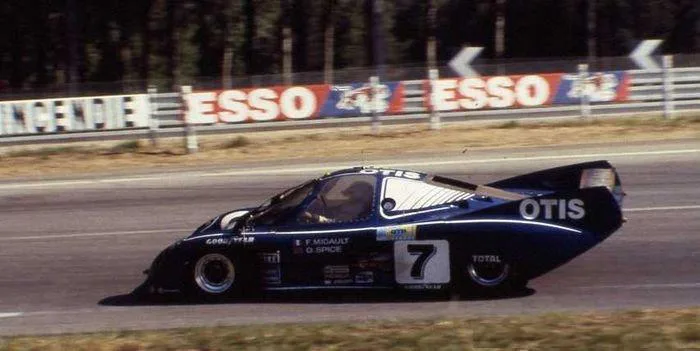
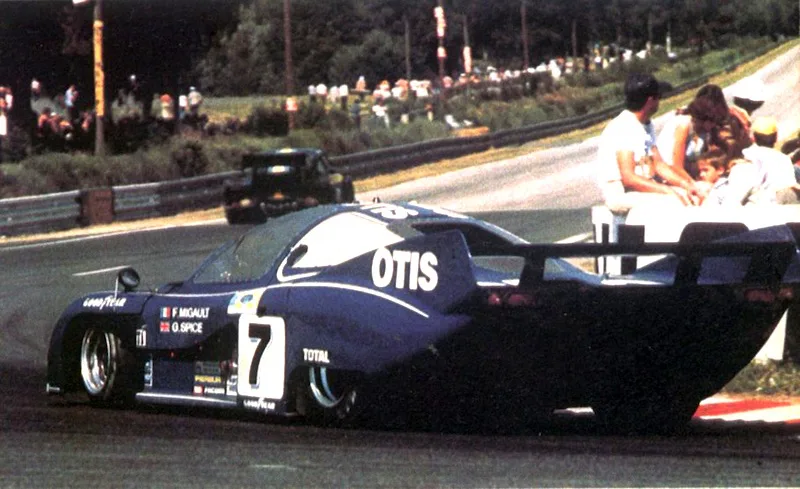
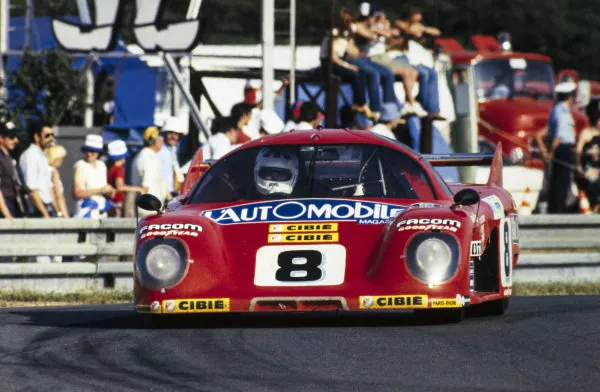
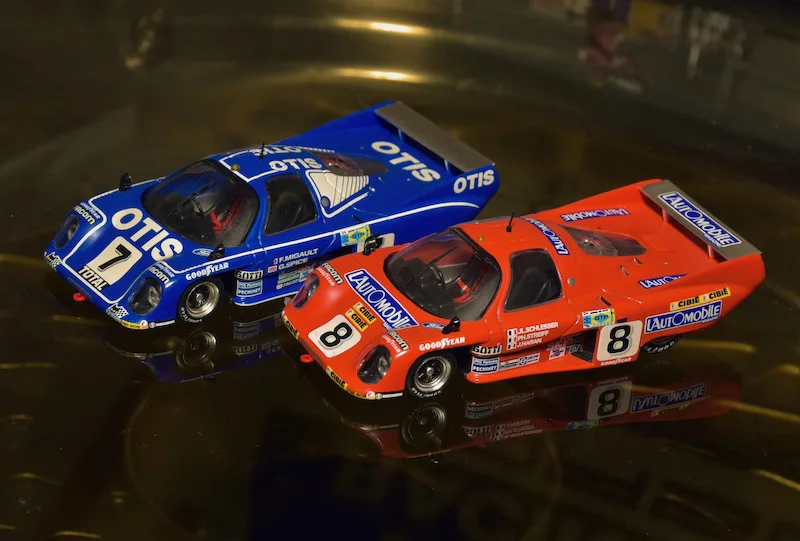

- IXO Classic Le Mans & GT Cars LMC050 & LMC051 (diecast)
- Overall rating: 3 STARS | Quality details: 3 STARS | Estimated value: 3 STARS
- Also appear in #089 Rondeau
1981 Le Mans 24h, Lola T600 – Porsche
The Group C category was officially launched in 1982. But the year prior to that, the engine limit of 3-liter was abandoned already. Porsche ran 2.6 liter twin turbo’s and this newly developed Lola T600 a 3.0 liter single turbo engine. But the Cooke Racing car had all kind of troubles during qualifying and ended up in 61st spot, not enough to qualify for the race.
Cooke Racing #17: Bobby Rahal (USA) / Brian Redman (GB) / Roy Woods (GB)
Results: Start-grid 61st DNQ / time 4:18.300 / race DNS
Lola T600 – Sportscars >2L: 3.0 liter Porsche Type 930/79 flat-6 turbo, approx. 600 hp. Goodyear tires. Weight 860 kg. Aluminium monocoque, chassisnr. #HU02
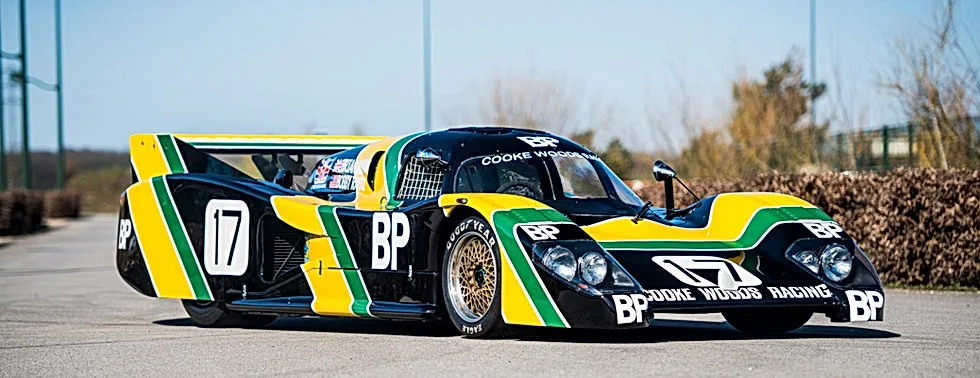
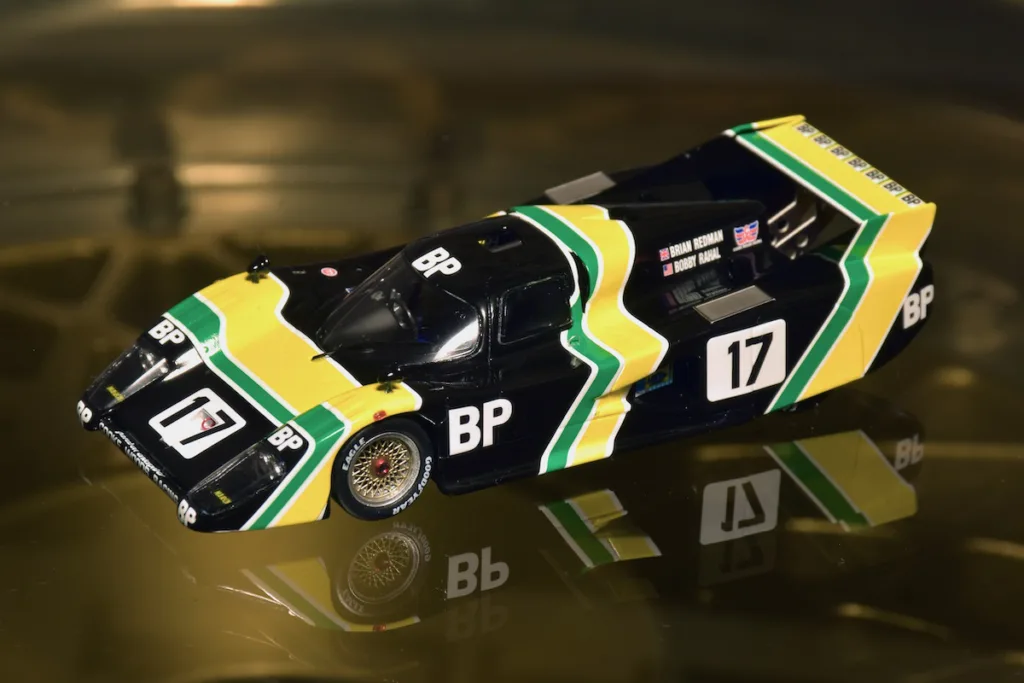
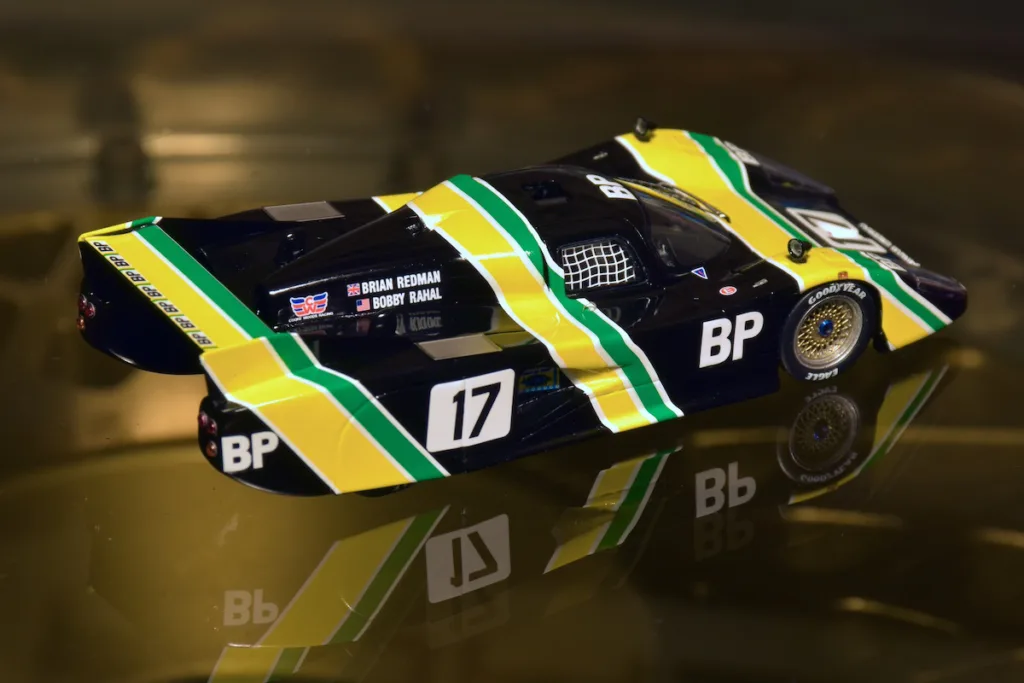
- SPARK S8606 (resin)
- Overall rating: 5 STARS | Quality details: 4 STARS | Estimated value: 4 STARS
- Also appears in #117 Classic Lola / #030 BP
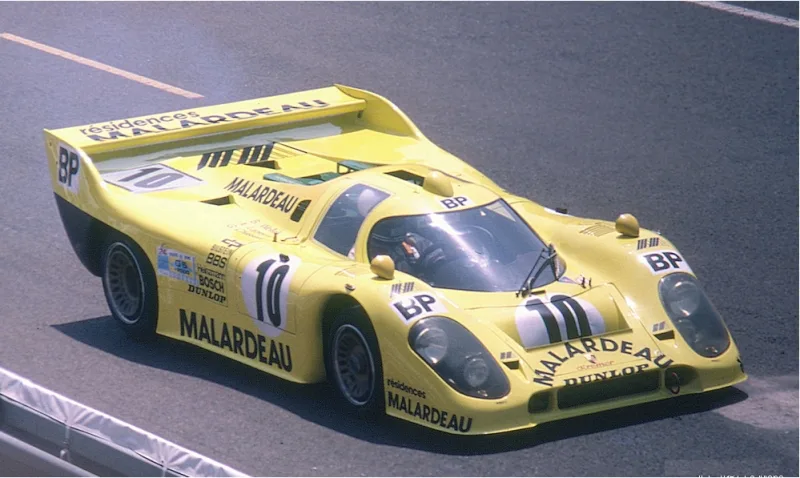
1981 Le Mans 24h, Porsche 917 K/81
Kremer built this completely new 917K in 1981 when the engine rules changed towards the new Group C regulations for 1982. The car was based on the last 917’s from 1971 but with a stiffened chassis, changed geometry to handle the modern slick tires and a rear wing. The car was beautiful but much slower than the original 917 due to wrong settings of the gearbox and the rear wing that hadn’t been tested in the wind tunnel and caused a lot of drag. It had to retire with a broken engine mount.
Kremer Racing #10: Bob Wollek (F) / Xavier Lapeyre (F) / Guy Chasseuil (F)
Results: Start-grid 18th / time 3:46.540 / race DNF engine mount – 82 laps
Porsche 917 K/81 – Group C: Powered by 5.0 liter Porsche 912.11 V12 180º, approx. 600 hp. Dunlop tires. Weight 900 kg. Aluminium space frame, chassisnr. Kremer #K/81
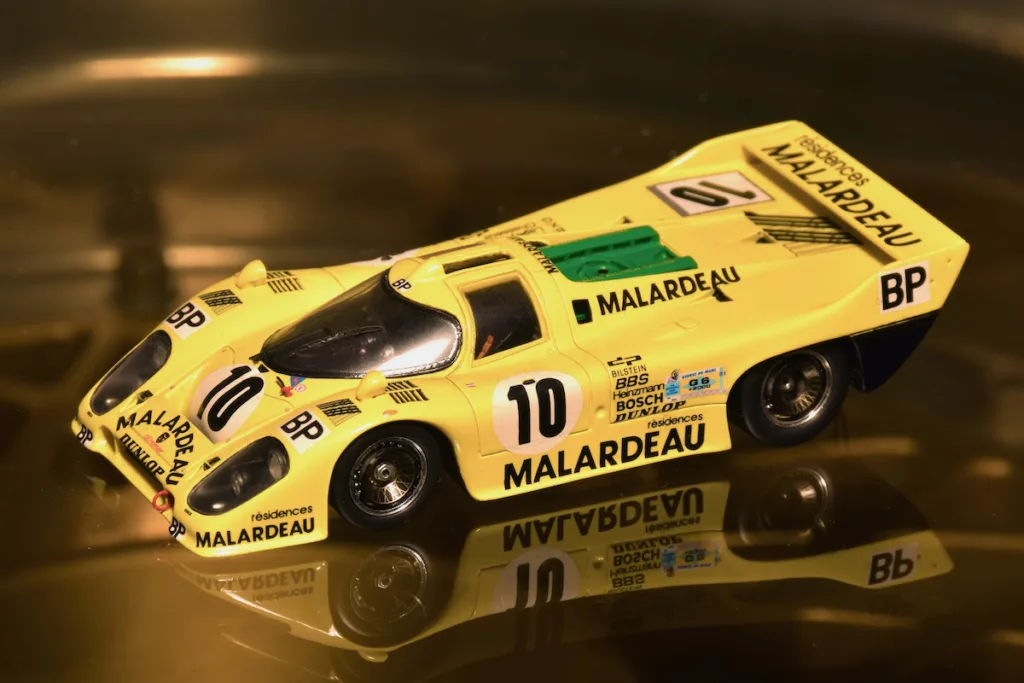
- SPARK S0917 (resin)
- Overall rating: 5 STARS | Quality details: 4 STARS | Estimated value: 4 STARS
- Also appears in #030 BP / 074 Kremer proto
1982
Group C attracted many manufacturers, from large car producers such as Ford, experienced Le Mans winners Porsche (that would dominate the first 5 years) and small teams such as Sauber or Grid.
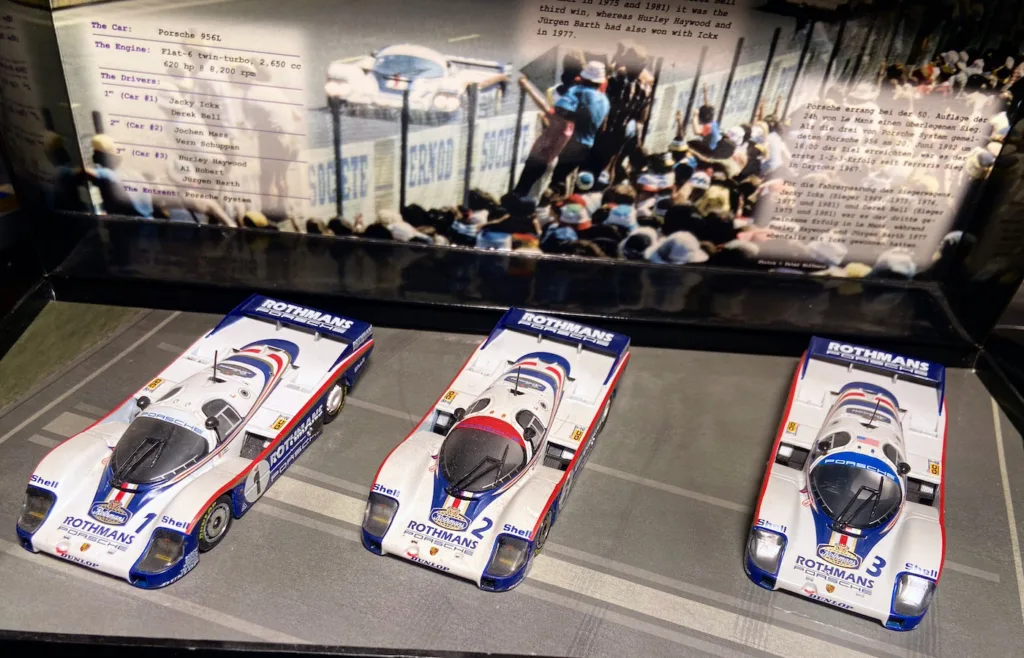
The Porsche 956 dominated the first years of Group C. Models can be found here:
#026 Rothmans Porsches; #052 Joest Porsches; #074 Kremer Porsches

1982 Le Mans 24h, Ford C100
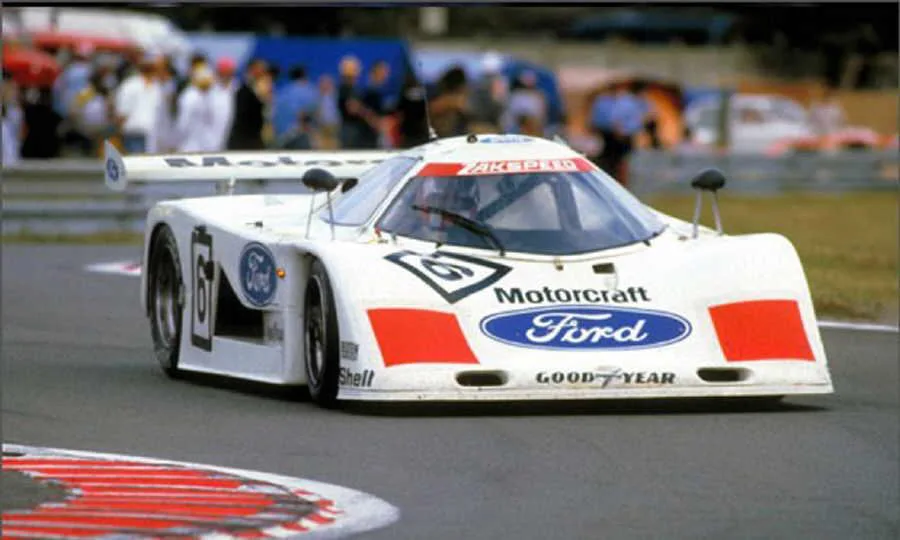
In 1982, the new group C regulations seduced Ford and they returned with the C100. It was powered by the successful F1 Cosworth engine, this time enlarged to 3.9 liter. That was part of the problem; the Cosworth DFL vibrated so much that it tore chassis’ apart. That was the other problem; the aluminum chassis was not rigid enough and flexed far too much. The cars were official Ford entries but operated by Zakspeed.
Ford #6: Klaus Ludwig (D) / Manfred Winkelhock (D) / Marc Surer (CH)
Results: Start-grid 6th / time 3:32.500 / race DNF engine – 67 laps
Ford C100 – Group C: Powered by 3.9 liter Cosworth DFL V8 90º, approx. 550 hp. Goodyear tires. Weight 830 kg. Aluminum monocoque, chassisnr. Thompson #004
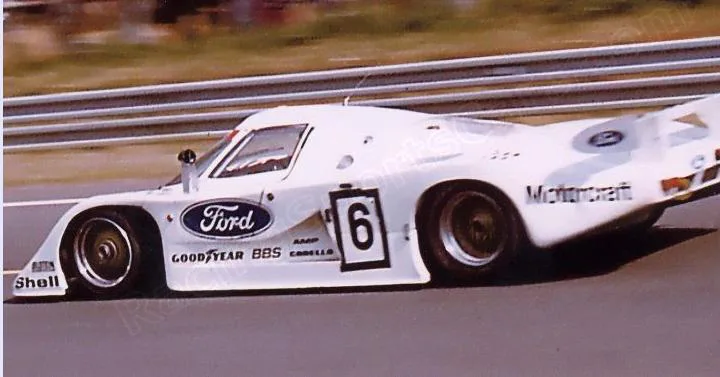
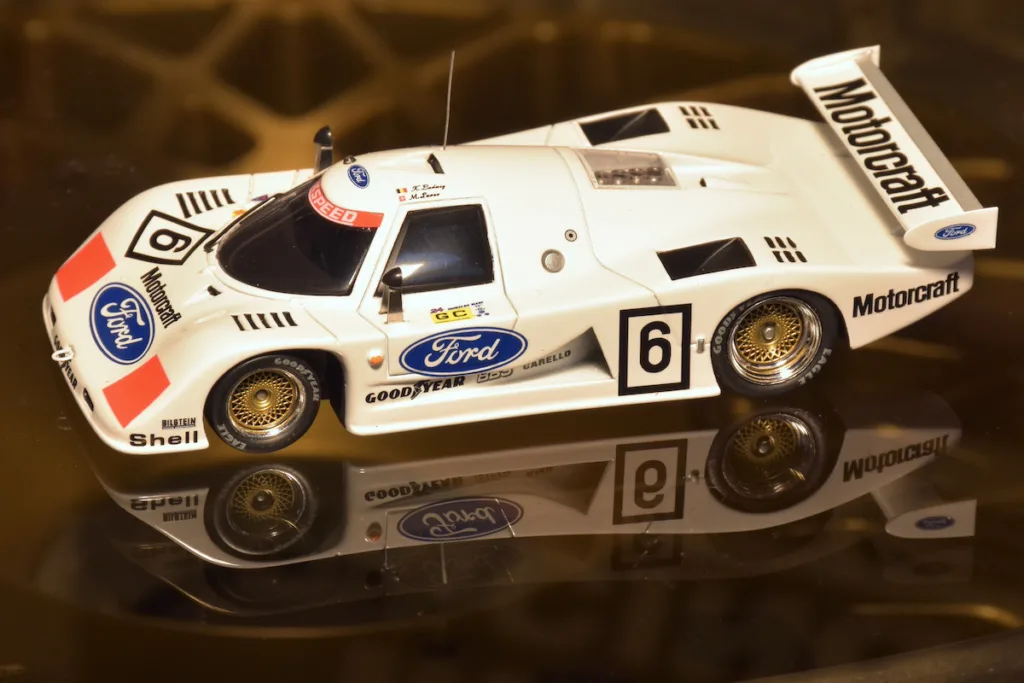
- BIZARRE BZ339 (resin)
- Overall rating: 5 STARS | Quality details: 4 STARS | Estimated value: 5 STARS
- Also appears in #040 Ford Prototypes
1982 Le Mans 24h, Lola T610 – Cosworth
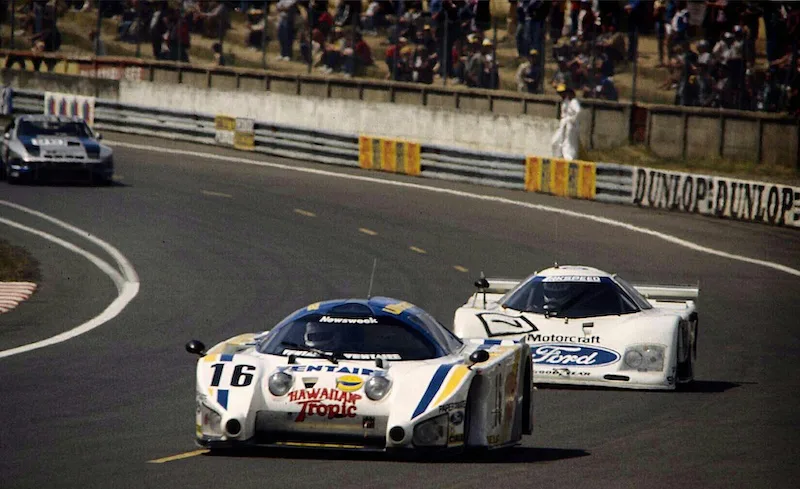
The new group C rules allowed great freedom in design as can be seen on this catamaran shaped Lola T600 and T610. Guy Edwards was a good driver but also famous for his ability to do sponsor deals, this time he arranged one with Hawaiian Tropic. The Porsche 956s won and this Cosworth engined Lola retired, the other Lola T610 from Cooke Racing didn’t finish either because it ran out of fuel.
Ultramar Team Lola #16: Guy Edwards (GB) / Rupert Keegan (GB) / Nick Faure (GB)
Results: Start-grid 10th / time 3:37.600 / race DNF engine – 72 laps
Lola T610 – Group C: Powered by 3.9 liter Ford Cosworth DFL V8 approximately. 550 hp. Avon tires. Weight 920 kg. Aluminium monocoque, chassisnr. HU01
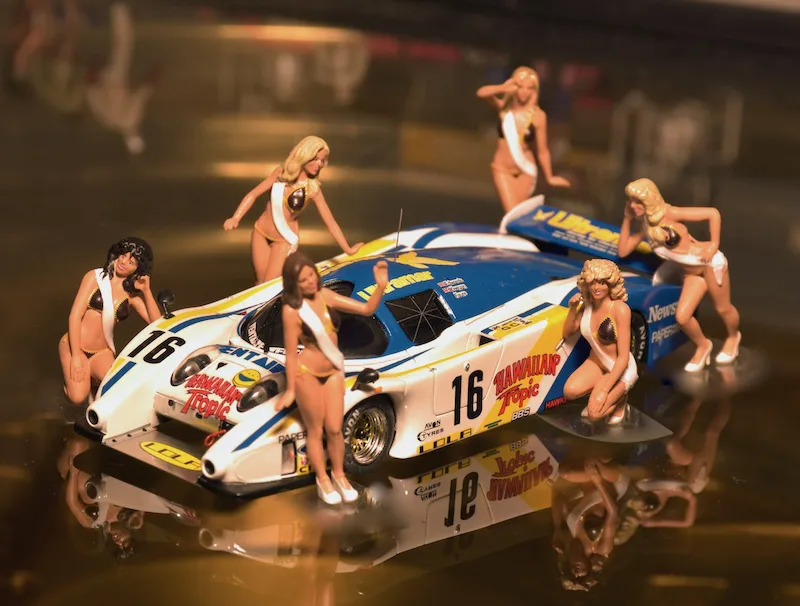
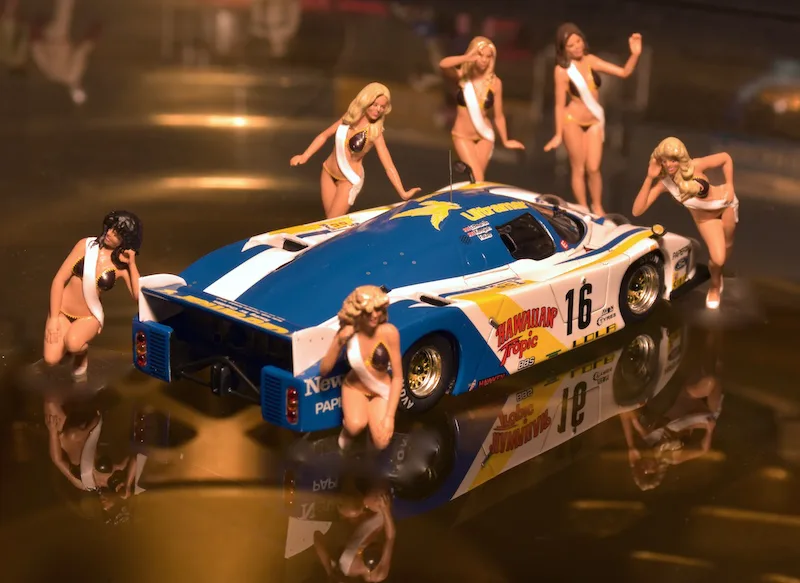
- BIZARRE BZ 358 (resin)
- Overall rating: 5 STARS | Quality details: 5 STARS | Estimated value: 5 STARS
- Also appears in #117 Classic Lola / #085 Hawaiian Tropic
1982 Le Mans 24h, Lola T610 – Cosworth
Cooke Racing came back to Le Mans with a Lola after last year’s failure. This year, their new Lola T610 used the 3.9 liter version of the Ford Cosworth F1 engine. The DFL had much vibrations and apparently higher fuel consumption than expected; after 28 laps the car came to a stop along the track with an empty fuel tank …
Cooke Racing #17: Brian Redman (GB) / Ralph Kent-Cooke (USA) / Jim Adams (USA)
Results: Start-grid 18th / time 3:43.060 / race DNF fuel – 28 laps
Lola T610 – Group C: Powered by 3.9 liter Ford Cosworth DFL V8 90º approx. 550 hp. Goodyear tires. Weight 825 kg. Aluminium monocoque, chassisnr. #HU02
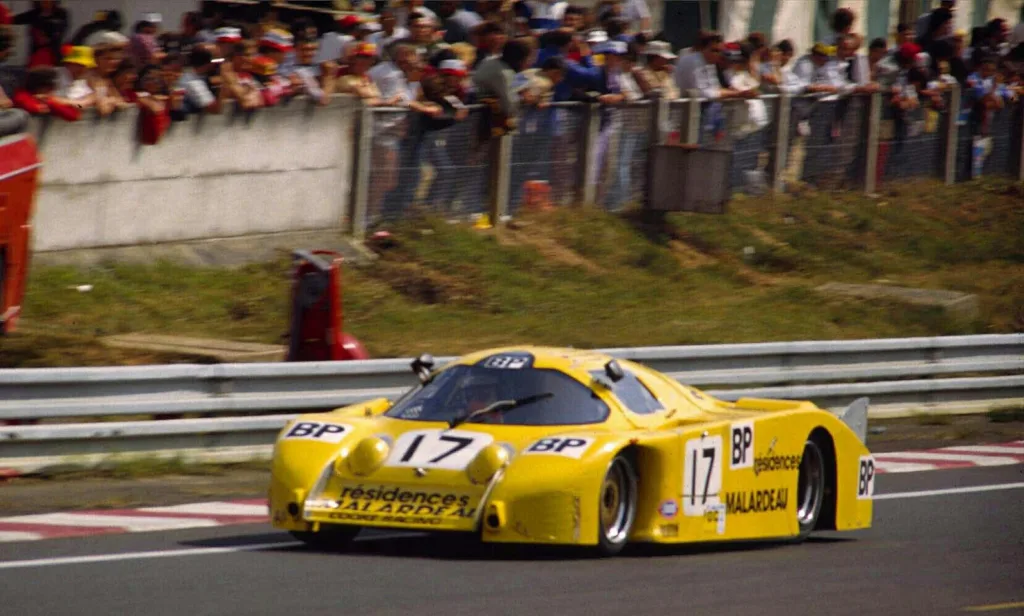
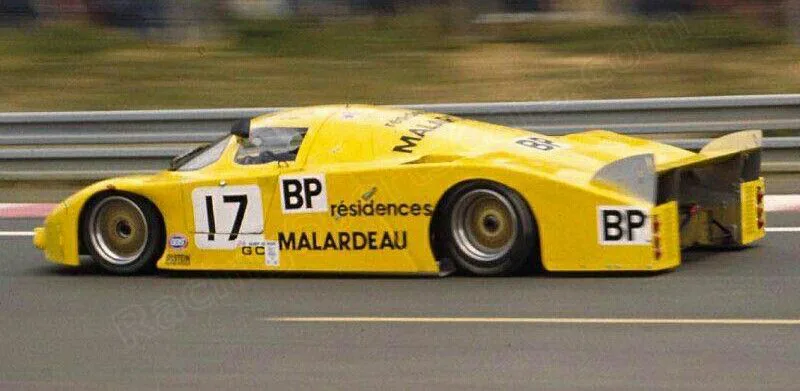
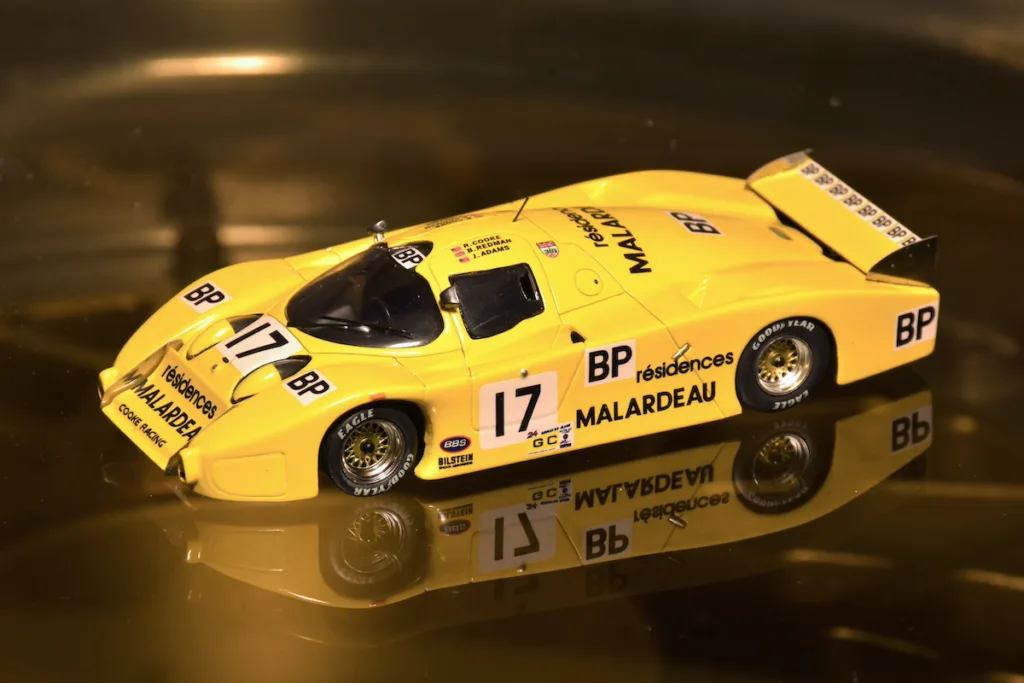
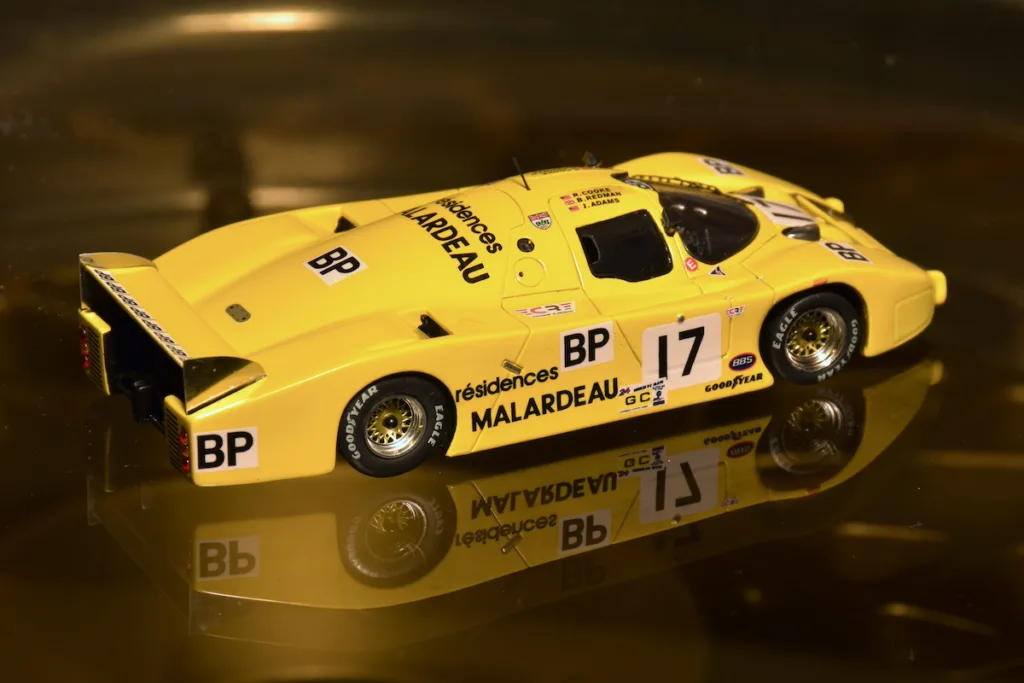
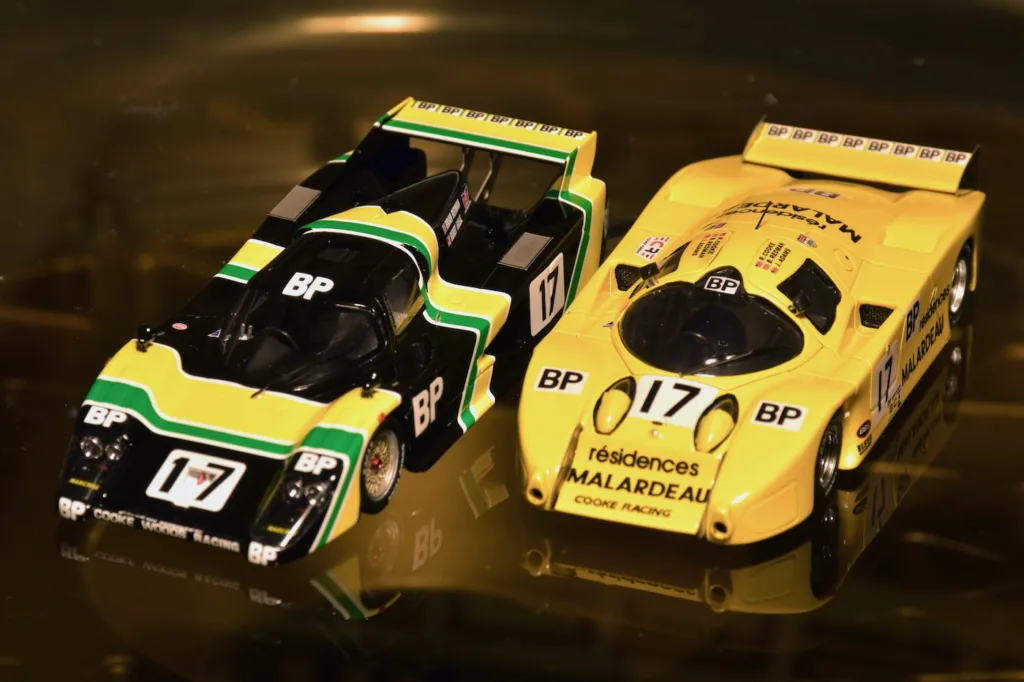
- BIZARRE BZ357 (resin)
- Overall rating: 4 STARS | Quality details: 4 STARS | Estimated value:4 STARS
- lso appears in #117 Classic Lola / #030 BP
1982 Le Mans 24h, Grid S1 – Cosworth
The Grid S1 was a distinctive design with its formula car nose cone poking out the main body, probably inspired by the Lola T600 that G.R.I.D. Racing used in 1981. It was designed by former Lotus employee Geoff Aldridge, but lack of funds lead to a much too heavy, underpowered car. The remarkable design generated so much drag that the topspeed was only 300 km/h. That didn’t mind as the engine seized after lap 7. The only positive was the support of the Hawaiian Tropic girls!
G.R.I.D. Racing #37: Emilio de Villota (ES) / Alain de Cadenet (GB) / Desiree Wilson (SA)
Results: Start-grid 17th / time 3:42.770 / race DNF engine – 7 laps
Grid S1 – Group C: 3.3 liter Cosworth DFL V8, approx. 550 hp. Dunlop tires. Weight 907 kg. Aluminium monocoque, chassisnr. #GA01
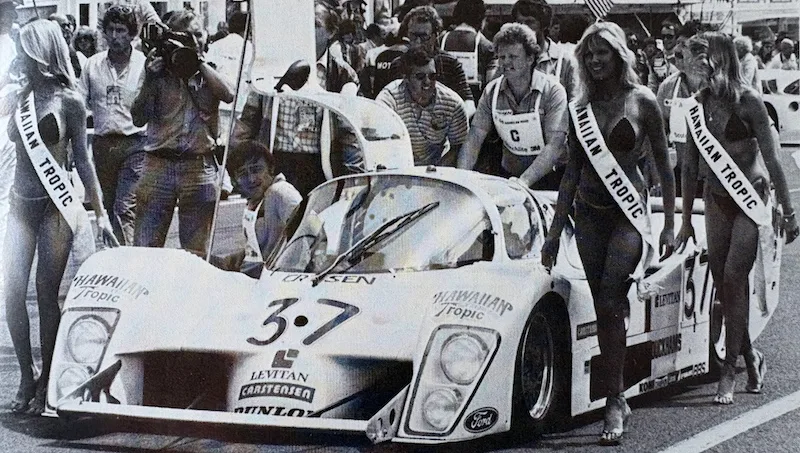
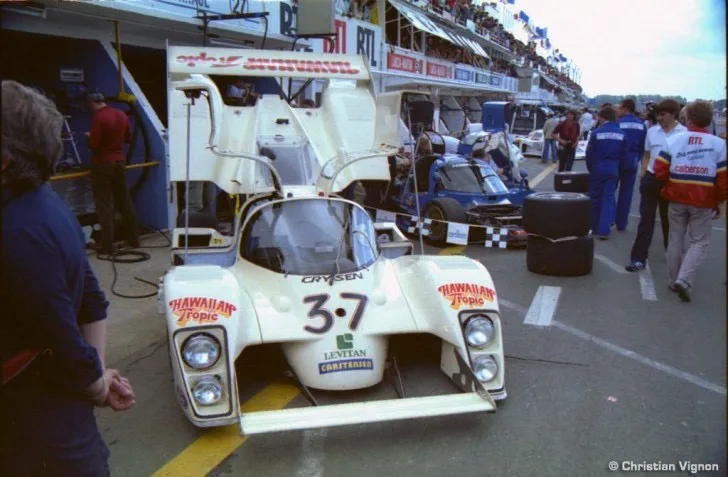
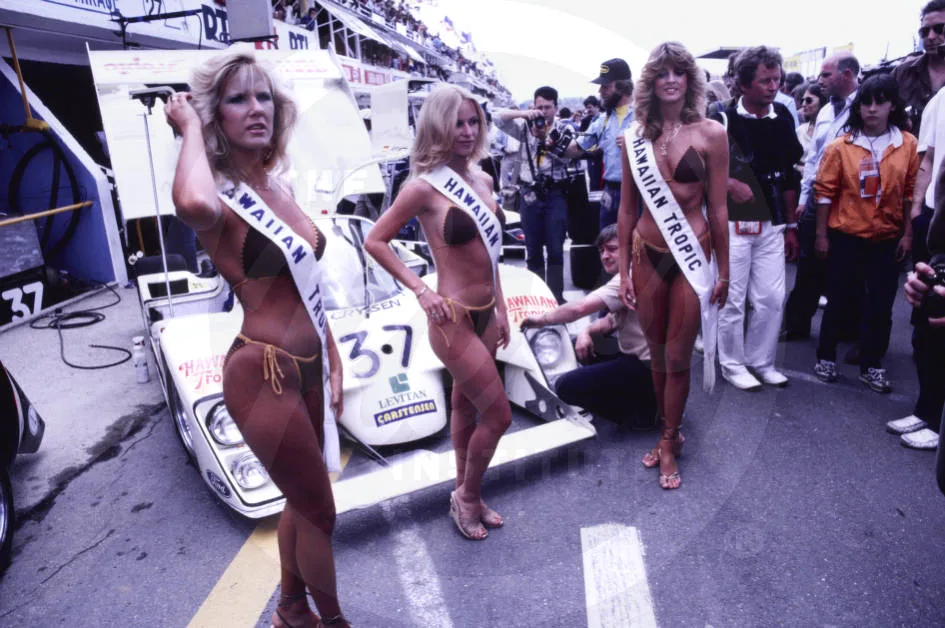
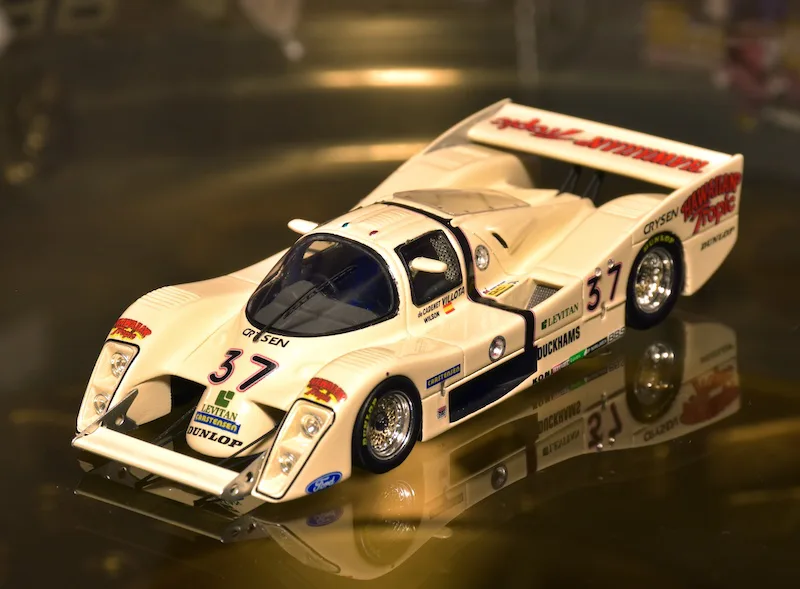
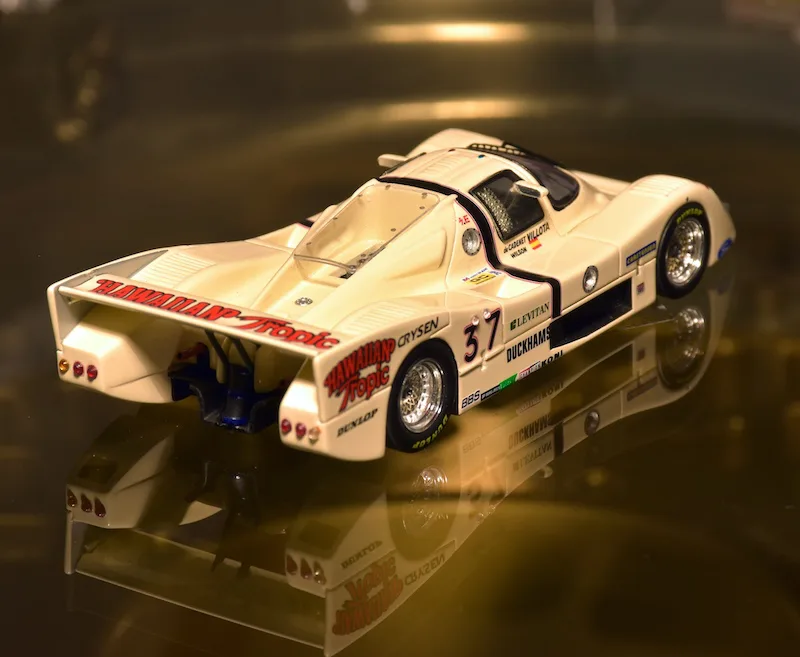
- SPARK Le Centenaire S9423 (resin)
- Overall rating: 5 STARS | Quality details: 5 STARS | Estimated value: 5 STARS
- Also appears in #095 Hawaiian Tropic / #124 Racing Ladies
1982 Le Mans 24h, Sauber SHS C6 – Cosworth
Swiss Peter Sauber used to build small sportscars with 4 cylinder engines. Together with construction company Seger & Hoffman he designed this group C racing car. It used the same long stroke Cosworth engine as the Ford C100, which was a disaster. The engine produced such vibrations that it destroyed the engine mountings of the GS .
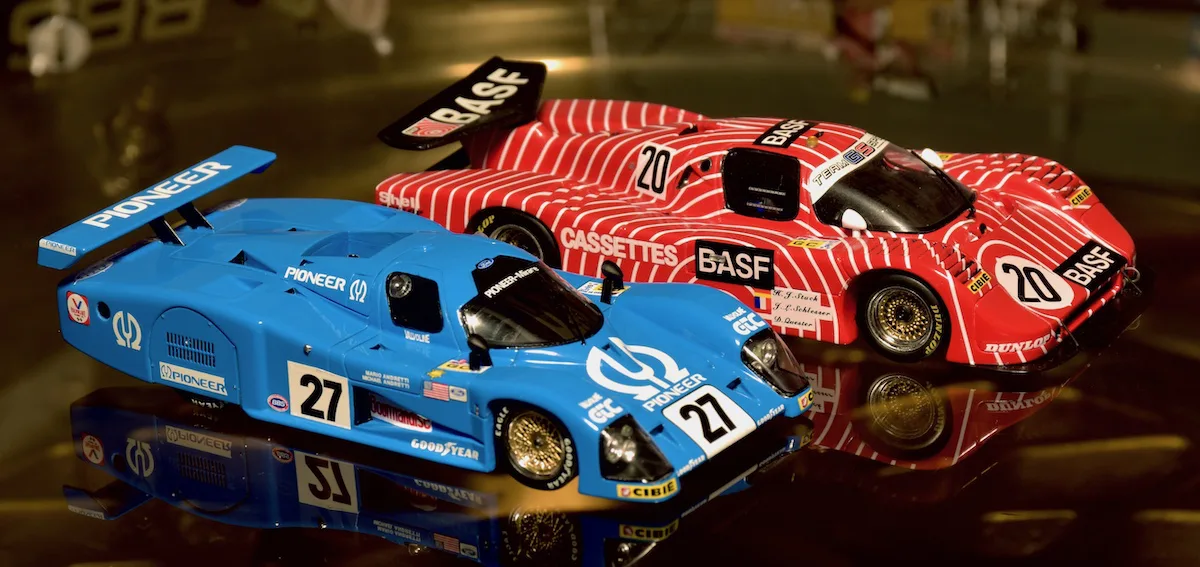
Team GS Sport #20: Hans J. Stuck (D) / Dieter Quester (A) / Jean-Louis Schlesser (F)
Results: Start-grid 7th / time 3:33.250 / race DNF engine mounts – 76 laps
Sauber SHS C6 – Group C: Powered by 3.9 liter Ford Cosworth DFL V8 90º approx. 550 hp. Dunlop tires. Weight 800 kg. Aluminium monocoque, chassisnr. Seger & Hoffman #unknown
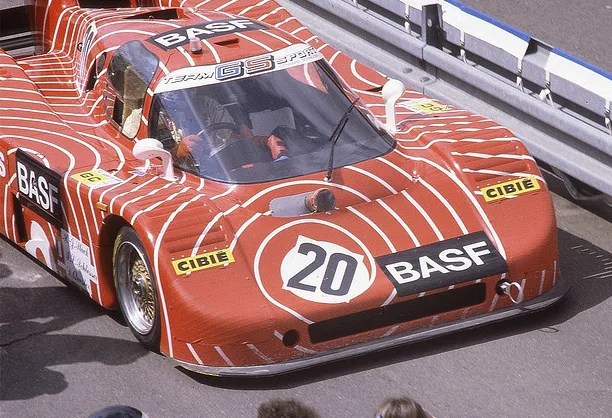
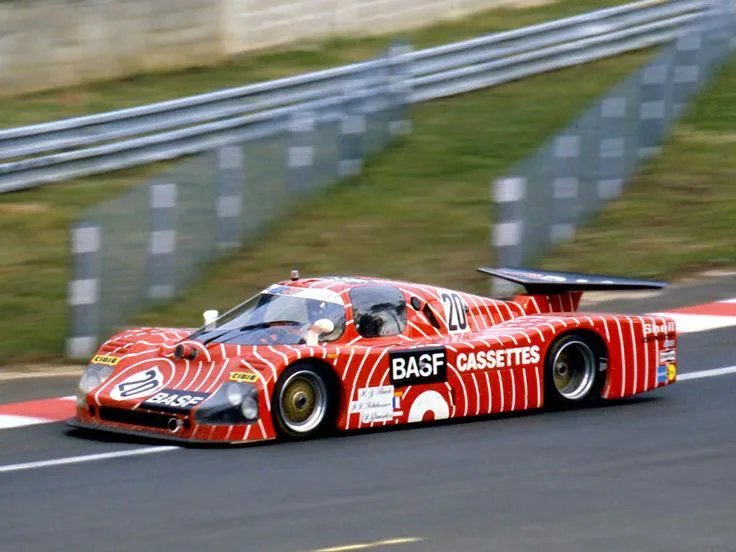
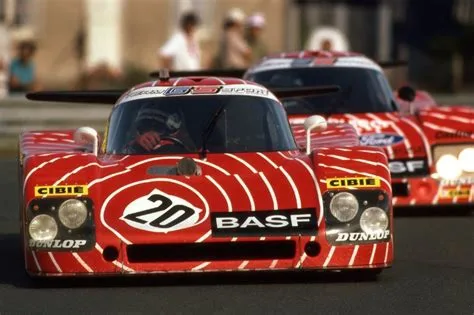
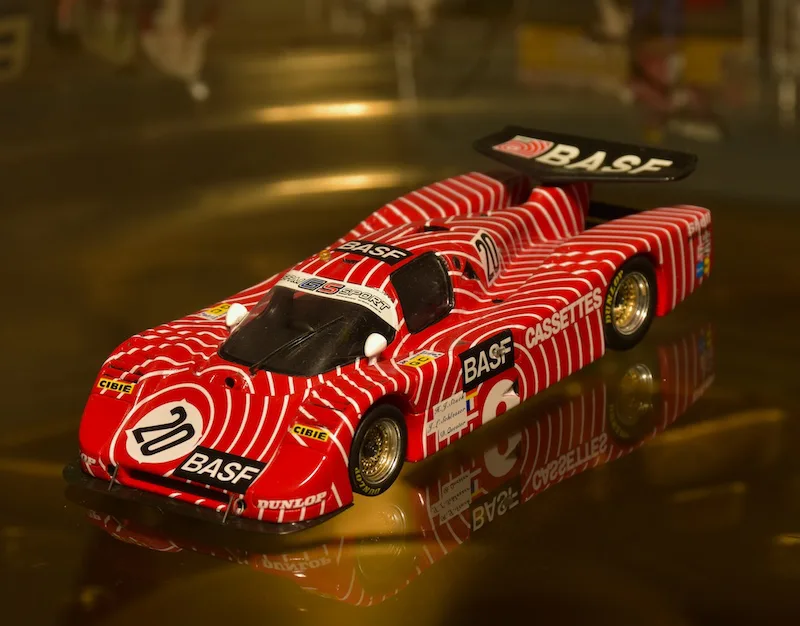
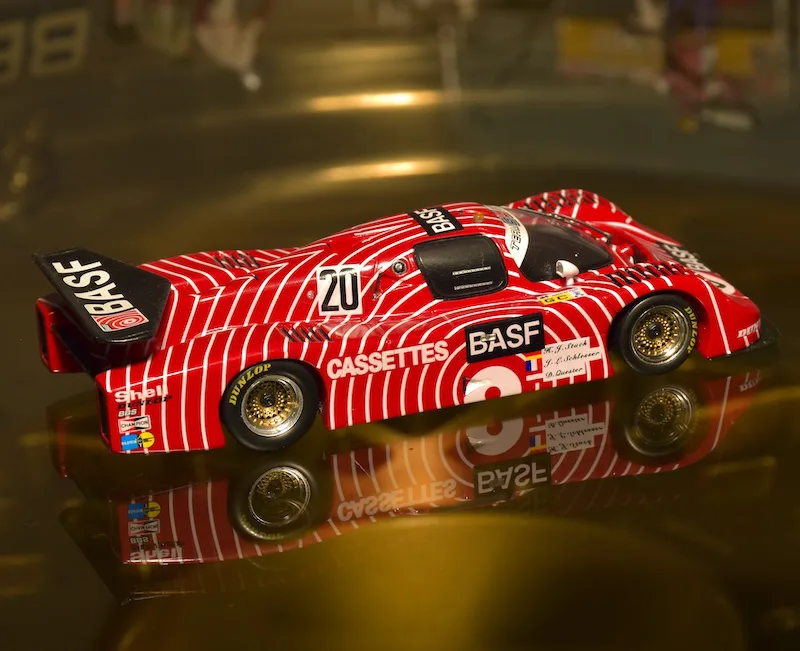
- BIZARRE BZ 482 (resin)
- Overall rating: 5 STARS | Quality details: 4 STARS | Estimated value: 5 STARS
- Also appears in #127 Hans J. Stuck
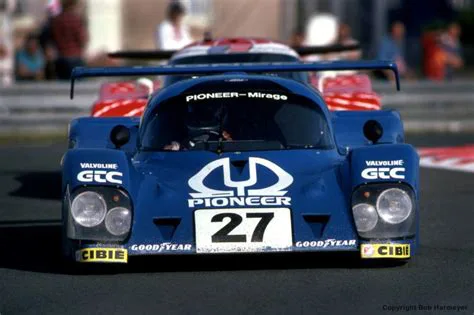
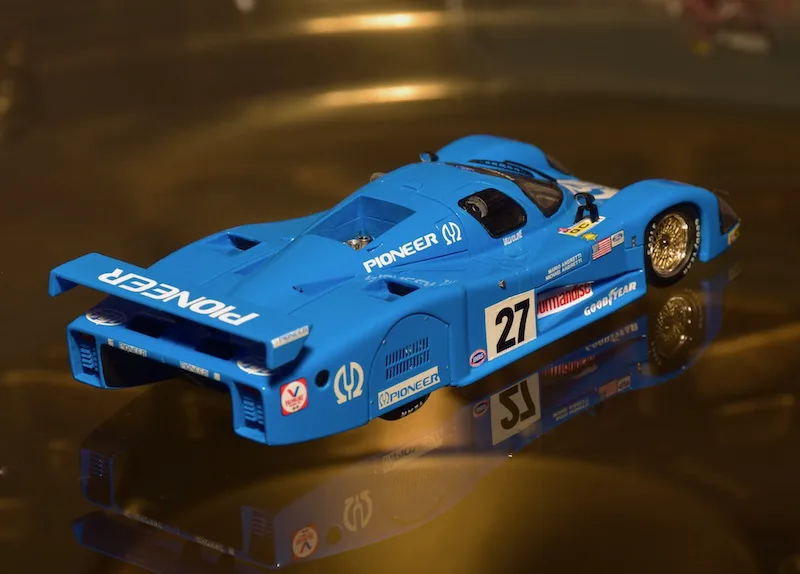
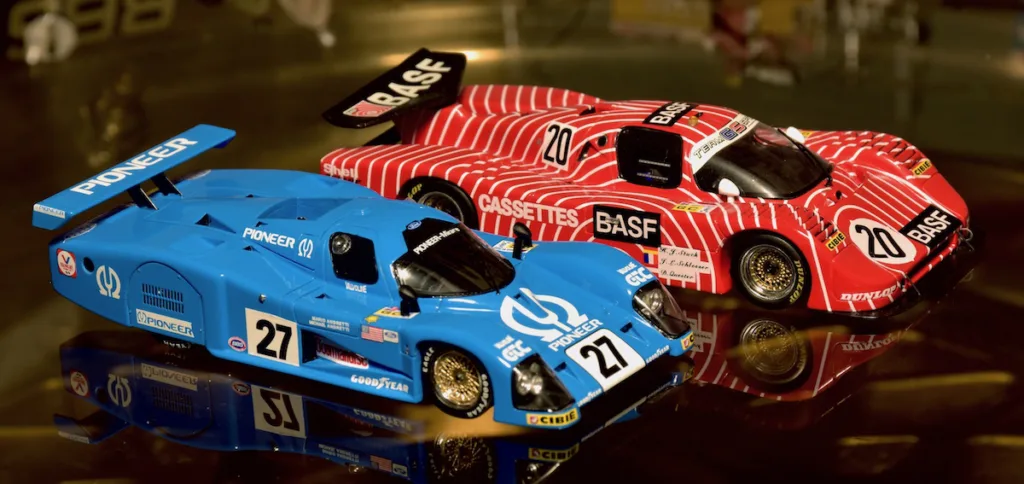
1982 Le Mans 24h, Mirage M12 – Cosworth
The Mirage M12 created to contest the Group C Category was a ground-effect car, designed by John Horsman and built by Howden Ganley‘s Tiga Race Cars in the UK. The car was a bit heavy but its aerodynamic design made it go over 340 kmh (212 mph) on the Le Mans straight. Mario and Michael Andretti qualified on the 5th row but were removed from the grid because of a non-compliant oil cooler. Horsman didn’t even try to change the unsafe postion of the oil cooler in the limited time available and the car didn’t start the race at all.
Grand Touring Cars Inc. #27: Mario Andretti (USA) / Michael Andretti (USA)
Results: Start-grid 9th/ time 3:37.090 / race DNS oil cooler
Mirage M12 – Group C: Powered by 3.9 liter Cosworth DFL V8 90º, approx. 550 hp. Goodyear tires. Weight 820 kg. Aluminum monocoque, chassisnr. M12 #001 (Tiga)
- SPARK S9475 (resin)
- Overall rating: 5 STARS | Quality details: 5 STARS | Estimated value: 4 STARS
- Only appears in this collection
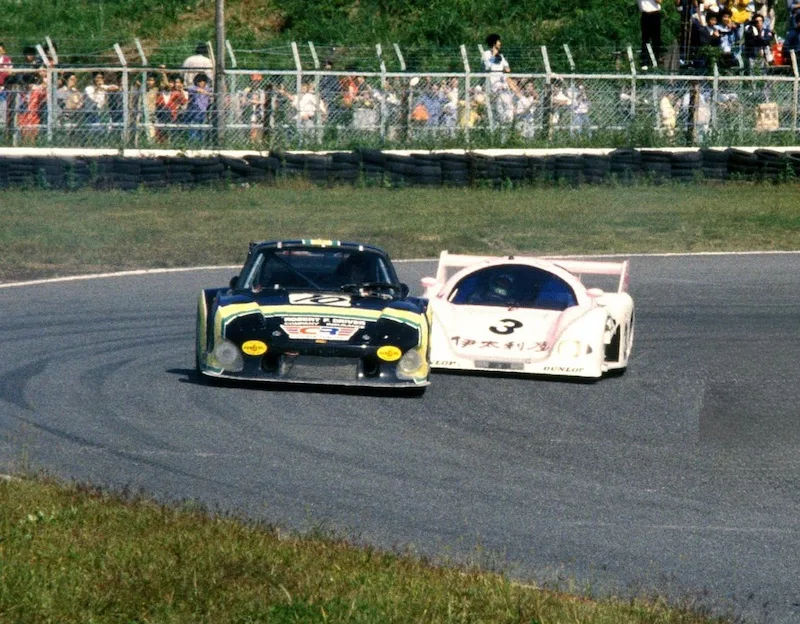
1982 Fuji 6h, Rondeau M382 – Cosworth
The M382 made its debut in 1982 to comply with the Group C technical regulations but was still largely based on the most successful Rondeau, the M379 model. It became clear soon that it stood no chance against the powerful Rothmans Porsche 956 and the little Martini Lancia group 6 car. The Rondeau was entered under the banner of Italyia Sport and Matsuda Collection. Pescarolo and Boutsen lost 4 seconds per lap but because there was not much competition outside the Rothmans and Martini cars, it was on its way to a podium position until a broken drive shaft spoiled the result.
Italya Sport / Rondeau #3: Henri Pescarolo (F) / Thierry Boutsen (B)
Results: Start-grid 5th / time 1:16.180 / race DNF drive shaft – 250 laps
Rondeau M382 – Group C: Powered by 3.0 liter Ford Cosworth DFV, approx. 520 hp. Dunlop tires. Weight 820 kg. Aluminium monocoque, chassisnr. #006
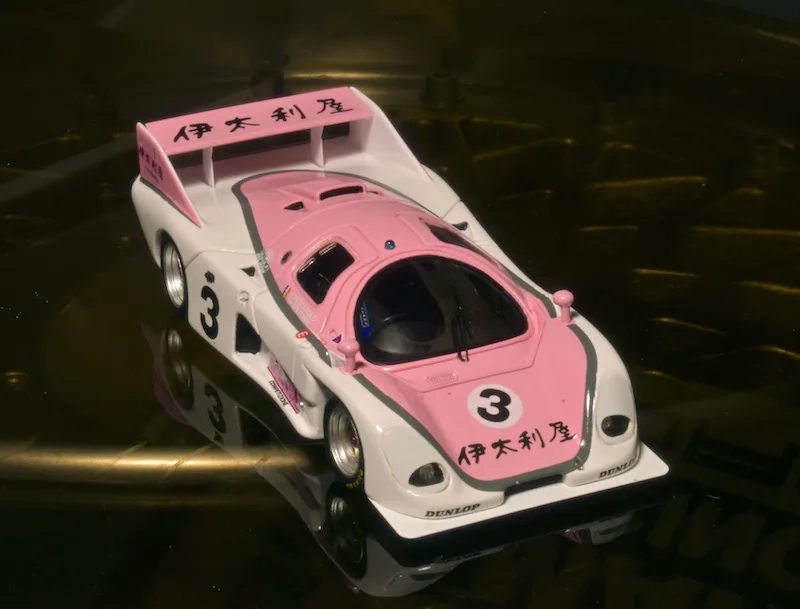
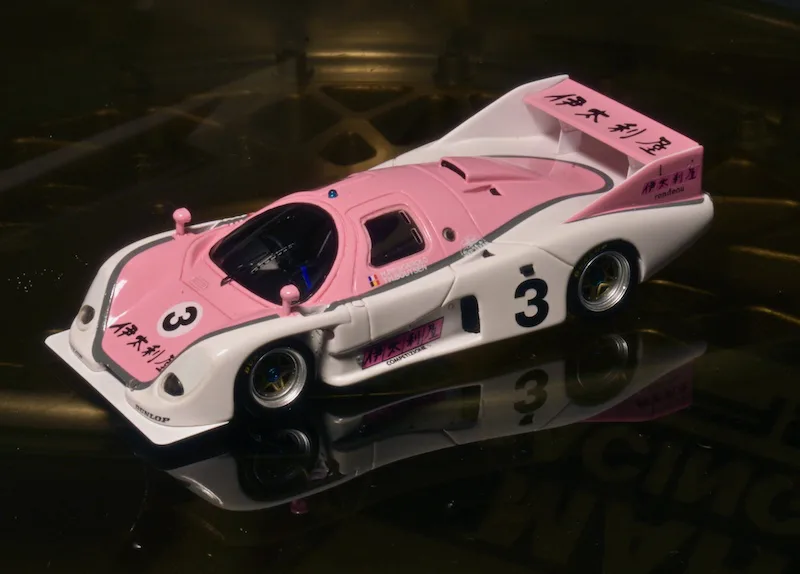
- SPARK SJ097 #086/400 pcs (resin)
- Overall rating: 4 STARS | Quality details: 4 STARS | Estimated value: 4 STARS
- Also appears in #089 Rondeau / #036 Pink & Purple
1983
1983 Le Mans 24h, Lancia LC2/83 – Ferrari
Lancia’s only real group C car was a spectacular one, the chassis was built by Dallara and powered by a Ferrari V8 turbo engine. It could match the speed of the Porsche 956, qualifying 2nd, but not its reliability. All three Martini Lancia’s broke down, this one already after 27 laps with a gearbox failure.
Martini Racing / Lancia Corse #4: Michele Alboreto (I) / Teo Fabi (I) / Alessandro Nannini (I)
Results: Start-grid 2nd / time 3:20.790 / race DNF gearbox – 27 laps
Lancia LC2/83 – Group C: Powered by 2.6 liter Ferrari Abarth V8 90º twin turbo, approx. 650 hp. Michelin tires. Weight 850 kg. Aluminium monocoque, chassisnr. Dallara #0002
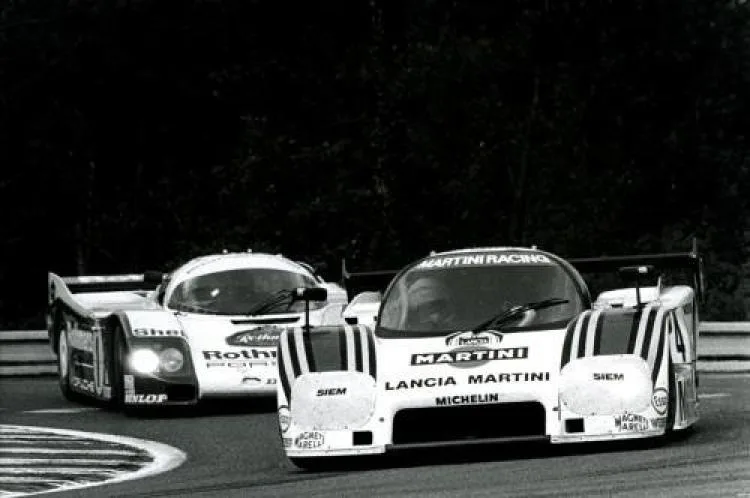
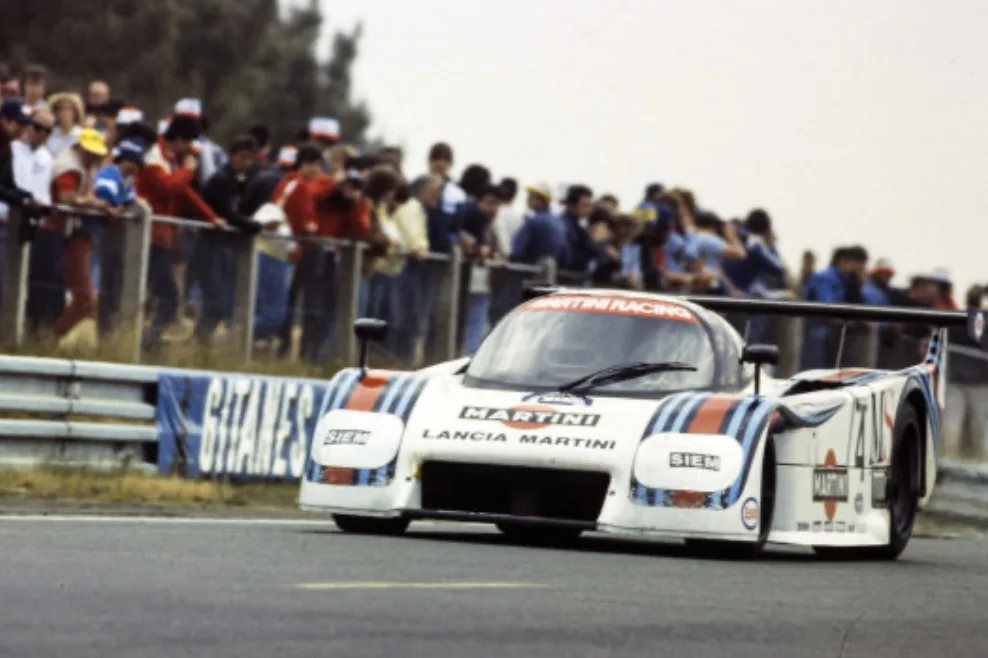
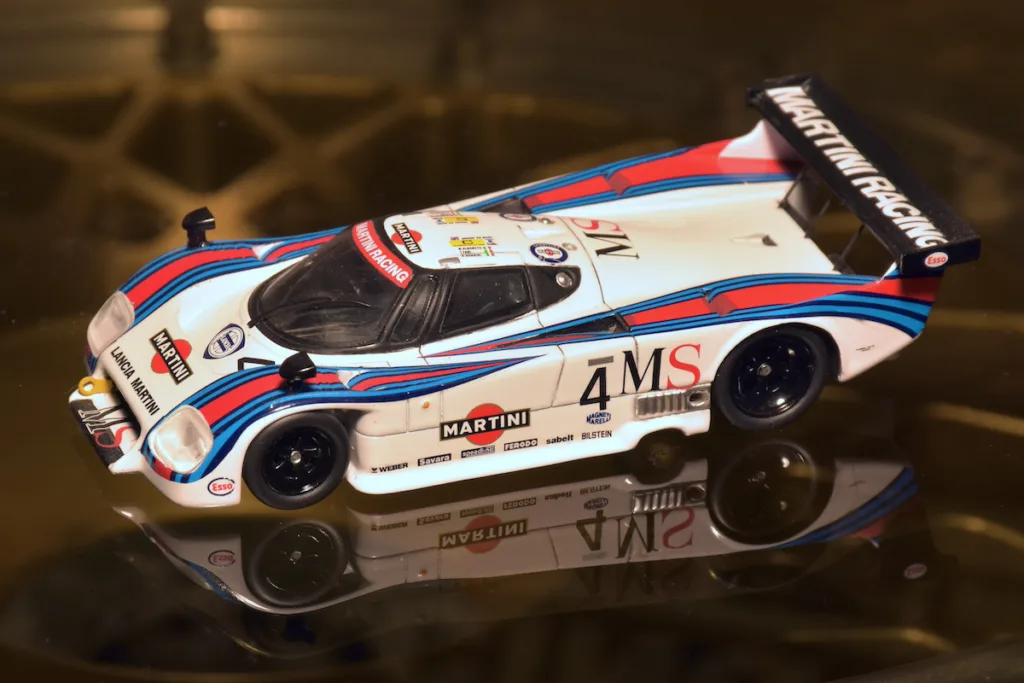
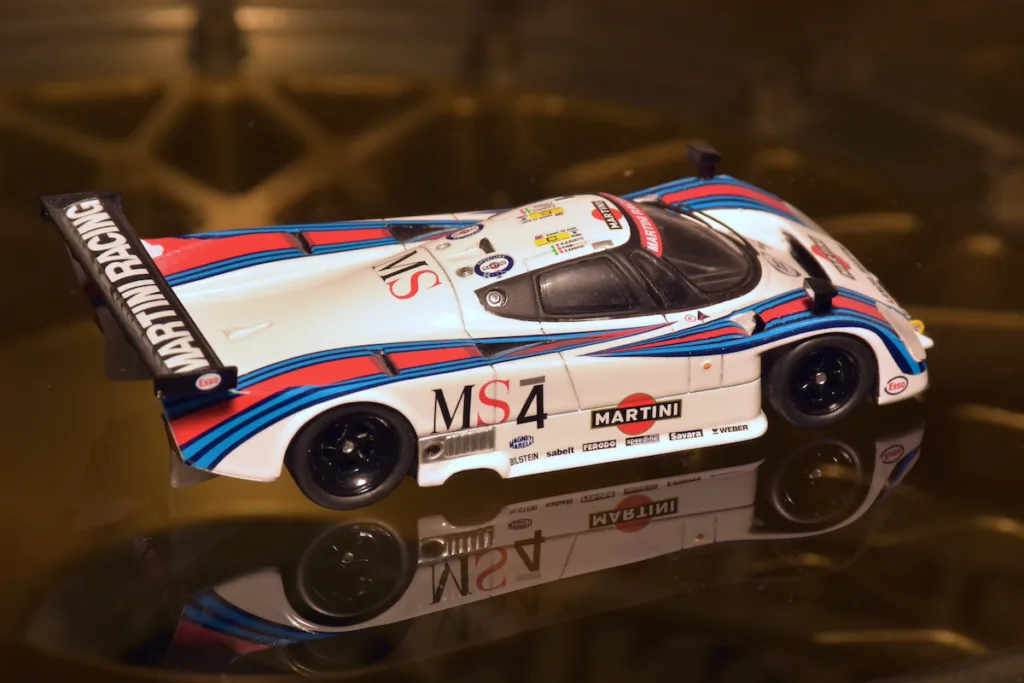
- SPARK S0650 (resin)
- Overall rating: 4 STARS | Quality details: 4 STARS | Estimated value: 4 STARS
- Also appears in #025 Martini Lancia
1983 Le Mans 24h, Rondeau M482 – Cosworth
Ford killed the C100 project after only one season and officially supported Rondeau that was the last Le Mans winner using Ford’s engine. The Rondeau M482 Group C car looked very spectacular with the huge venturis but the chassis had big troubles with porpoising due to the ground effect just like modern Formula 1 cars. Also, the strong vibrating Cosworth DFL engine made it no match for the Porsches. All three cars went out with engine related problems.
Ford France #24: Henri Pescarolo (F) / Thierry Boutsen (B)
Results: Start-grid 16th / time 3:36.060 / race DNF engine / 174 laps
Rondeau M482 – Group C1. Powered by 3.9 liter Cosworth DFL V8 90º, approx. 550 hp. Goodyear tires. Weight 820 kg. Aluminum monocoque, chassisnr. M482 #002
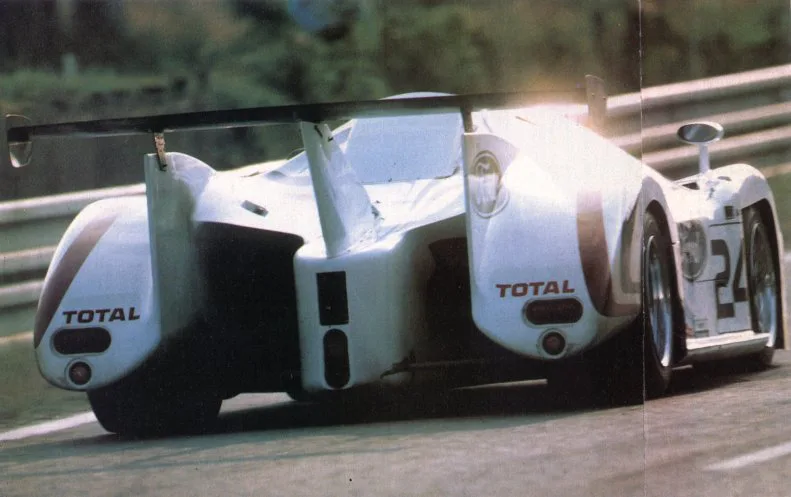

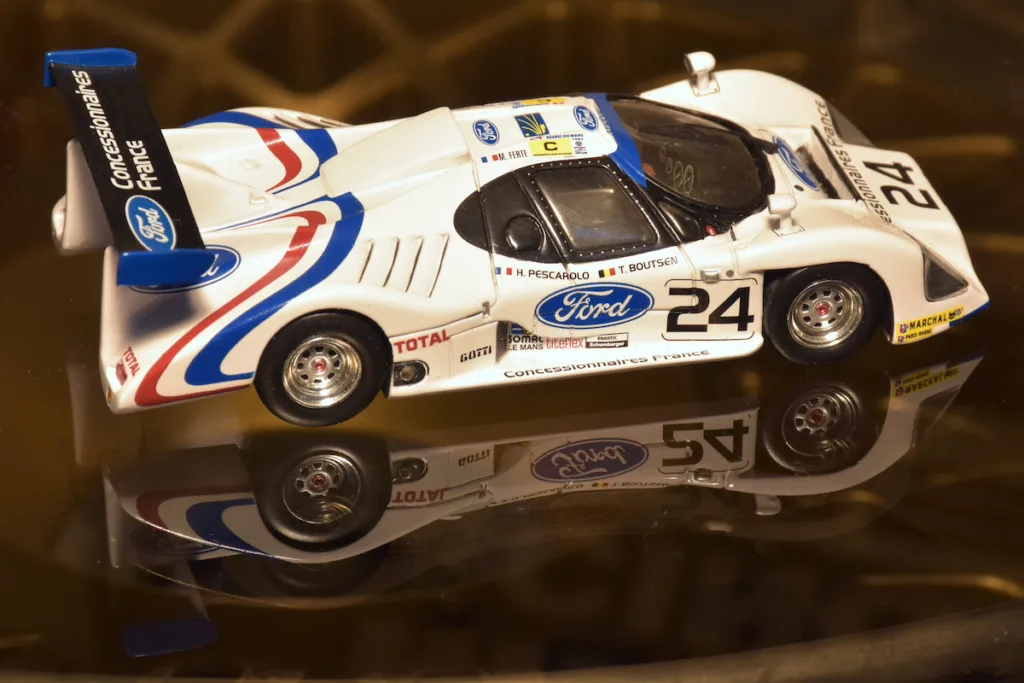
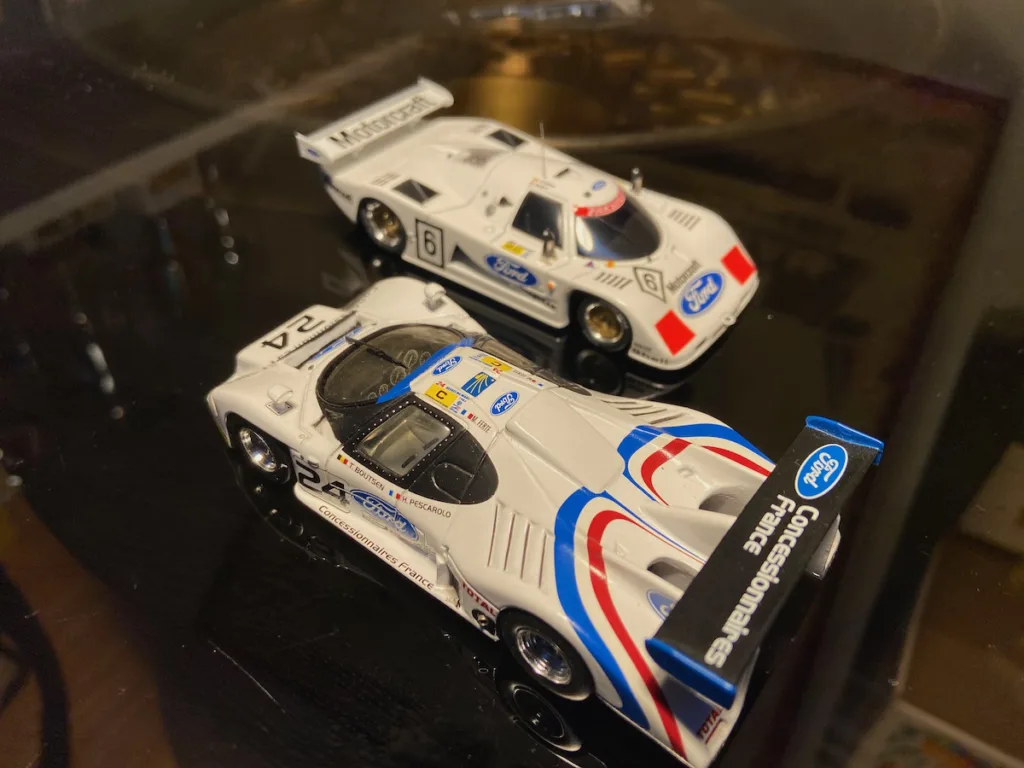
- BIZARRE BZ24 (resin)
- Overall rating: 5 STARS | Quality details: 5 STARS | Estimated value: 4 STARS
- Also appears in #089 Rondeau / #040 Ford Prototypes
1983 Le Mans 24h, EMKA C83/1 – Aston Martin
Emka’s Steve O’Rourke was manager of rock stars Pink Floyd and raced Le Mans as a hobby. He already participated in a Ferrari 512BB LM and BMW M1 and now wanted to do Group C. Together with Michael Cane Racing this lead to the EMKA C83/1 with Aston Martin V8 power. The car looked fantastic but had some issues: It looked like a ground effect car, but actually wasn’t. The sleek design lead all the air flow over the car and by doing this, at high speed the engine didn’t get enough air. Despite its 550 hp, it didn’t go faster than 290 km/h (180 mph) on the Le Mans straight. Porsches ran 40 to 50 km/h faster! Unfortunately the team found this out later when developing the car for the 1985 race …
Emka Productions #41: Steve O’Rourke (GB) / Tiff Needell (GB) / Nick Faure (GB)
Results: Start-grid 25th / time 3:42.230 / race 17st – 276 laps / 13th Group C
EMKA C83/1 – Group C: Powered by 5.3 liter Aston Martin Tickford, approx. 550 hp. Dunlop tires. Weight 890 kg. Aluminium monocoque, chassisnr. #MC 01 83C
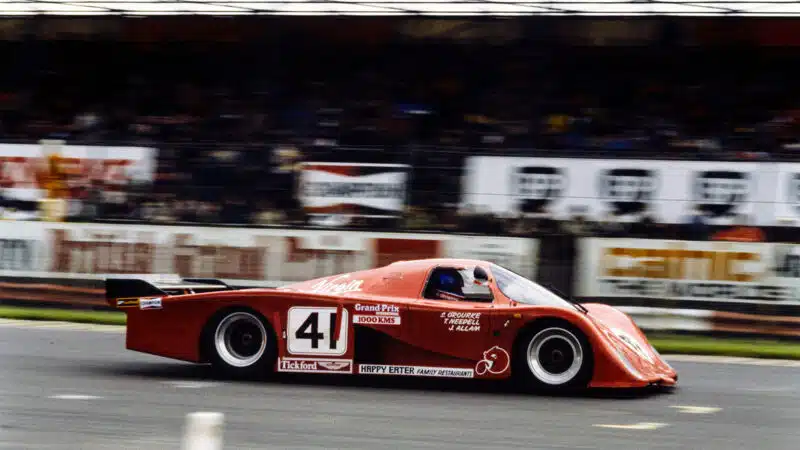
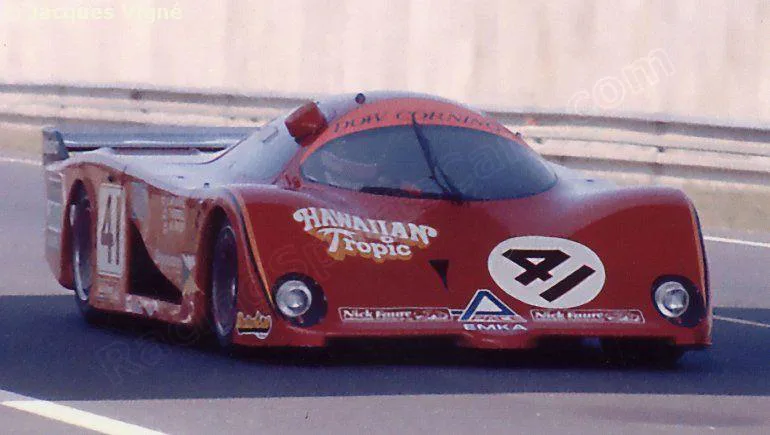
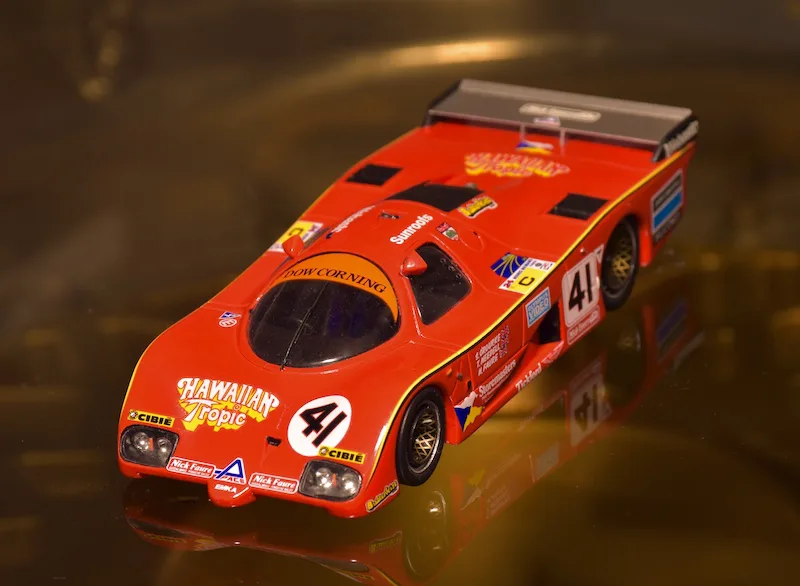
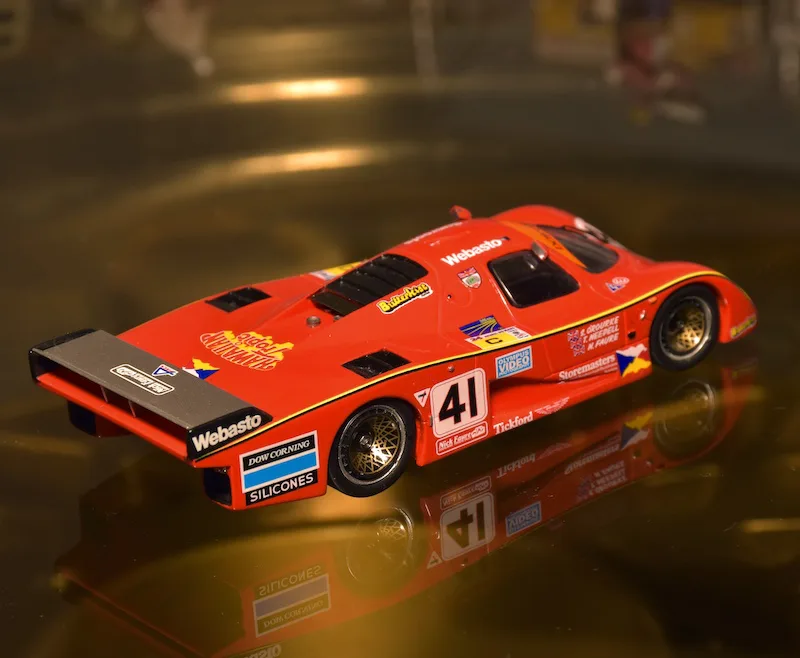
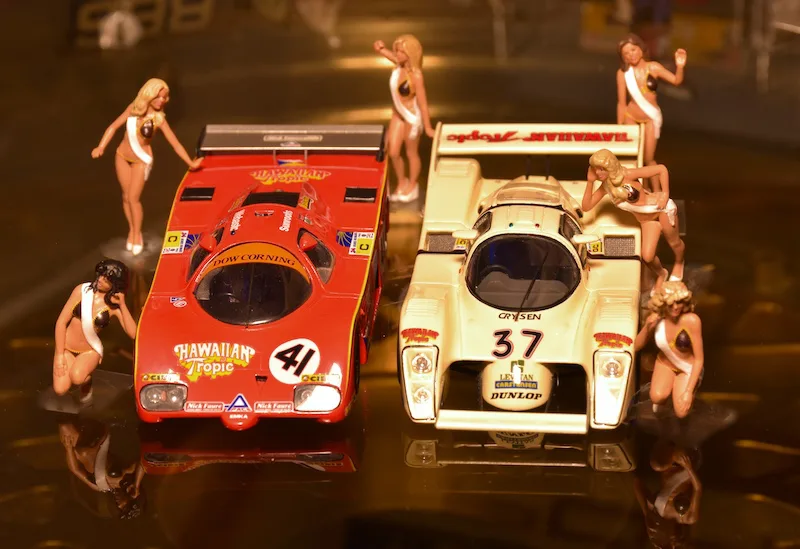
- BIZARRE BZ408 (resin)
- Overall rating: 5 STARS | Quality details: 4 STARS | Estimated value: 5 STARS
- Also appears in #095 Hawaiian Tropic
1983 Le Mans 24h, Dome R82C – Cosworth
Dome Racing and Colin Bennett entered this Group C Dome with Cosworth engine, as many other small teams. The car was designed by Dome but the chassis was built by March. It lacked speed and failed to finish due to a broken clutch.
Dome Racing #38: Chris Craft (GB) / Eliseo Salazar (RCH) / Nick Mason (GB)
Results: Start-grid 29th / time 3:44.310 / race DNF clutch – 75 laps
Dome RC82 – Group C: Powered by 3.3 liter Ford Cosworth DFL V8 approximately. 500 hp. Dunlop tires. Weight 905 kg. Aluminium monocoque, chassisnr. #01 (March / Dome)
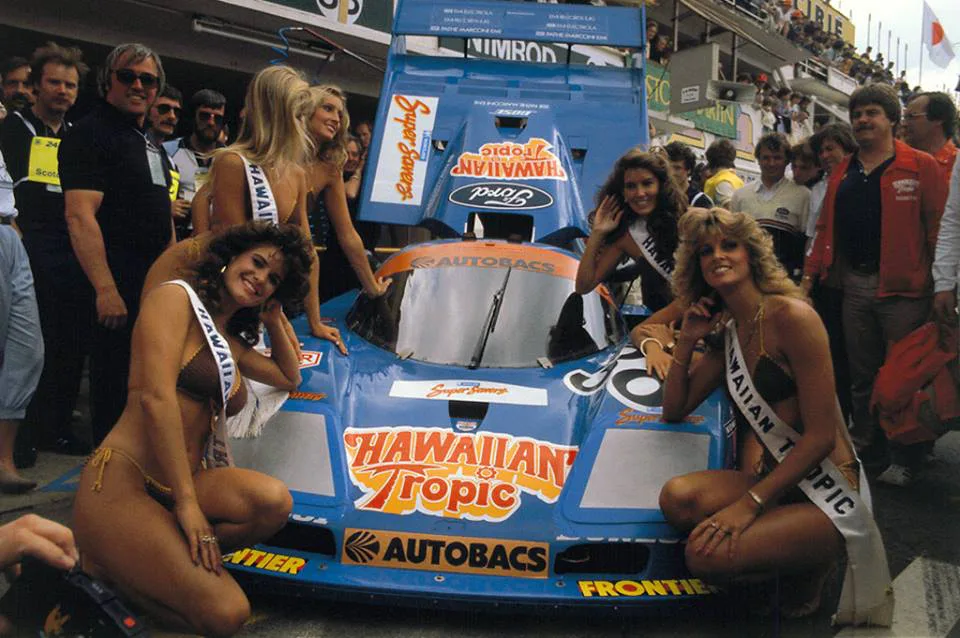
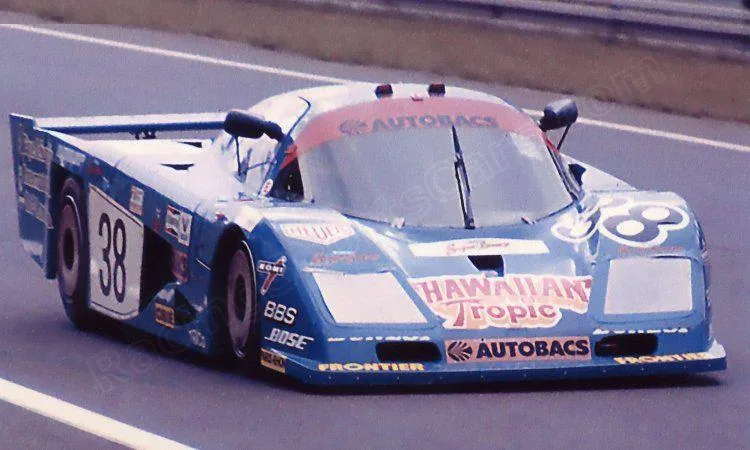
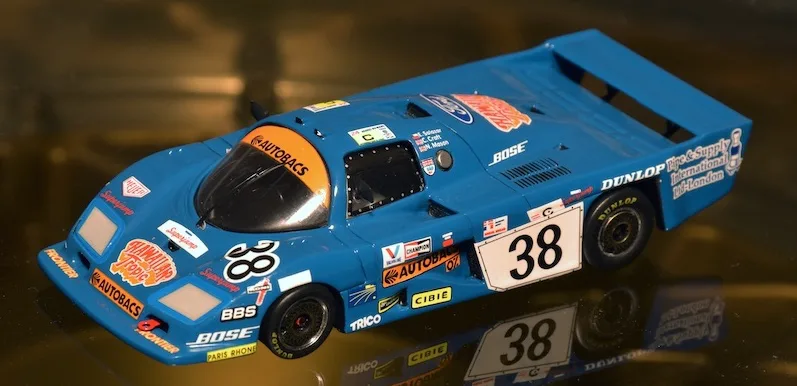
- BIZARRE BZ31 (resin)
- Overall rating: 4 STARS | Quality details: 4 STARS | Estimated value: 4 STARS
- Also appears in #0095 Hawaiian Tropic
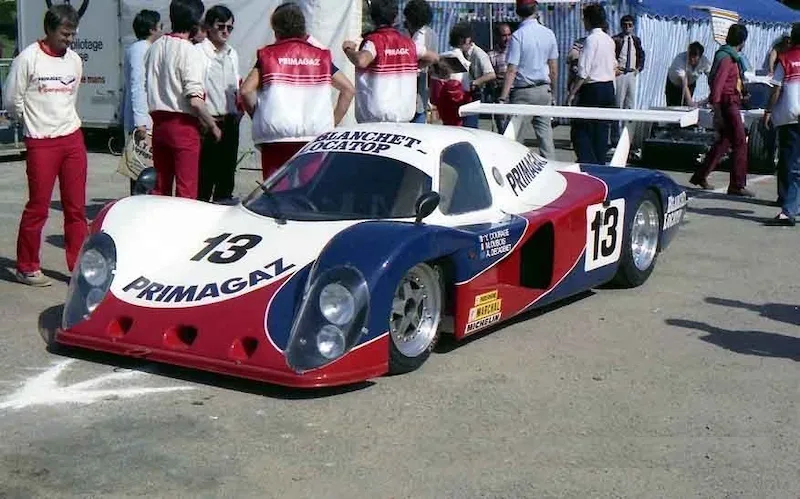
1983 Le Mans 24h, Cougar C01B – Cosworth
Yves Courage had won the 2-liter group 6 category in 1981 in a Lola and after that, started building his own cars. They would be named Courage in the future, but his first designs were called Cougar. The C01B (the same car as last year’s C01) is a simple aluminium monocoque with a Cosworth client engine, unfortunately that one seized. Maybe he should have taken another number than 13 …
Primagaz #13: Yves Courage (F) / Michel Dubois (F) / Alain de Cadenet (GB)
Results: Start-grid 30th / time 3:46.040 / race DNF engine – 86 laps
Cougar C01B – Group C: Powered by 3.3 liter Ford Cosworth DFL, approximately. 520 hp. Michelin tires. Weight 808 kg. Aluminium monocoque, chassisnr. #01
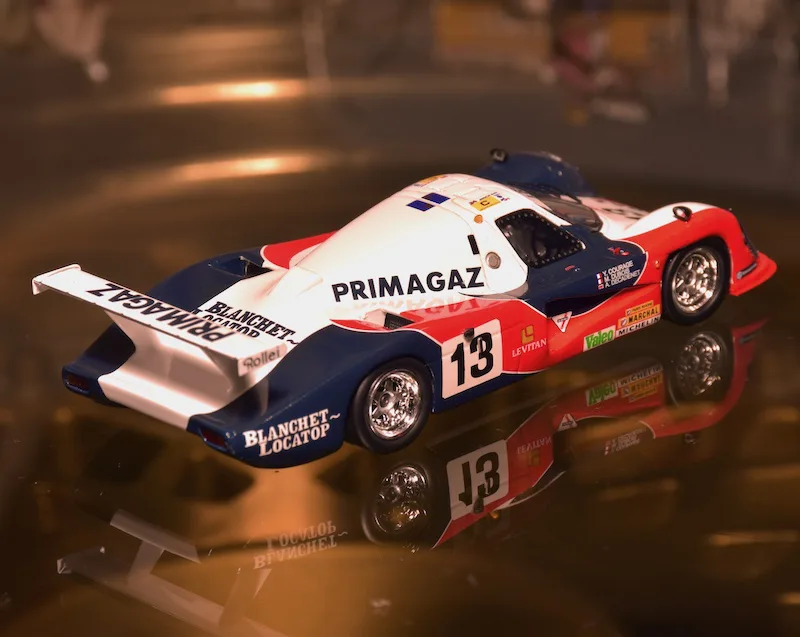
- SPARK S9500 (resin)
- Overall rating: 4 STARS | Quality details: 4 STARS | Estimated value: 4 STARS
- Only appears in this collection
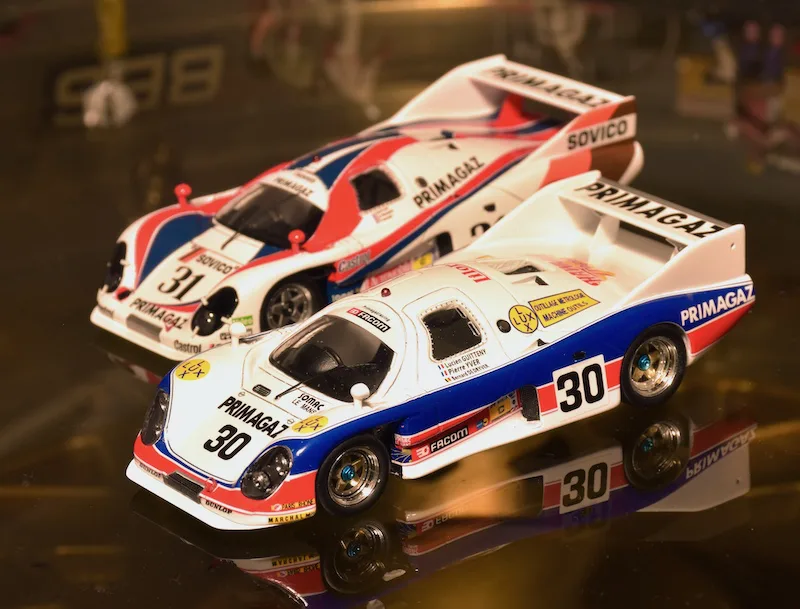
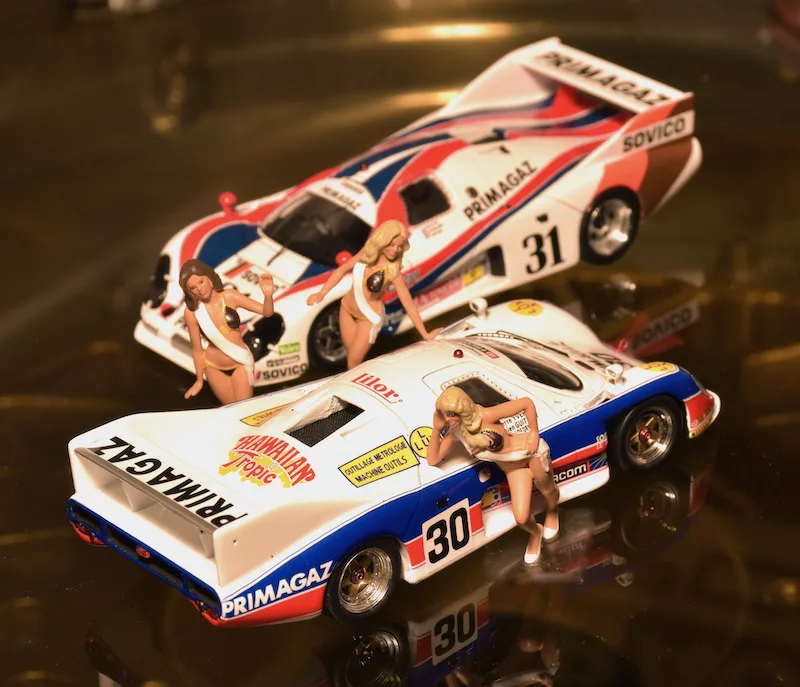
1983 Le Mans 24h, Rondeau M382 – Cosworth
The M382 made its debut already in 1982 and was the first Rondeau developed to comply with the Group C technical regulations, the 379C was originally a GTP / Group 6 design. Nevertheless, the M382 was still largely based on the most successful Rondeau, the M379 model, with which Jean Rondeau was able to win the 1980 24 Hours of Le Mans together with Jean-Pierre Jaussaud. This team was disqualified because they pushed the car over the finish line …
Primagaz #30: Pierre Yver (F) / Bernard de Dryver (B) / Lucien Guitteny (F)
Results: Start-grid 28th / time 3:43.940 / race DSQ – 266 laps
Rondeau M382 – Group C1: Powered by 3.0 liter Ford Cosworth DFV, approx. 520 hp. Dunlop tires. Weight 820 kg. Aluminium monocoque, chassisnr. #05
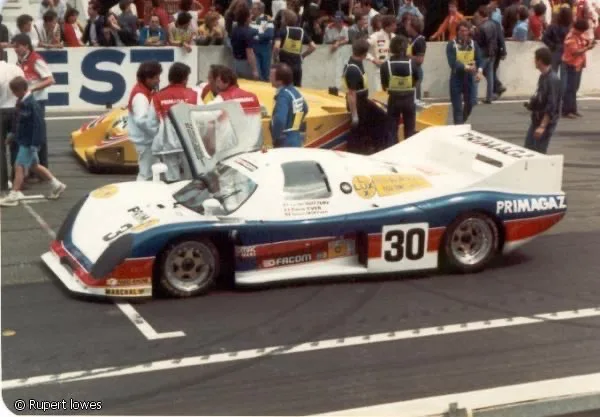
- SPARK S 2286 (resin)
- Overall rating: 4 STARS | Quality details: 4 STARS | Estimated value: 4 STARS
- Also appears in #095 Hawaiian Tropic / #089 Rondeau
1983 Daytona 24h, Nimrod NRA/C2 – Aston Martin
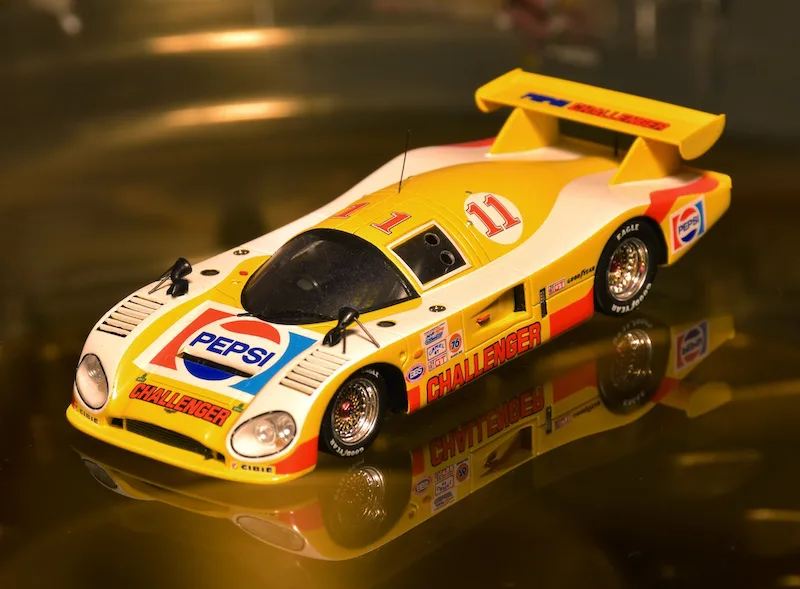
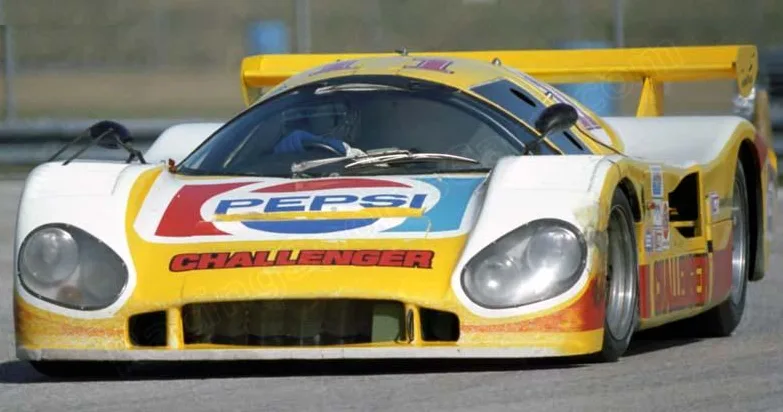
A.J. Foyt and Darell Waltrip started in this Lola based Nimrod. The Aston Martin engine gave up the ghost and Foyt continued the race in the Preston Henn Porsche 935 to win the race after all! Third driver on the car was Guillermo Maldonado, not related to Pastor …
Nimrod Racing #11: A.J. Foyt (USA) / Darell Waltrip (USA) / Guillermo Maldonado (ARG)
Results: Start-grid 13th / time 1:50.000 / race DNF engine – 121 laps
Nimrod NRA/C2 – IMSA GTP: Powered by 5.3 liter Aston Martin Tickford V8, approx. 550 hp. Goodyear tires. Weight 900 kg. Aluminium monocoque, chassisnr. (Lola T385) #002
- SPARK S0563 (resin)
- Overall rating: 5 STARS | Quality details: 5 STARS | Estimated value: 5 STARS
- Also appears in #117 Classic Lola
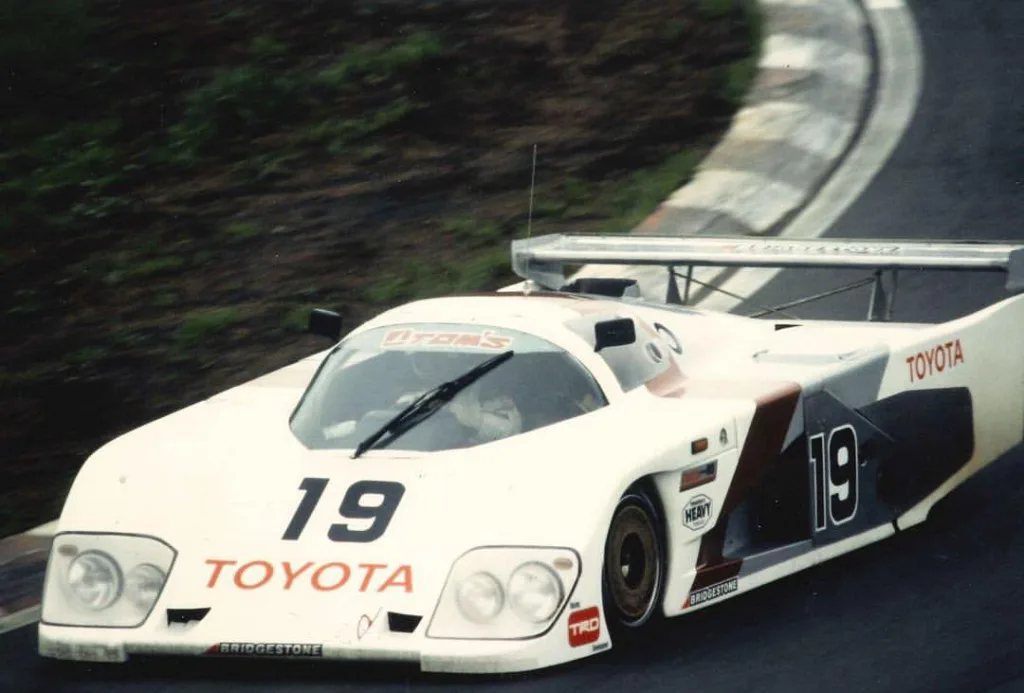
1983 Fuji 1000 km, Tom’s 83C – Toyota
One of the first Japanese producers of Group C cars was Dome. Their cars were used by Dome but also by Tom’s, a tuner that is in close relation with Toyota. Tom’s renamed the Toyota engined car and used it in a number of races in the Fuji Long Distance Series and All Japan Sports Prototype Championship.
Tom’s #19: Masanori Sekiya (J) / Keiji Matsumoto (J) / Kaoru Hoshino (J)
Results: Start-grid unknown / race DNF engine – 98 laps
Tom’s 83C – Group C: Powered by 2.1 liter Toyota 4T-GT straight-4 twin turbo, approx. 600 hp. Bridgestone tires. Weight 920 kg. Aluminium monocoque, chassisnr. #unknown (Dome)
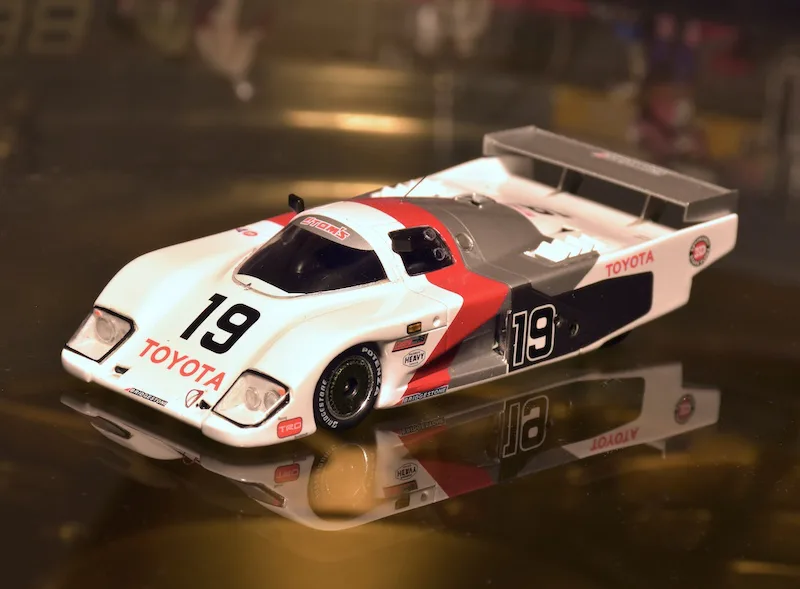
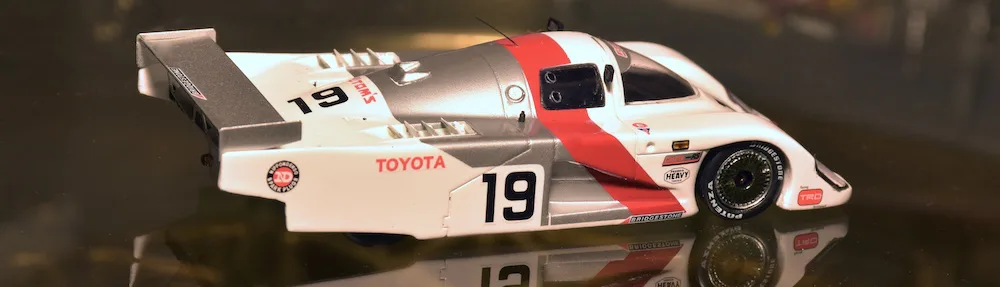
- EBBRO Toyota Racing Series 44478 (diecast)
- Overall rating: 4 STARS | Quality details: 4 STARS | Estimated value: 4 STARS
- Also appears in #068 Toyota Prototypes
1984
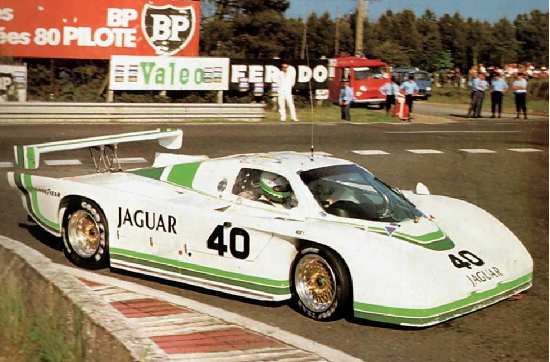
1984 Le Mans 24h, Jaguar XJR-5
American Bob Tullius had this beautiful IMSA Jaguar V12 built by Fabcar. It wasn’t fast enough to compete with the group C Porsches, but it sure got the attention of the Jaguar factory. Two years later Jaguar gave Tom Walkinshaw the mission to build a group C that could challenge Porsche.
Group 44 #40: John Watson (GB) / Claude Ballot-Lena (F) / Tony Adamowicz (USA) – DNF
Results: Start-grid 19th / time 3:39.160 / race DNF crash – 212 laps
Jaguar XJR-5 – IMSA GTP: Powered by 6.0 liter Jaguar V12 90º, approx. 600 hp. Goodyear tires. Weight 1050 kg. Aluminum monocoque, chassisnr. #006
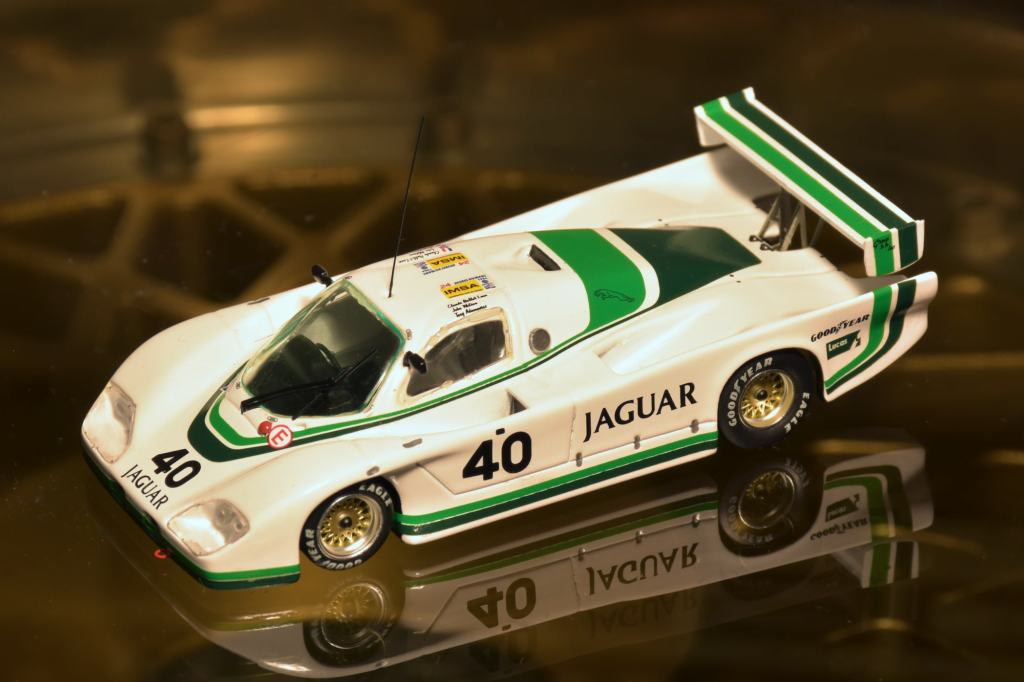
- BIZARRE BZ24 (resin)
- Overall rating: 4 STARS | Quality details: 4 STARS | Estimated value: 5 STARS
1984 Le Mans 24h, Rondeau M382C – Cosworth
Christian Bussi had raced Porsches for a few years, also at Le Mans. In 1982 het switched to sport cars and now entered a Rondeau M382 for this year’s 24-hour race. His race was over soon after the accelerator cable broke. Such a cheap part should not be able to destroy one’s race, a case of bad preperation.
Christian Bussi #45: Christian Bussi (F) / Bruno Ilien (F) / Jack Griffin (USA)
Results: Start-grid 37th / time 3:55.480 / race DNF accelerator cable – 49 laps
Rondeau M382 – Group C1: Powered by 3.0 liter Ford Cosworth DFV, approx. 520 hp. Dunlop tires. Weight 820 kg. Aluminium monocoque, chassisnr. #03
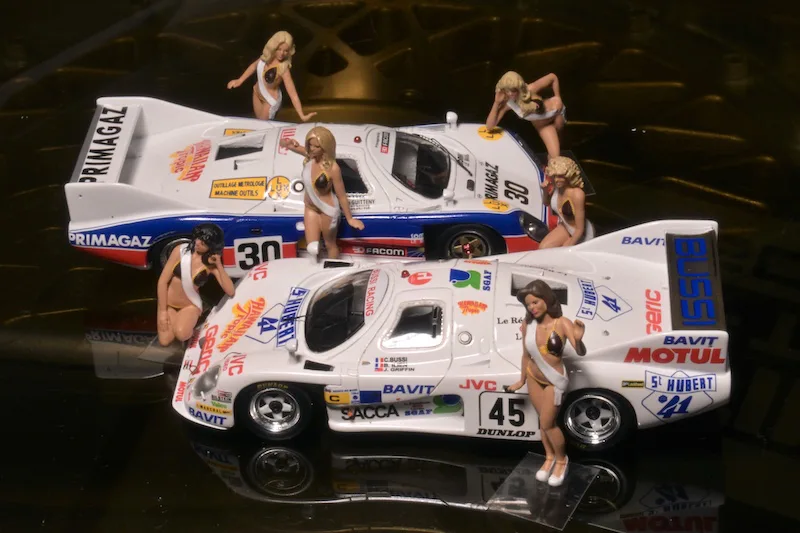
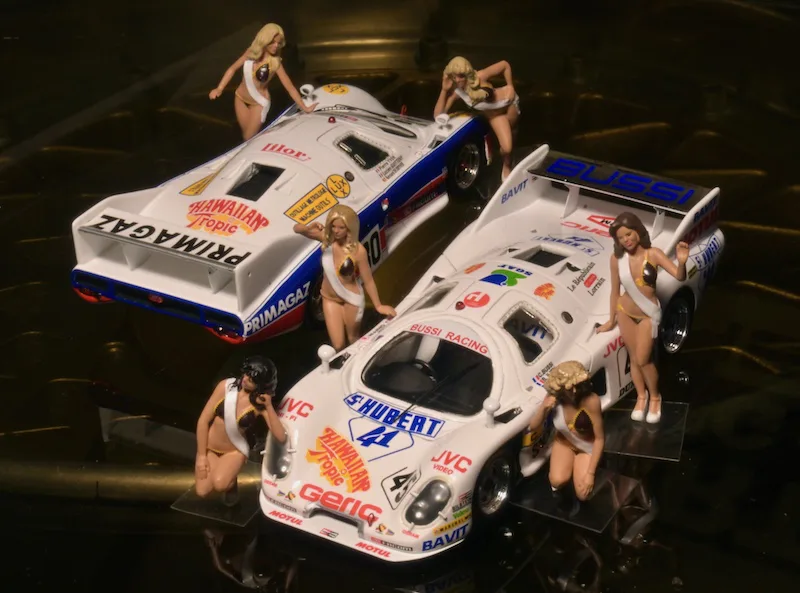
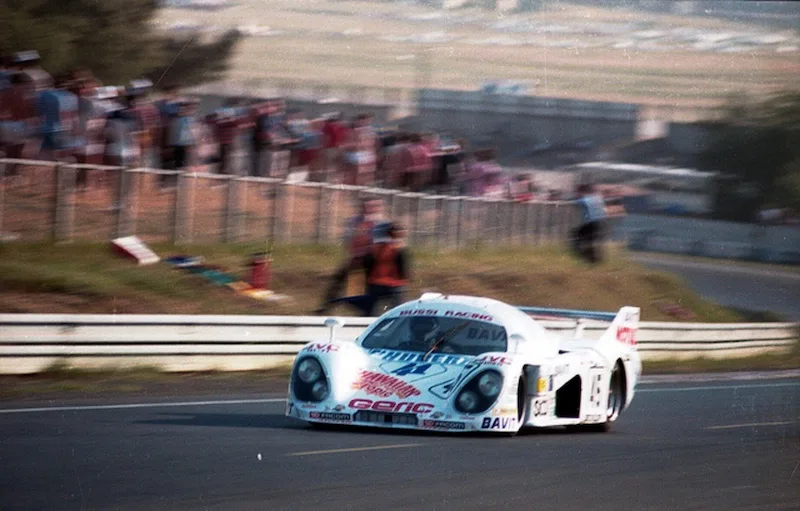
- SPARK S 8462 (resin)
- Overall rating: 4 STARS | Quality details: 4 STARS | Estimated value: 4 STARS
- Also appears in #089 Rondeau / #107 Group C
1984 Imola 1000 km, Lancia LC2 – Ferrari
Jolly Club received one of the former Martini LC2’s and raced it in several occasions in 1984 with sponsorship from totip. At Imola it ran with an additional front wing but finished only 9th after it took some damage.
Jolly Club #29: Pierluigi Martini (I) / Mauro Baldi (I)
Results: Start-grid 10th / time 1:40.840 / Race 9th – 178 laps
Lancia LC2/83 – Group C1: Powered by 2.6 liter Ferrari Abarth V8 90º twin turbo, approx. 650 hp. Dunlop tires. Weight 850 kg. Aluminium monocoque, chassisnr. Dallara #0006
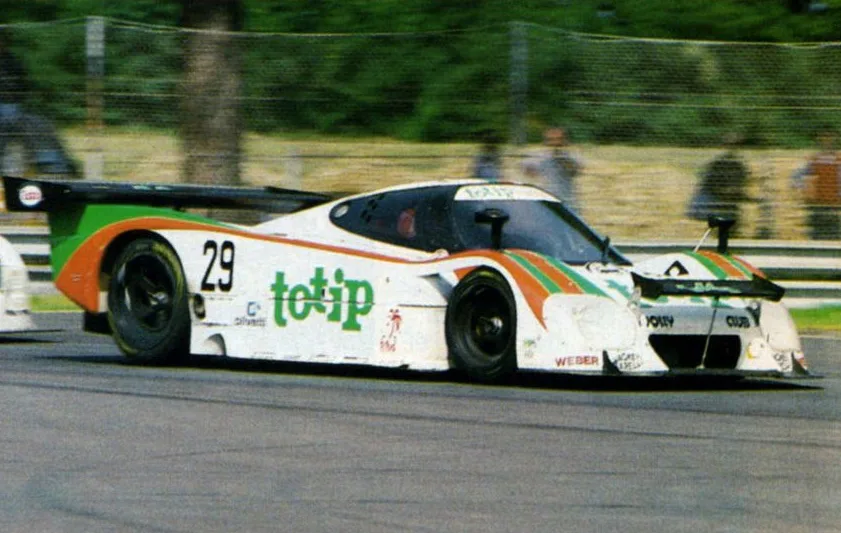
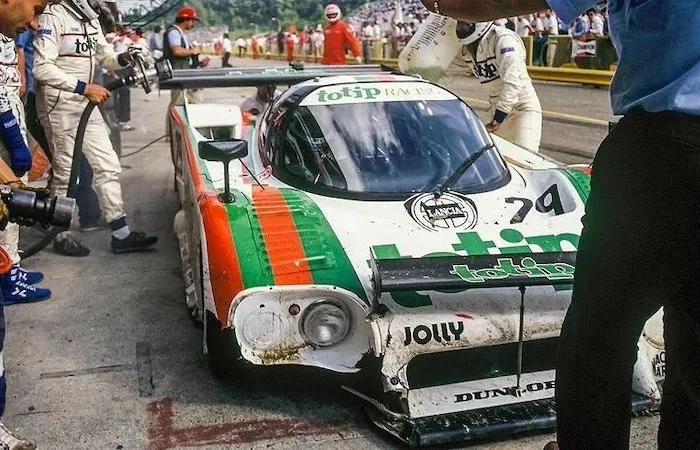
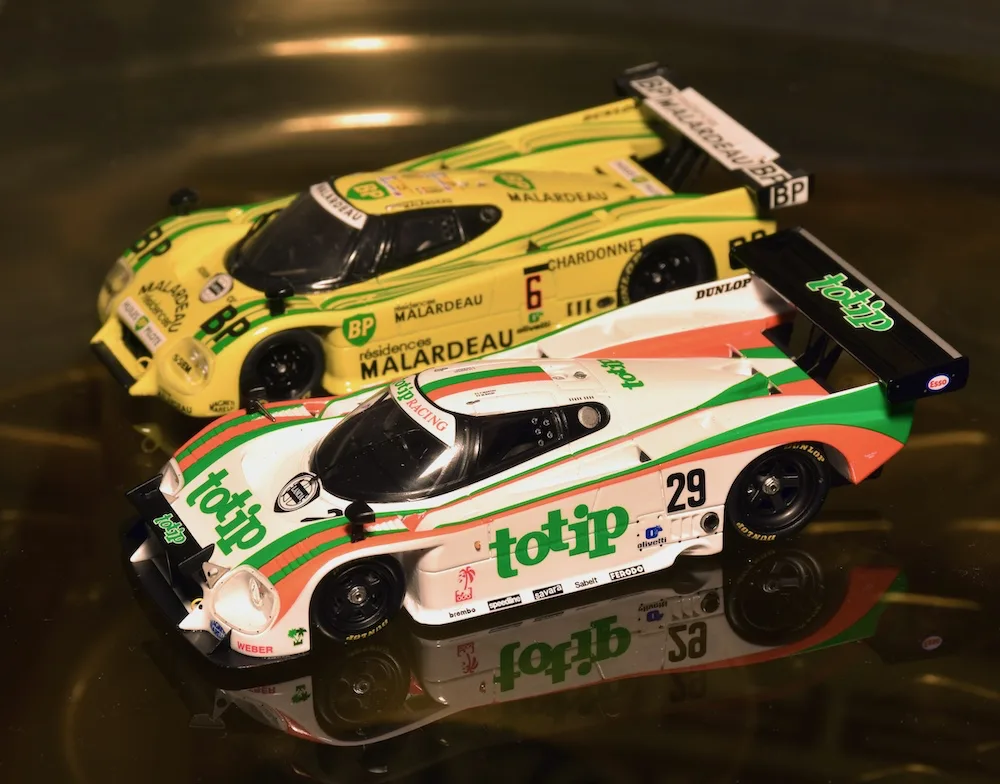
- SPARK MCP001 special Model Car Passion #385 / 400 pcs (resin)
- Overall rating: 5 STARS | Quality details: 5 STARS | Estimated value: 5 STARS
- Also appears in #057 Lancia
1984 Le Mans 24h, Lancia LC2 – Ferrari
Jolly Club cooperates close to the Lancia works team and often receives the former factory cars, both rally and race. In 1984 Jolly Club operates the Lancia LC2 at Le Mans but retire with a blown head gasket.
Jolly Club #6: Pierluigi Martini (I) / Beppe Gabbiani (I) / Xavier Lapeyre (F)
Results: Start-grid 12th / time 3:33.440 /race DNF head gasket – 117 laps
Lancia LC2/83 – Group C1: Powered by 2.6 liter Ferrari Abarth V8 90º twin turbo, approx. 650 hp. Dunlop tires. Weight 850 kg. Aluminium monocoque, chassisnr. Dallara #0006
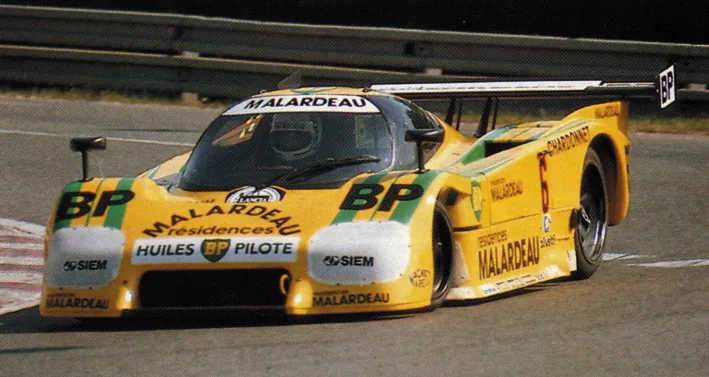
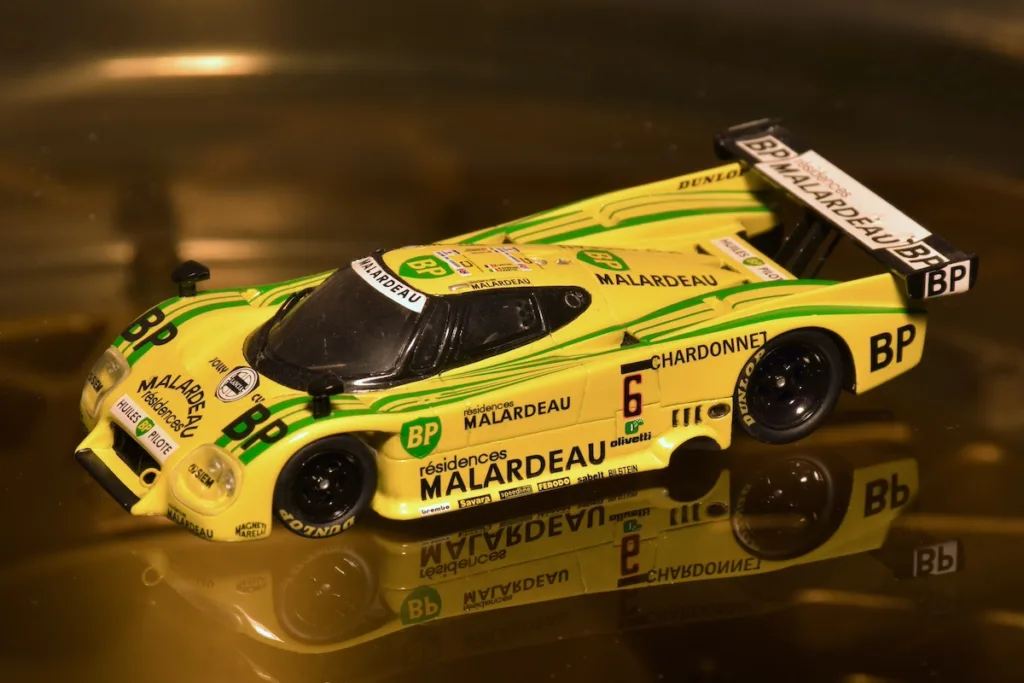
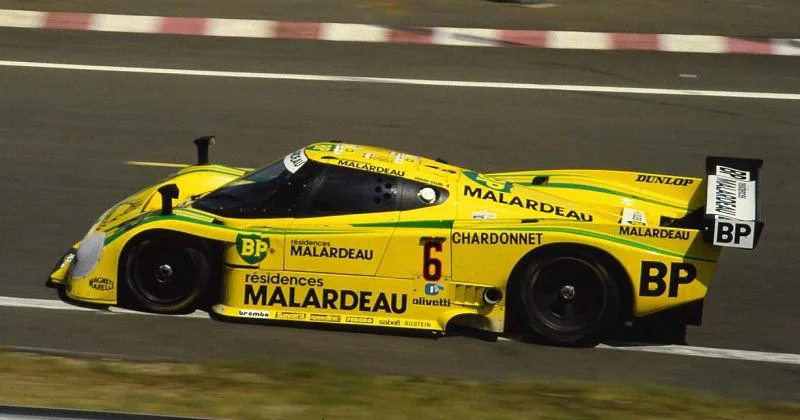
- SPARK S0655 (resin)
- Overall rating: 4 STARS | Quality details: 4 STARS | Estimated value: 5 STARS
- Also appears in #057 Lancia
1984 Le Mans 24h, Nimrod NRA/C2B Aston Martin
Viscount Downe entered two B-spec Nimrods for the 1984 Le Mans race. Sadly, John Sheldon crashed the #32 car at Mulsanne Straight, killing a track marshall. The #31 car was close behind and couldn’t avoid his unlucky teammate. Both cars were out.
Viscount Downe #31: Ray Mallock (GB) / Drake Olson (USA) / Richard Attwood (GB) DNS
Results: Start-grid 10th / time 13:33.120 / race DNF accident – 94laps
Nimrod NRA/C2B – Group C1: Powered by 5.3 liter Aston Martin Tickford V8, approx. 550 hp. Avon tires. Weight 900 kg. Aluminium monocoque, chassisnr. (Lola T385) #005
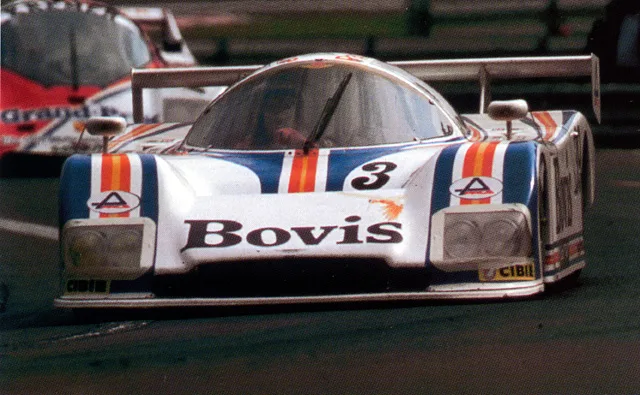
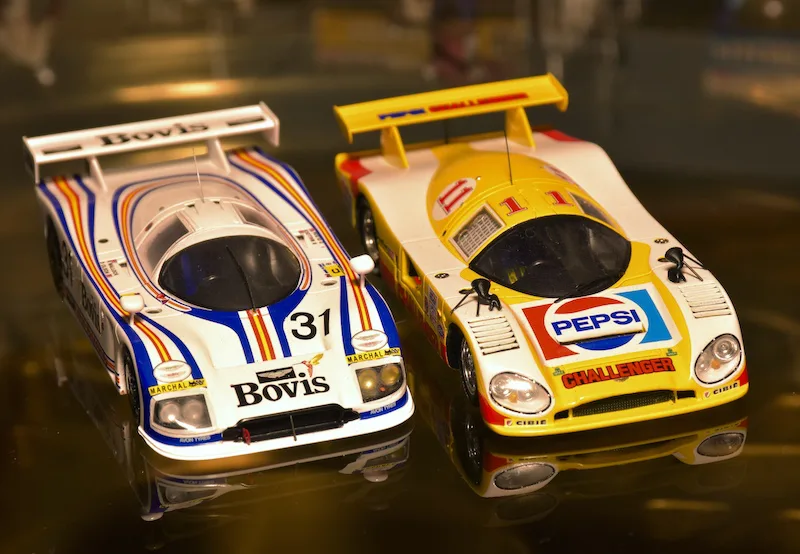
- SPARK S0564 (resin)
- Overall rating: 4 STARS | Quality details: 4 STARS | Estimated value: 4 STARS
- Also appears in #117 Classic Lola
1984 Le Mans 24h, ADA 01 – Cosworth
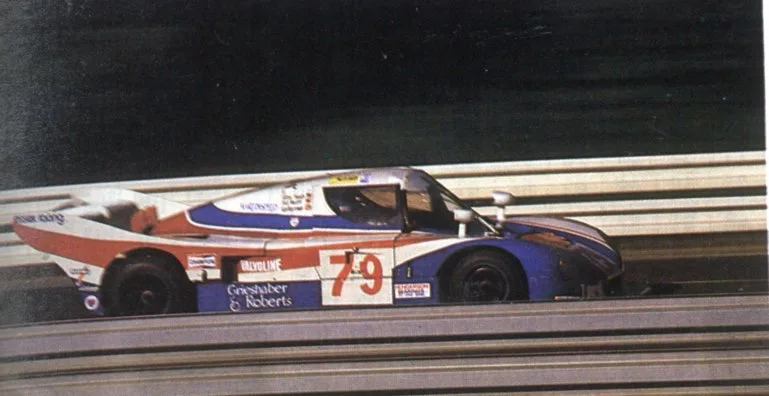
British A.D.A. Engineering built a group C2 car with the same Cosworth V8 engine that many teams used in those days. But it wasn’t the engine that was the weakest point, it was the 10 year old Lola chassis that it was based upon that broke early in the race. The car wasn’t expected to finish well at all. It wasn’t designed for endurance racing, the fuel tank capacity was only 47 liters and it missed the start of the race because the engine wouldn’t fire up …
ADA Engineering #79: Glenn Smith (GB) / Ian Harrower (GB) / Bill Wolff (GB)
Results: Start-grid 44th / time 4:02.630 / race DNF chassis – 42 laps
ADA 01 – Group C2: Powered by 3.3 liter Ford Cosworth DFL V8 approximately. 500 hp. Dunlop tires. Weight 750 kg. Aluminium monocoque, chassisnr. Lola T380 #HU04
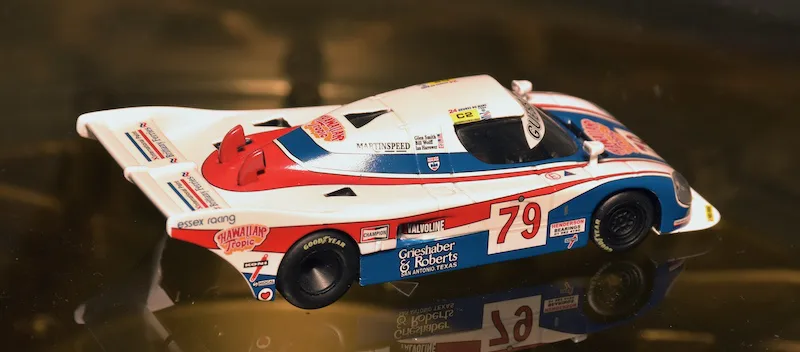
- BIZARRE BZ81 (resin)
- Overall rating: 4 STARS | Quality details: 4 STARS | Estimated value: 4 STARS
- Also appears in #117 Classic Lola / #095 Hawaiian Tropic
1984 Le Mans 24h, WM P83B – Peugeot
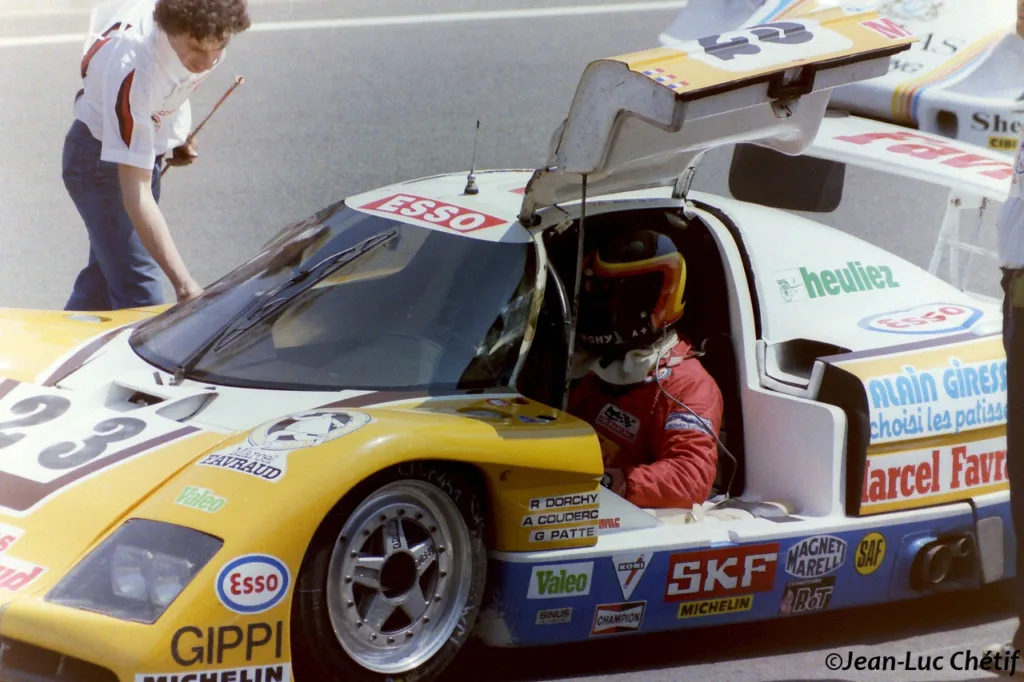
Roger Dorchy qualified the Peugeot powered WM P83B surprisingly fast; 8th overall. He could keep the pace of the Porsches for a while until he crashed while he was in second place, braking for Mulsanne corner. He managed to continue with only bodywork damage. In the pits he received some red bodywork that belonged to his teammate #24. Some hours later, the WM had to retire with a broken gearbox.
WM Secateva #23: Roger Dorchy (F) / Alain Couderc (F) / Gérard Patté (F)
Results: Start-grid 8h / time 3:30.010 / race DNF gearbox – 122 laps
WM P83B- Group C1: Powered by 2.6 liter Peugeot PRV V6 turbo, approx. 600 hp. Michelin tires. weight 850 kg. Aluminium monocoque, chassisnr. WM P82-01
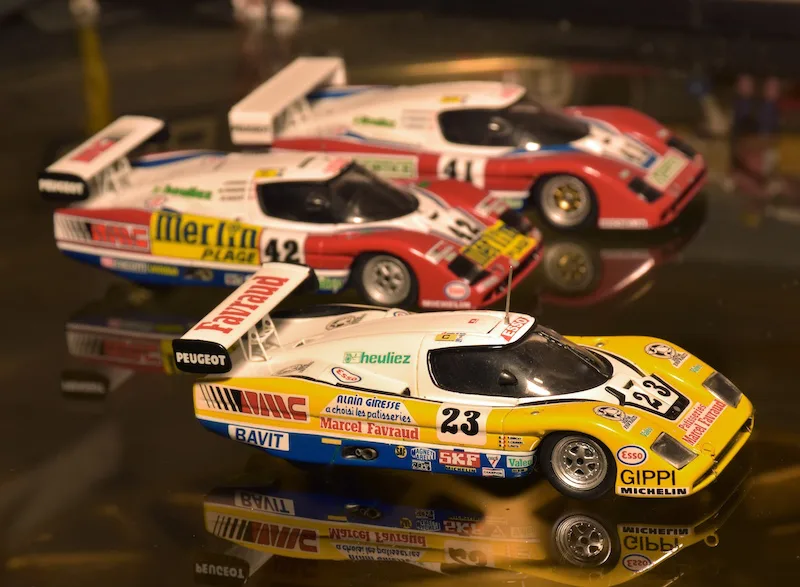
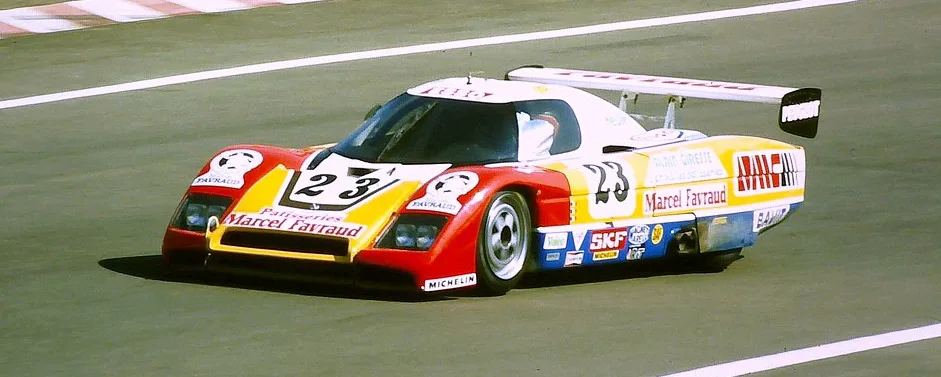
- BIZARRE BZ 368 (resin)
- Overall rating: 4 STARS | Quality details: 4 STARS | Estimated value: 4 STARS
- Also appears in #031 Peugeot
1984 Daytona 24h, March 83G
In European Group C, Porsche 956 dominated from the beginning. In American IMSA GTP more different chassis and engine combinations could be found. In the end a Porsche engined car won anyway. But it wasn’t the new 962 that made its US debut, it was the March 83G entered by South African Kreepy Krauly Racing.
Kreepy Krauly Racing #00: Sarel van der Merwe (SA) / Graham Duxbury (SA) / Tony Martin (SA)
Results: Start-grid 2nd / time 1:52.905 / race 1st – 640 laps
March 83G – IMSA GTP: Powered by 3.2 liter Porsche 962/71 flat-6 turbo, approx. 600 hp. Goodyear tires. Weight 900 kg. Aluminium monocoque, chassisnr. 83G #04
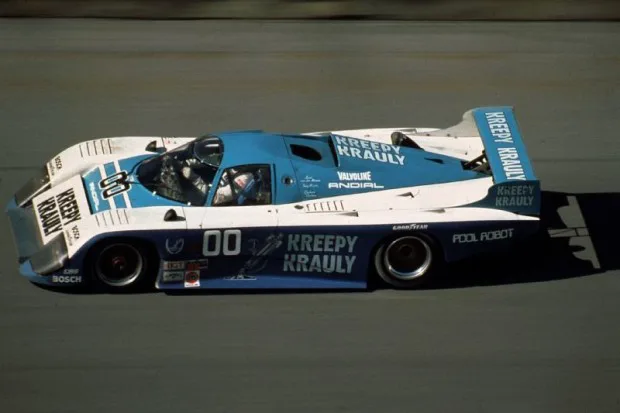
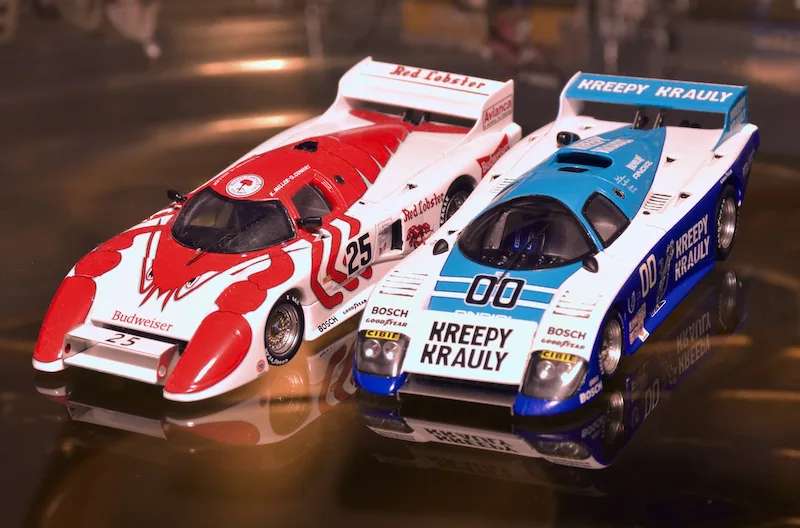
- SPARK Daytona Collection 43DA84 (resin)
- Overall rating: 4 STARS | Quality details: 4 STARS | Estimated value: 4 STARS
- Only appears in this collection
1984 Riverside 6h, March 83G – Chevrolet
A popular GTP chassis came from March, powered by Porsche turbo or Chevrolet V8 engines. The March 83G was being used by several teams such as Holbert, Momo Corse, Kreepy Krauly and Red Lobster. This last one finished 3rd at the Riverside 6 hour race.
Red Lobster Racing #25: Kenper Miller (USA) / Dave Cowart (USA)
Results: Start-grid 8th / time 1:39.250 / race 3rd – 199 laps
March 83G – IMSA GTP: Powered by 5.8 liter Chevrolet LS7 V8, approx. 600 hp. Goodyear tires. Weight 900 kg. Aluminium monocoque, chassisnr. 83G #03
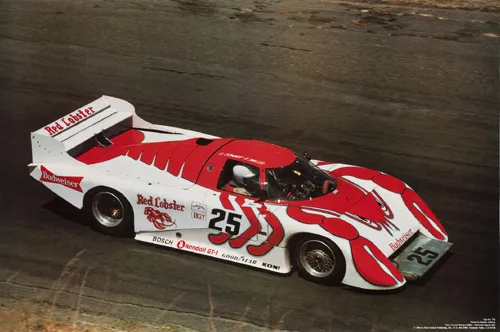
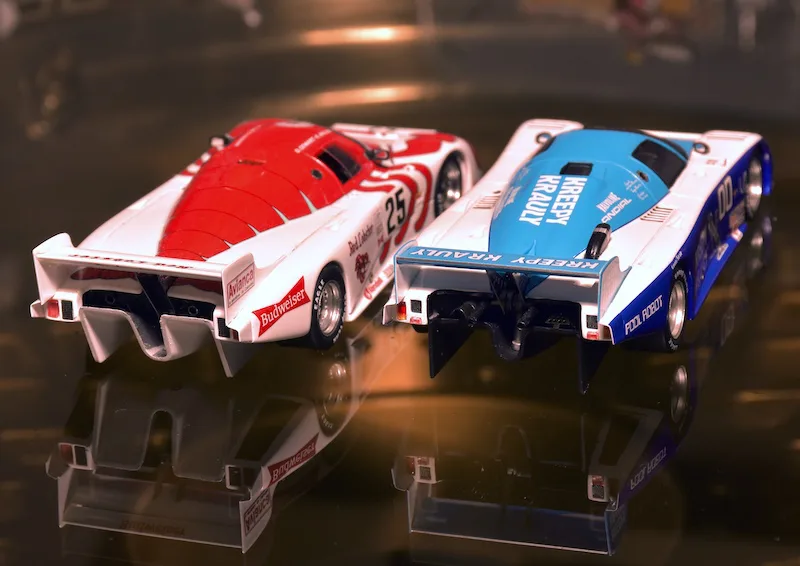
- SPARK S2992 (resin)
- Overall rating: 4 STARS | Quality details: 4 STARS | Estimated value: 4 STARS
- Only appears in this collection
1985
1985 Le Mans 24h, Lancia LC2/85 – Ferrari
In 1983, only one of the three Lancia’s reached the finish at Le Mans. In 1985, the final year of the program, the Italian beasts have become more reliable; they reach 6th and 7th places behind an armada of Porsches. Later in the season it won the 1000 km race at Spa-Francorchamps.
Martini Racing / Lancia Corse #4: Alessandro Nannini (I) / Bob Wollek (F) / Lucio Cesario (I)
Results: Start-grid 3rd / time 3:15.950 / race 6th – 360 laps
Lancia LC2/85 – Group C1: Powered by 2.6 liter Ferrari Abarth V8 90º twin turbo, approx. 720 hp. Michelin tires. Weight 850 kg. Aluminium monocoque, chassisnr. Dallara #0002
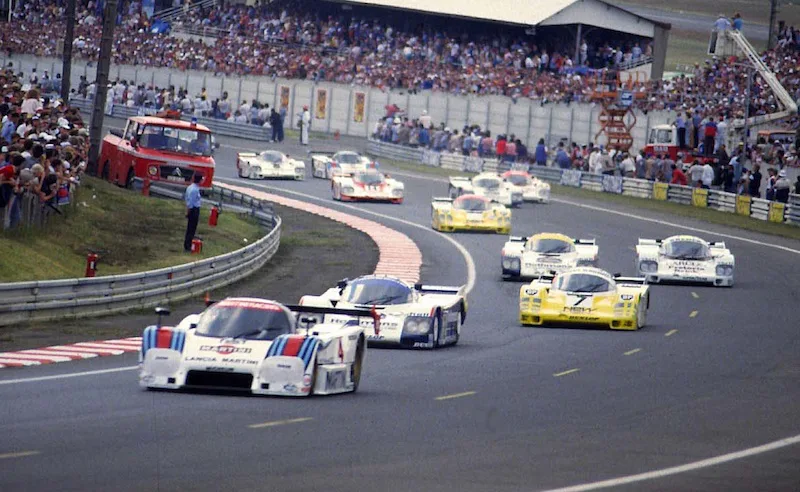
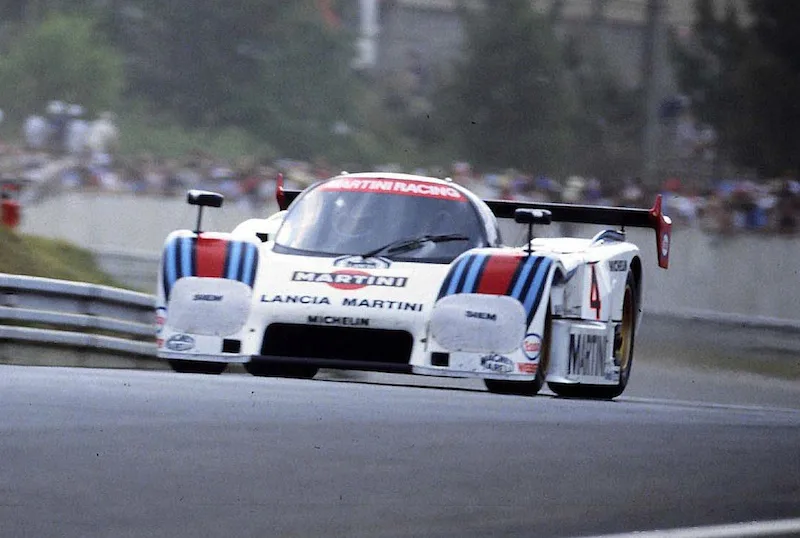
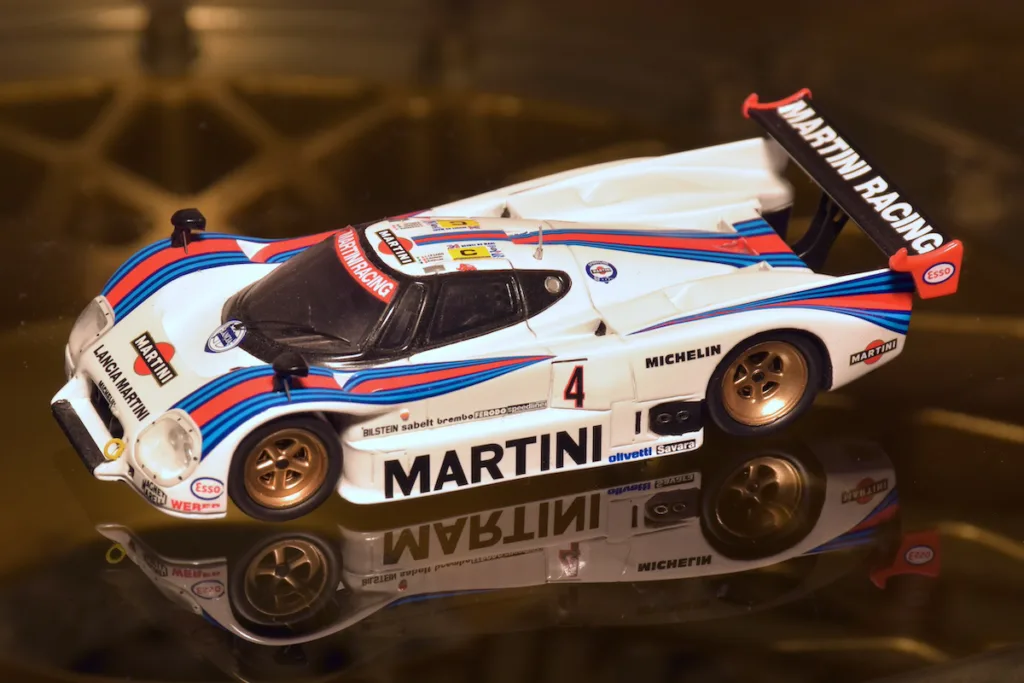
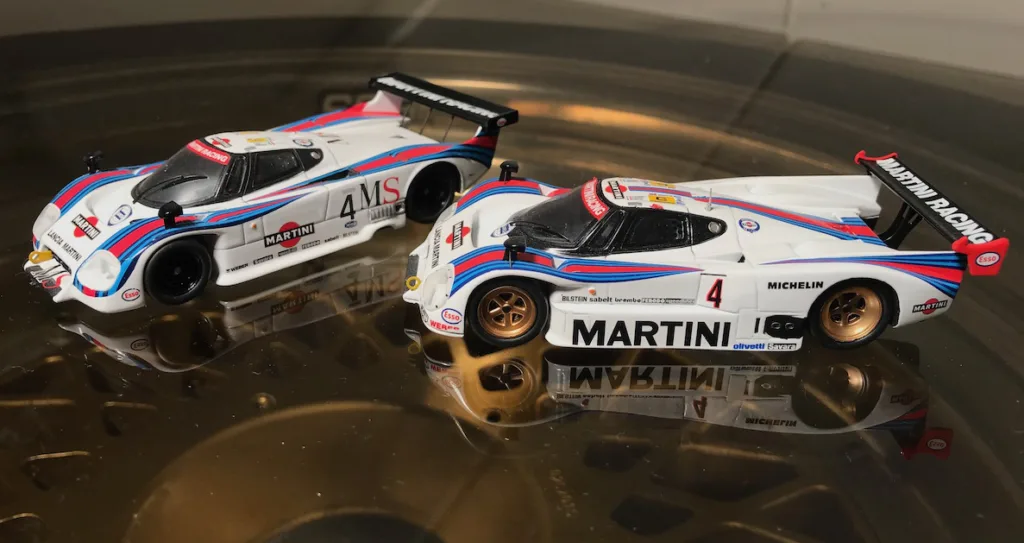
- SPARK S0656 (resin)
- Overall rating: 4 STARS | Quality details: 4 STARS | Estimated value: 4 STARS
- Also appears in #025 Martini Lancia
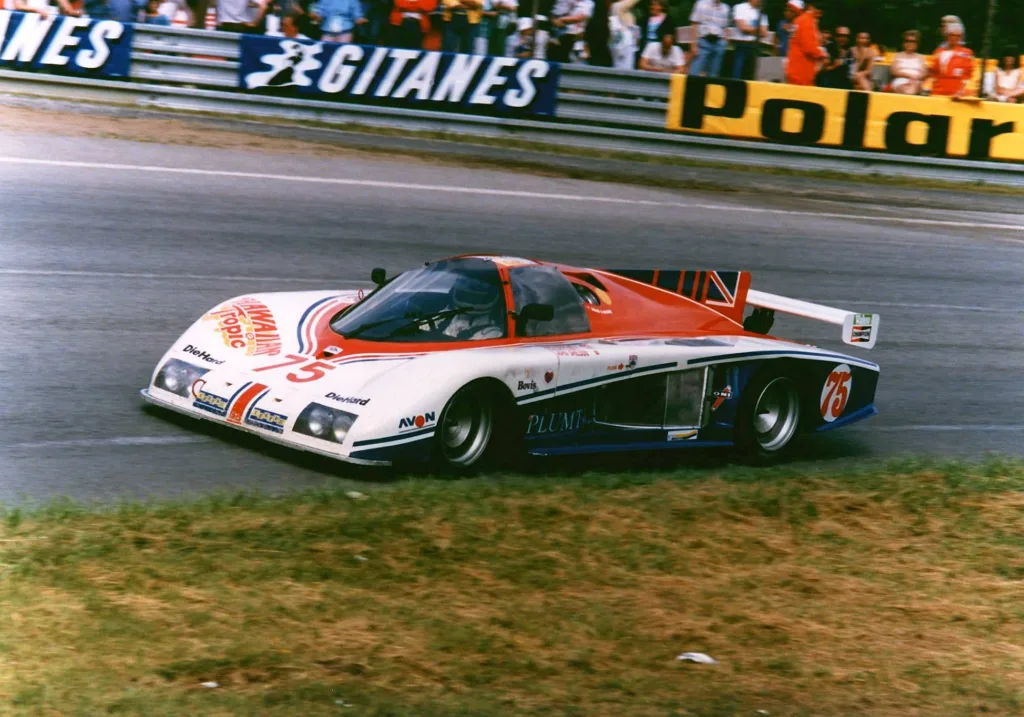
1985 Le Mans 24h, Gebhardt JC853 – Cosworth
The A.D.A. engineering car was one of two Gebhardts in this years race. The sleek German built car was powered by a Cosworth DFL as most of the C2 competitors and it finished second in class behind a Tiga – Cosworth but at such a distance from the winner that it did not classify. TheHawaiian Tropic advertising was put on the car after qualifying. The Spark model doesn’t have this and this Bizarre model does have the stickers. Unfortunately I couldn’t find any pictures of the girls with the car, probably because those kind of pictures are often taken on Friday when the stickers weren’t on yet ….
A.D.A. Engineering #75: John Sheldon (GB) / Steve Earle (GB) / Ian Harrower (GB)
Results: Start-grid 38th / time c3:55.620 / race 16th – 299 laps / 2nd C2 DNC
Gebhardt JC843 – Group C2: Powered by 3.3 liter Ford Cosworth DFL V8, approx. 470 hp. Avon tires. Weight 750 kg. Aluminium monocoque, chassisnr. #840-2
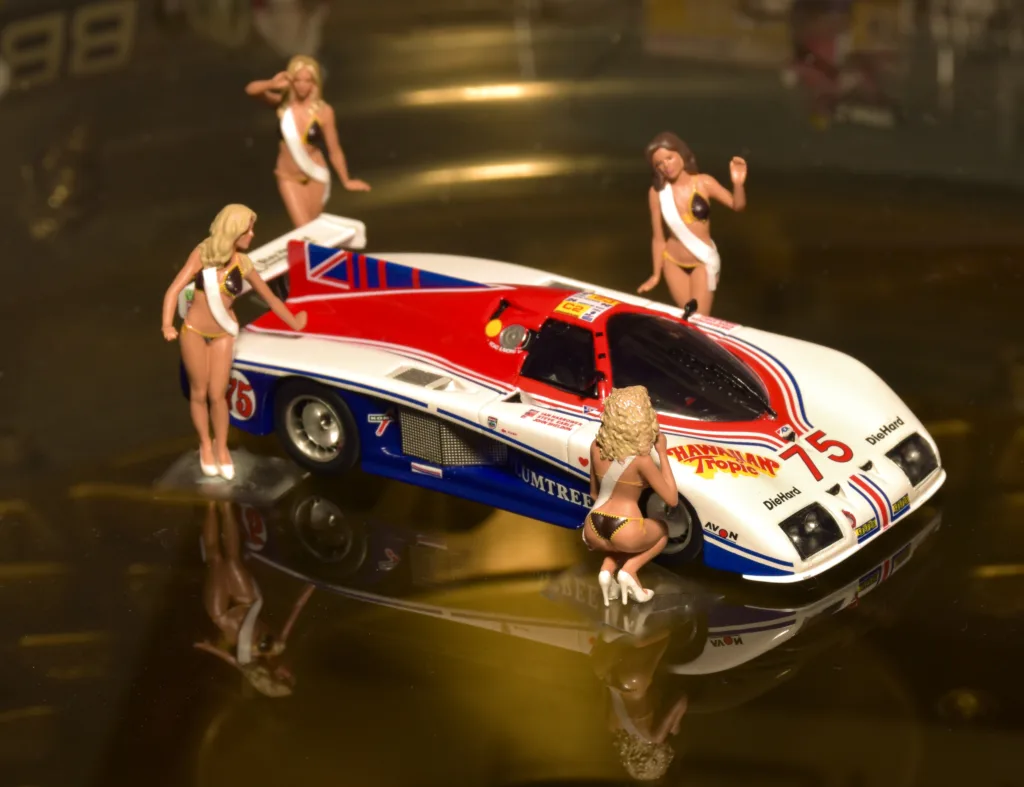
- BIZARRE BZ424 (resin)
- Overall rating: 4 STARS | Quality details: 4 STARS | Estimated value: 4 STARS
- Also appears in #095 Hawaiian Tropic
1985 Le Mans 24h, Rondeau M382 – Cosworth
This all French crew lead by Pierre Yver didn’t make it to the finish because the Cosworth engine quit, it was a 3.0 liter DFV and not the feared 3.9 liter.
Primagaz #31: Pierre Yver (F) / Pierre-François Rousselot (F) / François Servanin (F)
Results: Start-grid 31st / time 3:49.520 / race DNF engine – 286 laps
Rondeau M382 – Group C1. Powered by 3.0 liter Ford Cosworth DFV, approx. 520 hp. Dunlop tires. Weight 820 kg. Aluminium monocoque, chassisnr. #05
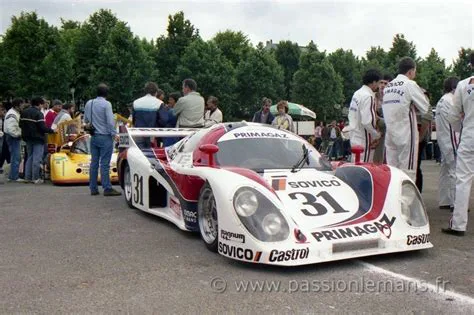
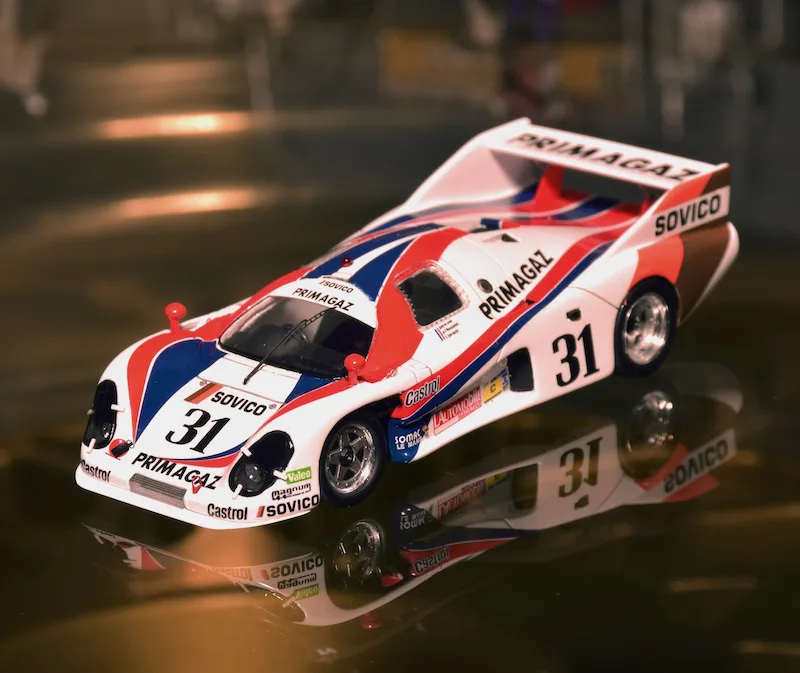
- SPARK S 8464 (resin)
- Overall rating: 4 STARS | Quality details: 4 STARS | Estimated value: 4 STARS
- Also appears in #089 Rondeau
1985 Le Mans 24h, WM P83B – Peugeot
WM was one of the first makes to build a group C car, but it didn’t develop much over the years. The 1985 car was still a P83B, originally built in 1982. Despite the presence of Jean Rondeau – winner in 1980 in his own car – the team could not impress.
WM Secateva #42: Jean Rondeau (F) / Michel Pignard (F) / Jean-Daniël Raulet (F)
Results: Start-grid 21st / time 3:43.070 / race 17th – 299 laps
WM P83B – Group C1: Powered by 2.6 liter Peugeot PRV V6 twin turbo, approx. 600 hp. Michelin tires. Weight 900 kg. Aluminium monocoque, chassisnr. #P82-01
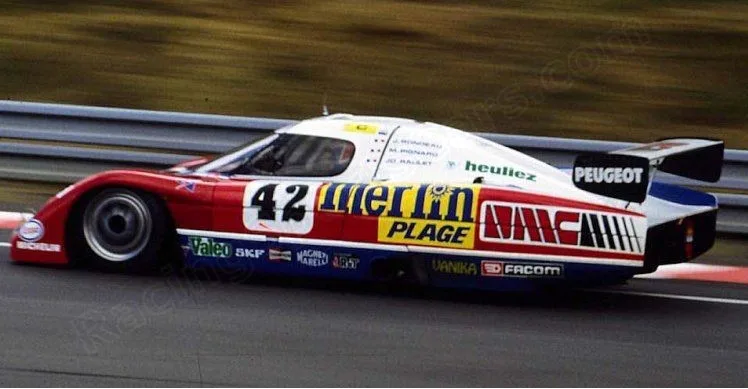
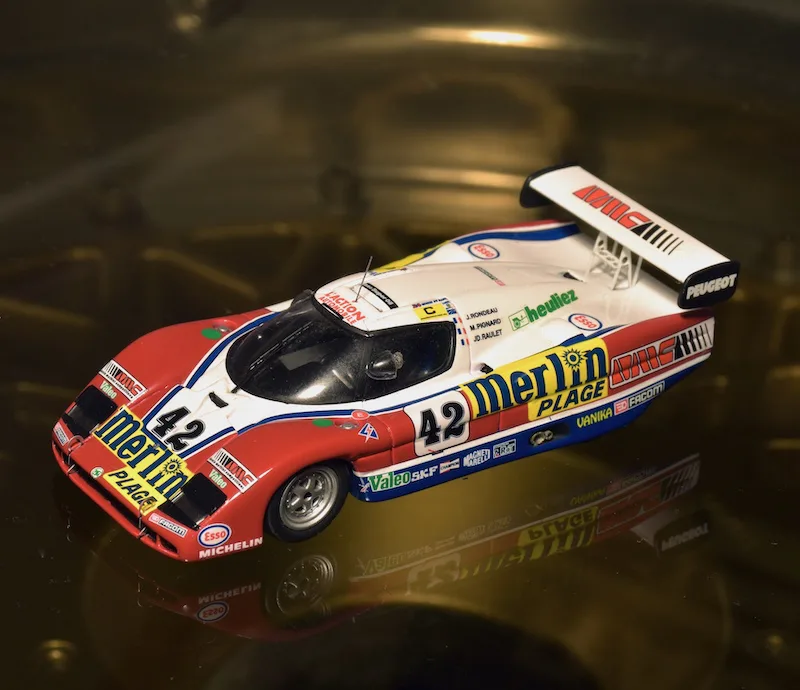
- BIZARRE BZ 382 (resin)
- Overall rating: 4 STARS | Quality details: 4 STARS | Estimated value: 4 STARS
- Also appears in #089 Rondeau / #031 Peugeot
1986
The TWR Jaguars made their Le Mans debut in 1986, not yet successful but that would change and Jaguar became Porsche’s greatest challenger. It was all started by the Bob Tulius’ Jaguar in 1984.
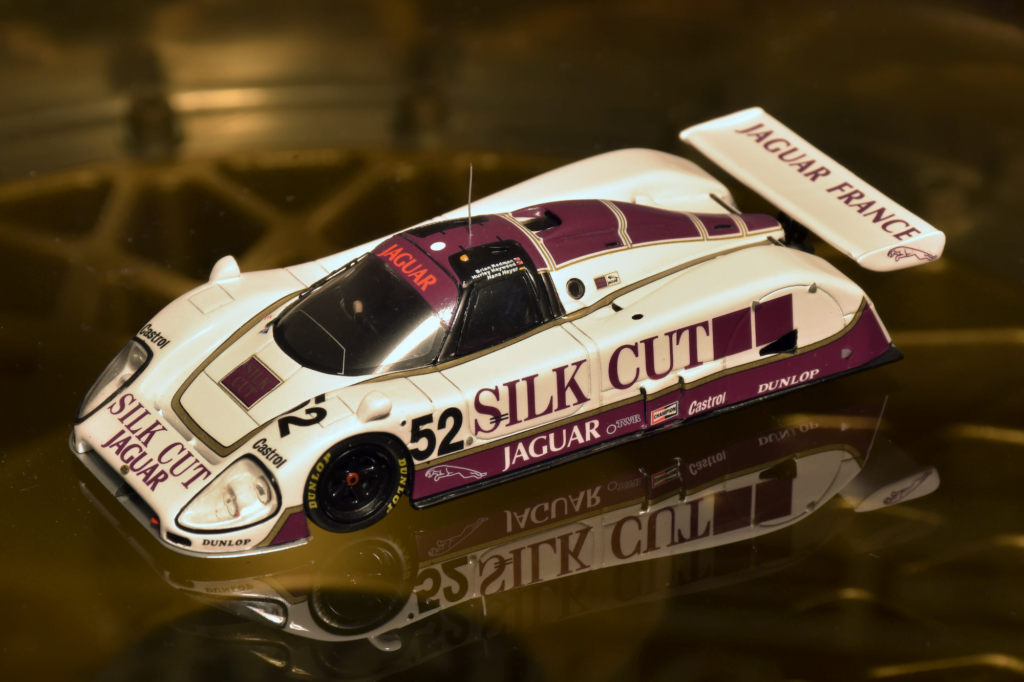

- The TWR Jaguars can be found in #003 TWR Jaguar
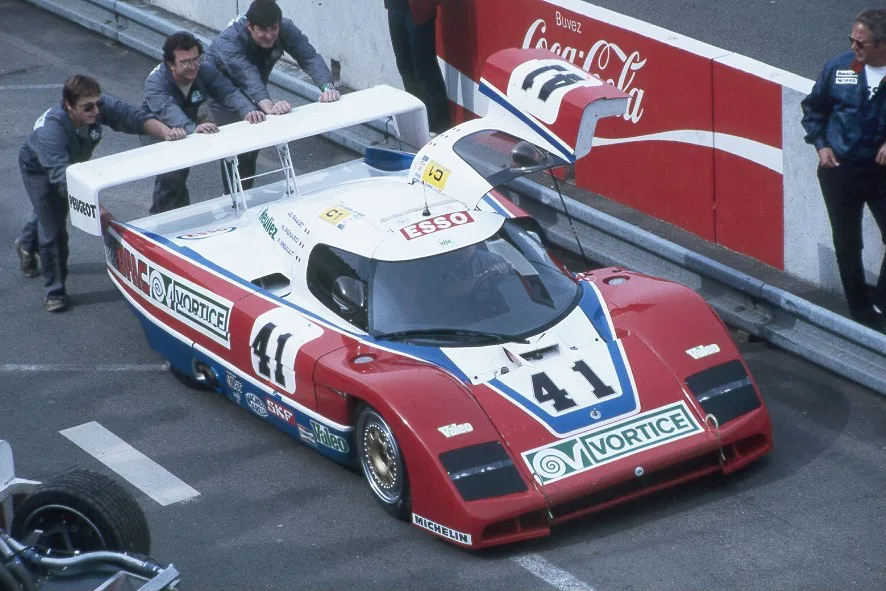
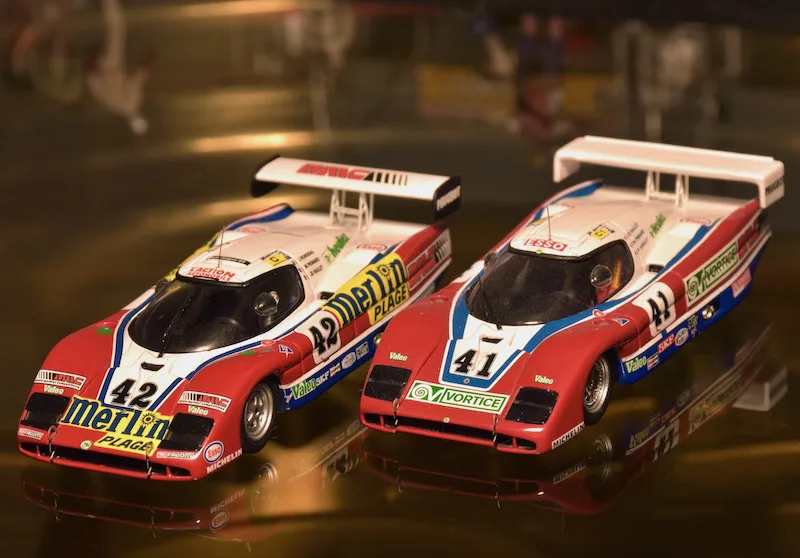
1986 Le Mans 24h, WM P86 – Peugeot
WM started building GTP cars and were among the first makes to build a group C car, but it didn’t develop much over the years. The 1986 car was a P86 in name, but almost identical to the P83B’s from previous years. It retired with a broken Peugeot engine.
WM Secateva #41: Francois Migault (F) / Michel Pignard (F) / Jean-Daniël Raulet (F)
Results: Start-grid 18th / time 3:33.970 / race DNF engine – 132 laps
WM P86 – Group C1: Powered by 2.8 liter Peugeot PRV V6 twin turbo, approx. 600 hp. Michelin tires. Weight 850 kg. Aluminium monocoque, chassisnr. #P86-01
- BIZARRE BZ930 (resin)
- Overall rating: 4 STARS | Quality details: 4 STARS | Estimated value: 4 STARS
- Also appears in #031 Peugeot
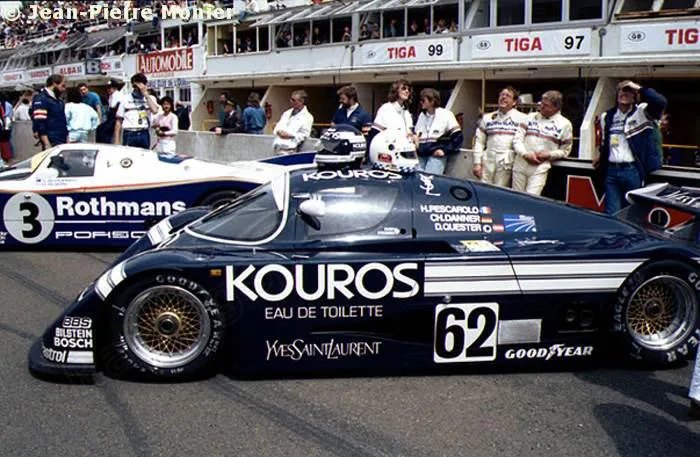
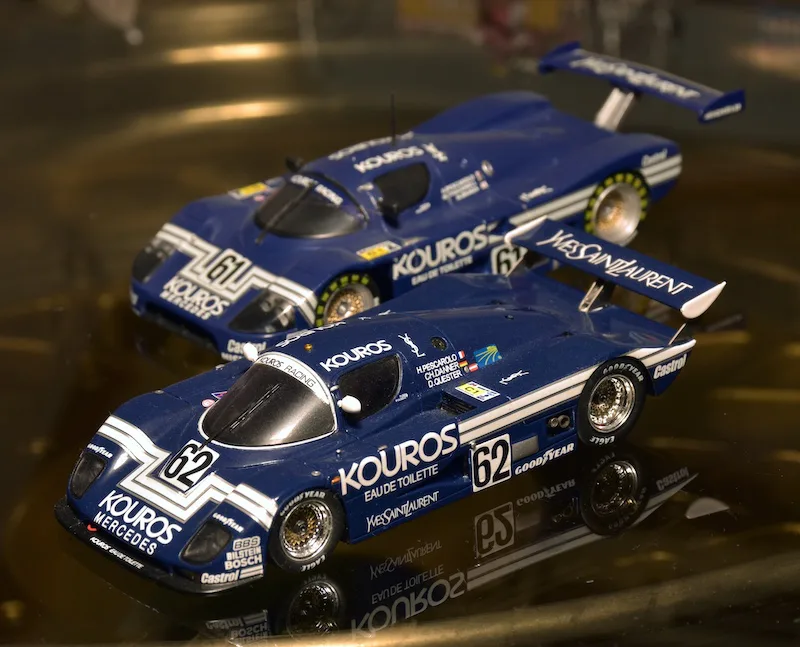
1986 Le Mans 24h, Sauber C8 – Mercedes
The Sauber C8 with Mercedes support won a world championship race at Nürburgring in the pouring rain (I know, I was there). But before that, the team entered two cars for Le Mans. Both retired already at saturday evening. This one with a broken gearbox, the sister car with a blown Mercedes engine.
Kouros Racing Team #62: Henri Pescarolo (F) / Dieter Quester (A) / Christian Danner (D)
Results: start-grid 9th / time 3:26.690 / race DNF gearbox – 86 laps
Sauber C8 – Group C1: Powered by 5.0 liter Mercedes M119 HL V8 twin-turbo, approx. 650 hp. Goodyear tires. Weight 870 kg. Aluminium monocoque, chassisnr. C8/86-01
- SPARK S1258 (resin)
- Overall rating: 4 STARS | Quality details: 4 STARS | Estimated value: 4 STARS
- Only appears in this collection
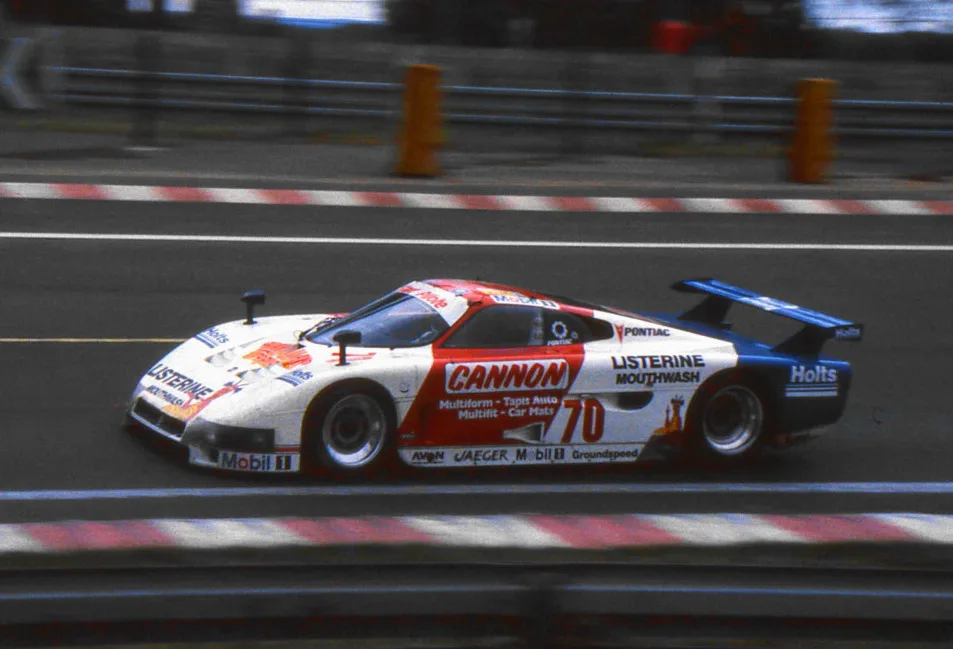
1986 Le Mans 24h, Spice SE86C – Cosworth
Group C1 was dominated by Porsche. Ford and Lancia tried, but couldn’t change this. Group C2 was the domain of the small chassis builders: Gordon Spice was very successful with his Cosworth powered Spice Fiero finishing 2nd in the C2 world championship. In Le Mans they only finished 6th in C2 and 19th overall.
Spice Engineering #70: Gordon Spice (GB) / Ray Bellm (GB) / Jean-Michel Martin (GB)
Results: Start-grid 23rd / time 3:40.470 / race 19th – 258 laps / 6th C2
Spice Fiero SE86 – Group C2: Powered by 3.3 liter Ford Cosworth DFV V8, approximately. 550 hp. Avon tires. Weight 750 kg. Aluminium monocoque, chassisnr. Spice SE96 #001
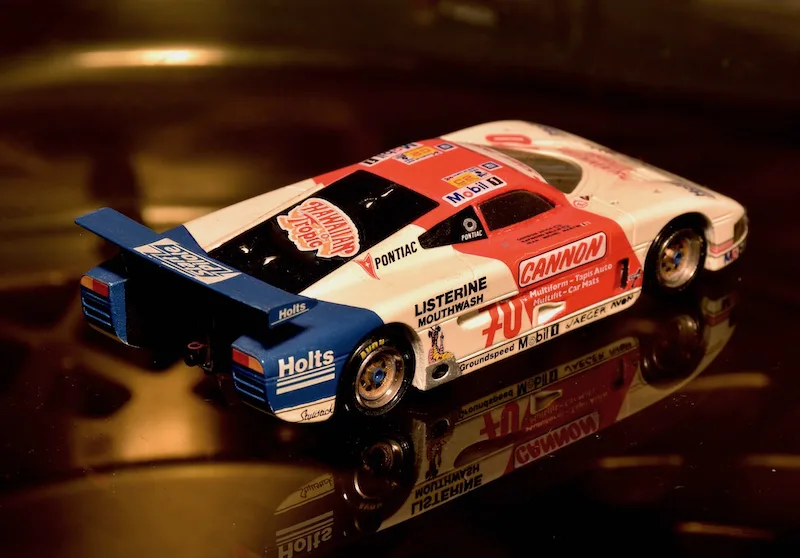
- STARTER (handbuilt resin)
- Overall rating: 3 STARS | Quality details: 4 STARS | Estimated value: 3 STARS
- Also appears in #095 Hawaiian Tropic
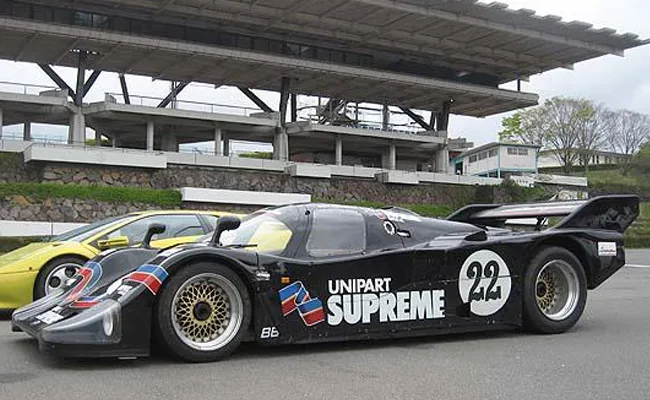
1986 Kyalami 500 km, Lamborghini Countach QVX
British Lamborghini distributor Portman requested Spice Engineering to build a Group C car with the engine of a Lamborghini Countach QV. Gordon Spice used the chassis of a Tiga and put the heavy V12 in. The car was supposed to make its debut in 1985 but got delayed every time. In the end, it only raced once during a non-championship race at Kyalami in 1986. The 500 km event consisted of two heats of 250 km each. Tiff Needell finished 7th and 5th and was 5th in aggregate. Gordon Spice started building cars under his own name already before the Lambo hit the track.
The model car says Goodyear, but the car actually ran on Dunlop tires.
Spice Engineering#22: Tiff Needell GB)
Results: start-grid 7th / time 1:17.290 / race 1: 7th – race 2: 5th
Lamborghini Countach QVX – Group C1: Powered by 5.7 liter Lamborghini V12, approx. 650 hp. Dunlop tires. Weight 900 kg. Aluminium monocoque, chassisnr. #SL8501 (Tiga / Spice Engineering)
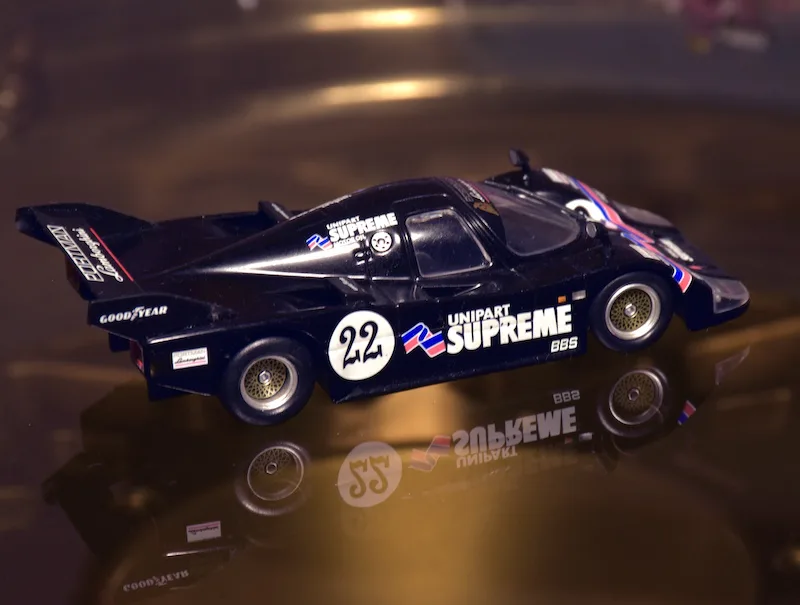
- FABBRI Lamborghini story #18 (diecast)
- Overall rating: 2 STARS | Quality details: 2 STARS | Estimated value: 2 STARS
- Only appears in this collection
1986 IMSA Portland 300 km, BMW GTP
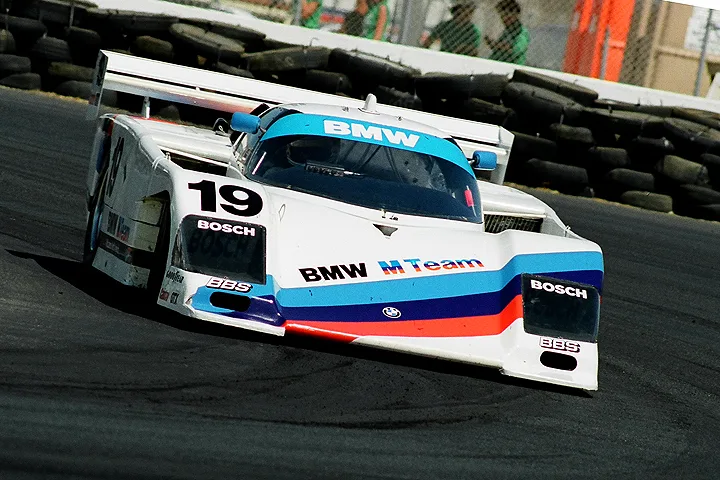
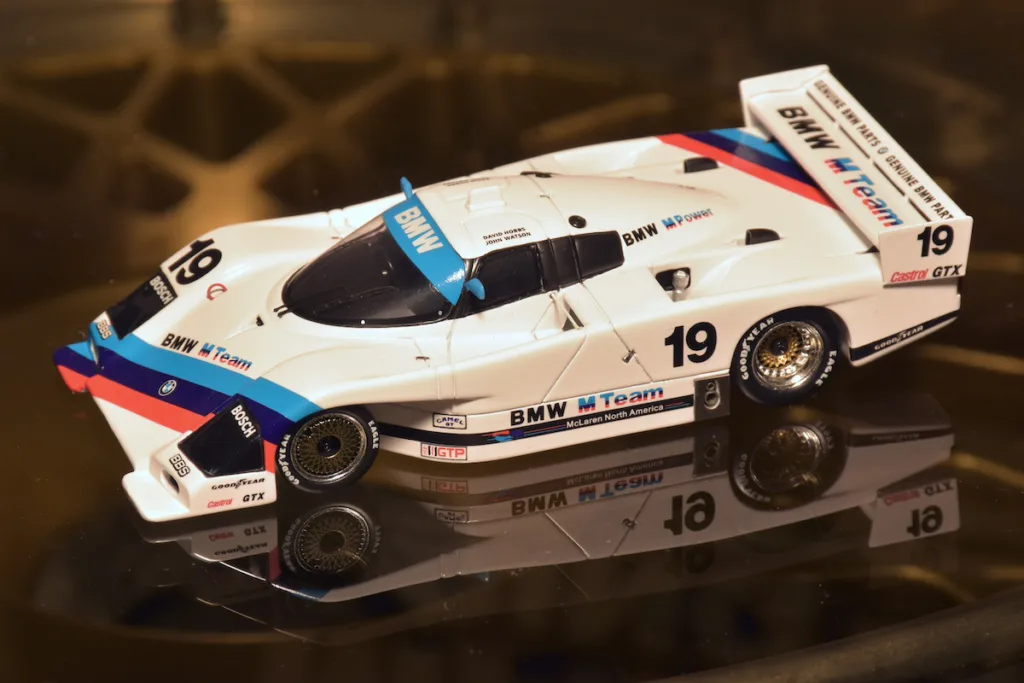
BMW had been succesful in USA with their touring cars and in Formula 1 with their turbo engines. The Germans decided to combine and bought two March chassis which they equiped with a 2-liter version of their 4 cylinder F1 turbo engine. The cars were powerful (upto 1000 bhp in qualifying) but hard to drive and not very reliable. Davy Jones and John Andretti managed a win at Watkins Glen. The best result of #19, driven by John Watson and David Hobbs was 4th at Portland. They could have won the race, but were delayed by a problem with the seat belts during the driver change.
BMW M Team #19:John Watson (GB) / David Hobbs (GB)
Results: Start-grid 8th / time unknown / race 4th – 97 laps
BMW GTP – IMSA GTP: Powered by 2.0 liter BMW M12/14 straight-4 turbo, approx. 800 hp. Goodyear tires. Weight 910 kg. Aluminum monocoque, chassisnr. March 86G #02
- SPARK S2571 (resin)
- Overall rating: 4 STARS | Quality details: 4 STARS | Estimated value: 4 STARS
- Also appears in #034 BMW Motorsport part I / #123 BMW Proto / #114 BMW 4-cylinders
1987
1987 Nürburgring Supersprint, Sauber C9 – Mercedes
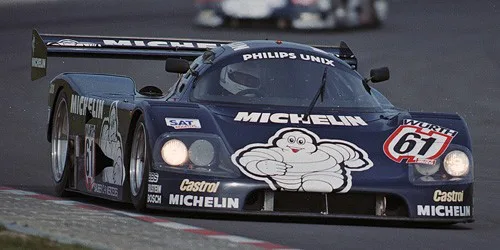
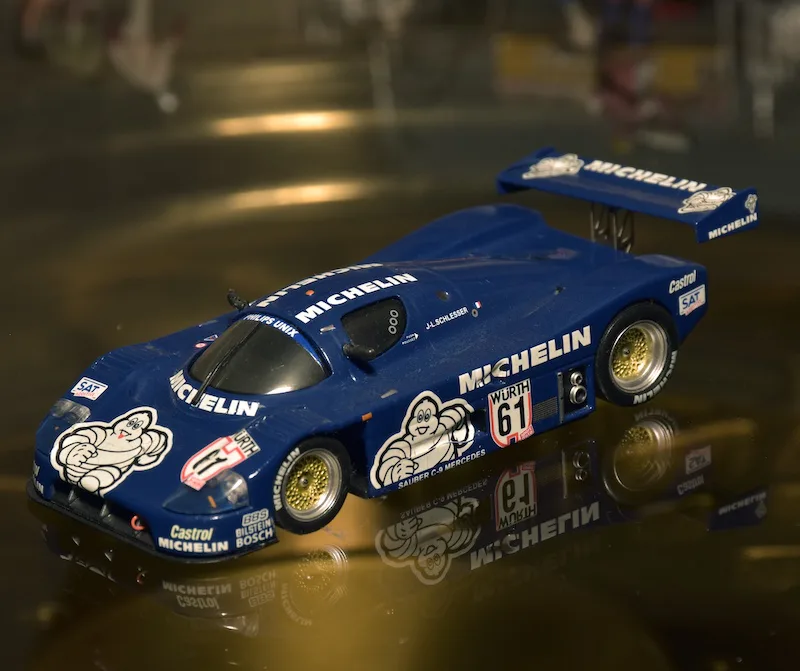
The Sauber team was supported by Mercedes for the second year. In the world championship it raced in Kouros livery, in the German Super Cup the cars that were entered by the unknown Formel Rennsportclub from Switzerland, wore the colors of Michelin. Jean Louis Schlesser won the last race of the season at the short Nürburgring in front of Hans Stuck’s Porsche en Mike Thackwell in the 2nd Sauber.
Formel Rennsportclub #61: Jean-Louis Schlesser (F)
Results: Start-grid 2nd / time 1:25.610 / race 1st – 39 laps
Sauber C9 – Group C1: Powered by 5.0 liter Mercedes M119 HL V8 twin-turbo, approx. 650 hp. Goodyear tires. Weight 905 kg. Aluminium monocoque, chassisnr. C9/87-01
- MINICHAMPS MC 432 871061 (diecast)
- Overall rating: 4 STARS | Quality details: 4 STARS | Estimated value: 3 STARS
- Only appears in this collection
1987 Le Mans 24h, Sauber C9 – Mercedes
Sauber was back at Le Mans with the support of Mercedes for the second year. Last year the Kouros Mercedes’ had not much luck and also wouldn’t this year. A puncture caused so much damage that they decided to retire the car. From the other car, the transmission failed.
Kouros Racing #61: Henri Pescarolo (F) / Mike Thackwell (NZ) / Hideki Okada (J)
Results: Start-grid 8th / time 3:27.410 / race DNF damage after puncture – 123 laps
Sauber C9 – Group C1: Powered by 5.0 liter Mercedes M119 HL V8 twin-turbo, approx. 650 hp. Goodyear tires. Weight 905 kg. Aluminium monocoque, chassisnr. C9/87-01
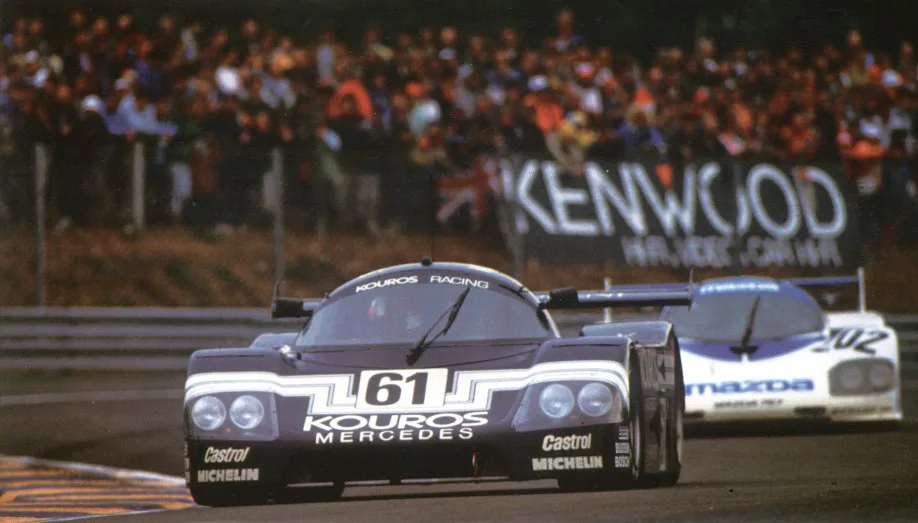
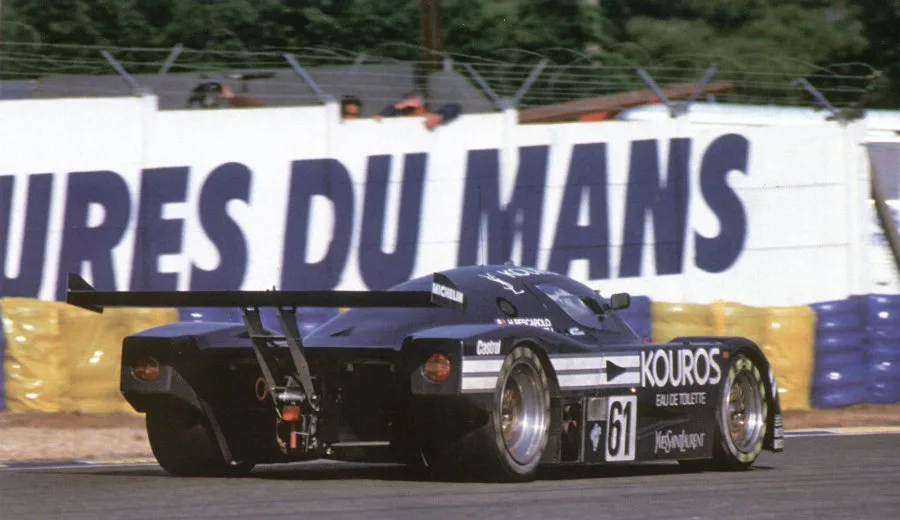
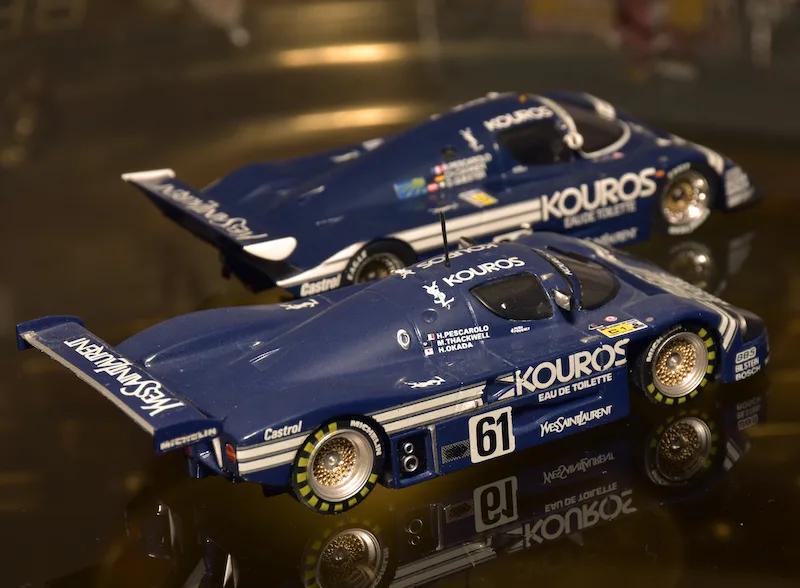
- MAX MODELS 1007 (diecast)
- Overall rating: 4 STARS | Quality details: 3 STARS | Estimated value: 3 STARS
- Only appears in this collection
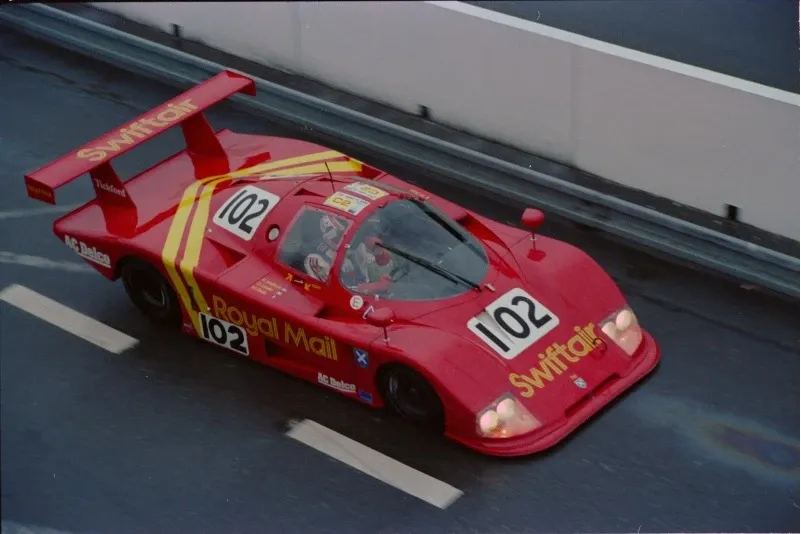
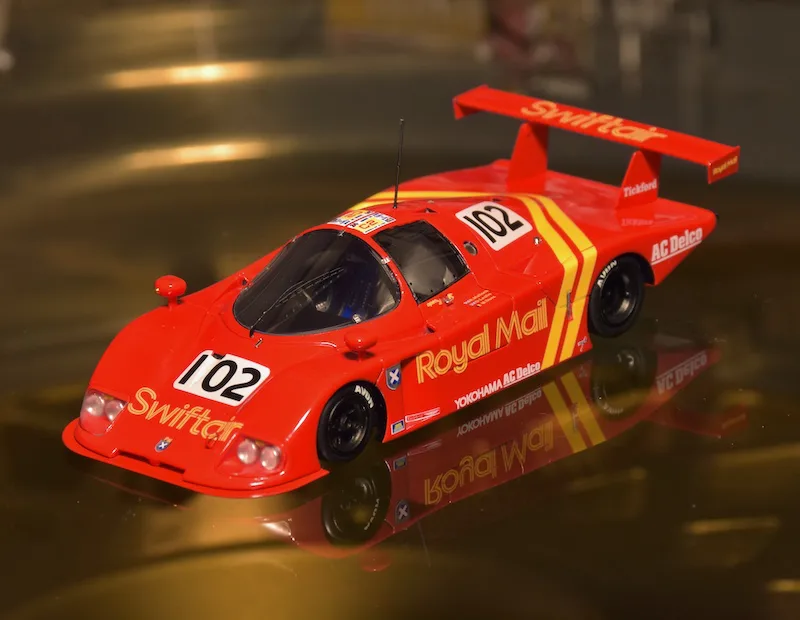
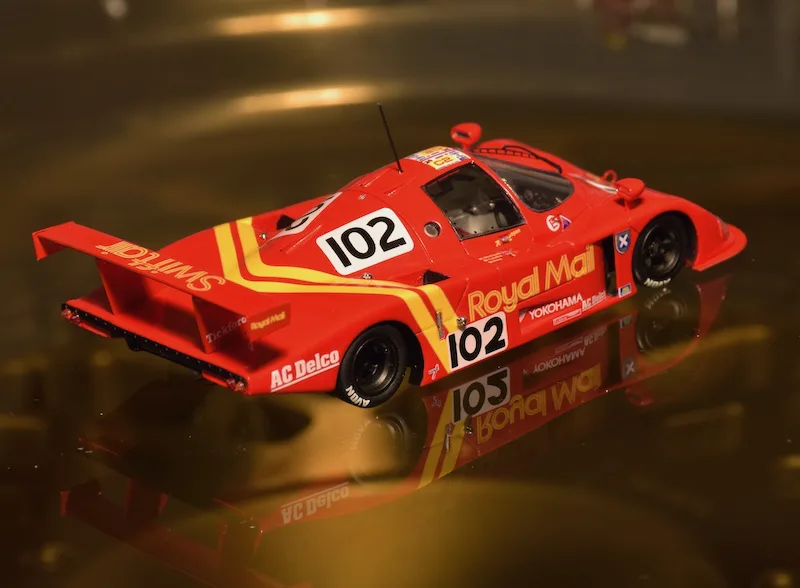
1987 Le Mans 24h, Ecosse C286 – Cosworth
Ecurie Ecosse developed the Ecosse C2 car and it proved to be a successful little car. The C284, C285 and C286 all competed in the C2 category. The rules set wasn’t much different form the C1 except the minimum weight was lower and the maximum fuel consumption allowed was lower. Two C286’s were entered in the 1987 Le Mans 24h, the #101 retired and this #102 finished 8th overall and 2nd in C2.
Ecurie Ecosse #102: Ray Mallock (GB) / Marc Duez (B) /David Leslie (GB)
Results: Start-grid 33th / time 3:53.370 / race 8th – 308 laps / 2nd C2
Ecosse 287C – Group C2: Powered by 3.3 liter Ford Cosworth DFV V8, approx. 550 hp. Yokohama tires. Weight 750 kg. Aluminium monocoque, chassisnr. Ecosse C286 #004
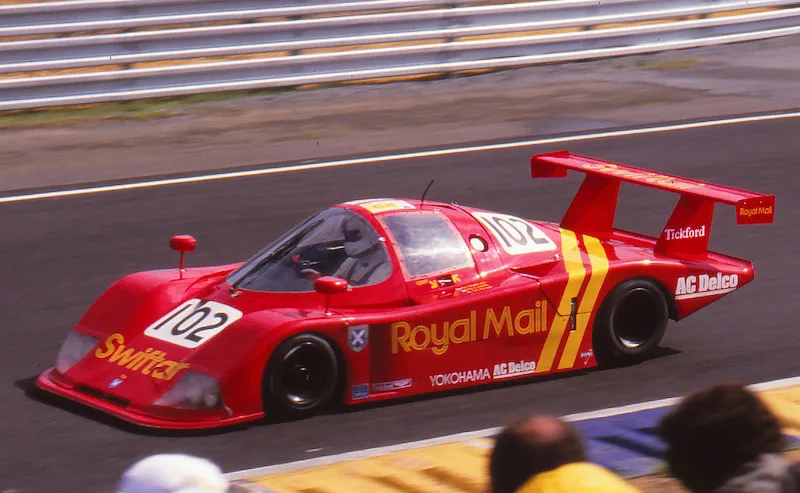
- SPARK S8227 (resin)
- Overall rating: 4 STARS | Quality details: 4 STARS | Estimated value: 4 STARS
- Only appears in this collection
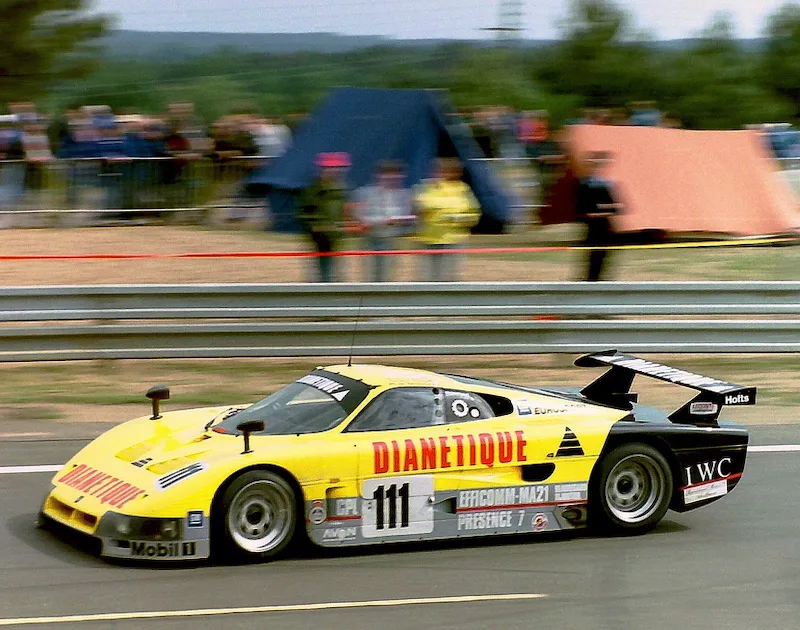
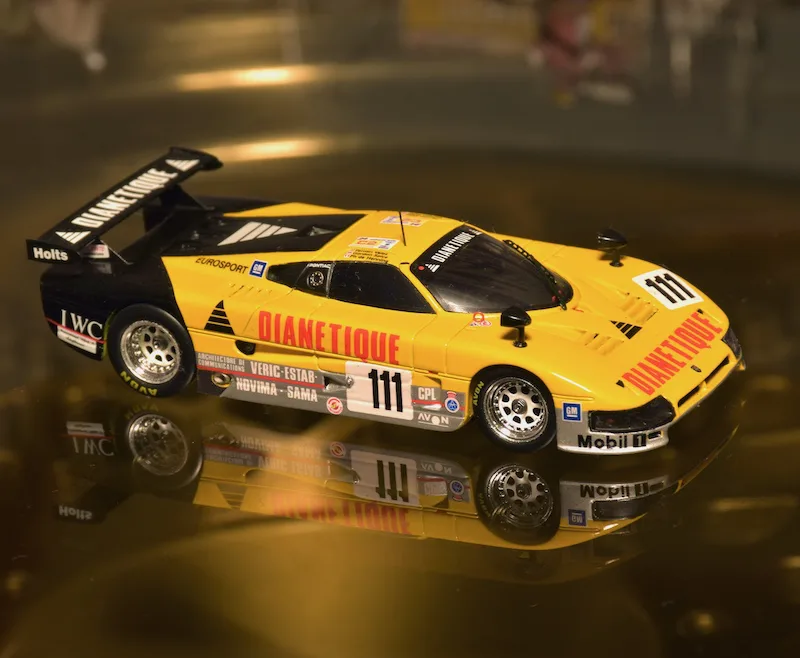
1987 Le Mans 24h, Fiero SE86C – Cosworth
Group C1 was dominated by Porsche. Both Mercedes and Jaguar were coming, but couldn’t change this yet. Group C2 was the domain of the small chassis builders that often still relied on the Cosworth V8. Gordon Spice was very successful with his Cosworth powered Spice Fiero winning the C2 category at Le Mans and finishing 6th overall.
Spice Engineering #111: Gordon Spice (GB) / Phillippe de Hennig (F) / Fermin Velez (ES)
Results: Start-grid 25h / time 3:42.280 / race 6th – 321 laps / 1st C2
Spice Fiero SE86C – Group C2: Powered by 3.3 liter Ford Cosworth DFV V8, approx. 550 hp. Avon tires. Weight 750 kg. Aluminium monocoque, chassisnr. SE86C #001
- SPARK S3588 (resin)
- Overall rating: 4 STARS | Quality details: 4 STARS | Estimated value: 4 STARS
- Only appears in this collection
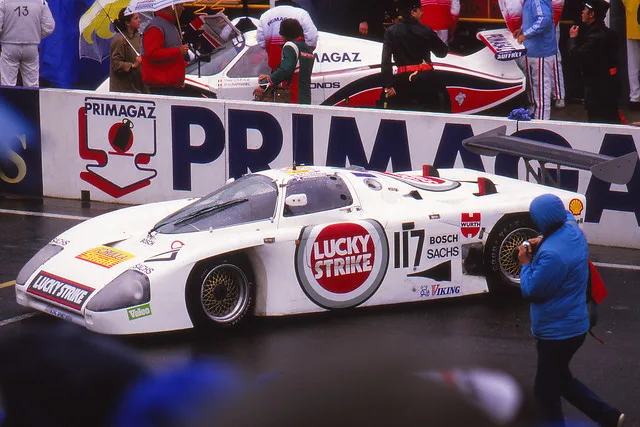
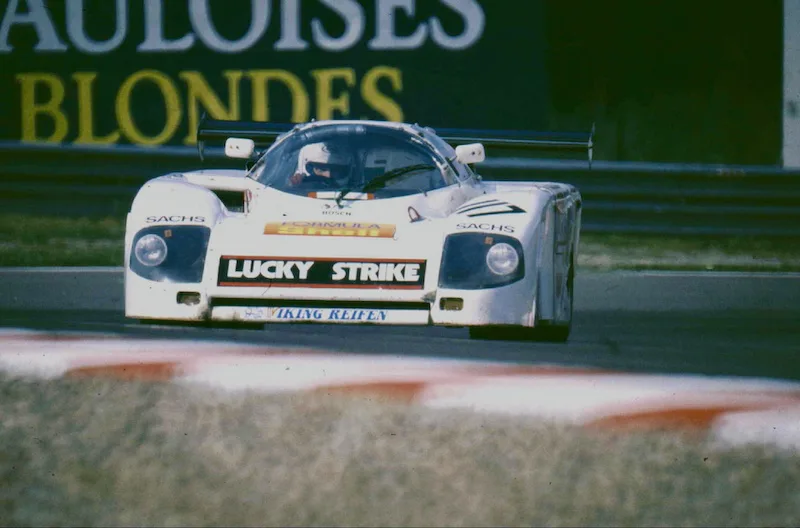
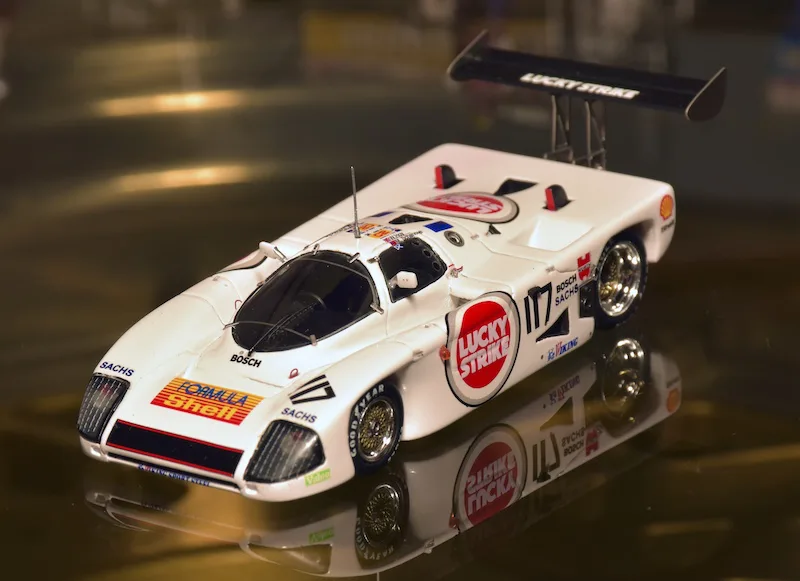
1987 Le Mans 24h, Argo JM19B – Zakspeed
Martin Schanche is multiple European rallycross champion. He is popular because of his aggressive and very spectacular driving style. Most of his career, Martin drove Ford products: Escort Mk II RS 1800, Escort Mk3 XR3i turbo 4×4 and the famous RS200. His Argo is powered by a Zakspeed Ford-based turbo engine that is capable of 1000 hp, but that is useless in the C2 category because of the strict fuel limit so it’s detuned to 550 hp. Also reliability is often an issue, but not this year at Le Mans, Schanche crashed in the 6th lap …
Lucky Strike Schanche #117: Martin Schanche (NOR) / Will Hoy (GB) / Robin Smith( GB)
Results: Start-grid 36th / time 3:57.210 / race DNF accident – 5 laps
Argo JM19B – Group C2: Powered by 1.8 liter Zakspeed straight-4 turbo, approx. 550 hp. Goodyear tires. Weight 750 kg. Steel monocoque, chassisnr. #116
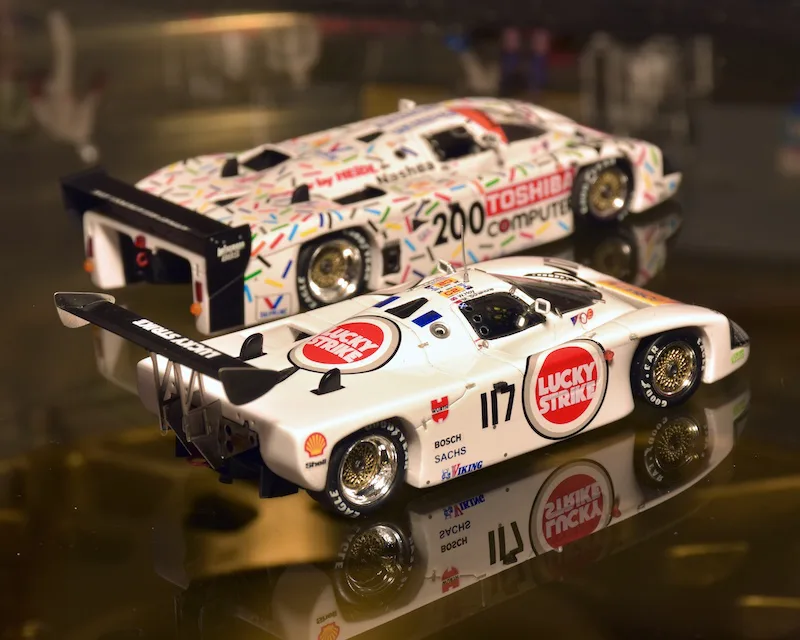
- SPARK S7320 (resin)
- Overall rating: 4 STARS | Quality details: 4 STARS | Estimated value: 4 STARS
- Only appears in this collection
1987 Le Mans 24h, Argo JM19 – Porsche
Argo Racing Cars is a British racing constructor founded by Swiss designer Jo Marquart and British engineer Nick Jordan. At first they constructed cars for Formula 3, Super Vee and Atlantic. When the prototype category gained interest they switched to Group C and IMSA GTP cars. Their chassis could handle several engine suppliers. This Dahm Argo was entered in Group C2 and equipped with a Porsche flat-6 turbo engine that didn’t last long. Many Porsches had engine failures early in the race. It was the result of a down-grade of the fuel from 105 octane to 98 octane. Due to bad weather during the training sessions this had been unnoticed, but in the race it caused many problems.
Dahm Racing Cars #200: Peter Fritsch (D) / Teddy Pilette (B) / Jean-Paul Libert (B)
Results: Start-grid 39th / time 4:01.400 / race DNF engine – 12 laps
Argo JM19 – Group C2: Powered by 3.2 liter Porsche 930 flat-6 twin turbo, approx. 600 hp. Goodyear tires. Weight 750 kg. Aluminium monocoque, chassisnr. #110
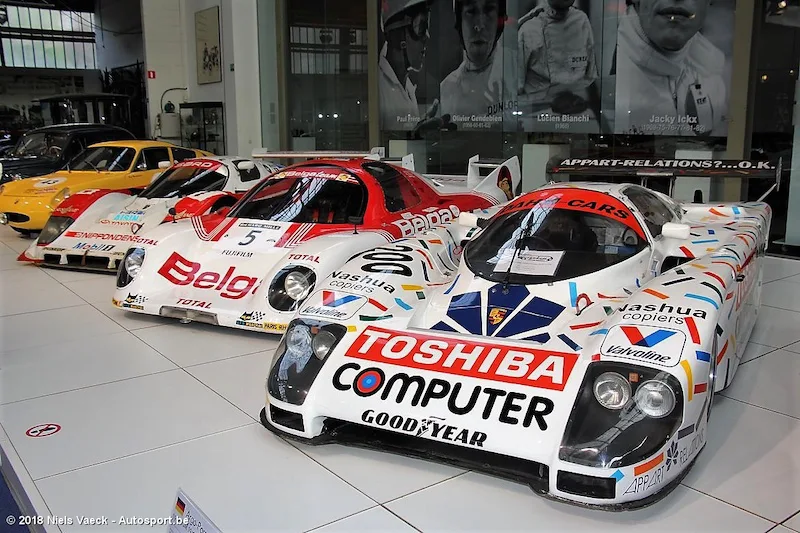
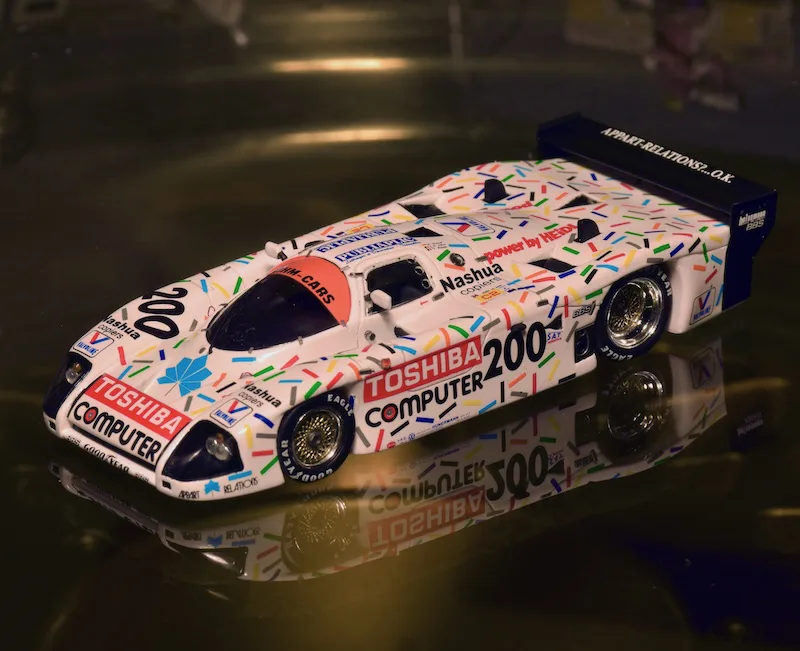
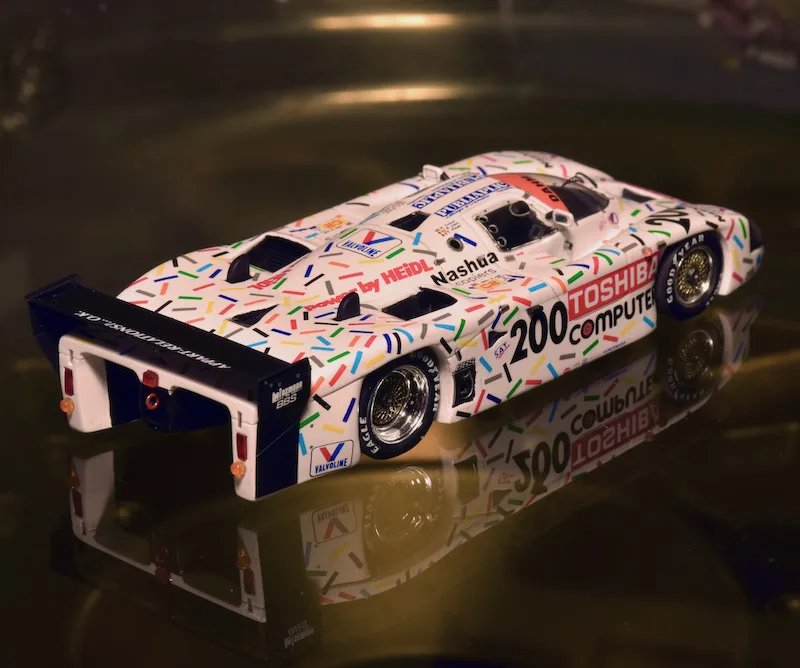
- SPARK S7321 (resin)
- Overall rating: 4 STARS | Quality details: 4 STARS | Estimated value: 3 STARS
- Only appears in this collection
1988
1988 Le Mans 24h, Sauber C9 – Mercedes
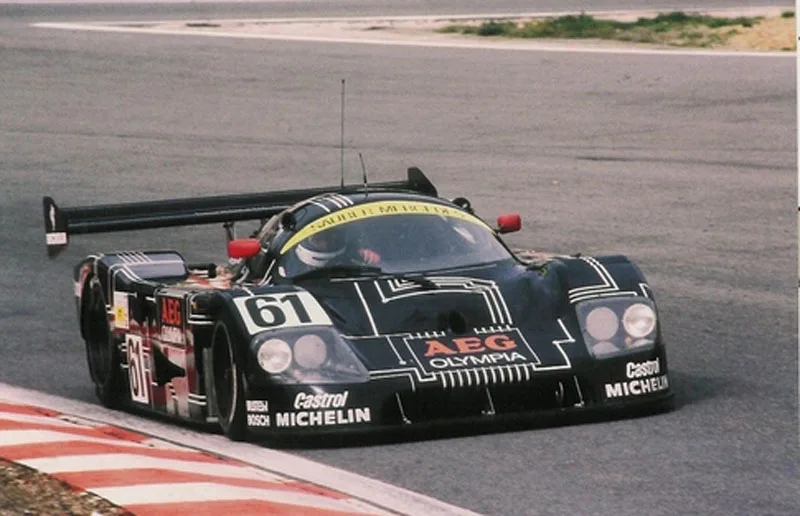
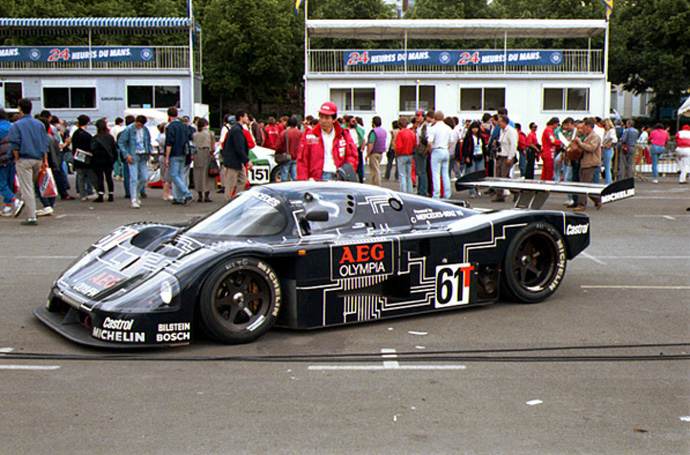
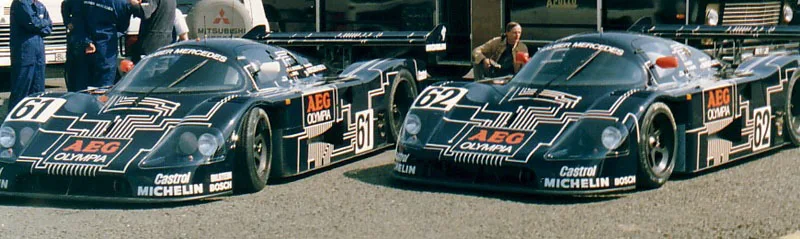
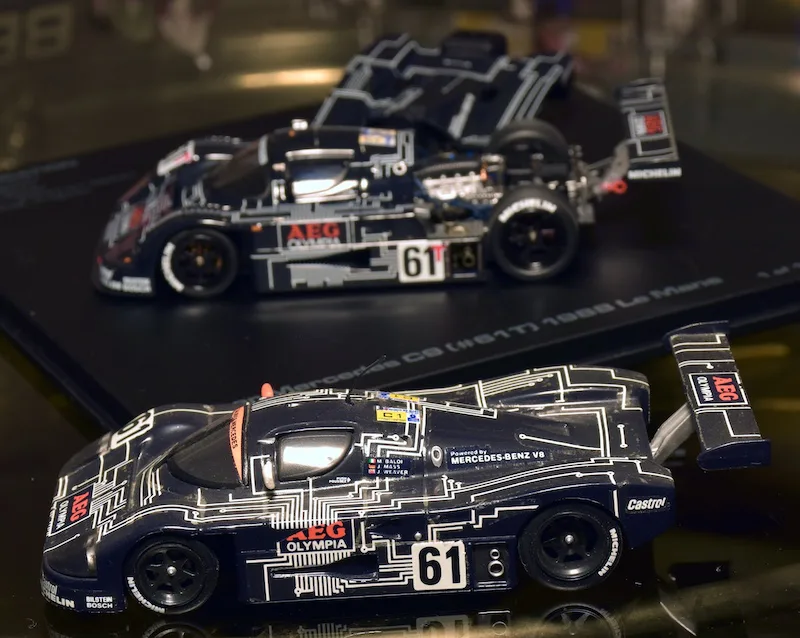
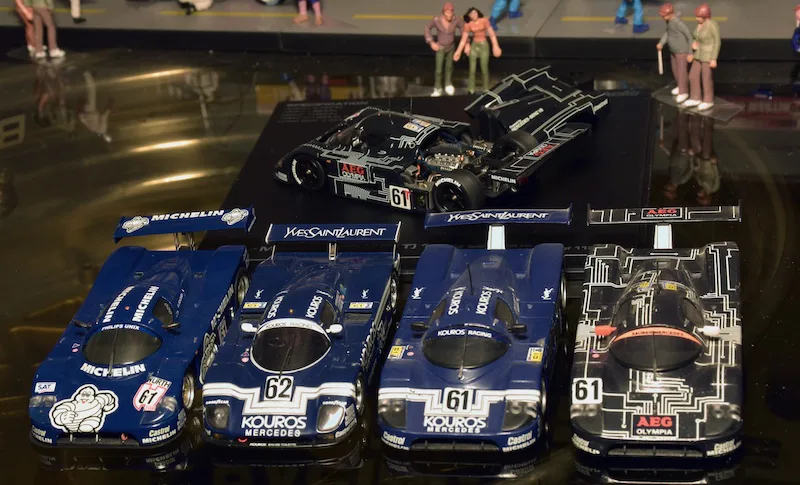
The powerful Saubers were so quick on the long straights in combination with the downforce they generated that the Michelin tires collapsed. A near accident in qualifying made Mercedes decide not to start te race. The #61T was the spare car that has not been used at all. In 1989 the Sauber would reach 400 km/h in qualifying, something that WM already managed this year with a car specially built for that purpose.
Team Sauber Mercedes #61(T): Jochen Mass (D) / Mauro Baldi (I) / James Weaver (GB)
Results: Start-grid n/a / time 3:30.800 / race DNS tires
Sauber C9/88 – Group C1: Powered by 5.0 liter Mercedes M119 HL V8 twin-turbo, approx. 740 hp. Michelin tires. Weight 905 kg. Aluminium monocoque, chassisnr. C9/87-02
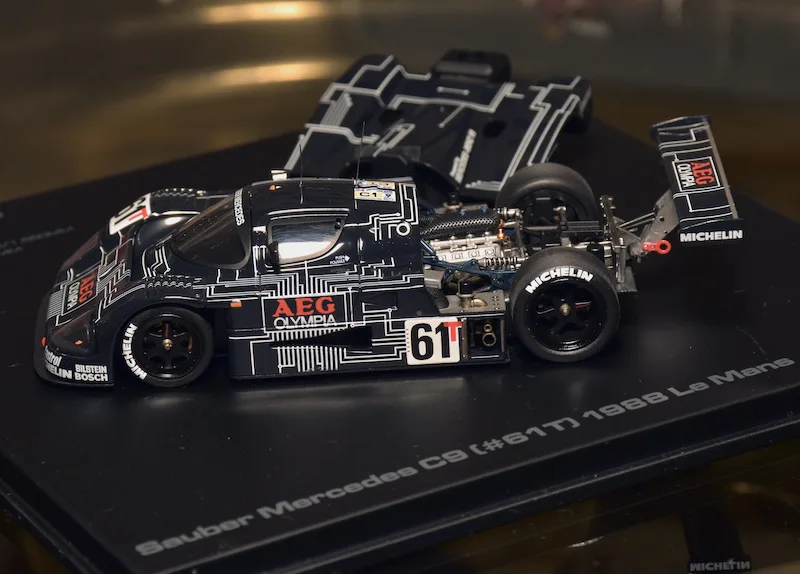
- #61 MAX MODELS 1007 (diecast)
- Overall rating: 4 STARS | Quality details: 3 STARS | Estimated value: 3 STARS
- #61T HPI 8065 (diecast)
- Overall rating: 5 STARS | Quality details: 5 STARS | Estimated value: 4 STARS
- Only appear in this collection
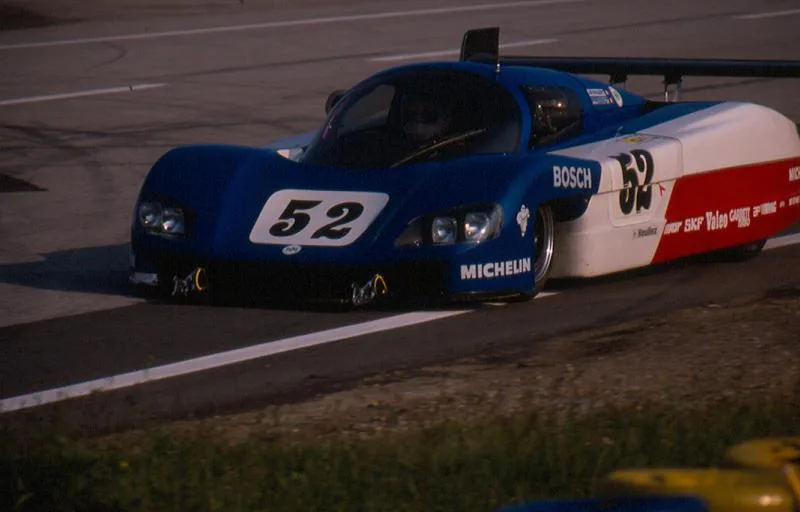
1988 Le Mans 24h, WM P87 – Peugeot
The small WM team brought two cars to Le Mans. A new P88 that was tuned for high top speeds and this P87. The P87 had an additional front wing for more downforce and a somewhat larger engine, which made it 7 seconds faster in qualifying than the #51 sister car. Unfortunately the gearbox broke down after only 22 laps.
WM Secateva #52: Pascal Pressiot (F) / Jean-Daniël Raulet (F)
Results: Start-grid 22nd / time 3:34.650 / race DNF gearbox – 22 laps
WM P87 – Group C1: Powered by 3.0 liter Peugeot PRV V6 twin-turbo, approx. 750 hp. Michelin tires. Weight 900 kg. Aluminium monocoque, chassisnr. P87 #01
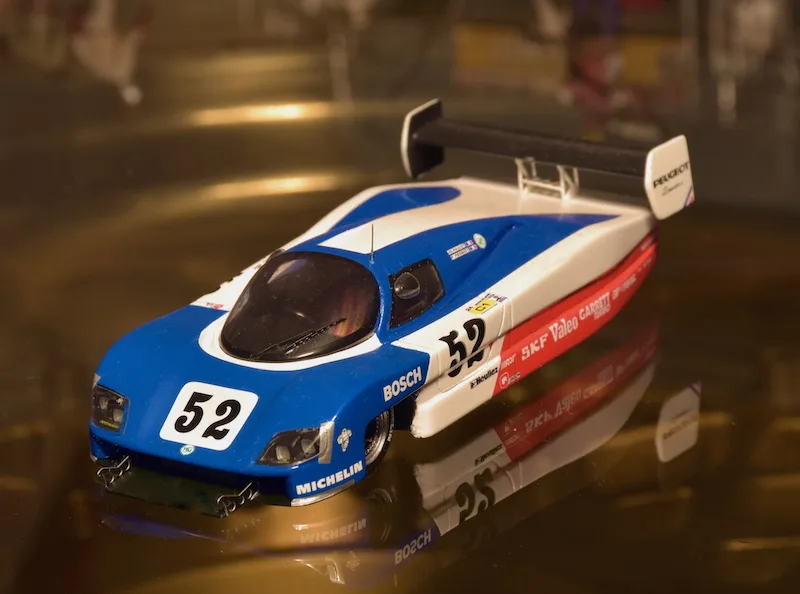
- BIZARRE BZ245 (resin)
- Overall rating: 5 STARS | Quality details: 4 STARS | Estimated value: 4 STARS
- Also appears in #031 Peugeot
1988 Le Mans 24h, WM P88 – Peugeot
This is the “Project 400”. The first racing car to exceed 400 kmh / 250 mph at the Mulsanne Straight. Roger Dorchy was the first who managed this in practice. Thanks to the 800 bhp Peugeot engine, special narrow Michelin tires and a very flat rear wing. Did it manage pole position? No, the lap times were not well but in a straight line, it was blistering fast. In the race the car retired early with overheating problems, probably because not many air ducts were made in the slick body work.
WM Secateva #51: Claude Haldi (CH) / Philippe Wambergue (F) / Roger Dorchy (F)
Results: Start-grid 36th / time 3:41.480 / race DNFoverheating – 59 laps
WM P88 – Group C1: Powered by 2.9 liter Peugeot PRV V6 twin-turbo, approx. 800 hp. Michelin tires. Weight 900 kg. Aluminium monocoque, chassisnr. P88 #01
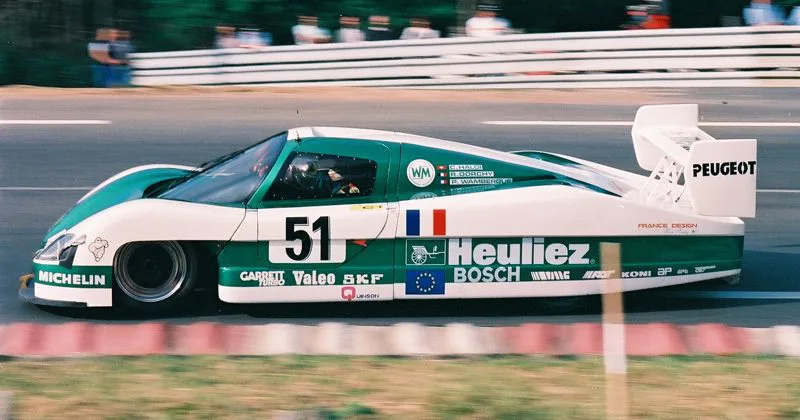
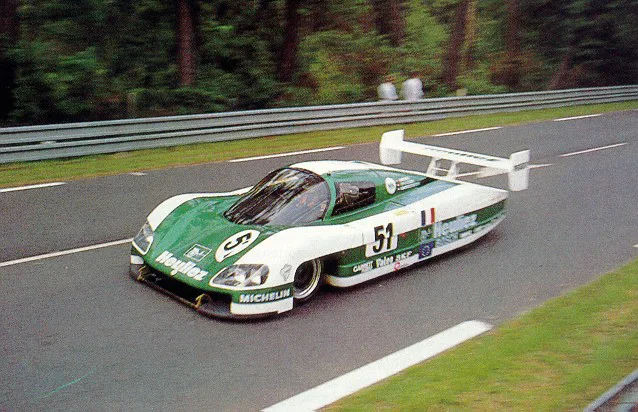
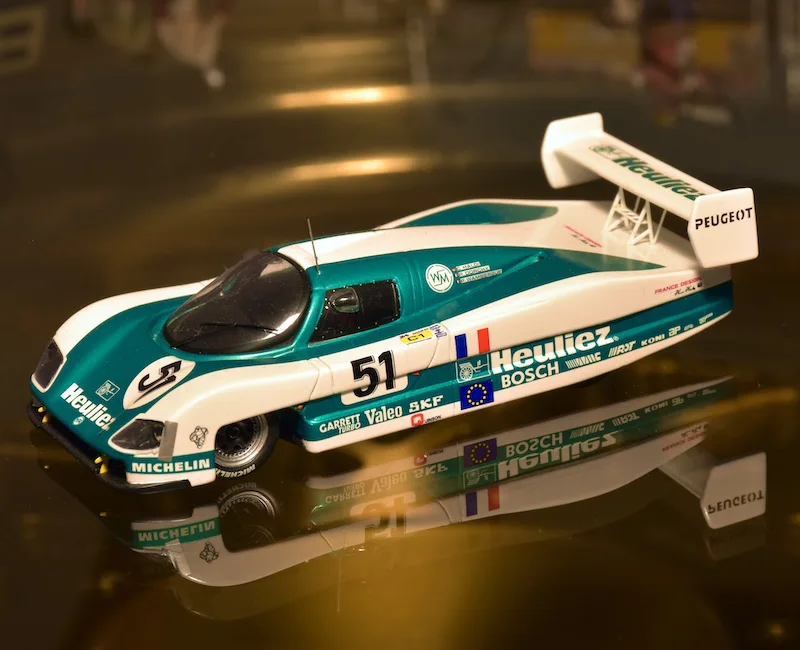
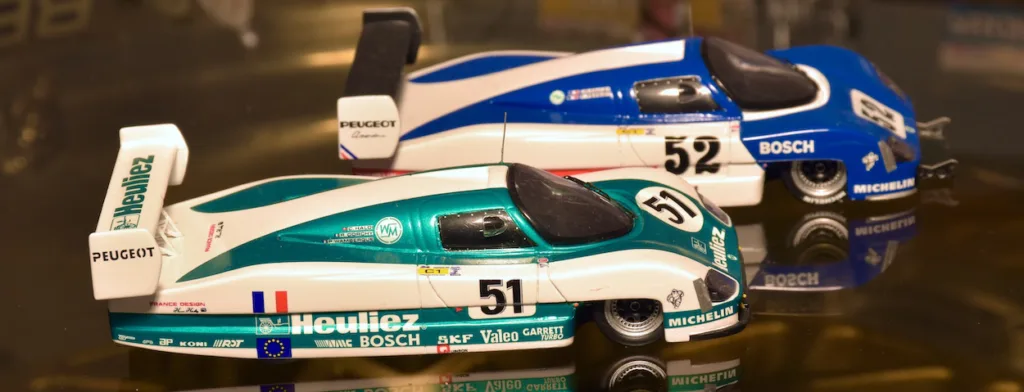
- BIZARRE BZ061 (resin)
- Overall rating: 5 STARS | Quality details: 4 STARS | Estimated value: 4 STARS
- Also appears in #031 Peugeot
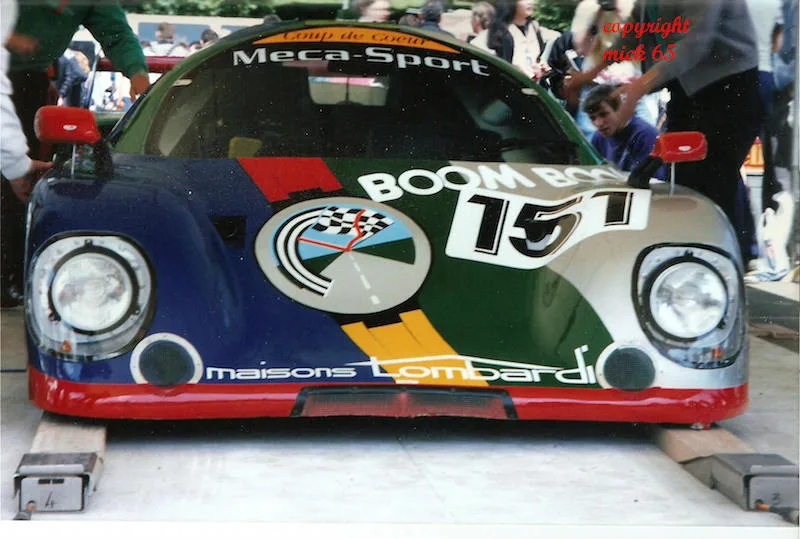
1988 Le Mans 24h, Rondeau M379C – Cosworth
The last Rondeau to run at Le Mans was this old 379C. It was entered in group C2, a category that was occupied by many privateer teams and drivers that used cars such as Spice, Tiga, ALD and Argo, many of these with normally aspirated engines. The Rondeau reached the finish but wasn’t classified because it didn’t covered enough distance.
Pierre-Alain Lombardi #151: Pierre-Alain Lombardi (CH) / Bruno Sotty (F) / DNS Rolando Vaglio (CH)
Results: Start-grid 43rd / time 3:53.740 / race DNC – 271 laps
Rondeau M379C – Group C2: Powered by 3.0 liter Ford Cosworth DFV V8 90º approx. 480 hp. Avon tires. Weight 800 kg. Aluminium space frame, chassisnr. M379 #006
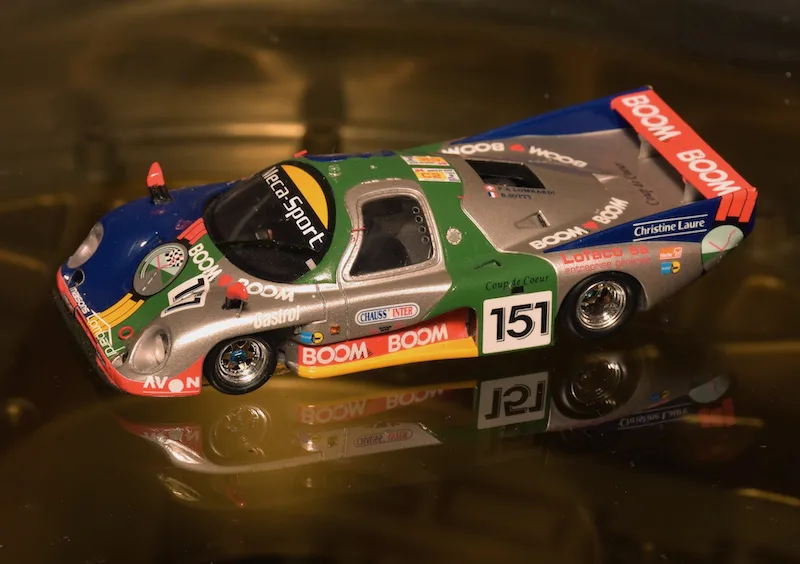
- SPARK S2269 (resin)
- Overall rating: 3 STARS | Quality details: 4 STARS | Estimated value: 3 STARS
- Also appears in #089 Rondeau
1989
Sauber was supported by Mercedes, and had become a force to reckon. Then the Saubers turned Silver and became officially Mercedes-Benz. The Silvern Arrows became the next challenger of Porsche and Jaguar.
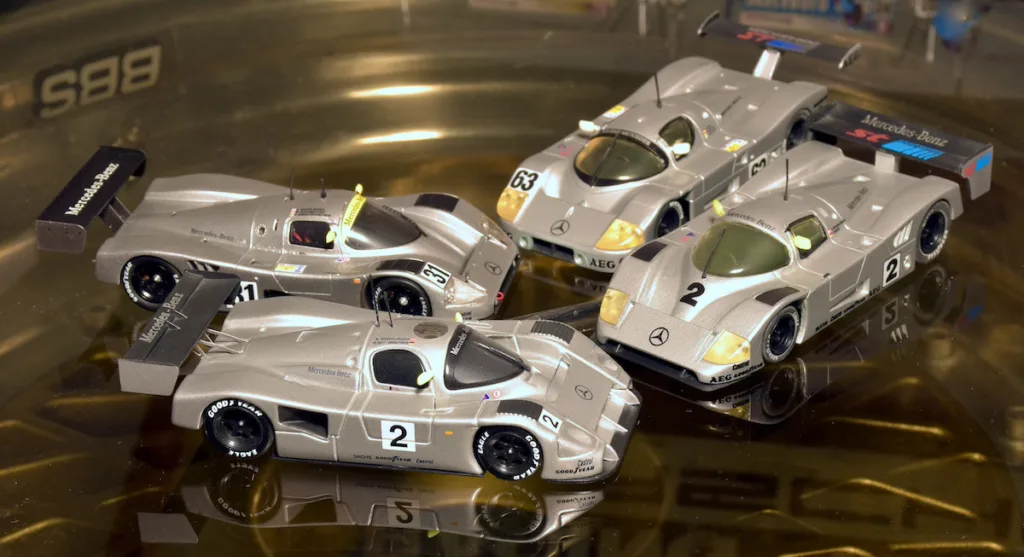
- The Mercedes-Benz group C cars can be found in #055 Silver Arrows
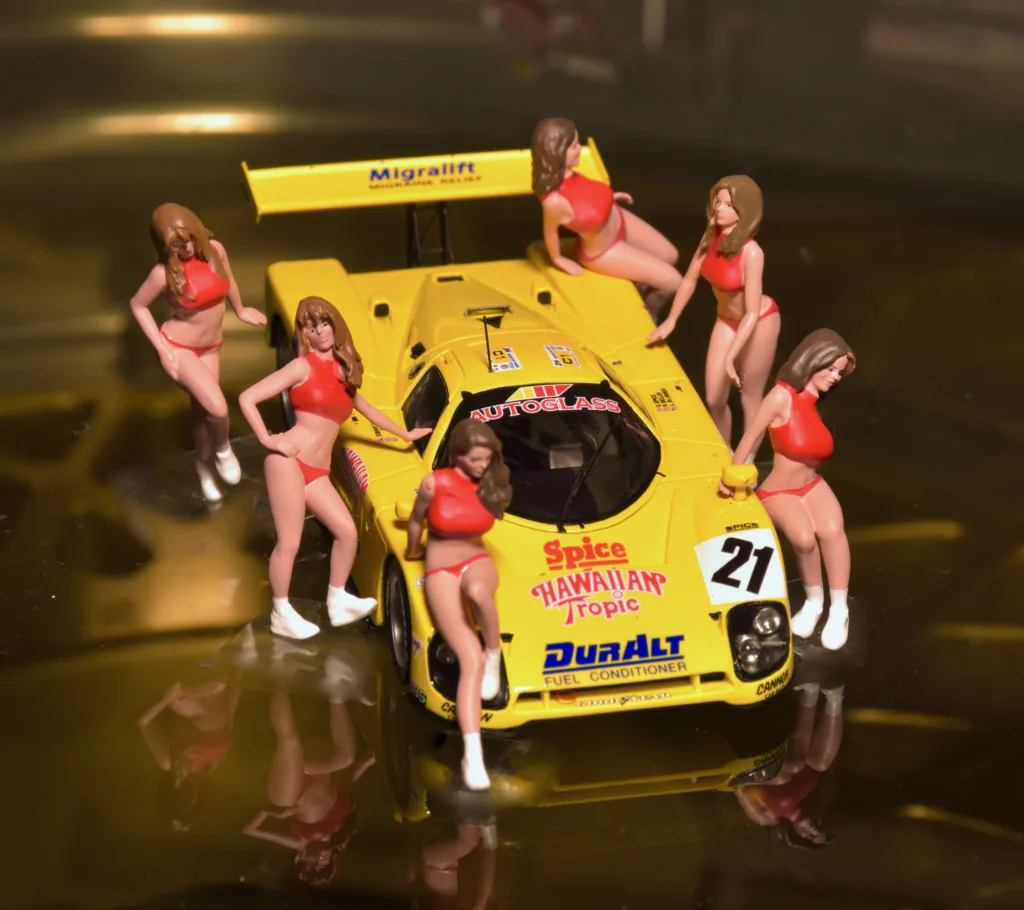
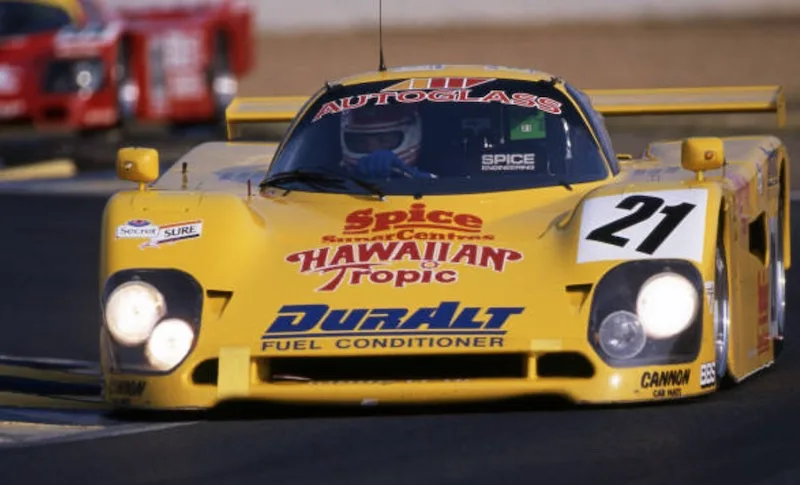
1989 Le Mans 24h, Spice SE89C – Cosworth
Gordon Spice entered this bright yellow SE89C in C1, which he drove himself with Ray Bellm and American female driver Lyn St.James. Unfortunately, the engine seized. The same happened to the sister car with #22. Three older Spice cars drove in C2 and finished 2nd, 3rd and 4th in class.
Spice Engineering #21: Gordon Spice (GB) / Ray Bellm (GB) / Lynn St.James (USA)
Results: Start-grid 31st / time 3:32.540 / DNF engine – 229 laps
Spice SE89C – Group C1: Powered by 3.5 liter Ford Cosworth DFZ V8, approximately. 600 hp. Goodyear tires. Weight 850 kg. Aluminium monocoque, chassisnr. Spice SE89 #004
- SPARK S6805 (resin)
- Overall rating: 4 STARS | Quality details: 4 STARS | Estimated value: 4 STARS
- Also appears in #095 Hawaiian Tropic / #124 Racing ladies
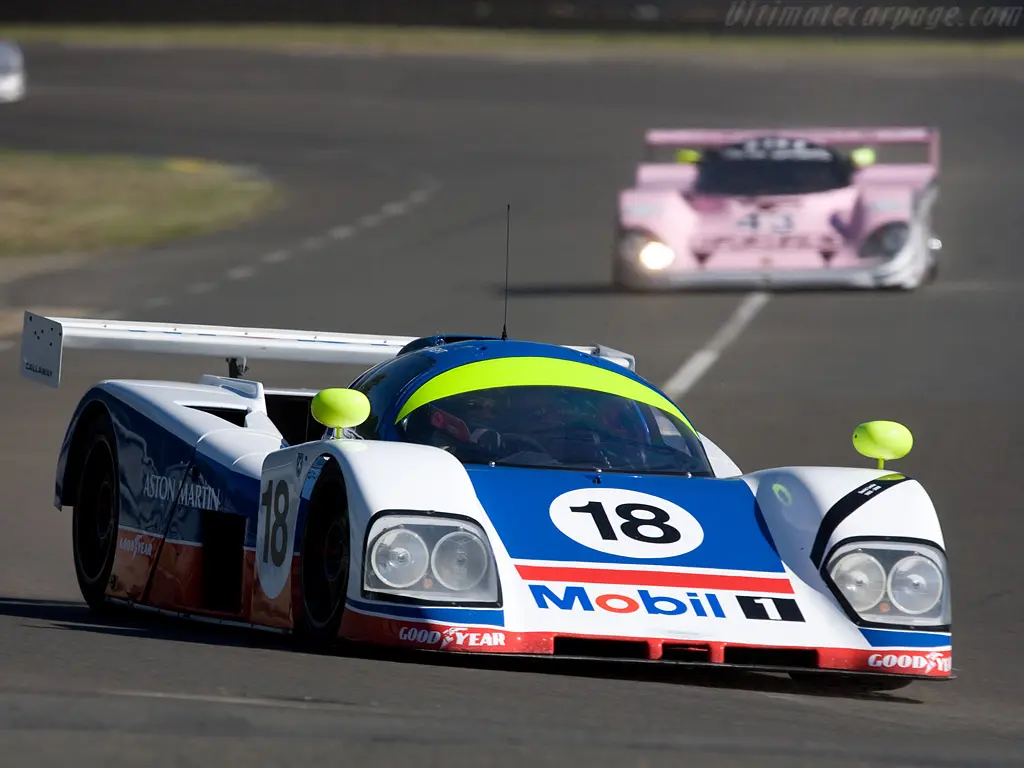
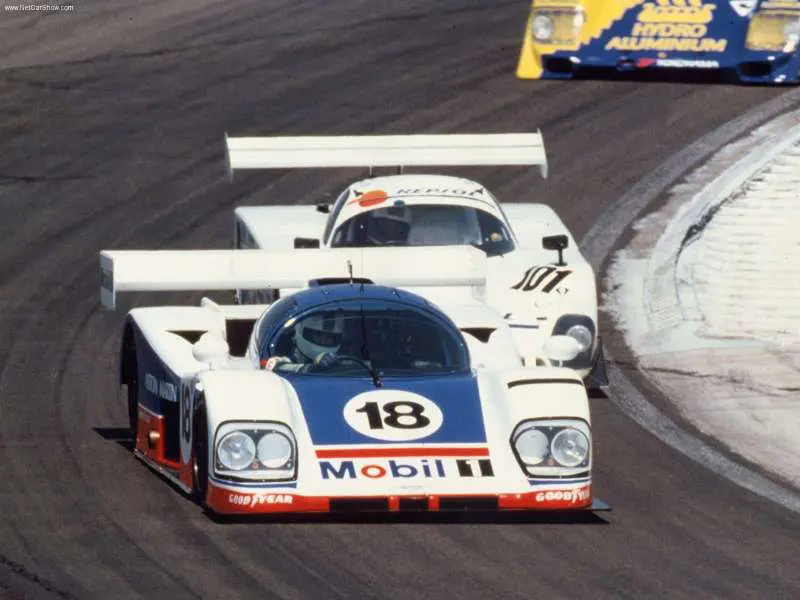
1989 Le Mans 24h, Aston Martin AMR1
This beautiful Aston Martin made its debut at Le Mans in 1989. In the same year Ford (which owned Aston Martin) also bought Jaguar. The TWR-Jaguars already were successful, so the Aston Martin project that was operated by Ray Mallock’s Ecurie Ecosse, ended in its first season. This car finished a credible 11th, while its teammate #19 retired.
Aston Martin #18: Brian Redman (GB) / Michael Roe (GB) / Costas Los (GR)
Results: Start-grid 32nd / time 3:34.080 / race 11th – 340 laps / 9th Group C1
Aston Martin AMR1 – Group C1: Powered by 6.3 liter Callaway RDP87 V8 90º, approx. 700 hp. Goodyear tires. Weight 910 kg. Carbon Fibre monocoque, chassisnr. Courtaulds #02
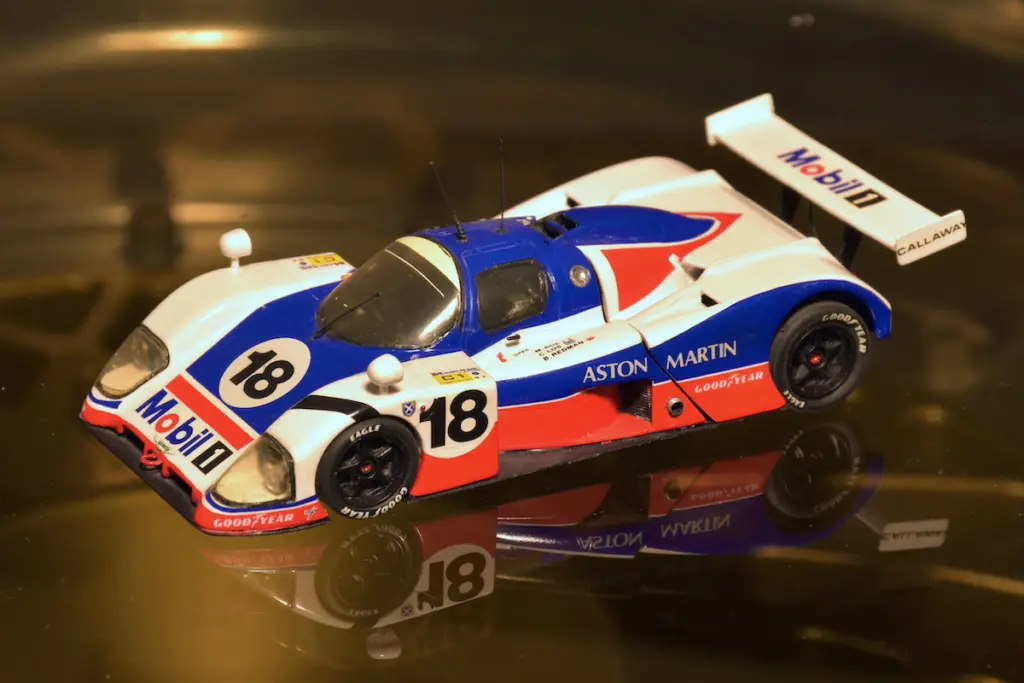
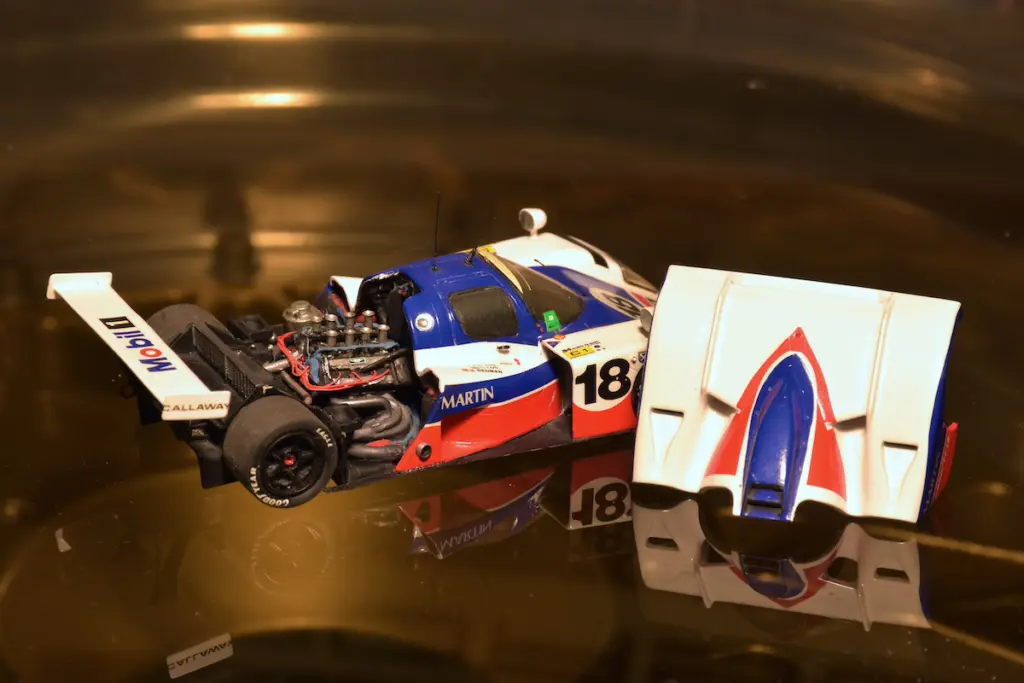
- STARTER T189 (resin)
- Overall rating: 4 STARS | Quality details: 4 STARS | Estimated value: 4 STARS
- Only appears in this collection
1989 Le Mans 24h, Spice SE86C – Cosworth
Pierre-Alain Lombardi is one of those privateers that fill the grids at Le Mans with interesting cars. In 1988 he participated in a privately entered Sauber C8, the year after in a Rondeau and now he brings a beautiful Spice SE86C to the track. It is the high time of Group C; over 40 C1-cars are on the entry list and 19 C2-cars. Some ALD C2-cars did not qualify, but Lombardi starts in 42nd position. Unfortunately, damage to the car after a puncture made the team retire early in the race.
Lombardi #151: Pierre-Alain Lombardi (CH) / Bruno Sotty (F) /Fabio Magnani (I)
Results: Start-grid 42nd / time 3:41.9400 / race DNF puncture damage – 58 laps
Spice SE86C – Group C2: Powered by 3.3 liter Cosworth DFL, approximately 550 hp. Goodyear tires. Weight 750 kg. Aluminium monocoque, chassisnr. SE86C #001
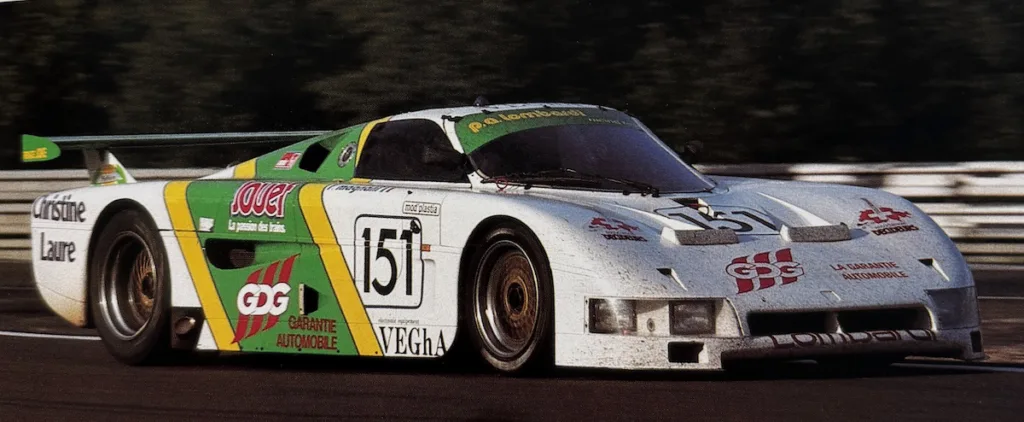
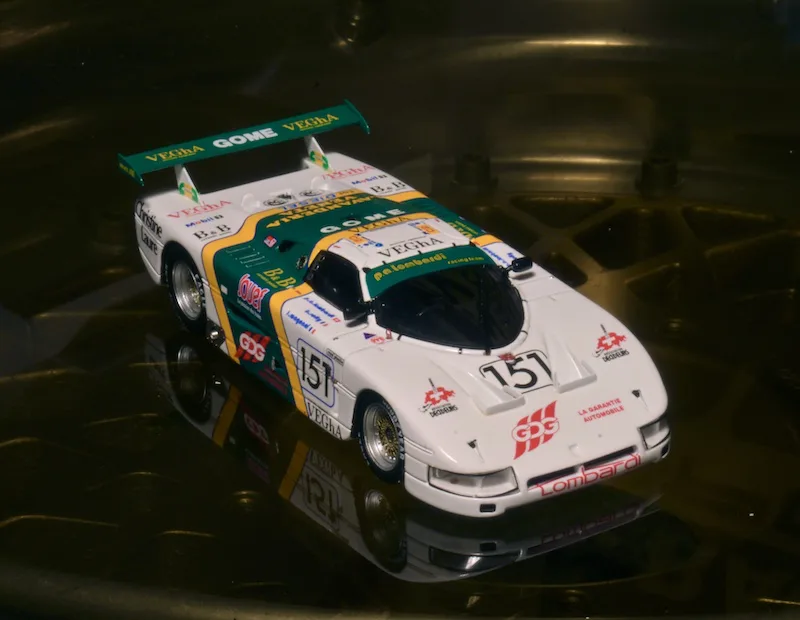
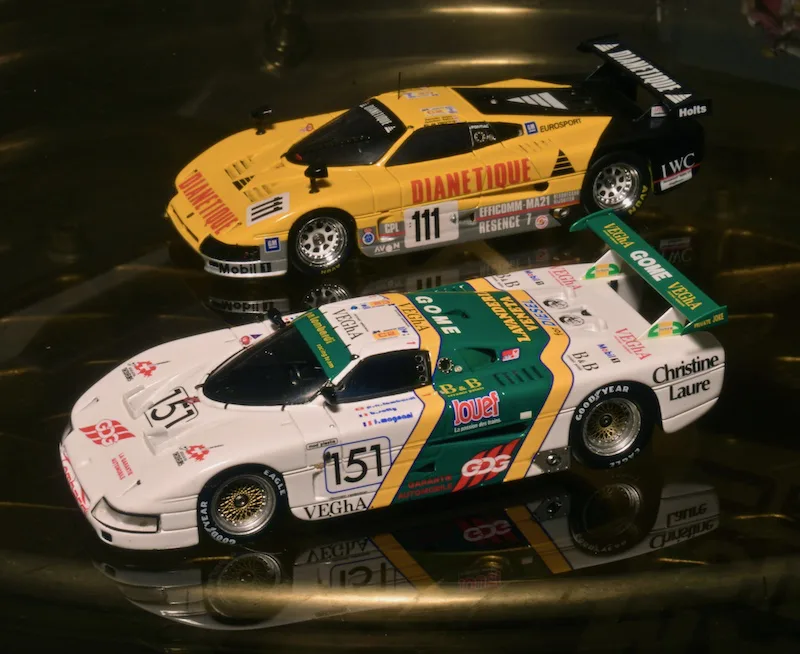
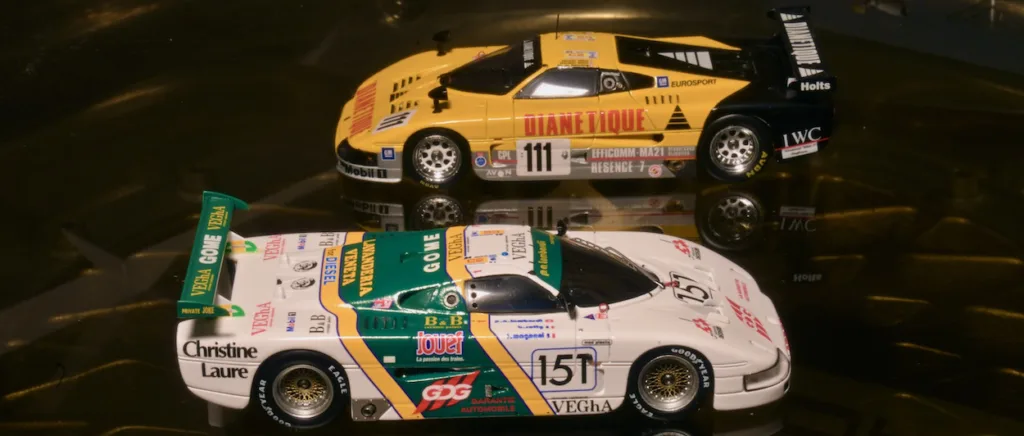
- SPARK S6809 (resin)
- Overall rating: 4 STARS | Quality details: 4 STARS | Estimated value: 3 STARS
- Only appears in this collection
1989 Supercup Norisring, Maurer C87 – BMW
Walter Maurer is a German artist who was involved in the production of the BMW Art cars. Except for the M1 which was painted by Warhol by hand, the paint jobs on the other Art Cars were done by Walter Maurer! He is also an amateur driver who had his own group C car based on a Lotec chassis and of course painted in Art Car style, inspired by Roy Lichtenstein.
Maurer #60: Walter Maurer (D)
Results: Start-grid 17th / time 0:53.030 / race 12th – 69 laps / 3rd C2
Maurer C87 – Group C2. Powered by 2.0 liter BMW M12 straight-4 turbo, approximately. 700 hp in race trim. Dunlop tires. Weight 800 kg. Aluminium monocoque #001 (Lotec)

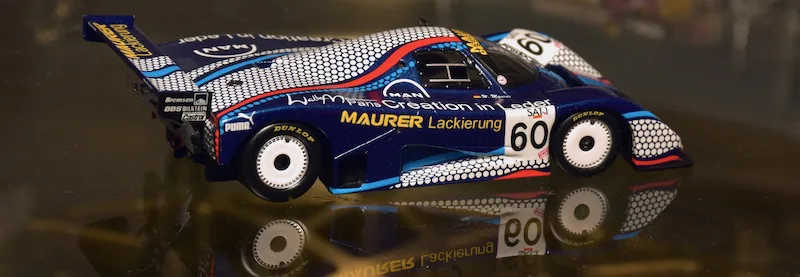
- SPARK Raceland Gold RS1270 #179 / 350 pcs (resin)
- Overall rating: 5 STARS | Quality details: 5 STARS | Estimated value: 4 STARS
- Also appears in #002 BMW Art Cars / #123 BMW Prototypes
3.5 liter Group C
Group C was extremely popular. At least 6 car manufacturers participated and many privateer teams, 300.000 spectators came to Le Mans for the big event. In Formula 1 only 2 manufacturers were present (Ferrari and Renault). Bernie Ecclestone wanted to turn it around and convinced the FIA to change the Group C rules. No longer a limit on fuel consumption, but only normally aspirated 3.5 liter engines, just as in Formula 1. Existing turbo cars were restricted in power and received penalty weight.That was the beginning of the end. Mazda would score a surprise win with their rotary engine, which was banned the following year and in 1994 the show was over.
Peugeot and Toyota were among the first to build a 3.5 liter that would manage 24 hours. Jaguar and Mercedes withdrew their 3.5 liter cars from racing at Le Mans and Mazda surprised all the favorites in 1991 before they switched to Judd-engined cars.
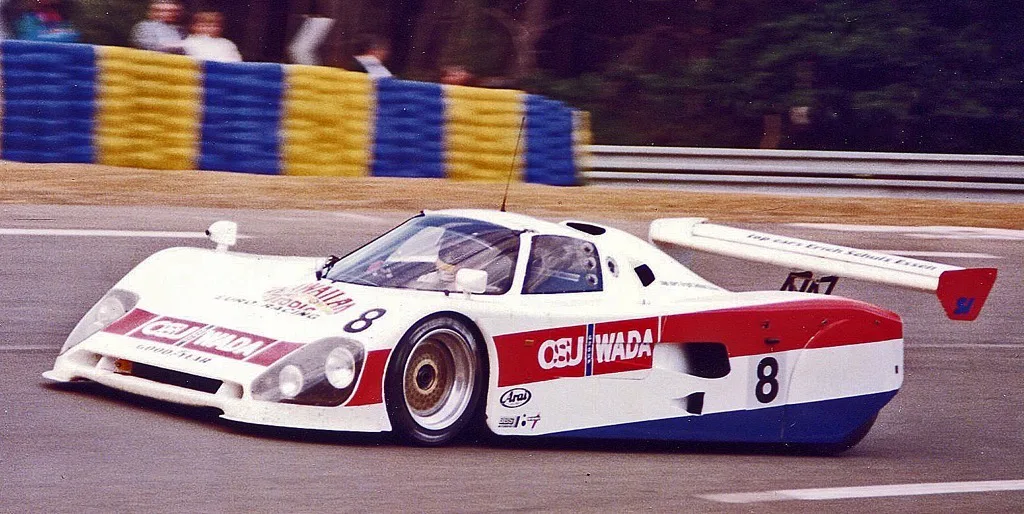
1991 Le Mans 24h, Spice SE90C – Cosworth
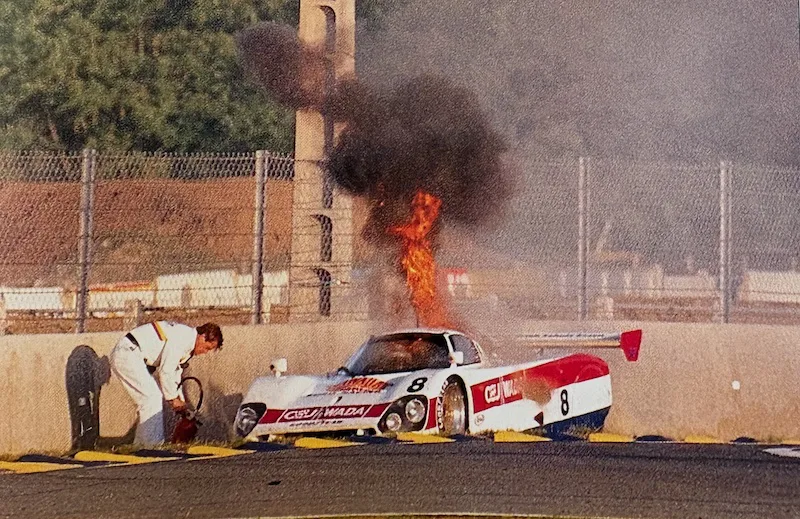
The Dutch Euroracing entered Spice’s qualified 15th fastest, 7 seconds behind the two leading Peugeot 905s. But because it was a class 1 Group C car (normally aspirated 3.5 liter) it was allowed to start the race from the second row. Mercedes and Jaguar used the older Group C cars that were in class 2 and had to start behind the 3.5 liters. The engine blew up, causing a fire and as result a DNF.
Euroracing #8: Charles Zwolsman (NL) / Cor Euser (NL) / Tim Harvey (GB)
Results: Start-grid 3rd / time 3:45.740 / race DNF fire- 72 laps
Spice SE90C – Group C, category 1 <3.5L: Powered by 3.5 liter Ford Cosworth DFZ V8, approximately. 600 hp. Goodyear tires. Weight 800 kg. Aluminium monocoque, chassisnr. Spice SE89 #022
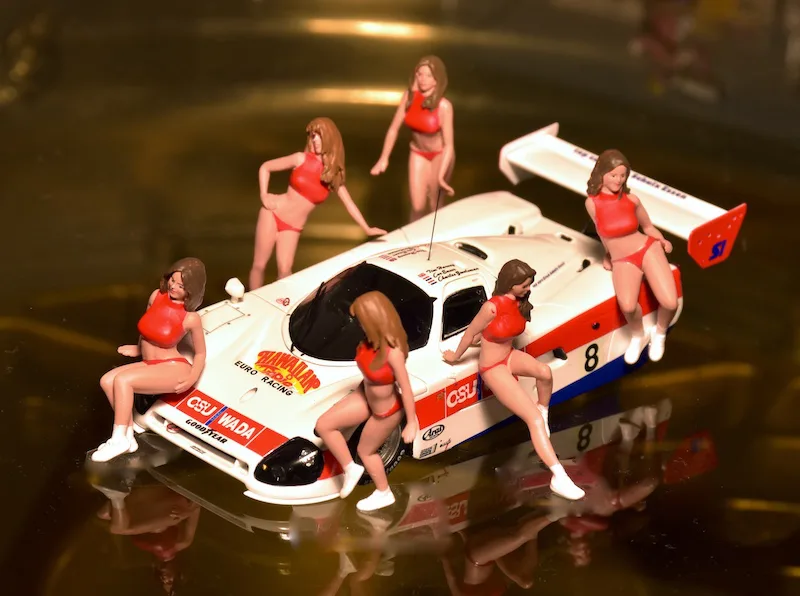
- SPARK S6822 (resin)
- Overall rating: 4 STARS | Quality details: 4STARS | Estimated value: 4 STARS
- Also appears in #095 Hawaiian Tropic
1991 Le Mans 24h, Spice SE90C – Cosworth
In 1976 we saw already a two driver female team in the Alpine, the first all-female line-up in a three driver team was this entry. It almost went wrong before it began. Tomiko Yoshikawa didn’t have the right license and former French F3 champion Cathy Muller replaced her in the last moment. Then, Desiree Wilson crashed the #017 chassis during practice on a wet track beyond repair. Also in the paddock was the GP Motorsport Spice that was brought for spare parts. A deal was made and the GP Motorsport #008 chassis switched owner and received the Cosworth DFZ and pink bodywork and became the new Euro Racing / AO entry. In the race, another crash caused the team to retire.
Euro Racing / AO #40: Desiree Wilson (SA) / Lynn St.James (USA) / Cathy Muller (F)
Results: Start-grid 38th / time 4:11.781 / DNF accident – 47 laps
Spice SE90C – Group C, cat.1: Powered by 3.5 liter Ford Cosworth DFZ V8, approximately. 600 hp. Dunlop tires. Weight 850 kg. Aluminium monocoque, chassisnr. Spice SE89 #008
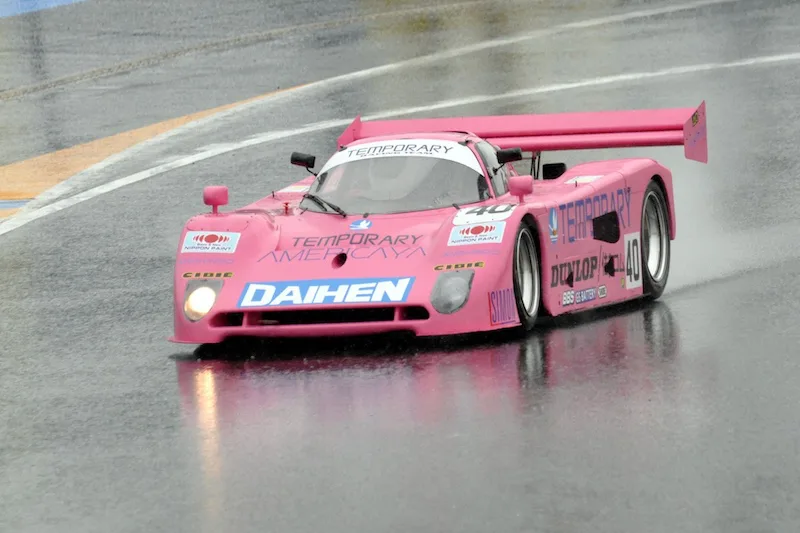
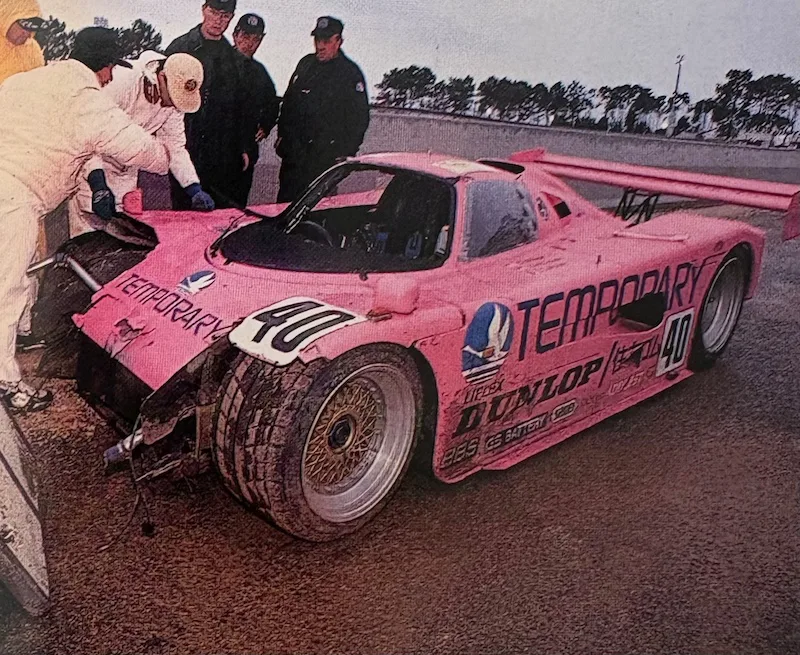
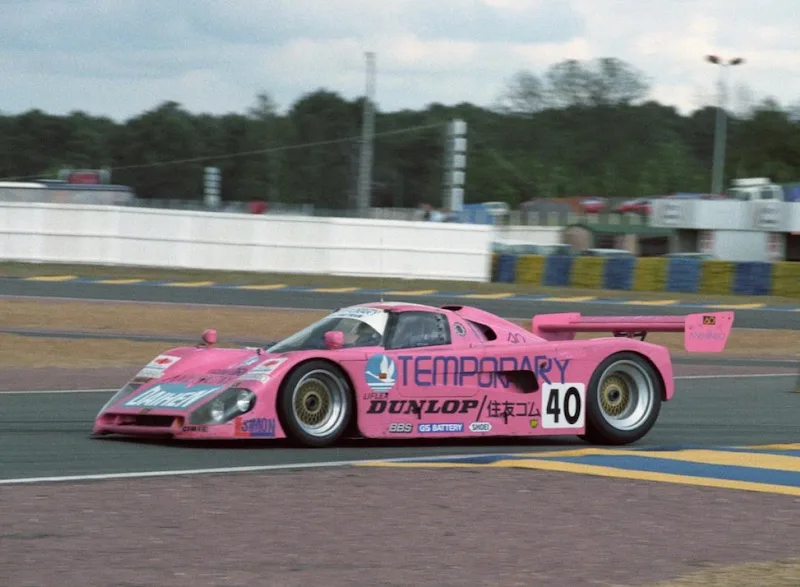
- the first two pictures are the original #017 chassis with a slightly different front
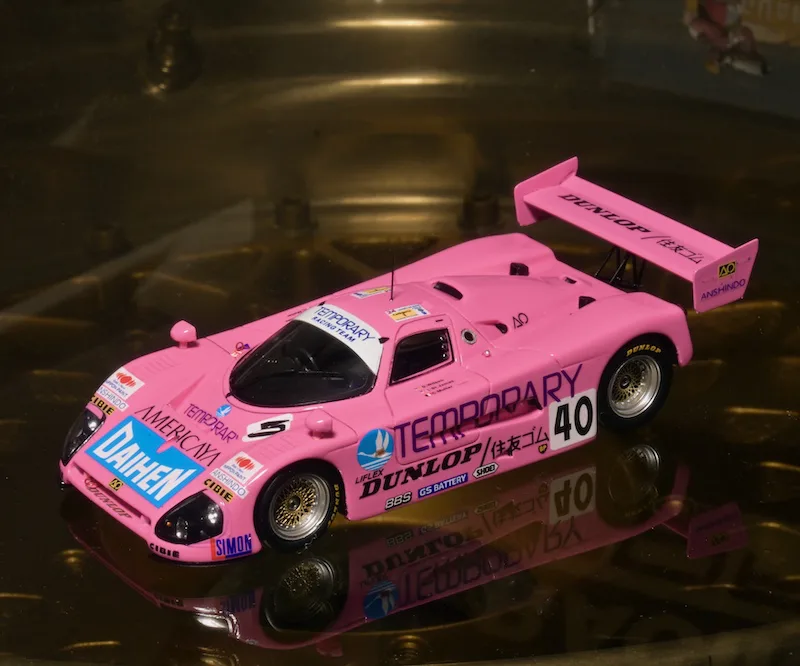
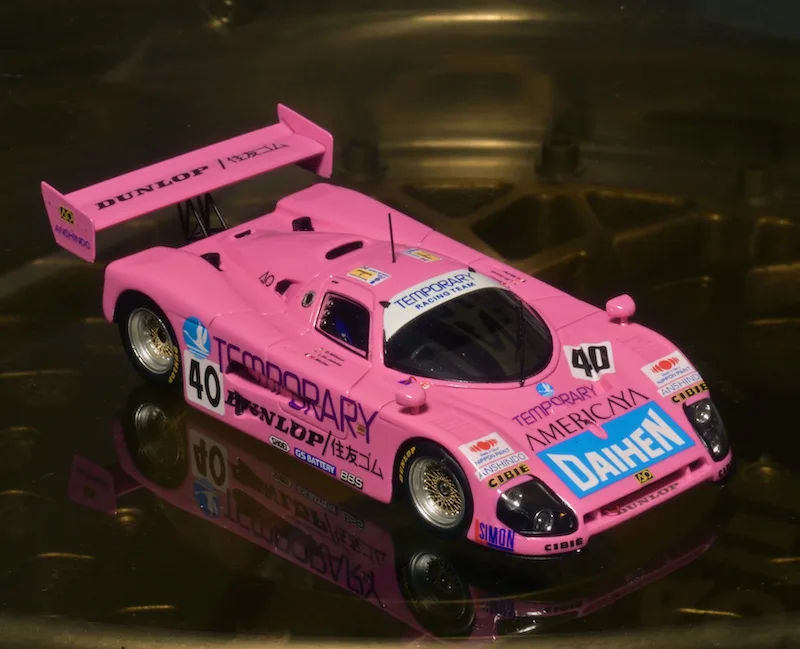
- SPARK S6823 (resin)
- Overall rating: 4 STARS | Quality details: 4 STARS | Estimated value: 4 STARS
- Also appears in #036 Pink & Purple / #124 Racing Ladies
1992 Le Mans 24h, Lola T92/10 – Judd
Dutch entrepreneur Charles Zwolsman had his own team Euroracing with which he raced at Le Mans in 1991 in a Spice. In 1992 he competed with two brand new Lola T92/10 with 3.5 liter Judd V10 (Formula 1) engines, design from fellow Dutchman Wiet Huydekoper. Zwolsman was entered as driver on both cars, the #3 had to retire, but the #4 car managed to finish the race. Besides racing, Zwolsman also managed another team, one that smuggled drugs and performed money laundering. He got arrested several times and deceased while he was in prison.
Euroracing #4: Heinz-Harald Frentzen (D) / Shunji Kasuya (J) / Charles Zwolsman (NL)
Results: Start-grid 12th / time 3:40.207 / race 13th – 271 laps / 6th Cat. 1
Lola T92-10 – Group C, cat. 1: Powered by 3.5 liter Judd GV V10, approx. 600 hp. Michelin tires. Weight 750 kg. Carbon fibre monocoque, chassisnr. #HU02
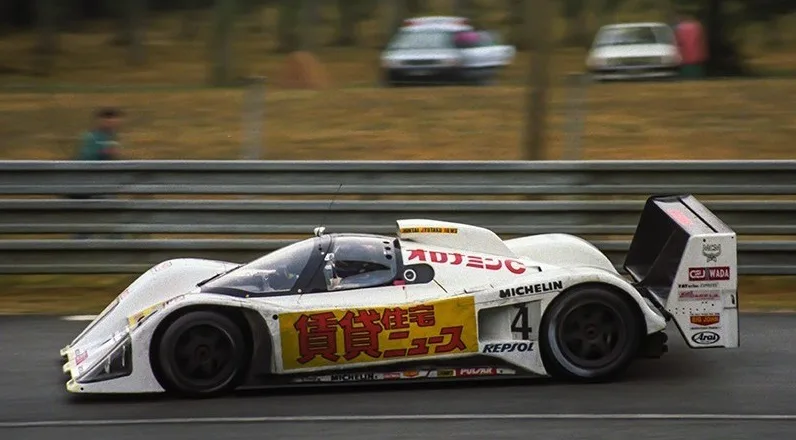
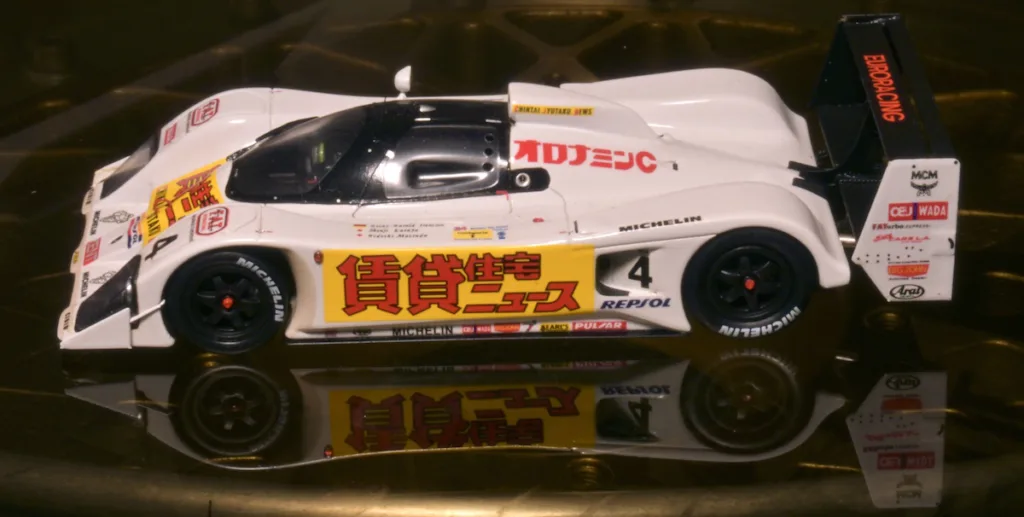
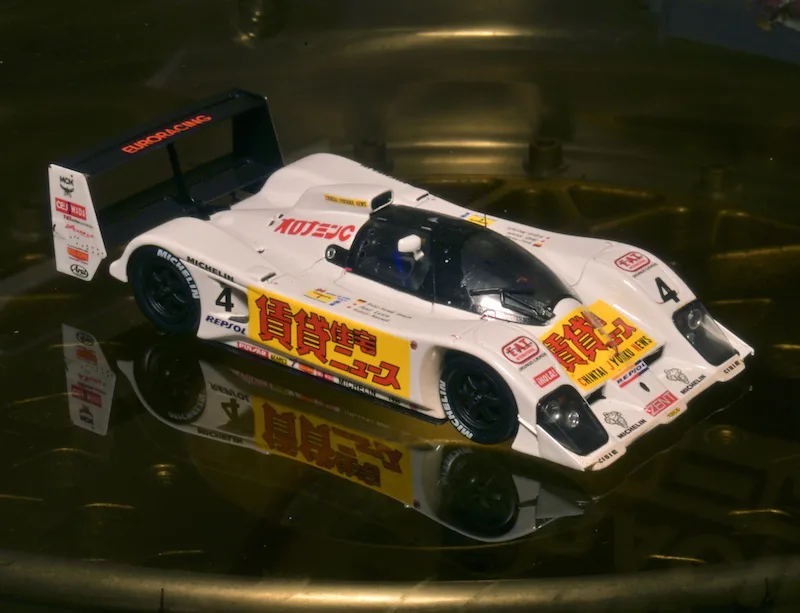
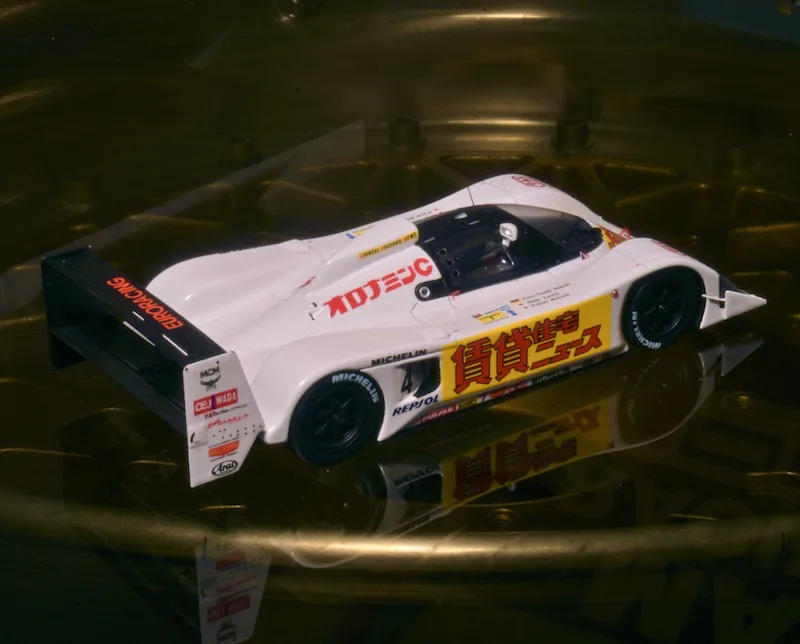
- SPARK S4725 (resin) It looks like the left hand mirror is missing on the model. But the model is accurate, it was also missing on the actual car 😉
- Overall rating: 5 STARS | Quality details: 5 STARS | Estimated value: 5 STARS
- Also appears in #117 Classic Lola
1992 Le Mans 24h, Spice SE90C – Cosworth
Bernard de Dryver entered a Spice SE90 for the 1992 Le Mans. He was supposed to drive himself but didn’t start. The drivers that did, failed to finish because the ignition failed.
B2 Dryver/Action Formula #21: Luigi Taverna (I) / Alessandro Gini (I) / John Sheldon (GB)
Results: Start-grid 21st / time 3:58.595 / race DNF ignition – 150 laps
Spice SE90C – Group C, category 1 <3.5L: Powered by 3.5 liter Ford Cosworth DFZ V8, approximately. 600 hp. Goodyear tires. Weight 800 kg. Aluminium monocoque, chassisnr. Spice SE89 #011
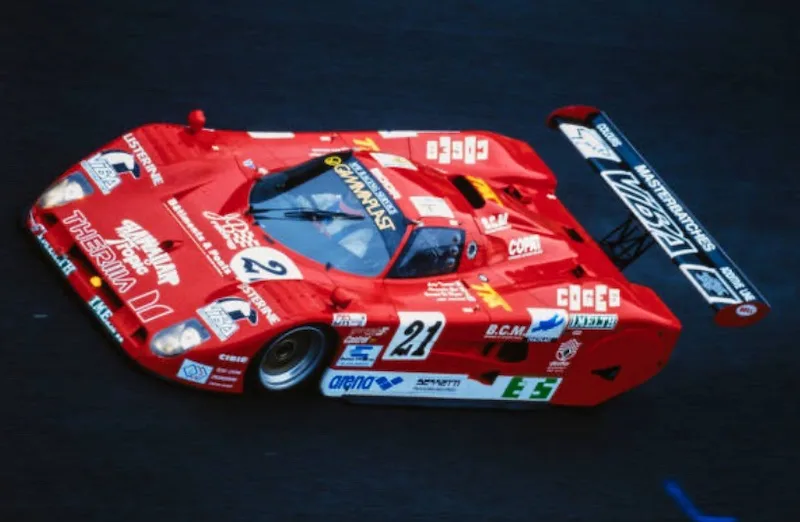
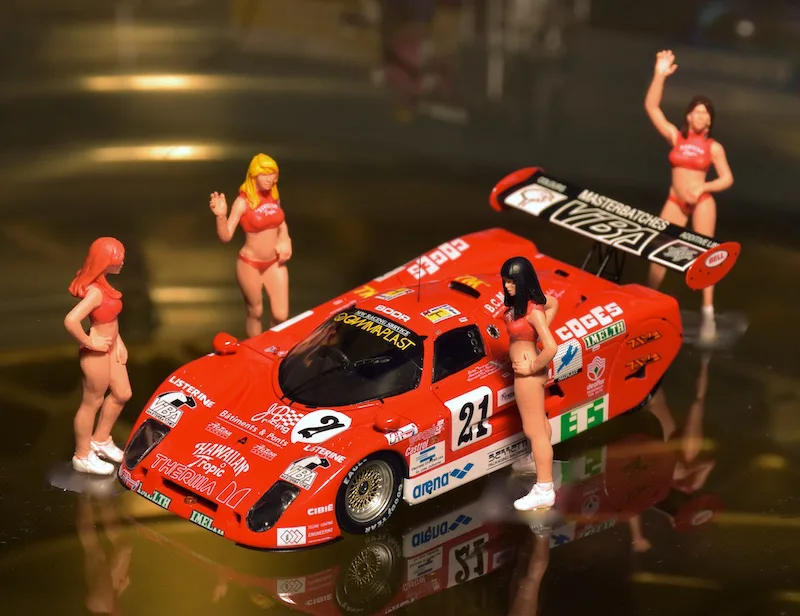
- SPARK S6826 (resin)
- Overall rating: 4 STARS | Quality details: 4 STARS | Estimated value: 4 STARS
- Also appears in #095 Hawaiian Tropic
Thanks for visiting 😉