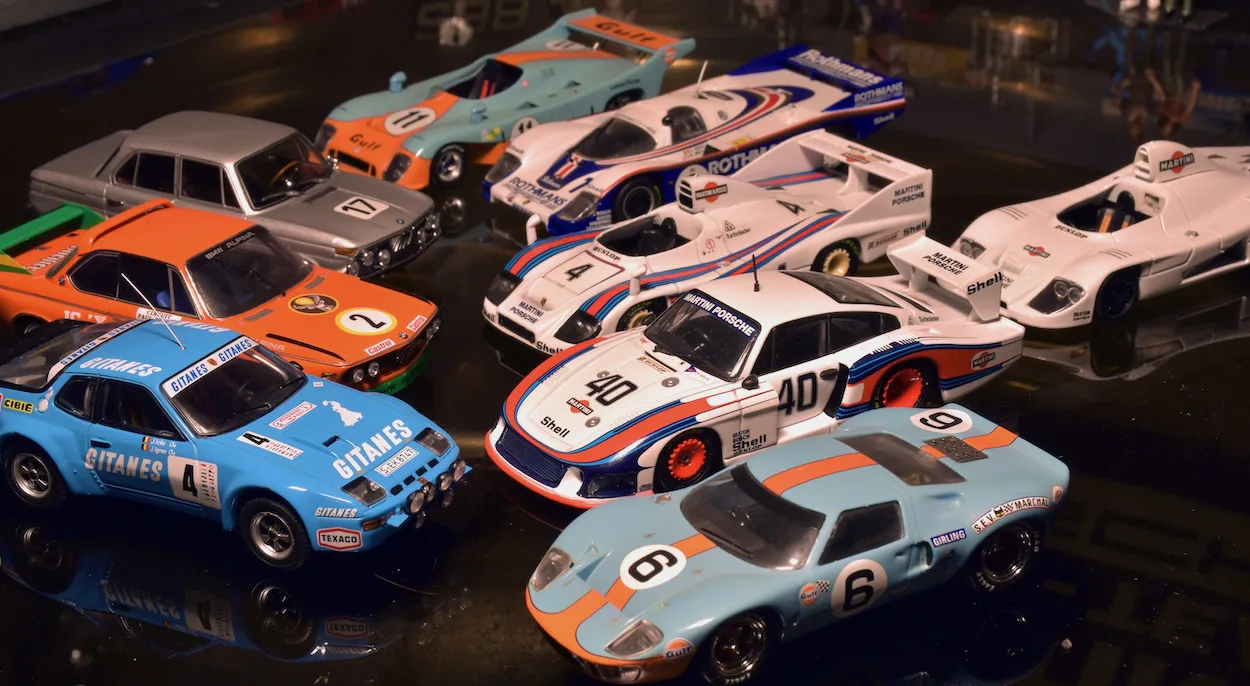
Published March 20, 2026 | Last update March 20, 2026 | 40 models in collection
Some drivers show up a lot more than others in my collection because they raced the most beautiful sports cars of which I collected a model car. So I decided to do these drivers honor by adding collections in which the driver is the main topic.
This collection is dedicated to Jacky Ickx, formerly nick named ‘Mr. Le Mans’ because he won the event 6 times. Tom Kristensen won even more and he is now Mr Le Mans.
- This collection contains:
- Gulf Ford / Mirage
- 1967 Daytona 24h – Ford GT40
- 1967 Le Mans 24h – Mirage M1
- 1969 Le Mans 24h – Ford GT40
- 1975 Le Mans 24h – Mirage GR8
- Ferrari
- 1970 Spa 1000 km – Ferrari 512S
- 1971 Monza 1000 km – Ferrari 312 PB
- 1972 Daytona 6 hours – Ferrari 312 PB
- 1972 Watkins Glen 6h – Ferrari 312 PB
- 1973 Le Mans 24h – Ferrari 312 PB “Coda Lunga”
- BMW
- 1966 Spa 24h, BMW 2000 Ti
- 1973 Paul Ricard 4h – BMW 3.0 CSL
- 1974 Nürburgring 1000 km – BMW 3.0 CSL
- Porsche 935
- 1976 Mugello 6h – Porsche 935/76
- 1976 Vallelunga 6h – Porsche 935/76
- 1976 Dijon 6h – Porsche 935/76
- 1977 Daytona 24h – Porsche 935/76
- 1977 DRM Hockenheim – Porsche 935/77 “baby”
- 1978 Test Paul Ricard – Porsche 935/78 “Moby Dick”
- 1978 DRM Norisring -Porsche 935/78 “Moby Dick”
- 1978 Nürburgring 1000 km – Porsche 935
- Porsche 936
- 1976 Monza 4 hours – Porsche 936
- 1976 Imola 500 km – Porsche 936
- 1976 Le Mans 24h – Porsche 936
- 1976 Dijon 500 km – Porsche 936
- 1977 Le Mans 24h – Porsche 936/77
- 1978 Test Paul Ricard – Porsche 936/78
- 1978 Le Mans 24h – Porsche 936/78 (2x)
- 1979 Le Mans 24h – Porsche 936/78
- 1980 Le Mans 24h – Porsche 908/80
- 1981 Le Mans 24h – Porsche 936/81
- Porsche 956
- 1982 Le Mans 24h – Porsche 956L (2x)
- 1983 Spa 1000 km – Porsche 956K
- Off road
- 1981 Paris – Algers – Dakar – Citroën CX
- 1982 Boucles de Spa – Porsche 924 GTS
- 1983 Paris – Algers – Dakar – Mercedes-Benz 280 GE
- 1986 Paris – Dakar – Porsche 959
- 2000 Dakar – Cairo – Toyota Landcruiser
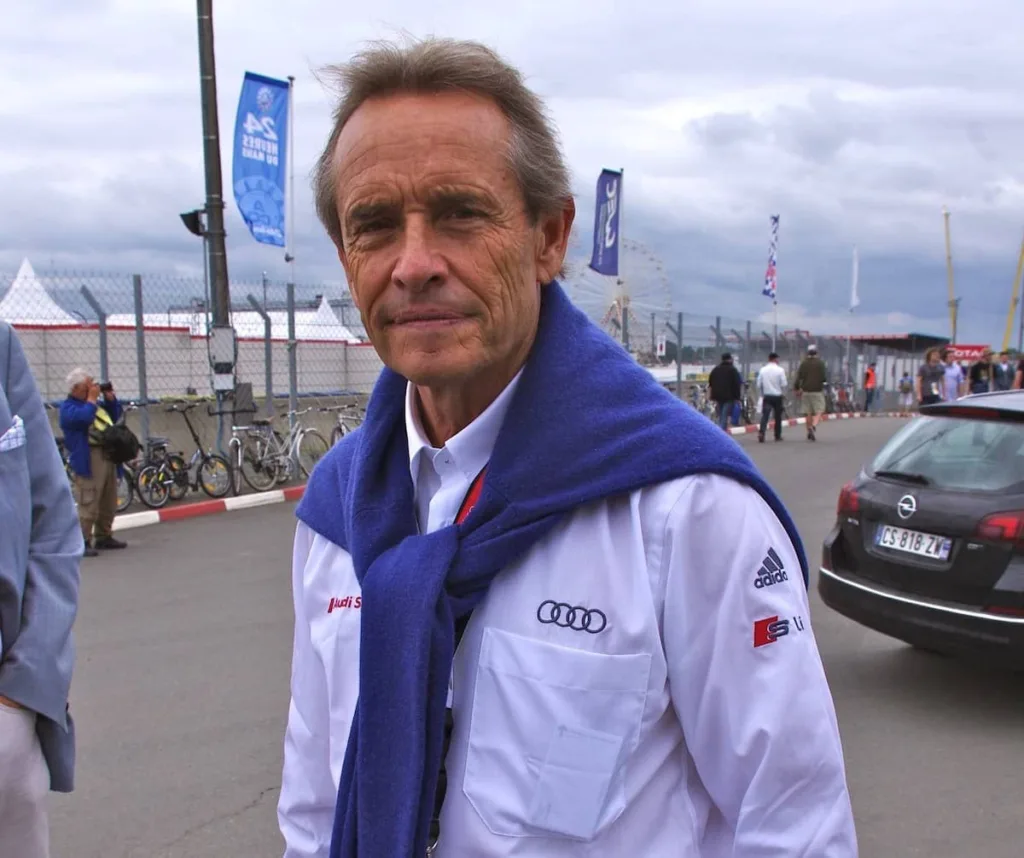
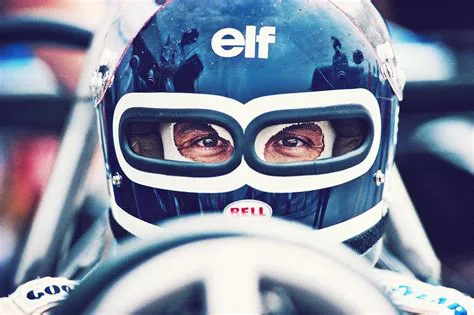
Jacques Bernard Edmon Martin Henri “Jacky” Ickx
born in Brussels, Belgium on January 1, 19451978 Test Paul Ricard – Porsche 936
Early career
Jacky begon his career on motorcycles before he switched to touring cars. His first big win was the 1966 Spa-Francorchamps 24-hour race in a BMW 2000 TI.
There was no ‘road to Formula 1’ with Formula 4, FRECA, Formula 3, Formula 2 etcetera by then, so the same year he made his debut in the German Grand Prix in a Formula 2 Matra in the team of Ken Tyrrell. He would spent quite some years in Formula 1, driving Cooper, Brabham, Ferrari, Lotus, Wolf, Ligier and some other teams.
Sportscars / Le Mans
Already during his Formula One career, Ickx started racing sports cars which was quite common in this days.
Gulf Ford GT40 / Mirage
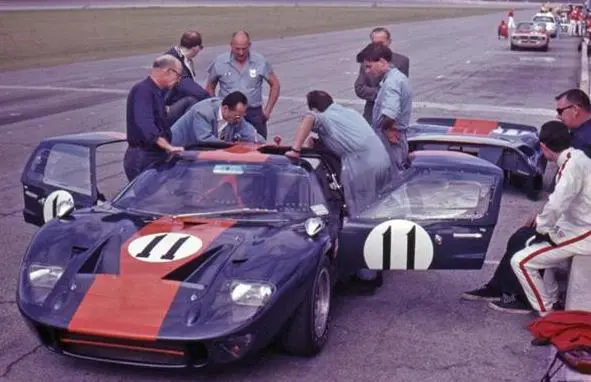
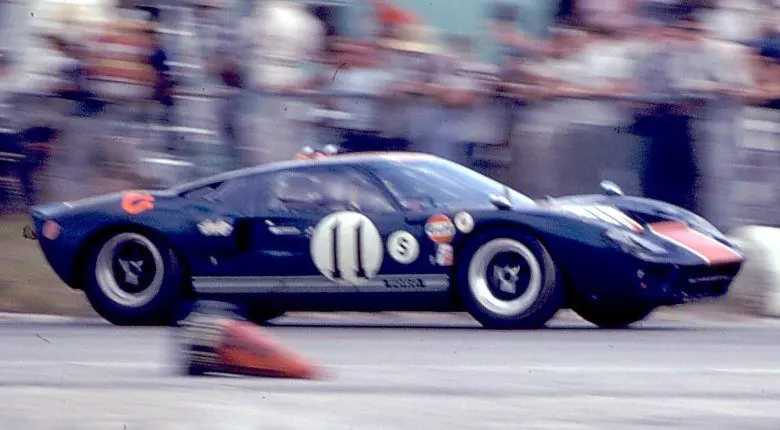
1967 Daytona 24h, Ford GT40
Ford won Le Mans in 1966 convincingly with their big-engined MkII’s, Ferrari took revenge by scoring a triple win at Daytona in ’67. Best of the sports cars and Fords was this John Wyer Automotive Engineering 4.7 liter GT40. It was the car of one of the Gulf directors that marked the start of the cooperation between Gulf and John Wyer Racing.
J.W. Automotive #11: Dick Thompson (USA) / Jacky Ickx (B)
Results: Start-grid 13th / time 2:01.100 / race 6th – 601 laps / 1st Sports car
Ford GT 40 – Sports cars >2L: Powered by 4.7 liter Ford 289 Weslake V8 90º , approx. 400 hp. Firestone tires. Weight 910 kg. Steel semi-monocoque, chassisnr. #1049
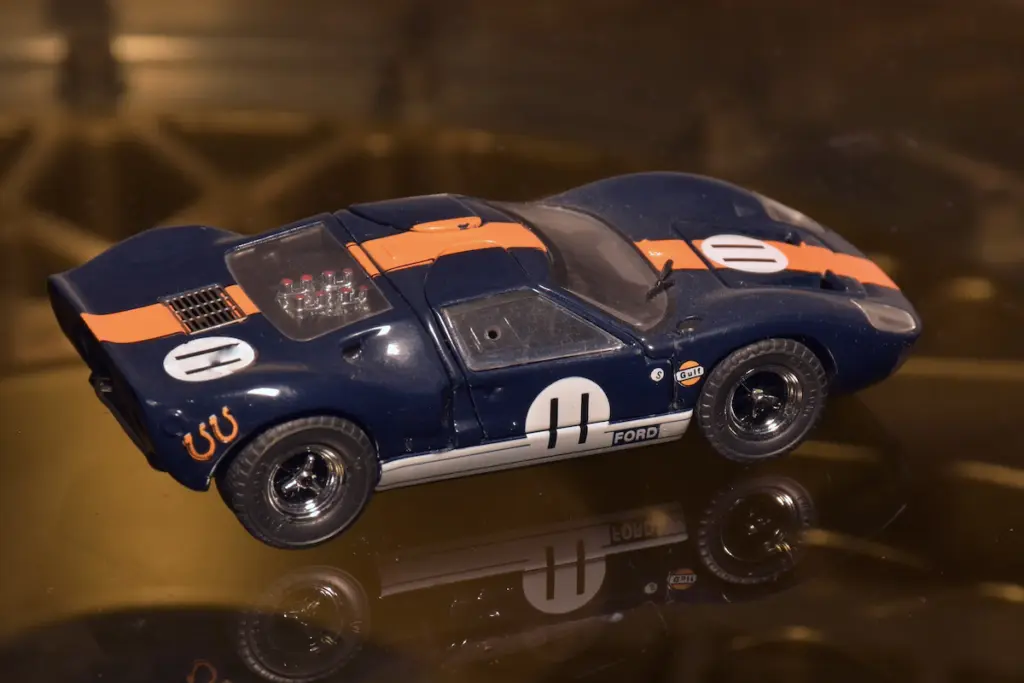
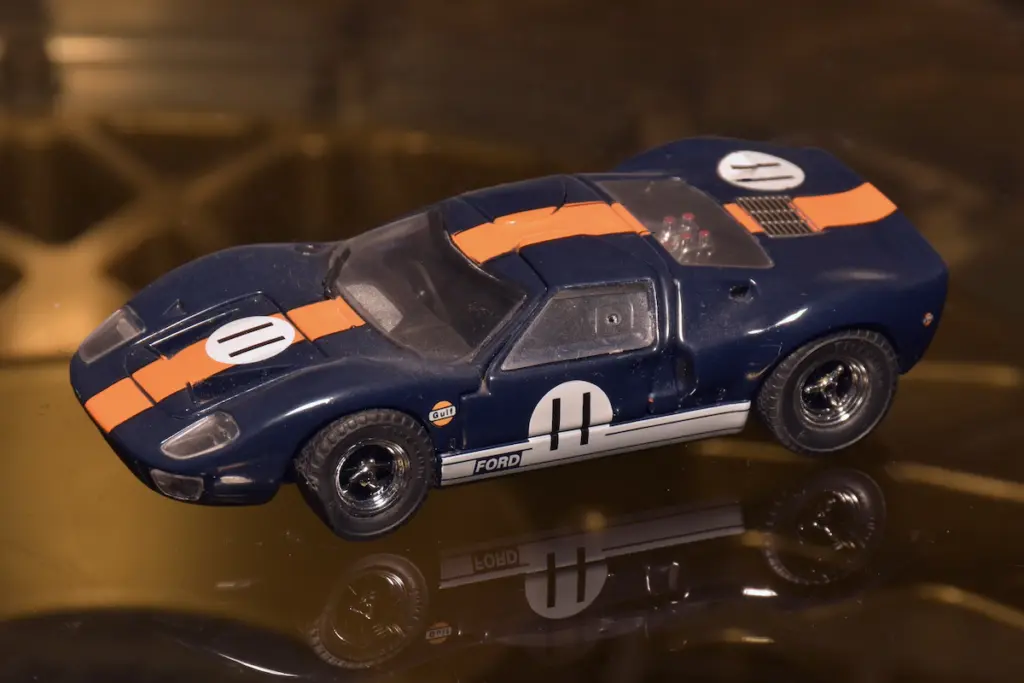
- JOUEF EVOLUTION #unknown (diecast)
- Overall rating: 2 STARS | Quality details: 2 STARS | Estimated value: 1 STARS
- Also appears in #021 Gulf Ford GT40 & Mirage
1967 Le Mans 24h, Mirage M1 – Ford
In 1967, Ford raced the MkIV, an aerodynamically improved version of the successful MkII. John Wyer was one of the customer teams and rebuilt some Ford GT40 chassis’ and changed these into the Mirage M1. The Mirage was lighter, stiffer and had better aerodynamics than the original GT40. But it still used the original engine, enlarged to 5.0 liter where the works Fords relied on the much more powerful 7.0 liter Nascar engine.
J.W. Automotive #15: Jacky Ickx (B) / Brian Muir (AUS)
Results: Start-grid 15th / time 3:36.300 / race DNF head gasket – 29laps
Mirage M1 – Prototypes >5L: Powered by 5.0 liter Ford 305 Weslake V8 90º , approx. 430 hp. Firestone tires. Weight 860 kg. Steel semi-monocoque, chassisnr. #10003 (Ford #1074)

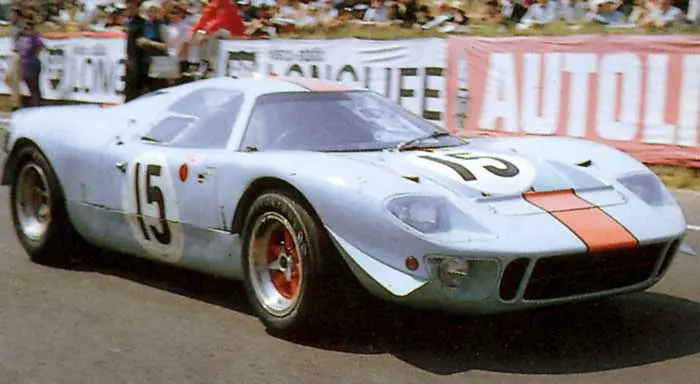
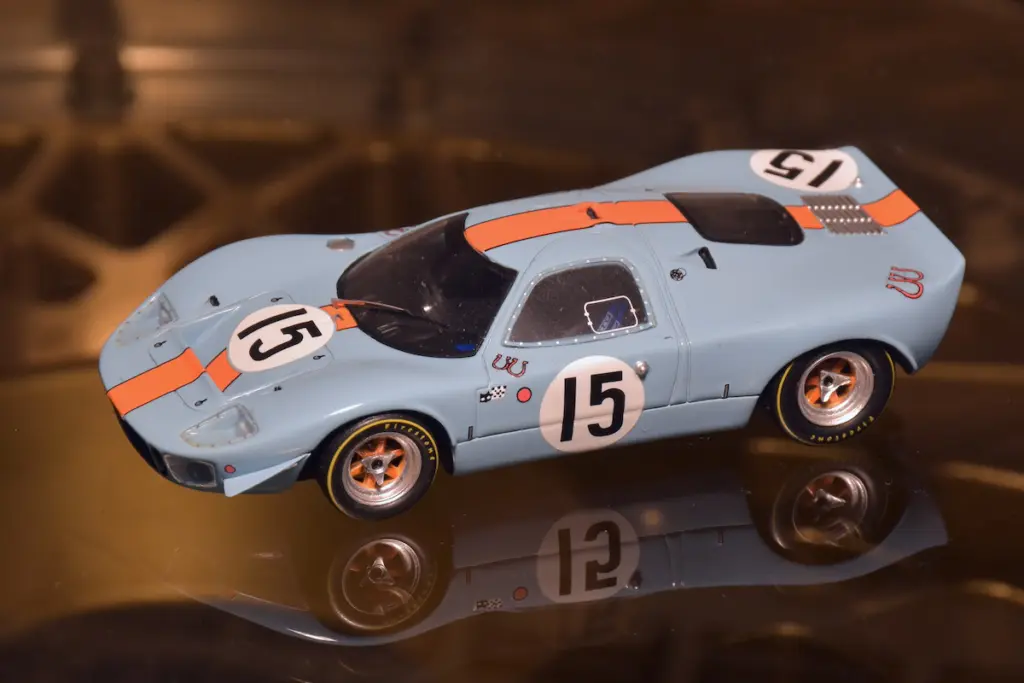
- BIZARRE BZ296 (resin)
- Overall rating: 4 STARS | Quality details: 4 STARS | Estimated value: 4 STARS
- Also appears in #021 Gulf Ford GT40 & Mirage
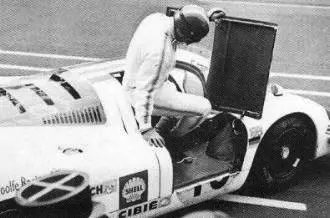
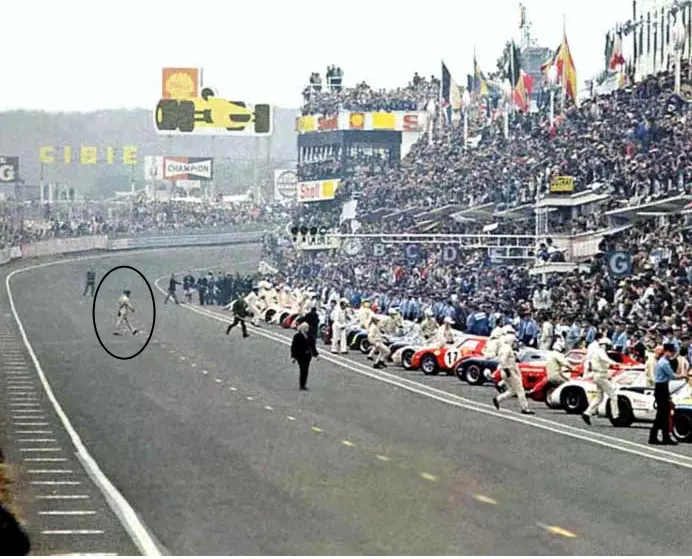
1969 Le Mans 24h: Porsche didn’t only run their 3-liter prototypes but found a loop hole in the regulations and introduced the fast – but aerodynamically still unstable – Porsche 917. Last year’s winner wouldn’t stand a chance against these modern racing cars. Jacky Ickx took the start of the race for the #6 JWA entry. Drivers would run across the track, jump in their cars and race off without their seat belts. Ickx protested against this and walked across the track quietly, fastened his belts and drove off in last position. Sadly John Woolfe (first picture) crashed his Porsche 917 in the first lap and lost his life because he wasn’t strapped in, proving that Ickx was right. It would be the last time that the drivers ran to their cars.
1969 Le Mans 24h, Ford GT40
Jacky Ickx and co-driver Jackie Oliver made up places throughout the race and by the end of Sunday morning the light blue Ford was heading the field because the last of the Porsche 917s retired. The last hours would be a battle between the Ford and the fastest of the Porsche 908s. The slick Porsche was faster on the straight, Ickx knew that if he would turn on the Mulsanne straight first, the Porsche would pass him and he wouldn’t be able to get it back. In the last lap, Ickx pretended to have run out of fuel. Hans Hermann in the Porsche went past and Ickx went for his slipstream. The Porsche had some brake problems and so Ickx outbraked the Porsche at the end of Mulsanne and took victory with less than a second!
J.W. Automotive #6: Jacky Ickx (B) / Jackie Oliver (GB)
Results: Start-grid 13th / time 3:37.500 / race 1st – 372 laps
Ford GT 40 – Sports Car <5L: Powered by 5.0 liter Ford 302 Weslake V8 90º , approx. 430 hp. Firestone tires. Weight 860 kg. Steel semi-monocoque, chassisnr. #1075

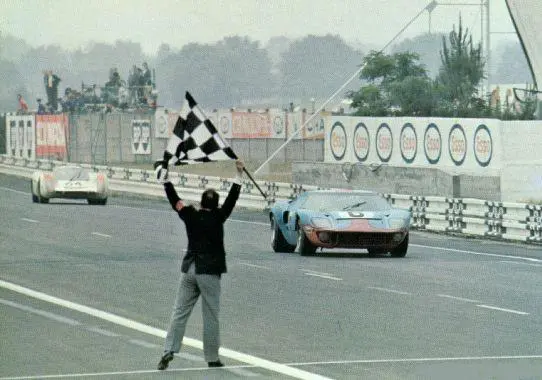
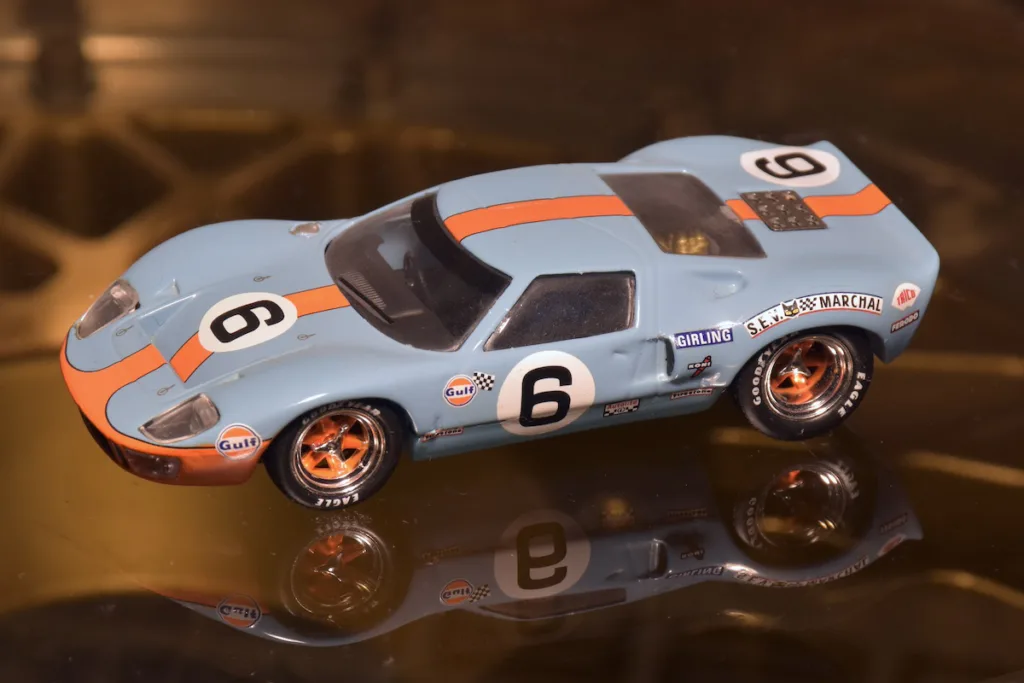
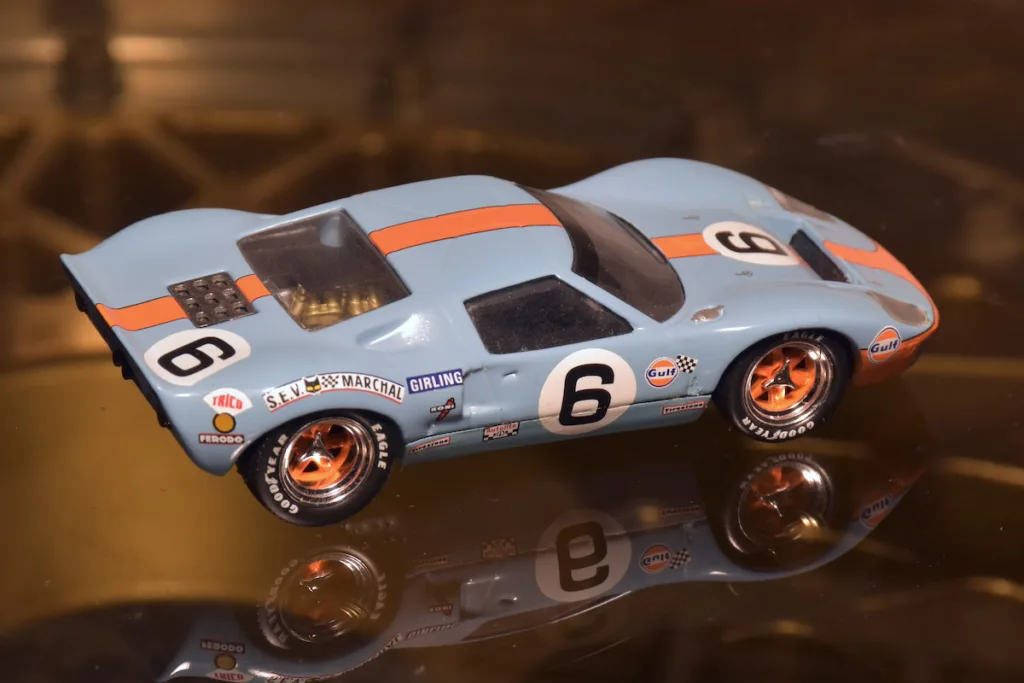
- IXO – Altaya 100 ans de sport automobile #29 (diecast)
- Overall rating: 3 STARS | Quality details: 3 STARS | Estimated value: 2 STARS
- Also appears in #021 Gulf Ford GT40 & Mirage
1975 Le Mans 24h, Mirage GR8 – Ford
1975 Was a year in between of two era’s: Matra quit after 3 wins in a row and Porsche and Renault would come in 1976 with their new turbocharged cars. Team Gulf Mirage took their chances, also thanks to the two topdrivers Ickx and Bell and the fuel consumption rules that benefited the Cosworth V8 which was turned down in power.
Gulf Research Racing Company / JWA #11: Jacky Ickx (B) / Derek Bell (GB)
Results: Start-grid 1st / time 3:49.900 / race 1st – 337 laps
Mirage GR8 – Prototypes Group 6 <3L: Powered by Ford Cosworth DFV – V8 90º, approx. 385 hp (restricted). Goodyear tires. Weight 650 kg. Aluminium monocoque, chassisnrs. #801 & #80
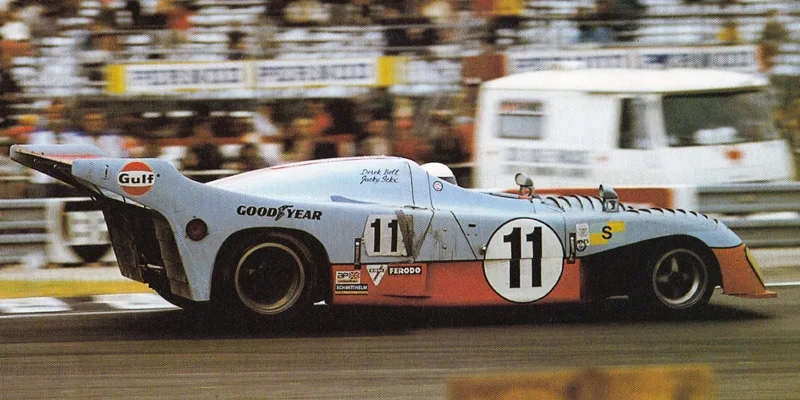
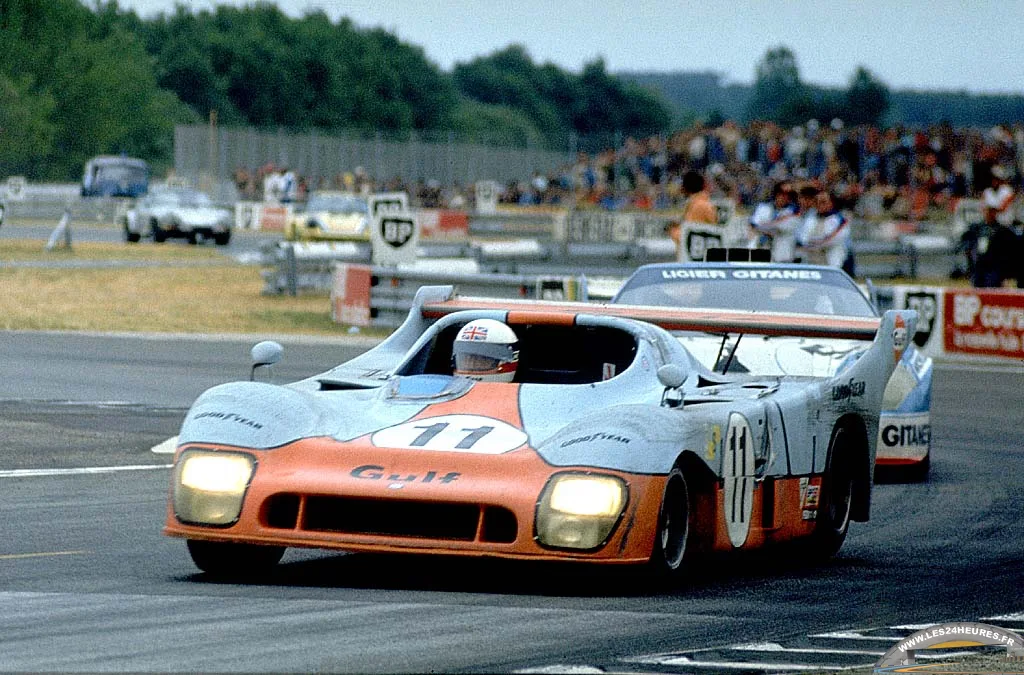
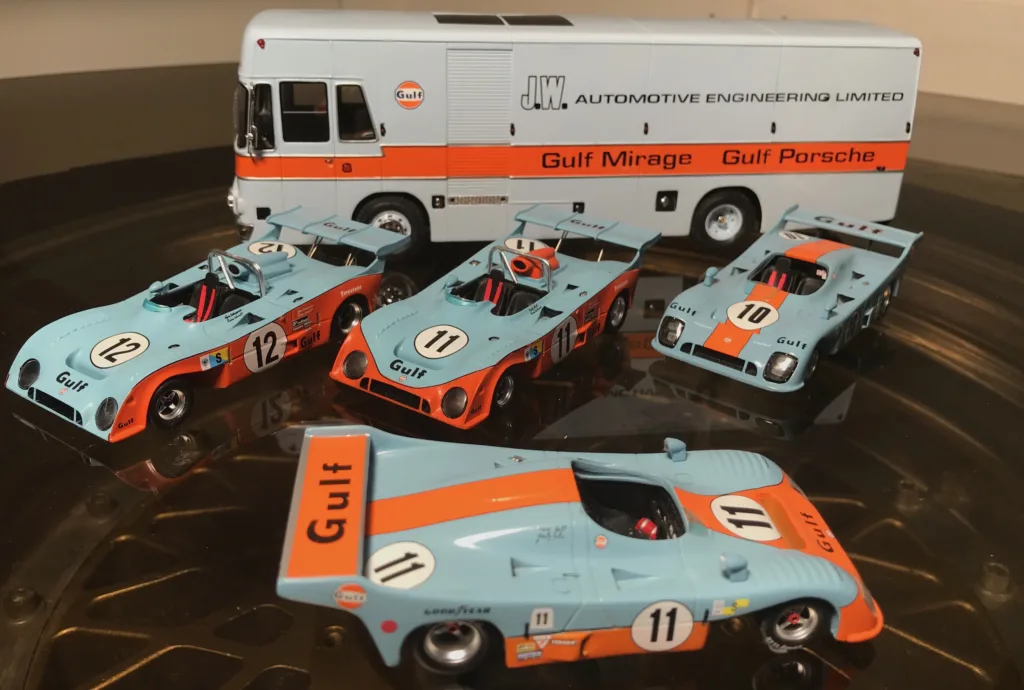
- SPARK STME 01 & STME 02 (resin)
- Overall rating: 4 STARS | Quality details: 3 STARS | Estimated value: 3 STARS
- Also appears in #021 Gulf Ford GT40 & Mirage
Ferrari
1970 Spa-Francorchamps 1000 km, Ferrari 512S
The Porsche 917 came to the race tracks in 1969. It was a revolutionary car that made use of a gap in the homologation regulations. Ferrari followed the example and built 25 Ferrari 512S. It was as least as powerful as the Porsche but the steel frame with aluminum plates made it stiffer but also much heavier than the aluminum space framed Porsche.
Spa Ferrari SEFAC #20: Jacky Ickx (B) / John Surtees (GB)
Results: Start-grid 3rd / time 3:24.400 / race 2nd – 71 laps
Ferrari 512S – Sports Cars <5L: Powered by 5.0 liter Ferrari Tipo 128 LM V12 60º, approx. 600 hp. Firestone tires. Weight 840 kg. Steel monocoque, chassisnr. #1038
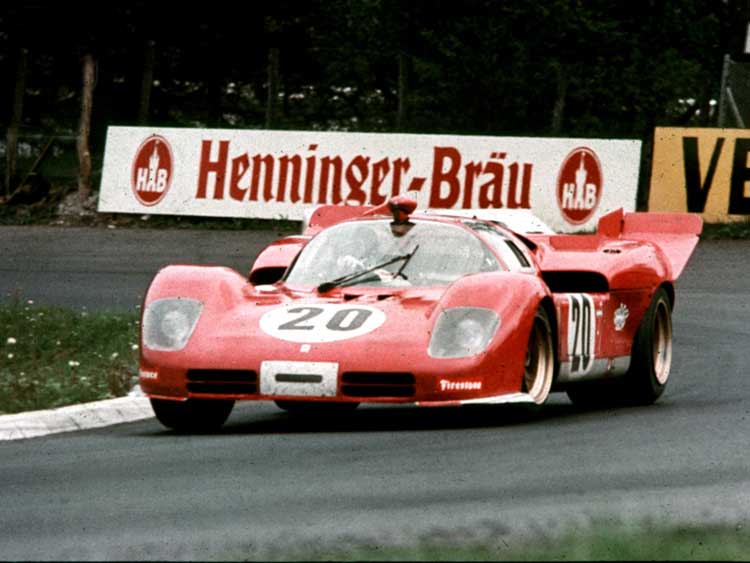
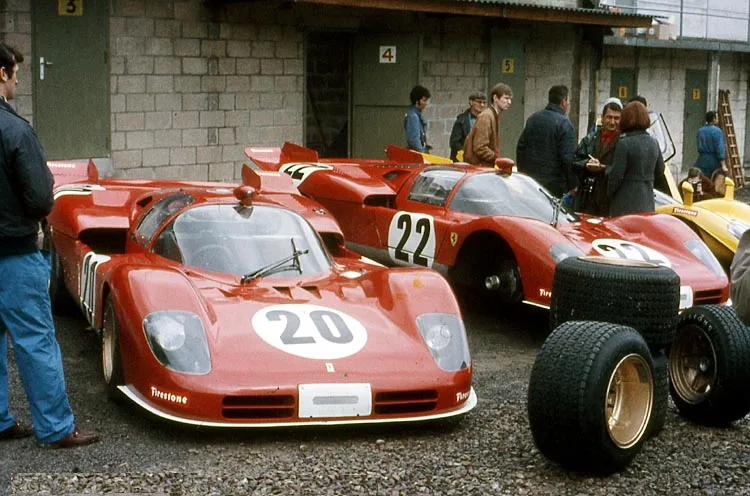
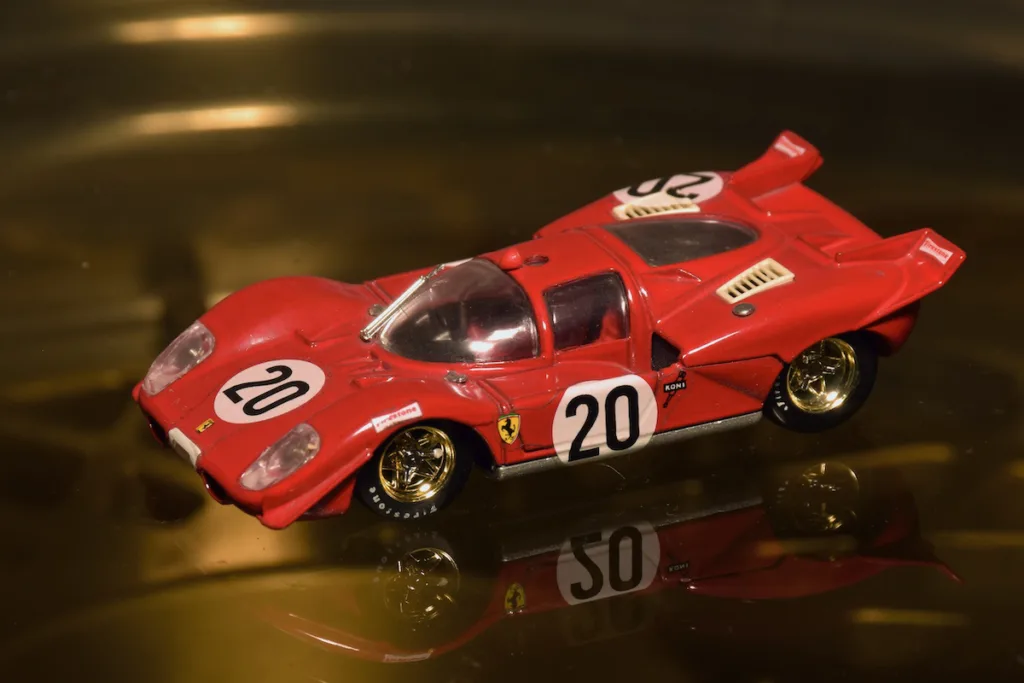
- BRUMM R202 (diecast)
- Overall rating: 2 STARS | Quality details: 2 STARS | Estimated value: 3 STARS
- Also appears in #038 Ferrari Prototypes
1971 Monza 1000 km, Ferrari 312 PB
The 1971 3-liter Ferrari was named 312 PB to distinguish it from the space frame 312 P that raced in 1969. It made its debut in a time when Ferrari also raced the 5-liter 512M’s and reached some fine results such as this 2nd place in qualifying at Monza.
Spa Ferrari SEFAC #15: Clay Regazzoni (CH) / Jacky Ickx (B)
Results: Start-grid 3rd / time 3:24.400 / race DNF accident – 11 laps
Ferrari 312 PB – Prototypes <3L: Powered by 3.0 liter Ferrari Tipo 623/001 V12 180º, approx. 460 hp. Firestone tires. Weight 665 kg. Aluminum monocoque, chassisnr. #0878
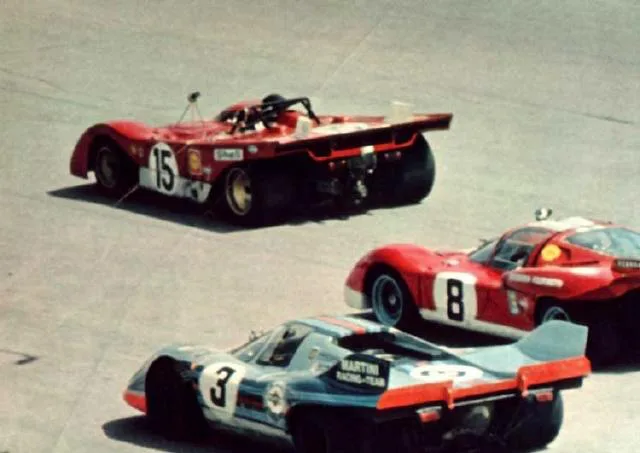
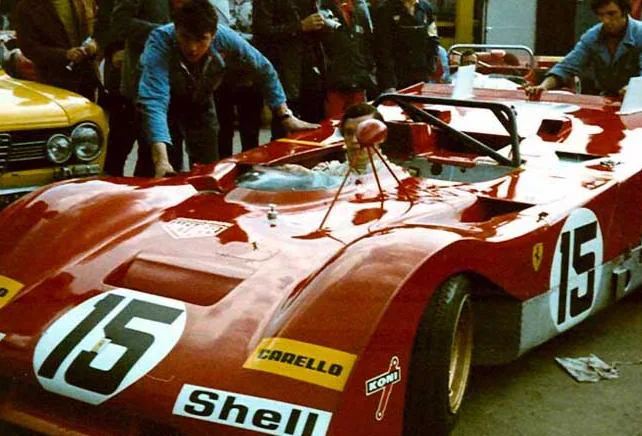

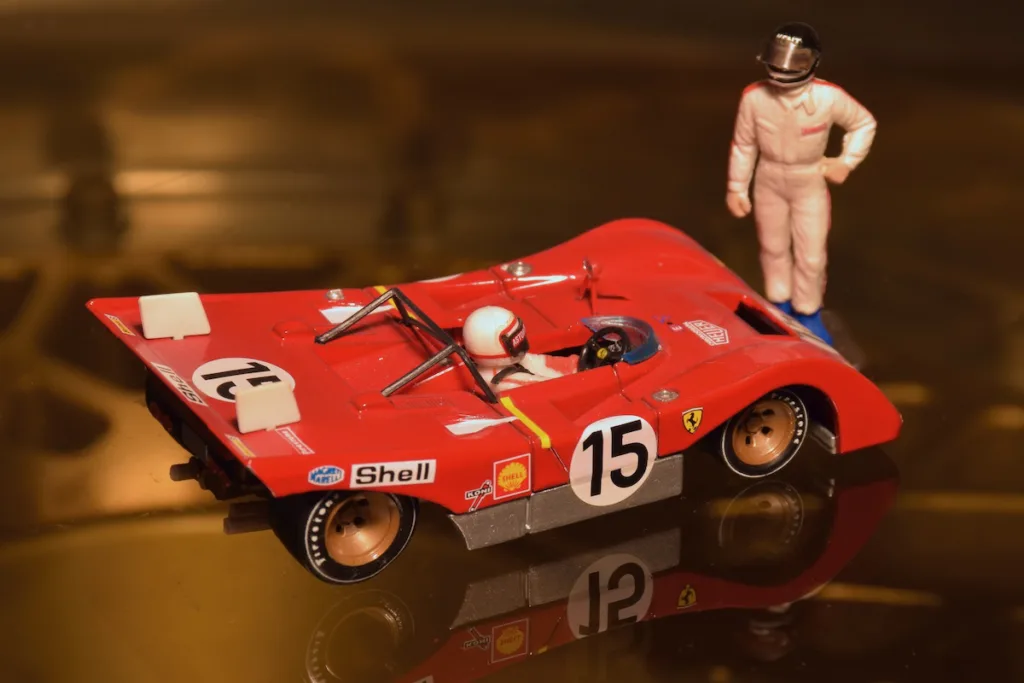
- BRUMM R259 CH (diecast) Regazzoni in the car and Ickx standing next to it
- Overall rating: 2 STARS | Quality details: 2 STARS | Estimated value: 3 STARS
- Also appears in #038 Ferrari Prototypes
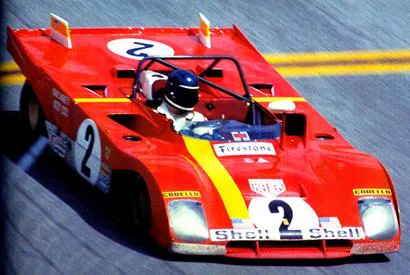
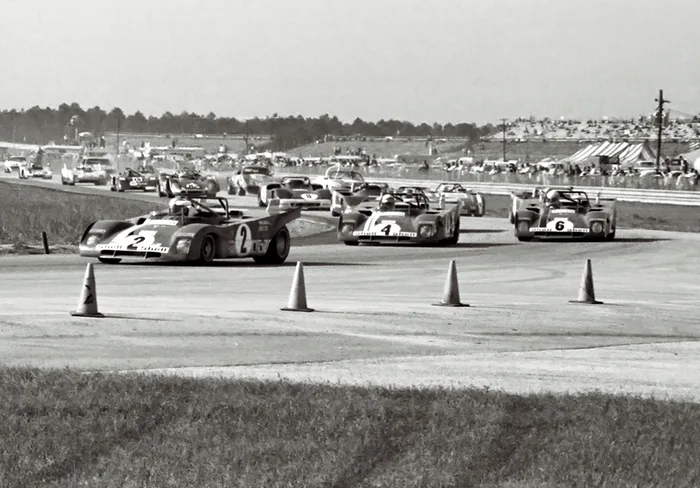
1972 Daytona 6 hours, Ferrari 312 PB
The 3-liter Ferrari 312 PB won al world championship races in 1972 but Le Mans. Enzo Ferrari thought that a 24 hour race was too long for the high revving 12 cylinder engines and decided no to compete in Le Mans. Matra won the 24 hour race. Daytona was only a 6-hour race this year, so Ferrari raced and won.
Spa Ferrari SEFAC #2: Mario Andretti (USA) / Jacky Ickx (B)
Results: Start-grid 1st / time 1:44.220 / race 1st – 194 laps
Ferrari 312 PB – Prototypes <3L: Powered by 3.0 liter Ferrari Tipo 623/001 V12 180º, approx. 460 hp. Firestone tires. Weight 665 kg. Aluminum monocoque, chassisnr. #0888
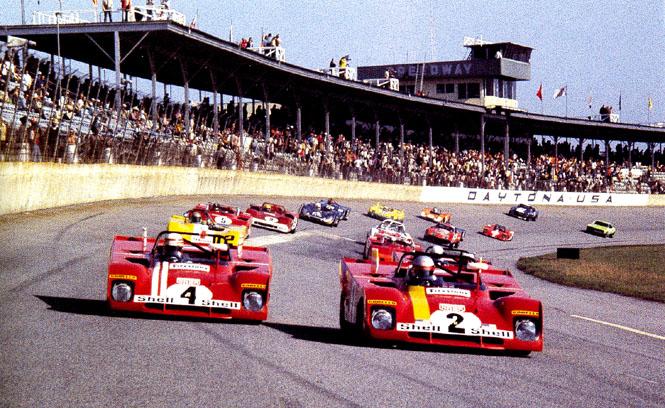

- BRUMM R260 (diecast)
- Overall rating: 2 STARS | Quality details: 2 STARS | Estimated value: 2 STARS
- Also appears in #038 Ferrari Prototypes
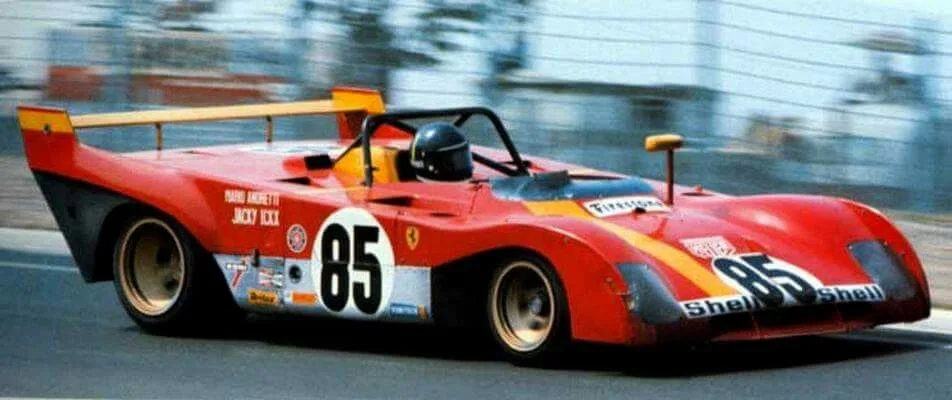
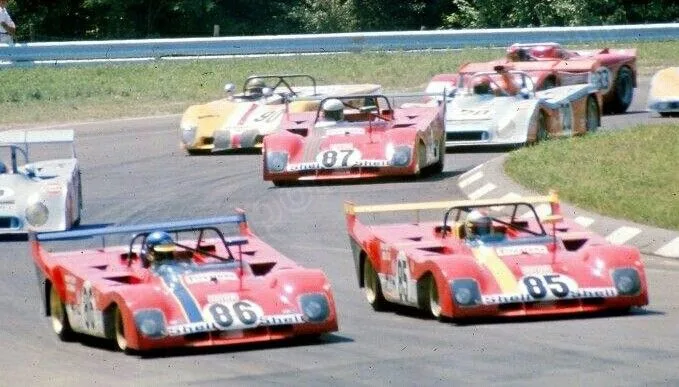
1972 Watkins Glen 6h, Ferrari 312 PB
Watkins Glen was the last world championship race in 1972 and that also ended in a double victory for the Ferrari team. It was the second time that the Ferrari’s raced with the rear wing and the black bodywork behind the rear wheels.
Spa Ferrari SEFAC #85: Mario Andretti (USA) / Jacky Ickx (B)
Results: Start-grid 1st / time 1:44.220 / race 1st – 194 laps
Ferrari 312 PB – Prototypes <3L: Powered by 3.0 liter Ferrari Tipo 623/001 V12 180º, approx. 460 hp. Firestone tires. Weight 665 kg. Aluminum monocoque, chassisnr. #0896

- ALTAYA unknown (diecast)
- Overall rating: 3 STARS | Quality details: 3 STARS | Estimated value: 3 STARS
- Also appears in #038 Ferrari Prototypes
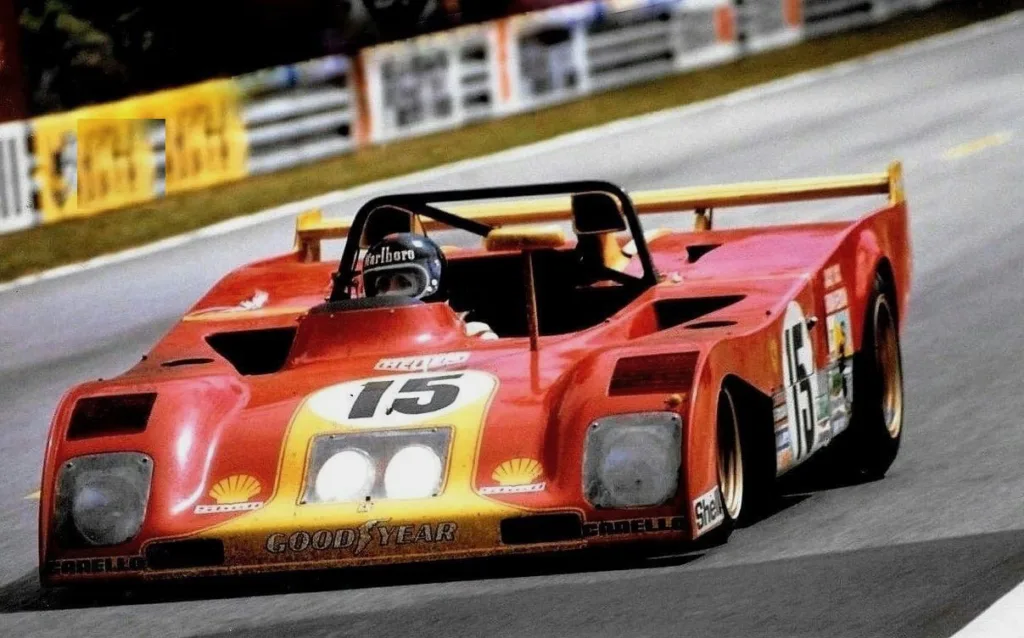
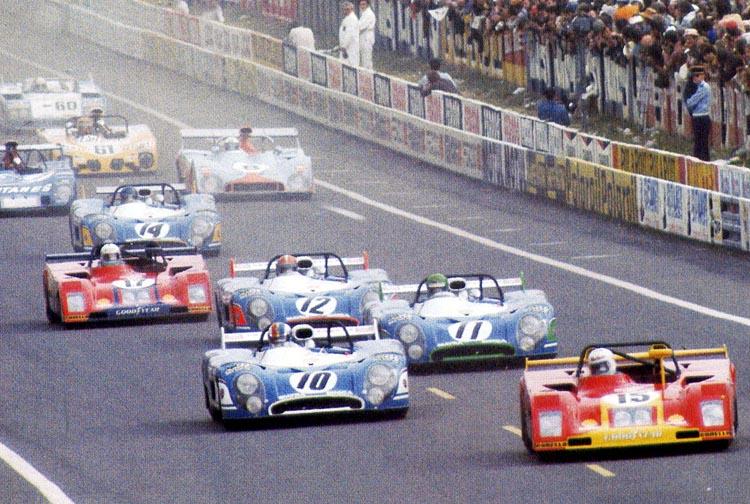
1973 Le Mans 24h, Ferrari 312 PB “Coda Lunga”
Ferrari was far less dominant in. 1973. World championship races were won by Porsche (Daytona, Targa Florio), Gulf Mirage (Spa), Ferrari (Monza, Nürburgring) and Matra-Simca (Vallelunga, Dijon) before they reached Le Mans. The Ferrari’s were an evolution version of the car from last year and had a Long tail bodywork “Coda Lunga” in Italian. Matra-Simca took the win at Le Mans, the next two world championship races and the title.
Spa Ferrari SEFAC #15: Jacky Ickx (B) / Brian Redman (GB)
Results: Start-grid 2nd / time 3:38.500 / race DNF engine – 332 laps
Ferrari 312 PB – Prototypes <3L: Powered by 3.0 liter Ferrari Tipo 623/001 V12 180º, approx. 460 hp. Firestone tires. Weight 665 kg. Aluminum monocoque, chassisnr. #0888
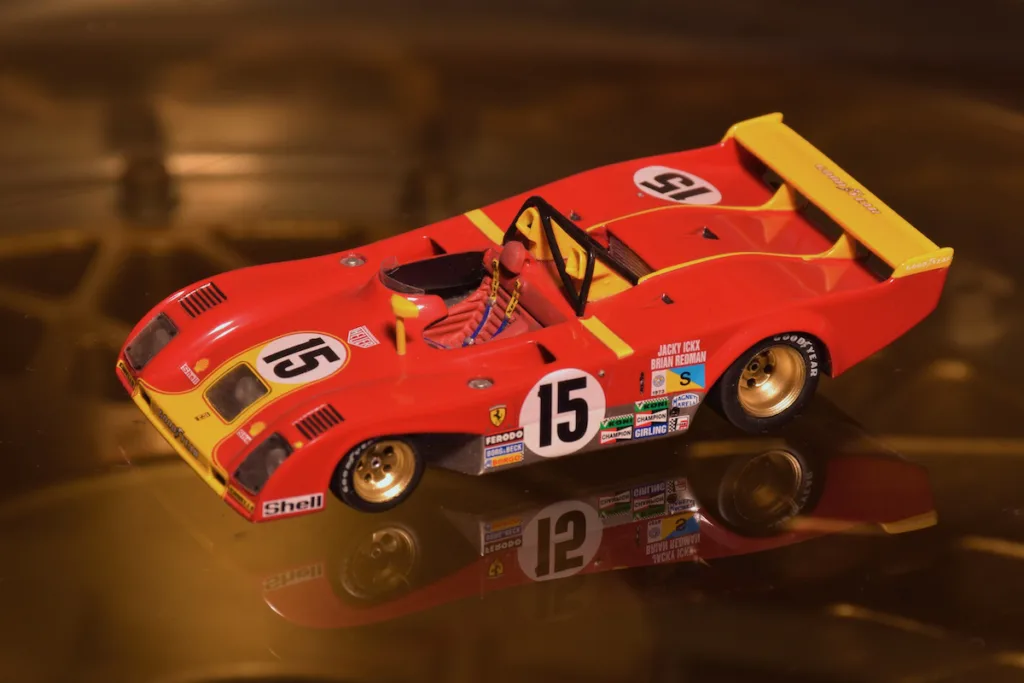
- RED LINE RL 00022 (resin, produced by Spark)
- Overall rating: 5 STARS | Quality details: 5 STARS | Estimated value: 5 STARS
- #15 also appears in #038 Ferrari Prototypes
BMW
1966 Spa-Francorchamps 24h, BMW 2000 Ti
Last year, Jacky’s brother Pascal won the Spa 24h in a BMW 1800 TI/Sa. This year it’s Jacky’s turn with the somewhat more powerful BMW 2000 Ti which he raced together with BMW’s regular Hubert Hahne. The other car of the team had already abandoned the race with an overheated engine and blown head gasket which was the main problem for the BMW’s last year also. The Ickx/Hahne car also had cooling issues, but a 5-minute pit stop to change the radiator and cool the car was enough to get it to the finish first.
BMW A.G. #17: Jacky Ickx (B) / Hubert Hahne (D)
Results: Start-grid 1st / time 4:45.600 / race 1st – 287 laps
BMW 2000 Ti – Touring division 3, >1.6L: Powered by 2.0 liter BMW M10 straight-4, approx. 170 hp. Firestone tires. Weight 970 kg. Steel monocoque, chassisnr. #unknown.
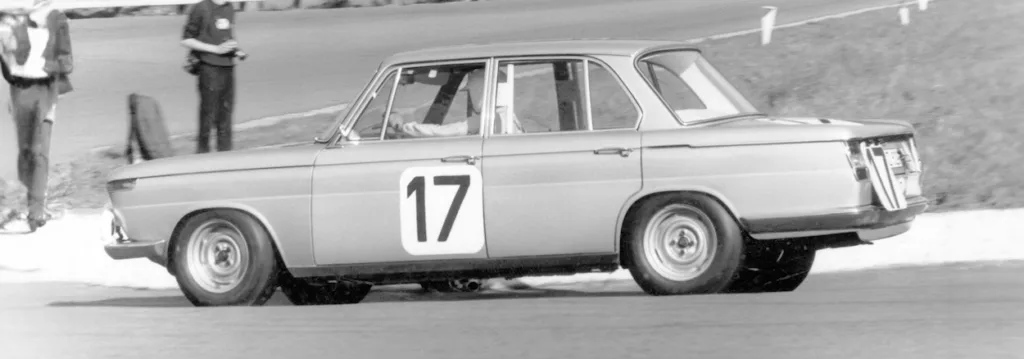
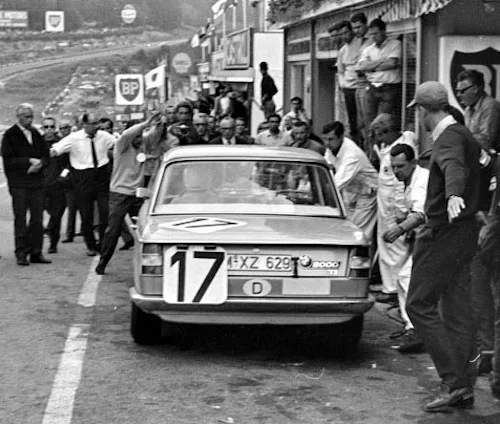
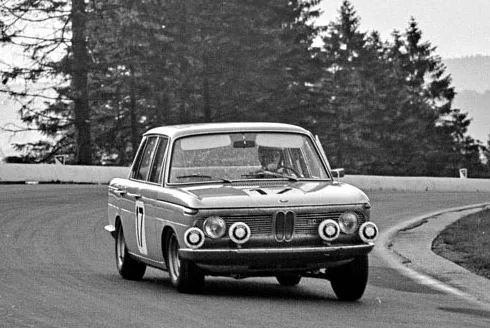
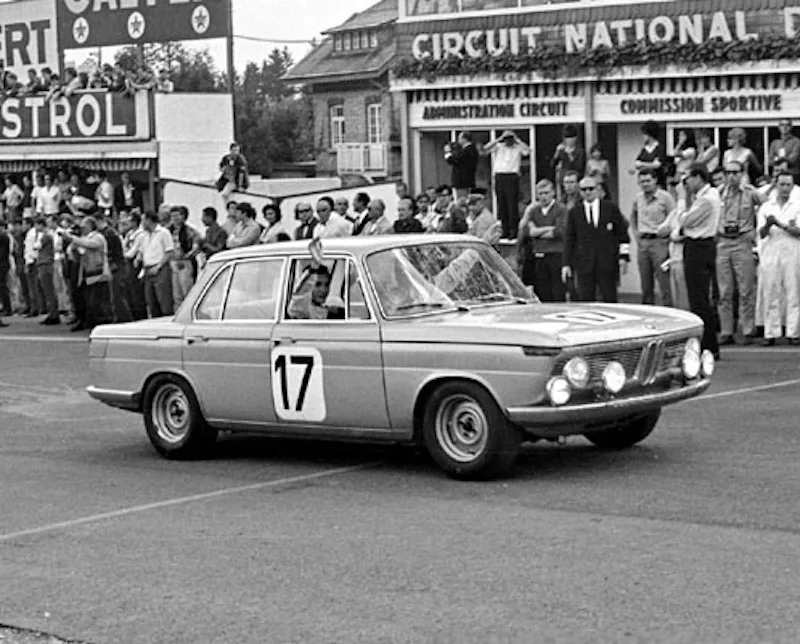
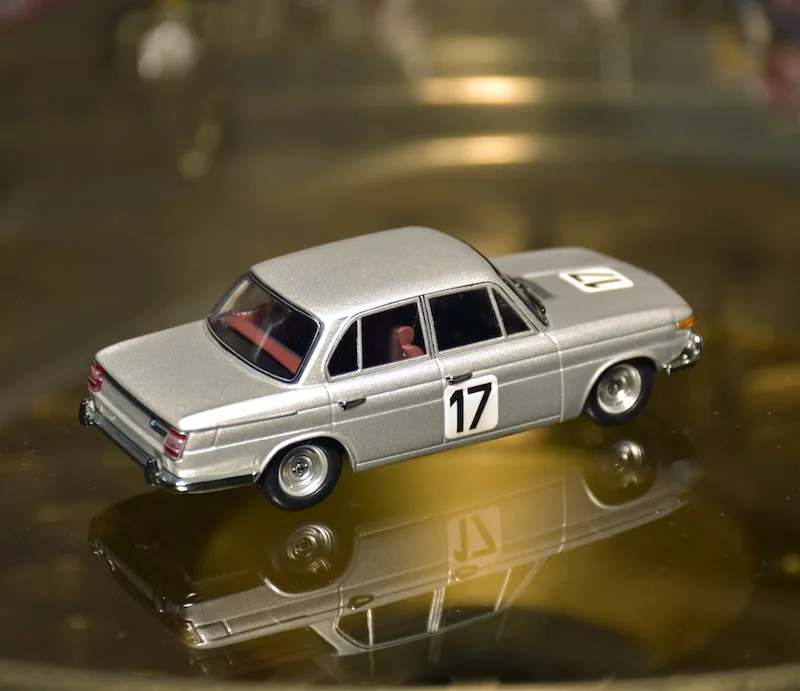
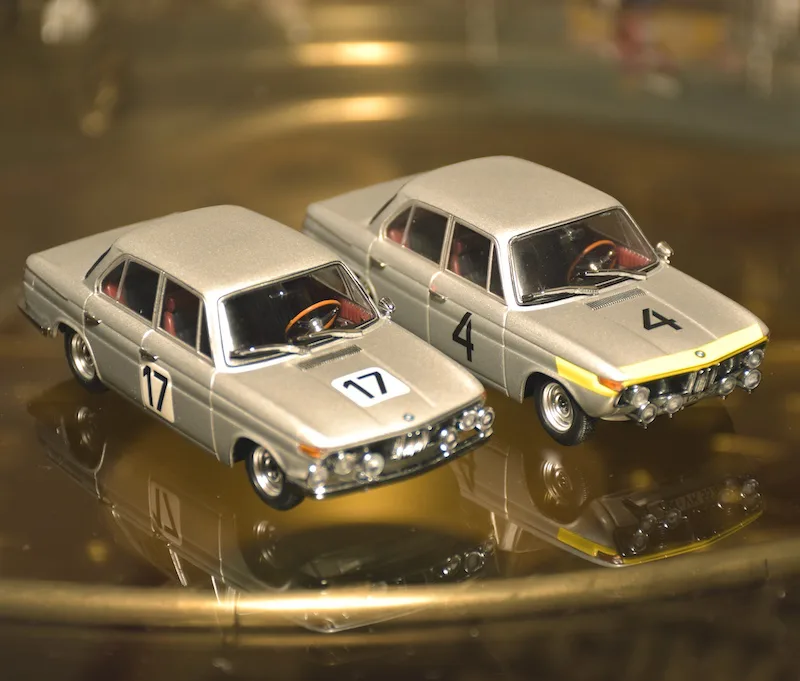
- MINICHAMPS MC 400 662517 limited 1272 pcs. Minichamps made an error: on the base plate the names of Ickx and Van Ophem are mentioned. Those are the winners from the previous year in a BMW 1800 TI/Sa. Also, the model doesn’t have the square plate #17 on the rear.
- Overall rating: 3 STARS | Quality details: 2 STARS | Estimated value: 3 STARS
- Also appears in #113 BMW 4-cylinder engines – part I
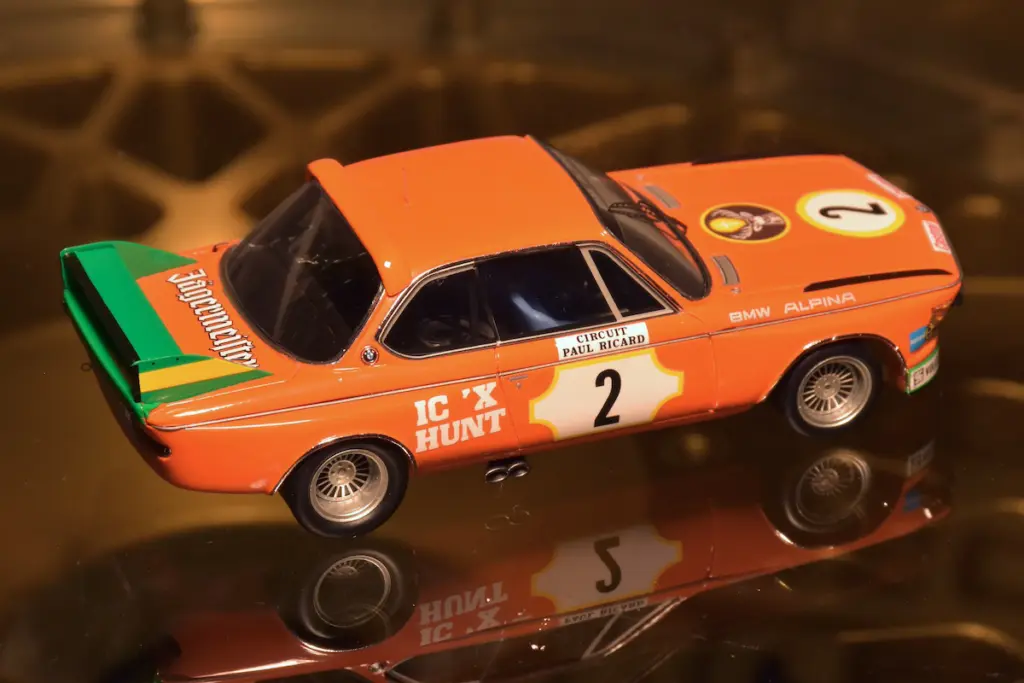
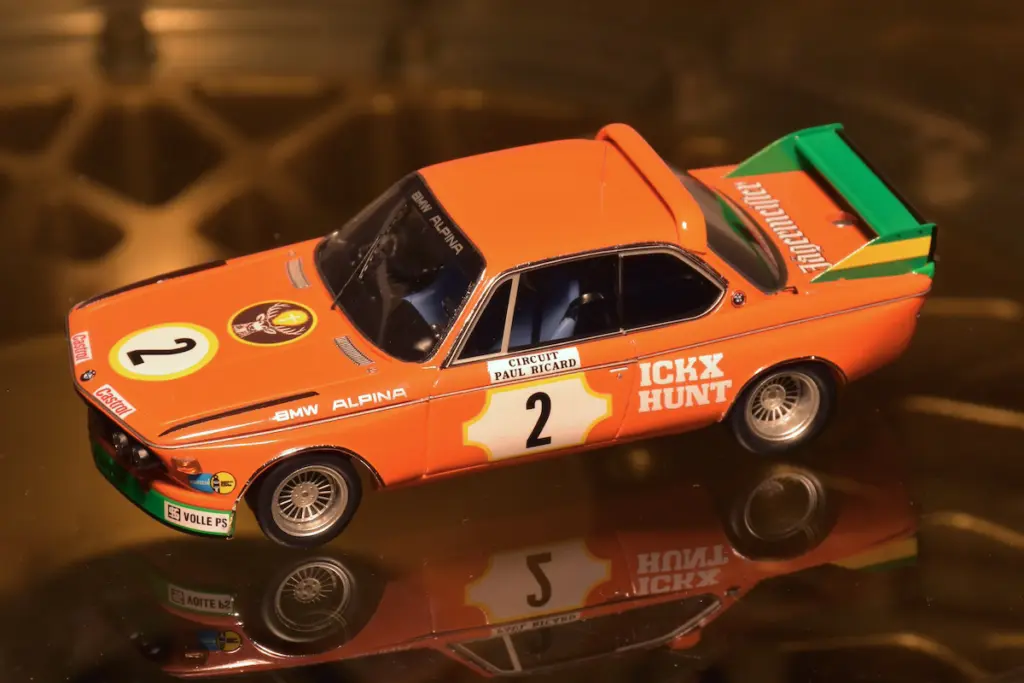
1973 Paul Ricard 4h, BMW 3.0 CSL – Alpina
Round 8 of the European Championship. The Jägermeister car had some good results in the European Championship with different driver pairings. Derek Bell, Niki Lauda, Hans-Peter Joisten, Brian Muir all piloted the orange BMW. At Paul Ricard, Jacky Ickx and James Hunt were the drivers and finished second behind the works BMW from Hezemans and Quester.
Jägermeister Alpina Racing #2: Jacky Ickx (B) / James Hunt (GB)
Results: Start-grid 5th / time 2:10.700 /race 2nd – 159 laps
BMW 3.0 CSL – Touring Group 2, division 2 >2L: Powered by 3.5 liter BMW M30B35 straight-6, approx. 340 hp. Dunlop tires. Weight 1050 kg. Steel monocoque, chassisnr. BMW E9 #unknown

- SPARK S2820 (resin)
- Overall rating: 5 STARS | Quality details: 5 STARS | Estimated value: 4 STARS
- Also appears in #022 Jägermeister Touring cars / #094 BMW CSL E9
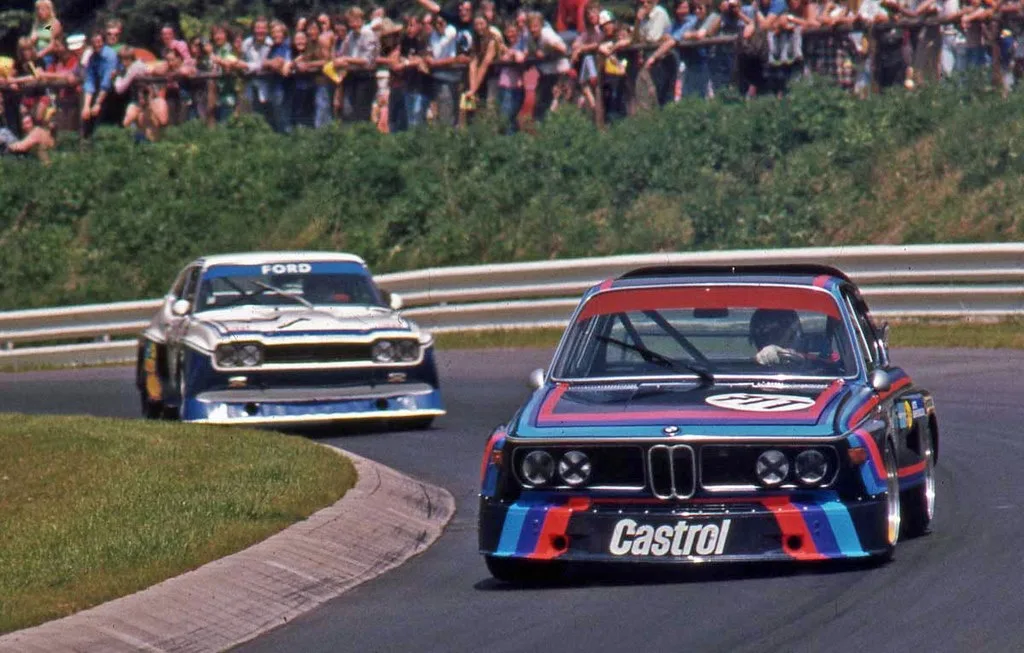
1974 Nürburgring 1000 km, BMW 3.0 CSL
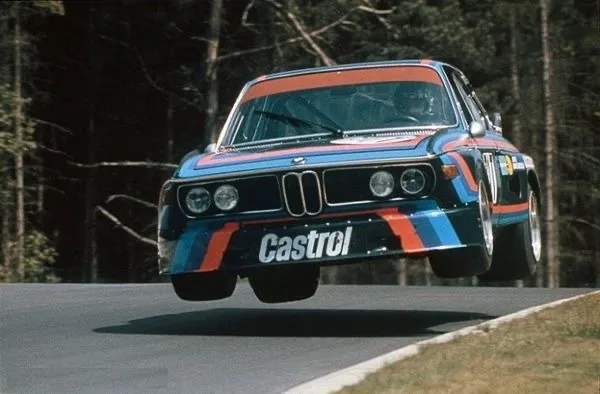
BMW didn’t compete in all races in 1974, so Ford took the European title in their last year with the Capri. BMW however, did compete in some world championship races such as the 1000 km at the Nürburging. Not in the familiar white, but in a dark blue livery. The T on the car means that it competed in the Touring category. Ickx and Stuck had a nice battle with arch enemy Ford (see pic), but retired with a broken gearbox.
BMW Motorsport #71: Jacky Ickx (B) / Hans J. Stuck (D)
Results: Start-grid 17th / time 8:06.200 / race DNF gearbox -3 laps
BMW 3.0 CSL – Touring Group 2, division 2 >2L: Powered by 3.5 liter BMW M30B35 straight-6, approx. 380 hp. Dunlop tires. Weight 1050 kg. Steel monocoque, chassisnr. BMW E9 #unknown
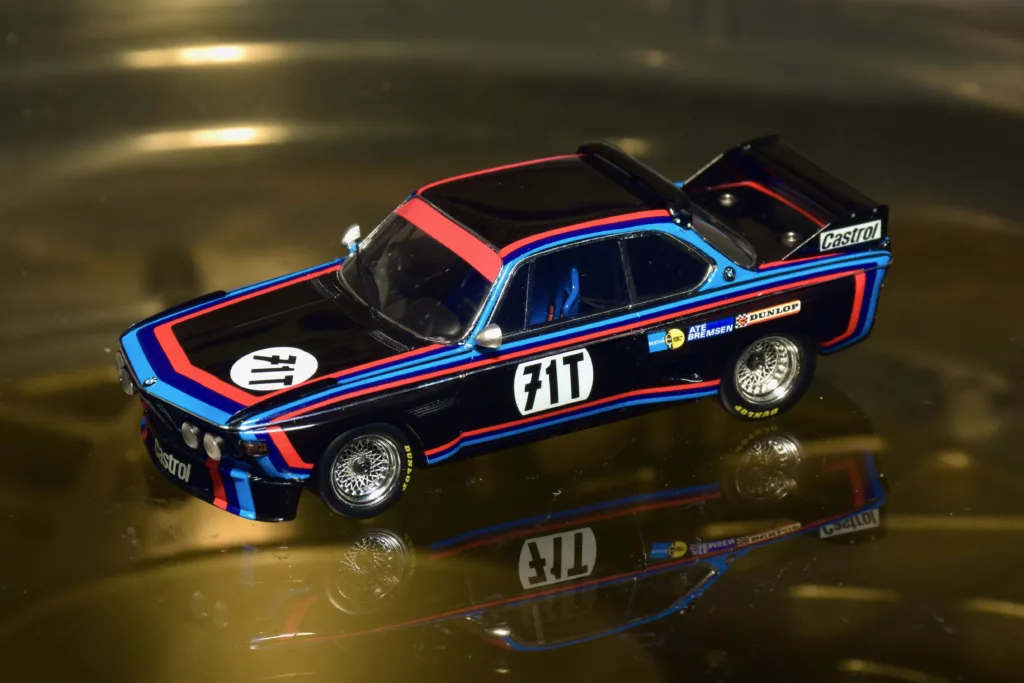
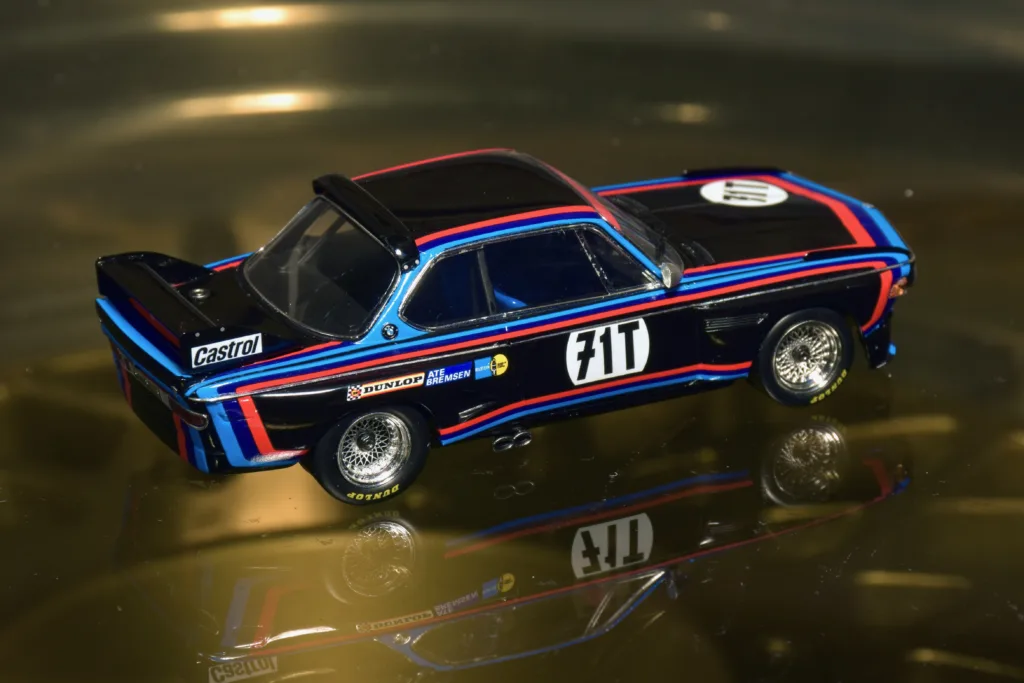
- SPARK SG625 #049 / 400 pcs (resin)
- Overall rating: 5 STARS | Quality details: 5 STARS | Estimated value: 4 STARS
- Also appears in #034 BMW Motorsport – part I / #094 BMW CSL E9
Porsche 935
1976 Mugello 6h, Porsche 935/76
The Martini sponsored works Porsche won the first world championship race at Mugello. This version already used the flat nose, but still had the rounded backside of the 911 RSR. Because of the turbo factor of 1.4, the 2.8 liter Porsches ran in the category over 3 liter.
Martini Porsche #4: Jacky Ickx (B) / Jochen Mass (D)
Results: Start-grid 1st / time 1:55.280 / race 1st – 174 laps
Porsche 935/76 – Group 5, division 3 >3L: Powered by 2.8 liter Porsche Type 930/78 flat-6 turbo, approx. 580 hp. Dunlop tires, Weight 970 kg. Steel monocoque, chassisnr. 935-002
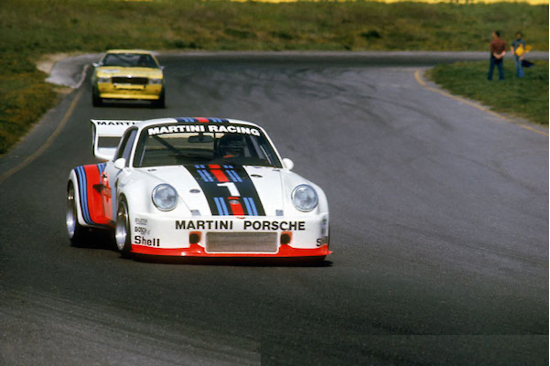
1976 Vallelunga 6h, Porsche 935/76
Just like two weeks earlier at Mugello the works Porsche 935 from Ickx and Mass won the race. In this race, and at the next one in Silverstone, it used the normal Porsche 911 nose with its high head lamps. It still had the rounded rear fenders.
Martini Porsche #1: Jacky Ickx (B) / Jochen Mass (D)
Results: Start-grid 1st / time 1:14.700 / race 1st – 270 laps
Porsche 935/76 – Group 5, division 3 >3L: Powered by 2.8 liter Porsche Type 930/78 flat-6 turbo, approx. 580 hp. Dunlop tires, Weight 970 kg. Steel monocoque, chassisnr. 935-002

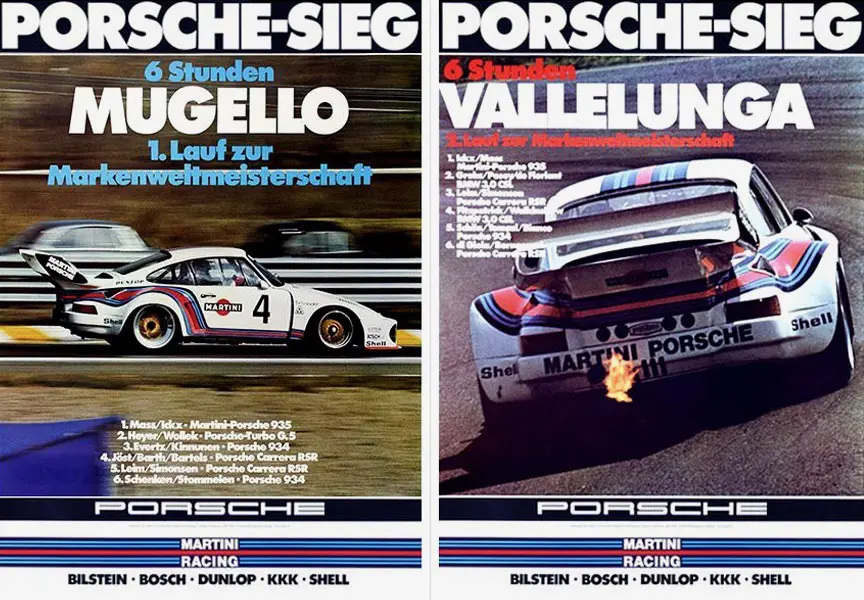
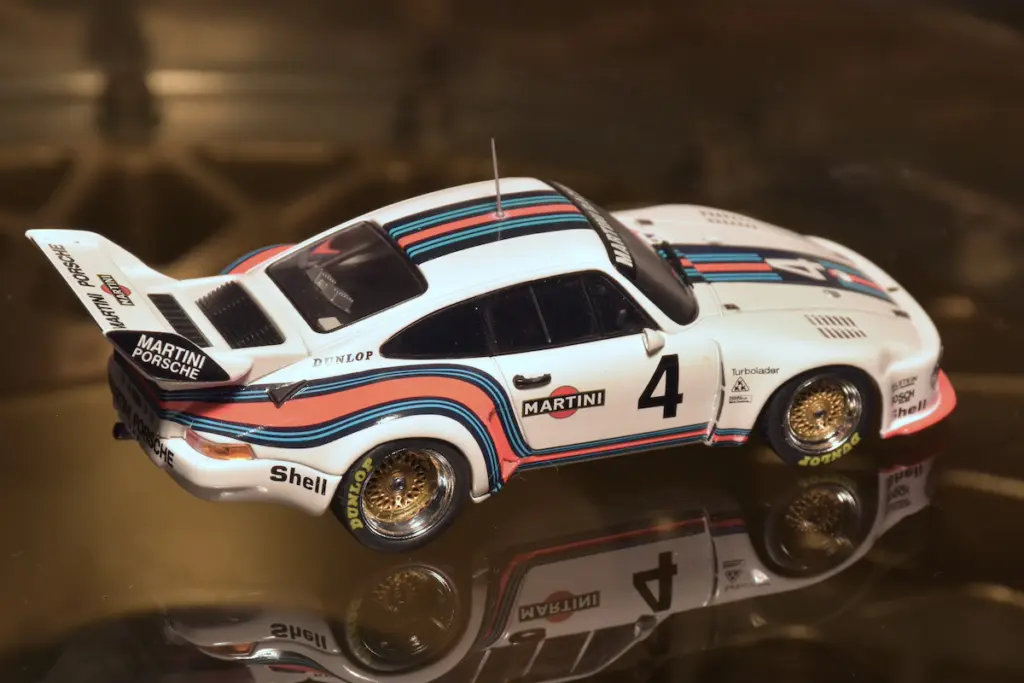
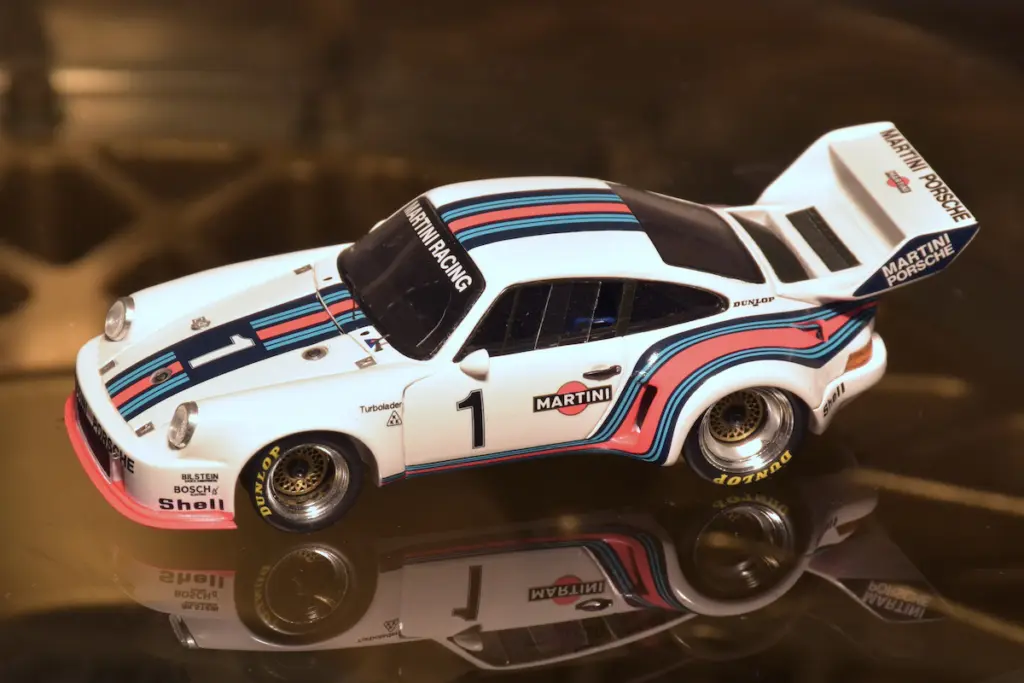
- #4 EBBRO 43770 (diecast) & #1 SPARK S3402 (resin)
- Overall rating: 4 STARS | Quality details: 4 STARS | Estimated value: 4 STARS
- Also appears in #013 Martini Porsche 935
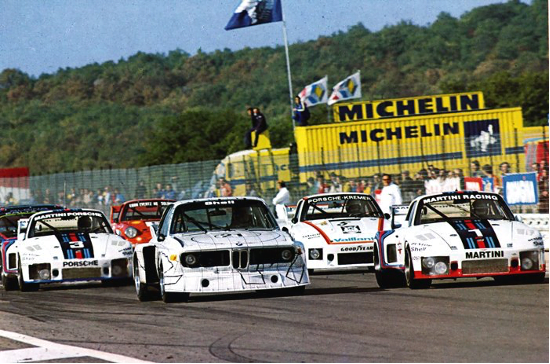
1976 Dijon 6h, Porsche 935/76
The last race of the season was an all-Porsche victory with the Martini cars and a Kremer version making up the top three.
Martini Porsche #1: Jacky Ickx (B) / Jochen Mass (D)
Results: Start-grid 2nd / time 1:05.730 / race 1st – 311 laps
Porsche 935/76 – Group 5, division 3 >3L: Powered by 2.8 liter Porsche Type 930/78 flat-6 turbo, approx. 580 hp. Dunlop tires, Weight 970 kg. Steel monocoque, chassisnr. 935-002
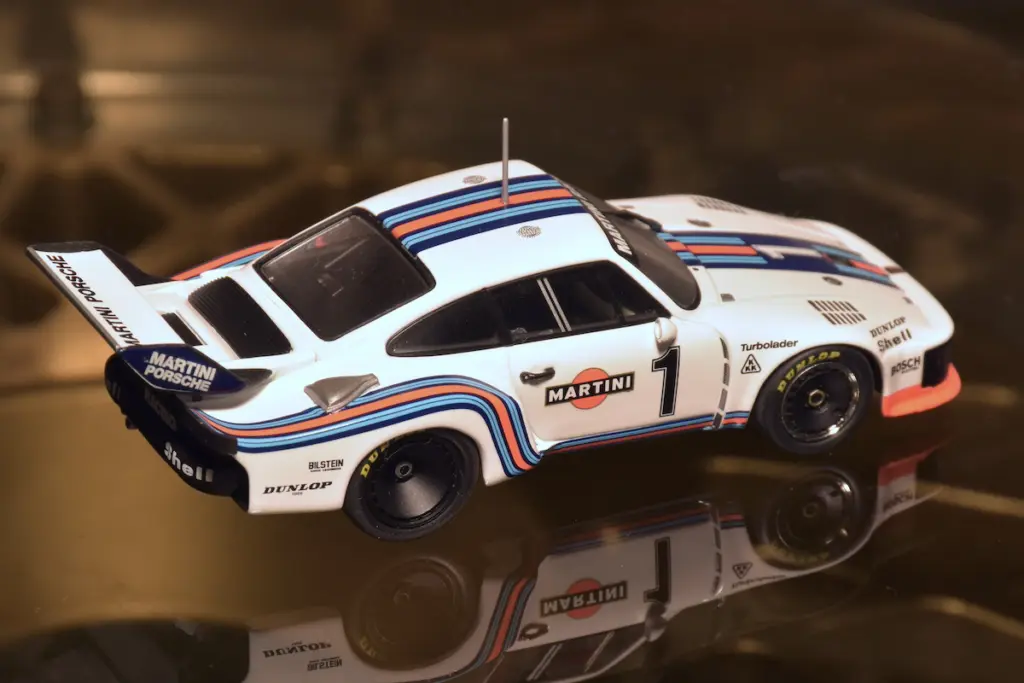
- EBBRO 43769(diecast)
- Overall rating: 4 STARS | Quality details: 4 STARS | Estimated value: 4 STARS
- Also appears in #013 Martini Porsche 935
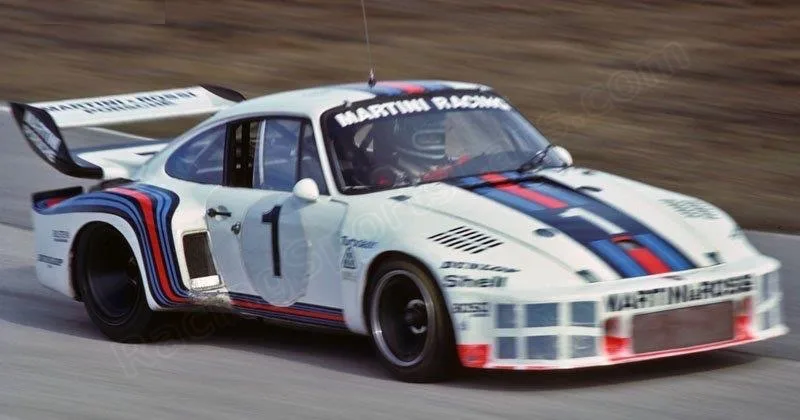
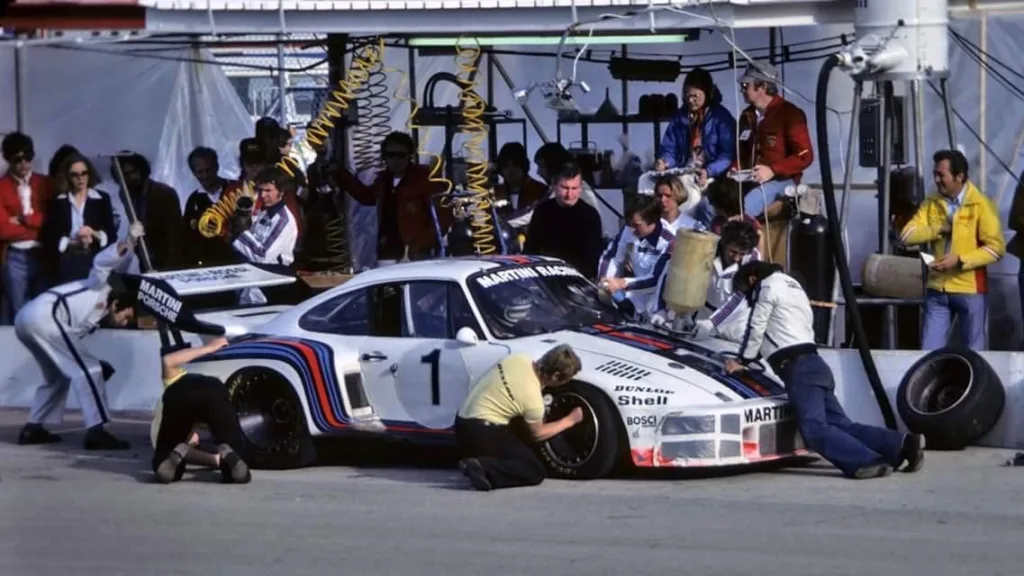
1977 Daytona 24h, Porsche 935/76
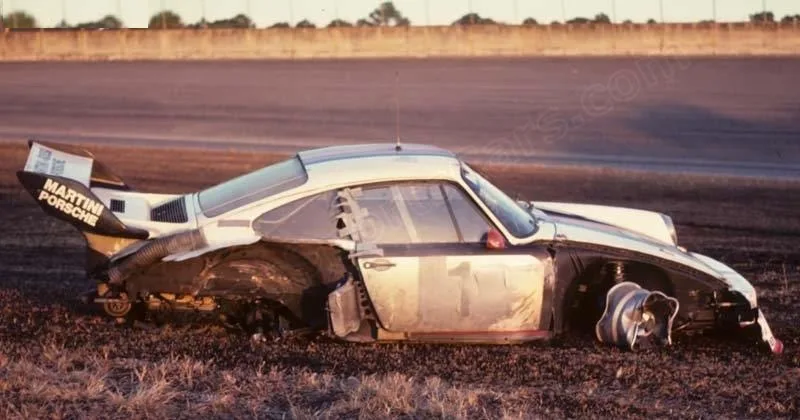
Daytona is always the opening of the racing season in February. Martini Racing entered an unchanged 1976 Porsche 935 because the new 935/77 wasn’t ready yet. The Porsche works car took pole position and lead the race for many hours, then a tire blew and the car crashed out of the race. Two privateer Porsche 935’s finished on the podium but the race was surprisingly won by a normally aspirated Carrera RSR.
Martini Porsche #1: Jacky Ickx (B) / Jochen Mass (D)
Results: Start-grid 1st / time 1:48.289/ race DNF crash after puncture – 452 laps
Porsche 935/76 – Group 5, division 3 >3L: Powered by 2.8 liter Porsche Type 930/78 flat-6 turbo, approx. 580 hp. Dunlop tires, Weight 970 kg. Steel monocoque, chassisnr. 935-002
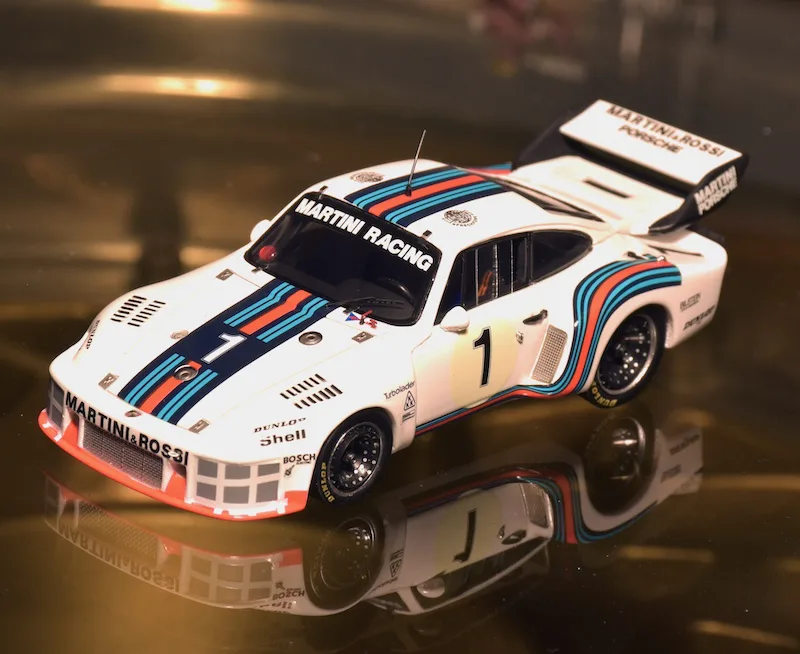
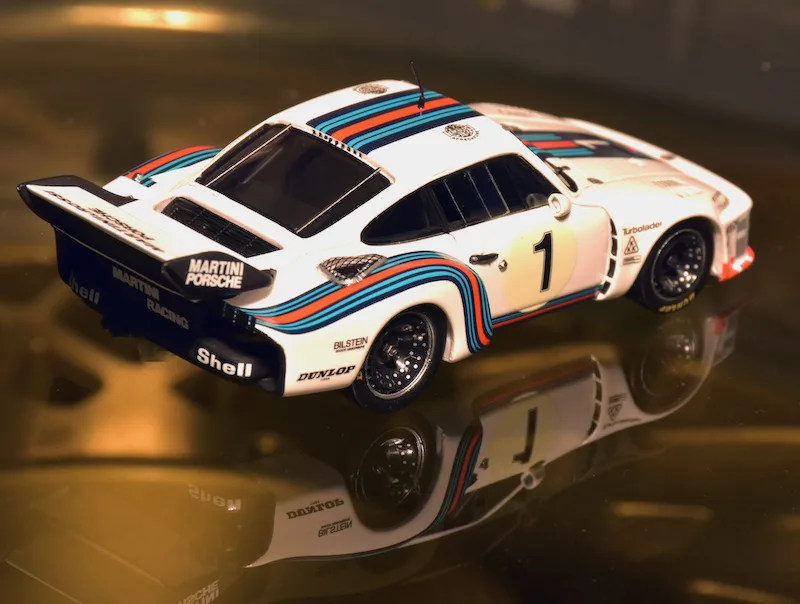
- SPARK US388 #192 / 500 pcs (resin)
- Overall rating: 4 STARS | Quality details: 4 STARS | Estimated value: 4 STARS
- Also appears in #013 Martini Porsche 935
1977 DRM Hockenheim, Porsche 935/77 “baby”
Porsche developed a 1.4-liter turbo version of their 935/77 to prove they could also win in the DRM Division II for cars up to 2 liter. To lower the weight of the car, front and rear parts of the monocoque were replaced by a space frame construction. The first attempt at the Norisring failed, but the second at Hockenheim ended in an impressive victory for Jacky Ickx who won with 50 seconds margin. Porsche proved its point and the car retired into the museum.
Martini Porsche #40: Jacky Ickx (B)
Results: Start-grid 1st / time 12:08.900 / race 1st – 19 laps
Porsche 935/77 “baby” – Group 5, DRM division II <2L: Powered by 1.4 liter Porsche Type 930/78 flat-6 twin turbo, approx. 380 hp. Dunlop tires, Weight 735 kg. Steel monocoque and aluminium space frames, chassisnr. 935/2-001

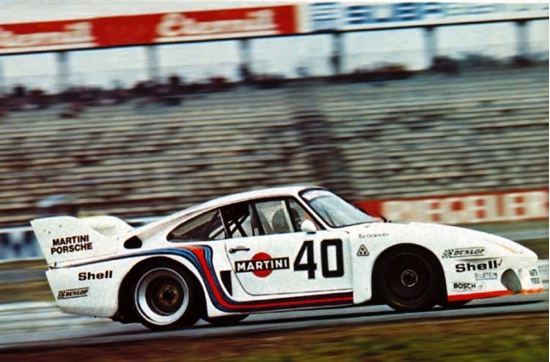
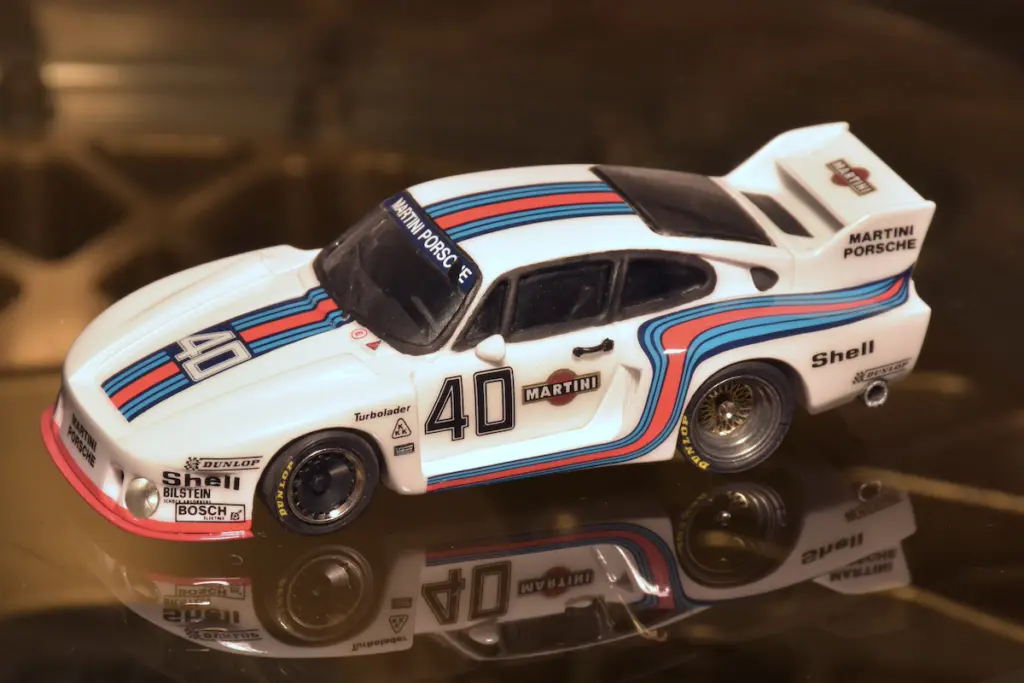
- STARTER #T166 (resin)
- Overall rating: 4 STARS | Quality details: 4 STARS | Estimated value: 4 STARS
- Also appears in #013 Martini Porsche 935
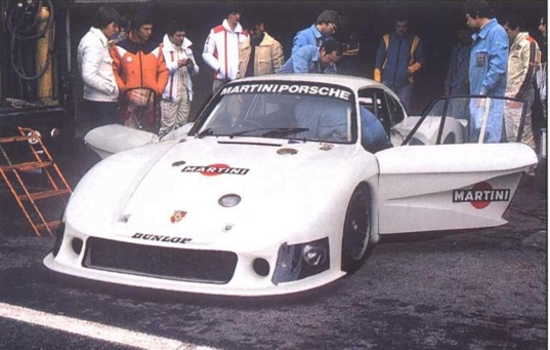
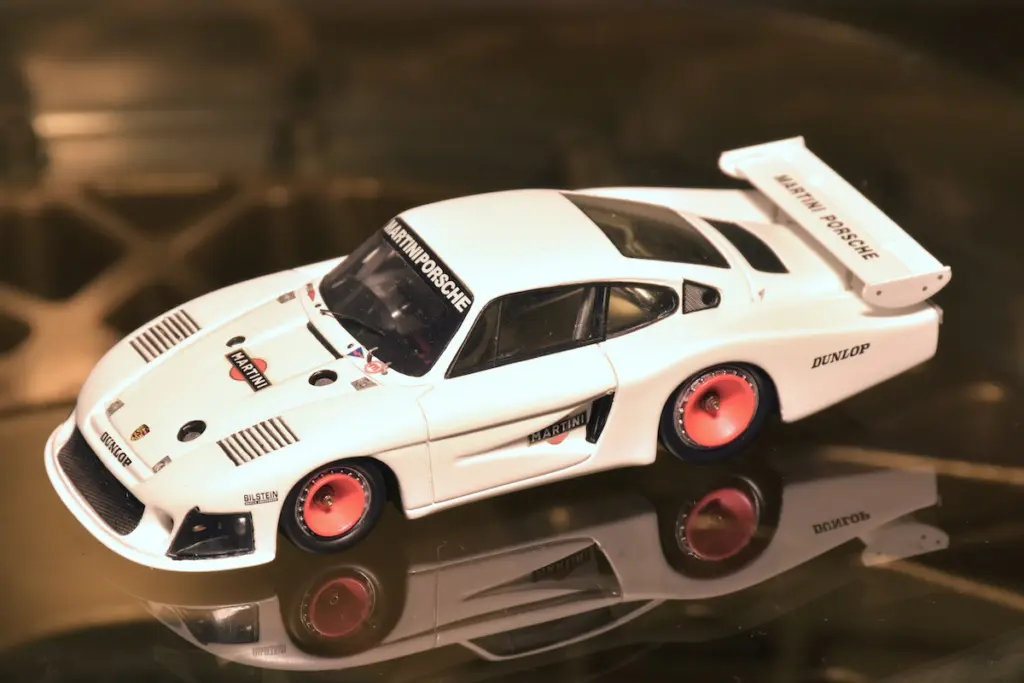
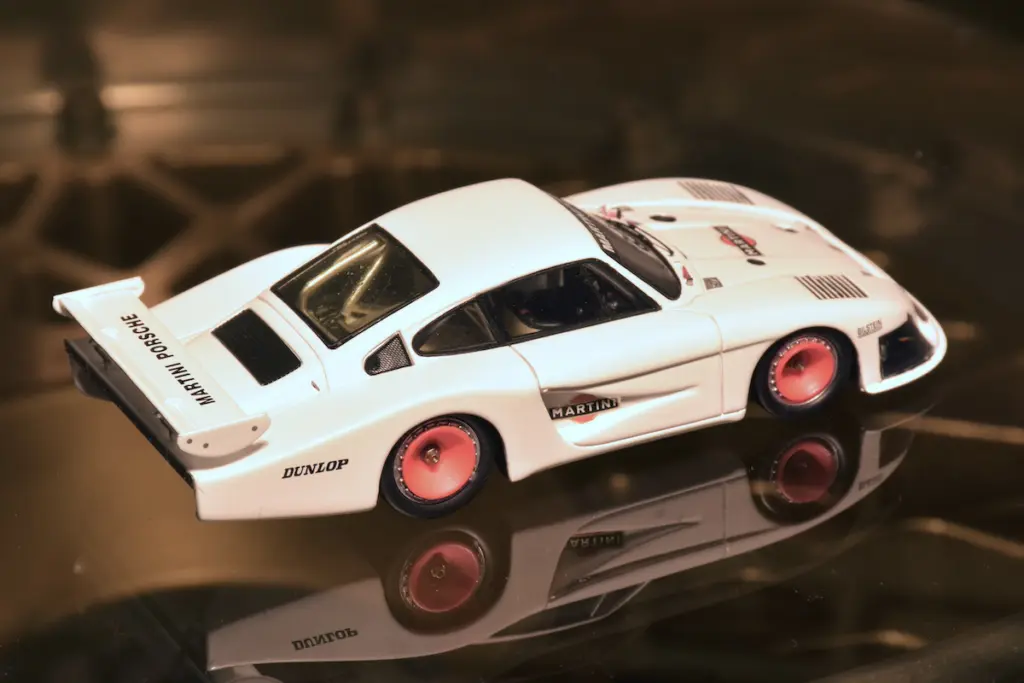
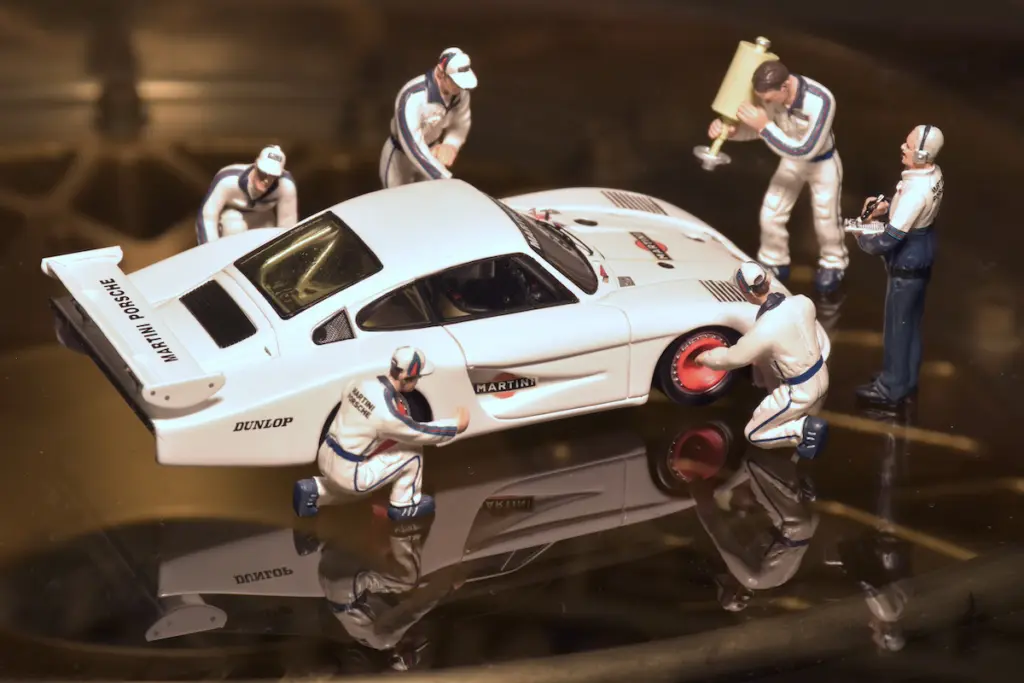
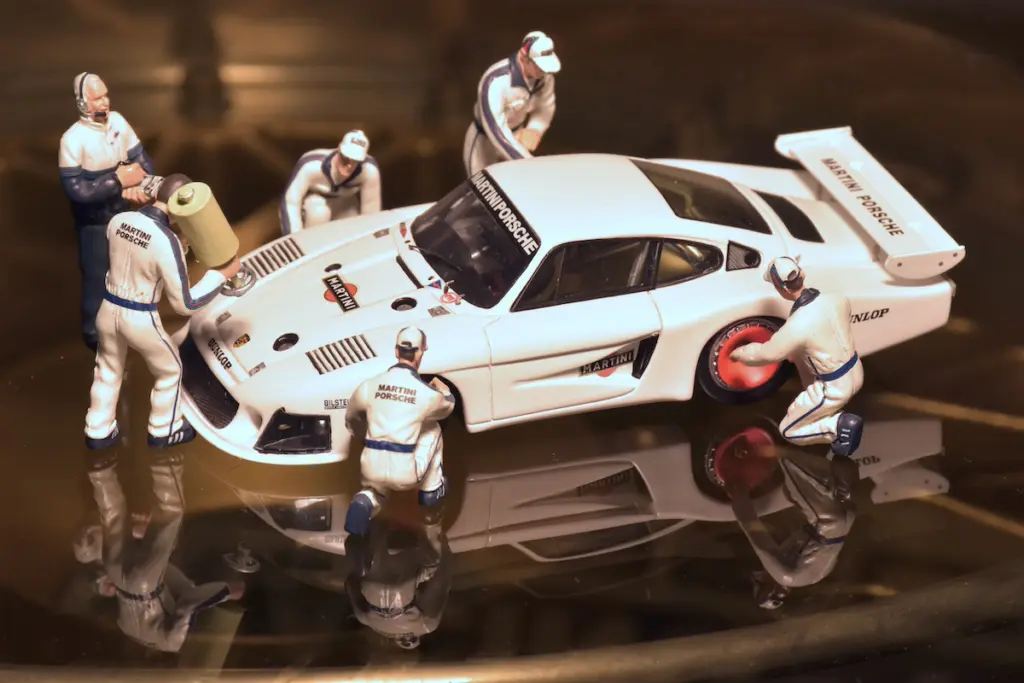
1978 Test Paul Ricard, Porsche 935/78 “Moby Dick”
One of the most impressive Le Mans cars is undoubtedly this Porsche 935 “Moby Dick”. It has an aluminum space frame and the 3.2-liter twin-turbo engine with water cooled cylinder heads delivers over 800 bhp. Before it was sent into battle, the car was tested extensively with somewhat different aerodynamics by Jacky Ickx at Paul Ricard. The covers over the doors were not allowed by FIA and had to be taken off before its first race at Silverstone.
Martini Porsche: Jacky Ickx (B)
Results: test / no time available
Porsche 935/78 “Moby Dick” – Group 5: Powered by 3.2 liter Porsche Type 935/71 flat-6 twin turbo, approx. 750 hp. Dunlop tires, Weight 1000 kg. Aluminum space frame, chassisnr. 935-006
- SPARK S0935 (resin)
- Overall rating: 4 STARS | Quality details: 4 STARS | Estimated value: 4 STARS
- Crew | True Scale Miniatures 10AC09 (resin)
- Overall rating: 3 STARS | Quality details: 3 STARS | Estimated value: 3 STARS
- Both also appear in #013 Martini Porsche
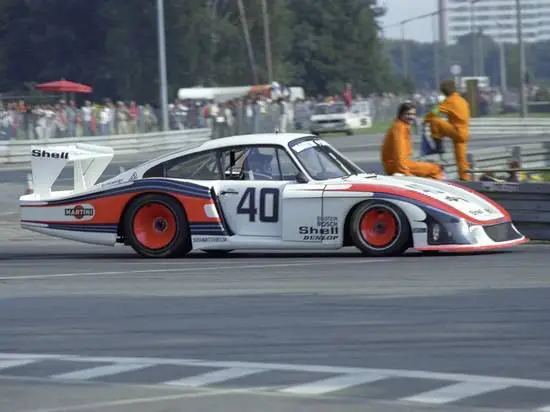
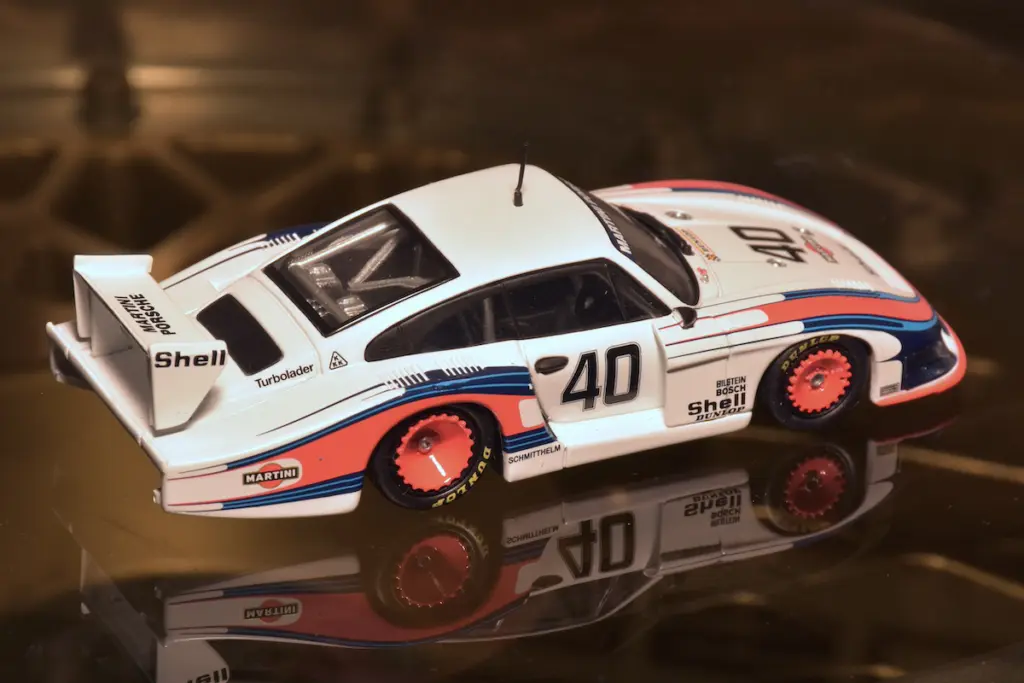
1978 DRM Norisring, Porsche 935/78 “Moby Dick”
Stommelen and Schurti piloted the Moby Dick at Le Mans, Jacky Ickx drove it during the DRM race at the Norisring. He was the fastest by far but retired after the brakes failed.
Martini Porsche #40: Jacky Ickx (B)
Results: Start-grid 4th / time unknown / race DNF -brakes – 14 laps
Porsche 935/78 “Moby Dick” – Group 5, DRM division I: Powered by 3.2 liter Porsche Type 935/71 flat-6 twin turbo, approx. 750 hp. Dunlop tires, Weight 1000 kg. Aluminum space frame, chassisnr. 935-006
- MINICHAMPS MC430 786740 (diecast)
- Overall rating: 5 STARS | Quality details: 4 STARS | Estimated value: 4 STARS
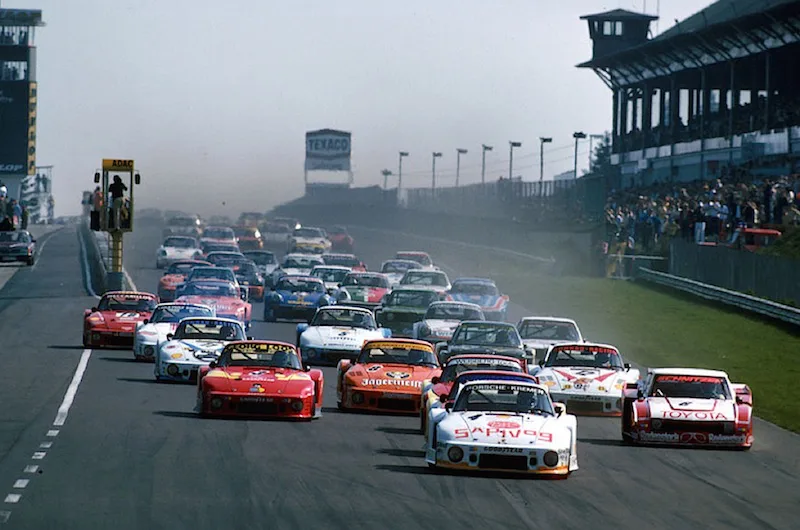
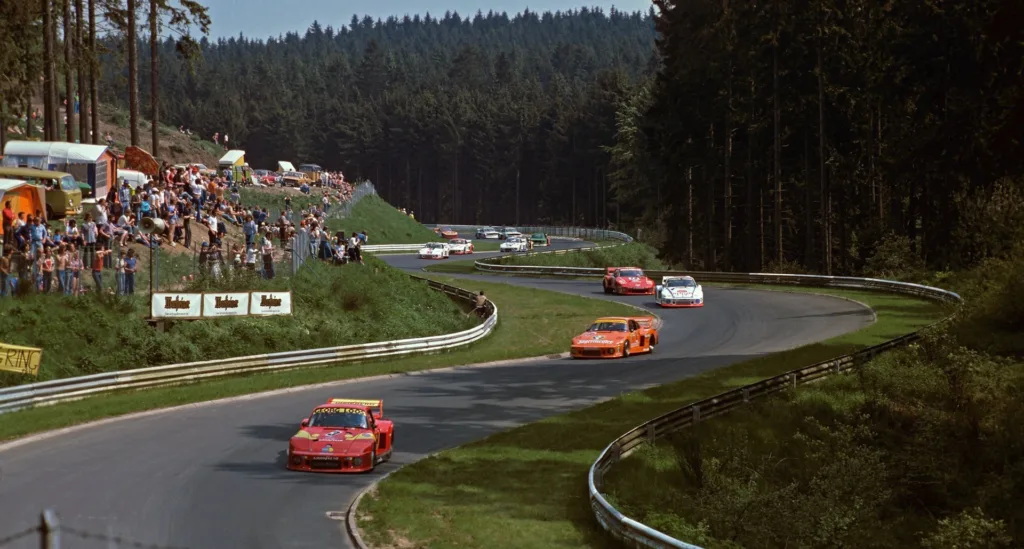
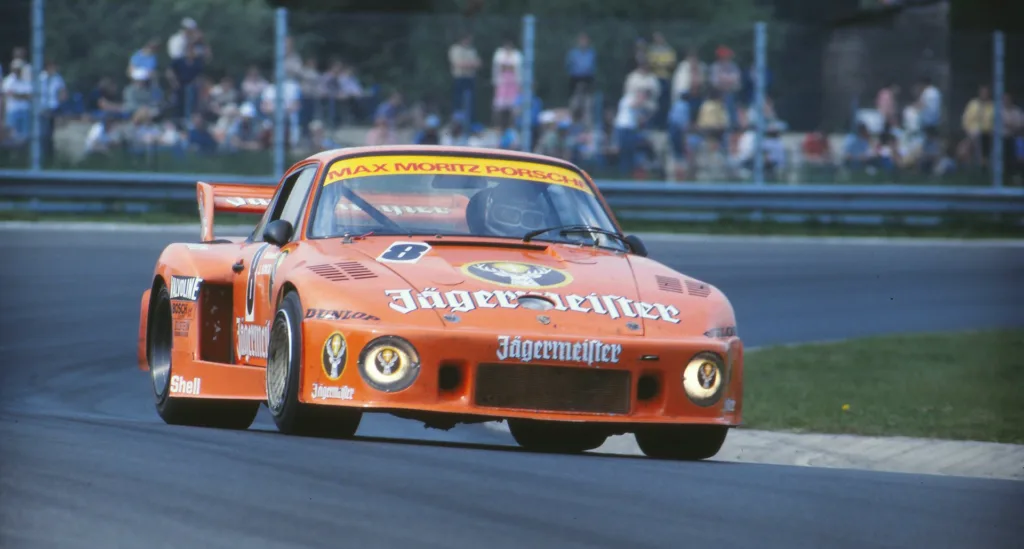
1978 Nürburgring 1000 km, Porsche 935
The races for the world championship were dominated by the German Porsche teams. The 1000 km Nürburgring race was won by Team Loos in front of this Max Moritz Porsche. Manfred Schurti was supported by Jacky Ickx for this race.
Jägermeister-Max-Moritz Team #8: Manfred Schurti (LI) / Jacky Ickx (B)
Results: Start-grid 3rd / time 7:38.300 / race 2nd – 44 laps
Porsche 935/77A – Group 5: Powered by 2.8 liter Porsche Type 930/78 – flat-6 turbo, approx. 600 hp. Dunlop tires. Weight 970 kg. Steel monocoque, chassisnr. #930 890 0017
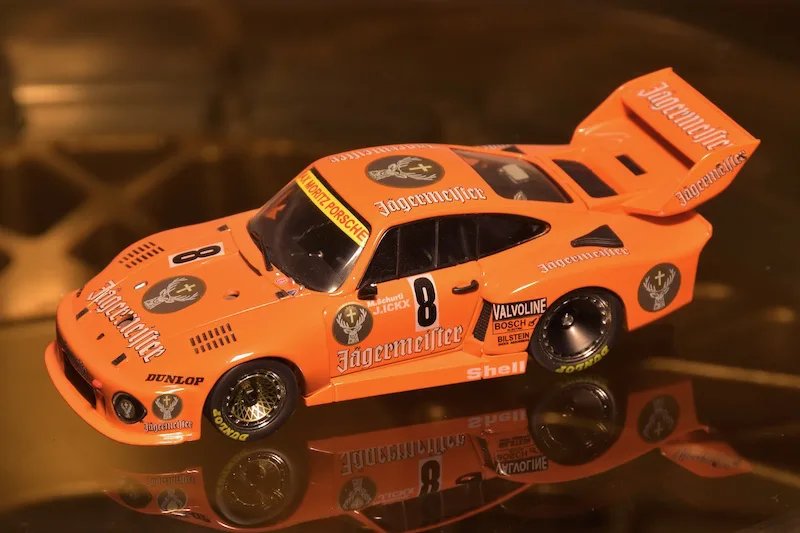
- EBBRO 44132 (diecast)
- Overall rating: 4 STARS | Quality details: 3 STARS | Estimated value: 3 STARS
- Also appears in #082 Jägermeister GT
Porsche 936
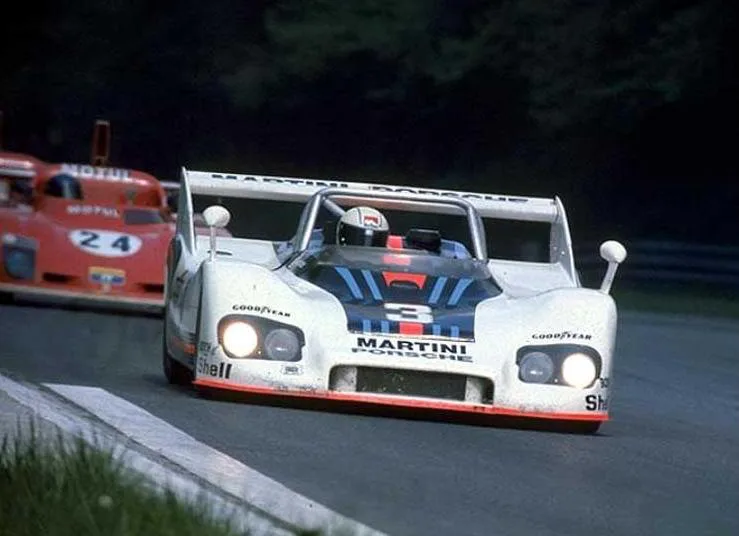
1976 Monza 4 hours, Porsche 936
New technology arrived in the world sports car championship in 1974 when Joest introduced turbo engines. Alpine and Porsche followed in 1975 but were beaten by the 12-cylinder Alfa Romeos from WKRT nearly every time. Porsche replaced the 908/03 turbo with the new 936 that made its debut in black. Porsche decided to do the entire championship with support from Martini. They won the second race of the season at Monza, one lap ahead of the Alpine and the Joest 908/03 turbo.
Martini Racing #3: Jacky Ickx (B) / Jochen Mass (D)
Results: Start-grid 1st / time 1:32.230 / race 1st – 153 laps
Porsche 936/76 – Prototypes Group 6 <3L: Powered by 2.1 liter Porsche 911/78 flat-6 turbo, approx. 540 hp. Goodyear tires. Weight 750 kg. Steel space frame, chassisnr. 936 #001
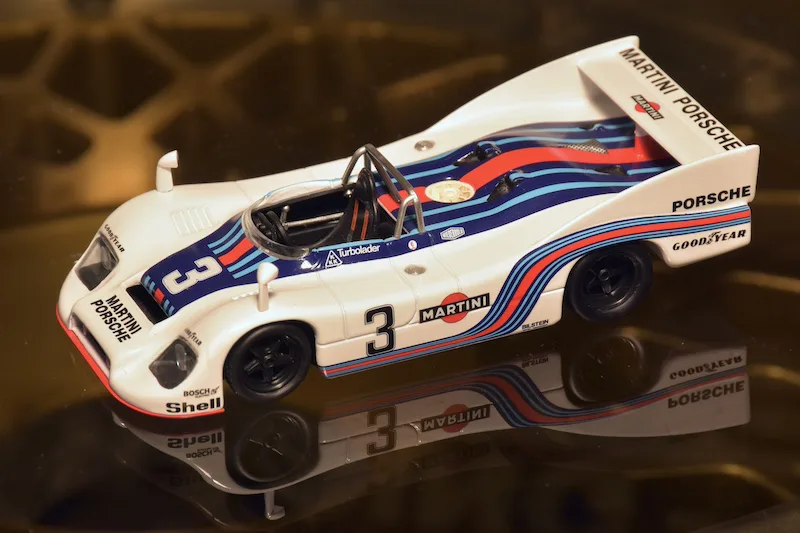
- TROFÉU 1903 (diecast)
- Overall rating: 3 STARS | Quality details: 3 STARS | Estimated value: 3 STARS
- Also appears in #071 Porsche 936 factory cars
1976 Imola 500 km, Porsche 936
The 500 km race at Imola was the third race of the championship. Ickx and Mass won the race with the new #002 chassis of the Porsche 936. Second was an Alfa Romeo 33TT12 and the Joest turbo Porsche finished third.
Martini Racing #7: Jacky Ickx (B) / Jochen Mass (D)
Results: Start-grid 3rd / time 1:43.030 / race 1st – 100 laps
Porsche 936/76 – Prototypes Group 6 <3L: Powered by 2.1 liter Porsche 911/78 flat-6 turbo, approx. 540 hp. Goodyear tires. Weight 750 kg. Steel space frame, chassisnr. 936 #002
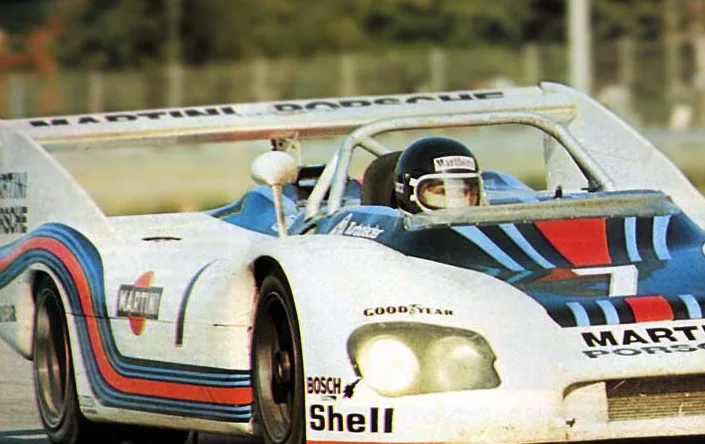
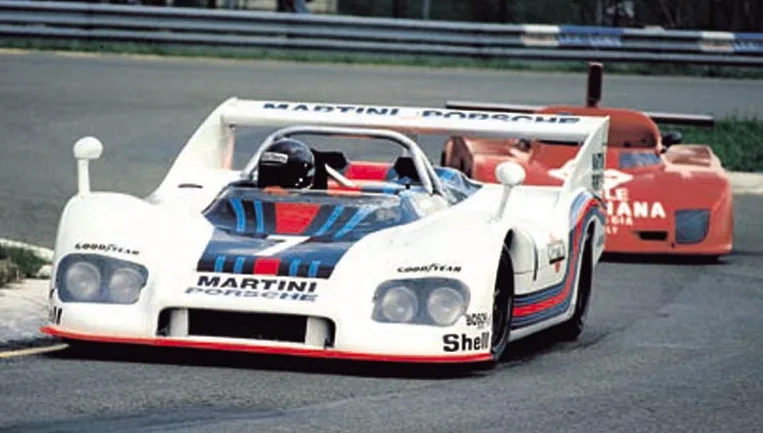
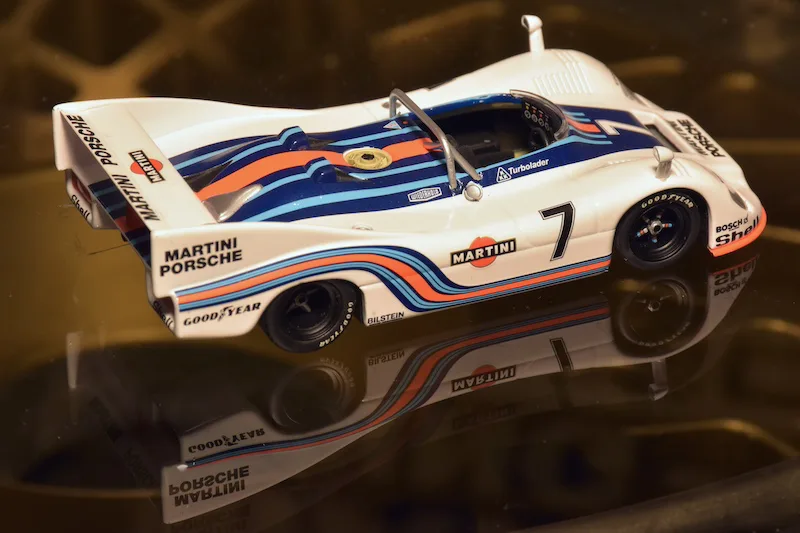
- MIINICHAMPS MC400 766607 limited 1152 pcs (diecast)
- Overall rating: 3 STARS | Quality details: 3 STARS | Estimated value: 3 STARS
- Also appears in #071 Porsche 936 factory cars
1976 Le Mans 24h, Porsche 936
For the non-championship race at Le Mans, Porsche entered both cars; the #002 chassis with air box for Ickx & Van Lennep and the older chassis #001 without air box under the flag of Joest Racing, however it was a full factory effort. The #18 retired with a broken engine, but the #20 won with an 11 laps advantage over the Renault powered Mirage M8. It was the first victory for a turbo car at Le Mans, Ickx his third and Van Lennep his second win.
Martini Racing #20: Jacky Ickx (B) / Gijs van Lennep (NL)
Results: Start-grid 2nd / time 3:39.800 / race 1st – 350 laps
Porsche 936/76 – Prototypes Group 6 <3L: Powered by 2.1 liter Porsche 911/78 flat-6 turbo, approx. 540 hp. Goodyear tires. Weight 750 kg. Steel space frame, chassisnrs. 936 #001 & #002
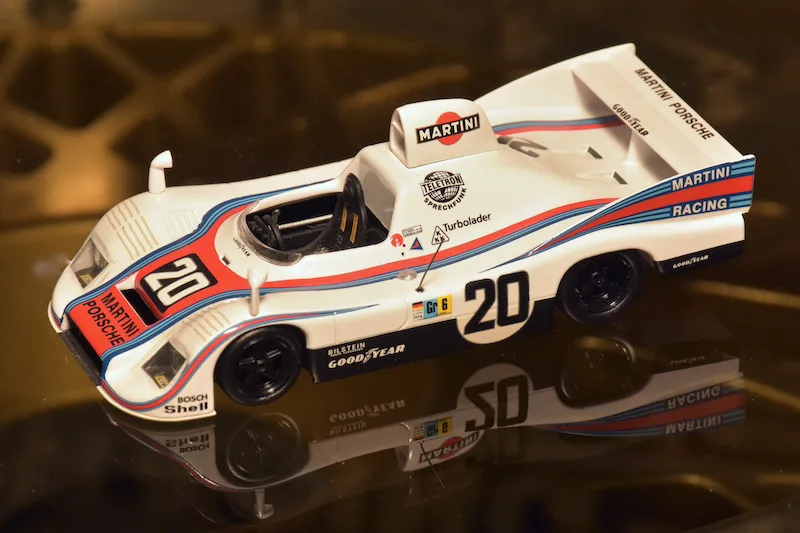
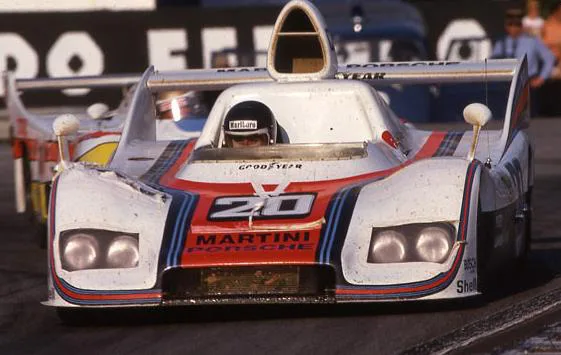
- TROFÉU 1901 & 1904 (diecast)
- Overall rating: 3 STARS | Quality details: 3 STARS | Estimated value: 3 STARS
- Also appears in #071 Porsche 936 factory cars
1976 Dijon 500 km, Porsche 936
The 6th round of the world championship was held at Dijon Prenois. The Martini Porsche won in front of two Alpine Renaults who failed to achieve a win in front of their home crowd. In fact, the Alpines didn’t win at all in 1976.
Martini Racing #6: Jacky Ickx (B) / Jochen Mass (D)
Results: Start-grid 2nd / time 1:00.120 / race 1st – 152 laps
Porsche 936/76 – Prototypes Group 6 <3L: Powered by 2.1 liter Porsche 911/78 flat-6 turbo, approx. 540 hp. Goodyear tires. Weight 750 kg. Steel space frame, chassisnrs. 936 #002
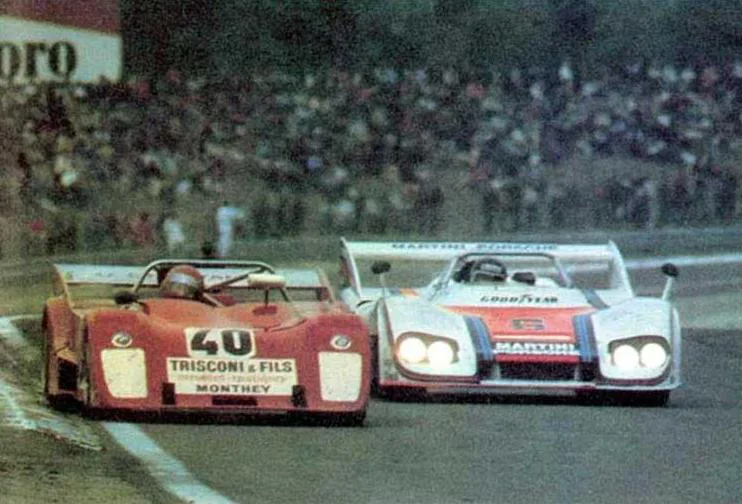
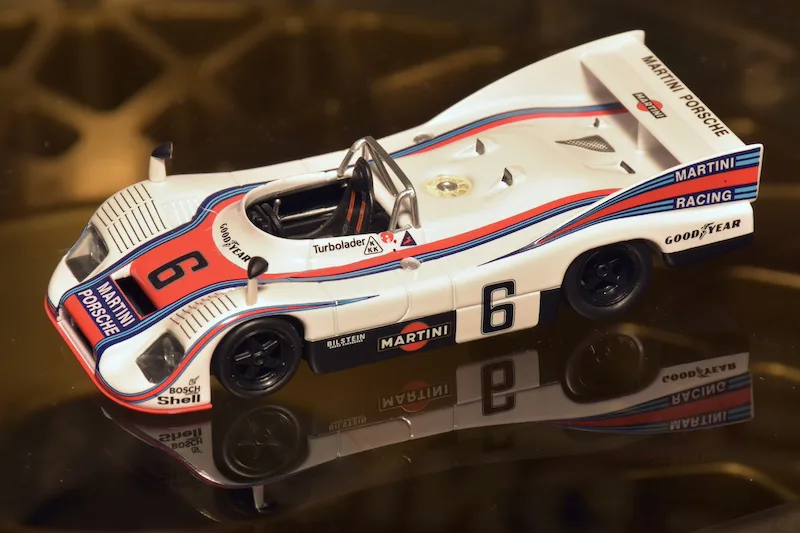
- TROFÉU 1905 (diecast)
- Overall rating: 3 STARS | Quality details: 3 STARS | Estimated value: 3 STARS
- Also appears in #115 Jacky Ickx
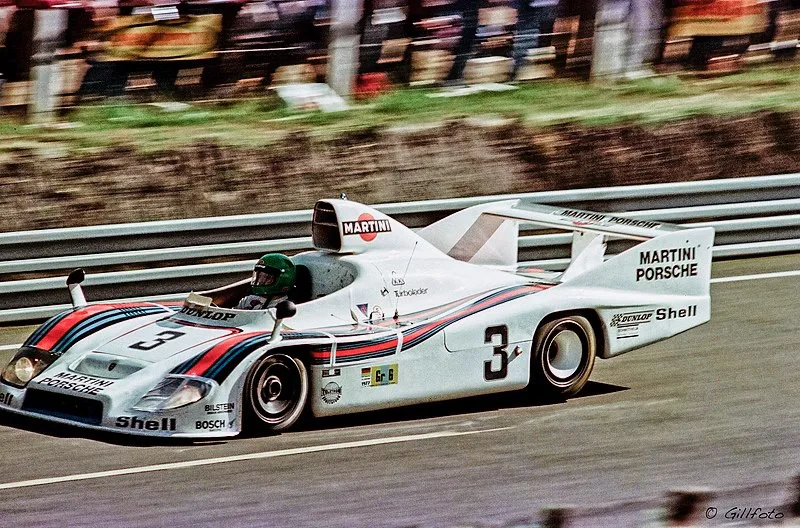
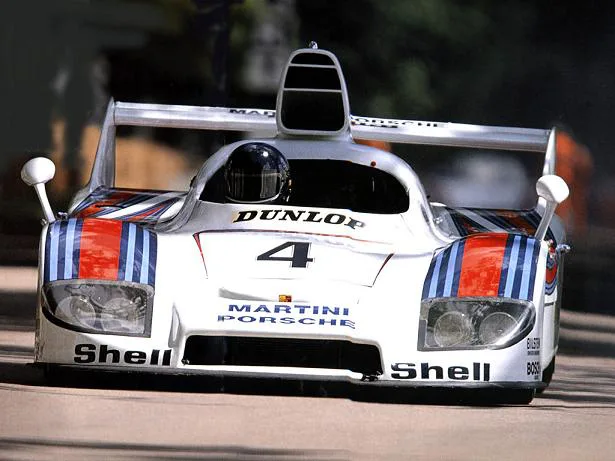
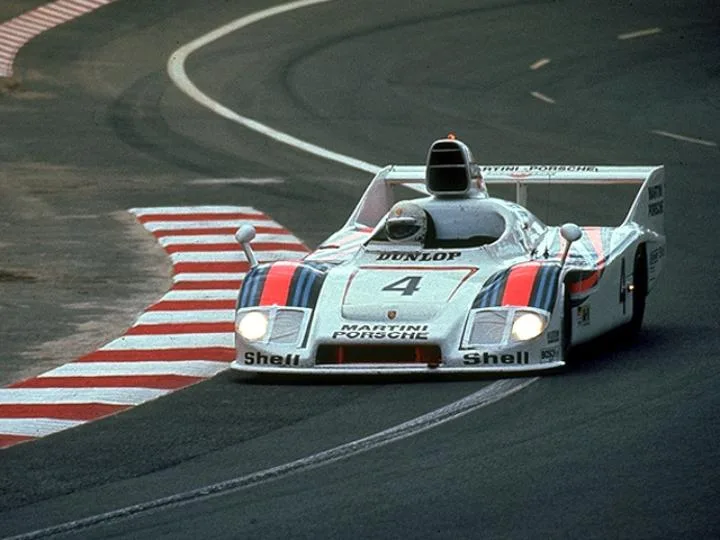
1977 Le Mans 24h, Porsche 936/77
Both Porsche and Renault didn’t compete in the world championship this year and put all their efforts in the Le Mans 24h. Jacky Ickx had to battle with the fast Alpines the entire race. At first in his own #3 car that he shared with Henri Pescarolo until that broke down. He then switched to the #4 car and drove such a high pace that all Renaults retired. Even his own engine seized, but he managed to finish running on 5 cylinders.
Martini Racing #4: Jacky Ickx (B) / Jürgen Barth (D) / Hurley Haywood (USA)
Results: Start-grid 7th / time 3:40.000 / race 1st – 343 laps
Porsche 936/77 – Prototypes Group 6 <3L: Powered by 2.1 liter Porsche 911/78 flat-6 turbo, approx. 550 hp. Goodyear tires. Weight 750 kg. Steel space frame, chassisnr. 936 #002
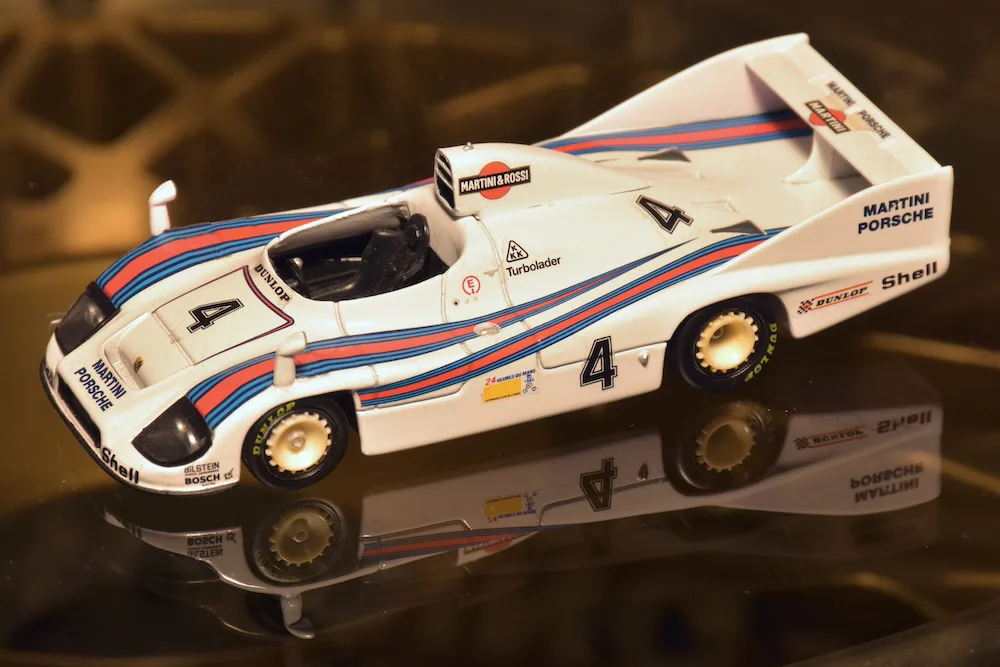
- MINICHAMPS WAP 020 044 97 (diecast)
- Overall rating: 3 STARS | Quality details: 3 STARS | Estimated value: 3 STARS
- Also appears in #115 Jacky Ickx
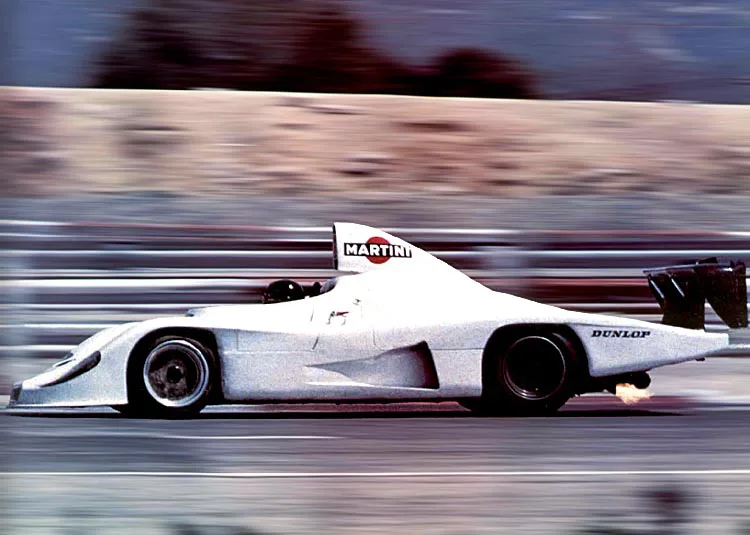
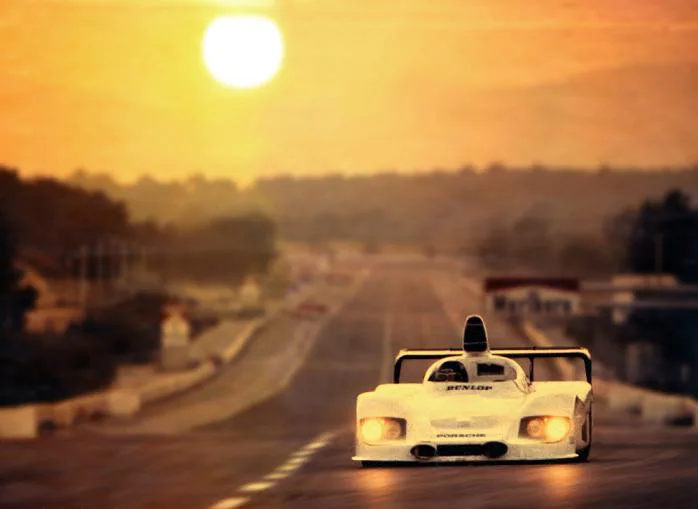
1978 Test Paul Ricard, Porsche 936/78
Before the Le Mans 24-hour race, Porsche extensively tested its aerodynamically improved 936 chassis #001 in a white outfit on the fast track of Paul Ricard. A new car with chassisnr. #003 had been built also. The cars had new 24-valve twin turbo engines with water-cooled cylinder heads, therefore it needed radiators that used the characteristic NACA air intakes on either side of the cars.
Martini Racing #-: Jacky Ickx (B)
Results: Test / no times available
Porsche 936/78 – Prototypes Group 6 <3L: Powered by 2.1 liter Porsche 935/73 flat-6 twin turbo, approx. 590-615 hp (@1.5-1.7 bar). Dunlop tires. Weight 820 kg. Steel space frame, chassisnr. 936 #001
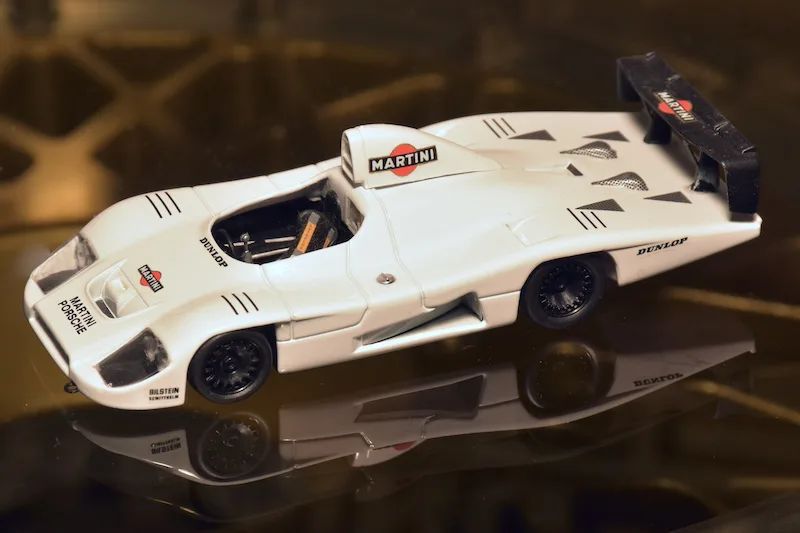
- TROFÉU 1207 (diecast)
- Overall rating: 3 STARS | Quality details: 3 STARS | Estimated value: 3 STARS
- Also appears in #115 Jacky Ickx
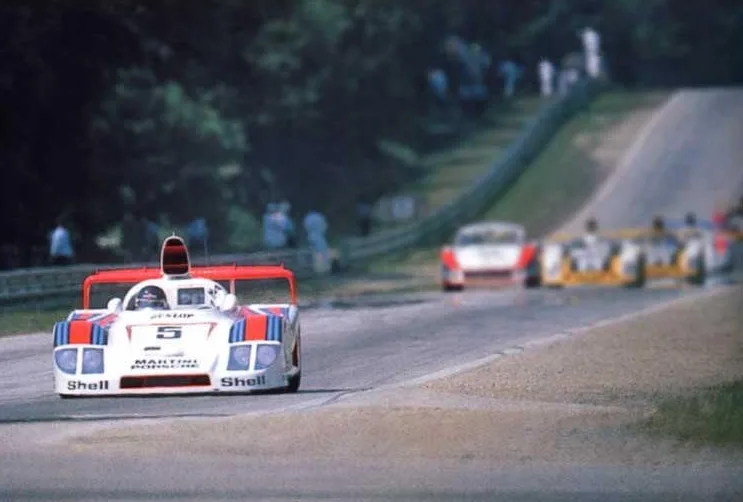
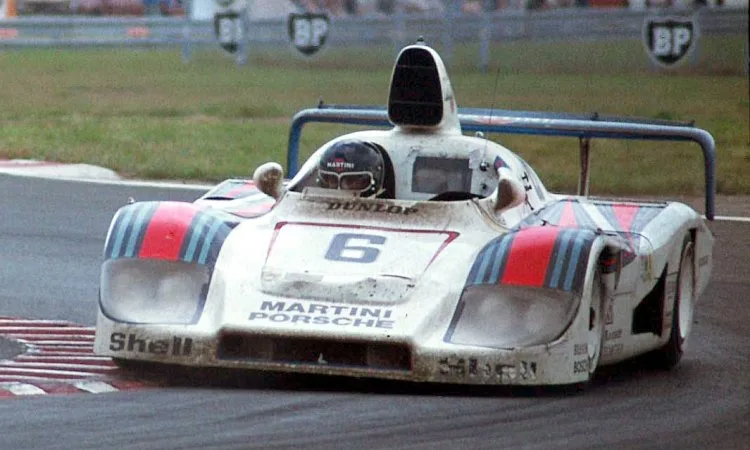
1978 Le Mans 24h, Porsche 936/78
Both Porsche and Renault competed with no less than 4 cars in this year’s 24-hour race. Porsche entered two new 936/78 twin-turbo cars, 1 older 936/77 and the “Moby Dick” 935. Jacky Ickx was entered as third driver on both ’78 cars and when his #5 car got delayed first and eventually crashed he continued in the #6 car. That also got delayed by a gearbox problem and however they pulled back two laps of their deficit, it never threatened the Renault-Alpine and had to settle for second.
Martini Racing #5: Henri Pescarolo (F) / Jochen Mass (D) / Jacky Ickx (B)
Results: Start-grid 1st / time 3:27.600 / race DNF accident – 255 laps
Martini Racing #6: Bob Wollek (F) / Jürgen Barth (D) / Jacky Ickx (B)
Results: Start-grid 4th / time 3:35.200 / race 2nd- 365 laps
Porsche 936/78 – Prototypes Group 6 <3L: Powered by 2.1 liter Porsche 935/73 flat-6 twin-turbo, approx. 590-615 hp (@1.5-1.7 bar). Dunlop tires. Weight 820 kg. Steel space frame, chassisnr. 936 #003 & #001
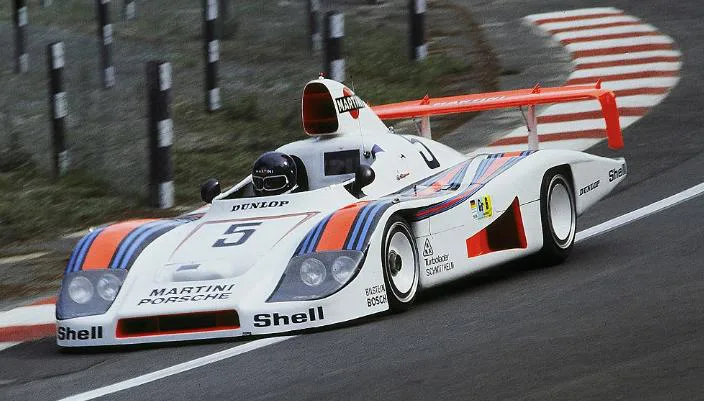
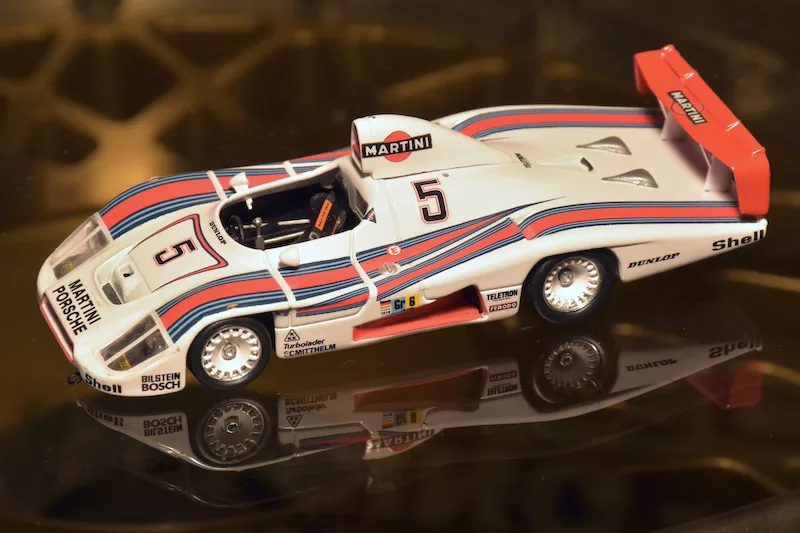

- TROFÉU 1201 & 1202 (diecast)
- Overall rating: 3 STARS | Quality details: 3 STARS | Estimated value: 3 STARS
- Also appears in #115 Jacky Ickx
1979 Le Mans 24h, Porsche 936/78
The first year without the famous Martini livery brought Porsche little success. The Essex sponsored cars were the same as last year’s and being favorite because of the absence of Renault, they failed! Both 936s got delayed in the early hours and coming back through the field wasn’t easy because of the heavy rain that limited the overspeed of the 936s. The #12 car got damaged and received some new body work from the sister car that had a red rear. It got disqualified for outside assistance. The #14 car crashed 4 hours before the finish, the win went surprisingly to Kremer’s Porsche 935 GT car.
Essex Porsche #12: Jacky Ickx (B) / Brian Redman (GB)
Results: Start-grid 2nd / time 3:31.370 / race DSQ outside assistance – 200 laps
Porsche 936/78 – Prototypes Group 6 <3L: Powered by 2.1 liter Porsche 935/73 flat-6 twin-turbo, approx. 590-615 hp (@1.5-1.7 bar). Dunlop tires. Weight 820 kg. Steel space frame, chassisnr. 936 #003
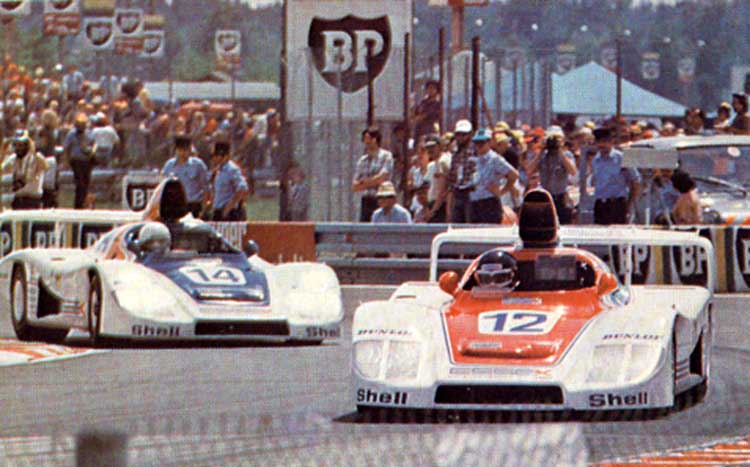
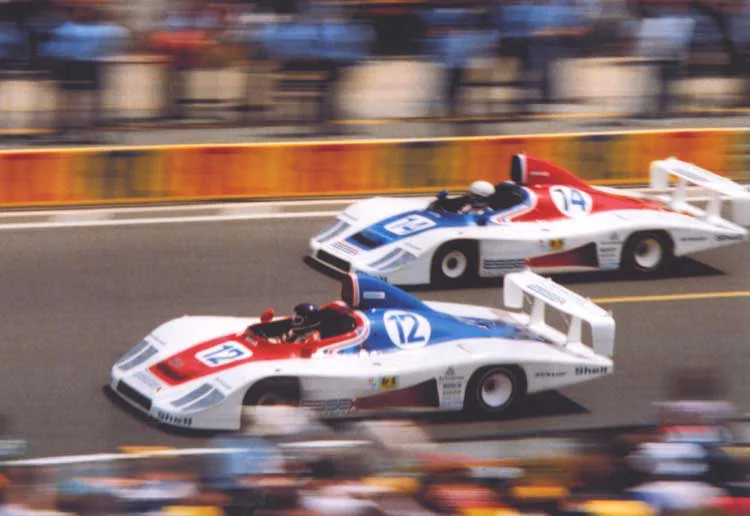
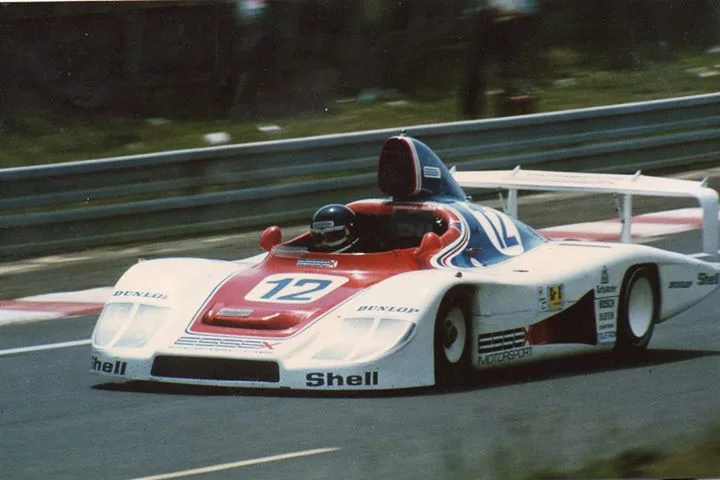
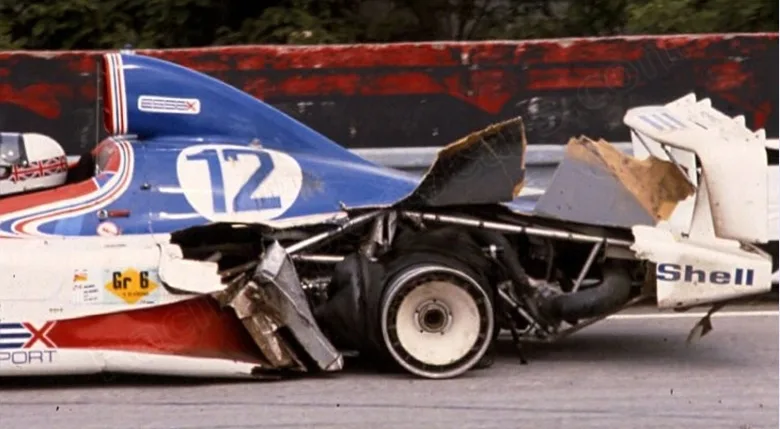
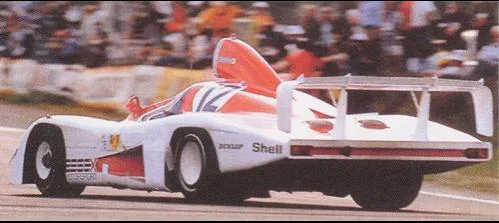
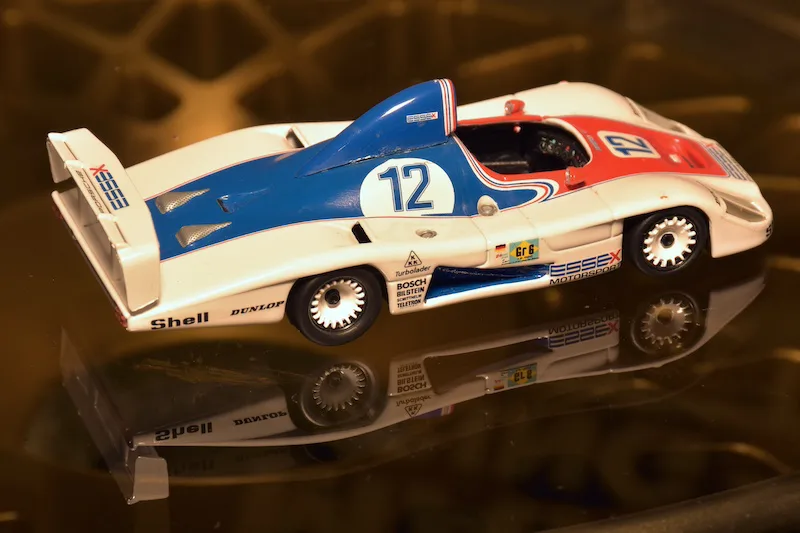

- TROFÉU 1203 & 1208 (diecast) wrong color number on the damaged #12
- Overall rating: 3 STARS | Quality details: 3 STARS | Estimated value: 3 STARS
- Only appear in this collection
1980 Le Mans 24h, Porsche 908/80
This year the Porsche works team entered three 924 GTPs and no 936 … officially. A new 936 according to 1977 specs was built with chassisnr. #004. But as Porsche didn’t want the 936 name used for this car that was entered by Joest Racing, so the car competed as 908/80. Martini was back as sponsor and also the #1 works driver Jacky Ickx. More about the history of the 908/80 can be found in collection #072.
Joest Martini Racing #9: Reinhold Joest (D) / Jacky Ickx (B)
Results: Start-grid 4th / time 3:50.000 / race 2nd – 337 laps
Porsche 908/80 – Prototypes Group 6 <3L: Powered by 2.1 liter Porsche 911/78 flat-6 turbo, approx. 550 hp. Dunlop tires. Weight 770 kg. Steel space frame, chassisnr. 936 #004
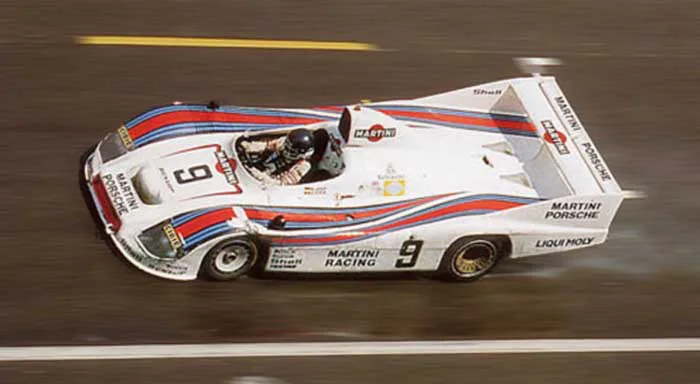
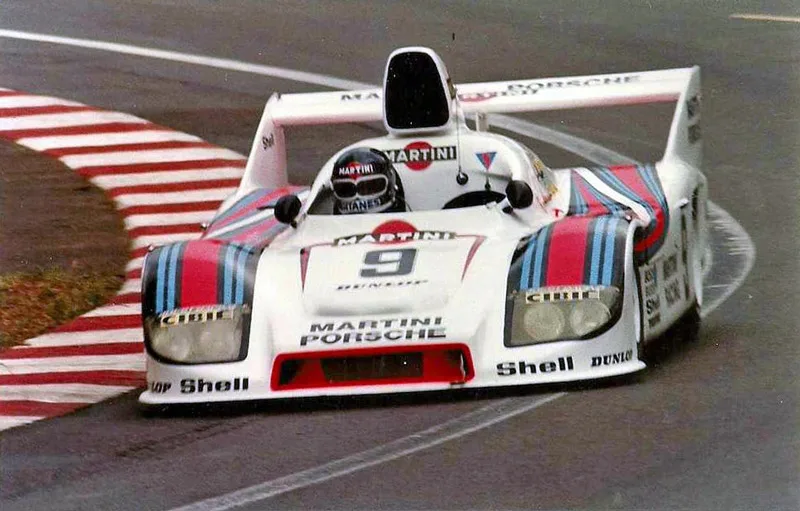
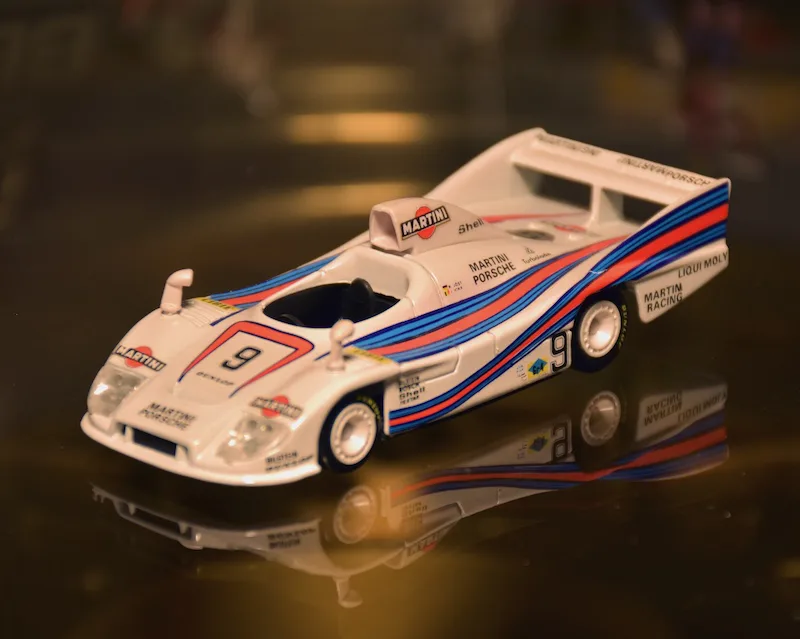
- VEREM 750 (diecast)
- Overall rating: 2 STARS | Quality details: 1 STAR | Estimated value: 2 STARS
- Also appears in #115 Jack Ickx
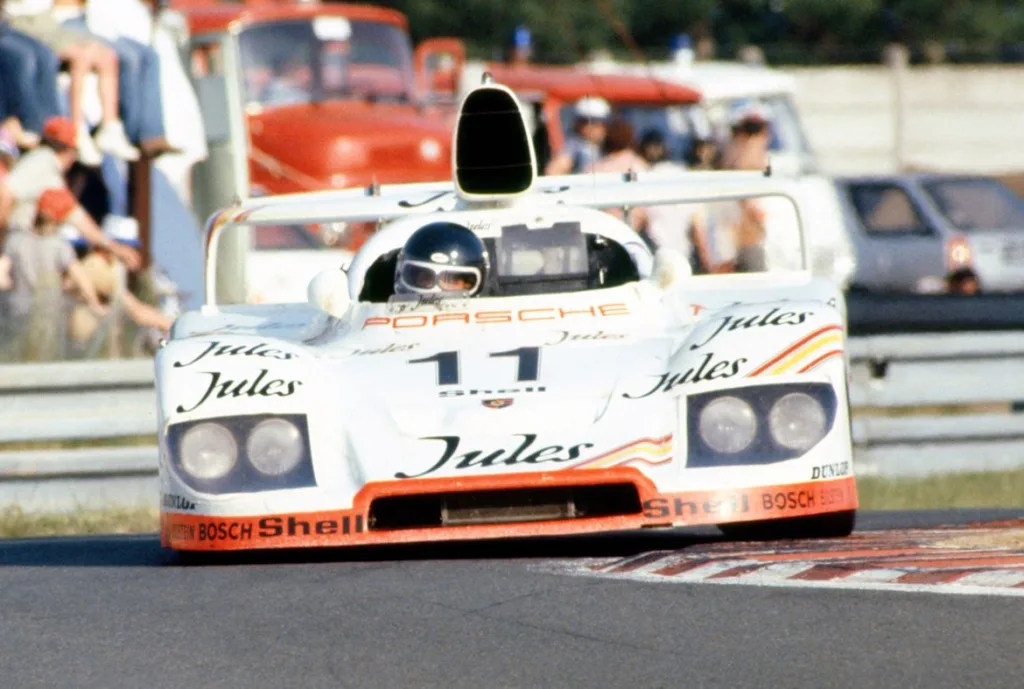
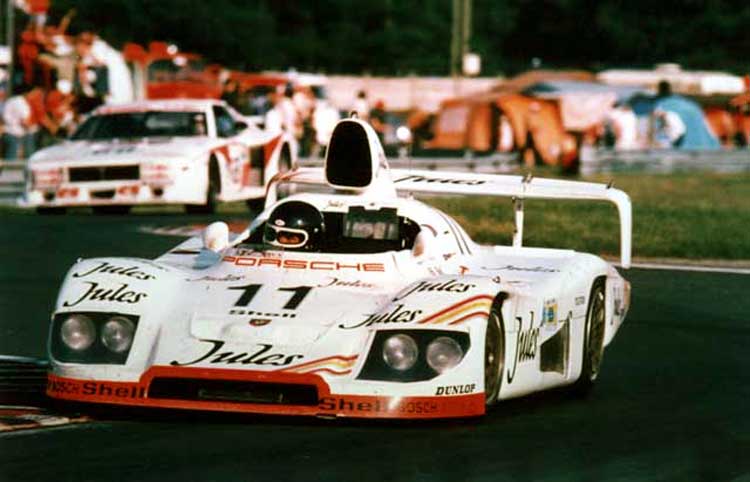
1981 Le Mans 24h, Porsche 936/81
The ACO let go of the 3-liter formula (or 2.1 liter turbo) group 6 cars. Next year Group C would be the new standard and such cars with larger engine capacities were already allowed to participate this year. Porsche developed a 2.65 liter flat-6 engine for Indy cars, but because of a rule change in the USA they didn’t use it at that side of the ocean. Now it could be found in the back of the old 936s that made their come-back to Le Mans and it would power the next generation Porsche Group C cars also.
Porsche System #11: Jacky Ickx (B) / Derek Bell (GB)
Results: Start-grid 1st / time 3:29.440 / race 1st – 355 laps
Porsche 936/81 – Prototypes >2L: Powered by 2.65 liter Porsche 935/82 flat-6 twin-turbo, approx. 620 hp (@ 1.4 bar). Dunlop tires. Weight 860 kg. Steel space frame, chassisnr. 936 #003 & #001
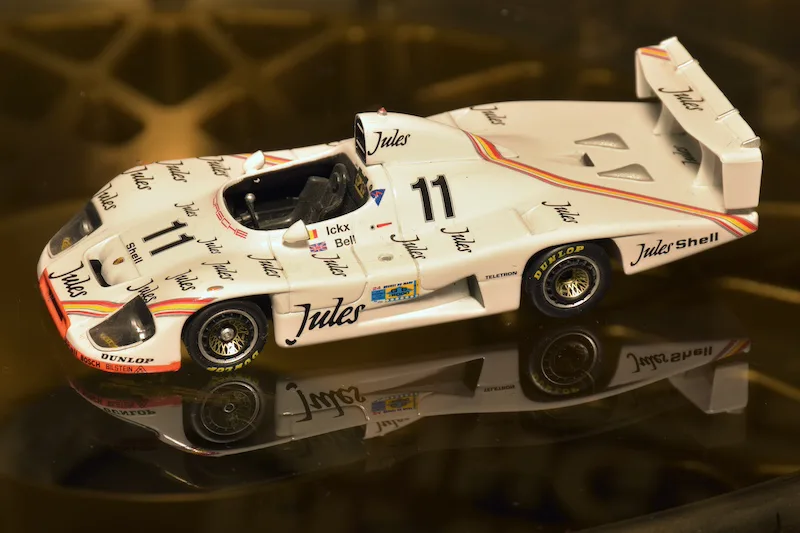
- MINICHAMPS MC430 816911 & MC430 816912 (diecast)
- Overall rating: 3 STARS | Quality details: 3 STARS | Estimated value: 3 STARS
- #11 also appears in #115 Jacky Ickx
Porsche 956
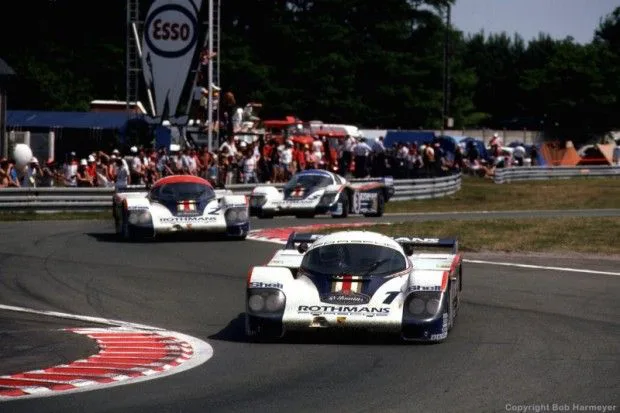
1982 Le Mans 24h, Porsche 956L
Porsche presented its new racing car just weeks before the 24h Le Mans. The Group C 956 was a new concept for Porsche. The engine – originally developed for Indianapolis – was already successful at Le Mans in 1981. But the rest of the car was brand new; an aluminium monocoque chassis with ground effect instead of the tubular space frames that all of its predecessors used. But the car was fuel efficient (important in Group C), fast and reliable which lead to a historic triple win.
Porsche System #1: Jacky Ickx (B) / Derek Bell (GB)
Results: Start-grid 1st / time 3:28.400 / race 1st – 359 laps
Porsche 956L – Group C: Powered by 2.65 liter Porsche 935/79 flat-6 twin-turbo, approx. 620 hp. Dunlop tires. Weight 840 kg. Aluminum monocoque, chassisnrs. #002
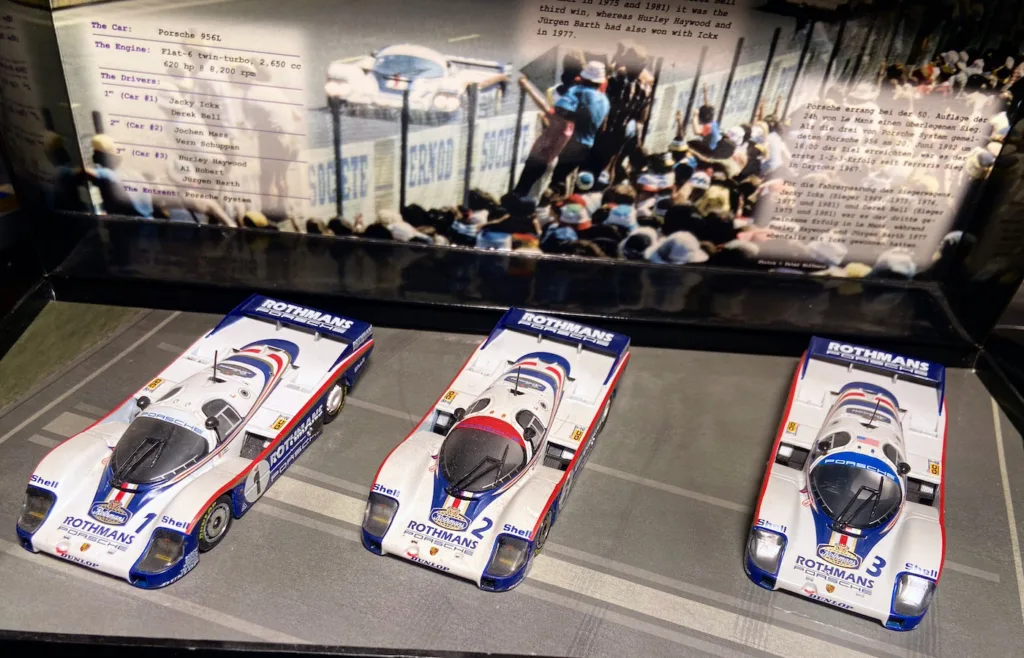

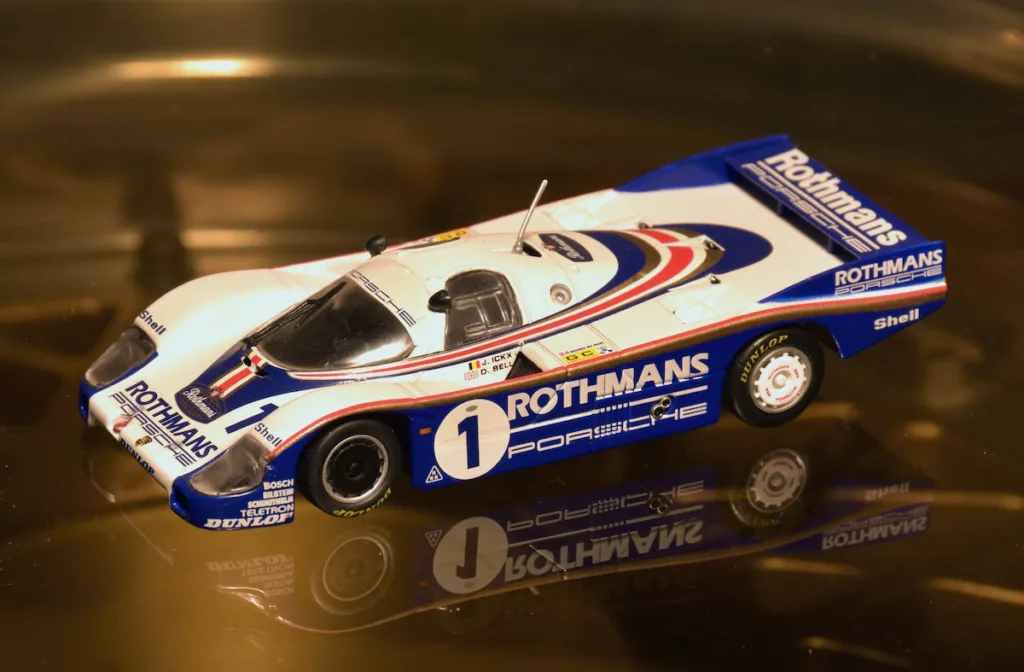
- MINICHAMPS MC402 826503 a 3-car presentation box #5114 / 5832 pcs (diecast)
- Overall rating: 3 STARS | Quality details: 3 STARS | Estimated value: 4 STARS
- QUARTZO Q3055 (diecast)
- Overall rating: 3 STARS | Quality details: 2 STARS | Estimated value: 3 STARS
- Both also appear in #026 Rothmans Porsche
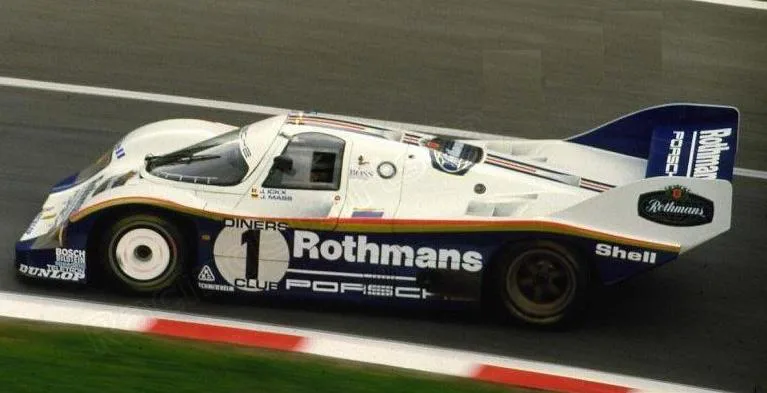
1983 Spa-Francorchamps 1000 km, Porsche 956K
Porsche dominated the World championship in 1983. The Joest team won the first race at Monza, but all others were a prey for the Rothmans factory team.
Porsche System #1: Jacky Ickx (B) / Jochen Mass (D)
Results: Start-grid 1st / time 2:09.300 / race 1st – 144 laps
Porsche 956L – Group C: Powered by 2.65 liter Porsche 935/79 flat-6 twin turbo, approx. 640 hp. Dunlop tires. Weight 840 kg. Aluminum monocoque, chassisnr. #005
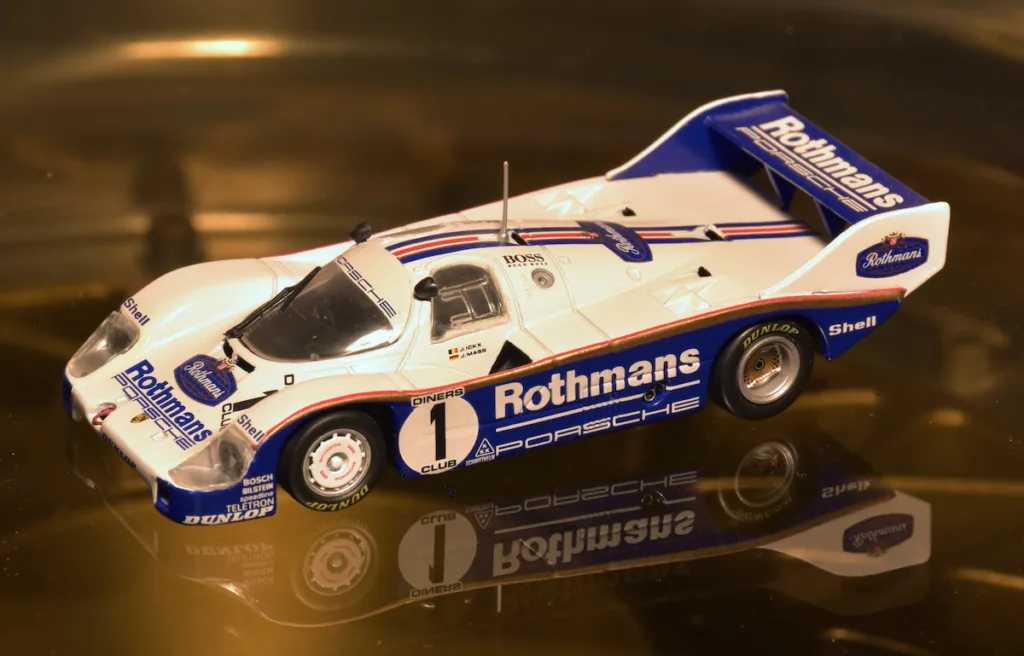
- QUARTZO Q3056 (diecast)
- Overall rating: 3 STARS | Quality details: 2 STARS | Estimated value: 3 STARS
- Also appears in #026 Rothmans Porsche
Off road
Jacky raced with the Rothmans Porsche team until Le Mans 1986, but since 1981 he was attracted to racing off road especially “Le Dakar”
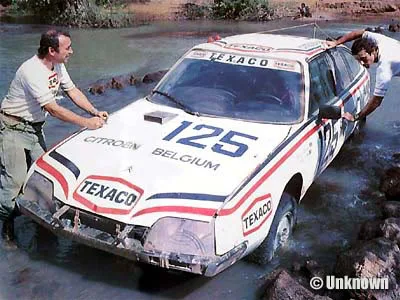
1981 Paris – Algers – Dakar, Citroën CX
Multiple Le Mans and Grand Prix winner Jacky Ickx made his debut in Le Dakar this year. He drove this front-wheel drive Citroën CX together with actor Claude Brasseur. Ickx and Brasseur won one stage but didn’t make it to the finish. They would return and win the event in 1983.
Citroën Belgium #125: Jacky Ickx (B) / Claude Brasseur (F)
Results: 1 stage win – stage #11 / race DNF
Citroën CX 2400 GTi – car category: Powered by 2.4 liter Citroën straight-4 injection, approx. 160 hp. Michelin tires. Weight 1400 kg. Steel monocoque, chassisnr. unknown. FWD
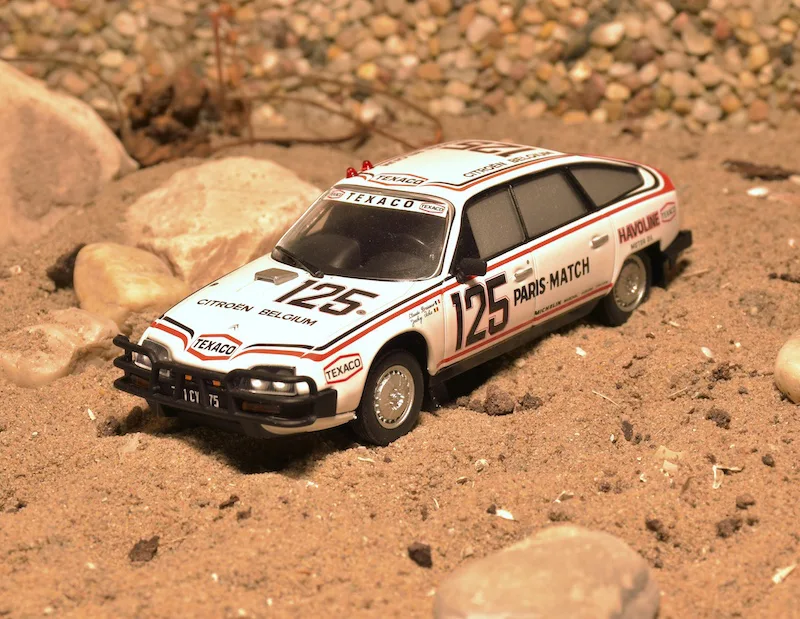
- NOREV Le Légende du Dakar 30 (diecast)
- Overall rating: 3 STARS | Quality details: 2 STARS | Estimated value: 2 STARS
- Also appears in #105 Le Dakar 1979-1999
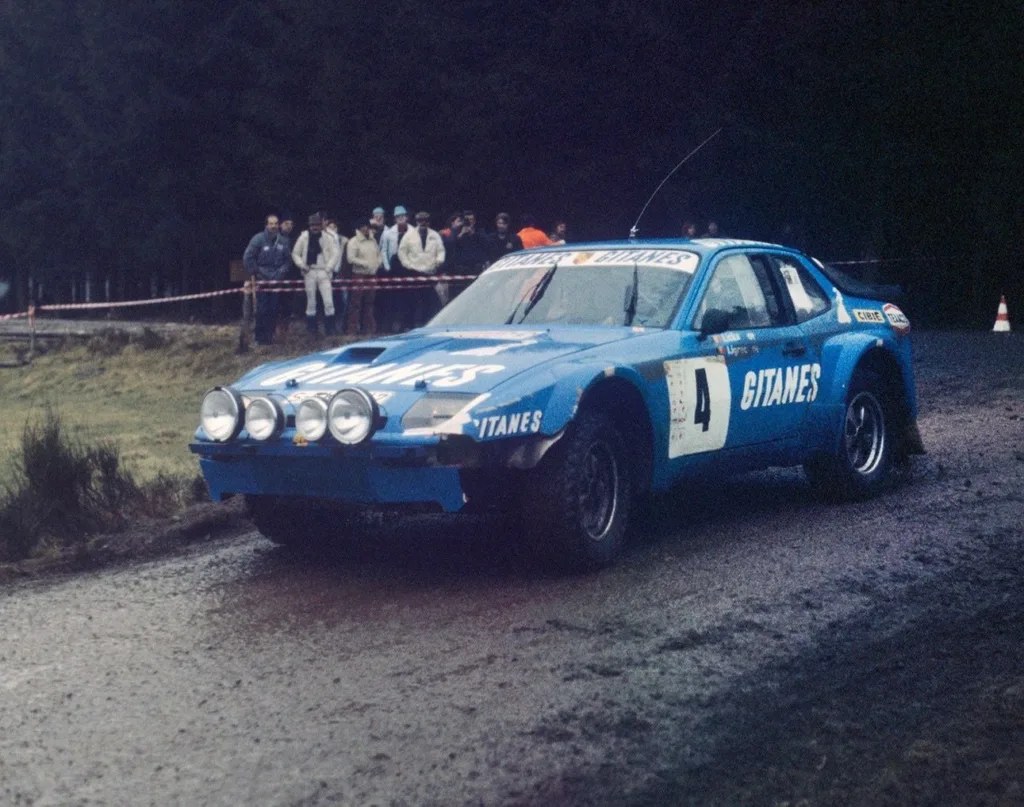
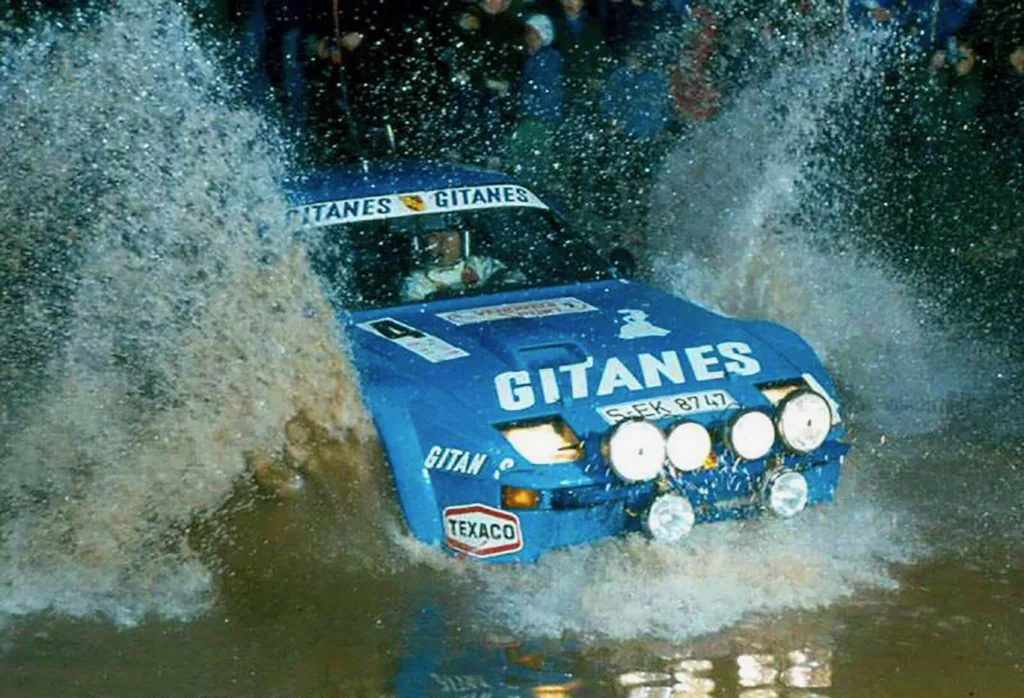
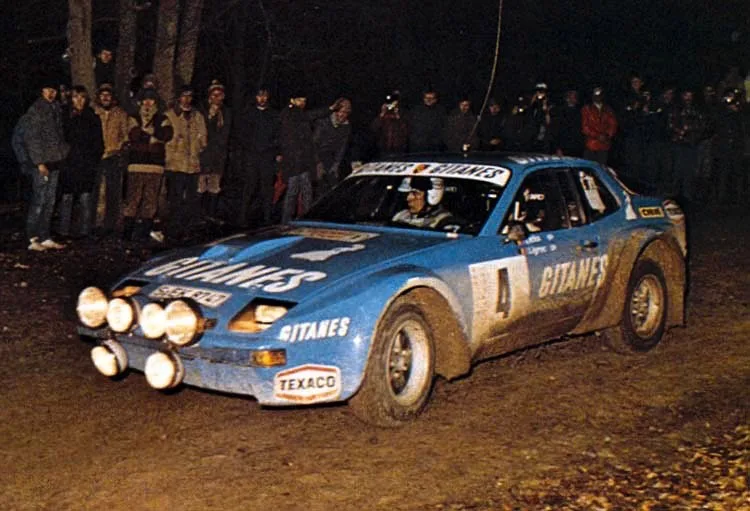
1982 Boucles de Spa, Porsche 924 GTS
The 924 GTS was the road-going version of the Group B GTR. It was used for rally’s, such as this one in which racing driver Jacky Ickx participated in the Boucles de Spa. Unfortunately he had to retire after only 4 stages.
Gitanes #4: Jacky Ickx (B) / John Igrec (B)
Results: DNF – 4 stages
Porsche 924 Carrera GTS – Group B: Powered by 2.0 liter Porsche M31.50 straight-4 turbo, approx. 270 hp. Dunlop tires. Weight 1025 kg. Steel monocoque, chassisnr. #unknown
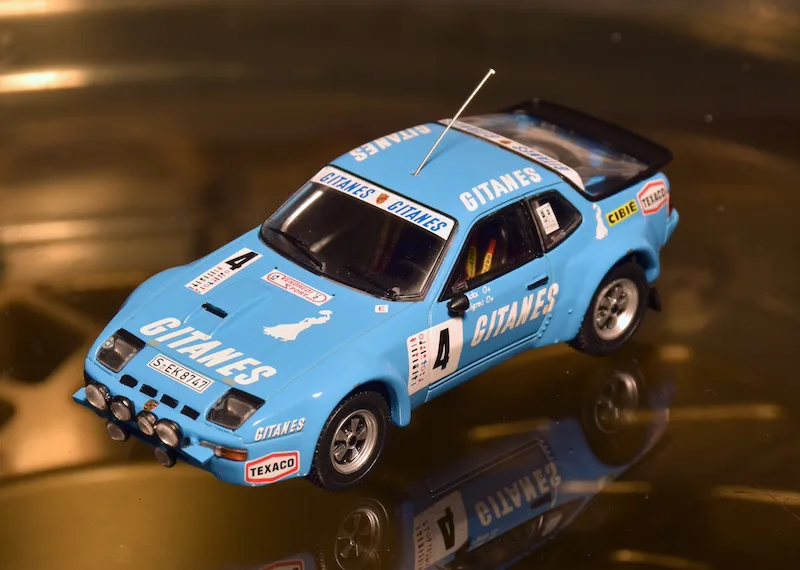
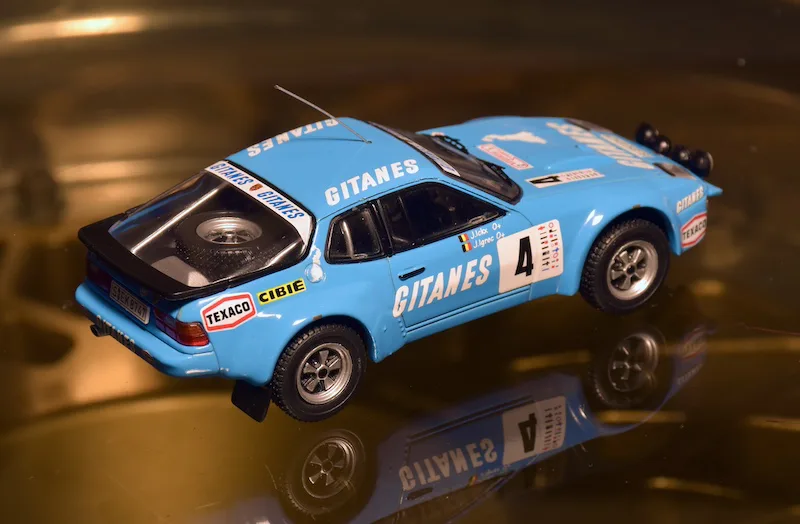
- IXO RAC367 (diecast)
- Overall rating: 4 STARS | Quality details: 3 STARS | Estimated value: 3 STARS
- Also appears in #062 Gitanes & Gauloises /#070 Front-engined Porsche
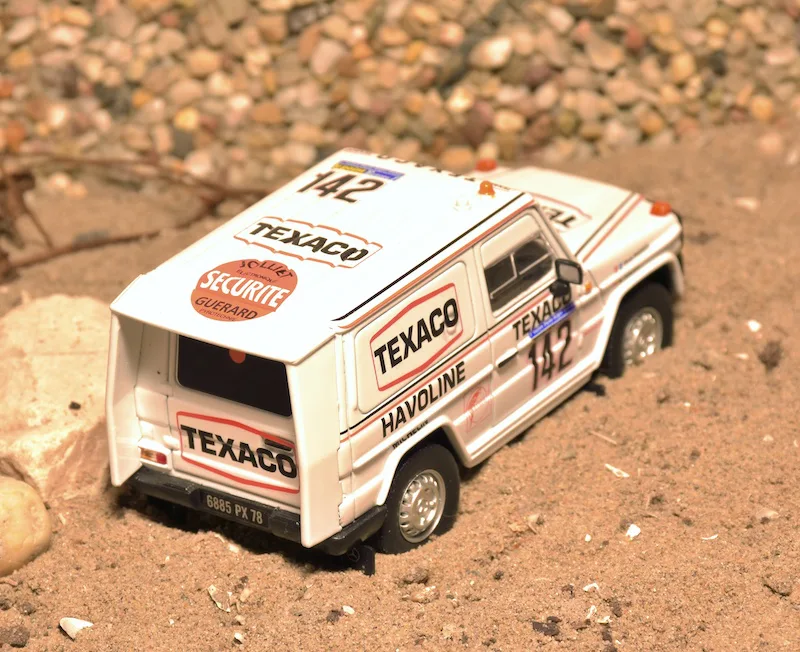
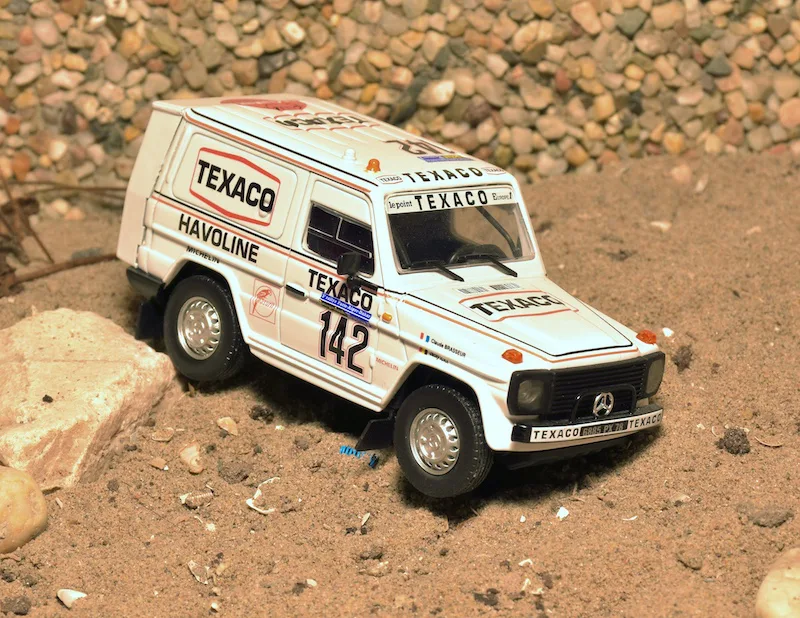
1983 Paris – Algers – Dakar, Mercedes-Benz 280 GE
‘Mr Le Mans’ and Formula 1 star Jacky Ickx turned to Le Dakar. After his first attempt with the FWD Citroën, he choose a 4WD Mercedes GE as his next weapon. He almost won in 1982 and did so in 1983, both times again with French actor Claude Brasseur as his co-pilot.
Texaco #142: Jacky Ickx (B) / Claude Brasseur (F)
Results: 5 stage wins / race 1st
Mercedes-Benz 280 GE – car category: Powered by 2.8 liter Mercedes M110 straight-6, approx. 210 hp. Michelin tires. Weight 1800 kg. Steel monocoque, chassisnr. unknown. 4WD
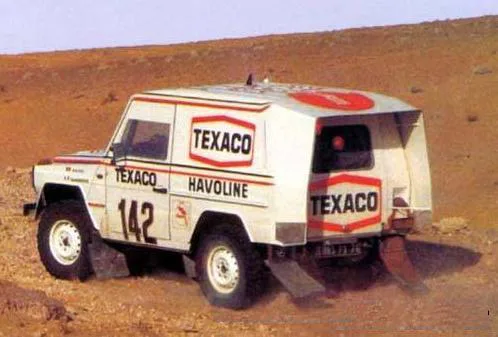
- NOREV Le Légende du Dakar 12 (diecast)
- Overall rating: 3 STARS | Quality details: 2 STARS | Estimated value: 2 STARS
- Also appears in #105 Le Dakar 1979-1999
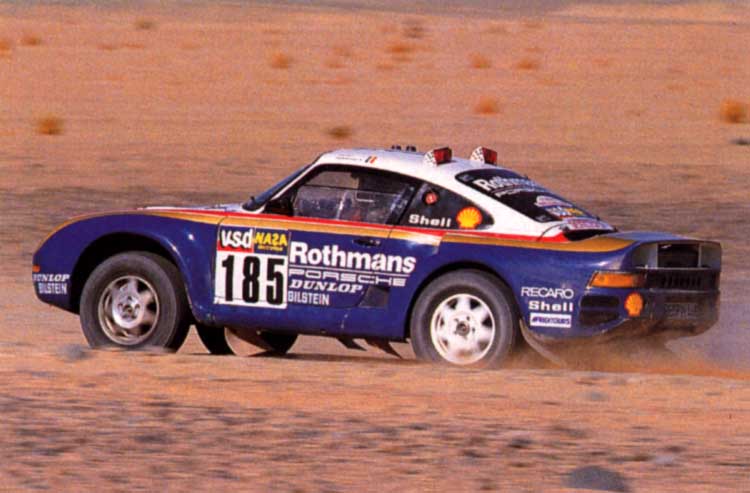
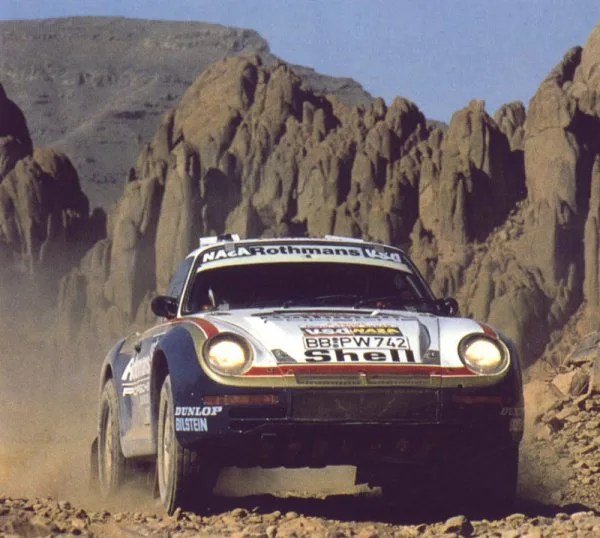
1986 Paris – Dakar, Porsche 959
The Porsche 959 was a special Dakar Rallye prototype, based on the 911 4×4 that won the rallye in 1984. The 959’s retired in 1985, but were very successful in 1986 with 1st, 2nd and 5th places. The turbo-boost was lowered because of the low octane fuel in Africa, so it delivered ‘only’ 390 hp instead of the original 450. Rene Metge won again, Jacky Ickx finished 2nd.
Rothmans Porsche #185: Jacky Ickx (B) / Claude Brasseur (F)
Results: 1 stage win / race 2nd
Porsche 959 Dakar – Car category: Powered by 2.8 liter Porsche flat-6 twin turbo, approx. 390 hp. Dunlop tires. Weight 1260 kg. Steel monocoque, chassisnr. unknown
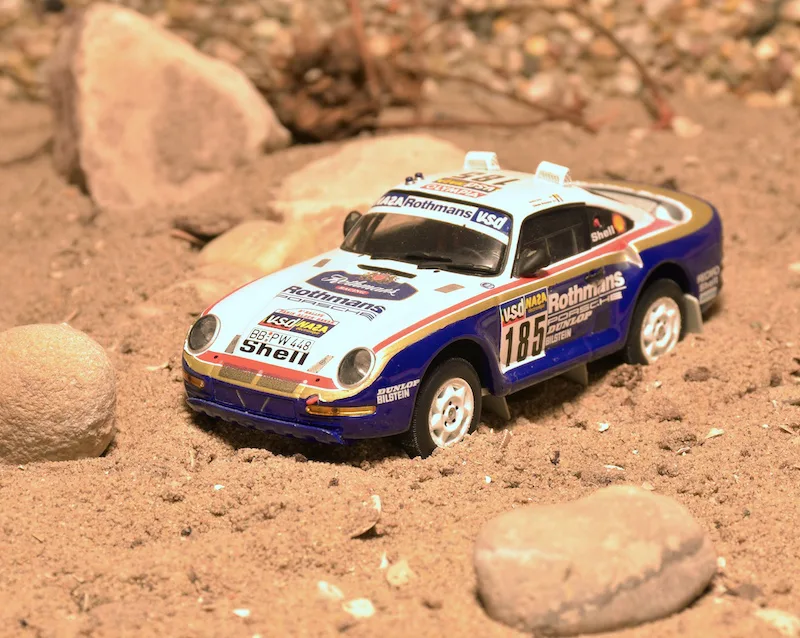
- MINICHAMPS MC400 866285 (diecast)
- Overall rating: 3 STARS | Quality details: 3 STARS | Estimated value: 3 STARS
- Also appears in Also appears in #106 Dakar 2000 and beyond / #026 Rothmans Porsche
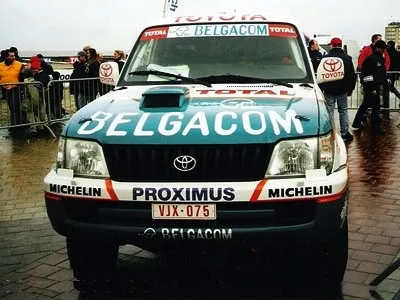
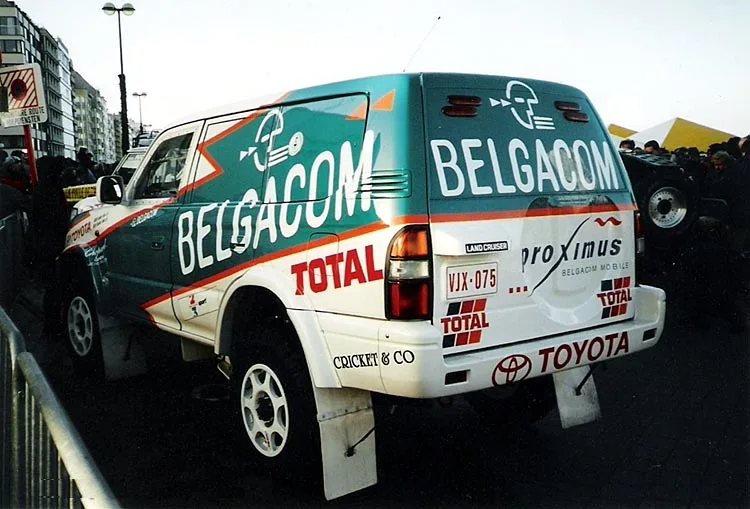
2000 Dakar – Cairo, Toyota Landcruiser
Racing legend Jacky Ickx (he won in F1, 6 times Le Mans and Le Dakar) returned to the desert with his daughter Vanina. They finished 18th overall and 1st in the T1 standard class with their Toyota Landcruiser.
Belgacom Toyota #274: Jacky Ickx (B) / Vanina Ickx (B)
Results: 18th / 1st T1
Toyota Landcuiser – T1 standard cars: Powered by 3.0 liter Toyota straight-6 approx. 210 hp. Michelin tires. Weight 2000 kg. Steel chassis, chassisnr. Toyota J100 unknown 4WD
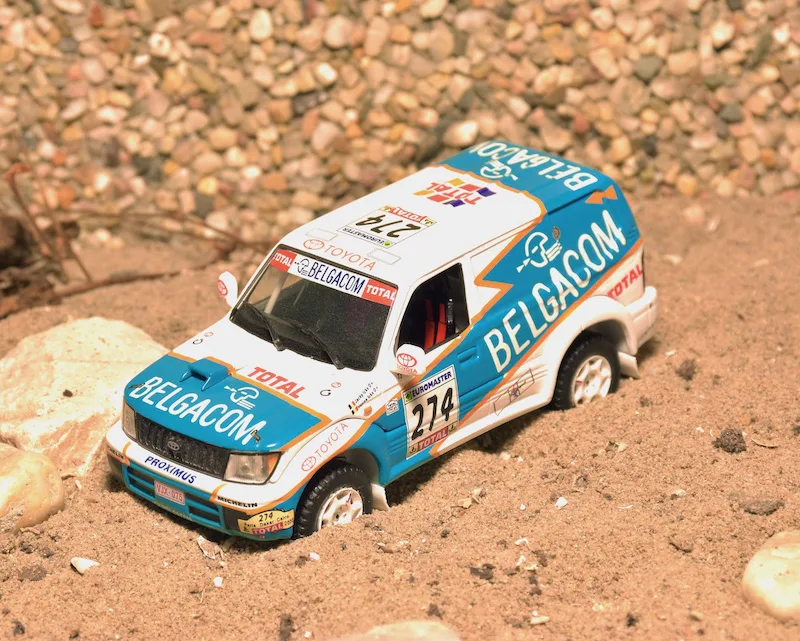
- SKID (Vitesse) SKM 99017 (diecast)
- Overall rating: 3 STARS | Quality details: 2 STARS | Estimated value: 2 STARS
- Also appears in #106 Dakar 2000 and beyond
Thanks for visiting 😉