Published May 15, 2024 | Last update October 1, 2026 | 28 models online
As Porsche only had small capacity road and racing cars in the 1950s and 1960s, they scored many class wins, and also overall victories against bigger cars, most notably in the Targa Florio. The factory cars in the early years were often grey but between 1966 and 1969, Porsche System entered mainly white cars with distinctive colors on the front. With the introduction of the 3-liter category, Porsche’s chances grew, but they had to wait for the big 917 to win their first Le Mans 24h.
- This collection contains:
- Porsche 907
- 1967 Le Mans 24h – Porsche 907 LH #40
- 1968 Daytona 24h – Porsche 907 LH #54
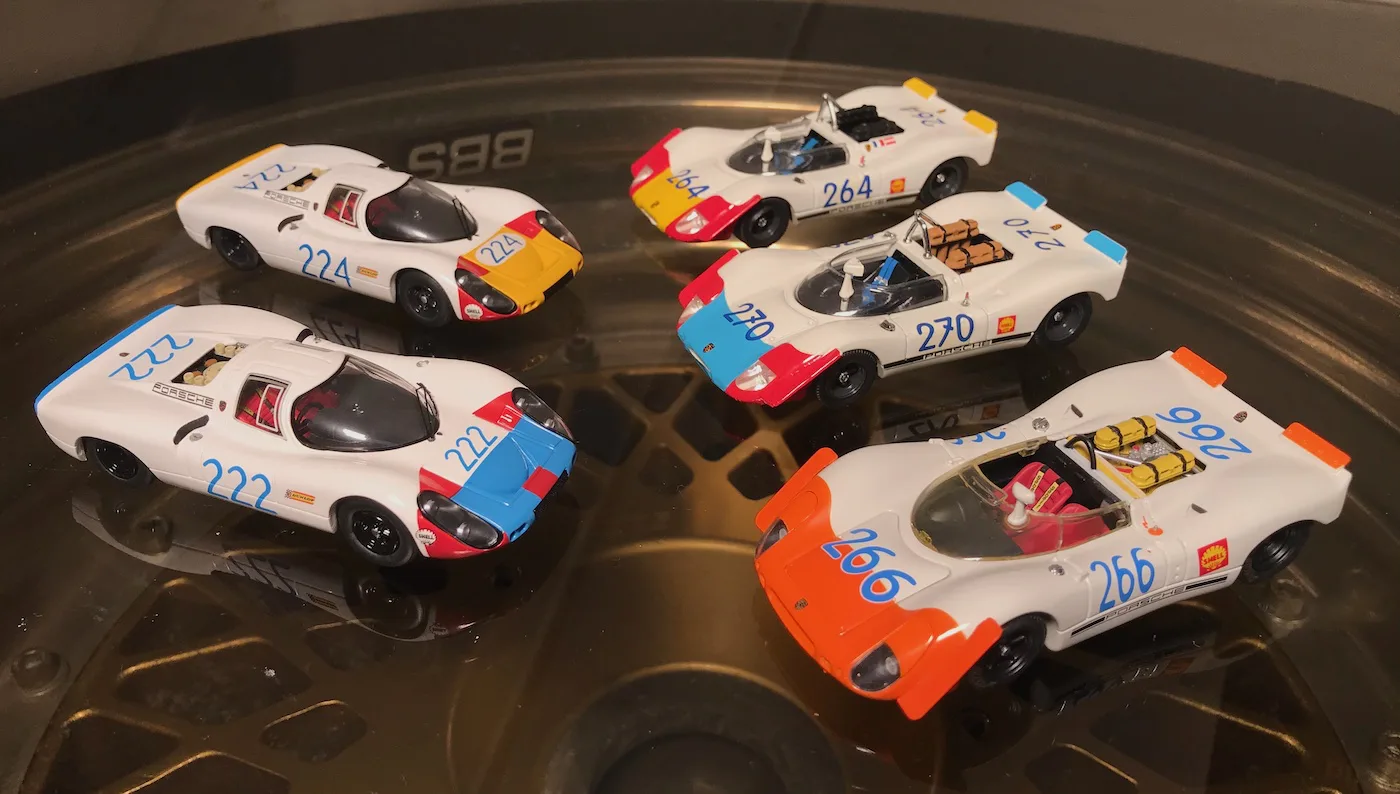
- 1968 Targa Florio – Porsche 907 KH #222 & #224
- 1968 Le Mans 24h – Porsche 907 LH #66
- 1968 – Porsche 908
- 1968 Nürburgring 1000 km – Porsche 908 KH #1 & #2
- 1968 Spa 1000 km – Porsche 908 KH #5
- 1968 Le Mans 24h – Porsche 908 LH #31, #32, #33 & #34
- 1968 Montlhéry 1000 km – Porsche 908 LH #12
- Porsche 909 Bergspyder
- 1968 Mont Ventoux hillclimb – Porsche 909 Bergspyder #2
- 1969 – Porsche 908
- 1969 Brands Hatch 1000 km – Porsche 908/02 #53
- 1969 Targa Florio – Porsche 908/02 #264
- 1969 Targa Florio – Porsche 908/02 #266
- 1969 Targa Florio – Porsche 908/02 #268
- 1969 Targa Florio – Porsche 908/02 #270
- 1969 Targa Florio – Porsche 908/02 #272
- 1969 Targa Florio – Porsche 908/02 #274
- 1969 – Porsche 917
- 1969 homologation – Porsche 917 #917
- 1969 Zeltweg 1000 km – Porsche 917 #29
- 1969 Le Mans 24h – Porsche 917L #12, #14 & #15
Porsche 907
1967 Le Mans 24h, Porsche 907 LH
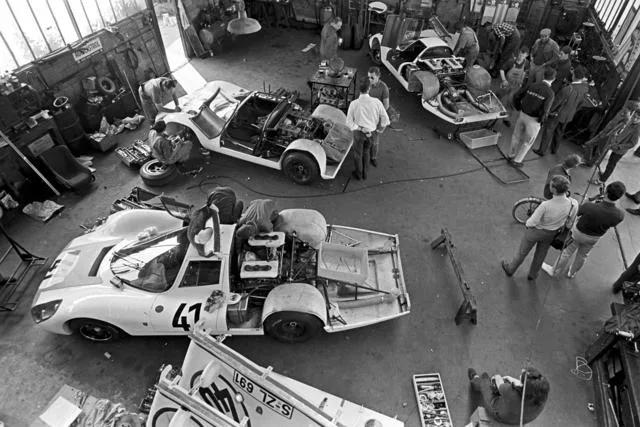
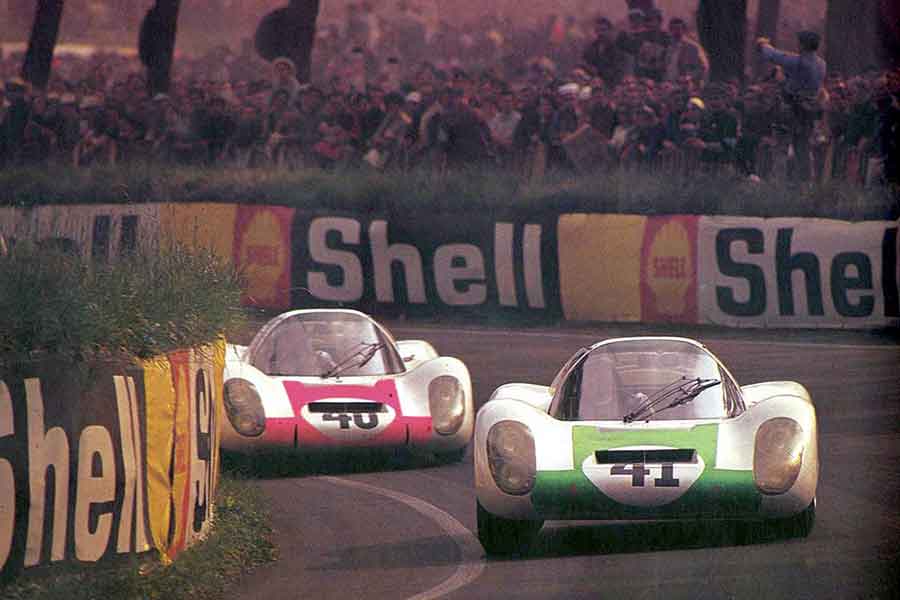
The Porsche 907 was a light sports car developed for endurance racing. With its small frontal surface and long tail it reached 300 km/h despite its small 6-cylinder engine. The debut was at the 24 hour race of Le Mans; the #40 retired with a broken camshaft while the other finished 5th overall and took class victory.
Porsche System Engineering #40: Jochen Rindt (A) / Gerhard Mitter (D)
Results: Start-grid 22nd / time 3:43.100 / race DNF engine – 103 laps
Porsche 907 LH – Prototype <2L: Powered by 2.0 liter Porsche 901 flat-6, approx. 220 hp. Dunlop tires. Weight 620 kg. Aluminum space frame, chassisnr. 907 #003
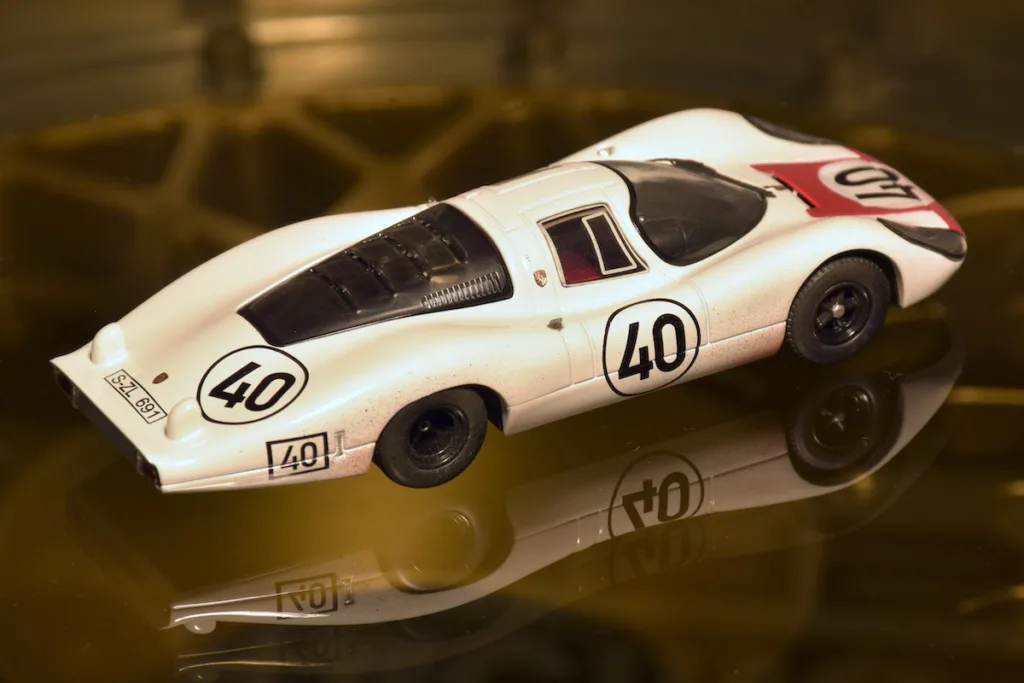
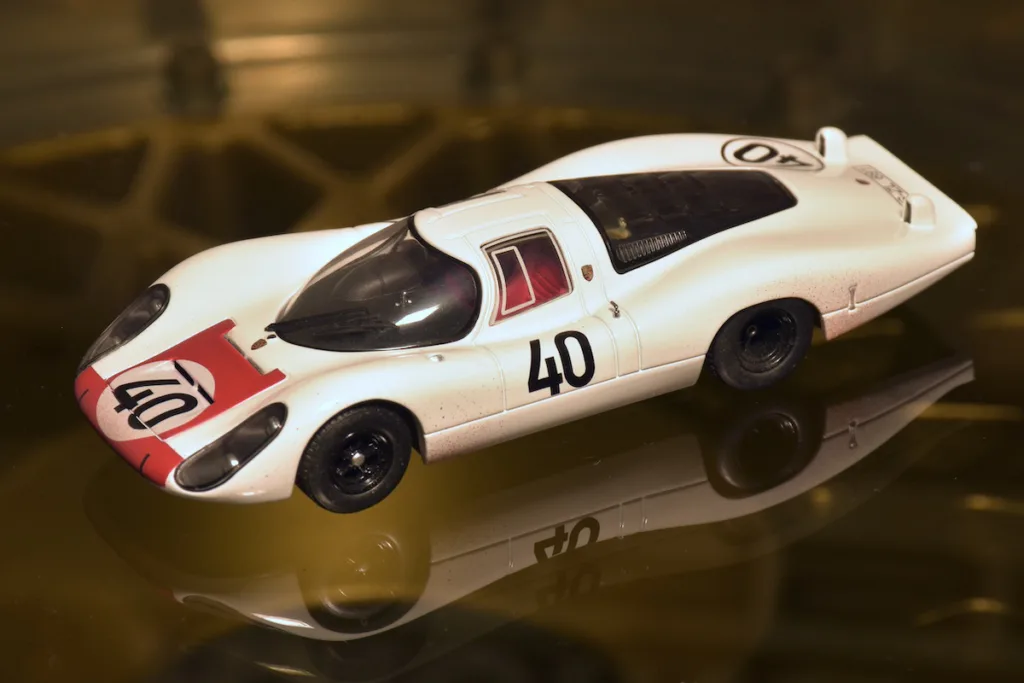
- SCHUCO 45 036 2500 limited 300 pcs. (diecast)
- Overall rating: 3 STARS | Quality details: 3 STARS | Estimated value: 3 STARS
- Only appears in this collection
1968 Daytona 24h, Porsche 907 LH
For the 1968 season, the 907 was equipped with a 8-cylinder 2.2 liter engine. In Daytona 1968 the small Porsche scored a triple victory, just as Ferrari did the year before. But the Ferrari’s had twice the engine size and horsepower, and did less laps. A month later, the little Porsches would also win Sebring.
Porsche System Engineering #54: Vic Elford (GB) / Jochen Neerpasch (
D) / Rolf Stommelen (D)
| Jo Siffert (CH)
Results: Start-grid 5th / time 1:59.150 / race 1st – 673 laps
Porsche 907 LH – Prototype <3L: Powered by 2.2 liter Porsche 771/1 flat-8, approx. 270 hp. Dunlop tires. Weight 630 kg. Aluminum space frame, chassisnr. 907 #005
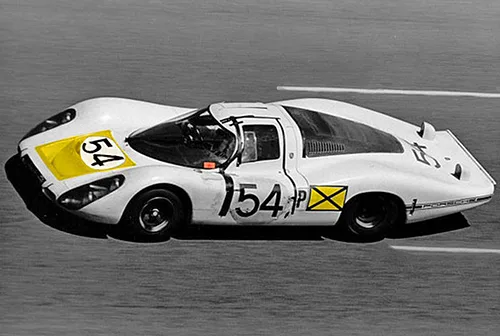
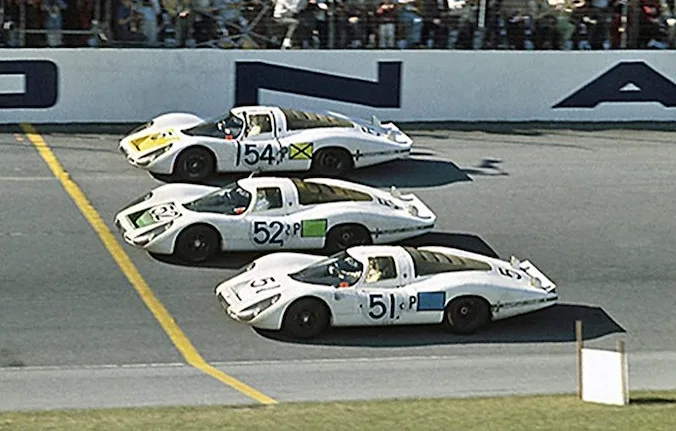
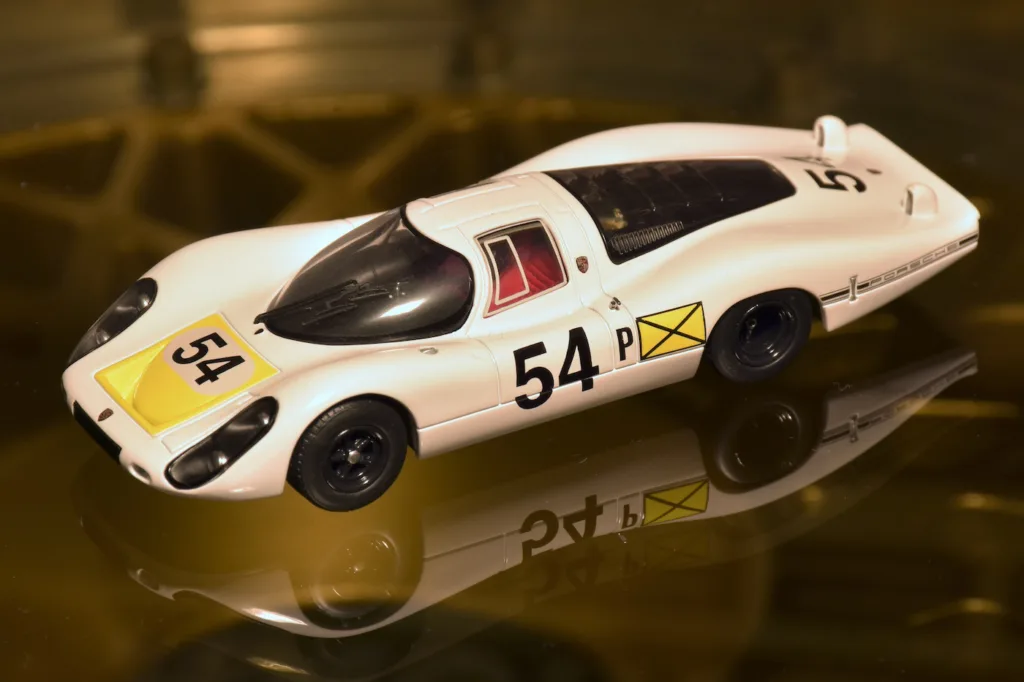
- SCHUCO 45 036 2900 limited 1.000 pcs. (diecast)
- Overall rating: 3 STARS | Quality details: 3 STARS | Estimated value: 3 STARS
- Only appears in this collection
1968 Targa Florio, Porsche 907 KH
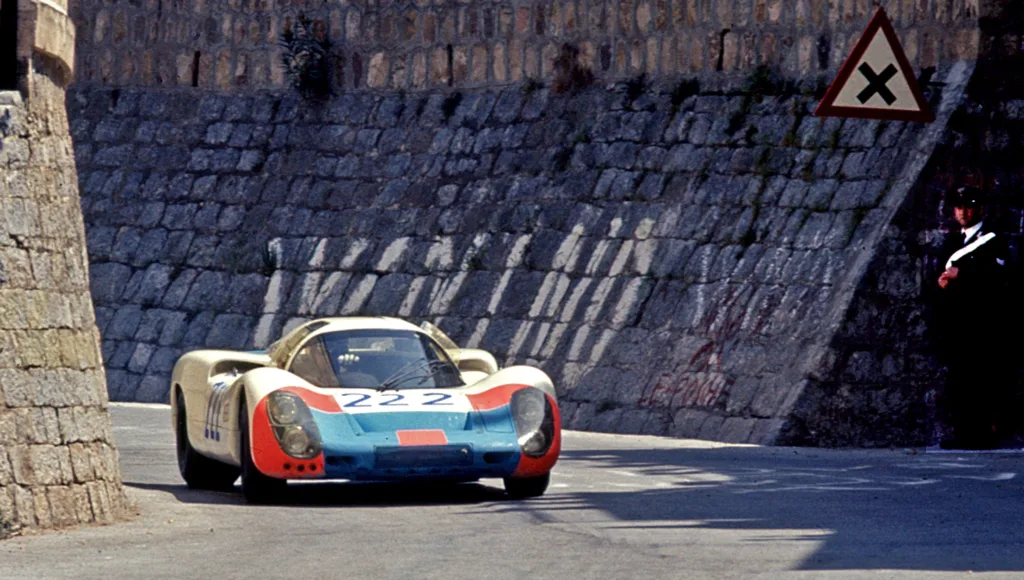
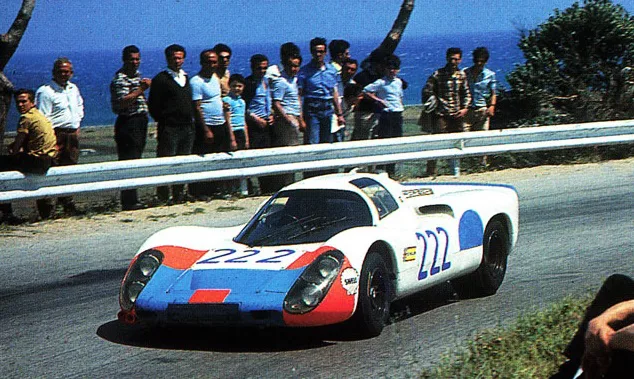
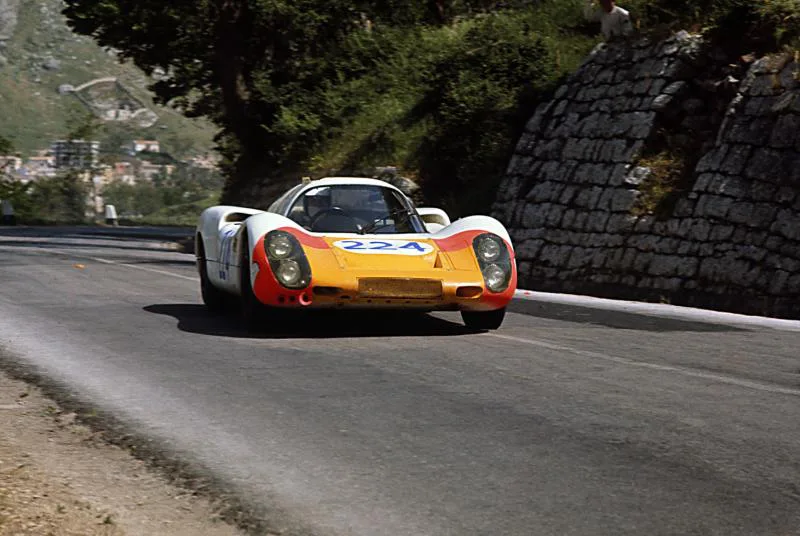
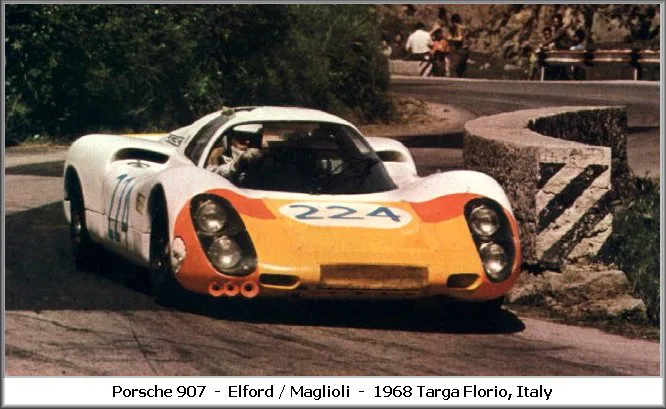
The short tail version of the Porsche 907 won the 1968 Targa Florio. The #224 won and the #222 finished 4th. The other places in the top 6 were all for Alfa Romeo 33/2. Vic Elford lost much time because of two punctures and considered the race lost. As compensation he went for the lap record and was so fast that he overtook the leading Alfa Romeo and won the race by 3 minutes.
Porsche System Engineering #222: Hans Herrmann (D) / Jochen Neerpasch (D)
Results: Race 4th- 10 laps
Porsche System Engineering #224: Vic Elford (GB) / Umberto Magllioli (
I)
Results: Start-grid 1st / time 36:47.700 / race 1st – 10 laps
Porsche 907 KH – Prototype <3L: Powered by 2.2 liter Porsche 771/1 flat-8, approx. 270 hp. Dunlop tires. Weight 630 kg. Aluminum space frame, chassisnr. 907 #030 & #025
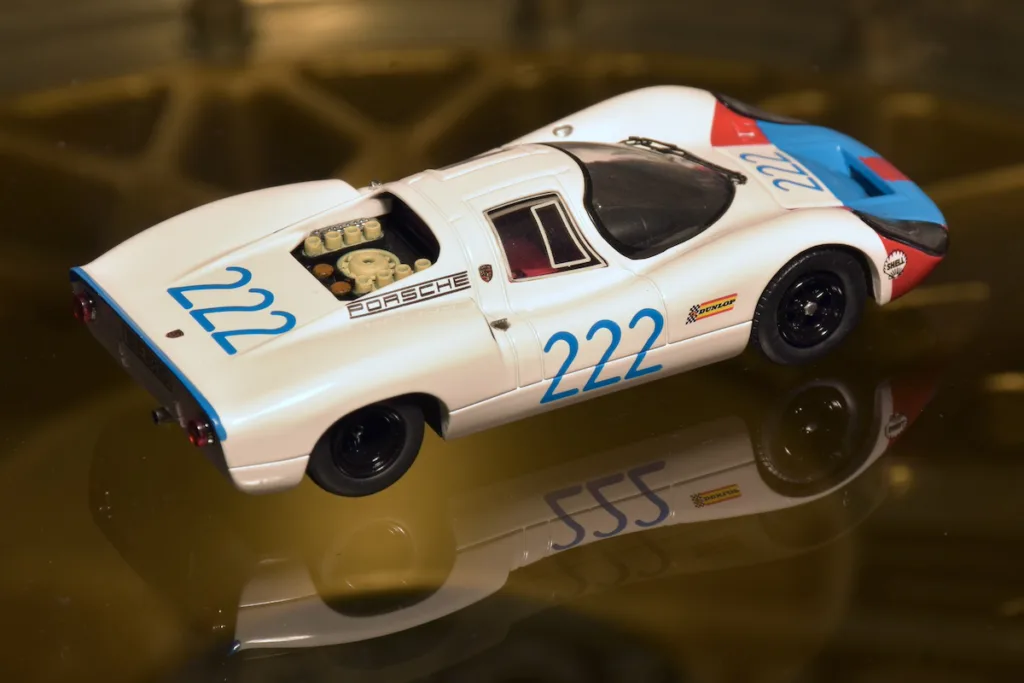
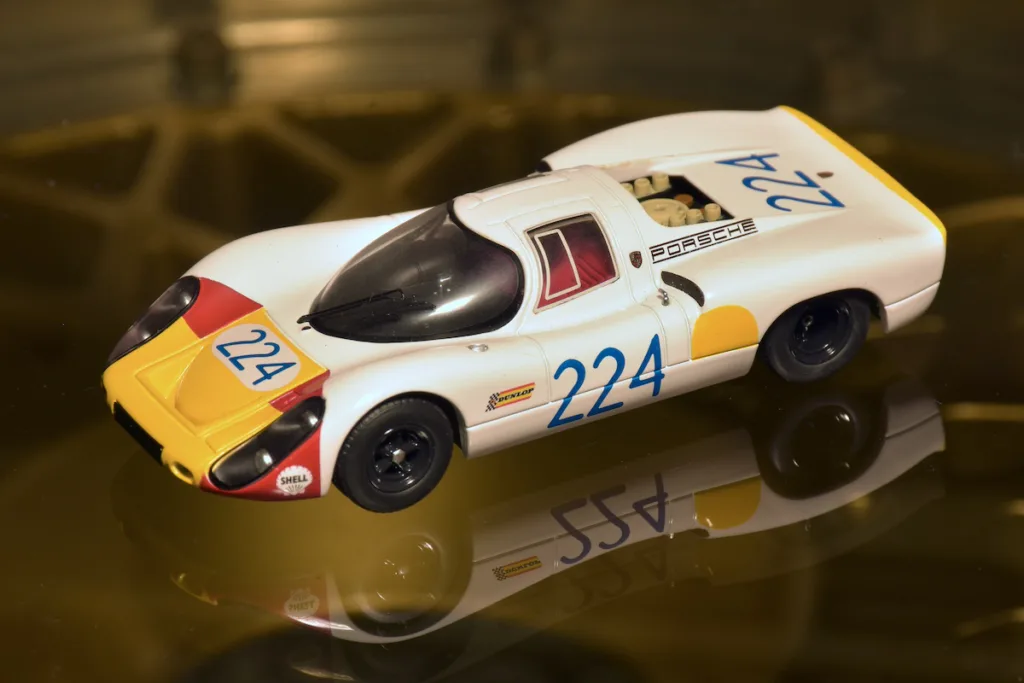
- SCHUCO 45 036 2200 limited 1.000 pcs. & 45 036 2100 limited 1.000 pcs. (diecast)
- Overall rating: 3 STARS | Quality details: 3 STARS | Estimated value: 3 STARS
- Only appear in this collection
1968 Le Mans 24h, Porsche 907 LH
In Daytona 1968 the small Porsches scored a triple victory, but at Le Mans it should have no chance against the GT40 and the new 8-cylinder Porsche 908’s. But because all but one new factory 908’s failed and also some Fords retired, this privately entered 907LH took 2nd place overall and first in class.
Hart Ski #66: Rico Steinemann (CH) / Dieter Spoery (CH)
Results: Start-grid 22nd / time 3:57.400 / race 2nd – 325 laps / 1st prototype <3L.
Porsche 907 LH – Prototype <3L: Powered by 2.2 liter Porsche 771/1 flat-8, approx. 270 hp. Dunlop tires. Weight 630 kg. Aluminum space frame, chassisnr. 907 #008
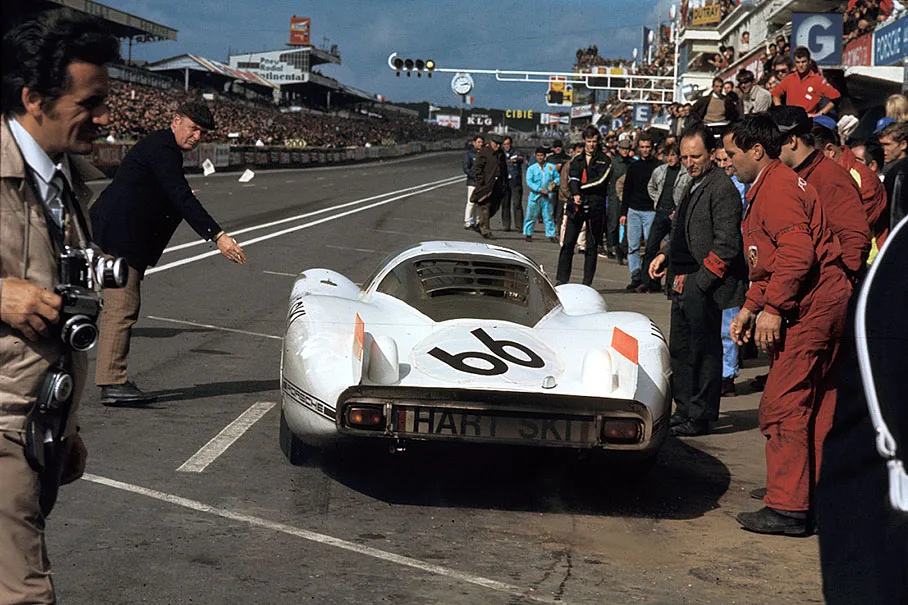
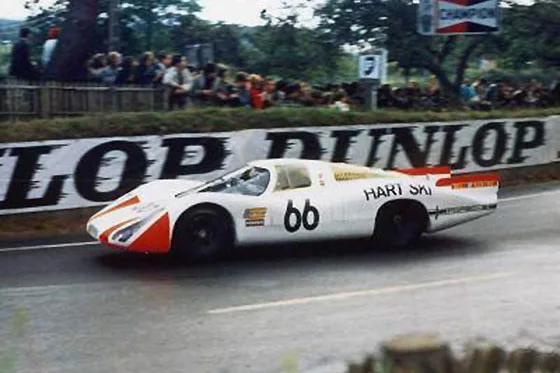
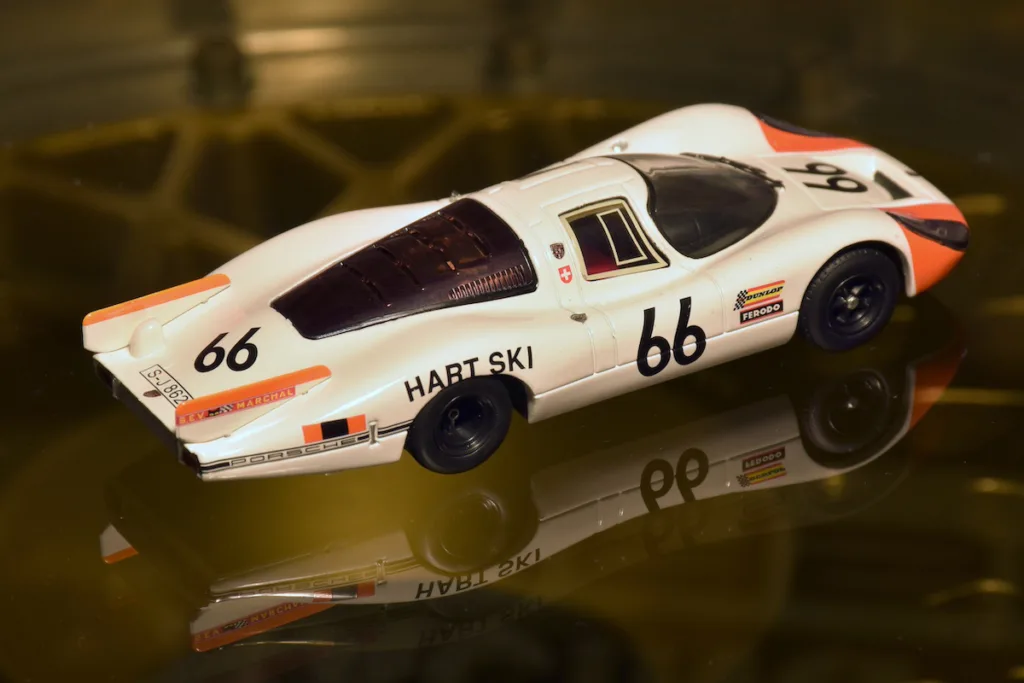
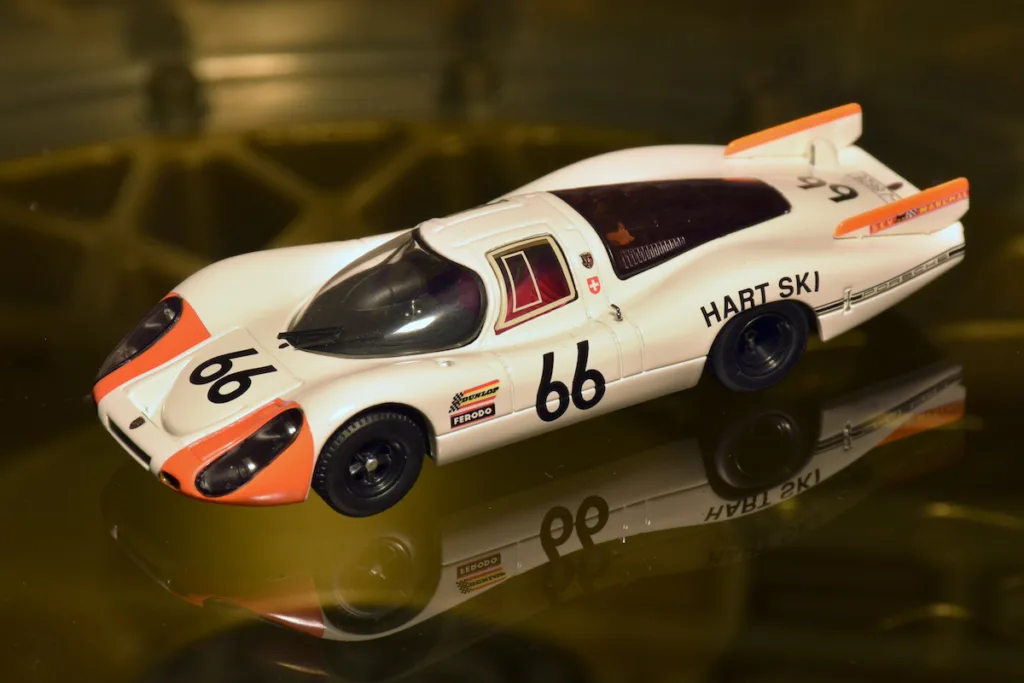
- SCHUCO 45 036 2800 limited 1.000 pcs. (diecast)
- Overall rating: 3 STARS | Quality details: 3 STARS | Estimated value: 3 STARS
- Only appears in this collection
1968 – Porsche 908
1968 Nürburgring 1000 km, Porsche 908 KH
The Nürburgring 1000 km was the first world championship race that Porsche System entered the all new 908 with 3.0 liter 8-cylinder engine. It was an immediate success; #1 retired in the first lap, but the #2 car that started from the back, won the race ahead of a factory 907 2.2 liter. Another 907 finished 4th.
Porsche System Engineering #1: Gerhard Mitter (D) / Ludovico Scarfiotti (I)
Results: Start-grid 3rd / time 8:40.100 / race DNF
Porsche System Engineering #2: Jo Siffert (CH) / Vic Elford (GB)
Results: Start-grid 27th / time 9:35.900 / race 1st – 44 laps
Porsche 908 KH – Prototypes <3L: Powered by 3.0 liter Porsche 908 flat-8, approx. 350 hp. Dunlop tires. Weight 600 kg. Aluminum space frame, chassisnr. 908 #009 & #008
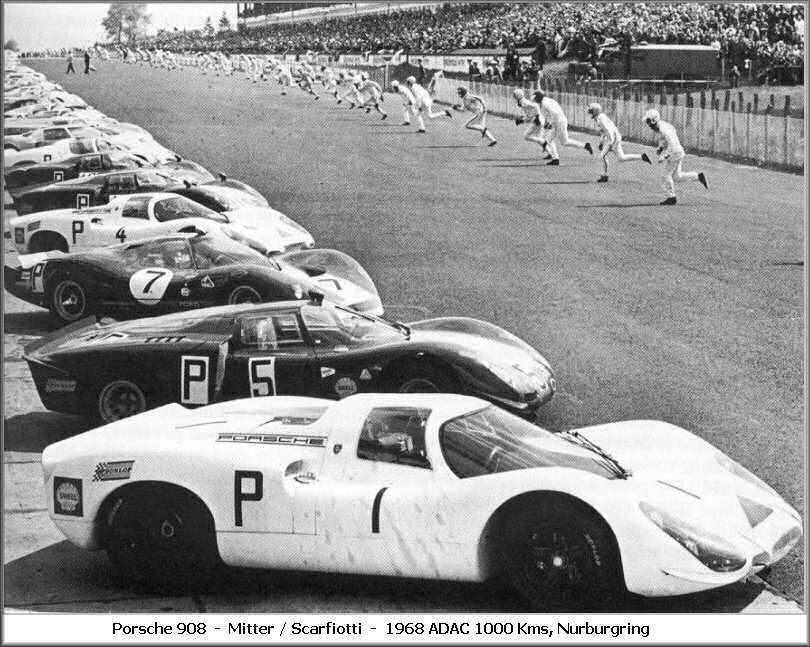
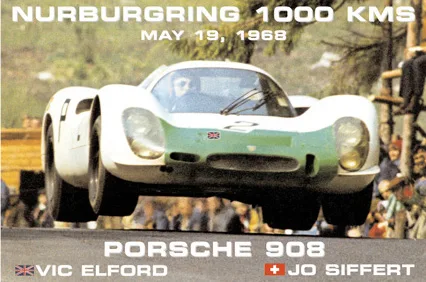
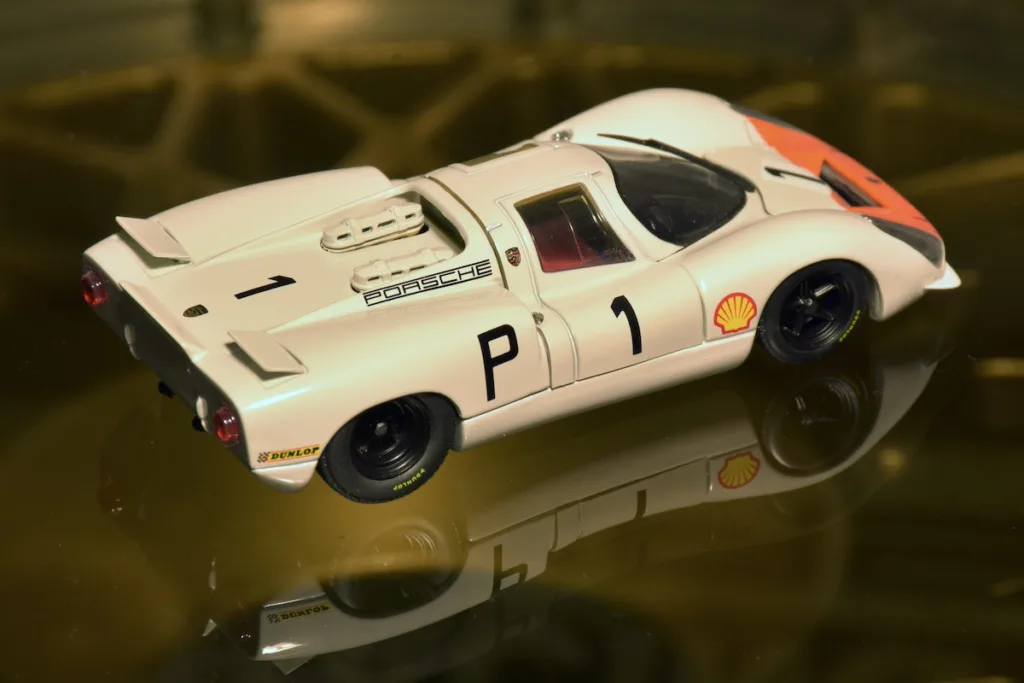
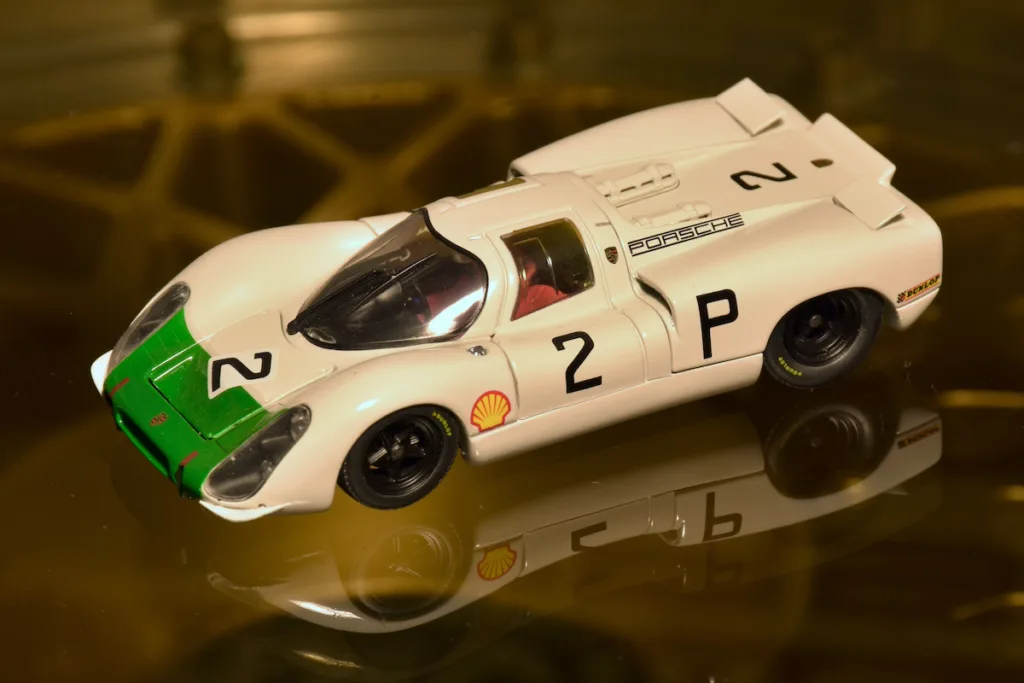
- EBBRO 43738 & 43739 (diecast)
- Overall rating: 4 STARS | Quality details: 3 STARS | Estimated value: 3 STARS
- Only appear in this collection
1968 Spa 1000 km, Porsche 908 KH
Only one week after its successful debut at the Nürburgring, the 908 had to race in the rain at Spa. Jacky Ickx won in a Ford GT40 ahead of one of the Porsche 907’s. The #6 908 crashed halfway the race and the #5 had to settle for third.
Porsche System Engineering #5: Rolf Stommelen (D) / Hans Herrmann (D)
Results: Start-grid 5th / time 3:45.700 / race 3rd – 69 laps
Porsche 908 KH – Prototypes <3L: Powered by 3.0 liter Porsche 908 flat-8, approx. 350 hp. Dunlop tires. Weight 600 kg. Aluminum space frame, chassisnr. 908 #011
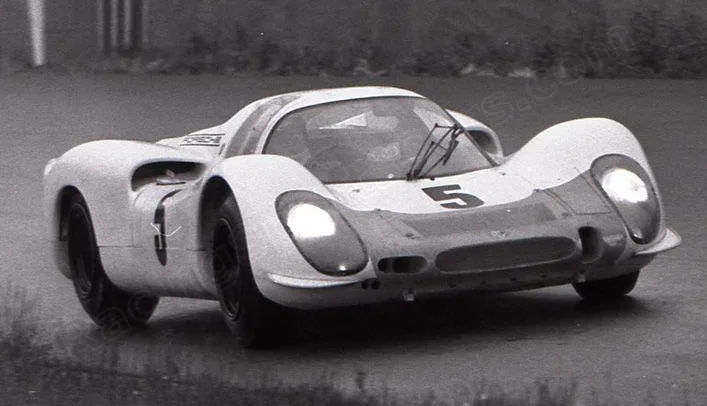
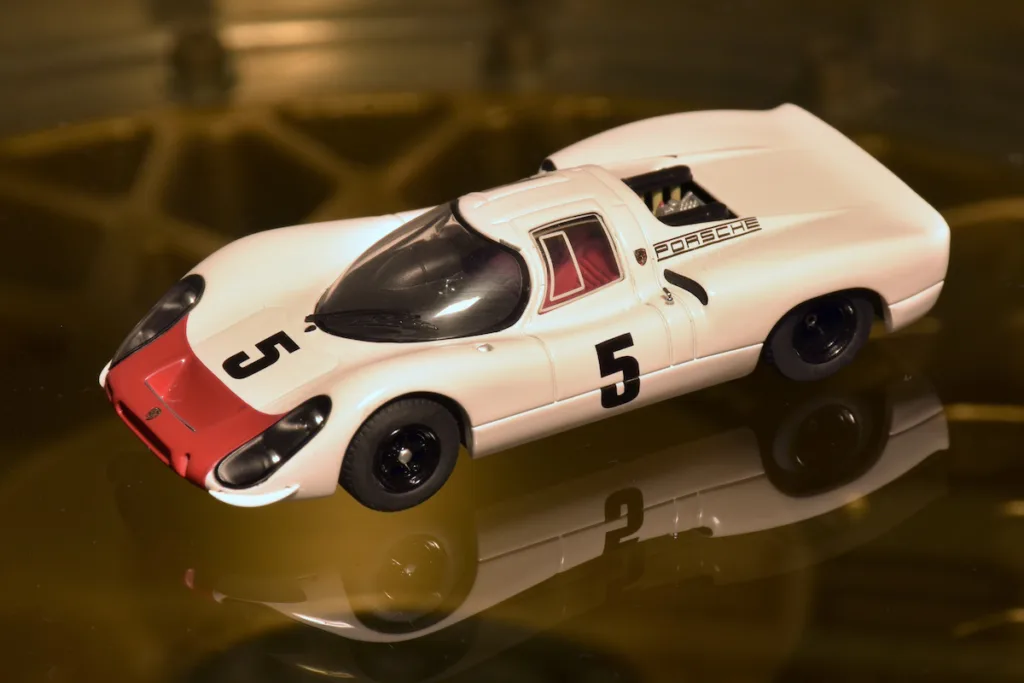
- SCHUCO 45 037 2500 limited 1.000 pcs. (diecast)
- Overall rating: 3 STARS | Quality details: 3 STARS | Estimated value: 3 STARS
- Only appear in this collection
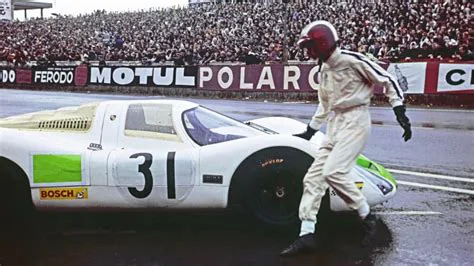
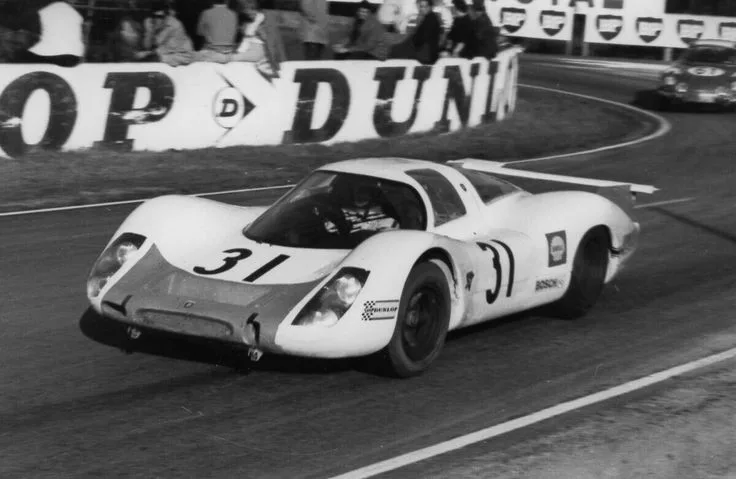
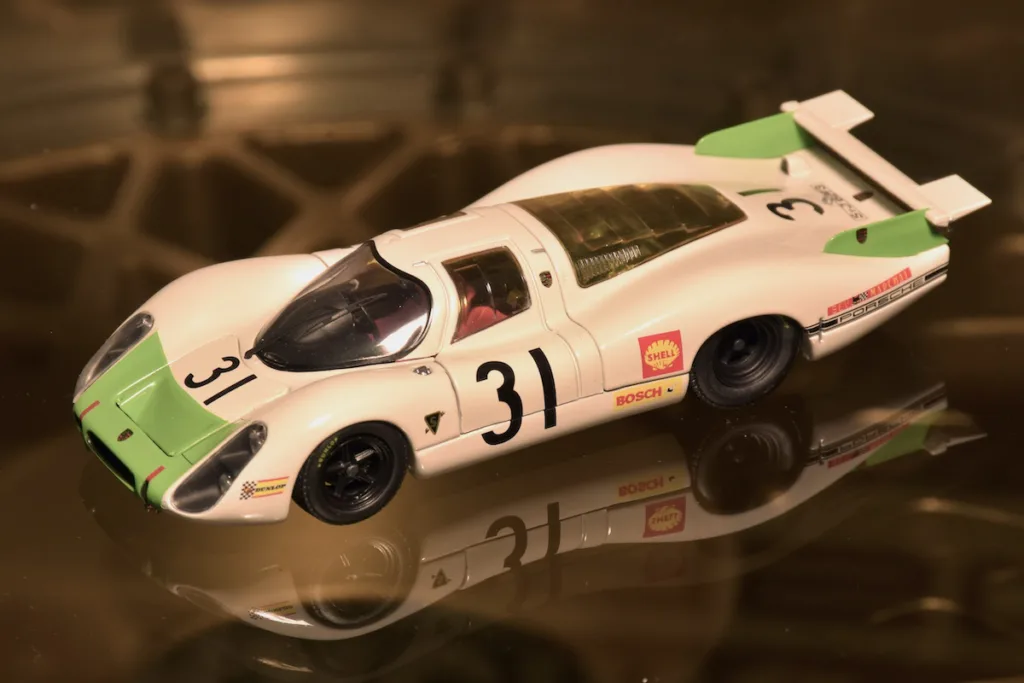
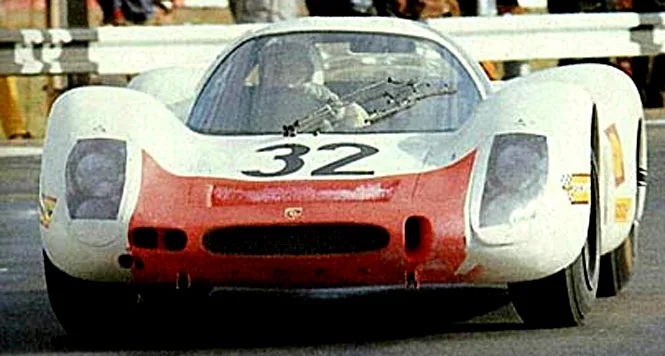
1968 Le Mans 24h, Porsche 908 LH
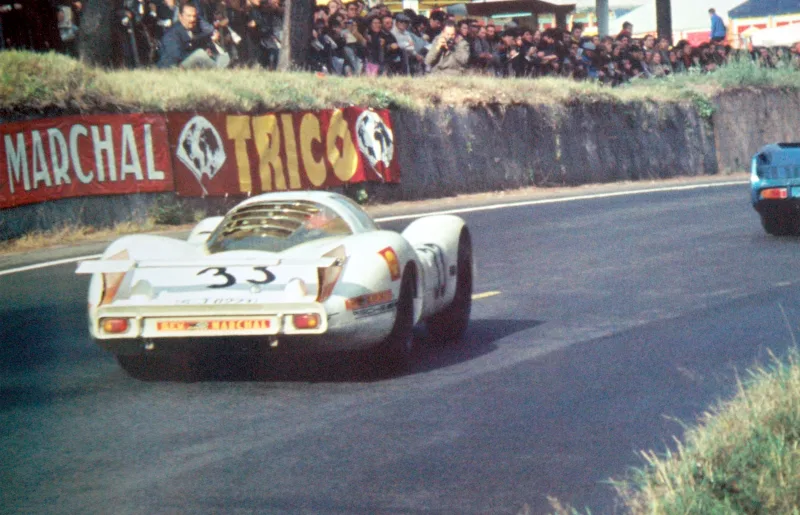
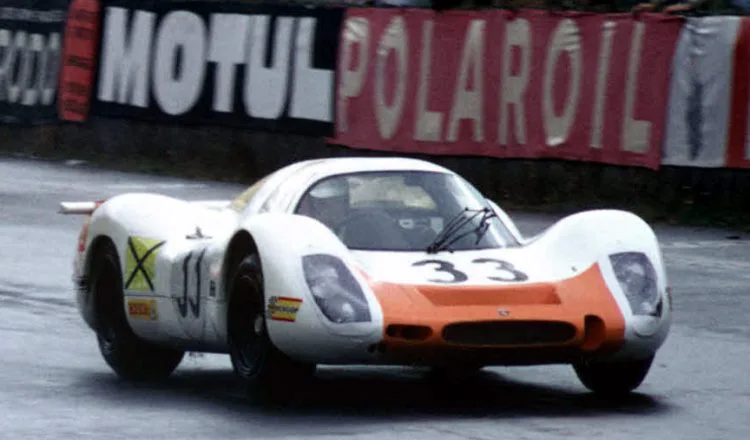
At Le Mans, Porsche launched a large scale assault with no less than four factory 908 long tails. It was fast, the cars were 1st, 2nd, 3rd and 7th in qualfying. Unfortunately the 908 was not yet as reliable as it would be in the following years. Two of the four cars retired with technical problems, one got disqualified. The one that made it to the finish was defeated by the Gulf Ford and the Scuderia Tartaruga Porsche 907.
Porsche System Engineering #31: Jo Siffert (CH) / Hans Herrmann (D)
Results: Start-grid 1st / time 3:35.400 / race DNF clutch – 59 laps
Porsche System Engineering #32: Vic Elford (GB) / Gerhard Mitter (D)
Results: Start-grid 3rd / time 3:39.300 / race DSQ illegal alternator change
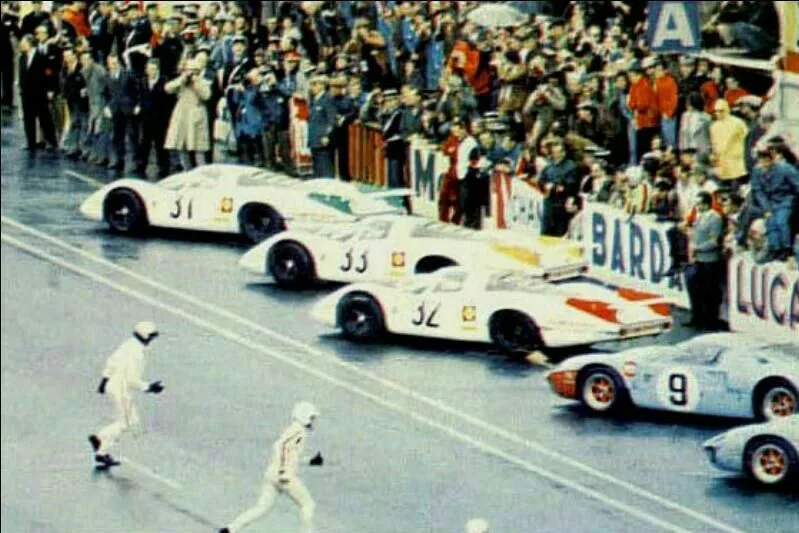

Porsche System Engineering #33: Rolf Stommelen (D) / Jochen Neerpasch (
D)
Results: Start-grid 12nd / time 3:35.800 / race 3rd – 325 laps / 2nd prototype <3L

Porsche System Engineering #34: Joe Buzzetta (USA) / Scooter Patrick (USA)
Results: Start-grid 7th / time 3:43.200 / race DNF alternator – 115 laps

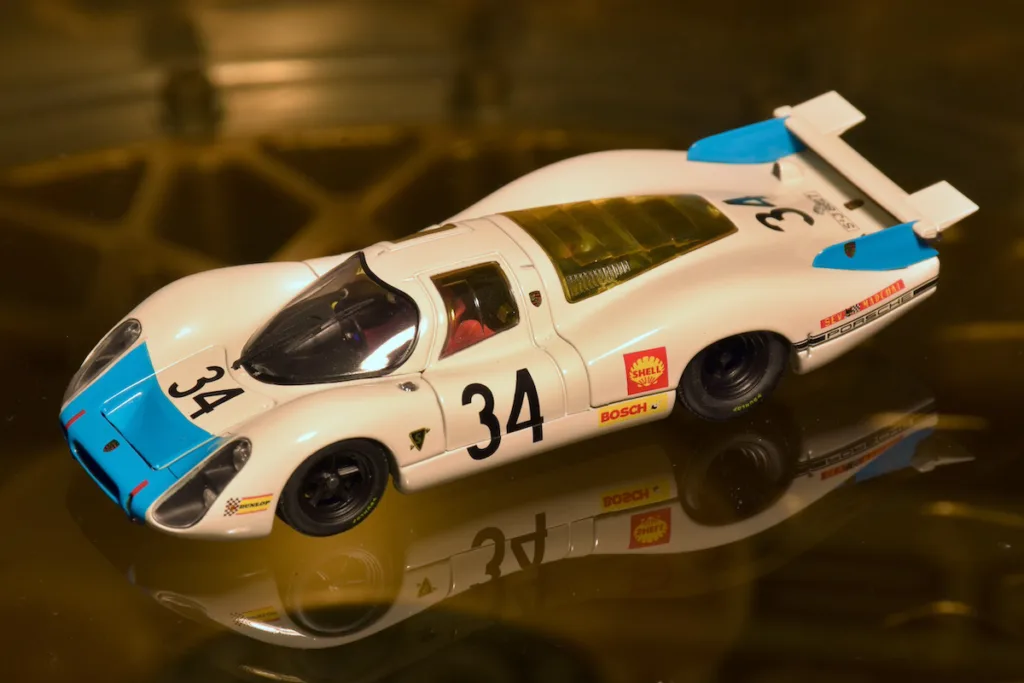
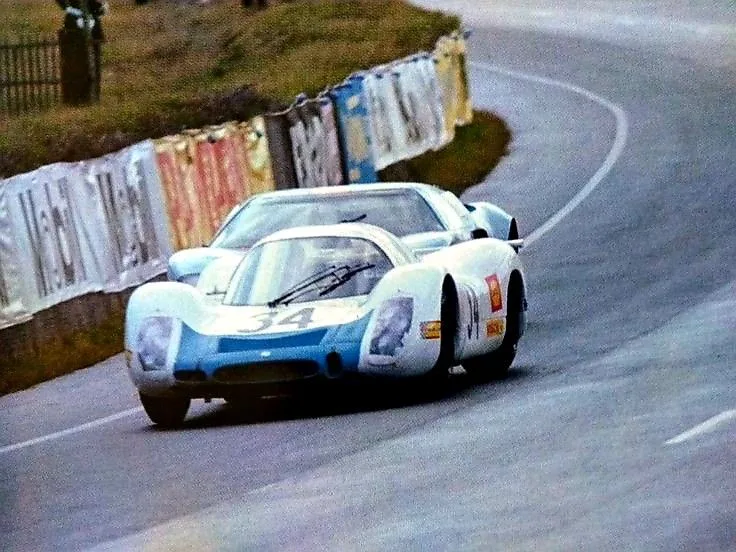
Porsche 908 LH – Prototypes <3L: Powered by 3.0 liter Porsche 908 flat-8, approx. 350 hp. Dunlop tires. Weight 650 kg. Aluminum space frame, chassisnr. 908 #015, #016, #013 & #01
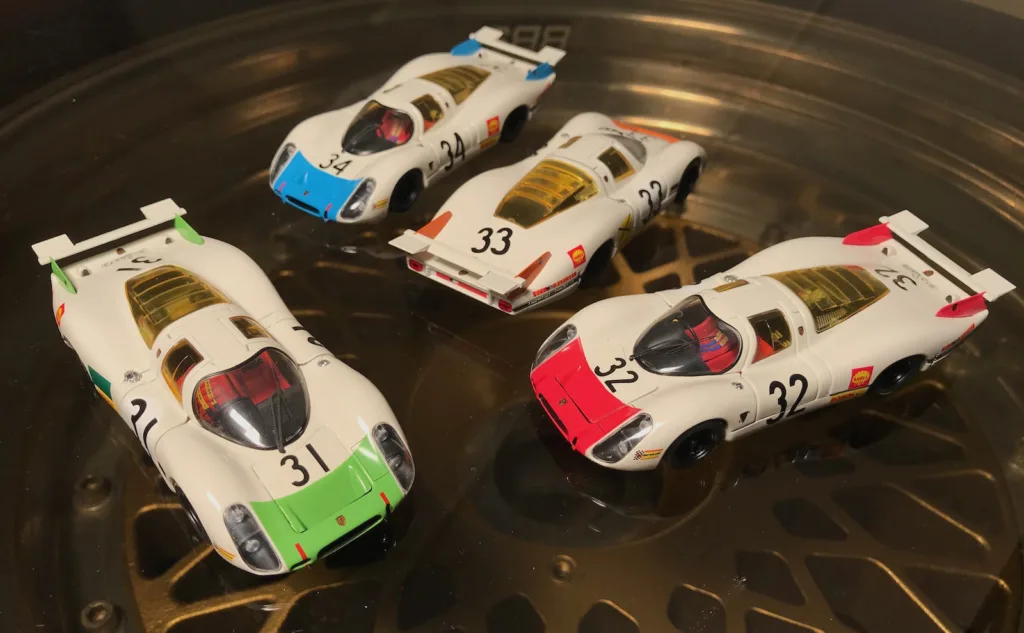
- EBBRO 44288, 44289, 44290 & 44291 (diecast)
- Overall rating: 4 STARS | Quality details: 3 STARS | Estimated value: 4 STARS
- Only appear in this collection
1968 Montlhéry 1000 km, Porsche 908 LH
Reliability was an issue at Le Mans, but only 2 weeks later, two 908 LH’s destroyed the competition in the 1000km of Paris at the fast track of Monthléry.
Porsche System Engineering #12: Rolf Stommelen / Hans Herrmann
Results: 1st
Porsche 908 LH – Prototypes <3L: Powered by 3.0 liter Porsche 908 flat-8, approx. 350 hp. Dunlop tires. Weight 650 kg. Aluminum space frame, chassisnr. 908 #015
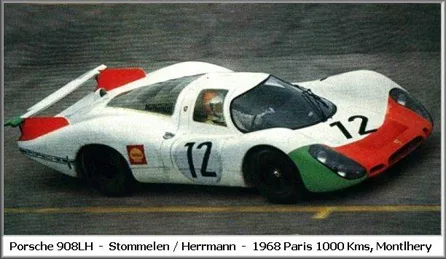
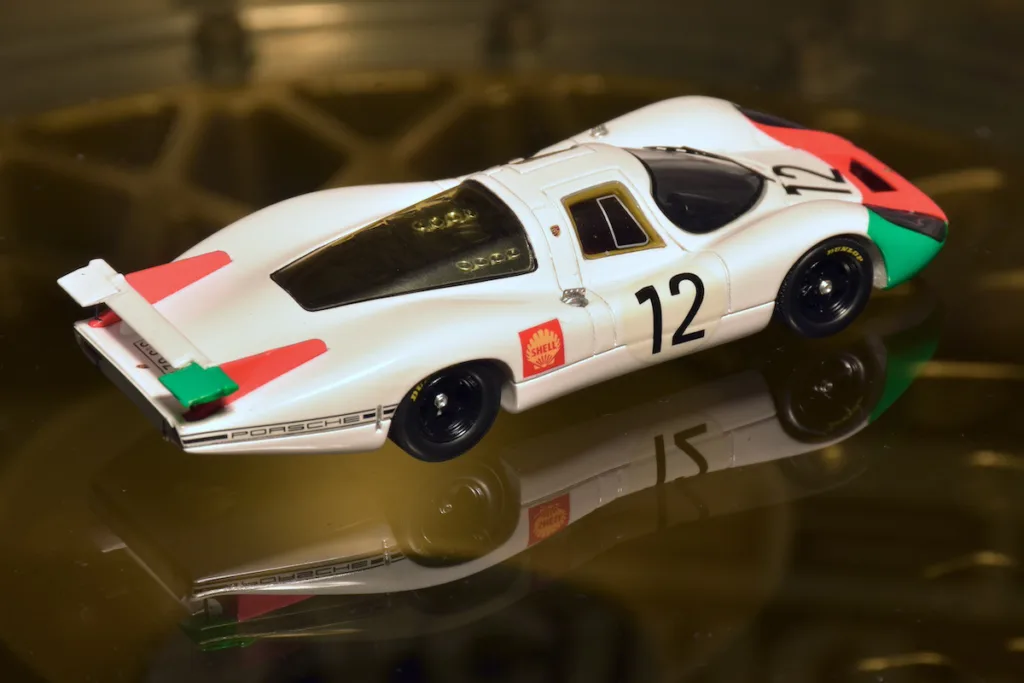
- SPARK SF050 (resin)
- Overall rating: 4 STARS | Quality details: 4 STARS | Estimated value: 4 STARS
- Only appears in this collection
Porsche 909 Bergspyder
1968 Mont Ventoux hillclimb, Porsche 909 Bergspyder
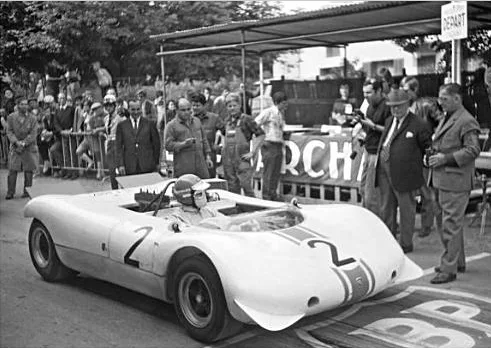
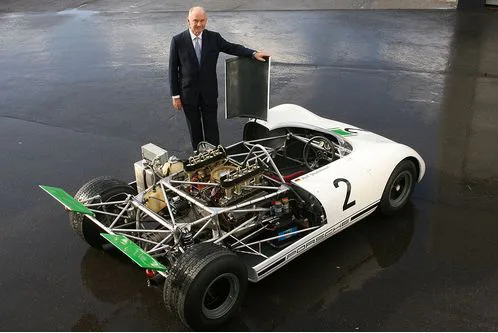
In the 60’s hillclimbs were serious business. Porsche developed this car specially for it. The 909 Bergspyder was ultra light, weighing only 385 kg (approx. 850 lbs), with a 16 liter fuel tank, plastic body work and small brakes. Only two of these dangerous cars were built, but it developed into the successful 908/03. Rolf Stommelen risked his life at the Mont Ventoux in 1968 finishing 2nd behind team mate Gerhard Mitter in the #1.
Porsche System Engineering #2: Rolf Stommelen (D)
Results: 2nd
Porsche 909 Bergspyder – Prototypes: Powered by 3.0 liter Porsche 908 flat-8, approx. 350 hp. Dunlop tires. Weight 385 kg. Aluminum space frame, chassisnr. 909 #002
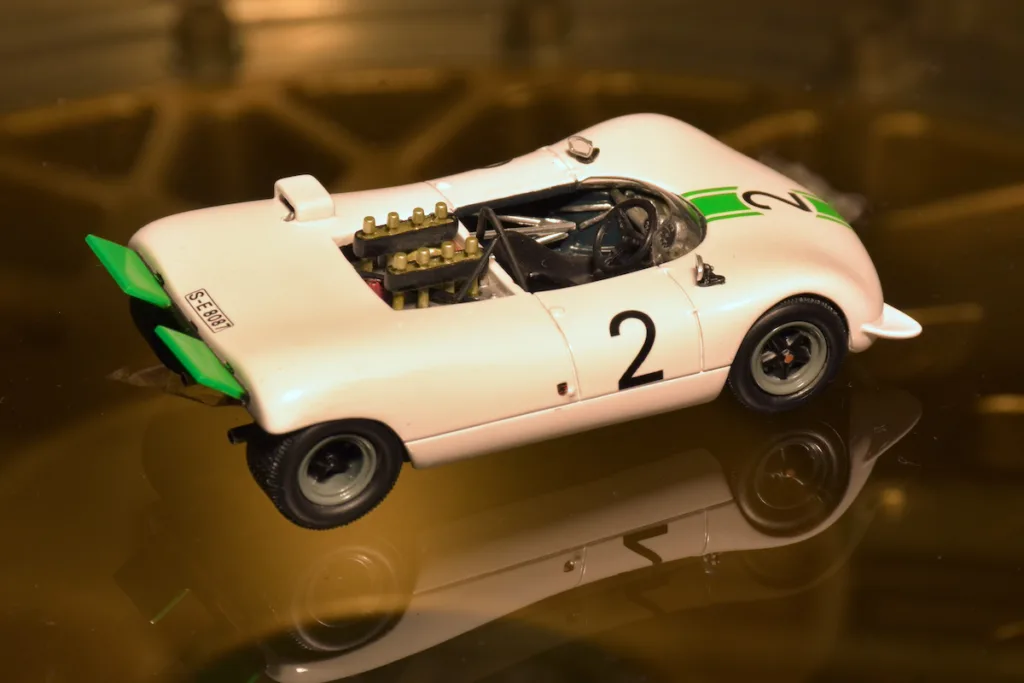
- PROVENCE PM0051 (resin)
- Overall rating: 3 STARS | Quality details: 3 STARS | Estimated value: 3 STARS
- Only appears in this collection
1969 – Porsche 908
1969 Brands Hatch 1000 km, Porsche 908/02
Porsche introduced the open version of the 908, the 908/02 “Flunder” which was lighter than the closed 908 KH that was used in 1968. Also on the fast and difficult track of Brands Hatch it was a winner, when in the hands of a pair of extraordinary drivers such as Redman and Siffert.
Porsche System Engineering #53: Brian Redman (GB) / Rolf Stommelen (D)
Results: Start-grid 1st / time 1:28.800 / race 1st – 227 laps
Porsche 908/02 “Flunder” – Prototypes <3L: Powered by 3.0 liter Porsche 908 flat-8, approx. 350 hp. Dunlop tires. Weight 600 kg. Aluminum space frame, chassisnr. 908 #011

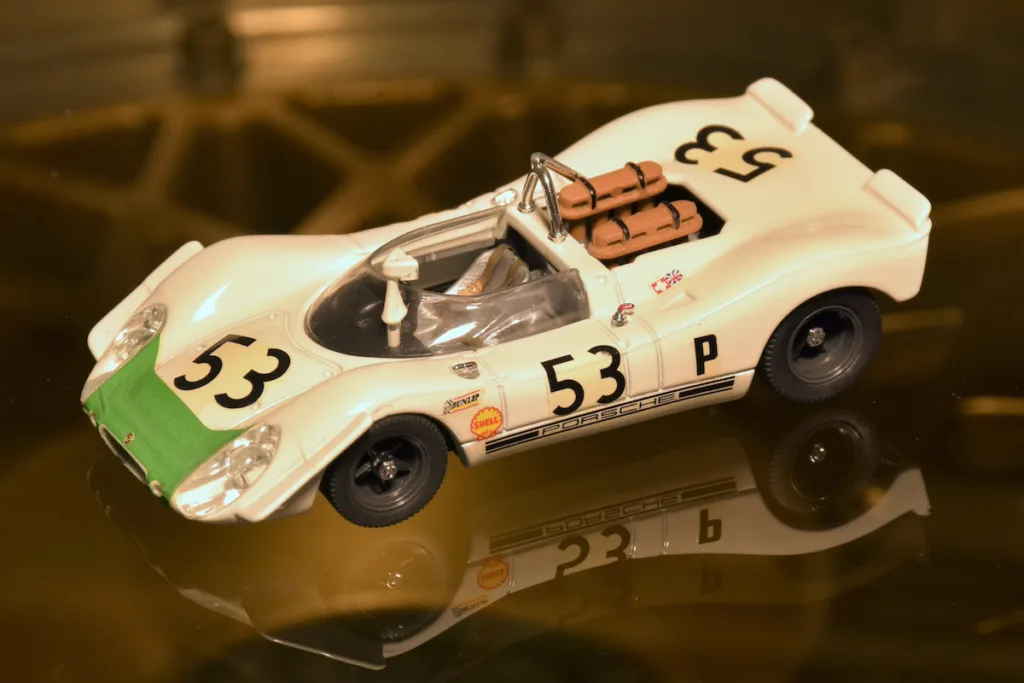
- BEST 9042 (diecast)
- Overall rating: 2 STARS | Quality details: 2 STARS | Estimated value: 2 STARS
- Only appears in this collection
Porsches were quite dominant in the following races. At Monza the Porsche 908/02 filled the first 5 places, at the Nürburgring they were 1st and 2nd and also the Spa 1000 km was won by a 908/02. The next race in the world championship was the notorious Targa Florio.
1969 Targa Florio, Porsche 908/02
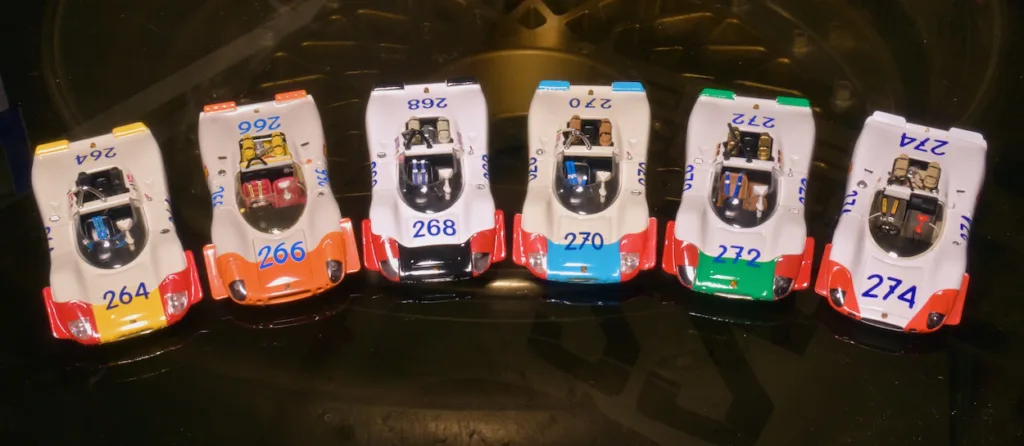
No less than six (!) factory Porsche 908/02 “flunders” and 1 spare car arrived at Sicily. They were the king of the Targa Florio, the works cars finished in the first four places. Porsche 908’s would also win the event in 1970 and 1971, but those were the very extreme 908/03 versions.
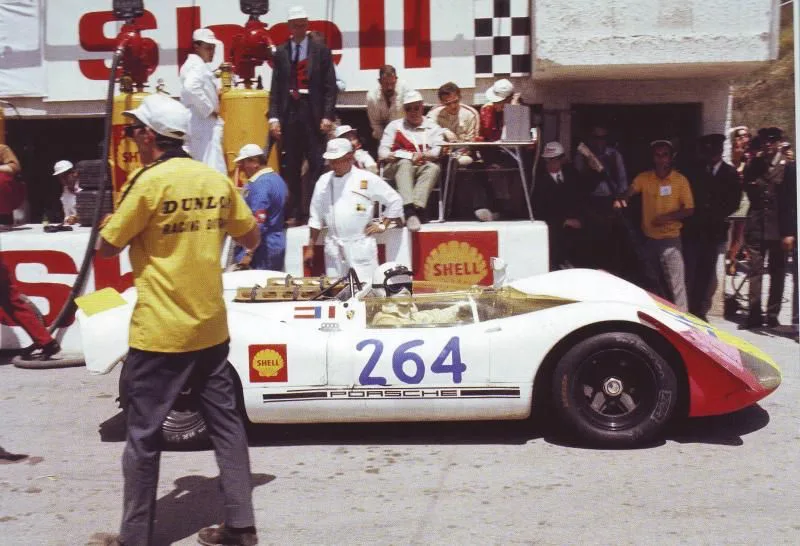
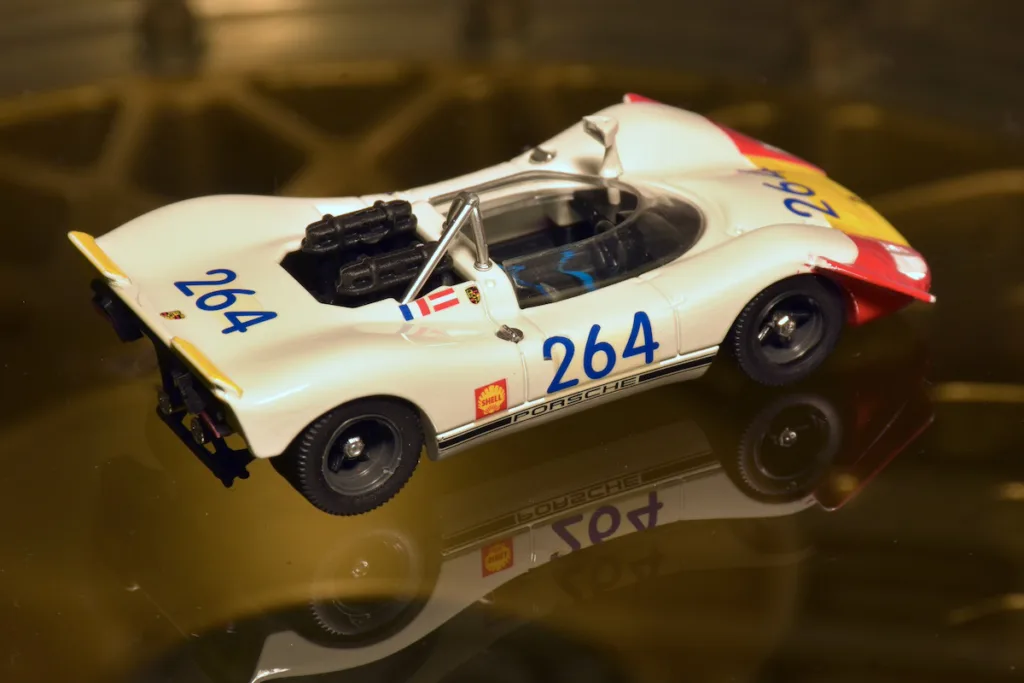
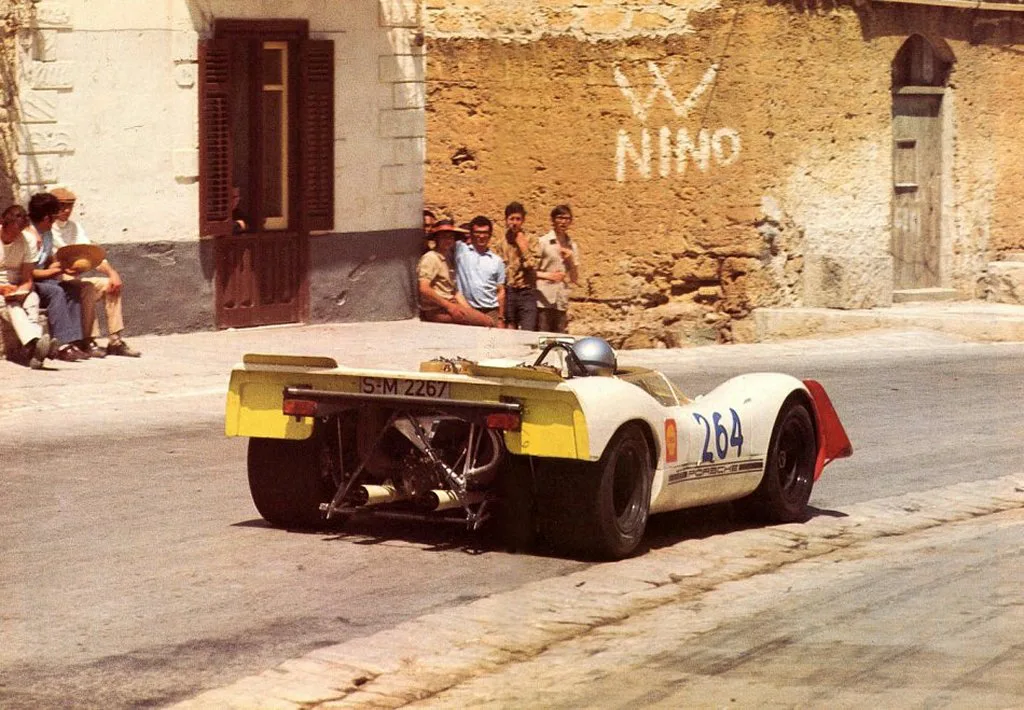
The #264 Porsche only completed 8 laps but was still classified 21st.
Porsche System engineering #264: Gérard Larrousse (F) / Rudi Lins (
A)
Results: Qualifying time 38:55.000 / race 21st – 8 laps
Porsche 908/02 “Flunder” – Prototype <3L: Powered by 3.0 liter Porsche 908 flat-8, approx. 350 hp. Dunlop tires. Weight 600 kg. Aluminum space frame, chassisnr. 908/02 #010
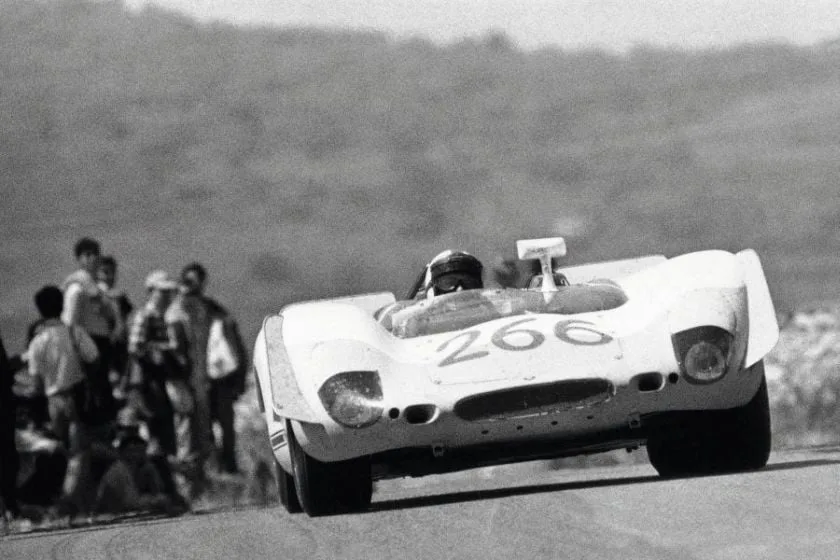
1969 Targa Florio, Porsche 908/02
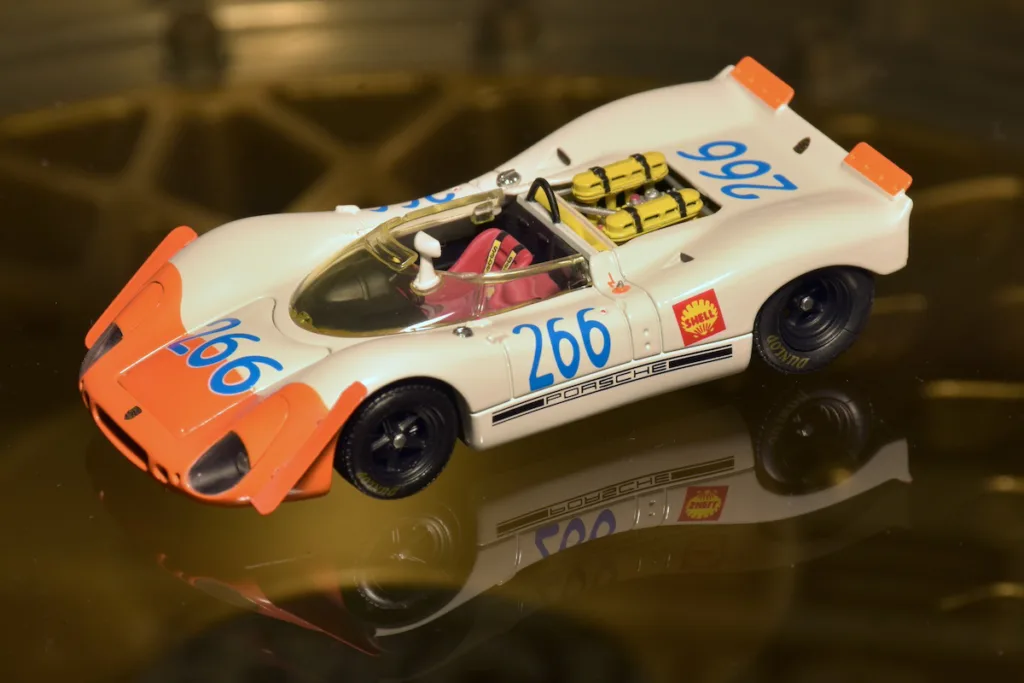
The #266 Porsche was the fastest in the race or had the least problems. During the race, the oil temperature rose to 140 degrees Celsius, because of a sack blocking the oil-cooler. Mitter had to stop to clean the air-intake and still won with a margin of 2 minutes and 45 seconds over last year’s winners Elford and Maglioli.
Porsche System engineering #266: Gerhard Mitter (D) / Udo Schütz (
D)
Results: Qualifying time 36:25.100 / race 1st – 10 laps
Porsche 908/02 “Flunder” – Prototype <3L: Powered by 3.0 liter Porsche 908 flat-8, approx. 350 hp. Dunlop tires. Weight 600 kg. Aluminum space frame, chassisnr. 908/02 #014

1969 Targa Florio, Porsche 908/02
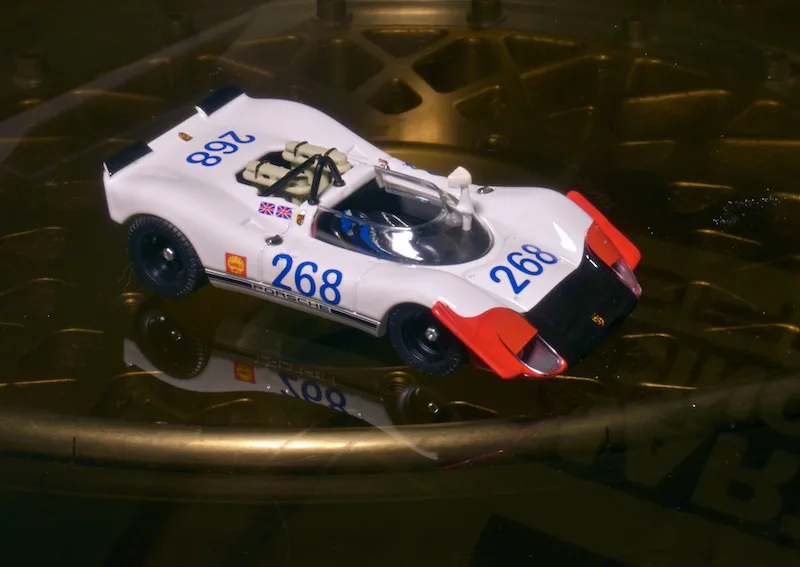
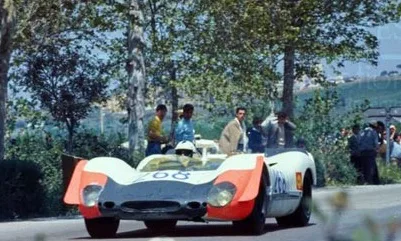
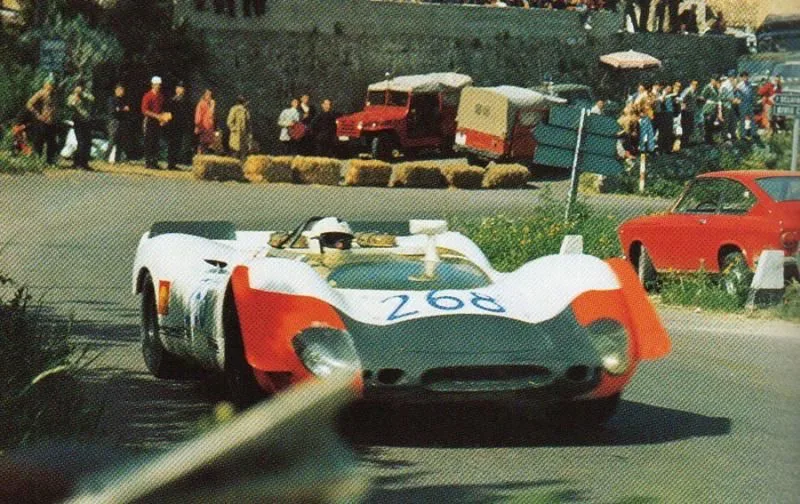
The #268 Porsche with an all English crew suffered from a broken drive shaft and only completed 7 laps but nevertheless was classified 33rd.
Porsche System engineering #268: Richard Attwood (GB) / Brian Redman (GB)
Results: Qualifying time 37:46.000 / race 33rd – 7 laps
Porsche 908/02 “Flunder” – Prototype <3L: Powered by 3.0 liter Porsche 908 flat-8, approx. 350 hp. Dunlop tires. Weight 600 kg. Aluminum space frame, chassisnr. 908/02 #012
1969 Targa Florio, Porsche 908/02
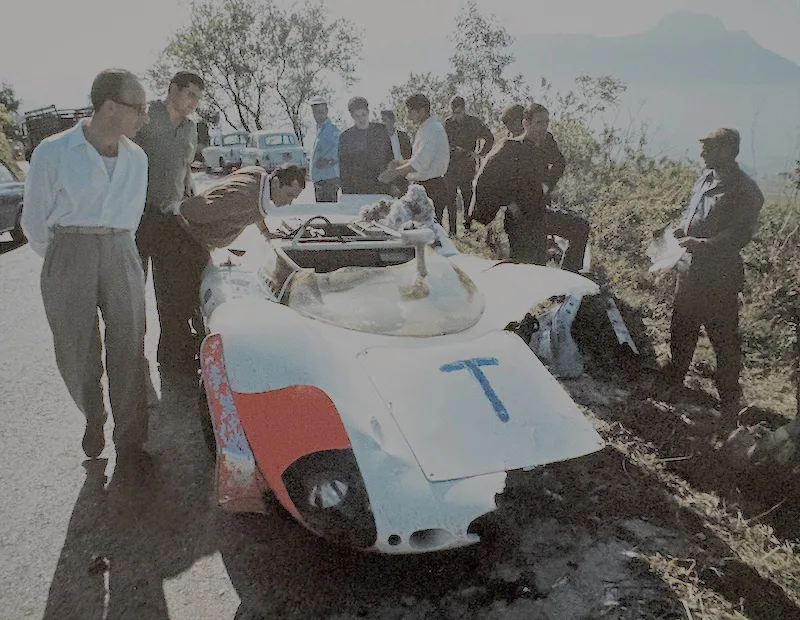
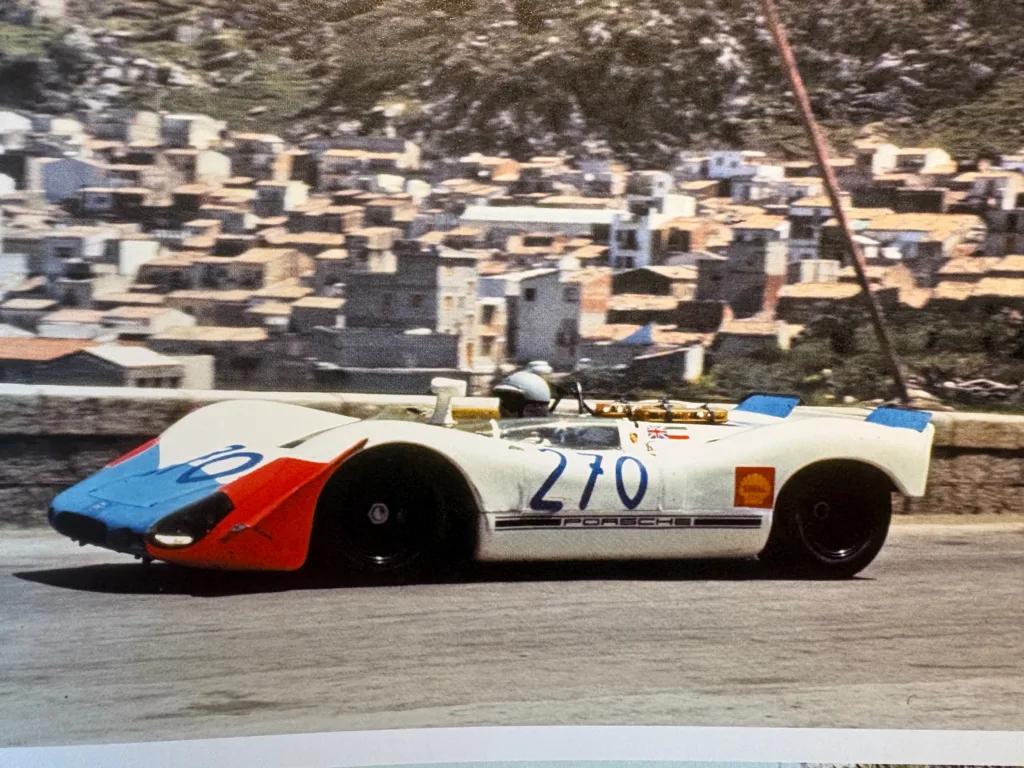
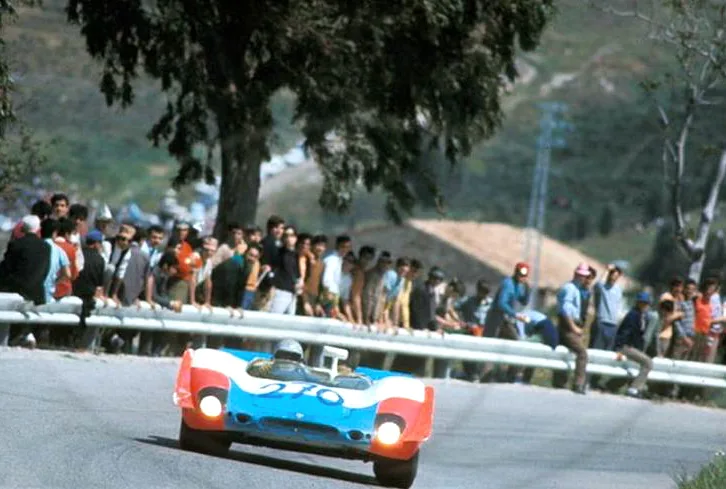
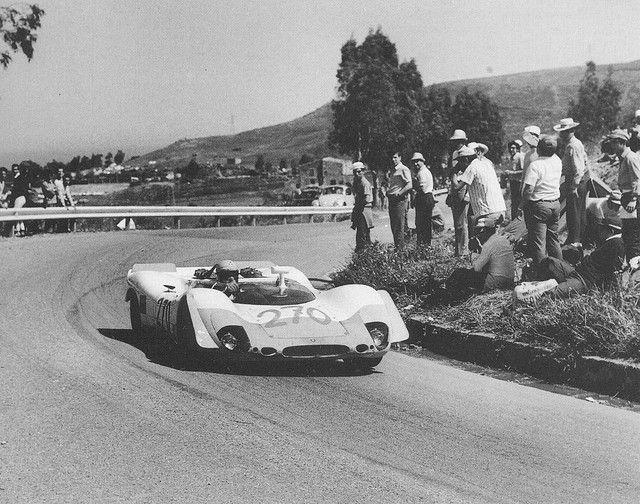
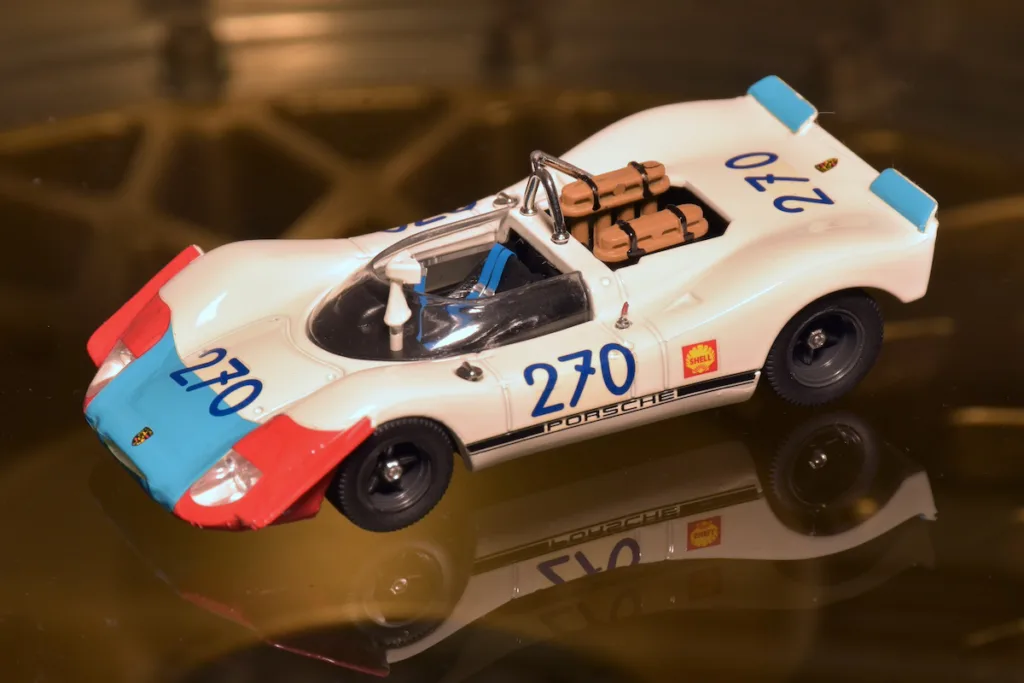
Vic Elford crashed his T-car – which would have been his #270 race car – with chassis number #007 in practice after setting a new lap record in 35:54.700. They turned to the spare car chassis #013 and finished 2nd. The team lost more than 6 minutes because of a broken fan belt, during his attempt to recover the lost time, Elford collided with the Alfa Romeo of Nanni Galli. That put the Alfa out of the race, but Elford could proceed but had to settle for second place. On his fastest laps “Quick Vic” was almost a minute faster than his record lap in practice: 35:08.200 which meant an average speed of almost 123 km/h.
Porsche System engineering #270: Vic Elford (GB) / Umberto Maglioli (I)
Results: Qualifying time 36:33.500 / race 2nd – 10 laps
Porsche 908/02 “Flunder” – Prototype <3L: Powered by 3.0 liter Porsche 908 flat-8, approx. 350 hp. Dunlop tires. Weight 600 kg. Aluminum space frame, chassisnr. 908/02 #013 (#007 in practice)
1969 Targa Florio, Porsche 908/02
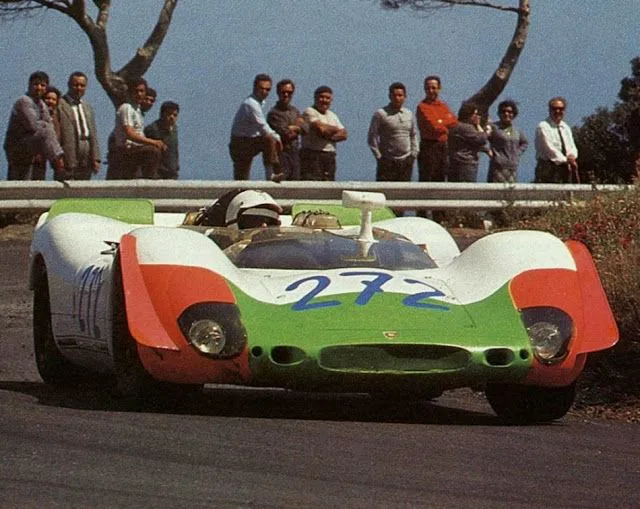
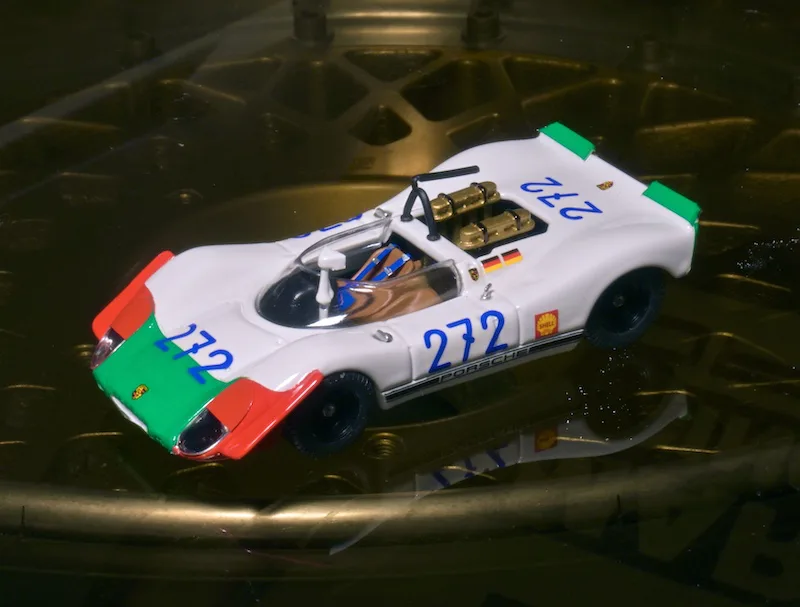
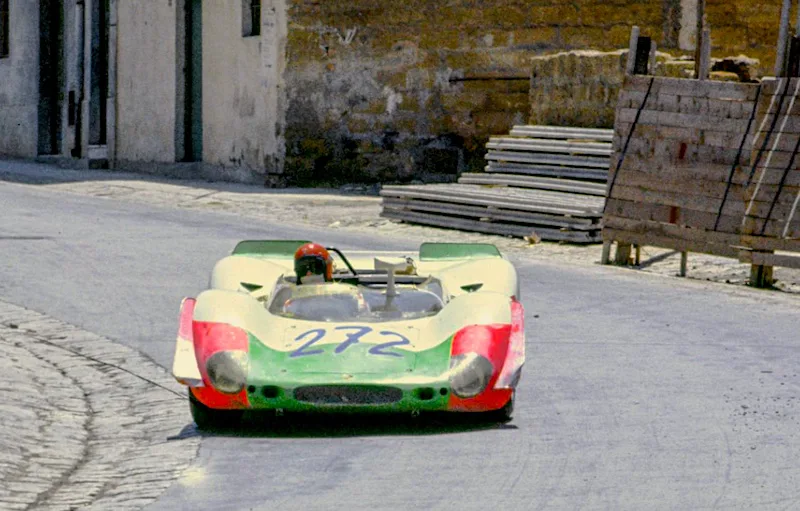
The #272 was the slowest Porsche 908, but Kauhsen and von Wendt stayed out of trouble and finished in a credible 4th position almost 28 minutes behind the #266.
Porsche System engineering #272: Karl Freiherr von Wendt (D) / Willy Kauhsen (D)
Results: Qualifying time 40:32.500 / race 4th – 10 laps
Porsche 908/02 “Flunder” – Prototype <3L: Powered by 3.0 liter Porsche 908 flat-8, approx. 350 hp. Dunlop tires. Weight 600 kg. Aluminum space frame, chassisnr. 908/02 #011
1969 Targa Florio, Porsche 908/02
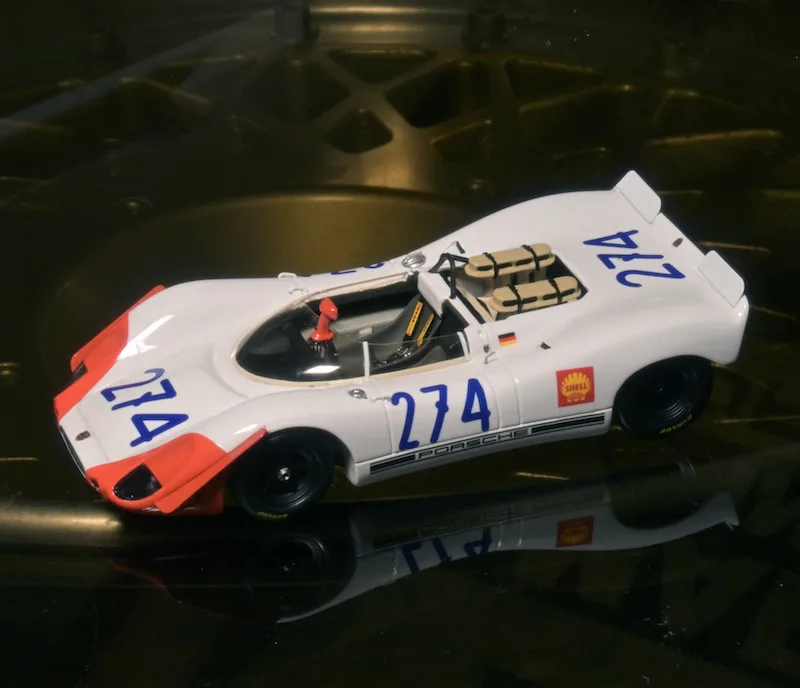
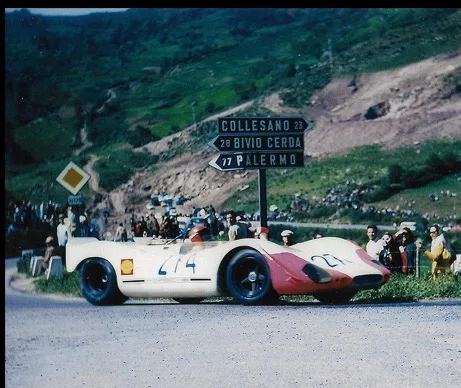
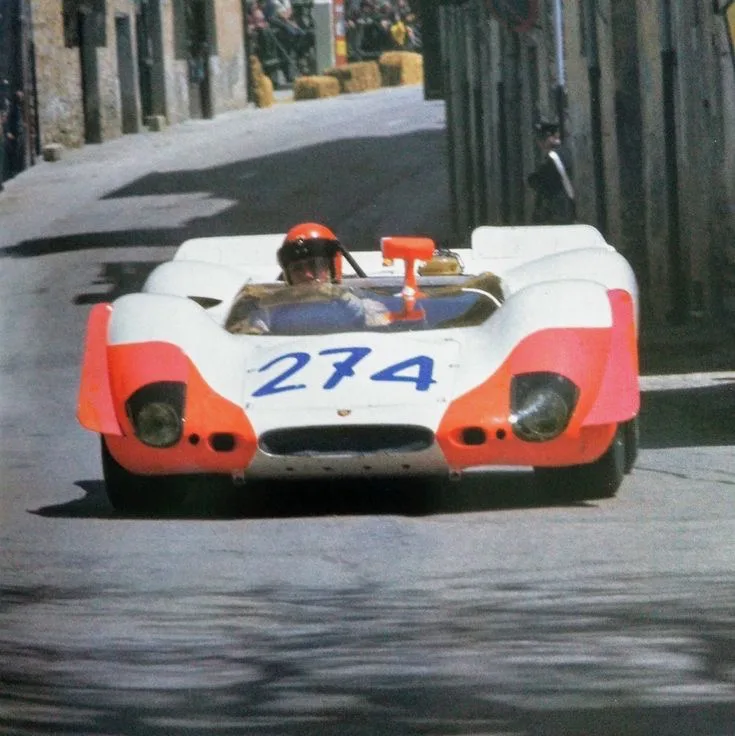
The #274 Porsche with Rolf Stommelen behind the wheel was the 2nd fastest qualifier. In the Targa Florio, this gives no real advantage as the cars start with 20 second intervals from each other. The Porsches were fastest and supposed to start first, but the Italian organizers gave that honor to local hero Nico Vacarella in an Alfa Romeo 33. The 20 second intervals became shorter and shorter, so in the end a lot of cars were on the road close together …
Porsche System engineering #274: Rolf Stommelen (D) / Hans Herrmann (D)
Results: Qualifying time 36:22.200 / race 3rd – 10 laps
Porsche 908/02 “Flunder” – Prototype <3L: Powered by 3.0 liter Porsche 908 flat-8, approx. 350 hp. Dunlop tires. Weight 600 kg. Aluminum space frame, chassisnr. 908/02 #015
- #264 BEST 9209 (diecast)
- Overall rating: 3 STARS | Quality details: 3 STARS | Estimated value: 3 STARS
- #266 EBBRO 43729 (diecast)
- Overall rating: 4 STARS | Quality details: 4 STARS | Estimated value: 4 STARS
- #268 BEST 9666 (diecast)
- Overall rating: 3 STARS | Quality details: 3 STARS | Estimated value: 3 STARS
- #270 BEST 9238 (diecast)
- Overall rating: 3 STARS | Quality details: 3 STARS | Estimated value: 3 STARS
- #272 BEST 9482(diecast)
- Overall rating: 3 STARS | Quality details: 3 STARS | Estimated value: 3 STARS
- #274 SPARK S9246 (resin)
- Overall rating: 4 STARS | Quality details: 4 STARS | Estimated value: 4 STARS
- Only appear in this collection
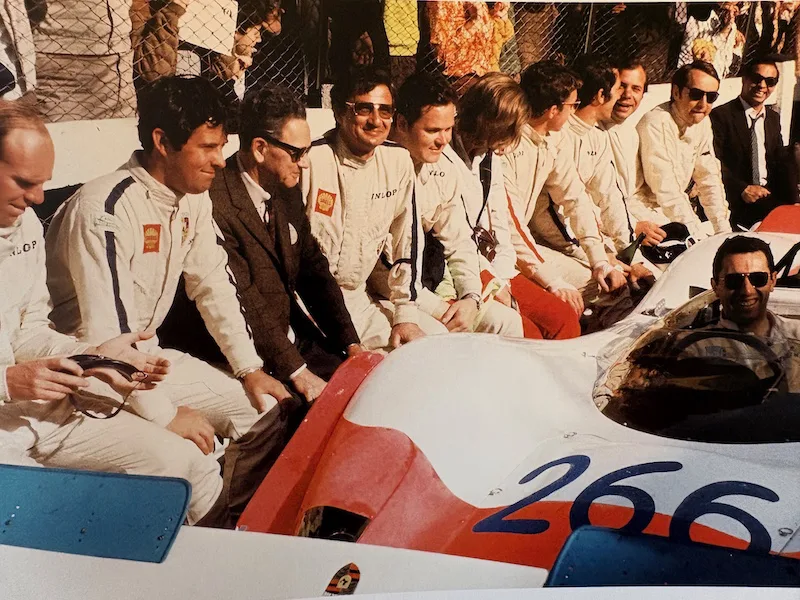
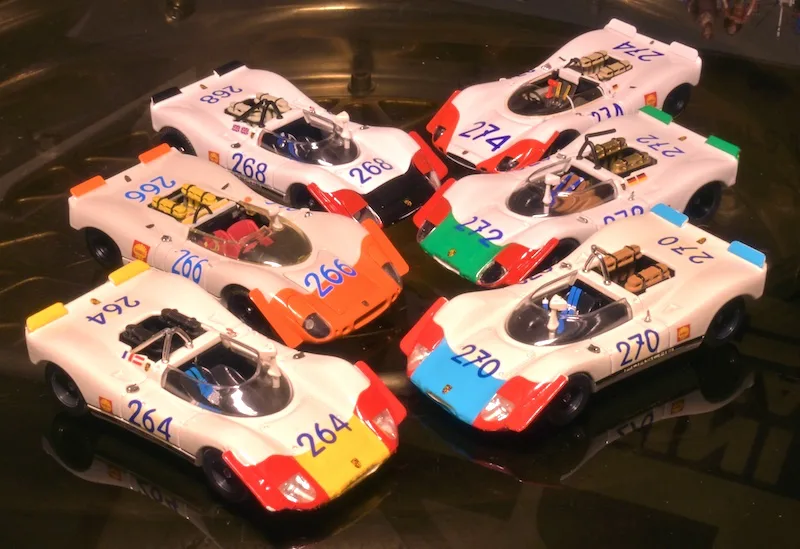
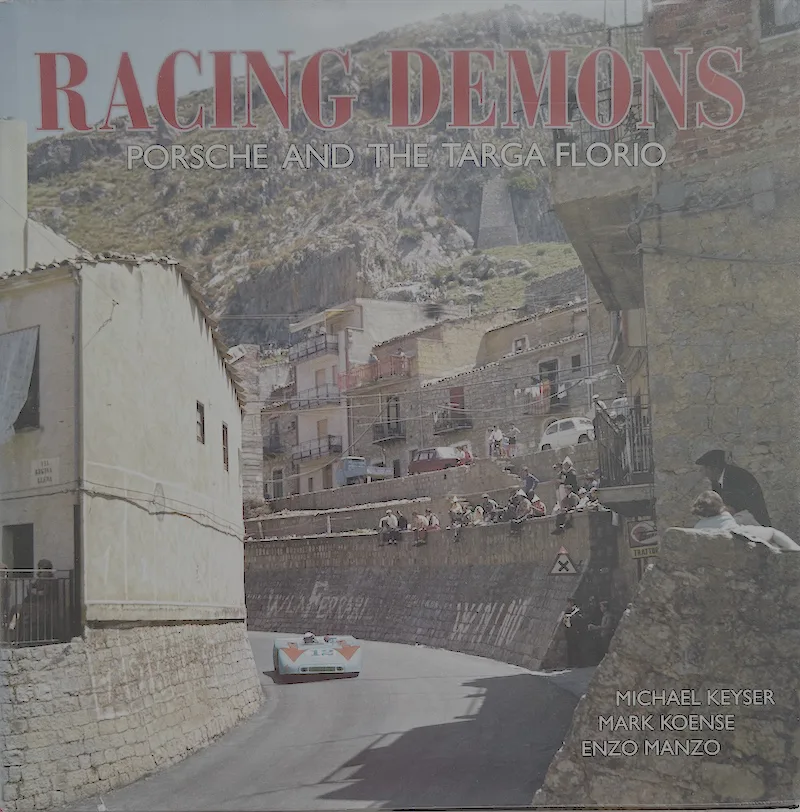
Nice overview of the many drivers, the six cars and the book “Racing Demons” that I have in my collection also.
1969 Le Mans 24h, Porsche 908 LH
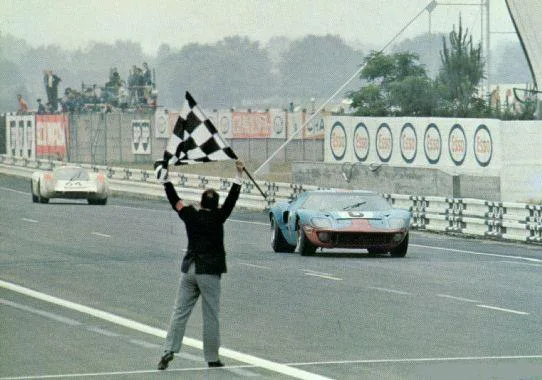
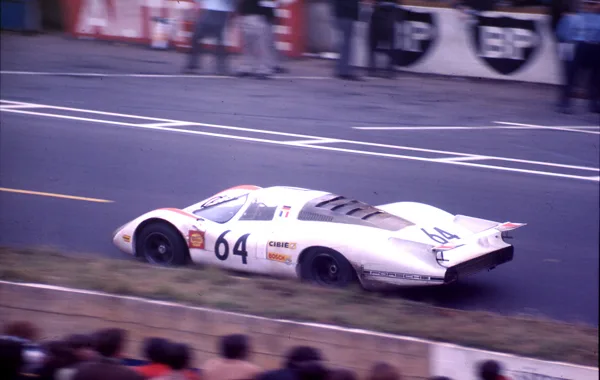
The #64 Porsche 908 LH chased Jacky Ickx’s Ford GT40 to the finish in Le Mans 1969. It just came 100 meter short and still Porsche was chasing its first Le Mans victory. The two other works Porsche 908’s retired, #22 with a broken gearbox and #23 crashed. But these weren’t the only factory Porsches present; also the spectacular 917 was there …
Porsche System Engineering #23: Udo Schütz (D) / Gerhard Mitter (D)
Results: Start-grid 8th / time 3:35.600 / race DNF accident – 199 laps
Porsche System Engineering #64: Gérard Larrousse (F) / Hans Hermann (D)
Results: Start-grid 7th / time 3:35.600 / race 2nd – 372 laps, only 100 meters behind
Porsche 908 LH – Prototypes <3L: Powered by 3.0 liter Porsche 908 flat-8, approx. 350 hp. Dunlop tires. Weight 650 kg. Aluminum space frame, chassisnr. 908 #030 & #031
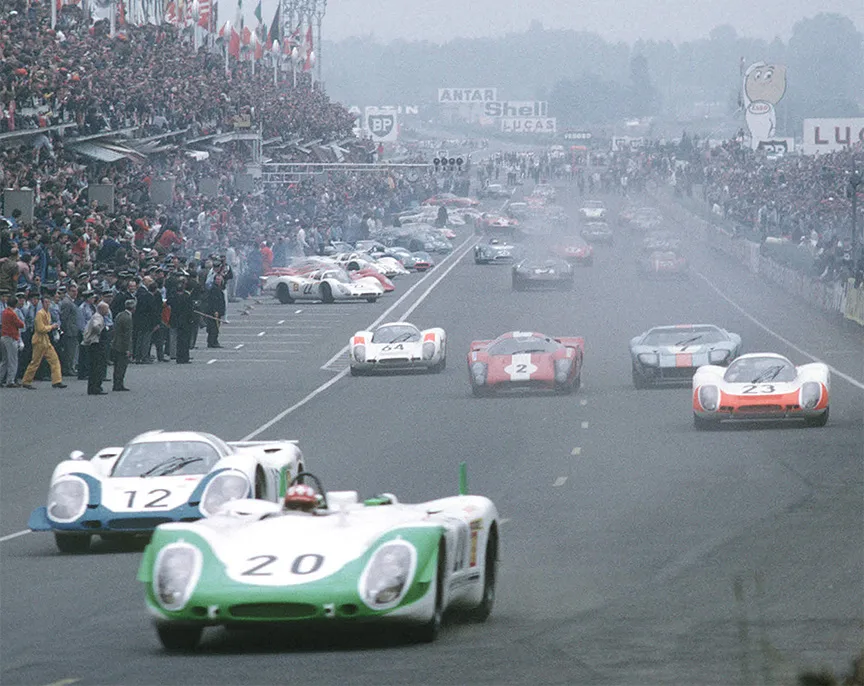
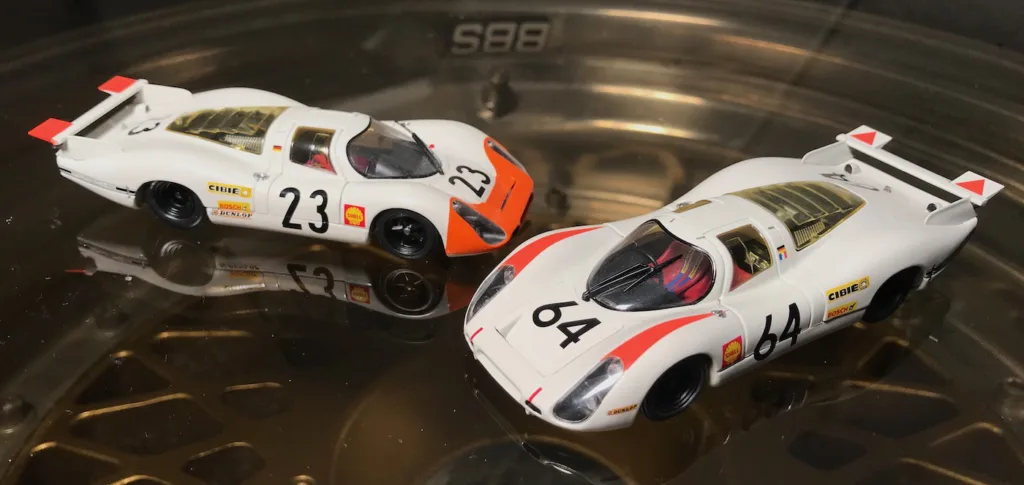
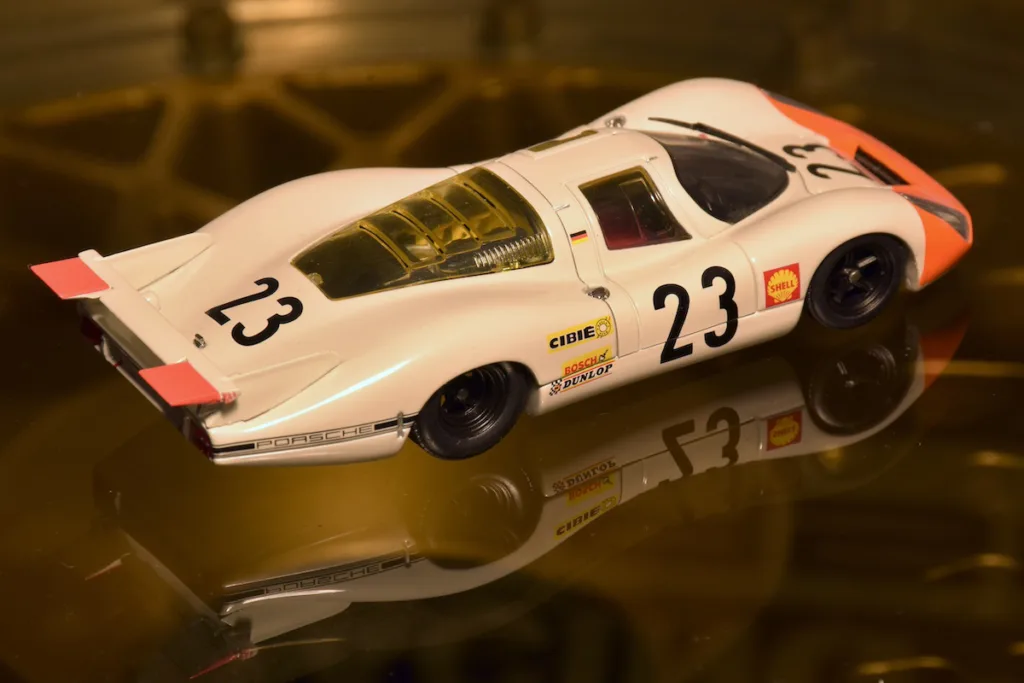

- EBBRO 43741 & 43740 (diecast)
- Overall rating: 4 STARS | Quality details: 3 STARS | Estimated value: 3 STARS
- Only appear in this collection
1969 – Porsche 917
1969 homologation, Porsche 917
Porsche built 25 cars of their 917 to get it homologated for group 5 sportscars. The first cars were difficult to drive, but after some aerodynamic adjustments they ruled endurance and sprintraces in 1970 and 1971. After another change of rules, the Porsche 917would continue its domination but now in Interserie and CanAm.
Porsche System Engineering #917: homologation car
Porsche 917L – Sportswear <5L: Powered by 4.5 liter Porsche 912.00 – V12 180º, approx 570 hp. Dunlop tires. Weight 810 kg. Aluminum space frame, chassisnr. 917 #001
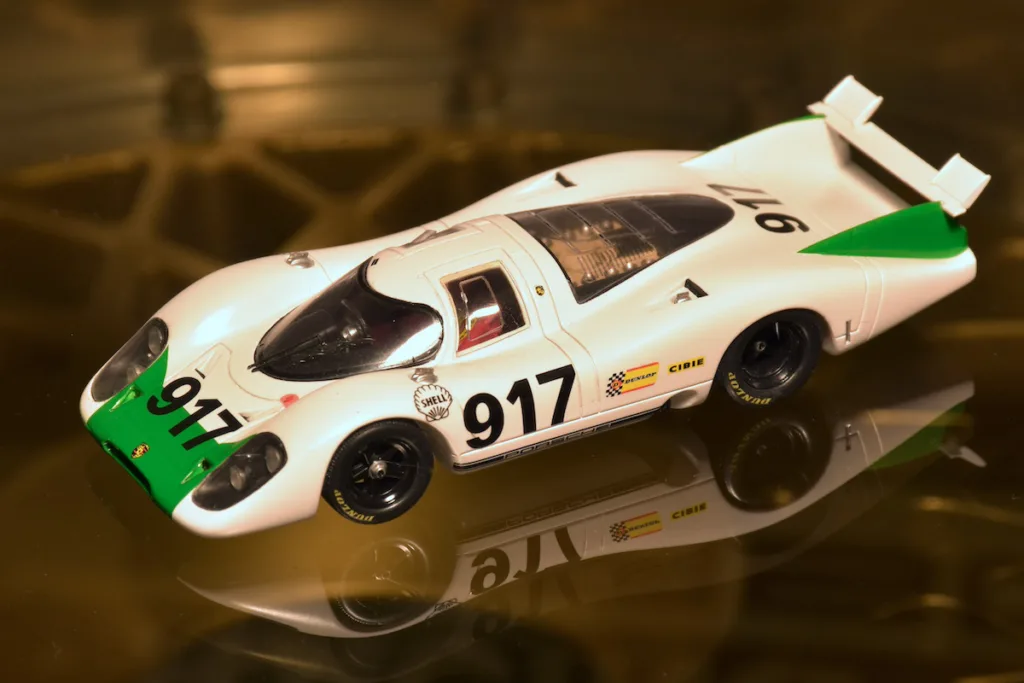
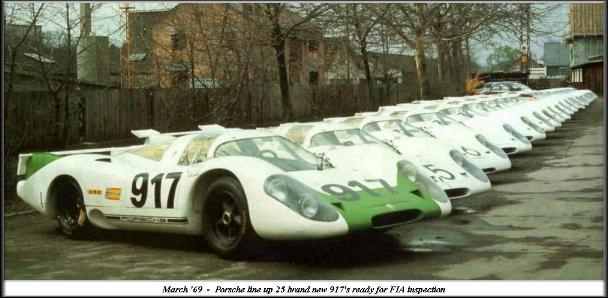
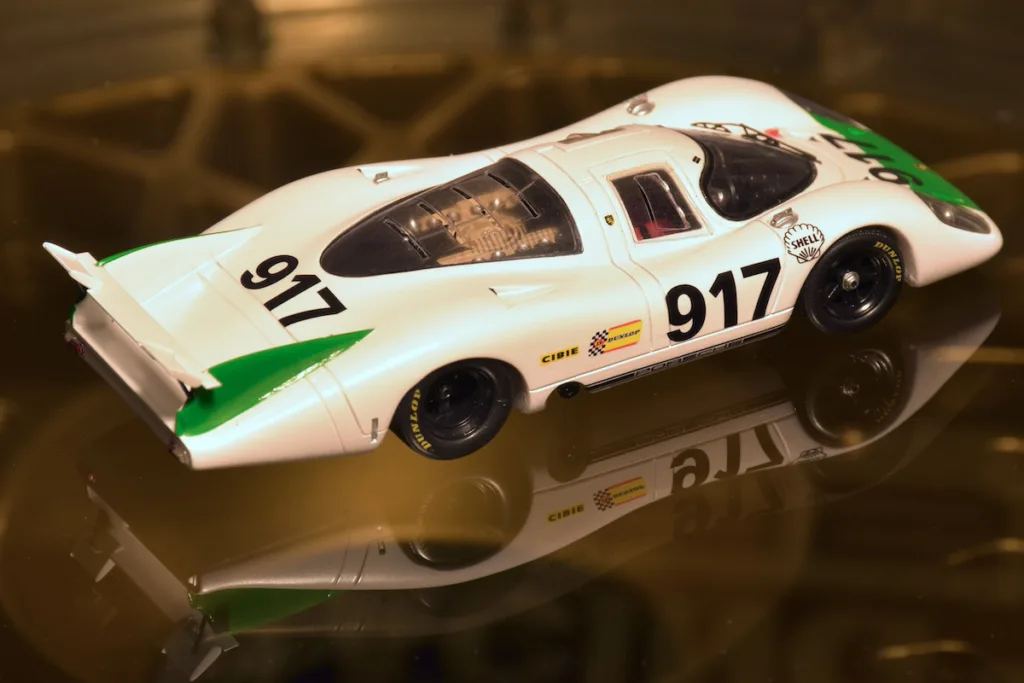
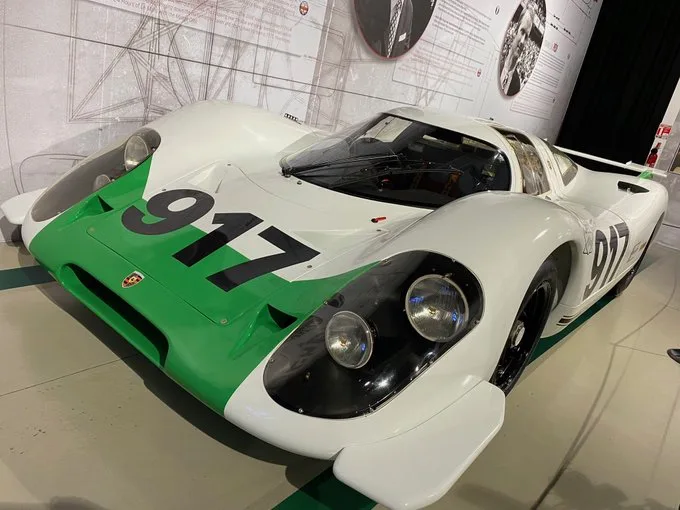
- SPARK AutoHebdo “40 years Porsche 917” #199 / 333 pcs (resin)
- Overall rating: 4 STARS | Quality details: 4 STARS | Estimated value: 4 STARS
- Only appears in this collection
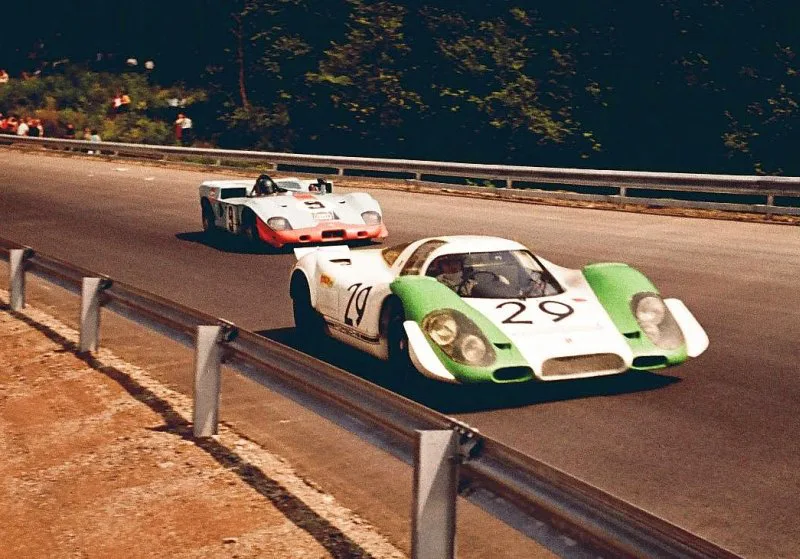
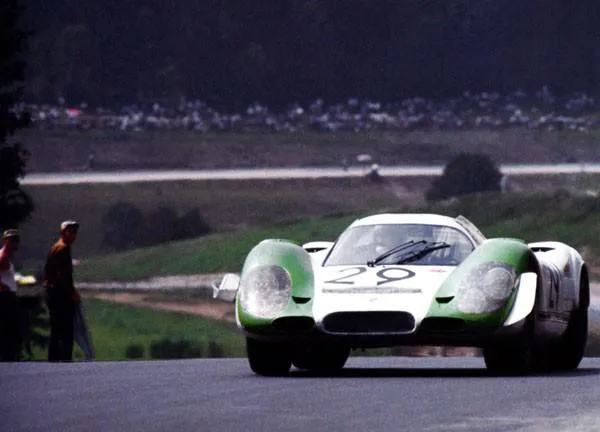
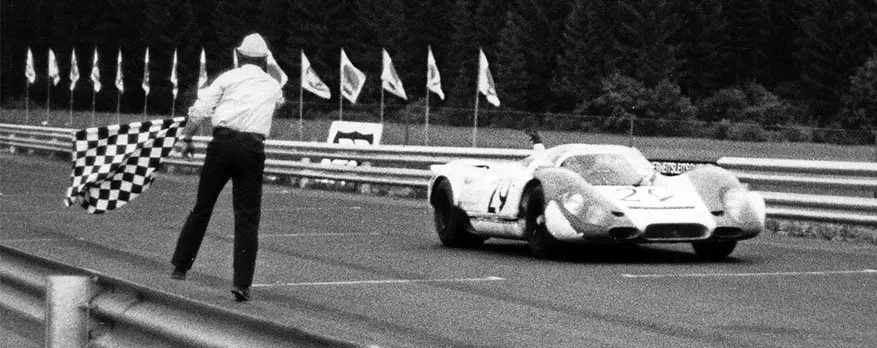
1969 Zeltweg 1000 km, Porsche 917
The first 917s were difficult to drive, especially the short one. But it managed to win its first race at Zeltweg, during the last event in the world championship. Days after this race John Wyer tested at Zeltweg a new body shape designed by mechanic John Horsman. This new short tail gave the 917 much needed stability and improved laptimes by 4 seconds. This would be the 1970 917K, K stands for Kurzheck = shorttail.
#29 Jo Siffert (CH) / Kurt Ahrens Jr. (D) – 1st
Porsche 917 – 4.5 liter Porsche 912.00 – V12 180º, approx 570 hp. Dunlop tires. Weight 810 kg. Aluminum space frame, chassisnr. 917 #009
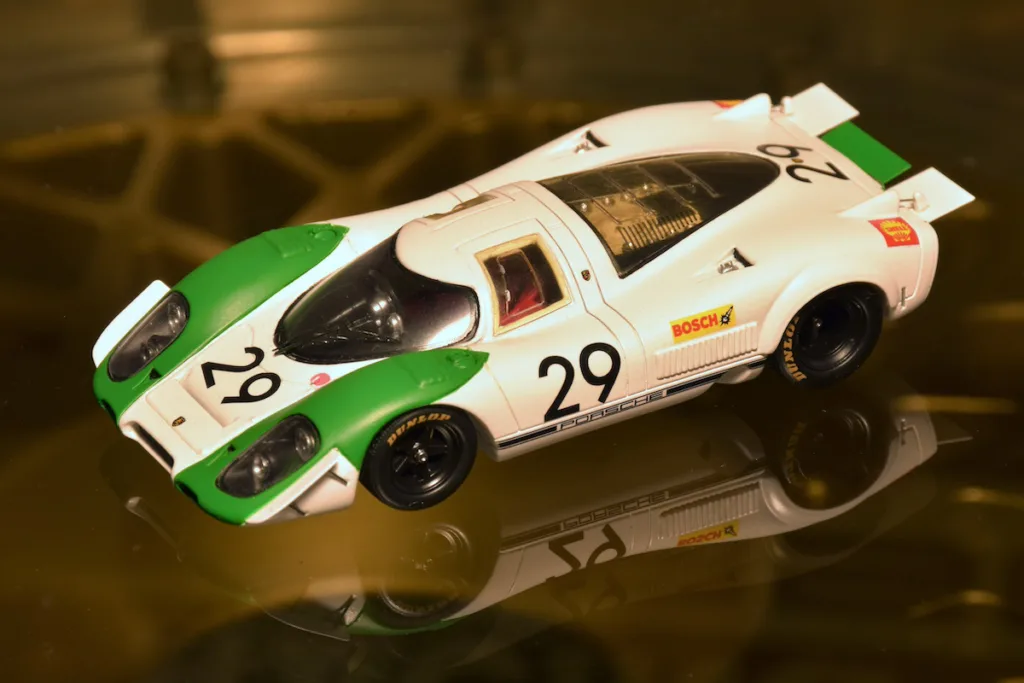
- SPARK S1897 (resin)
- Overall rating: 4 STARS | Quality details: 4 STARS | Estimated value: 4 STARS
- Only appears in this collection
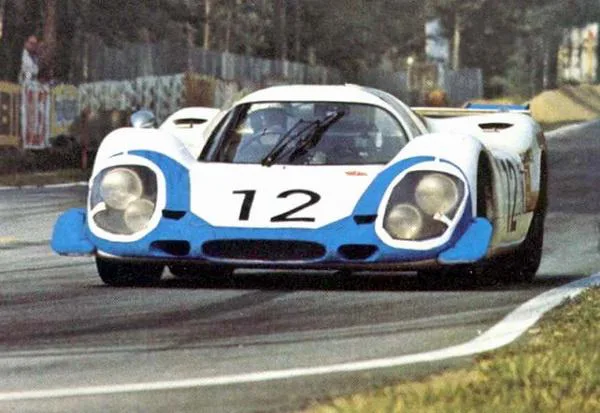
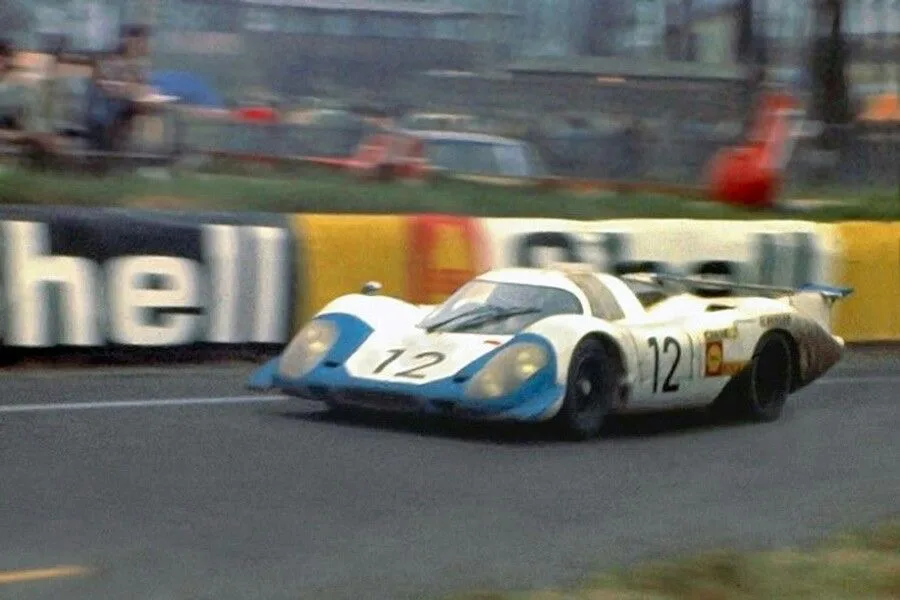
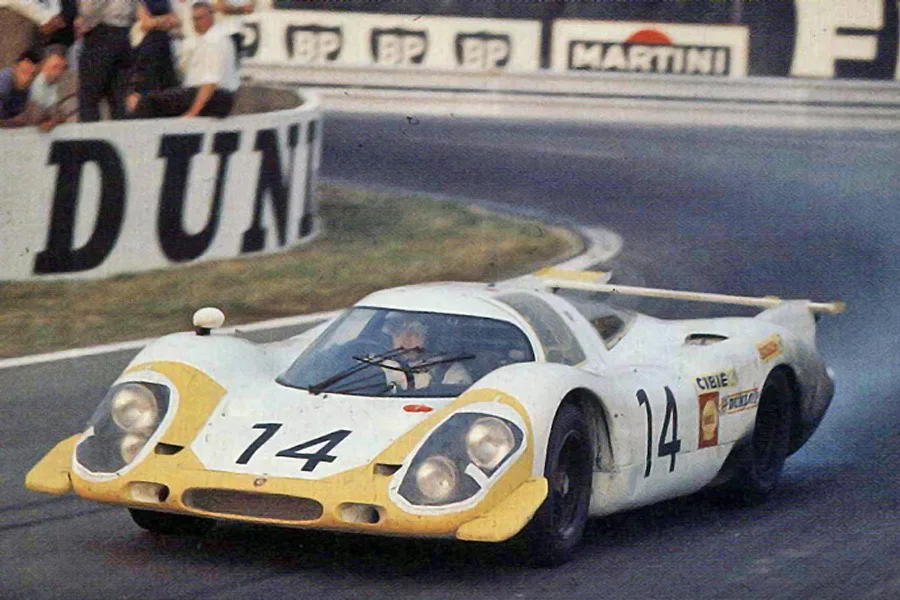
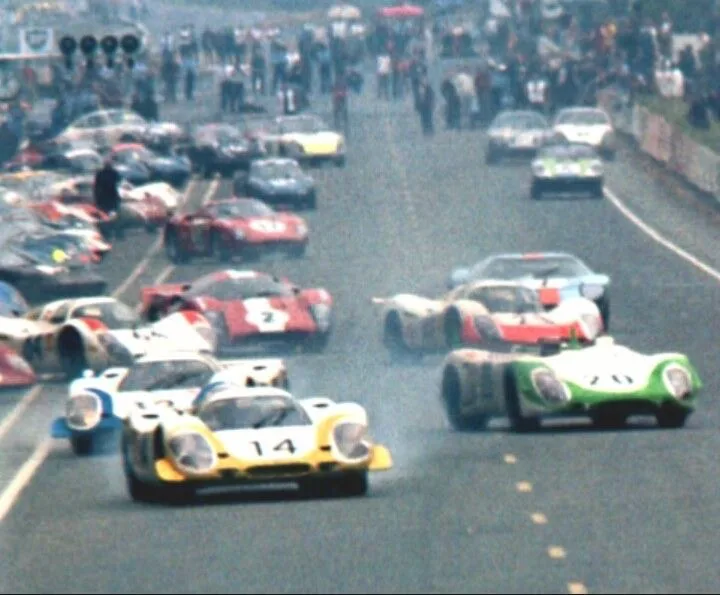
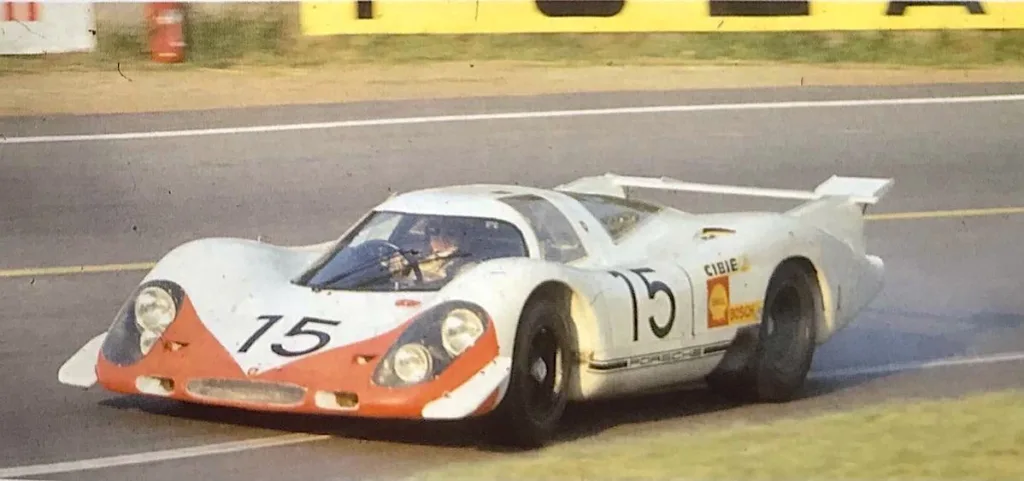
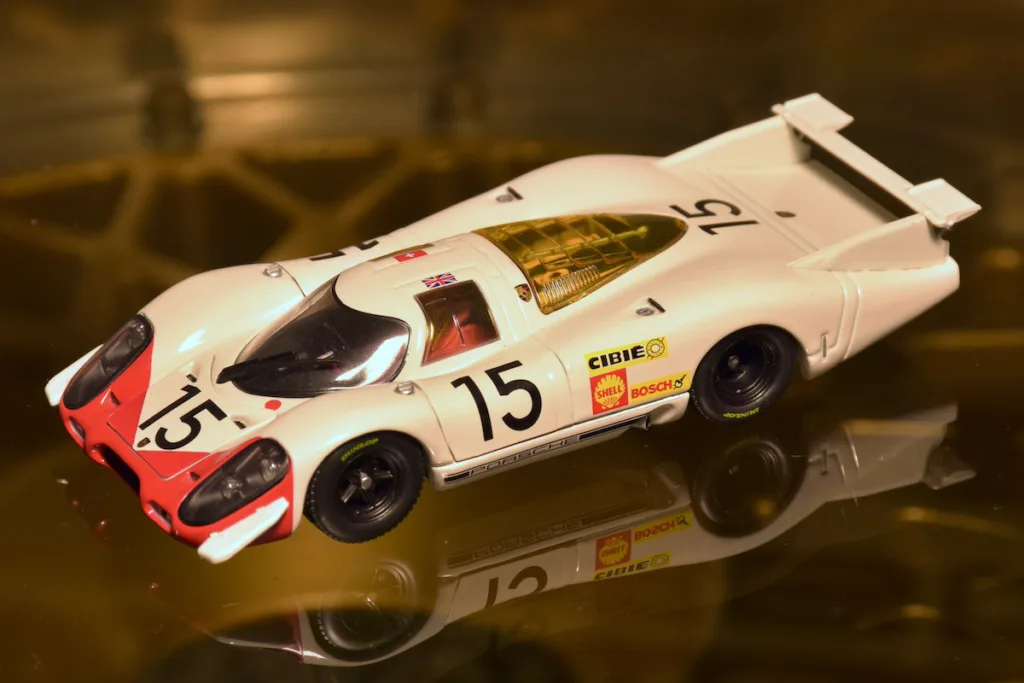
1969 Le Mans 24h, Porsche 917L
The Porsche 917 was produced in a small series to be able to compete with a larger engine than 3 liter. The first 917’s were blistering fast but difficult to drive. Privateer Woolfe got killed and the factorycars retired and the #15 was only used in practice. But the German cars would be back to win the next few years.
Porsche System Engineering #12: Vic Elford (GB) / Richard Attwood (GB)
Results: Start-grid 2nd / time 3:26.700 / race DNF gearbox – 327 laps
Porsche System Engineering #14: Rolf Stommelen (D) / Kurt Ahrens jr. (D)
Results: Start-grid 1st / time 3:22.900 / race DNF oil leak – 148 laps
Porsche System Engineering #15: Vic Elford (GB) / Herbert Linge (D) / Rudi Lins (A)
Results: practice only / time 3:27.000 / Did not start – 0 laps
Porsche 917L – Sportswear <5L: Powered by 4.5 liter Porsche 912.00 – V12 180º, approx 570 hp. Dunlop tires. Weight 810 kg. Aluminum space frame, chassisnr. 917 #008, #007 & #006
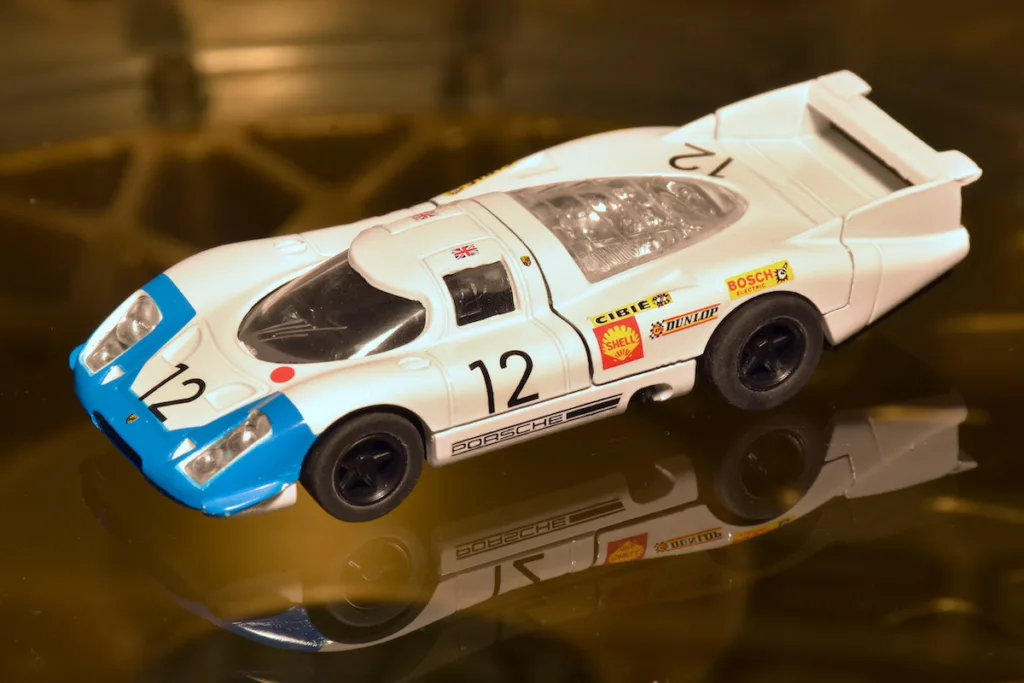
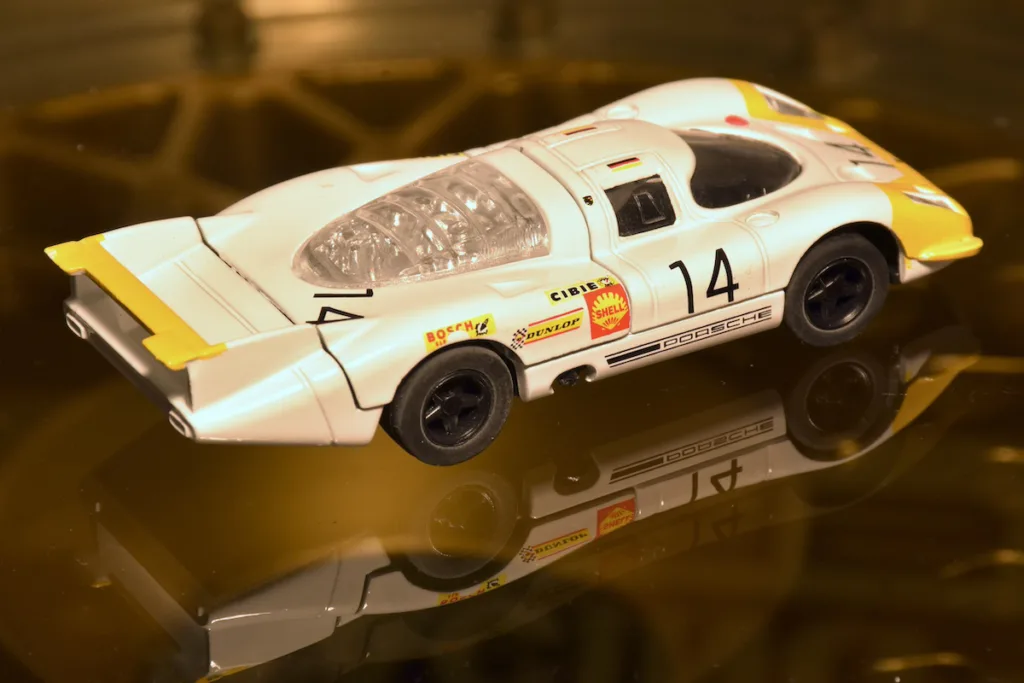
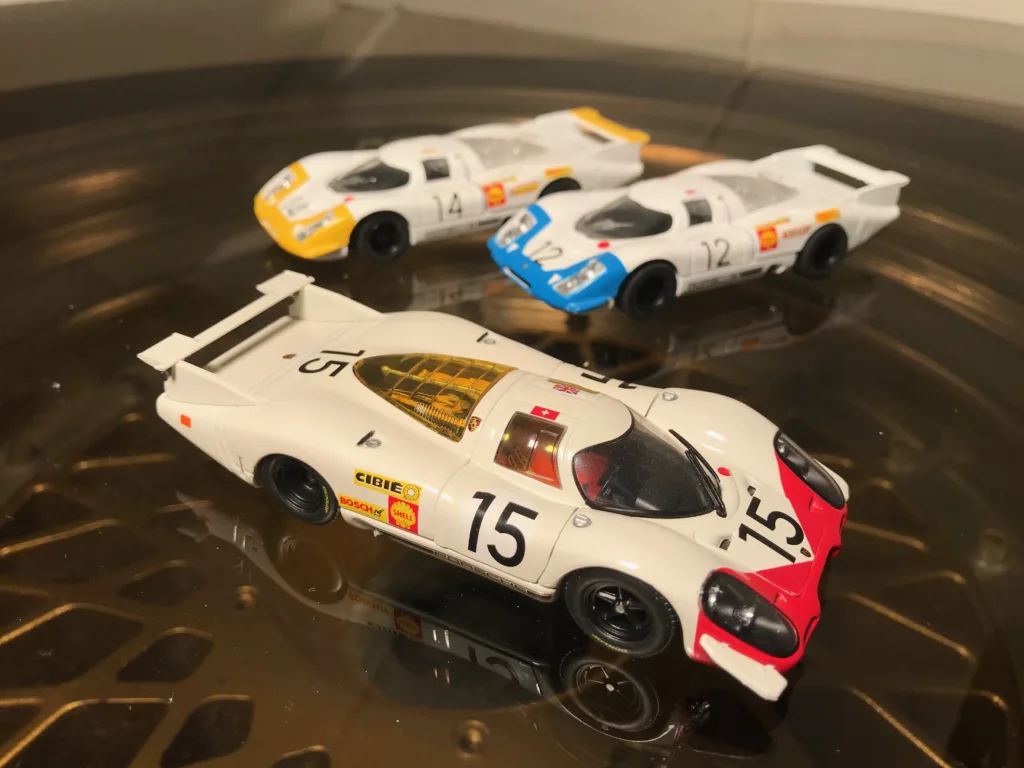
- ELIGOR 1198 & 1199 (diecast)
- Overall rating: 2 STARS | Quality details: 2 STARS | Estimated value: 2 STARS
- EBBRO 43751 (diecast)
- Overall rating: 4 STARS | Quality details: 3 STARS | Estimated value: 3 STARS
- Only appear in this collection
At the end of the year, the teams of John Wyer and Porsche Salzburg took over the racing activities from Porsche System Engineering.
Thanks for visiting 😉