Published October 23, 2026 | Last update October 23, 2026 | 34 models online
“Everything used to be better …”, well that isn’t true, but things were different. I grew up in a period that cars were smaller, lighter and so much fun to drive on their narrow tires without aero. I know from experience how it is to race small touring cars and how to drift (not power slide) these as fast as possible through corners without losing too much time. We just had little 4-cylinder engines with some double carburetors and limited power, so better keep your speed …
Modern racing cars have much, much more engine power, grip and downforce and often traction control, ABS and power steering … The game of racing has changed considerably.
To remember how it was, I present some of the little ones sometimes compared with their modern counterparts. Now and then I do miss old small touring and rally cars …
- This collection contains:
- Mini
- 1967 Rally de Monte Carlo – Mini Cooper S
- Dakar
- 1979 Paris – Algers – Dakar – Sunhill Buggy
- 1980 Paris – Algers – Dakar – Volkswagen iltis
- 1980 Paris – Algers – Dakar – Renault 4 Sinpar
- Alpine
- 1969 Alpine Renault 1600S
- 1969 Tour de Corse – Alpine Renault 1600S
- 1973 Rally de Monte Carlo – Alpine Renault 1800S
- 1973 Rally du Maroc – Alpine Renault 1800S
- Porsche
- 1956 Le Mans 24h – Porsche 550 RS Coupé
- 1964 Le Mans 24h – Porsche 904/4 GTS
- NSU
- 1975 Nürburgring 6h – NSU 1200 TTS
- 2017 Slalom – NSU 1000 TT Cup
- FIAT
- 1969 European Touring Cars Zandvoort – FIAT Abarth 1000 TCR 2x
- 1973 Colle della Maddalena – FIAT Abarth 695 SS
- 1984 Akropolis rally – FIAT 126P
- Simca
- 1972 Simca 1000 Rallye 1, 2 & 3 3x
- 1973 Rally de Monte Carlo – Simca Rallye 1
- 1974 Stars Racing – Simca Rallye 2
- 1974 Spa-Francorchamps 24h – Simca Rallye 2
- Sunbeam / Hillman Imp
- 1972 British Saloon Car Championship – Sunbeam Imp
- Renault 5
- 1978 Rally de Monte Carlo – Renault 5 Alpine
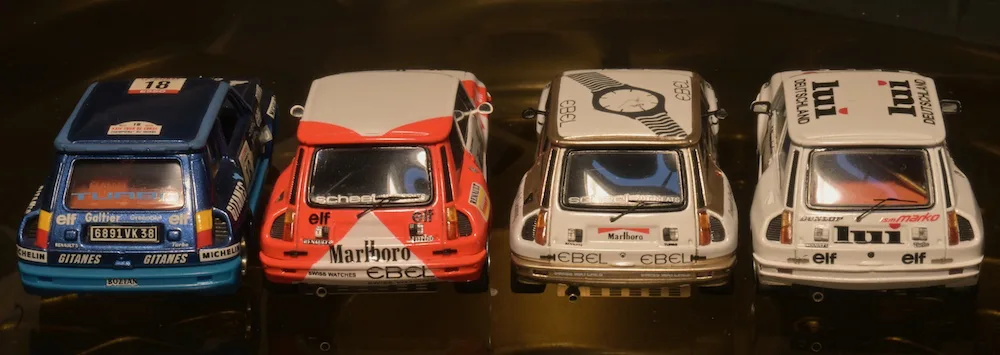
- 1980 Tour de Corse – Renault 5 turbo Gitanes
- 1981 Renault 5 turbo Cup LUI
- 1982 Renault 5 turbo Cup Ebel
- 1983 Renault 5 turbo Cup Marlboro
- 1984 Renault 5 turbo Cup Momo
- Volkswagen Golf & Scirocco
- 1977 Zandvoort – VW Scirocco
- 1977 Nürburgring 1000km – VW Golf
- 1978 DRM Nürburgring “Eifelrennen” – VW Scirocco
Mini
The Mini Cooper S may be the most famous of the small cars, but it sure wasn’t the first or the only one.
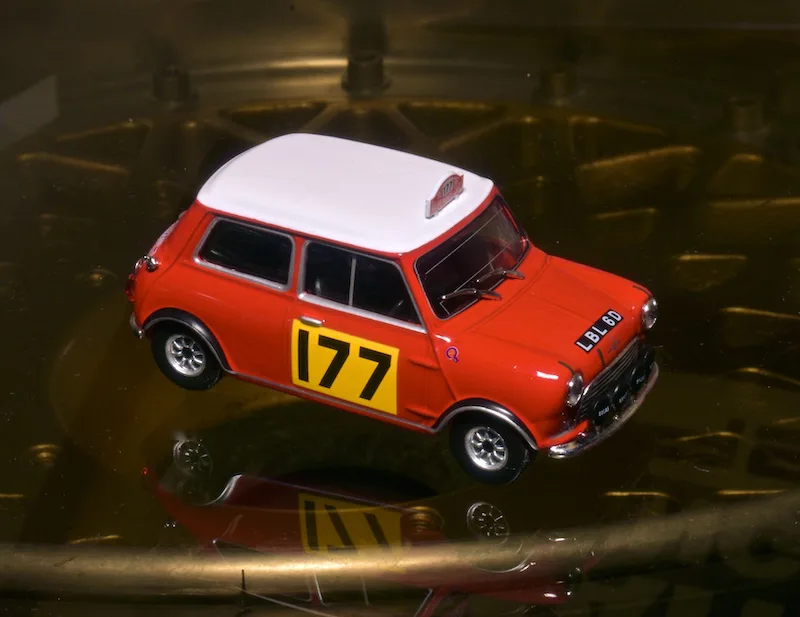
1967 Rally de Monte Carlo, Mini Cooper S
The Mini Cooper’s most famous rally success came in 1964, when Paddy Hopkirk won the Monte Carlo Rally overall in a Mini Cooper S. A small and light front-wheel driven car with limited engine power, but that was the key to success. It was much quicker on the icy, snow covered roads than the more powerful cars from the competition. This was already proven by Erik Carlsson who won the two previous editions in a FWD 2-stroke Saab. In 1966, Pauli Toivonen would repeat the success of the Mini and in 1967, another ‘Flying Fin’, Rauno Aaltonen took victory. This time in a 1.3 liter Cooper, beating stars like Ove Andersson in a Lancia and Vic Elford in a Porsche.
British Motor Corporation #177: Rauno Aaltonen (FIN) / Henry Liddon (GB)
Results: 1st
MIni Cooper S: Powered by 1.3 liter BMC straight-4, approx. 100 hp. Dunlop tires. Steel monocoque, license plate LBL 6D
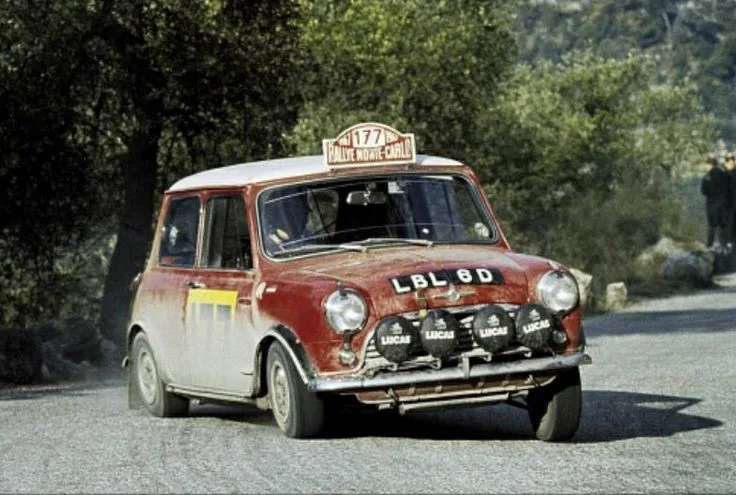
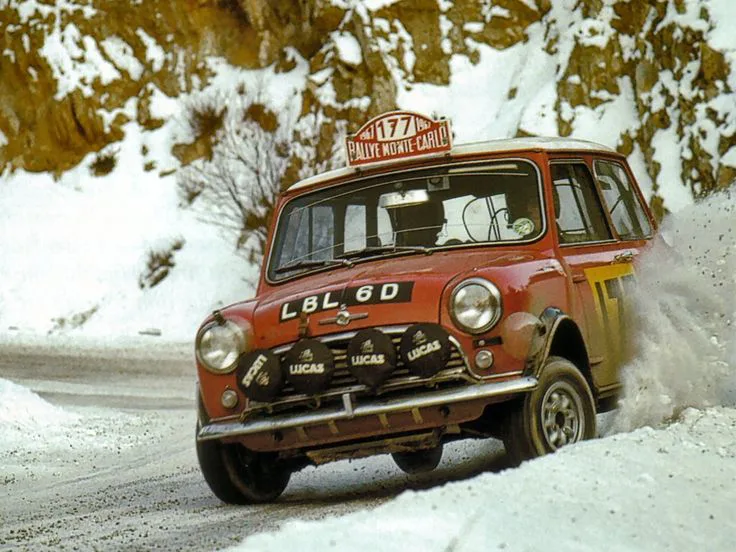
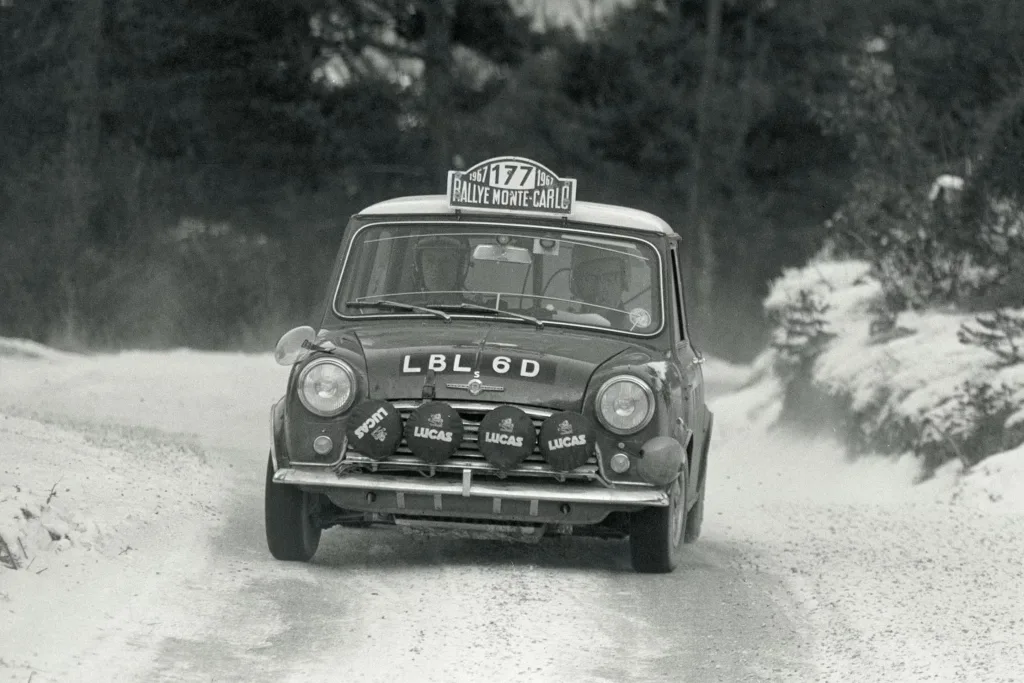
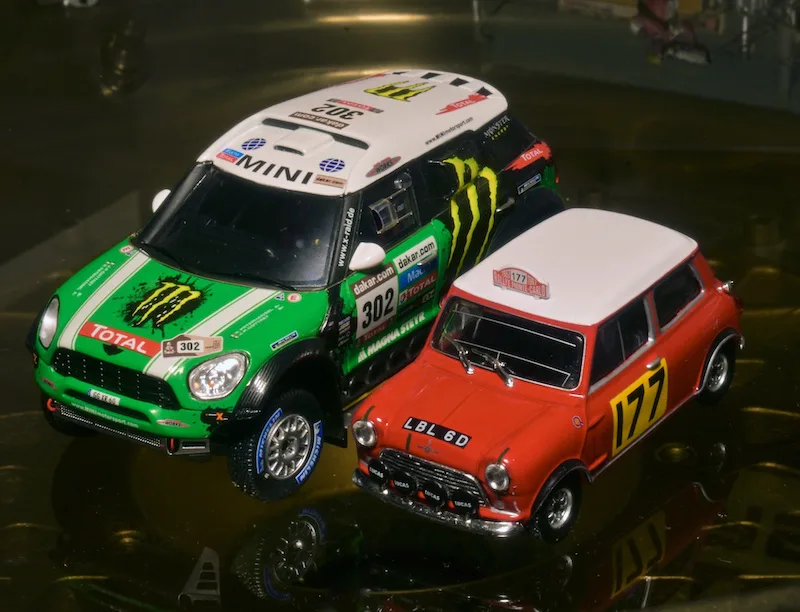
Compare the original Mini Cooper S with a modern one, especially the Dakar versions aren’t exactly ‘mini’ …
- RACING CAR COLLECTION #unknown
- Overall rating: 2 STARS | Quality details: 2 STARS | Estimated value: 2 STARS
- Appears in #129 Small touring cars & GT
Dakar
Dakar cars are always big … well nowadays they sure are, but how was that in the beginning?
1979 Paris – Algers – Dakar, Sunhill Buggy
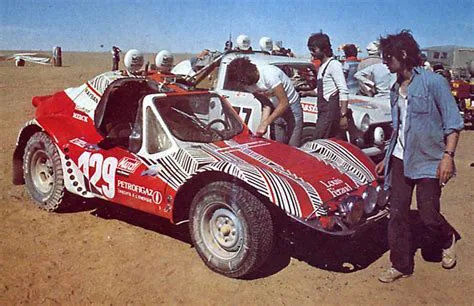
The first Dakar was a survival trip more than a race. Participants were looking for the best vehicle to cross the African continent and came up with odd vehicles such as a Renault 4 or Rolls Royce. Yves Sunhill built his own little 2 wheel-drive buggy in which he competed no less than 5 Dakars. The best solution in the end was just a near standard 4WD Range Rover V8 that won the car category.
Yves Sunhill #129: Yves Dunhill (F) / Jen-Paul Sevin (F)
Results: DNF
Sunhill Buggy: Powered by 1.8 liter Renault straight-4, approximately. 90 hp. Weight 653 kg. Gates tires. Steel space frame, chassisnr. 1102610268. 2WD
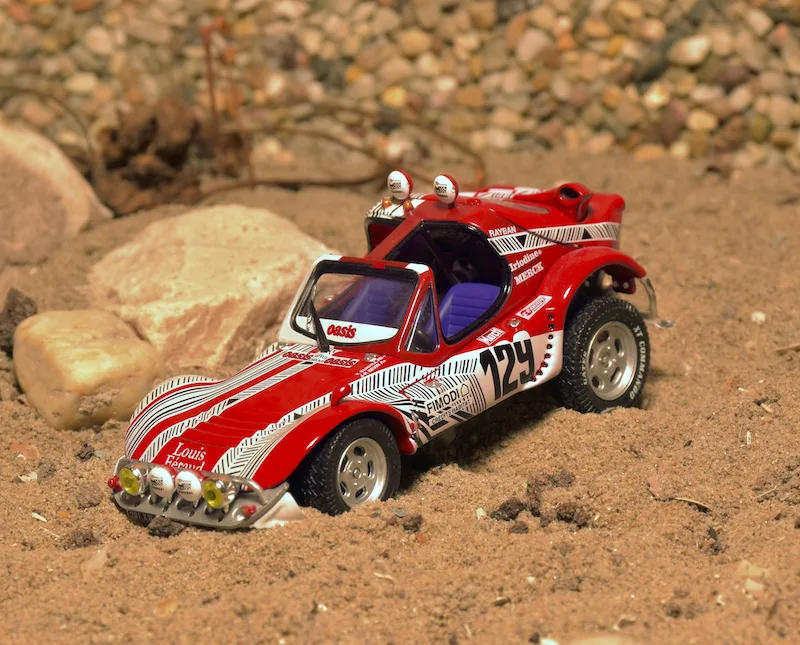
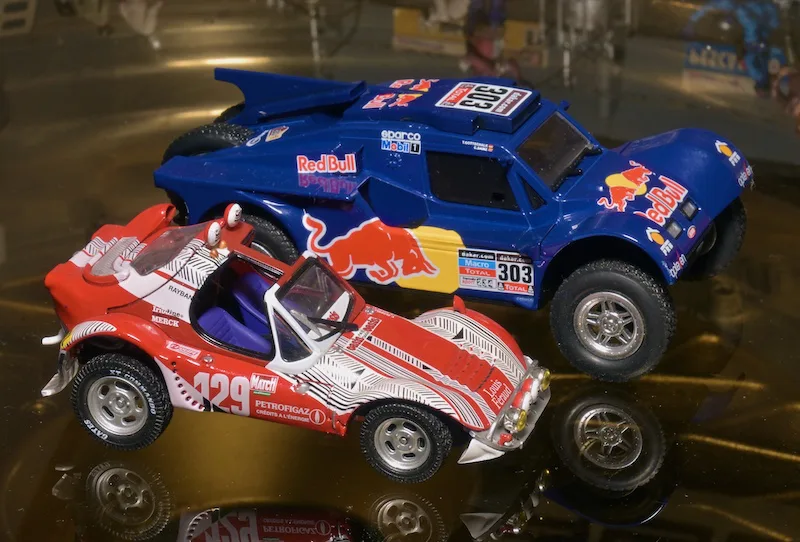
Compare the 1979 Buggy with a similar 2WD concept from 2015 ….
- NOREV Le Légende du Dakar 34 (diecast)
- Overall rating: 3 STARS | Quality details: 2 STARS | Estimated value: 2 STARS
- Appears in #105 Le Dakar 1979-1999 / #129 Small touring cars & GT
1980 Paris – Algers – Dakar, Volkswagen iltis
The Rally Dakar was an instant hit, well known drivers and manufacturers were interested already in the second edition. Volkswagen was the first factory team that participated; Four Volkswagen Iltis were entered. Originally it is a military vehicle, just as the Jeep was 40 years earlier. The design of this four-wheel drive system provided the basis for Audi’s Quattro system that would be introduced four years later. If you watch closely, the car had Ingolstadt number plates, Audi’s home town. The standard 75 hp powerplant was replaced by a Golf GTi engine. Freddy Kottulinsky won after a hard battle with the Marreau brothers. The other Iltis’ finished 2nd, 4th and 9th.
VW Motorsport #137: Freddy Kotulinsky (D) / Fred Luffelman (D)
Results: 1st
VW Iltis: Powered by 1.8 liter Volkswagen straight-4, approx. 118 hp. Uniroyal tires. Weight 1300 kg. Steel monocoque, chassisnr. #unknown. 4WD
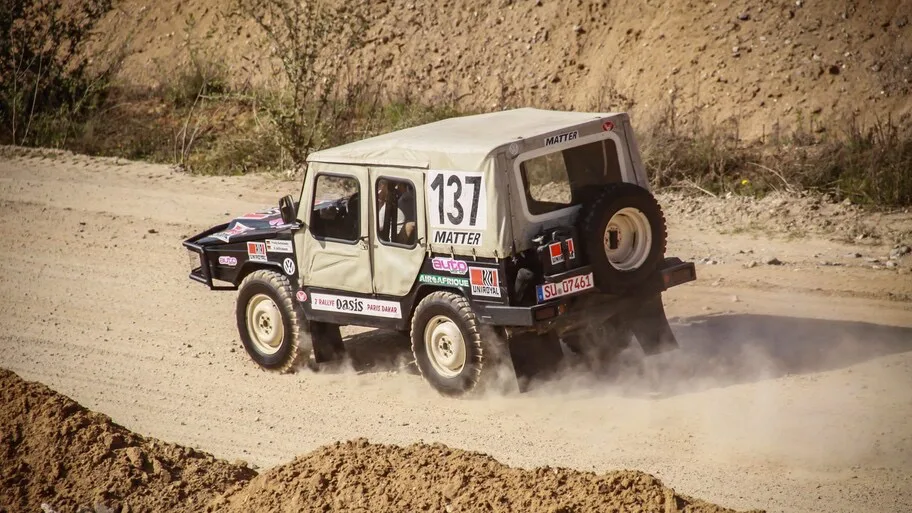
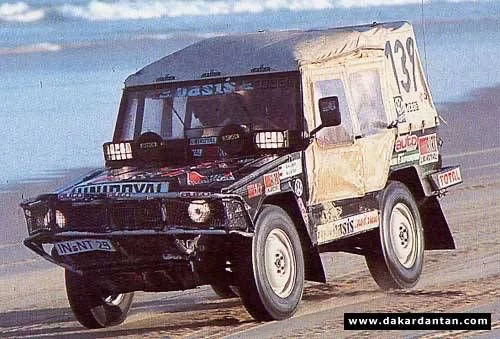
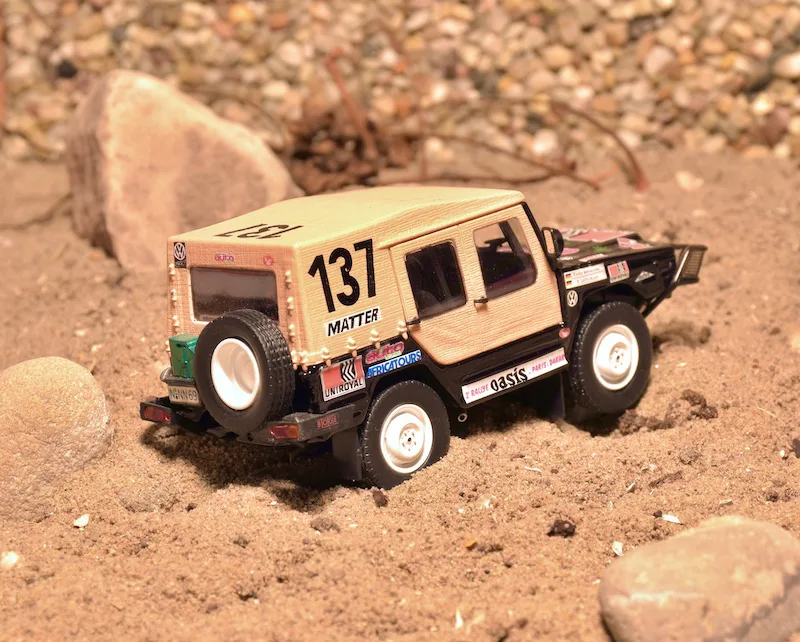
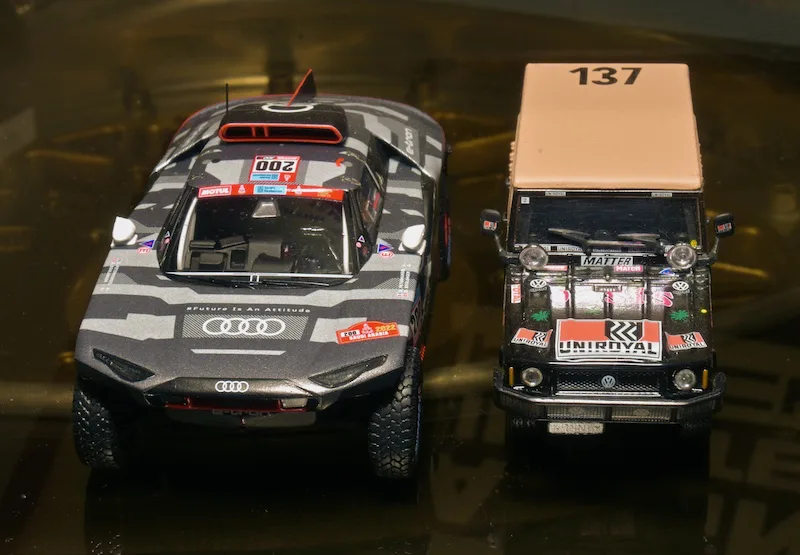
Just compare the size of this little Ingolstadt car with a recent one ...
- NOREV Le Légende du Dakar 4 (diecast + plastic)
- Overall rating: 3 STARS | Quality details: 2 STARS | Estimated value: 2 STARS
- Appears in #105 Le Dakar 1979-1999 / #129 Small touring cars & GT
1980 Paris – Algers – Dakar, Renault 4 Sinpar
Volkswagen was the first factory team that participated and took victory in 1980. But to reach that they had to defeat these guys, the ‘desert foxes’, the Marreau brothers in their Renault 4 Sinpar. It had all wheel drive and the engine of a group 2 Renault 5 Alpine, it finished 3rd. Previous year they already finished second in the cars category.
#120 Claude Marreau (F) / Bernard Marreau (F) – 3rd
Frères Marreau Renault 4 Sinpar – 1.4 liter Renault straight-4, approx. 120 hp. Uniroyal tires. Weight 1100 kg. Steel monocoque, chassisnr. #unknown. 4WD.
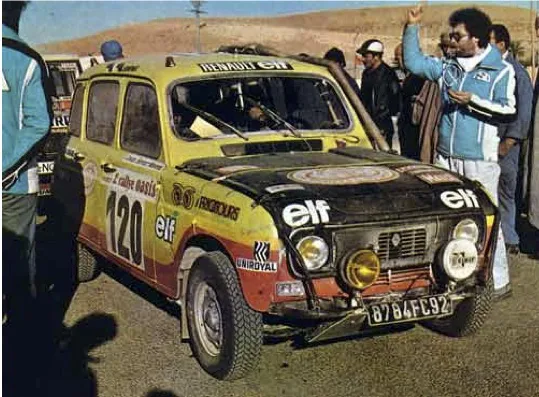
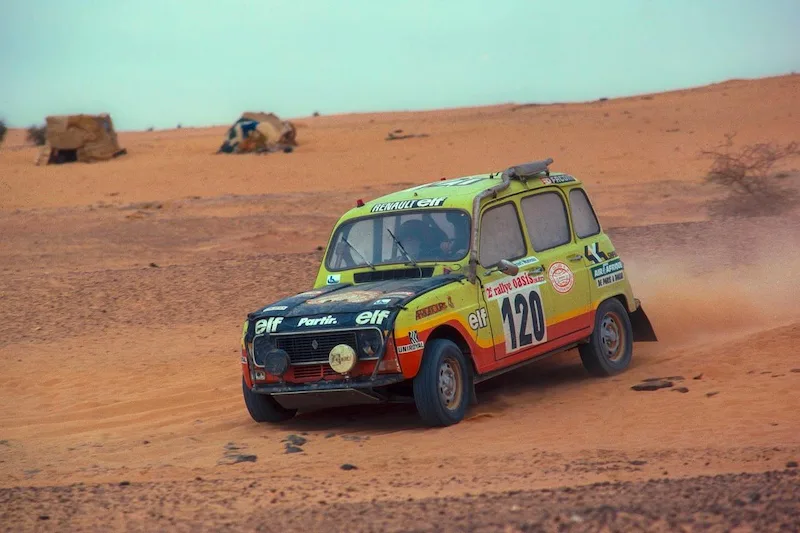
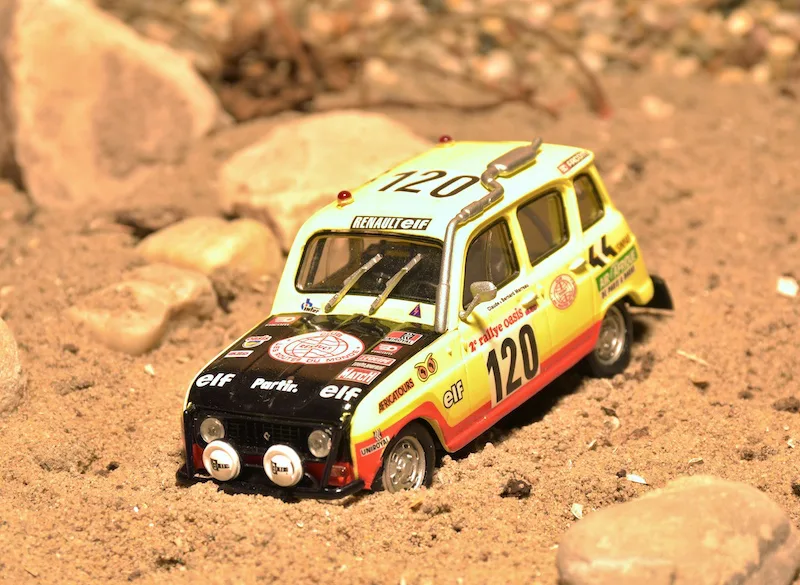
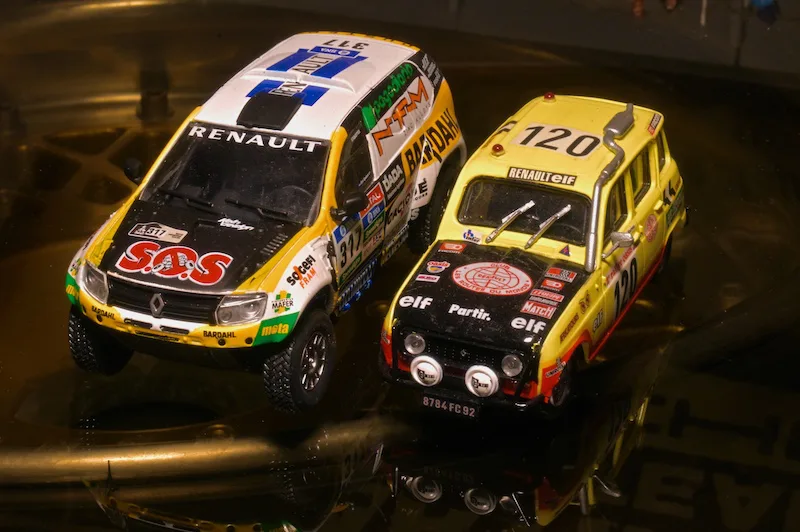
The Renault 4 is such a cute little car, here it is compared to a Renault from 2020 …
- NOREV Le Légende du Dakar 19 (diecast)
- Overall rating: 3 STARS | Quality details: 2 STARS | Estimated value: 2 STARS
- Appears in #105 Le Dakar 1979-1999 / #129 Small touring cars & GT
Alpine
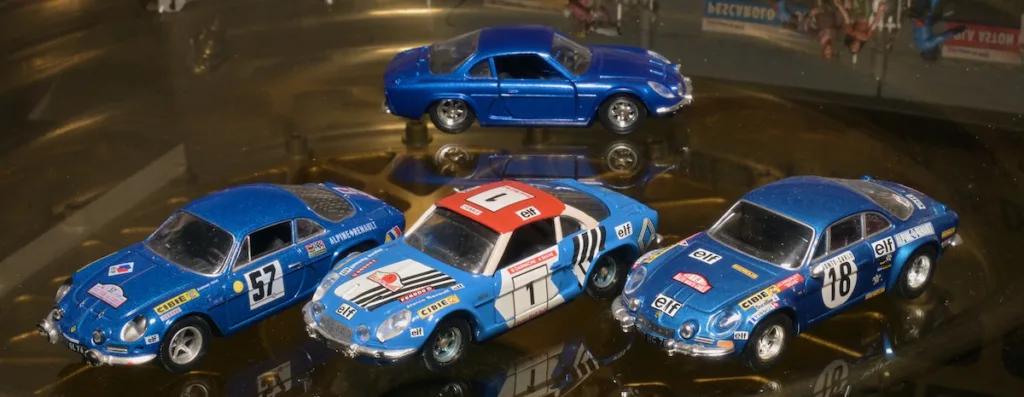
1969 Alpine-Renault A110
With a length of 385 cm, height of 113 cm and weight of around 700 kg, the original Alpine A110 can be described as a small car. Because of these specs, it was very successful as a rally car. Its modern successor is still not a large car: 418 cm long, 125 cm high and a curb weight that is more than 400 kg heavier than the original.
Alpine Renault A110 – street: Powered by 1.6 liter Renault DOHC straight-4, approx, 108hp. Michelin tires. Weight 700 kg. Steel monocoque with fibreglass body, chassisnr. unknown
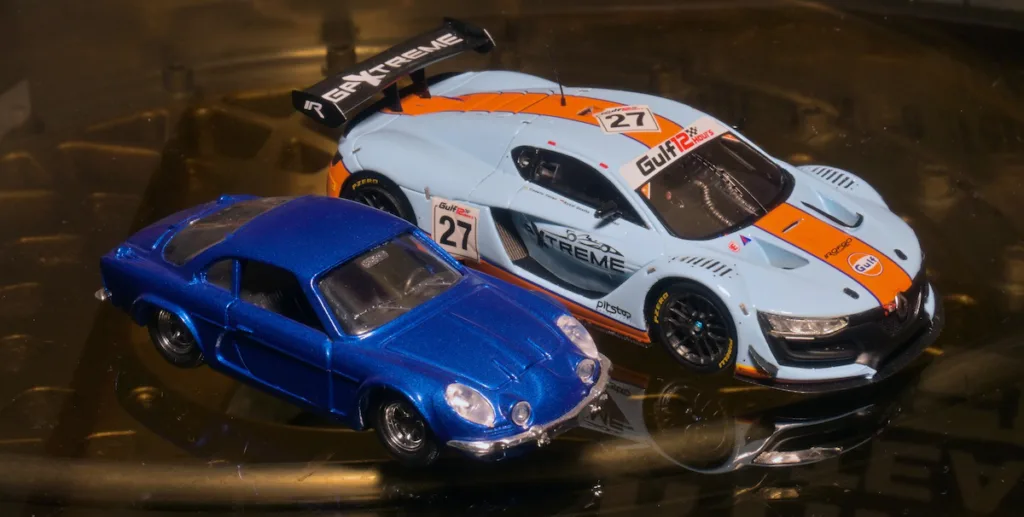
Here is the A110 next to the 2016 Renault R.S.01 …
- SOLIDO #unknown
- Overall rating: 2 STARS | Quality details: 2 STARS | Estimated value: 1 STARS
- Appears in #044 Alpine & Renault / #129 Small touring cars & GT
1969 Tour de Corse, Alpine-Renault A110
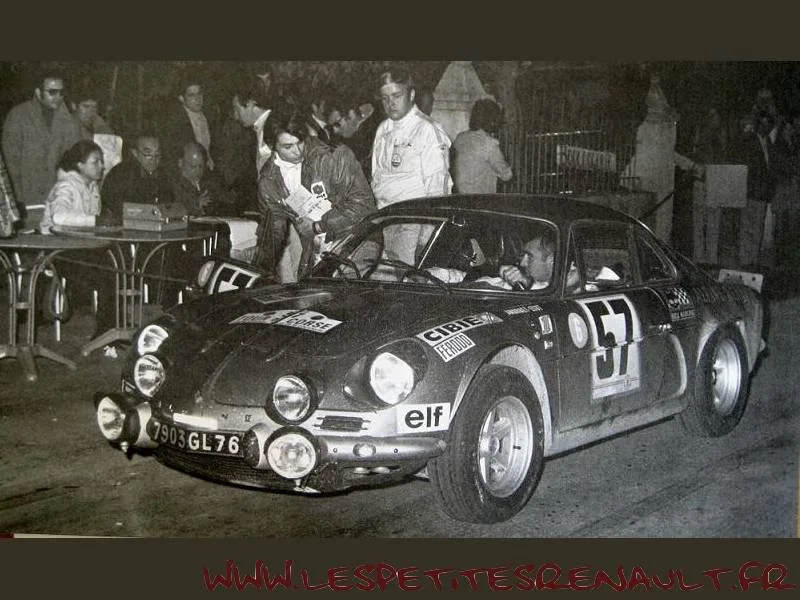
The Alpine A110 was already introduced in 1963, but the 950 cc 51 hp engine didn’t invite to race or rally the car. The small Berlinetta could handle more powerful engines and by 1969, the 1.6 liter twin-carburetor version produced about 138 hp. Many Alpines were entered for the 1969 Tour de Corse rally, most of them being 1300 and 1500 cc versions. Andruet had a 1600S, but had to retire with damage after an accident. Other Alpines finished 2nd, 4th, 5th, 6th and 8th behind Gérard Larrousse in a Porsche 911. Larrousse would become Renault Sport Director some years later.
Alpine Renault #57: Jean-Claude Andruet (F)/ Patrice Écot (F)
Results: DNF damage after accident – 6 special stages
Alpine-Renault A110 – Group 4: Powered by 1.6 liter Renault DOHC straight-4, approx, 138 hp. Michelin tires. Weight 700 kg. Steel monocoque with fibreglass body, chassisnr. unknown
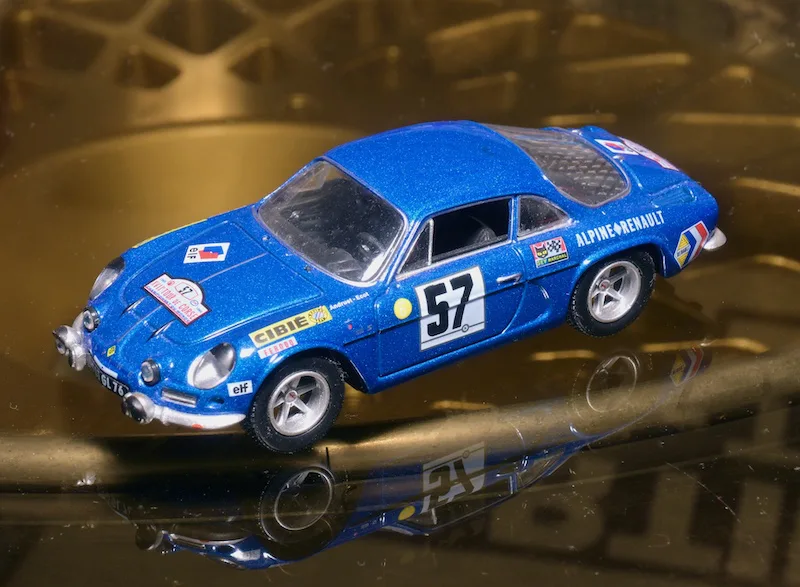
- UNIVERSAL HOBBIES #unknown (diecast, no box)
- Overall rating: 2 STARS | Quality details: 2 STARS | Estimated value: 1 STARS
- Appears in #044 Alpine & Renault / #129 Small touring cars & GT
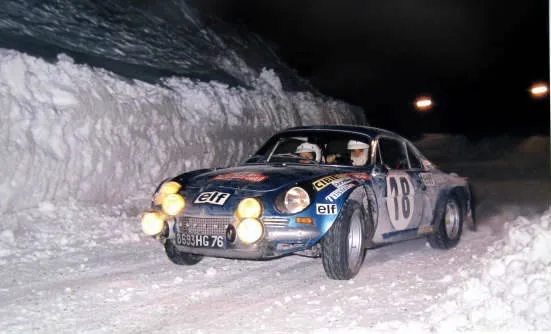
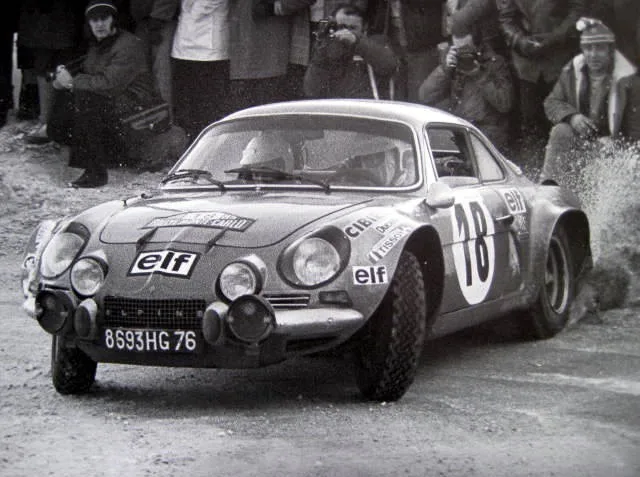
1973 Rally de Monte Carlo, Alpine-Renault A110
At this time, the Monte Carlo rally was a regularity rally, with teams beginning competition in 9 different cities across Europe. Once gathered in Monte Carlo, the competition part began. The Group 4 Alpine-Renault was the car to beat on the special stages and these finished 1st, 2nd, 3rd, 5th, 6th and 10th. Victory going to Andruet and his female co-pilot “Biche” a pseudonym for Michèle Petit.
Alpine Renault #18: Jean-Claude Andruet (F) / “Biche” (F)
Results: 1st
Alpine-Renault A110 – Group 4: Powered by 1.8 liter Renault 807-GA DOHC straight-4, approx, 185 hp. Michelin tires. Weight 700 kg. Steel monocoque with fibreglass body, chassisnr. unknown

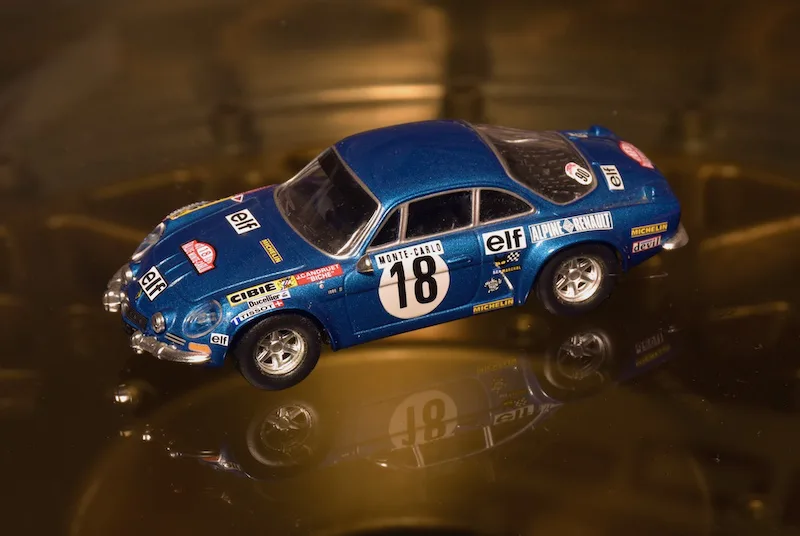
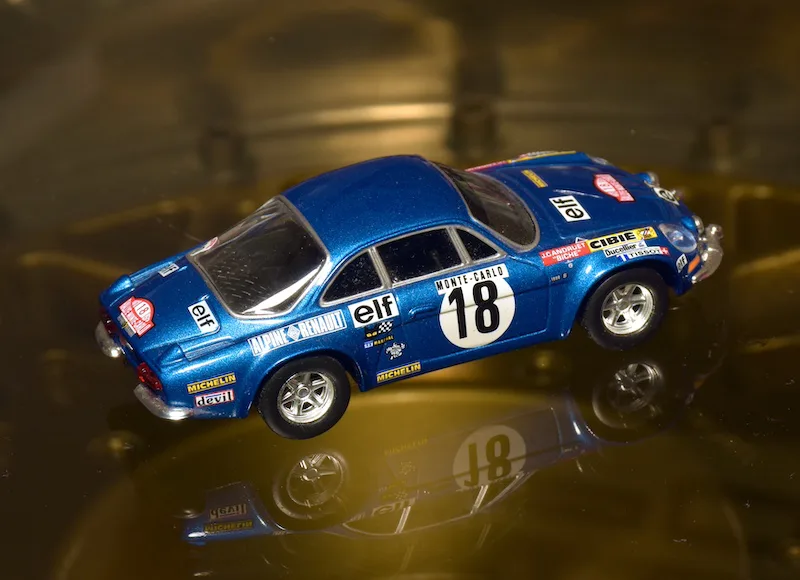
- ALTAYA unknown (diecast)
- Overall rating: 3 STARS | Quality details: 3 STARS | Estimated value: 2 STARS
- Appears in #044 Alpine & Renault / #097 Classic GT 1970s / #124 Racing Ladies / #129 Small touring cars & GT
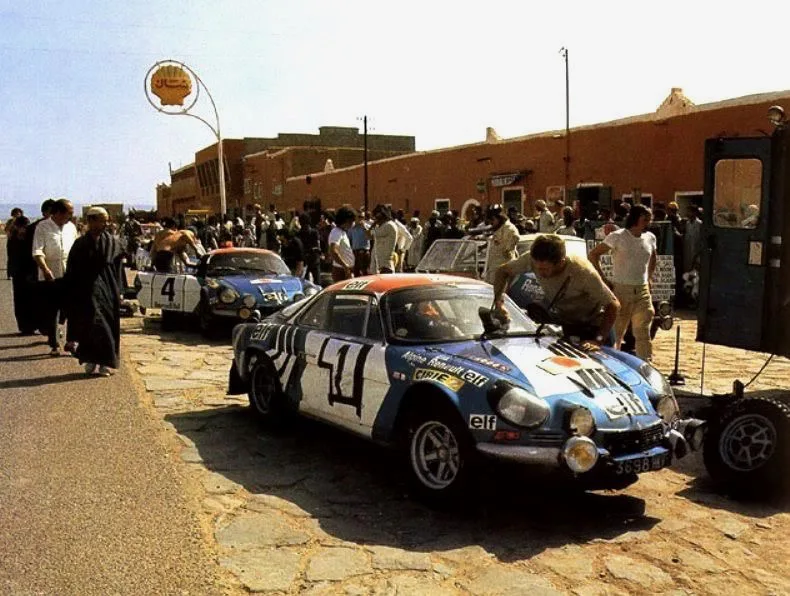
1973 Rallye de Maroc, Alpine-Renault A110
1973 Was the first year of the official World Rally Championship (WRC) that began with the Monte Carlo in January. The 5th round of the season was completely different. Again it was an Alpine that won, but 2nd, 3rd and 4th were Citroën DS23. Not your average rally car, but the hydropneumatic suspension worked very well on the bad roads in Morocco. Alpine-Renault would go on and win the first manufacturers’ championship with a total of 6 victories.
Alpine Renault #1: Bernard Darniche (F) / Alain Mahé (F)
Results: 1st
Alpine-Renault A110 – Group 4: Powered by 1.8 liter Renault 807-GA DOHC straight-4, approx, 185 hp. Michelin tires. Weight 700 kg. Steel monocoque with fibreglass body, chassisnr. unknown
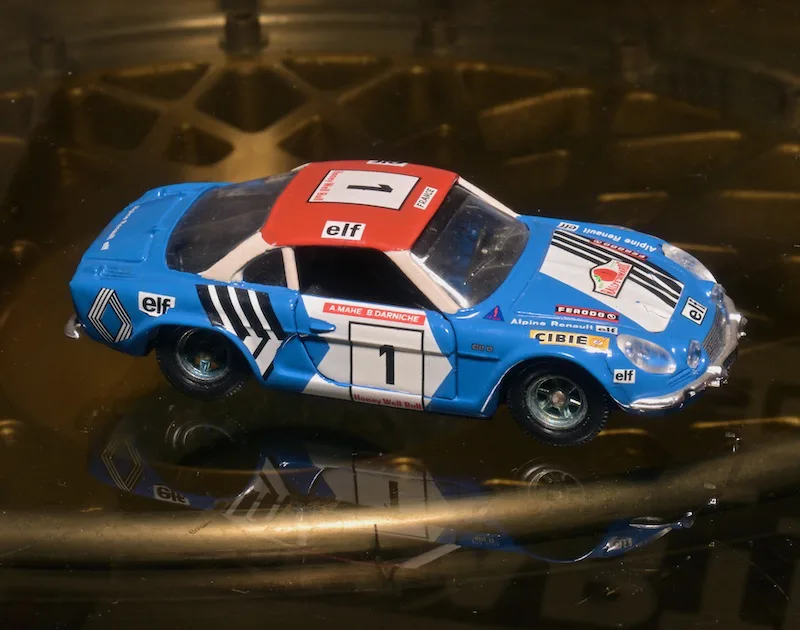
- VEREM #unknown (diecast, no box)
- Overall rating: 2 STARS | Quality details: 2 STARS | Estimated value: 1 STARS
- Appears in #044 Alpine & Renault / #129 Small touring cars & GT
Porsche
Porsche is famous for its powerful cars and nowadays also horrible SUV’s, but that hasn’t been always the case. Porsche started with nimble, small sports cars with little 4-cylinder air-cooled engines.
1956 Le Mans 24h, Porsche 550 RS Coupé
The 550 RS Coupé was a new developed car with a space frame that gave it much better handling than the platform chassis of the previous generation. The little twin-spark 4-cylinder was reliable and the small car won its class and finished 5th overall.
Porsche KG #25: Richard von Frankenberg (D) / Wolfgang von Trips (D)
Results: Start-grid unknown / race 5th – 282 laps / 1st S 1.5 liter
Porsche 550 RS Coupé – Sports cars < 1.5L: Powered by 1.5 liter 547/2 flat-4 twin-spark, approx. 130 hp. Continental tires. Weight 540 kg. Steel tubular frame + aluminium body, chassisnr. #0104


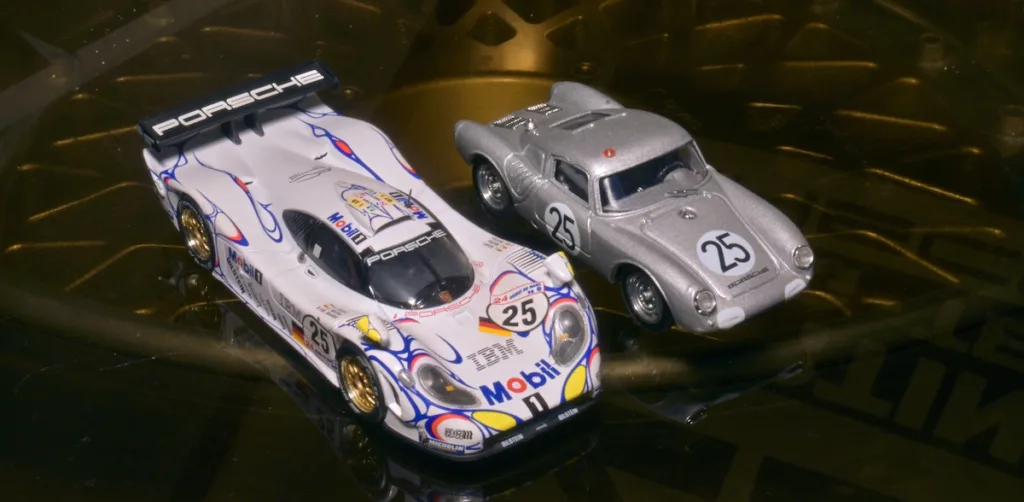
Look how small the RS Coupé is compared to the 1998 Le Mans winning GT1/98 …
- BRUMM R192 (diecast)
- Overall rating: 2 STARS | Quality details: 2 STARS | Estimated value: 2 STARS
- Appears in #096 Classics 50s & 60s / #129 Smal touring cars & GT
1964 Le Mans 24h, Porsche 904/4 GTS
The Porsche 904 was a small, light GT with great performance and reliability. That is, if equipped with the original flat-4 engine. Two factory 904/8 were entered with 2-liter 8 cylinder engines but both retired with clutch related problems. The 4 cylinder versions all finished in the top 12 overall and 1st to 5th in the 2-liter GT category. One of these was the bright orange Racing Team Holland car from Ben Pon.
Racing Team Holland #33: Ben Pon (NL) / Henk van Zalinge (NL)
Results: Start-grid 28th / time 4:16.000 / race 8th – 319 laps / 2nd GT <2L
Porsche 904/4 Carrera GTS – GT <2L: Powered by 2.0 liter Porsche Type 587/3 flat-4, approx. 180 hp. Dunlop tires. Weight 650 kg. Steel ladder frame with fiberglass body, chassisnr. #055


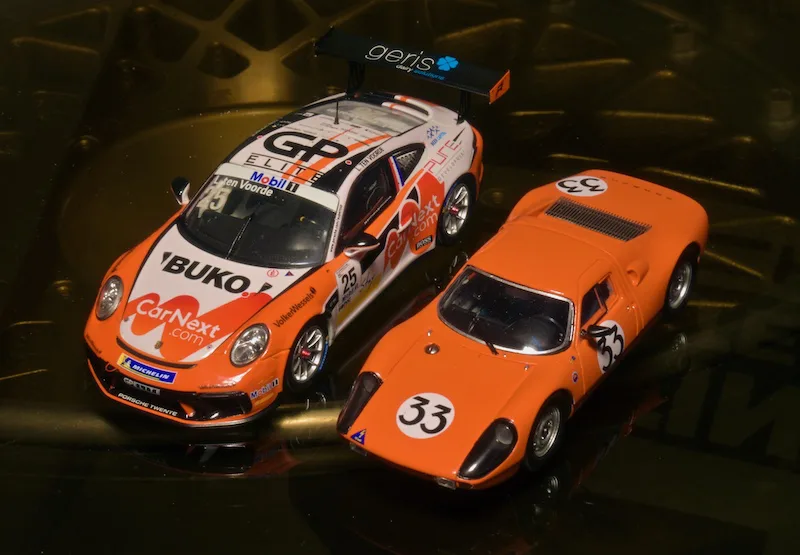
A Porsche 911 is not the largest car, but a modern GT3 Cup is anyway bigger and heavier than the old 904 that weighed only 650 kg with its fiberglass body...
- SPARK 43NAS003 #190 / 200 (resin)
- Overall rating: 5 STARS | Quality details: 4 STARS | Estimated value: 4 STARS
- Appears in #029 Racing Team Holland / #096 Classics 50s & 60s / #129 Small touring cars & GT
NSU
NSU used to be an independant car manufacturer that did things differently. The NSU 1000 and 1200 had the engine in the rear which was quit common in the sixties. But they also built a luxury sedan with a rotary engine, the Ro 80. The brand was bought by the Volkswagen Group and together with Auto Union merged into AUDI.
1975 Nürburgring 6h, NSU 1200 TTS
Willi Bergmeister raced this little NSU for many years in hillclimbs and on race tracks scoring many class wins. One of his greatest achievements was during the 6-hour race for the European Touring Car Championship in 1975 at the Nürburgring Nordschleife. The little 1300 cc NSU finished 4th overall behind 3 BMW 3.0 CSL’s beating the 2002’s and some big Opel Commodores, and of course it won its class.
Jägermeister Racing #71: Willi Bergmeister (D) / Wolfgang Wolf (D)
Results: Start-grid 13th / time 9:26.500 / race 4th – 25 laps / 1st <1.3 liter
NSU 1200 TTS – Touring division 1: Powered by 1.3 liter Spiess NSU straight-4, approx. 120 hp. Tires unknown. Weight 625 kg. Steel monocoque, chassisnr. unknown.


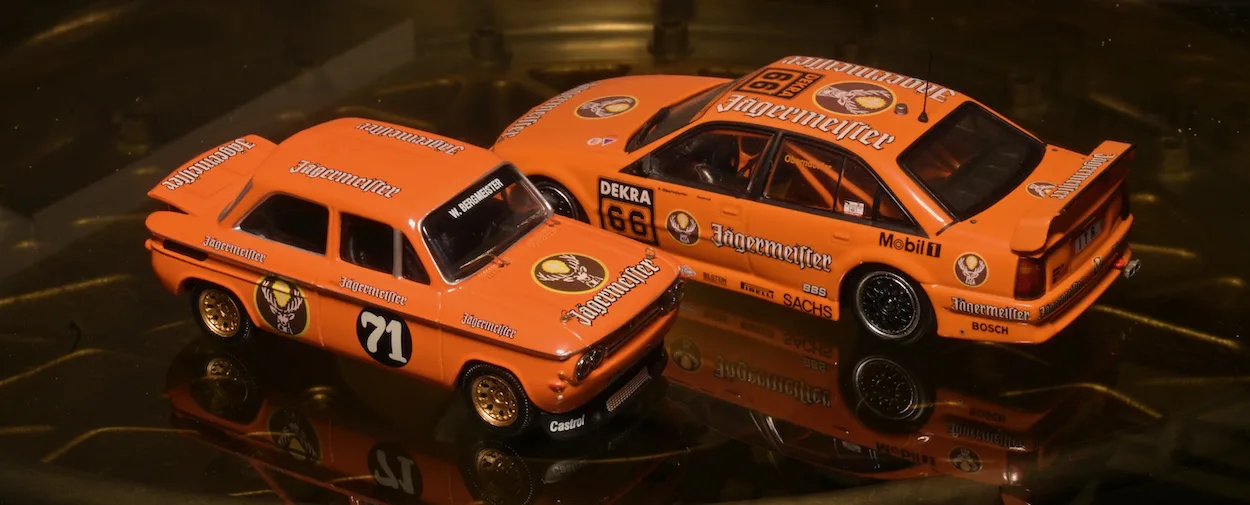
The little NSU next to a Opel Omega 3000 evo from the year 1991 …
- SCHUCO 02268 limited 1000 pcs (diecast)
- Overall rating: 3 STARS | Quality details: 3 STARS | Estimated value: 4 STARS
- Appears in #022 Jägermeister Touring cars / #129 Small touring cars & GT
2017 NSU 1000 TT Cup
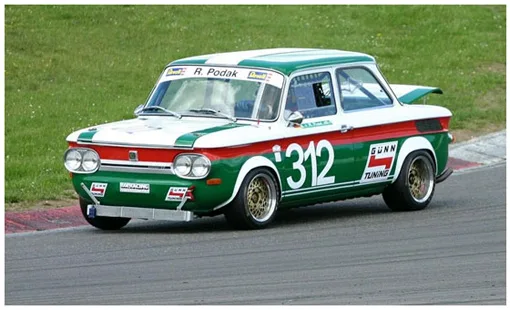
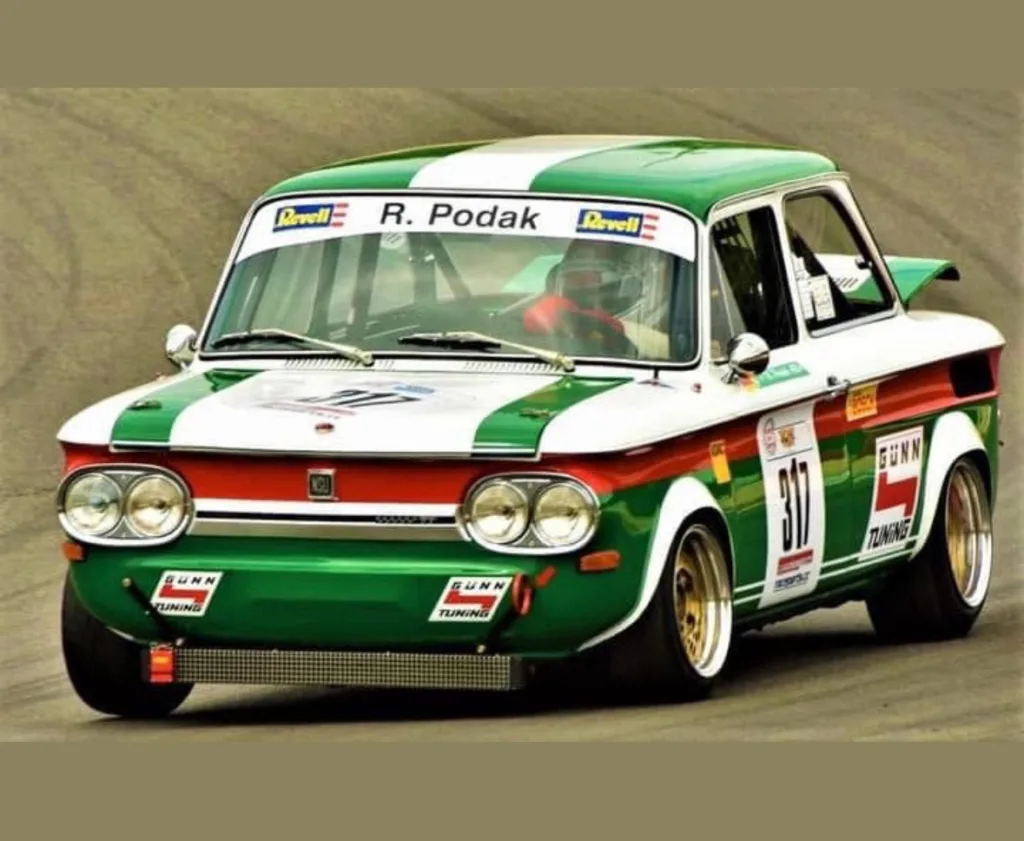
NSU are still used by enthousiasts in historic race, hillclimb and slalom events. Here is a YouTube video from 2017 showing Robin Podak in his NSU 1000 TT. I was unable to find more information than this.
Podak #511: Robin Podak (D)
NSU 1000 TT Cup:Powered by NSU straight-4, approx. 1Weight 625 kg. Steel monocoque, chassisnr. unknown.
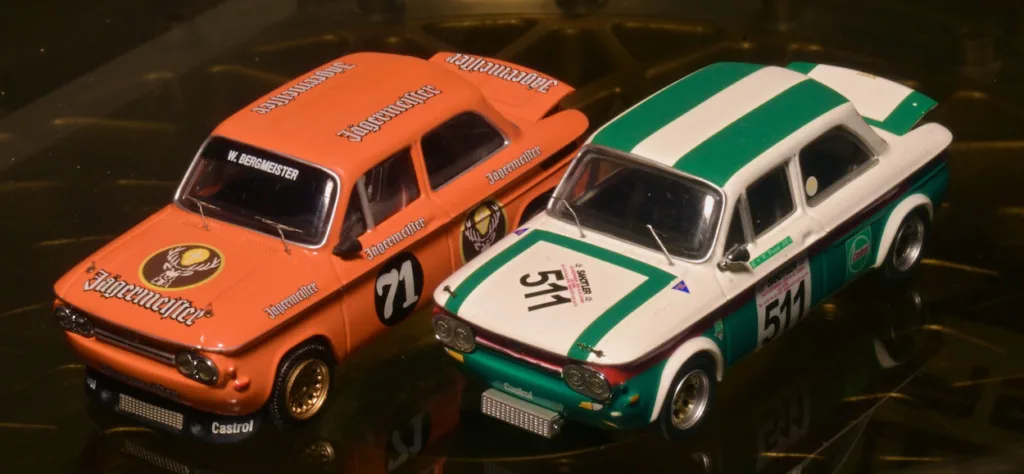
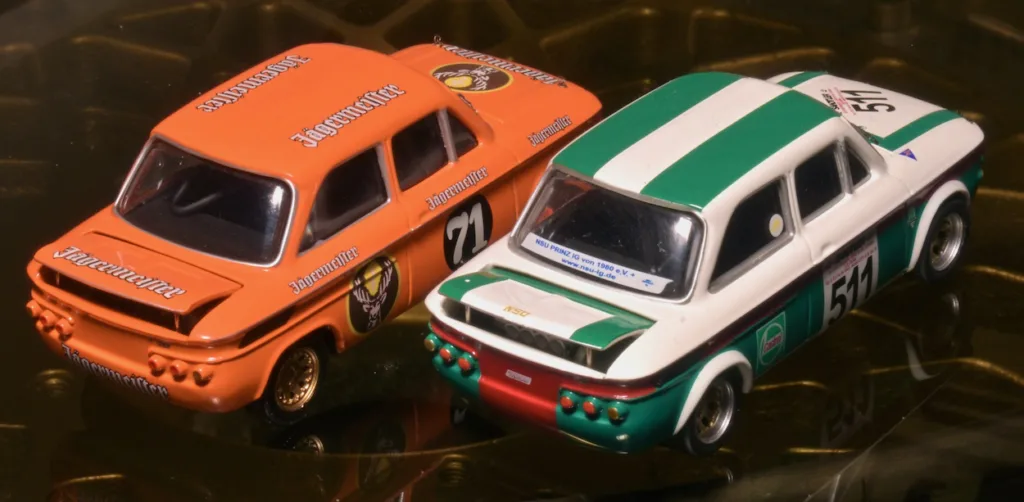
- SCHUCO 03182 (diecast)
- Overall rating: 3 STARS | Quality details: 3 STARS | Estimated value: 3 STARS
- Appears in #069 Castrol / #129 Small touring cars & GT
FIAT
FIAT, short for Fabbrica Italiana Automobili Torino has always been good in developing and producing small affordable cars.
A number of these were also popular in rallies and racing especially when improved by Abarth.
1969 European Touring Cars Zandvoort, FIAT Abarth 1000 TCR
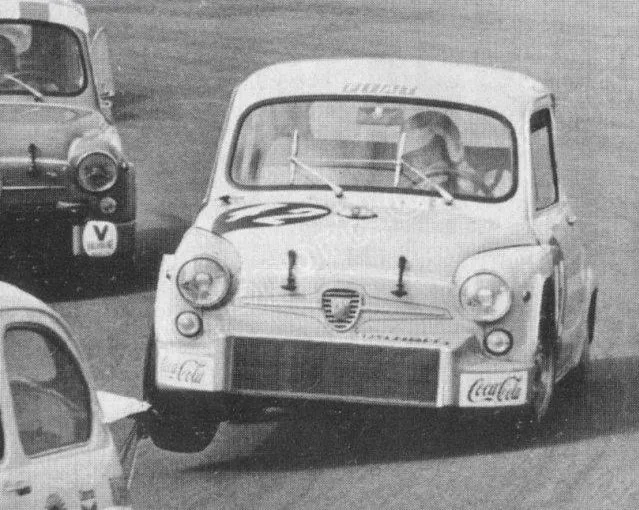
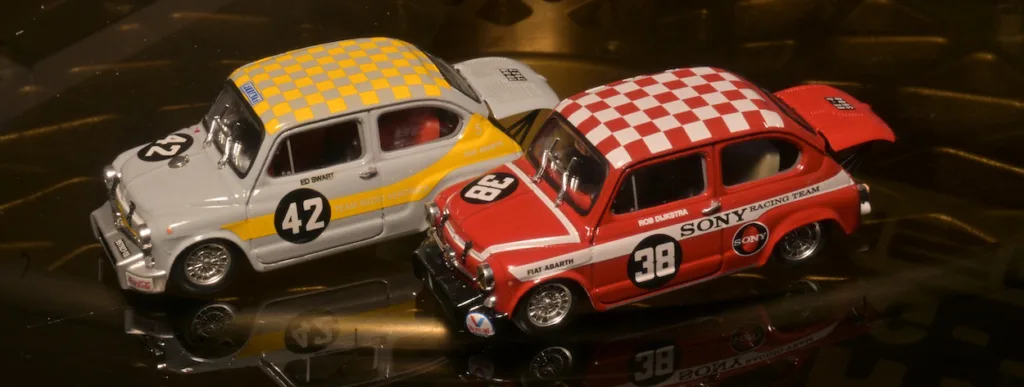
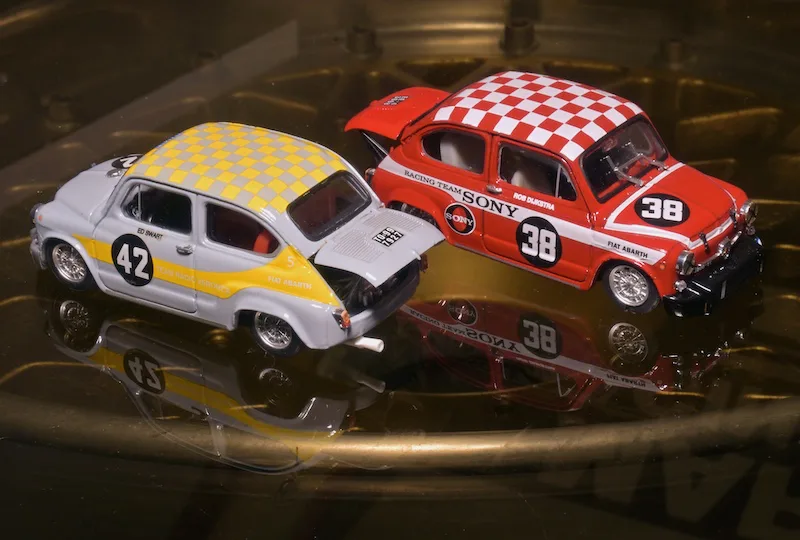
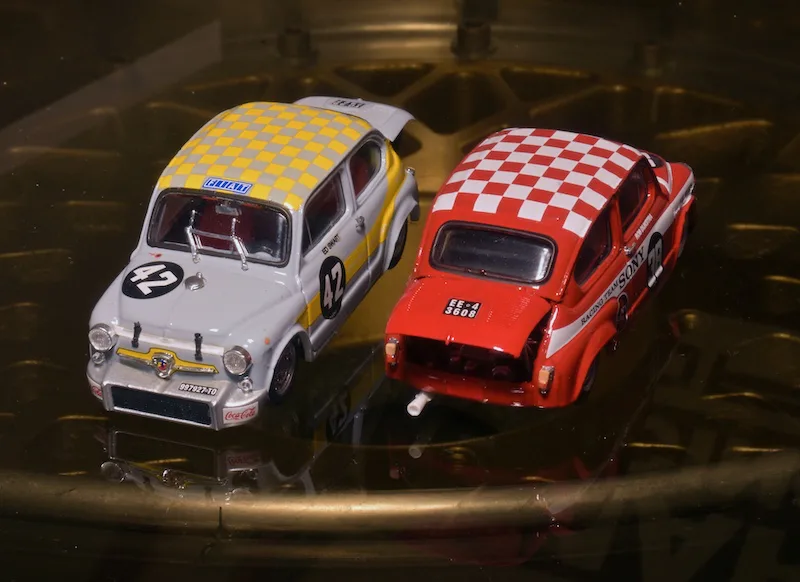
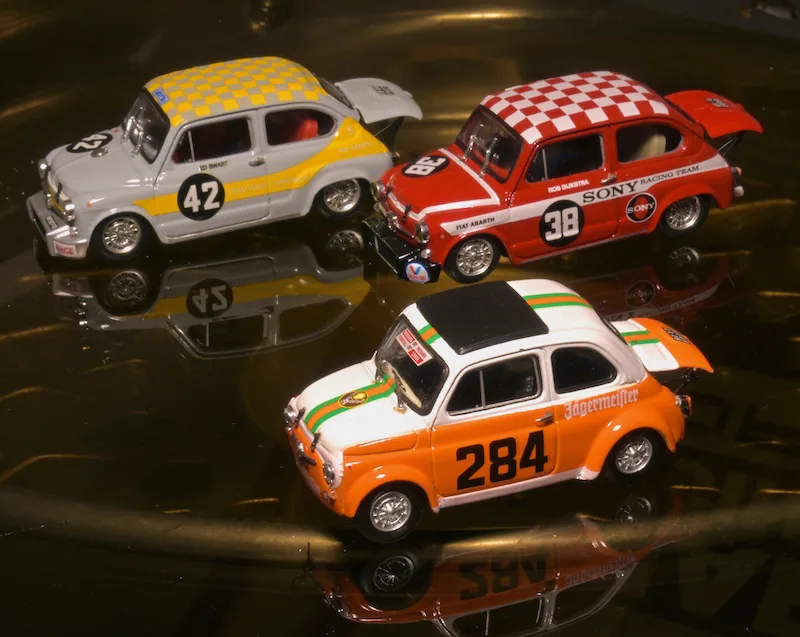
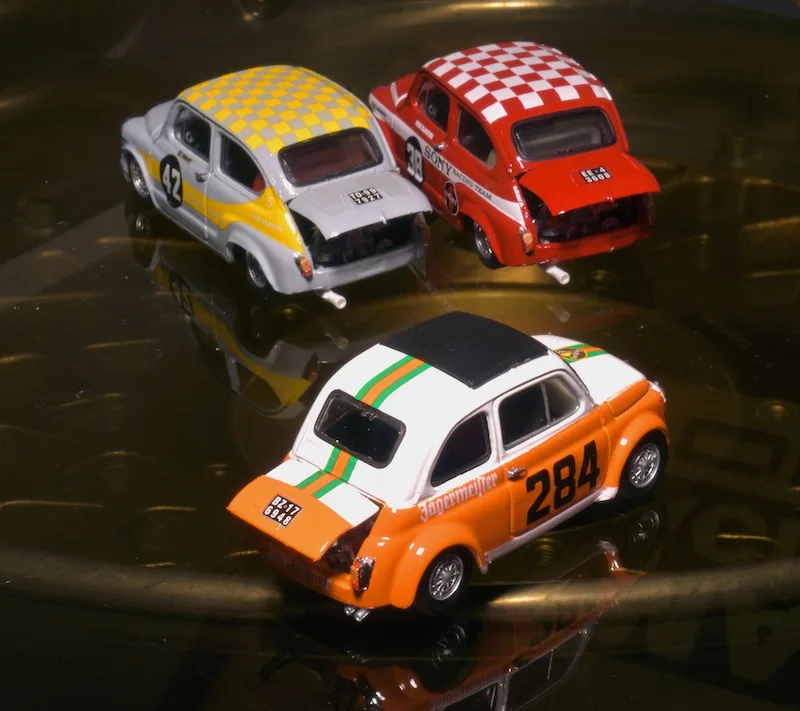
Based on the FIAT 600, Abarth developed the 1000 TCR with a 4-cylinder engine. There used to be racing categories upto 850 cc, 1000 cc, 1150 cc, . The Abarth 1000 TCR (Turismo Competizione Radiale) ruled the first category, often on three wheels or less, but always spectacular. Dutch drivers such as Ab Goedemans, Wim Boshuis and Toine Hezemans raced such cars. These are the cars of Ed Swart and Rob Dijkstra who participated in the Zandvoort Trophy which counted for the European Touring Car championship. Wim Boshuis took pole-position for the category 1 race but retired. Rob Dijkstra won from second on the grid and Ed Swart retired with a broken gearbox. Rob had to fight with Italian factory driver “Pam” #28 (Marsilio Pasotti) all the time, see pictures.
Sony Racing Team #38: Rob Dijkstra (NL)
Results: Start-grid 2nd / time 1:49.900 / race 1st – 35 laps
Team Radio Veronica #42: Ed Swart (NL)
Results: Start-grid 3rd / time 1:51.400 / race DNF gearbox – 11 laps
FIAT Abarth 1000 TCR – TS <1L: Powered by Abarth 1.0 liter straight-4, approx. 120 hp. tires unknown. Weight 570 kg. Steel monocoque, chassisnr. unknown
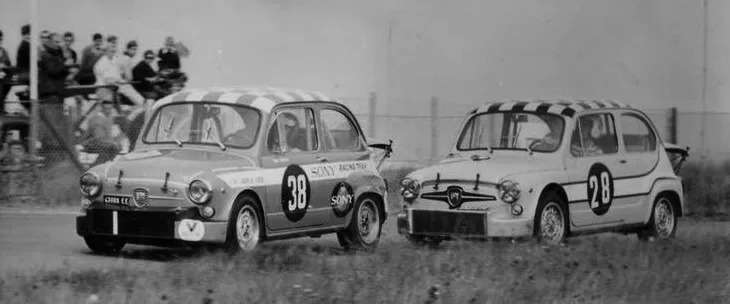
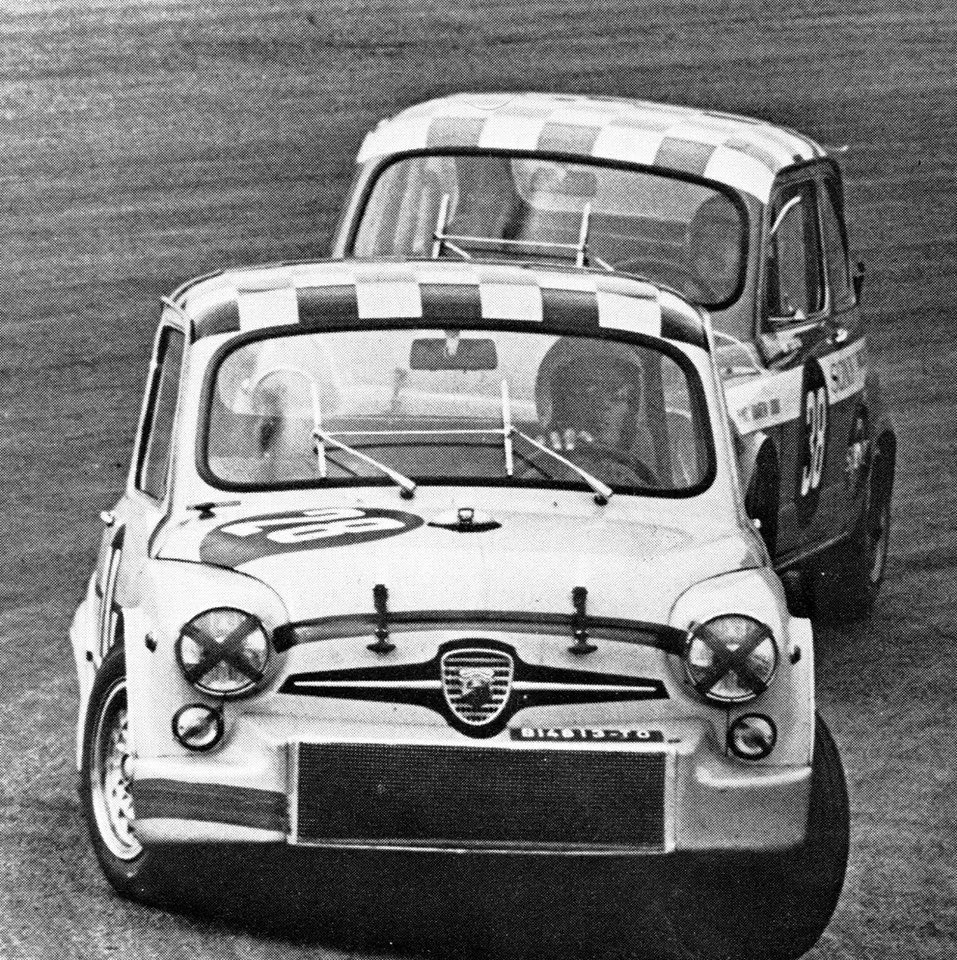
- BRUMM R419 & R421 (diecast)
- Overall rating: 3 STARS | Quality details: 2 STARS | Estimated value: 2 STARS
- Appear in #129 Small touring cars & GT / #132 FIAT & Abarth
1973 Colle della Maddalena, FIAT Abarth 695 SS
Somewhat smaller than a 1000 TCR is the 695 SS, based on the little FIAT 500 and equipped with a 2-cylinder engine. Italian Renato Menapace used it in hillclimbs. I couldn’t find any pictures from him in this little 595 SS but he appears to have won his category in the Colle della Maddelena hillclimb in 1973.
Scuderia Merano Corse #284: Renato Menapace (I)
Results: 1st in category
FIAT Abarth 695 SS: Powered by 0.7 liter Fiat 2 cylinder, approx. 45 hp. Tires. unknown. Weight 485 kg. Steel monocoque, chassisnr. unknown
- BRUMM R496 (diecast)
- Overall rating: 3 STARS | Quality details: 2 STARS | Estimated value: 2 STARS
- Appear in #022 Jägermeister touring / #129 Small touring cars & GT / #132 FIAT & Abarth
1984 Akropolis rally, FIAT 126P
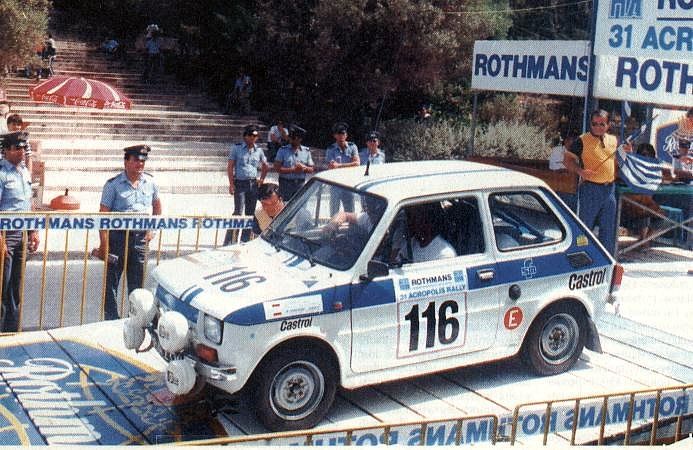
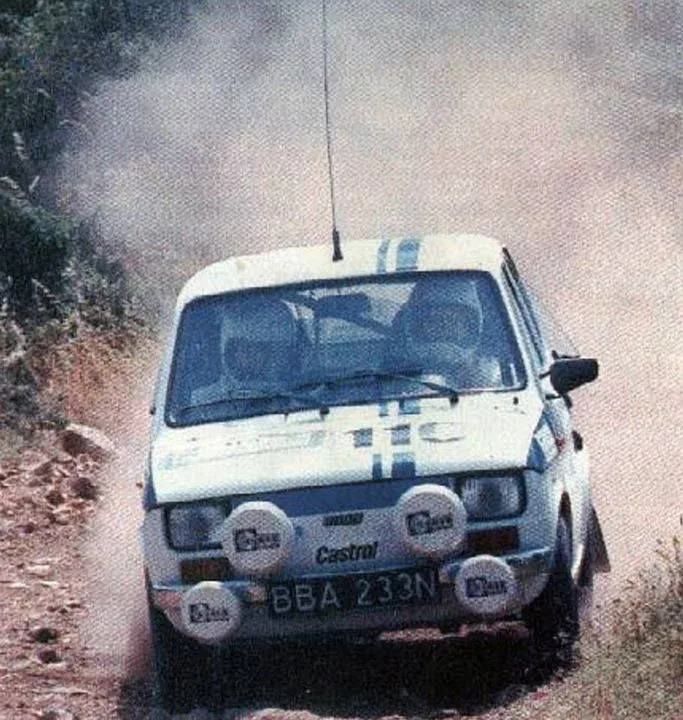
The successor of the 500 was the 126. Because it was built in Poland it was named 126P. It also had a small 2-cylinder engine in the back and as there was no Abarth version, it wasn’t very fast. Nevertheless a team from Poland in a 126P managed to get an entry for the World Rallye Championship round in Greece, the famous Acropolis rally. One of the tougher rallies in the championship because of the bad roads. The team retired early with a defect clutch.
#116: Janusz Szerla (POL) / Krzysztof Janarek (P)
Results: DNF clutch
Polski FIAT 126P: Powered by 0.6 liter FIAT 2-cylinder, approximately 48 hp. Weight 600 kg. Steel monocoque, chassisnr. unknown
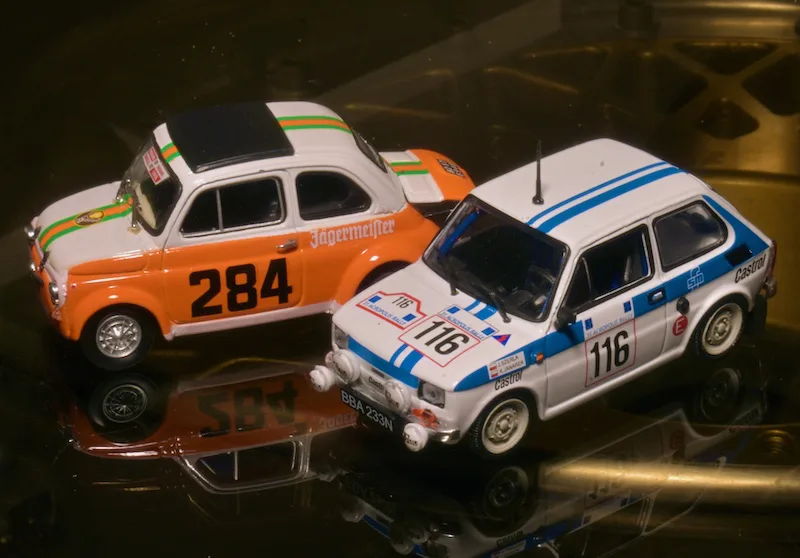
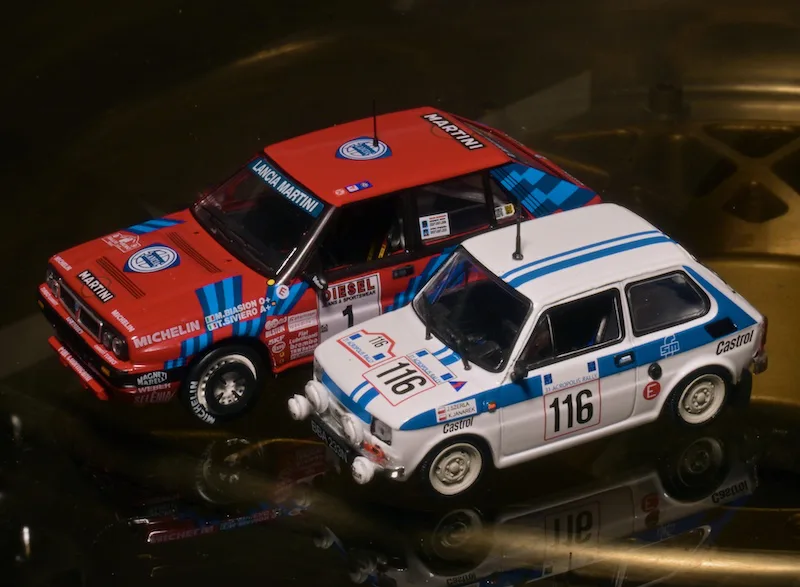
It’s as small as the 695 and much smaller than a Lancia Delta, which is not a real big car …
- ATLAS #unknown (diecast)
- Overall rating: 2 STARS | Quality details: 2 STARS | Estimated value: 1 STAR
- Appear in #129 Small touring cars & GT / #132 FIAT & Abarth
Simca
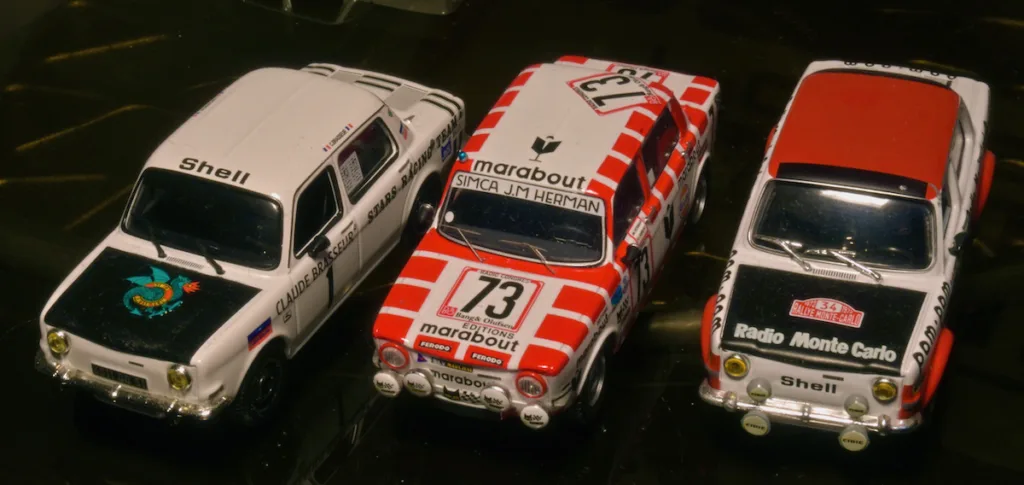
1972 Simca 1000 Rallye 1, 2 & 3
Another rear-engined car is the Simca 1000. In 1970 a sporty version was introduced, the Simca 1000 Rallye with a 1.1 liter engine and black hood and bucket seats. Followed in 1972 by the Rallye 1 with 1.3 liter engine and a single carburetor, delivering 60 hp (I had a street version). The Rallye 2 became a very successful competition car, with 2 double Solex carburetors and improved cooling, it delivered 82 hp (my first racing car). The last one was the Rallye 3 with 2 double Weber DCOE carburetors. Only 1000 were produced in 1978, but Simca offered body and engine kits with which one could transform a Rallye 2 into a Rallye 3. These were also homologated for racing in Group 1B and later Group A. In the Dutch touring car championship, only one real Rallye 3 competed, all others including mine were upgraded Rallye 2.
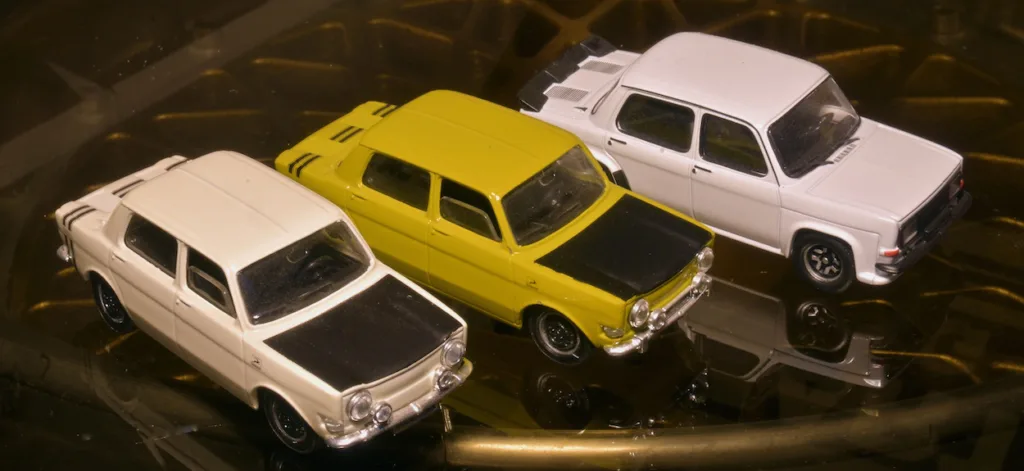
- SOLIDO 1844 white Rallye 1 & 1845 green Rallye 2 (diecast)
- Overall rating: 2 STARS | Quality details: 1 STAR | Estimated value: 1 STAR
- Appear in #129 Small touring cars & GT
- IXO CLC150 white Rallye 3 (diecast)
- Overall rating: 3 STARS | Quality details: 3 STARS | Estimated value: 2 STARS
- Appears in #129 Small touring cars & GT
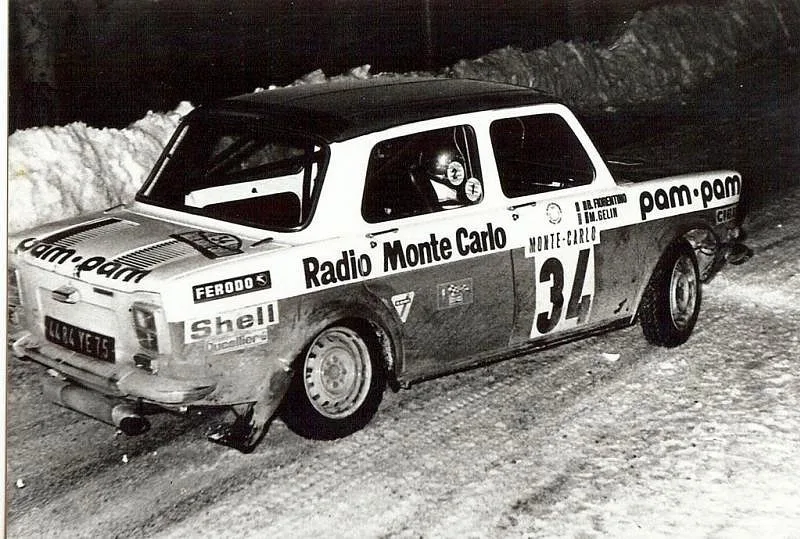
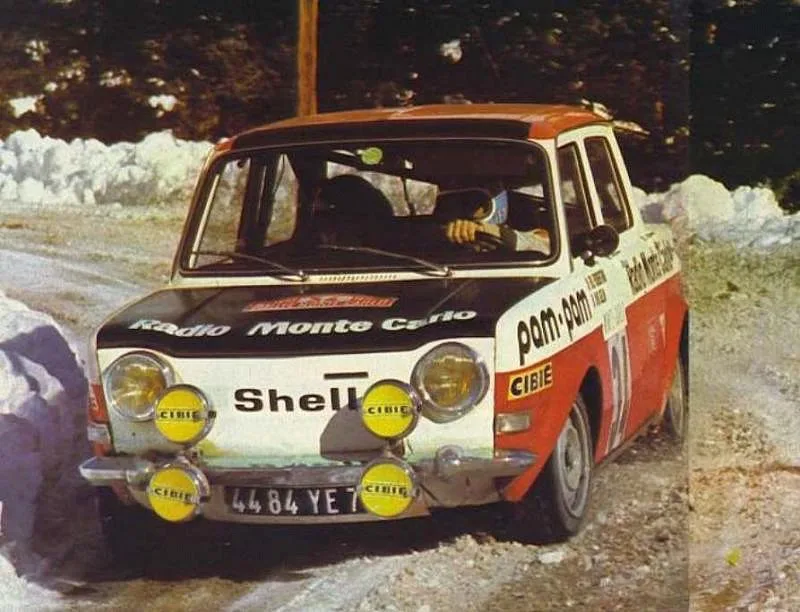
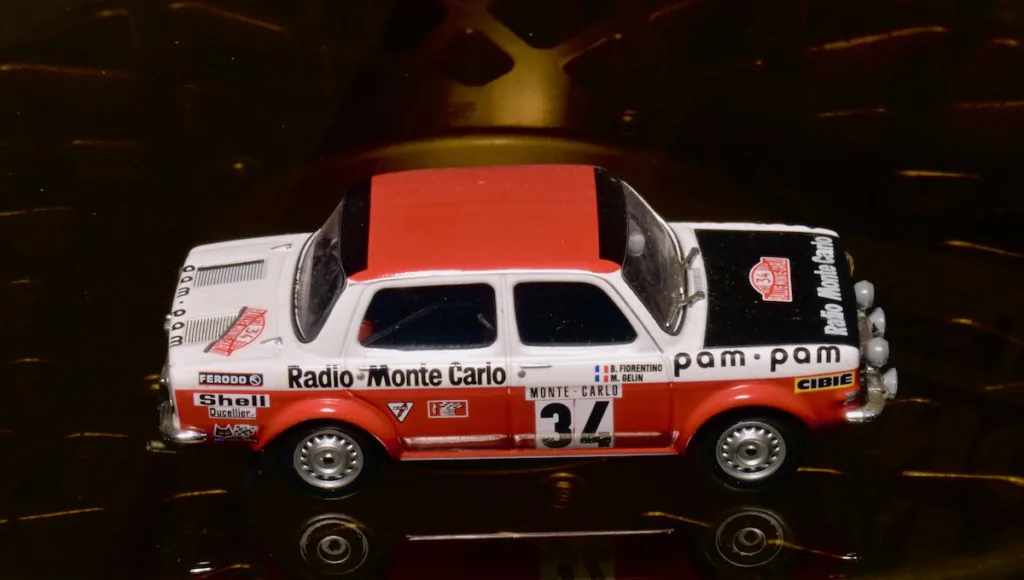
1973 Rally de Monte Carlo, Simca Rallye 1
The 1973 Rally de Monte Carlo was the opener of the World Rally Championship and the battle at the front went between the Group 4 Alpine 110, Fiat 124 Abarth and Ford Escort RS. Behind that, smaller engines cars had their own fight such as this Simca. The car is supposed to be a Rallye 2, but the license plate is attached where a Rallye 2 has its radiator, so my guess is it was a Rallye 1 in Group 2 specs with wider wheel arches and the 2 double carburetors from a Rallye 2 …
Chrysler France #34: Bernard Fiorentino (F) / Maurice Gélin (F)
Results: 21st overall
Simca Rallye 1 – Touring group 2: Powered by Simca 371/1G straight-4, approx. 82 hp. tires unknown. Weight 780 kg. Steel monocoque, chassisnr. unknown
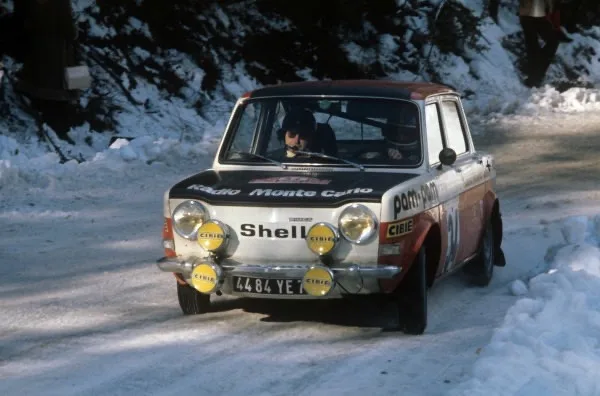
- IXO Altaya #67485 (diecast)
- Overall rating: 2 STARS | Quality details: 2 STARS | Estimated value: 2 STARS
- Appears in #129 Small touring cars & GT
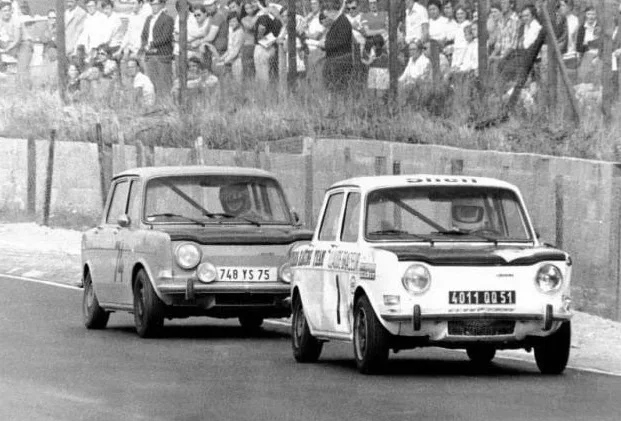
1974 Stars Racing, Simca Rallye 2
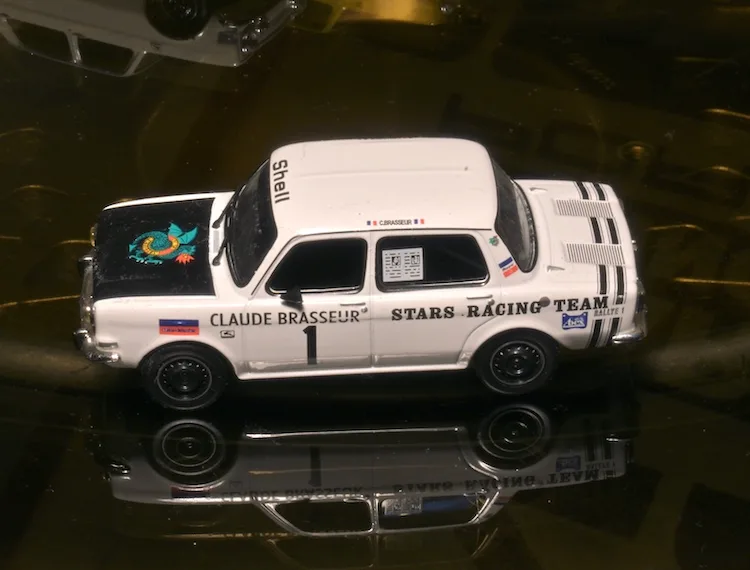
In France a one-make competition was held with Simca Rallye 1 and/or 2. The Stars Racing Team, invited French actors, musicians, artists such as Johnny Halliday and Jean Louis Trintignan to compete in the series. Also actor Claude Brasseur, he liked motorsports so much that he became the co-pilot for Jacky Ickx in a number of Dakars, winning in 1981. The model is announced as a Rally 1, also on the sticker on the rear fender. But both the model and the real car are a Simca Rallye 2, which has the radiator below the front bumper. The Rallye 1 has the radiator in the back with a big fan to cool it and the front is completely closed.
Star Racing Team #1: Claude Brasseur (F)
Results: unknown
Simca Rallye 2 – Touring group 1: Powered by Simca 371/1G straight-4, approx. 82 hp. Michelin tires. Weight 780 kg. Steel monocoque, chassisnr. unknown
- ATLAS #unknown (diecast)
- Overall rating: 2 STARS | Quality details: 2 STARS | Estimated value: 2 STARS
- Appears in #129 Small touring cars & GT
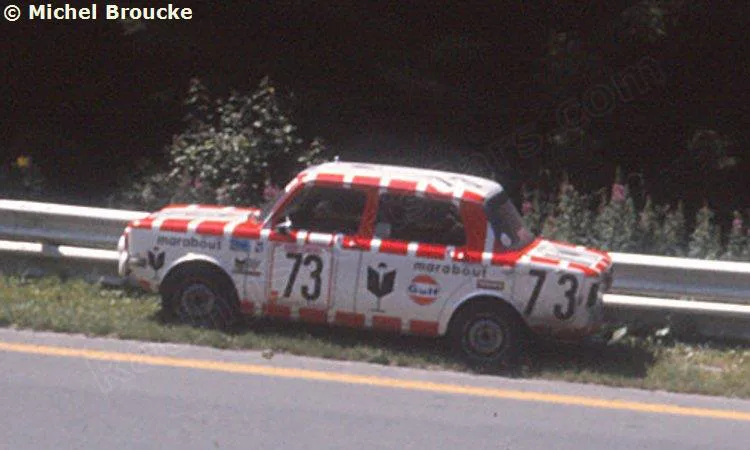
1974 Spa-Francorchamps 24h, Simca Rallye 2
The little Simca from Team Marabout didn’t qualify for the 24-hour race. Probably because it stranded during qualifying as can be seen in the picture. Reliability was not the strongest point from these cars.
Marabout Racing Team #73: Jean-Marie Herman (B) / Raymond Lambert (B)
Results: Did not qualify
Simca Rallye 2 – Touring group 1B: Powered by Simca 371/1G straight-4, approx. 82 hp. Michelin tires. Weight 780 kg. Steel monocoque, chassisnr. unknown
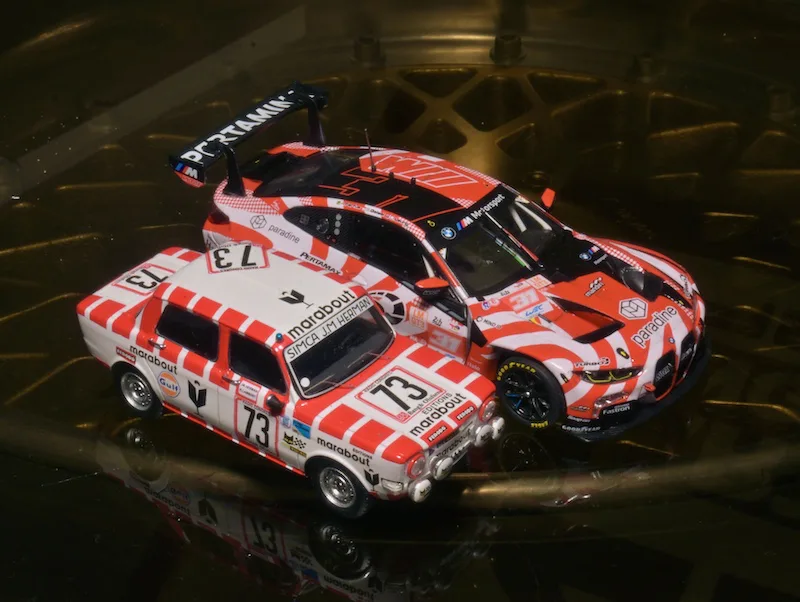
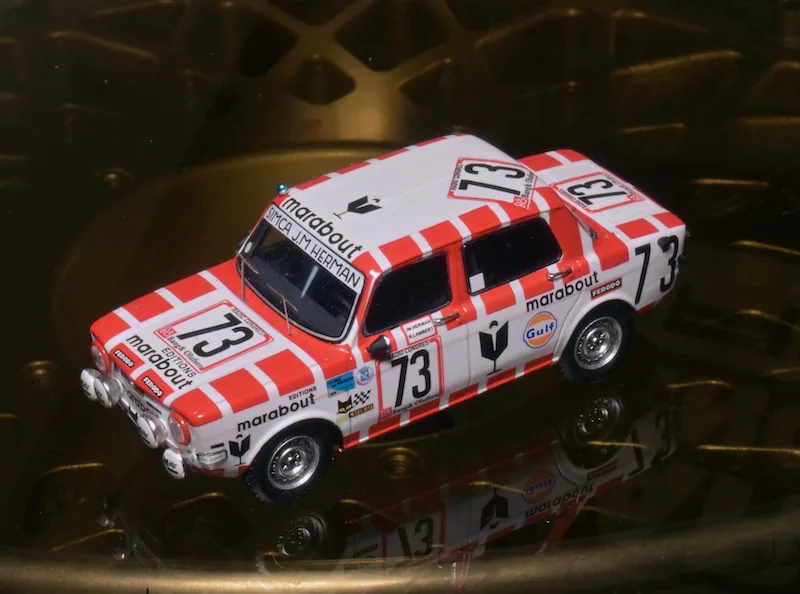
The Simca was already small compared to others in 1974, let alone when compared to a modern GT3 …
- SPARK 100 Ans de Spa 100SPA06 (resin)
- Overall rating: 3 STARS | Quality details: 3 STARS | Estimated value: 3 STARS
- Appears in #129 Small touring cars & GT
Sunbeam / Hillman
The Hillman Imp was a small rear-engined car produced by the Roots Group, which was bought by Chrysler in the 1960’s. It was also sold as Sunbeam Imp. The Imp was developed by future Ferrari Formula 1 driver Mike Parkes, the same man who would later be the primary development engineer of the Lancia Stratos.
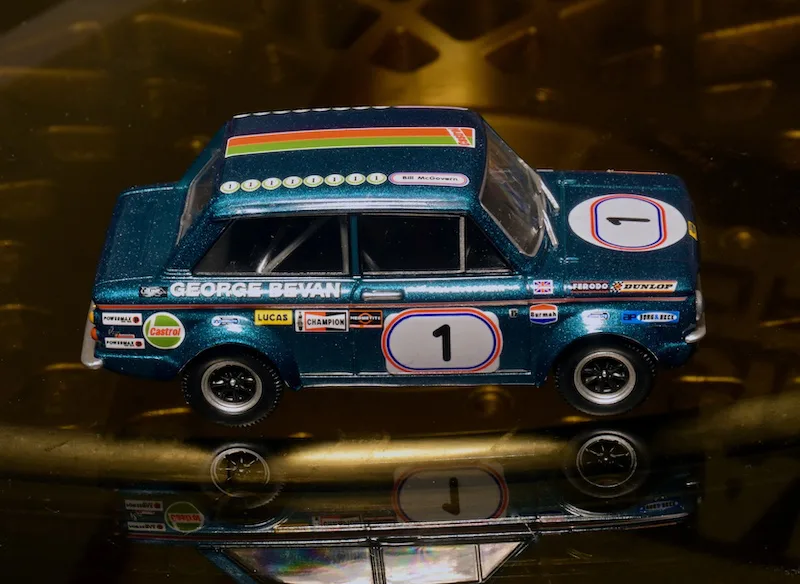
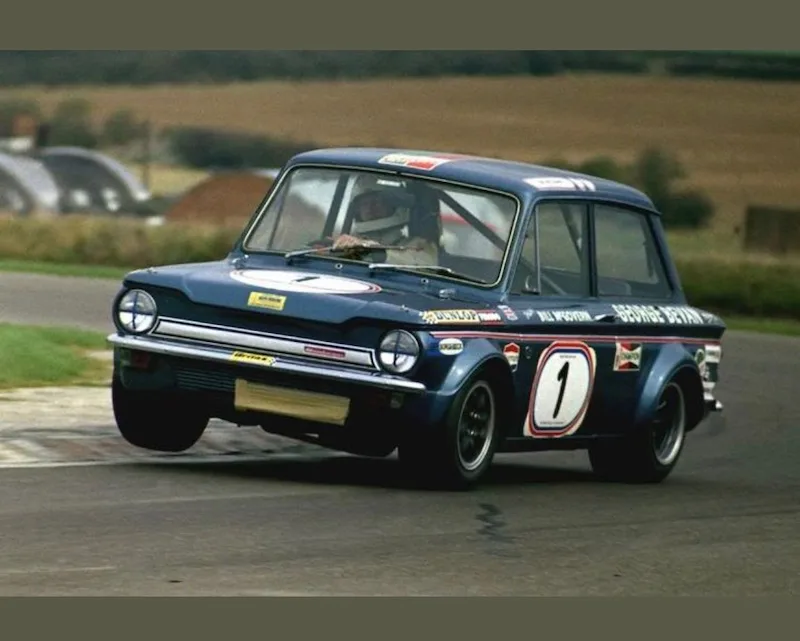
1972 British Saloon Car Championship, Sunbeam Imp
The British Saloon Car Championship was contested over multiple categories.The best 7 results out of 10 races counted for the championship. Three drivers finished the season with 63 points (a victory gave 9 points). Reigning champion Bill mcGovern was crowned champion again, he had won all 10 events in category D, up to 1 liter. Dave Matthews in his category B Ford Escort RS was 2nd, and Brian Muir in the mighty category A Camaro third. Both had won ‘only’ 7 times.
George Bevan #1: Bill McGover (GB)
Results: 10 victories / 1st championship
Sunbeam Imp – Group 2 <1L: Powered by 1.0 liter Hillman straight-4, approximately 120 hp. Dunlop tires. Weight 680 kg. Steel monocoque, chassisnr. unknown
- ATLAS #unknown (diecast)
- Overall rating: 2 STARS | Quality details: 2 STARS | Estimated value: 2 STARS
- Appears in #129 Small touring cars & GT
Renault 5
The Renault 5 was a small city car introduced in 1972, of which 5 million cars are produced. The basic versions had 850 cc and 1.1 liter engines but soon other versions appeared such as the Alpine (1.4 liter / 93 hp), the Alpine turbo (1.4 liter / 110 hp) and at last the Turbo with mid-engine, RWD and 160 hp.
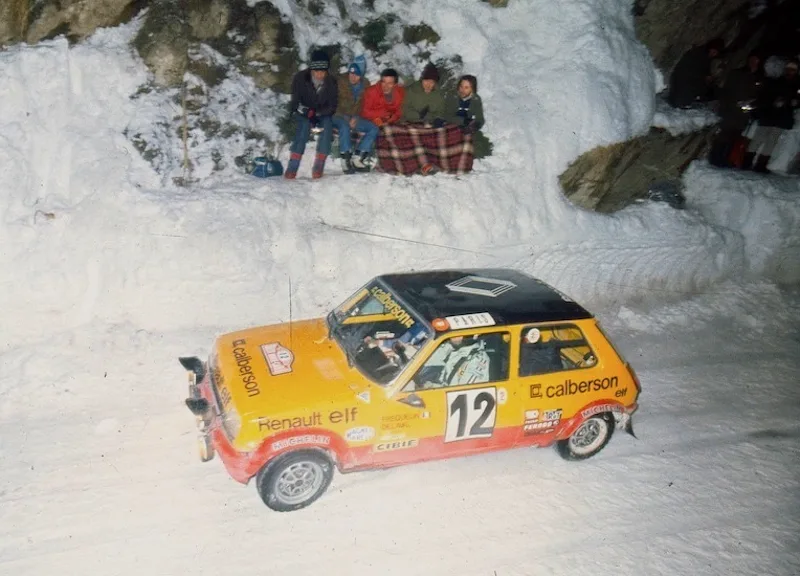
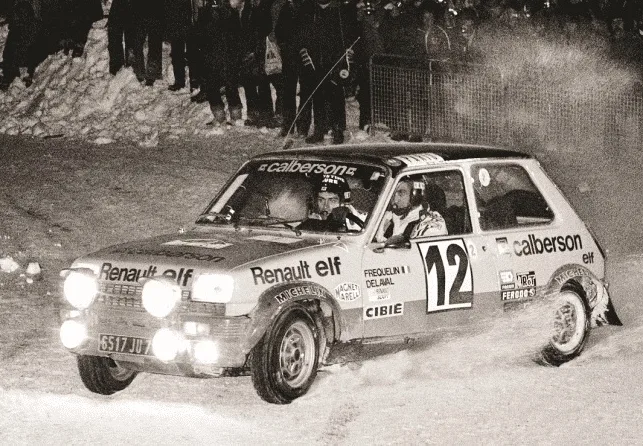
1978 Rally de Monte Carlo, Renault 5 Alpine
The 1978 version of the Rally de Monte Carlo saw a lot of snow, which may be a disadvantage when you have a lot of engine power. Jean-Pierre Nicolas managed it very well in his Porsche 911, but behind him finished two little front-wheel drive Renault 5 Alpine. The French cars beat all the factory Fiat 131 Abarths and some Lancia Stratos! Jean Ragnotti finished second and Guy Fréquelin third.
Renault Elf Calberson #12: Guy Fréquelin (F) / Jacques Delaval (F)
Results: 3rd overall / 2nd Group 2
Renault 5 Alpine – Group 2: Powered by 1.4 liter Renault straight-4, approximately. 130 hp. Michelin tires. Weight 800 kg. Steel monocoque, chassisnr. unknown
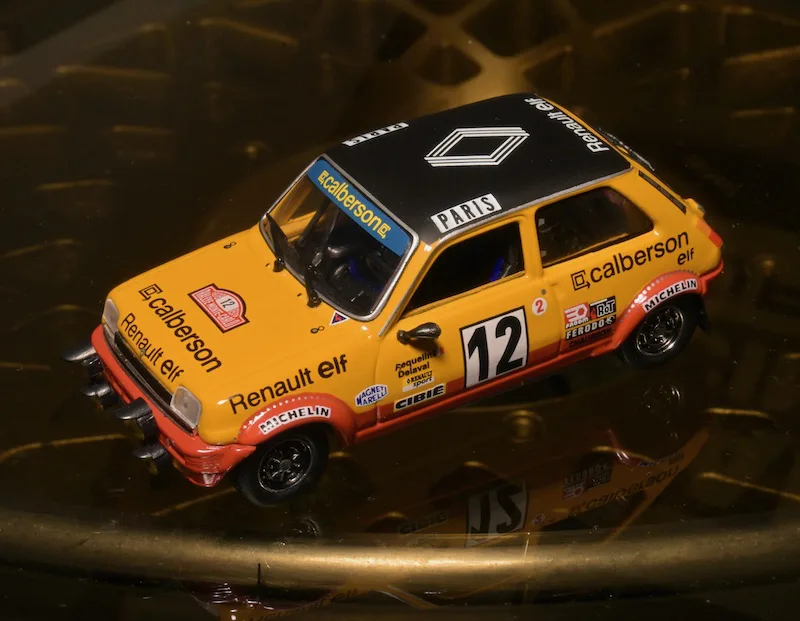
- SKID SKC028 (diecast)
- Overall rating: 2 STARS | Quality details: 3 STARS | Estimated value: 2 STARS
- Appears in #044 Alpine & Renault / #129 Small touring cars & GT
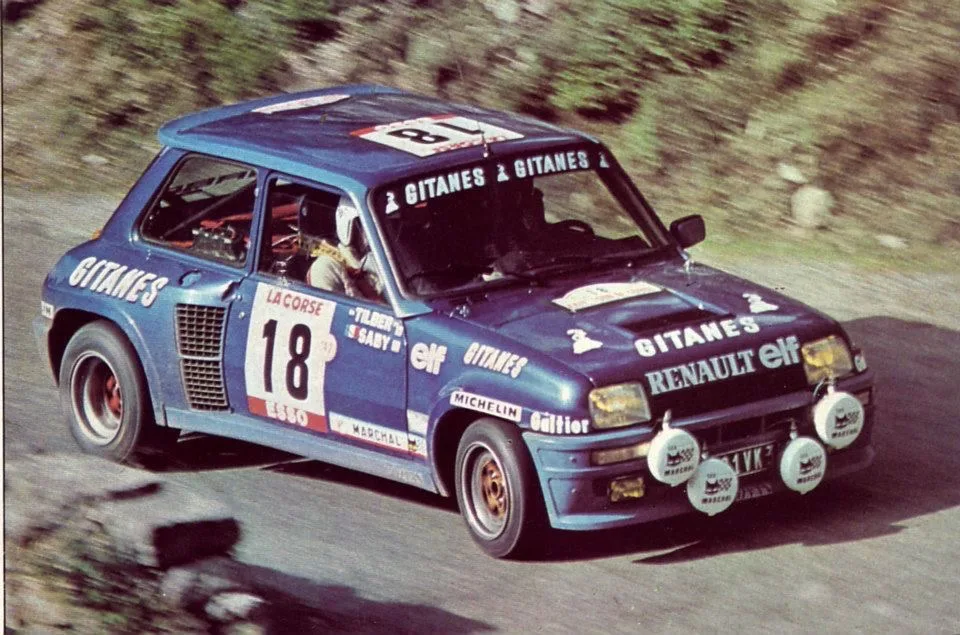
1980 Tour de Corse, Renault 5 turbo
The small Renault 5 turbo was a competitive rally car in the early 1980s before the powerful AWD group B cars arrived. In the 1980 Tour de Corse, Bruno Saby managed a fine 4th place behind two Porsche 911 and a FIAT 131 Abarth.
Garage Galtier #18: Bruno Saby (F) / Christian Tilber (MC)
Results: 4th / 2nd in class
Renault 5 turbo – Group 4 <2L: Powered by 1.4 liter Renault Gordini 830 straight-4 turbo, approx. 180 hp. Michelin tires. Weight 900 kg. Steel monocoque, chassisnr. unknown
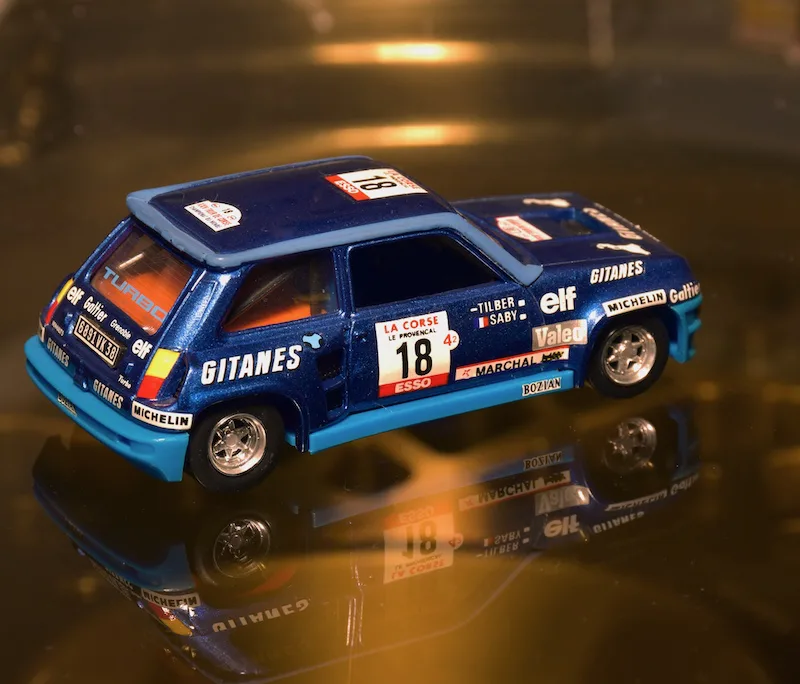
- SOLIDO 1023 (diecast)
- Overall rating: 2 STARS | Quality details: 2 STARS | Estimated value: 2 STARS
- Appears in #044 Alpine & Renault / #062 Gitanes & Gauloises / #129 Small touring cars & GT
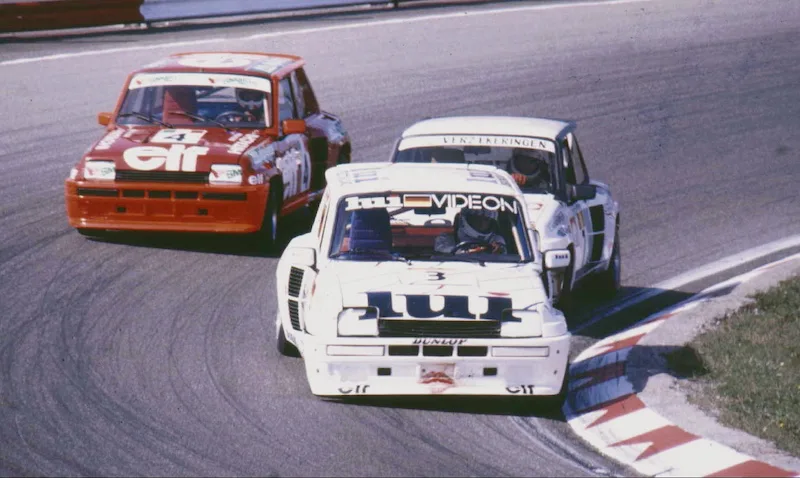
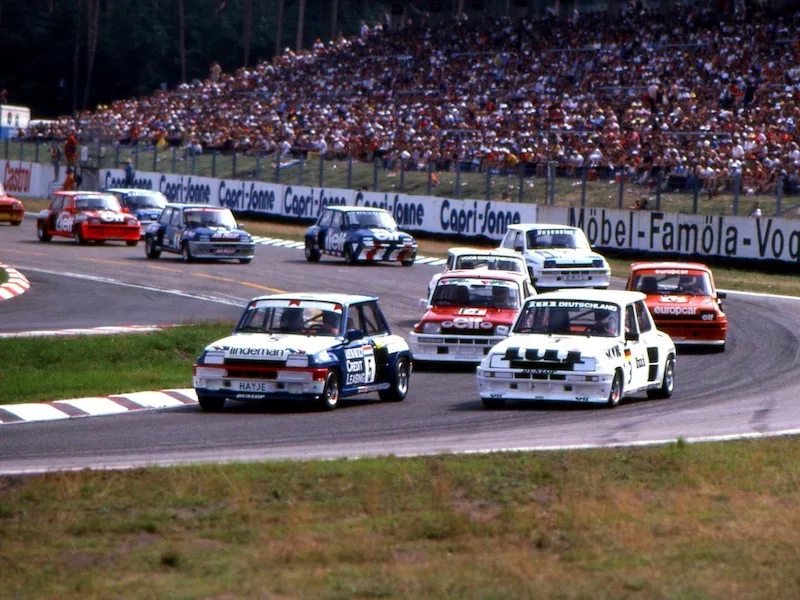
1981 Renault 5 turbo Cup
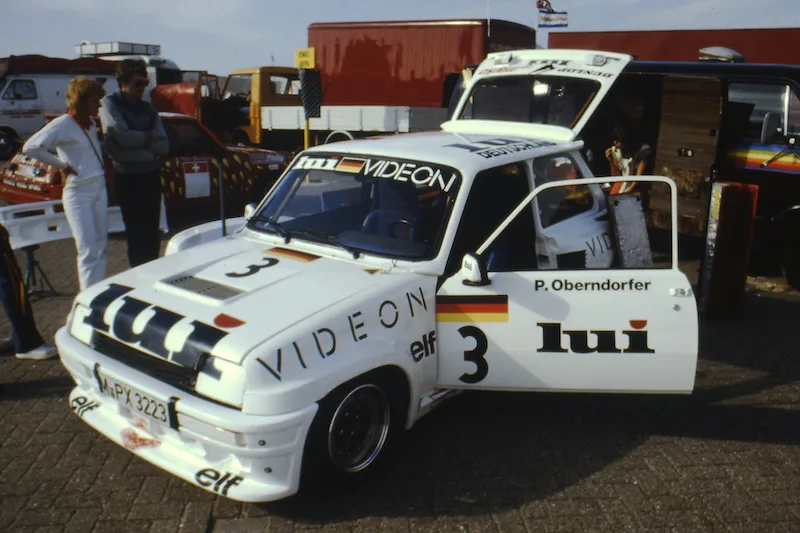
1981 was the first year of the European Renault 5 turbo cup. A one-make series with near-standard versions of the spectacular mid-engined Renault 5 turbo. Drivers came from France of course, but also quit a many form The Netherlands, Germany and Italy. German Wolfgang Schütz was the first champion, another fast German driver was Peter Oberndorfer. He finished the 1981 championship in 6th position.
LUI Germany #3: Peter Oberndorfer (D)
Results: championship 6th
Renault 5 turbo 2 – R5 turbo Cup: Powered by 1.4 liter Renault Gordini 830 straight-4 turbo, approx. 200 hp. Dunlop tires. Weight 900 kg. Steel monocoque, chassisnr. unknown
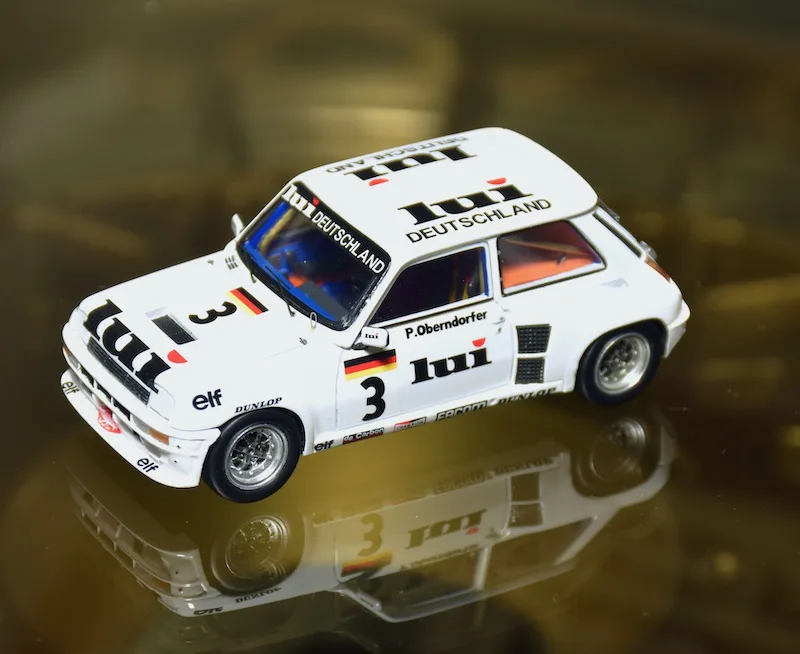
- SPARK S6021 (resin)
- Overall rating: 4 STARS | Quality details: 4 STARS | Estimated value: 3 STARS
- AAppears in #044 Alpine & Renault / #129 Small touring cars & GT / #116 LUI Magazine
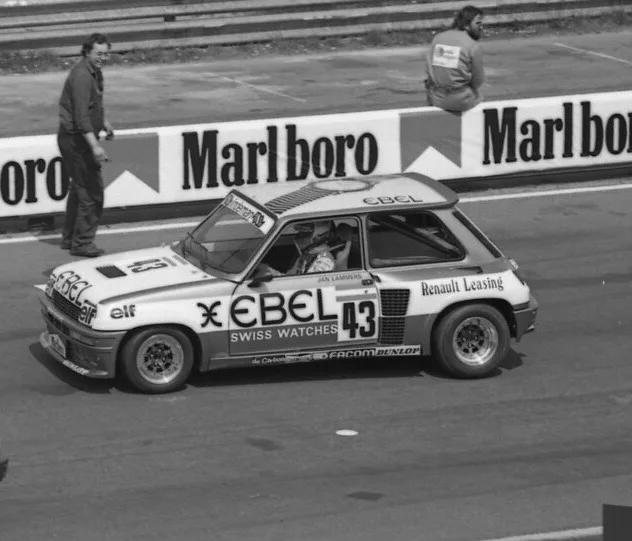
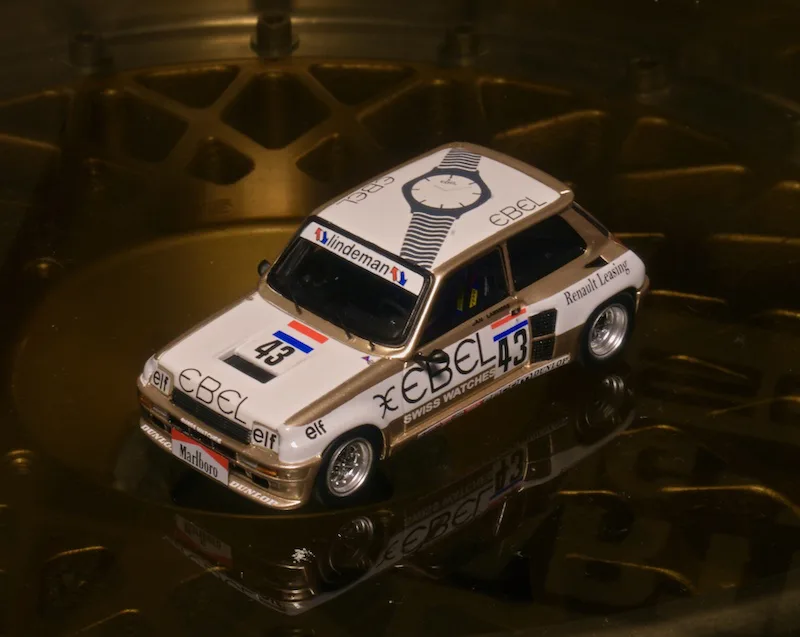
1982 Renault 5 turbo cup, Renault 5 turbo
Jan Lammers made his debut in the European Renault 5 cup in 1982 with support from the Dutch distributor. He took victory at the Norisring and would become champion in the next two seasons.
Renault Nederland #2: Jan Lammers (NL)
Results: 1 victory
Renault 5 turbo 2 – R5 turbo Cup: Powered by 1.4 liter Renault Gordini 830 straight-4 turbo, approx. 200 hp. Dunlop tires. Weight Steel monocoque, chassisnr. unknown
- SPARK S6023 (resin)
- Overall rating: 4 STARS | Quality details: 4 STARS | Estimated value: 4 STARS
- Appears in #044 Alpine & Renault / #129 Small touring cars & GT
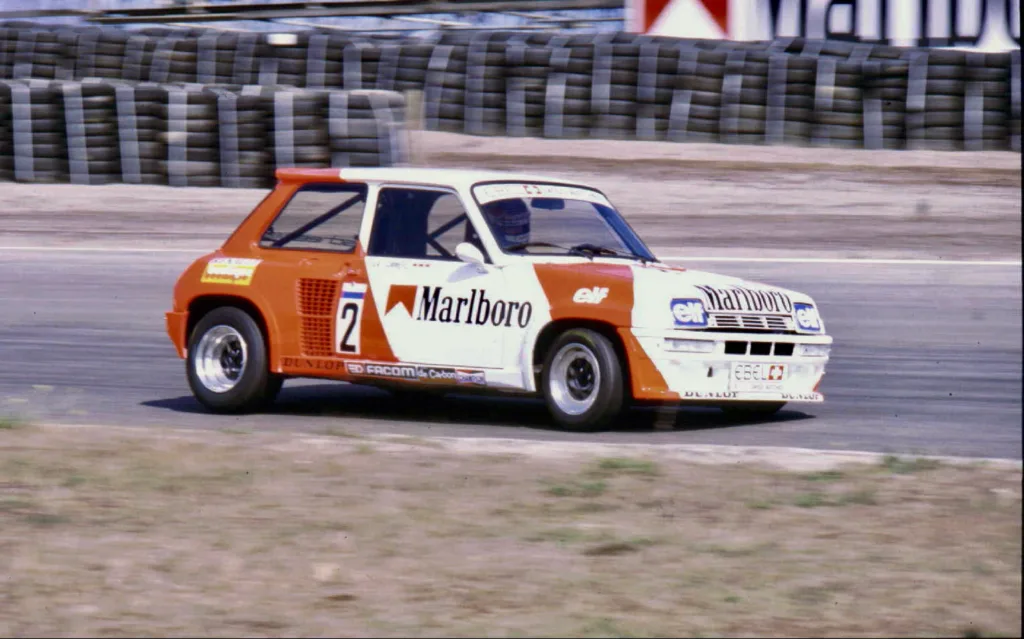
1983 Renault 5 turbo cup, Renault 5 turbo
Jan Lammers’ F1 career didn’t go as hoped. But he was an absolute ace in the Renault Cups; champion in the little R5 turbos in 1983 and 1984 and 3rd in the Alpine V6 cup in 1986. Later he would also excel in endurance racing, winning both the Le Mans and Daytona 24-hour races.
Marlboro Team Renault Nederland #2: Jan Lammers (NL)
Results: 4 victories / 1st championship
Renault 5 turbo 2 – R5 turbo Cup: Powered by 1.4 liter Renault Gordini 830 straight-4 turbo, approx. 200 hp. Dunlop tires. Weight Steel monocoque, chassisnr. unknown
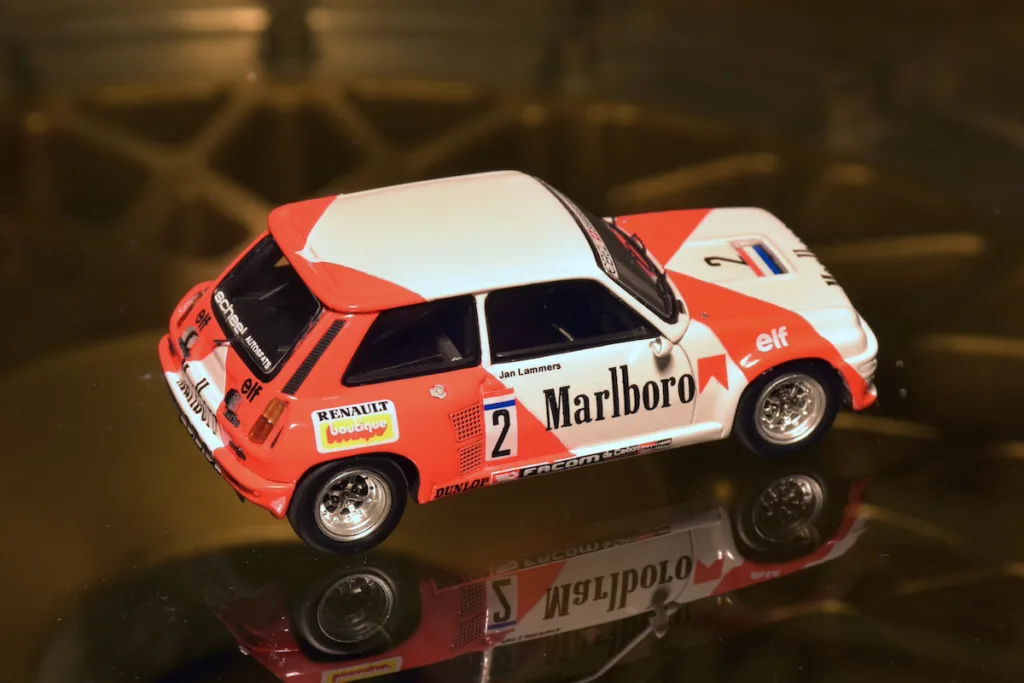
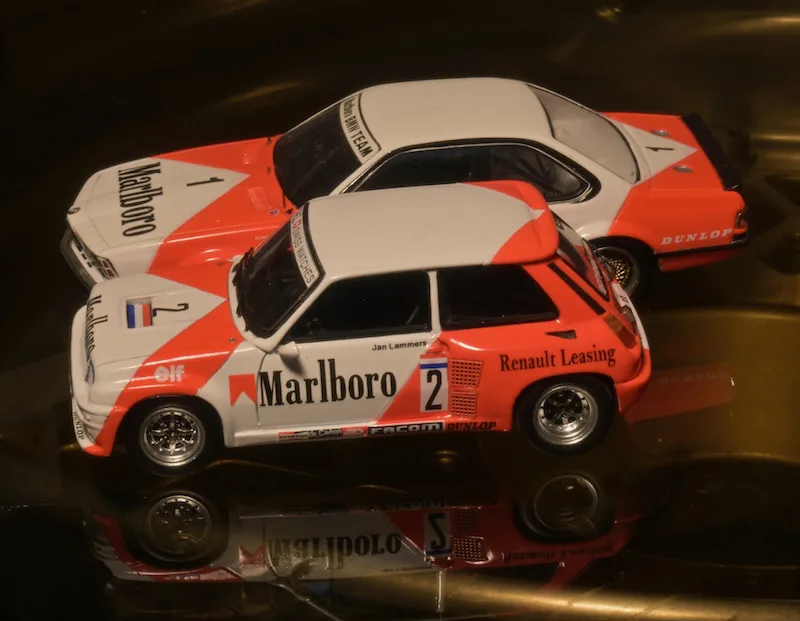
- SPARK S6155 (resin)
- Overall rating: 4 STARS | Quality details: 4 STARS | Estimated value: 4 STARS
- Appears in #044 Alpine & Renault / #063 Marlboro / #129 Small touring cars & GT
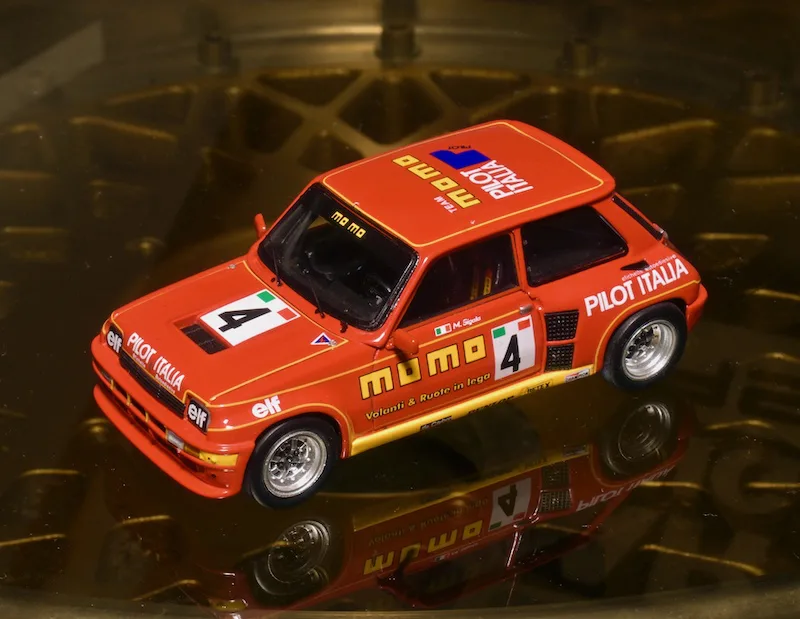
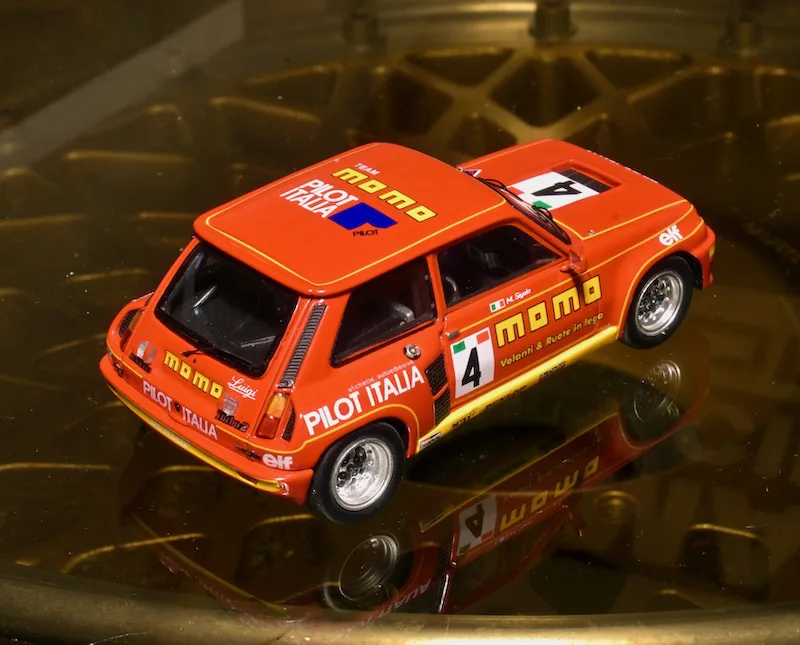
1984 Renault 5 turbo cup, Renault 5 turbo
Sicilian Massimo Sigala is a very experienced Cup driver. He won the Italian Renault 5 cup in 1978, the European Alfasud Sprint Cup in 1979, participated in all seasons of the European Renault 5 turbo Cup. In 1984 he finished 5th in the championship and took victory at Jan Lammers’ hometrack in Zandvoort. After the Renault 5 Turbo Cup ended, he switched to its successor the Renault V6 turbo cup and won the championship in 1986, 1987 and 1988. In 1989 and 1990 he also won the Renault 21 Turbo Cup. In between he raced Porsche 956s often together with Oscar Larrauri.
Momo #4: Massimo Sigala (I)
Results: 1 victory / 5th championship
Renault 5 turbo 2 – R5 turbo Cup: Powered by 1.4 liter Renault Gordini 830 straight-4 turbo, approx. 200 hp. Dunlop tires. Weight Steel monocoque, chassisnr. unknown
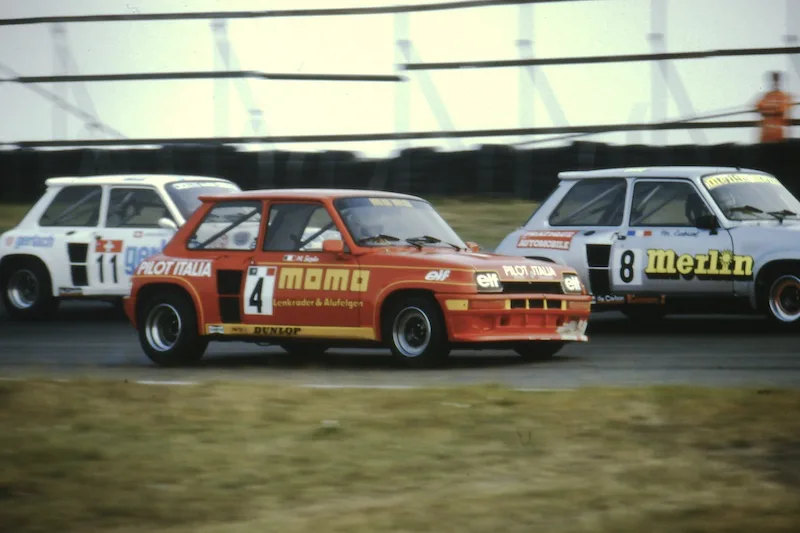
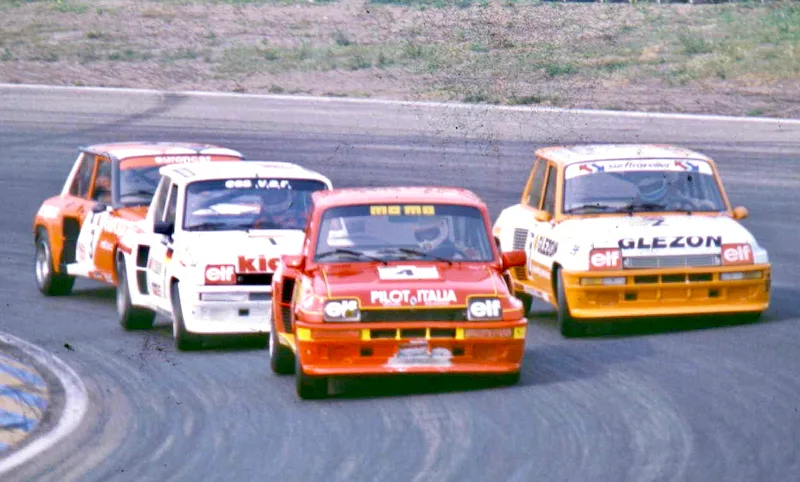
- SPARK S5558 (resin)
- Overall rating: 4 STARS | Quality details: 4 STARS | Estimated value: 4 STARS
- Appears in #044 Alpine & Renault / #129 Small touring cars & GT / #130 Momo
Volkswagen Golf & Scirocco
Are the Volkswagen Golf and Scirocco small cars? Well, I thinks so. The original Golf was 3.72 meter long, almost 40 cm shorter than a 2025 VW Polo. The original Scirocco was somewhat longer: 3.88 meters. Especially the GTi versions were extreme popular, but the Scirocco was already used in racing in 1975 before the launch of the GTi. The group 2 cars often had a Kugelfischer mechanical injection.
1977 Zandvoort, VW Scirocco
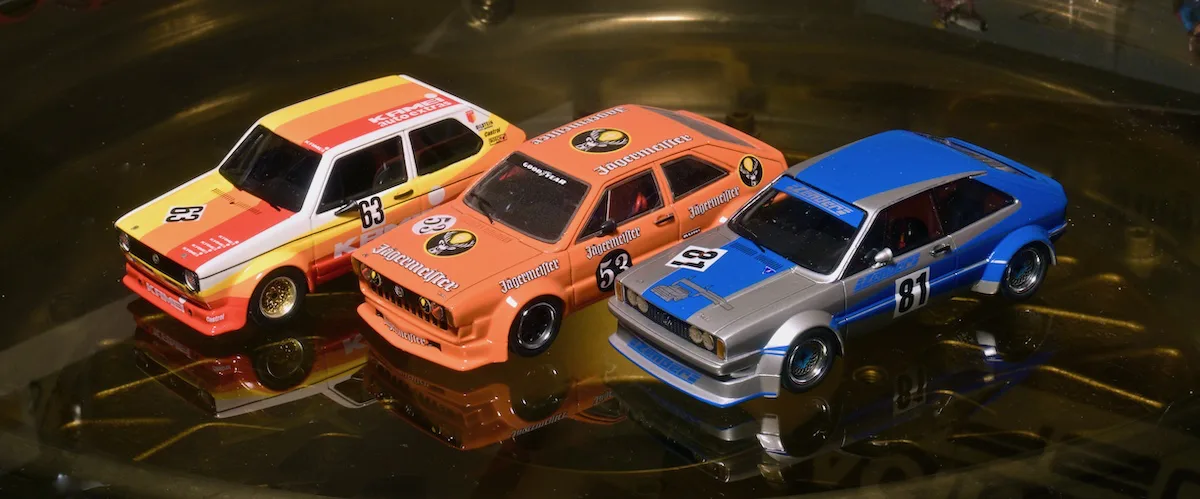
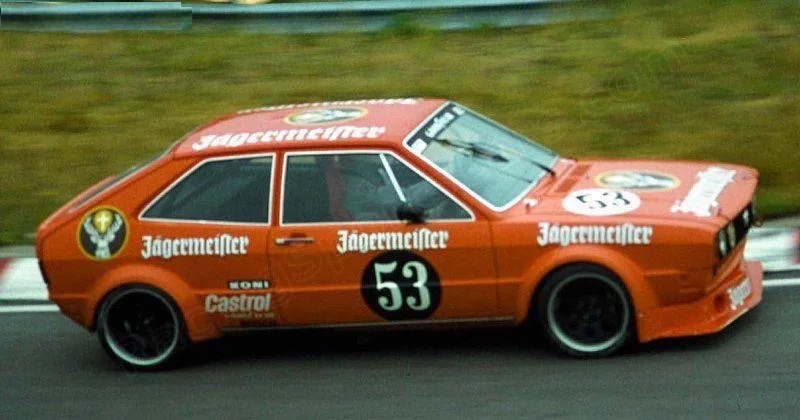
The VW Scirocco was the car to beat in the 1.6 liter category of the European Touring Car Championship in 1977. Especially the Spiess prepared cars were very fast. Willi Bergmeister and Helmut Henzler shared this Jägermeister sponsored car and won in Pergusa and at the Nürburgring. At the Zandvoort Trophy they failed to finish because of a broken gearbox.
Spiess Tuning #53: Willi Bergmeister (D) / Helmut Henzler (D)
Results: Start-grid unknown / race DNF gearbox – 45 laps
VW Scirocco TS – Touring Group 2, division 2: Powered by 1.6 liter Spiess Volkswagen straight-4, approx. 180 hp. Goodyear tires. Weight 750 kg. Steel monocoque, chassisnr. unknown


- NEO 45246 (diecast)
- Overall rating: 4 STARS | Quality details: 4 STARS | Estimated value: 4 STARS
- Appears in #022 Jägermeister Touring cars / #129 Small touring cars & GT
1977 Nürburgring 1000km, VW Golf
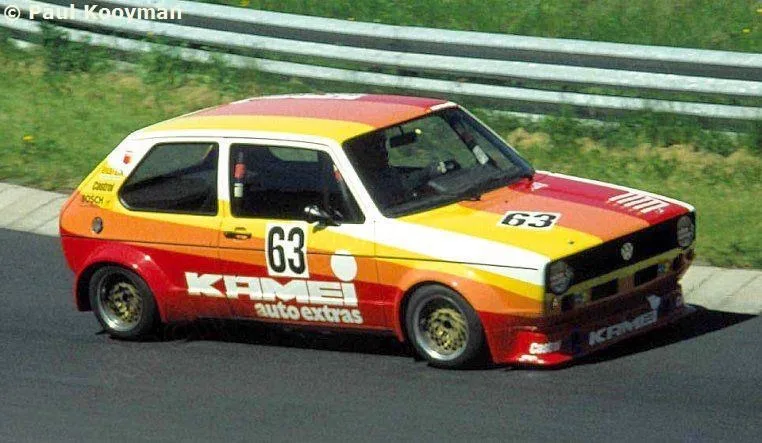
The Kamei VW Golf GTi participated in the 1000 km race at the Nürburgring, a race for the World Endurance Championship. At the front of the field were all the big Porsche teams with their 935s. Behind that were many group 2 touring cars and you could see the times were changing. The new generation 1.6 liter front-wheel drive Volkswagens were super fast. This beautiful Kamei sponsored car qualified 26th right in the middle of some Porsche Carrera RSR, 3-liter Opel Commodore and BMW 2002. The race result wasn’t that good unfortunately.
Kamei-Autoextras #63: Wolfgang Wolf (D) / Bernd Renneisen (D)
Results: Start-grid 26th / time 9:20.400 / race 30th – 30 laps / 7th Touring <2L
Volkswagen Golf GTi – Touring Group 2: Powered by 1.6 liter Volkswagen straight-4, approx. 170 hp. Goodyear tires. Weight 770 kg. Steel monocoque, chassisnr. unknown
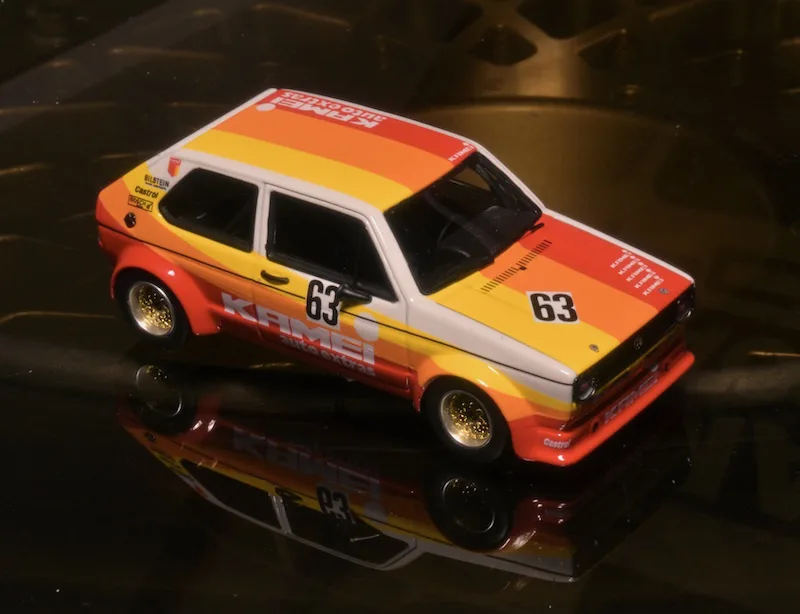
- NEO 32353 (resin)
- Overall rating: 4 STARS | Quality details: 4 STARS | Estimated value: 4 STARS
- Appears in #022 Jägermeister Touring cars / #129 Small touring cars & GT
1978 DRM Nürburgring “Eifelrennen”, VW Scirocco
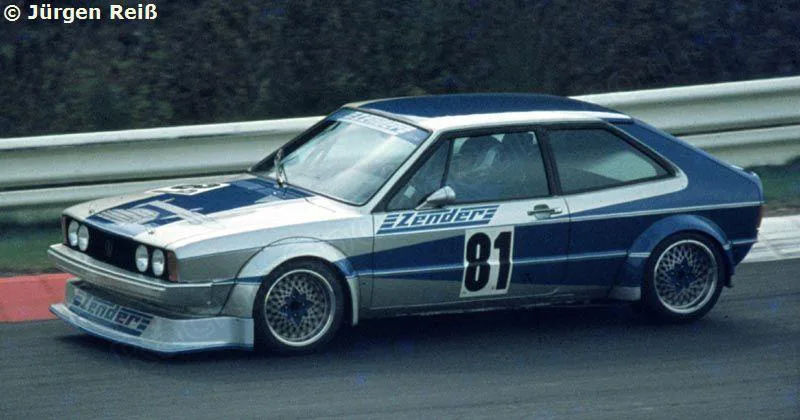
Zender is a producer of car accessories such as bodykits and spoilers, just like Kamei. They entered a beautiful VW Scirocco in the DRM race for Werner Dittert. He finished 14th in division II, the category up to 2 liters where also the group 5 BMW 320s and Zakspeed Escorts competed. He was 4th in the Touring sub-category behind 3 BMW 2002s.
Zender GmbH #81: Werner Dittert (D)
Results: Start-grid 16th in division II / race 14th – 6 laps / 4th Touring
VW Scirocco GTi – DRM, division 2: Powered by 1.6 liter Spiess Volkswagen straight-4, approx. 180 hp. Goodyear tires. Weight 750 kg. Steel monocoque, chassisnr. unknown
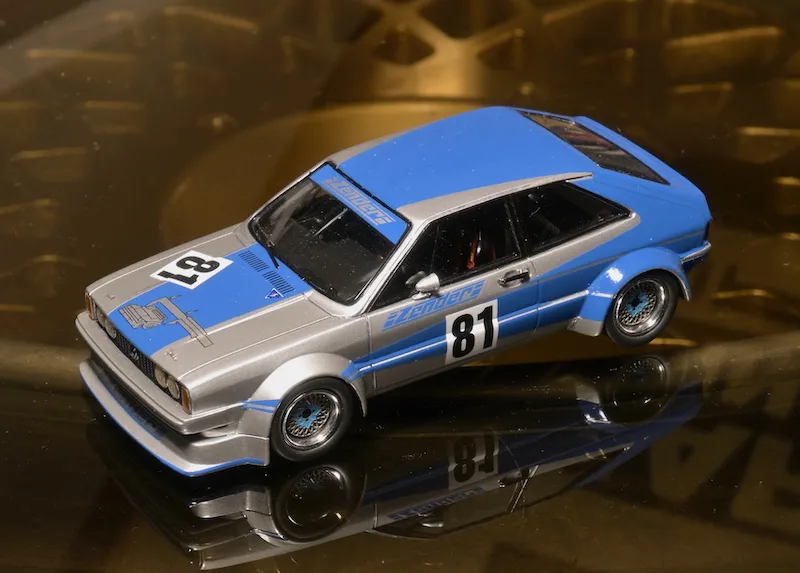
- NEO 45245 (resin)
- Overall rating: 4 STARS | Quality details: 4 STARS | Estimated value: 4 STARS
- Appears in #022 Jägermeister Touring cars / #129 Small touring cars & GT
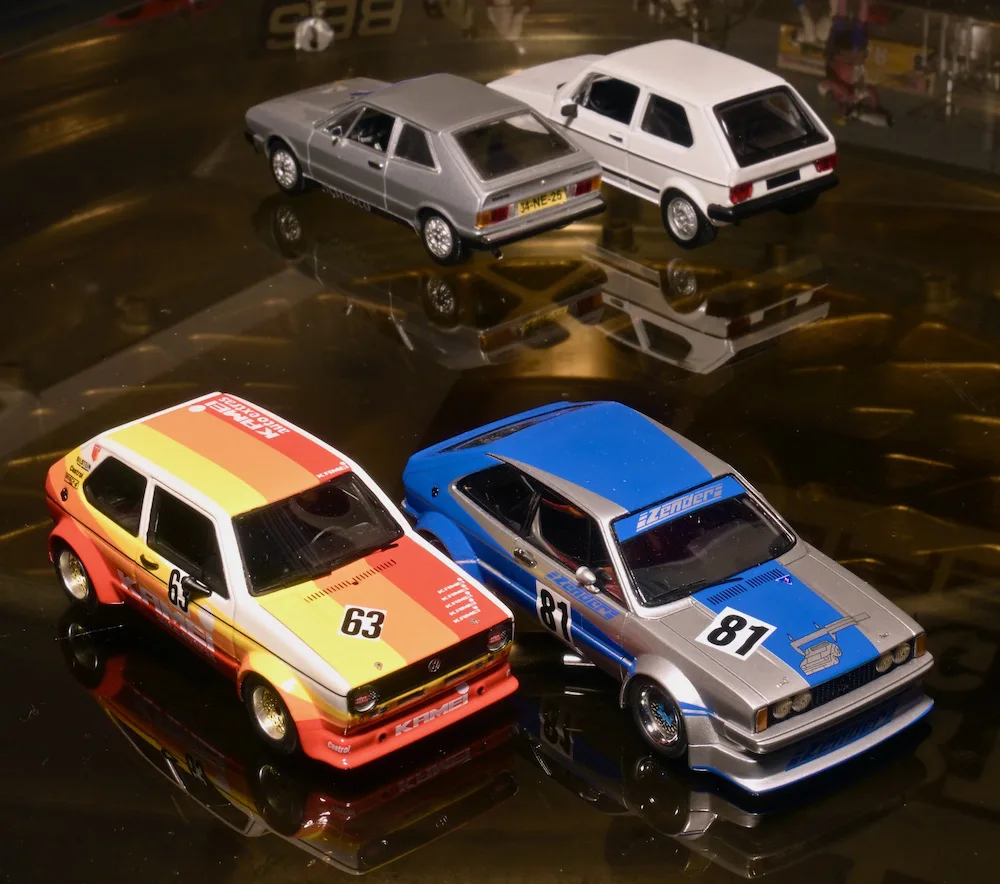
In the background two of my old cars:
- VW Golf GTI SOLIDO #unknown
- Overall rating: 2 STARS | Quality details: 2 STARS | Estimated value: 2 STARS
- VW Scirocco TS MINICHAMPS MC 430 050422
- Overall rating: 3 STARS | Quality details: 3 STARS | Estimated value: 3 STARS
- Appear in #129 Small touring cars & GT
Thanks for visiting 😉