Published December 12, 2025 | Last update July 17, 2026 | 14 models online
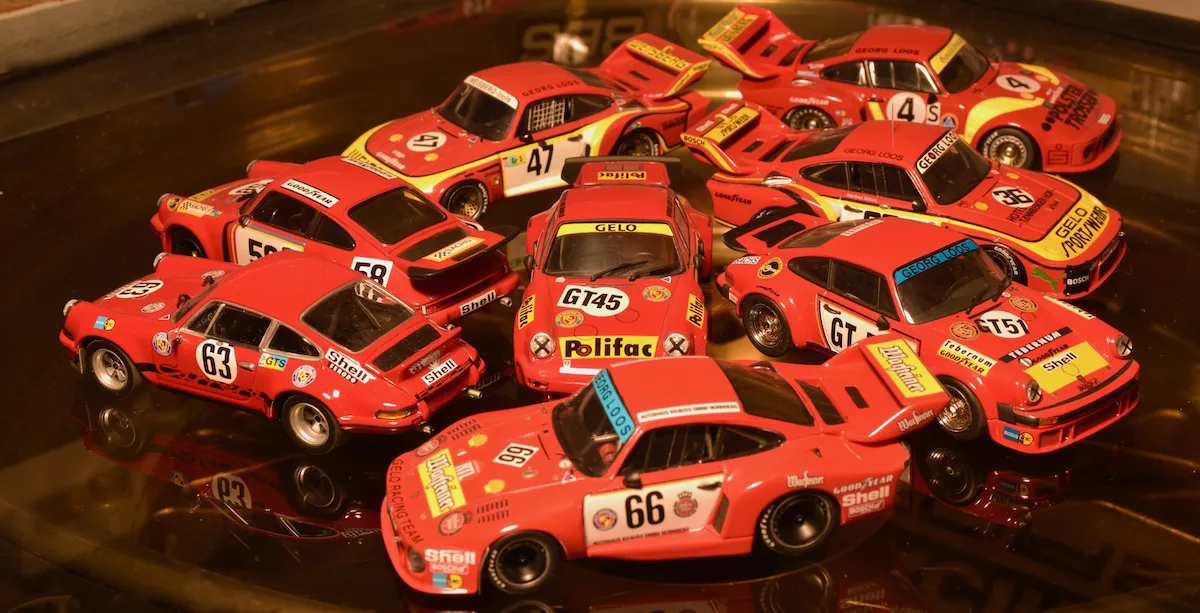
Georg Loos was a German entrepreneur, team manager and racing driver. His Gelo Racing Team competed in the Interserie, DRM and world championship including Le Mans between 1968 and 1980. As a person and team owner he was infamous for his bad behavior towards his drivers.
- This collection contains:
- 1971 Le Mans 24h – Ferrari 512M
- 1971 Interserie Norisring 200 miles – Porsche 917 Spyder
- 1973 Interserie – Porsche 917/10 turbo
- 1972 Le Mans 24h – Porsche 911 S
- 1973 Le Mans 24h – Porsche 911 Carrera RSR
- 1974 Nürburgring 1000 km – Porsche 911 Carrera RSR
- 1975 Nürburgring 1000 km – Mirage GR7
- 1975 Le Mans 24h – Porsche 911 Carrera RSR
- 1976 Nürburgring 300 km – Porsche 934
- 1977 DRM Norisring – Porsche 935/77A
- 1978 Silverstone 1000 km – Porsche 935/77A
- 1978 Le Mans 24h – Porsche 935/77A
- 1979 Le Mans 24h – Porsche 935/77A
- 1980 Le Mans 24h – Porsche 935/80
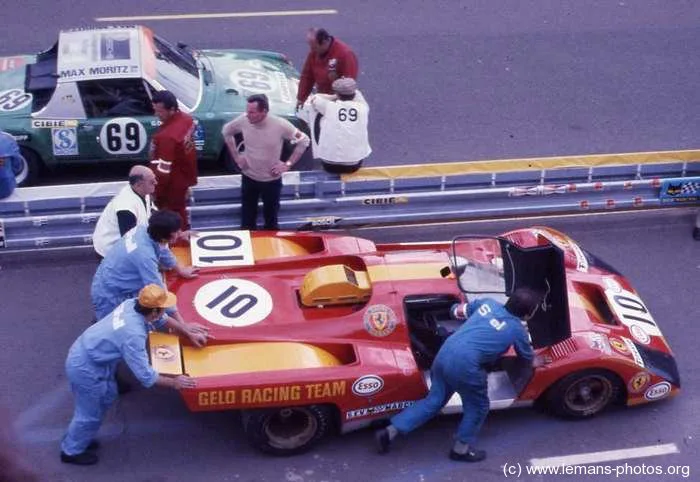
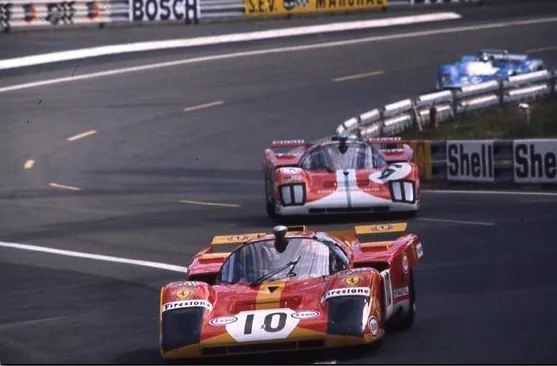
1971 Le Mans 24h, Ferrari 512M
The biggest competition for the Porsche 917 was the improved Ferrari 512M. The German driver and team owner Georg Loos drove this 512M but retired in the sixth hour with a broken piston in his 12-cilinder engine.
Gelo Racing Team #10: Georg Loos (D) / Franz Pesch (D)
Results: Start-grid 13th / time 3:26.700 / race DNF piston
Ferrari 512M – Sports cars <5L: Powered by 5.0 liter Ferrari Tipo 128 LM – V12 60º – approx. 550 hp. Firestone tires. Weight 815 kg. Steel semi-monocoque, chassisnr. #1018
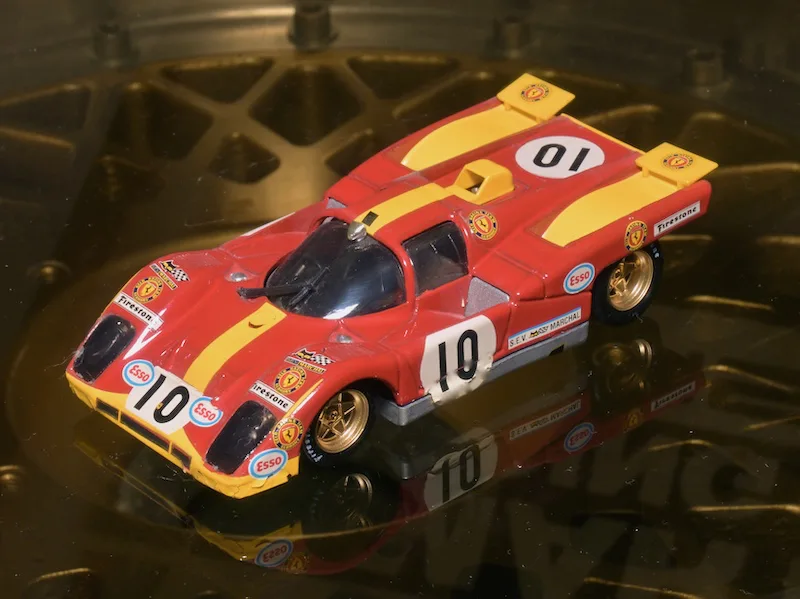
- BRUMM S047 (diecast)
- Overall rating: 3 STARS | Quality details: 2 STARS | Estimated value: 3 STARS
- Also appears in #038 Ferrari prototypes
1971 Interserie Norisring 200 miles, Porsche 917 Spyder
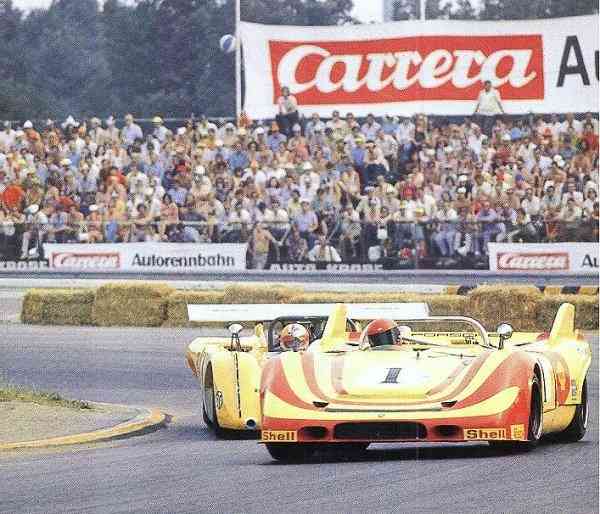
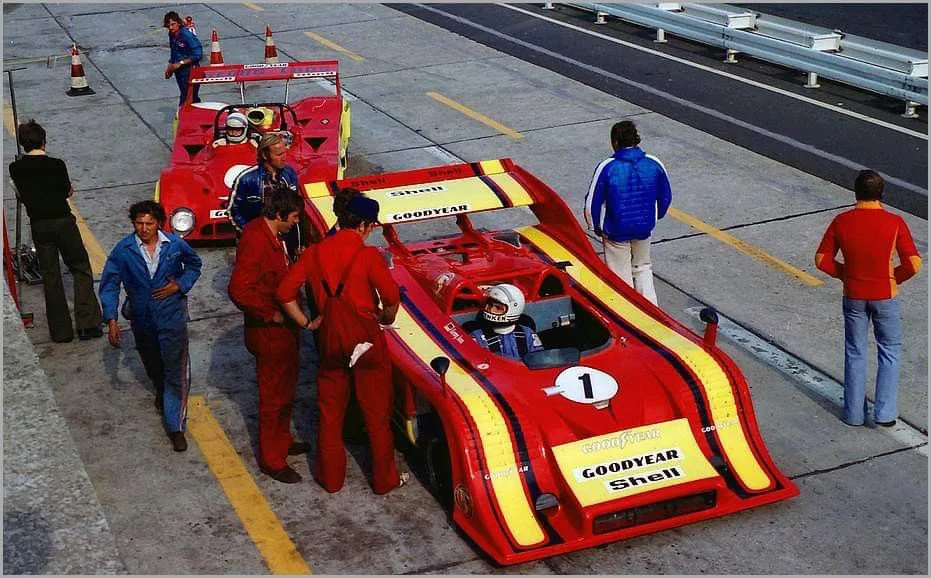
The Interserie was an attractive championship. A mix of sports cars and prototypes battled in sprint races, often in 2 heats. Jürgen Neuhaus drove this beautiful Gelo Porsche Spyder to 2nd place in the 1st heat, he gave up in the 2nd. Reason was the fatal accident of Pedro Rodriguez in a Ferrari while leading the first race. This was a Gulf 917K in its previous life (chassis #026, damaged in Le Mans 1970), Porsche restored the car and transferred into a 917 Spyder and changed the chassisnumber to #030. Jürgen Neuhaus entered the car under his own name in 1971 but probably the car was already owned by Georg Loos by then.
Jürgen Neuhaus/ Gelo #1: Jürgen Neuhaus (D)
Results: Start-grid 4th / time 1:16.200 / race 1 – 2nd / race 2 – DNF
Porsche 917 Spyder – Interserie: Powered by 5.0 liter Porsche 912.11 V12 180º, approx. 630 hp. Firestone tires. Weight 770 kg. Aluminum space frame chassisnr. 917/10 #030 (former 917K #026)
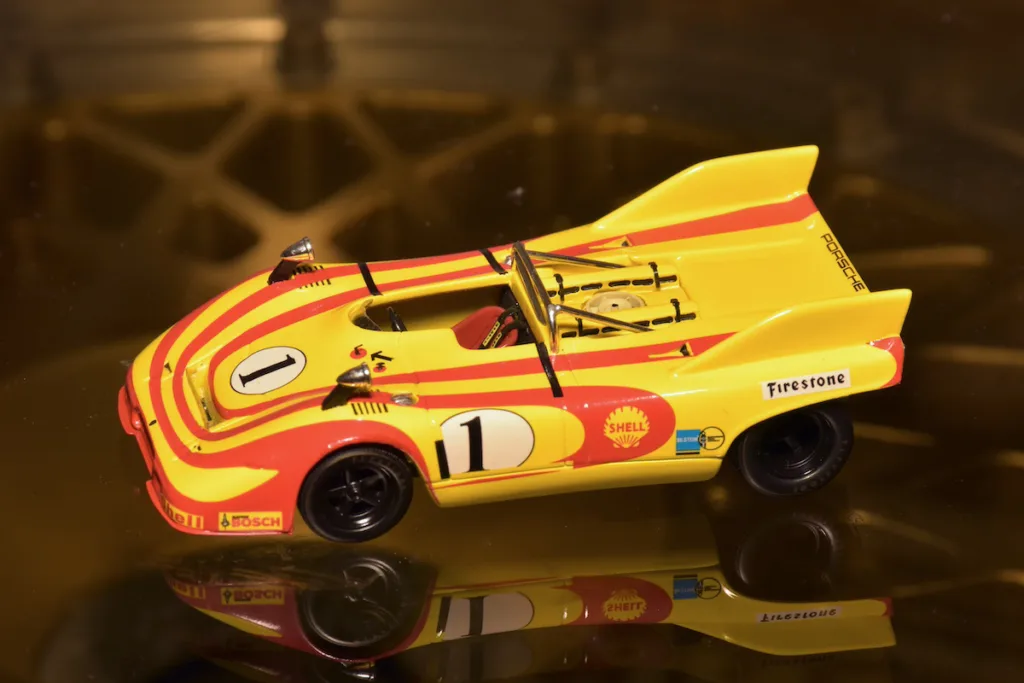
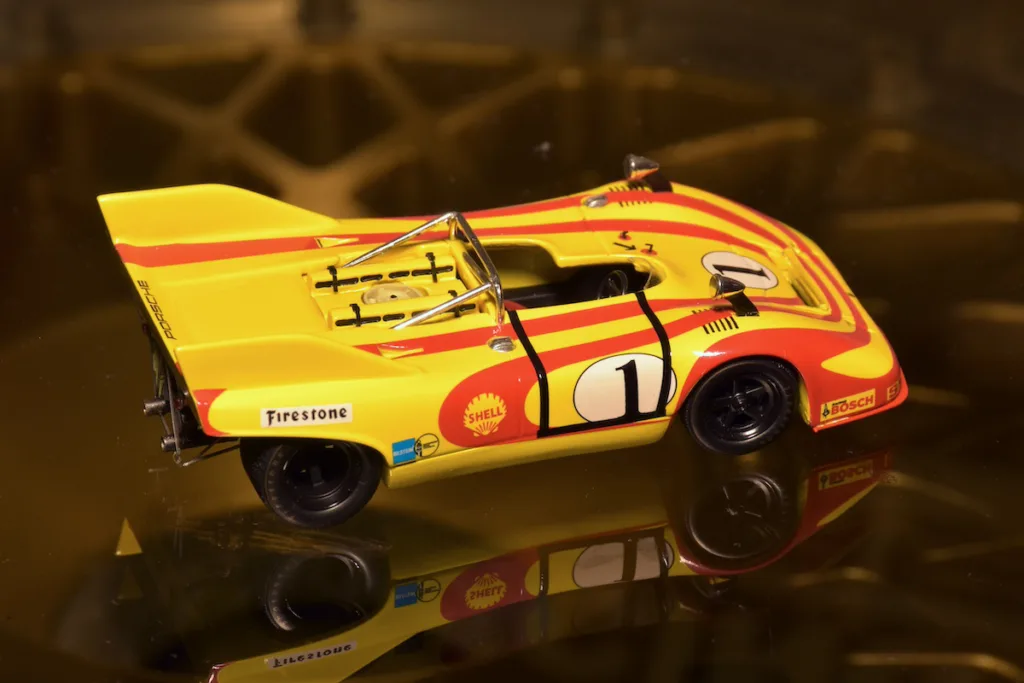
- SPARK SG011 #234 / 500 pcs (resin)
- Overall rating: 5 STARS | Quality details: 5 STARS | Estimated value: 5 STARS
- Also appears in #060 Shell / #028 Porsche 917 Spyder & turbo
1973 Interserie, Porsche 917/10 turbo
Team owner Georg Loos drove a Porsche 917/10 in the Interserie championship and took 6 podiums but didn’t win a race. In the championship he finished 3rd behind Leo Kinnunen and Willy Kauhsen in similar Porsche 917s.
Gelo Racing #6: Georg Loos (D)
Results: 6 podiums / 3rd championship
Porsche 917/10 turbo – Interserie: Powered by 5.0 liter Porsche 912.51 V12 180º twin turbo, approx. 1100 hp. Goodyear tires. Weight 745 kg. Aluminum space frame chassisnr. #917/10 017
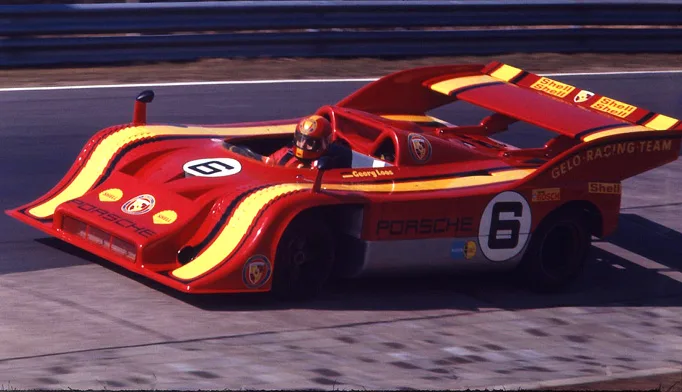
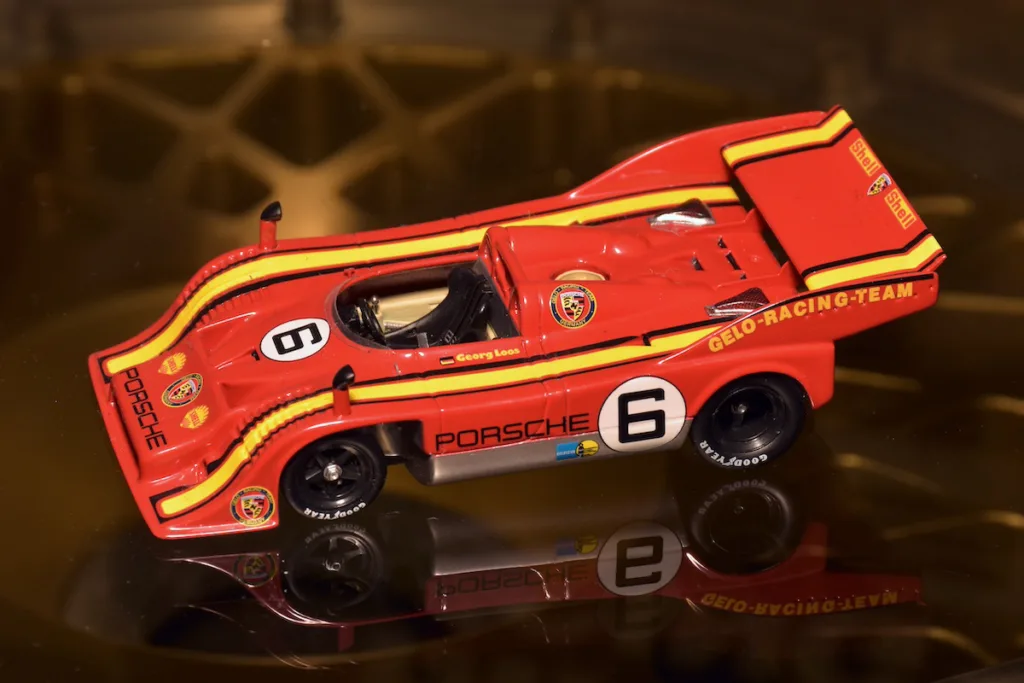
- SPARK Raceland Specials RS1209 #041 / 300 pcs (resin)
- Overall rating: 4 STARS | Quality details: 4 STARS | Estimated value: 4 STARS
- Also appears in #028 Porsche 917 Spyder & turbo
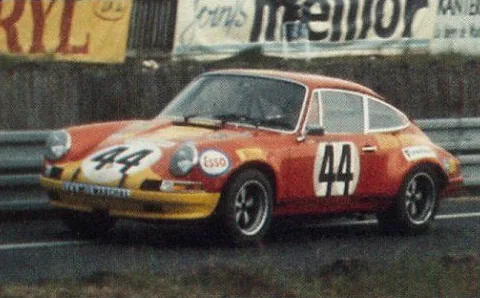
1972 Le Mans 24h, Porsche 911 S
Georg Loos and Franz Pesch teamed up with French Jean Sage for the 1972 Le Mans, but unfortunately retired with a broken engine. The 911’s that raced Le Mans in 1972 were not much more than improved street cars, the Carrera RSR that would arrive in the next year had been developed as a racing car and much more reliable.
Gelo Racing #44: Jean Sage (F) / Georg Loos (D) / Franz Pesch (D)
Results: Start-grid 52nd / time 4:46.200 / race DNF engine – 64 laps
Porsche 911 S – GT: Powered by 2.5 liter Porsche 911/70 flat-6 injection, approx. 230 hp. Dunlop tires. Weight 900 kg. Steel monocoque, chassisnr. #911 230 0955

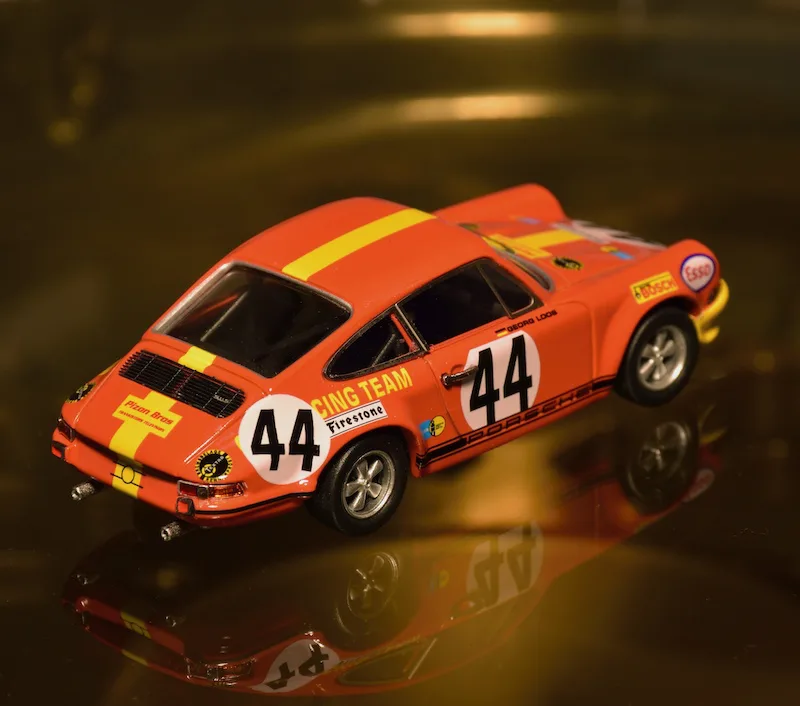
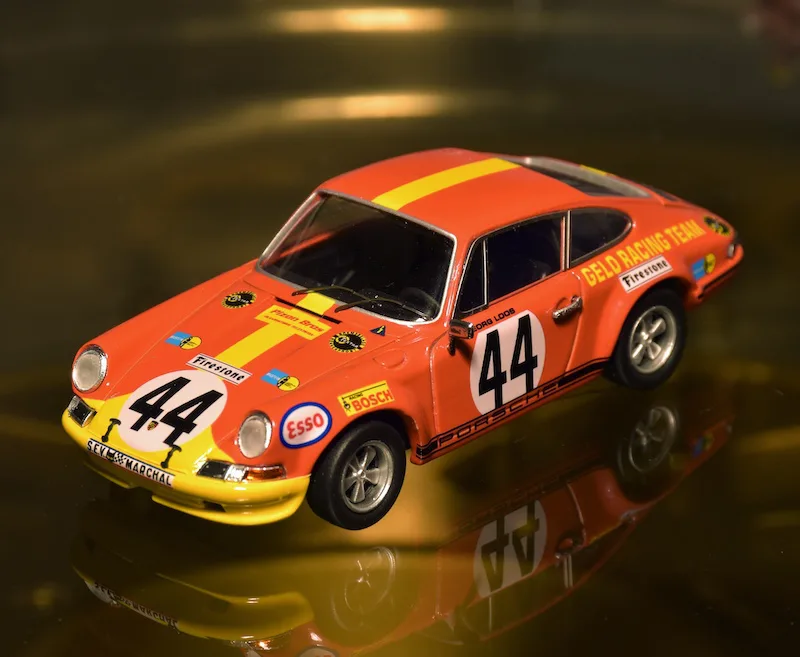
- TROFEU DSN264 limited 150 pcs (resin)
- Overall rating: 4 STARS | Quality details: 4 STARS | Estimated value: 4 STARS
- Only appears in this collection
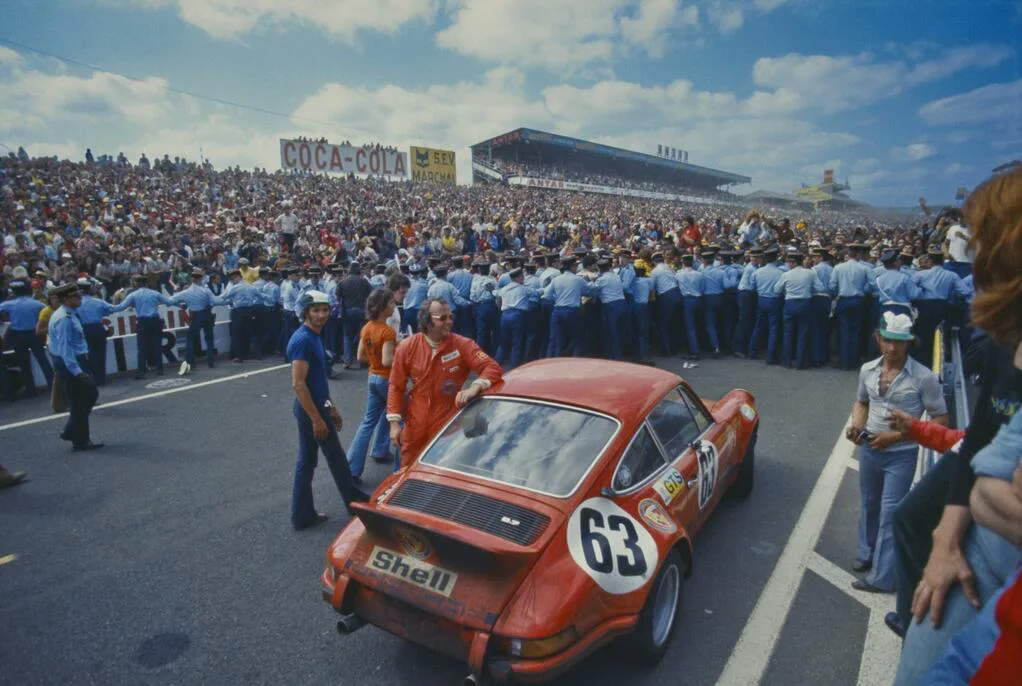
1973 Le Mans 24h, Porsche 911 Carrera RSR
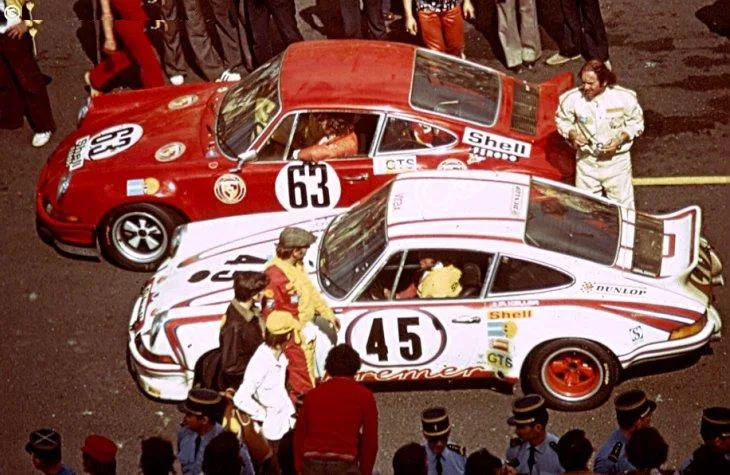
The evolution version of the Porsche 911, the 2.7 liter Carrera RSR was the most succesful GT of its time. It won its class in every world championship race in 1973 and overall in Daytona. Georg Loos drove his car together with Porsche factory engineer and test driver Jürgen Barth and finished 10th overall, second in class behind the #45 Kremer RSR.
Gelo Racing #63: Georg Loos (D) / Jürgen Barth (D)
Results: Start-grid 32nd / time 4:19.300 / race 10th – 312 laps / 2nd GTS
Porsche 911 Carrera RSR – GTS <3L: Powered by 2.8 liter Porsche 911/72 flat-6 injection, approx. 300 hp. Dunlop tires. Weight 830 kg. Steel monocoque, chassi5snr. #911 360 0847

- MINICHAMPS MC 430 736963 (diecast)
- Overall rating: 3 STARS | Quality details: 3 STARS | Estimated value: 3 STARS
- Only appears in this collection
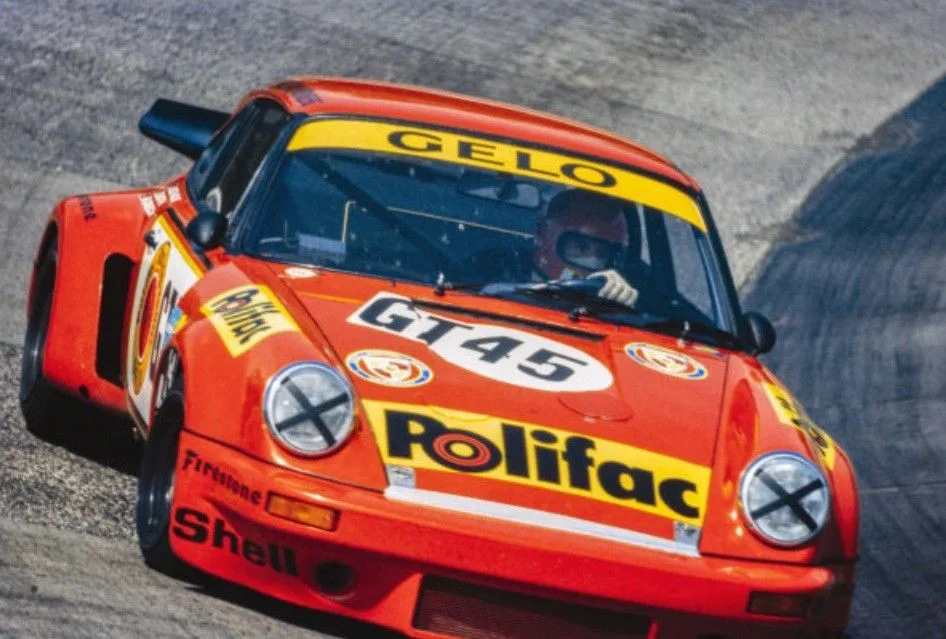
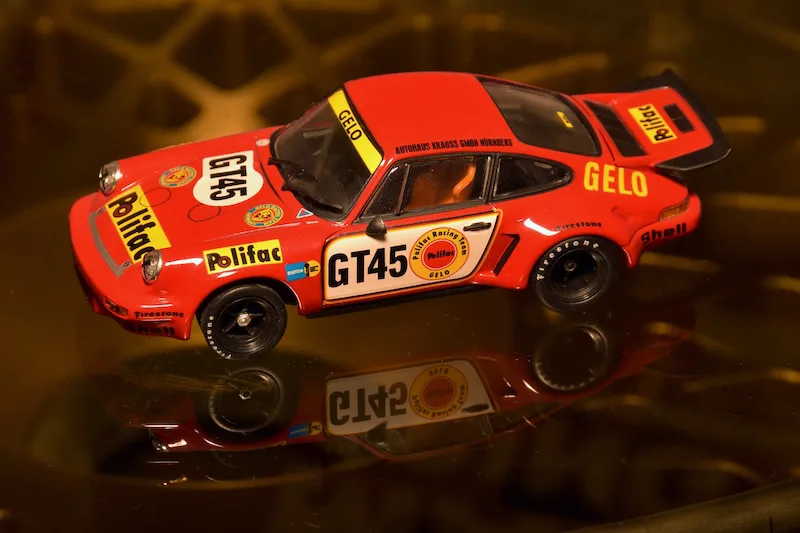
1974 Nürburgring 1000 km, Porsche 911 Carrera RSR
The German team Loos entered the new 3.0 liter RSR in the DRM, European GT and some world championship races. Many different drivers raced for Loos this year, making that Gelo / Polifac Racing won quit some races against their arch rival – the Samson Kremer team – but won no championship. This car won the GT-class in the world championship 1000 km race at the Nürburgring in 1974 with John Fitzpatrick. Fitzpatrick raced in the European GT for Gelo, but finished the season in the Samson Kremer team and went on to become European GT champion.
Gelo Racing #45: John Fitzpatrick (GB) / Jürgen Barth (D)
Results: Start-grid 32nd / time 4:19.300 / race 12th – 312 laps / 1st GT
Polifac Racing / Gelo Porsche 911 Carrera RSR – 3.0 liter Porsche 911/75 flat-6 injection, approx. 300 hp. Dunlop tires. Weight 830 kg. Steel monocoque, chassisnr. #911 460 9065
Seen with the competition:
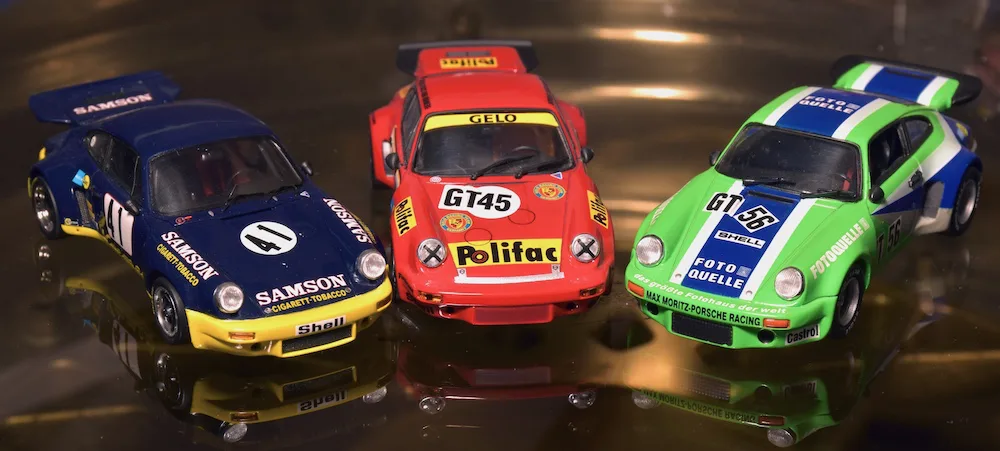
- MINICHAMPS history set (diecast)
- Overall rating: 3 STARS | Quality details: 3 STARS | Estimated value: 3 STARS
- Only appears in this collection
1975 Nürburgring 1000 km, Mirage GR7
John Wyer would win Le Mans this year with the Mirage GR8. The older GR7’s were sold to Georg Loos. Gelo used them in several world championship races such as this at the Nürburgring, Gelo’s home track. Two cars were entered, one for Howden Ganley and Tim Schenken who finished 2nd at the Nürburgring behind the Alfa Romeo form Willy Kauhsen Racing. The second car with John Watson and Tom Pryce crashed out of the race.
Gelo Racing #4: Howden Ganley (NZ) / Tim Schenken (AUS)
Results: Start-grid 8th / time 7:46.100 / race 2nd – 44 laps
Mirage GR7 – Prototypes <3L: Powered by 3.0 liter Cosworth DFV V8, approx. 450 hp. Goodyear tires. Weight 720 kg. Aluminium monocoque, chassisnr. #704
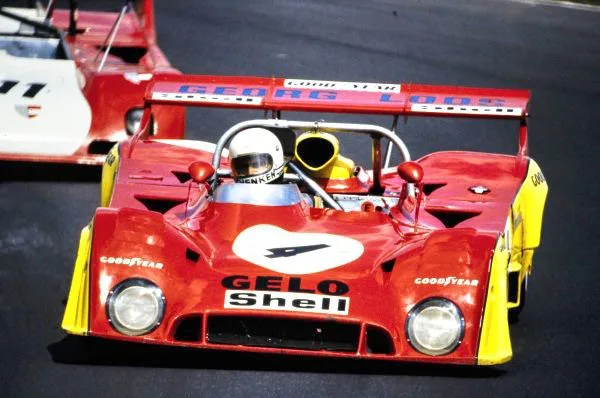
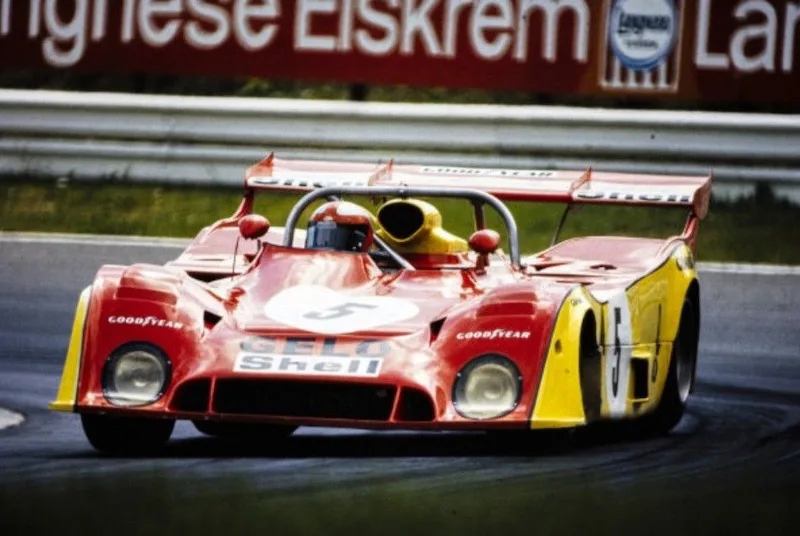
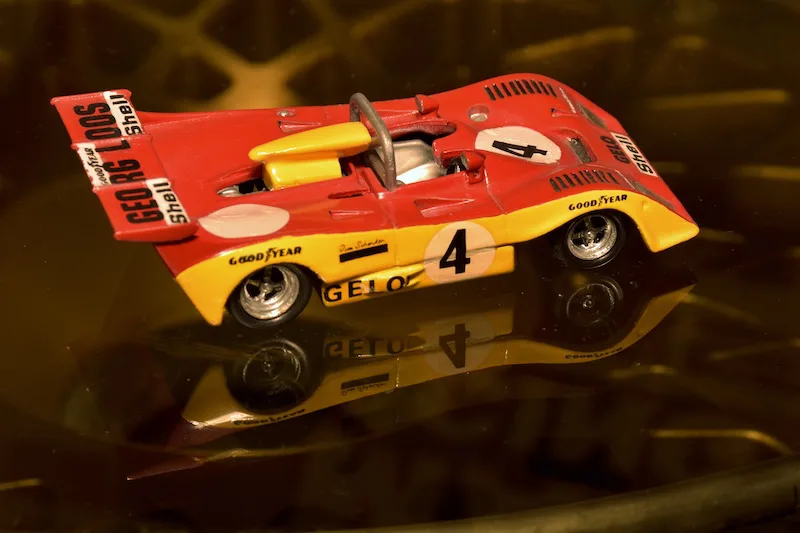
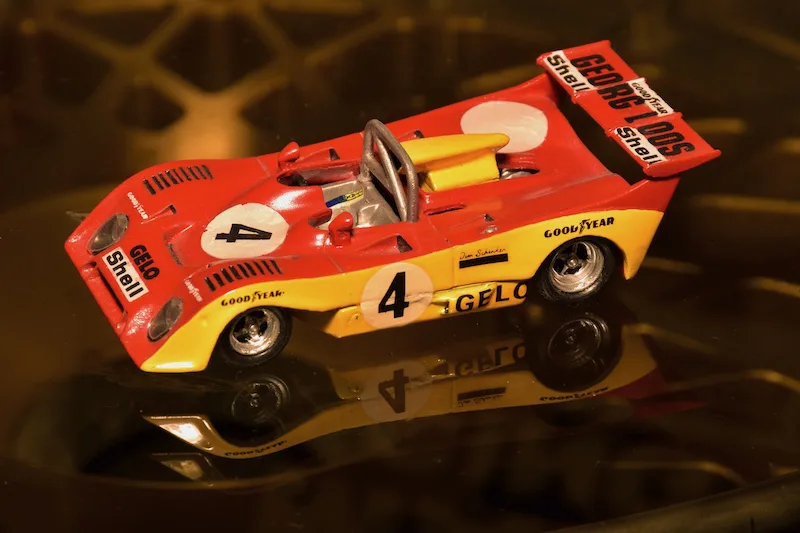
- PROVENCE MOULAGE kit (resin)
- Overall rating: 3 STARS | Quality details: 3 STARS | Estimated value: 2 STARS
- Only appears in this collection
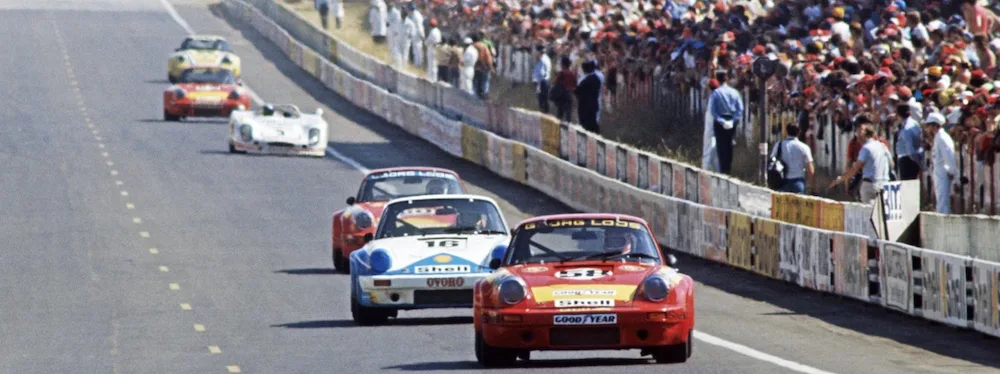
1975 Le Mans 24h, Porsche 911 Carrera RSR
Gelo entered none of his Mirages, but three GT Porsches for Le Mans. Not all went smooth: In the 10th hour the #60 car of Hezemans and Schurti retired and both drivers joined Van Lennep and Fitzpatrick in the #58. The #59 car of F1 drivers Schenken and Ganley retired with a broken gearbox in the 21st hour. But the #58 stayed in one piece and won the GTS category.
Gelo Racing #58: John Fitzpatrick (GB) / Gijs van Lennep (NL) / Toine Hezemans (NL) / Manfred Schurti (FL)
Results: Start-grid 20th / time 4:18.400 / race 5th -316 laps / 1st GT
Porsche 911 Carrera RSR – GT: Powered by 3.0 liter Porsche 911/75 flat-6 injection, approx. 300 hp. Goodyear tires. Weight 830 kg. Steel monocoque, chassisnr. #911 460 9012
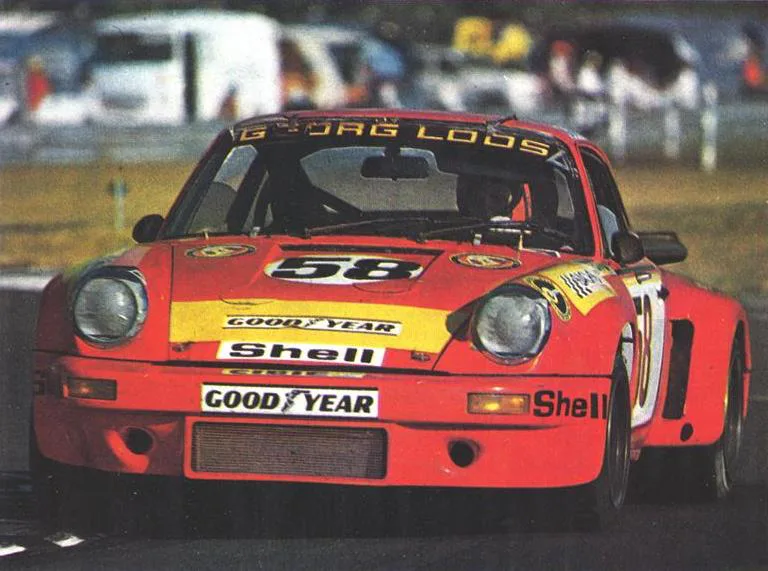
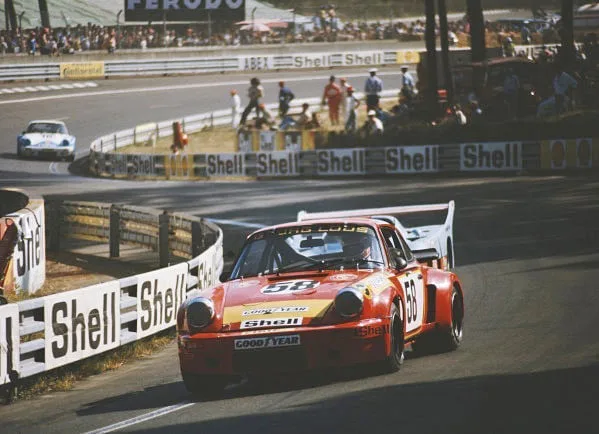
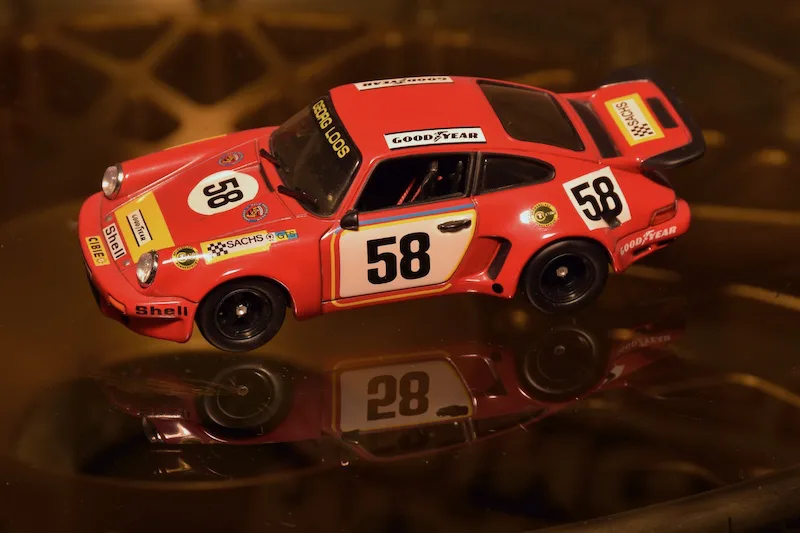

- EAGLE’S RACE 3681 (diecast)
- Overall rating: 3 STARS | Quality details: 3 STARS | Estimated value: 2 STARS
- Only appears in this collection
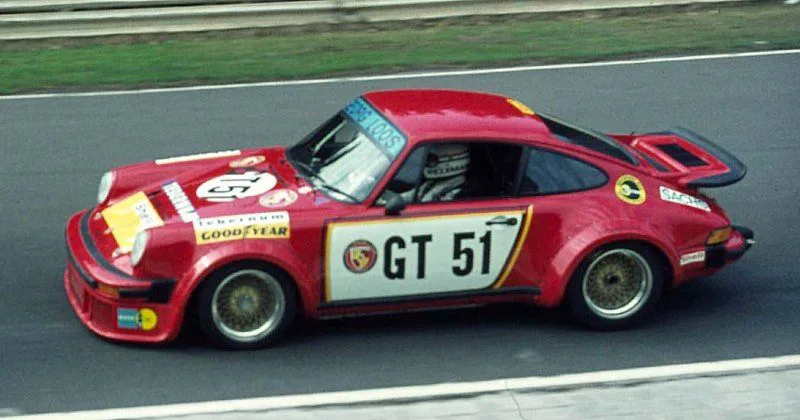
1976 Nürburgring 300 km, Porsche 934
Only 2 years after the debut of a turbocharged Porsche 911 on the racetracks, the car was available for road use and homologated for Group 4 and 5 racing. Not an easy car to drive, the street car was nicknamed ‘widow maker’, but it soon took over GT racing as it was so much more powerful than the normally aspirated Carrera RSR. The first European GT race was combined with the first World championship race in April at a wet and foggy Nürburgring. The Joest Prototype Porsche won, Hezemans finished second in the Tebernum / Gelo Porsche 934.
Gelo Racing / Tebernum #51: Toine Hezemans (NL)
Results: Start-grid 8th / time 8:17.100 / race 2nd – 11 laps / 1st GT
Porsche 934 – GT>3L: Powered by 3.0 liter Porsche Type 930/71 – flat-6 turbo, approx. 485 hp. Goodyear tires. Weight 1120 kg. Steel monocoque, chassisnrs. 911 670 0175
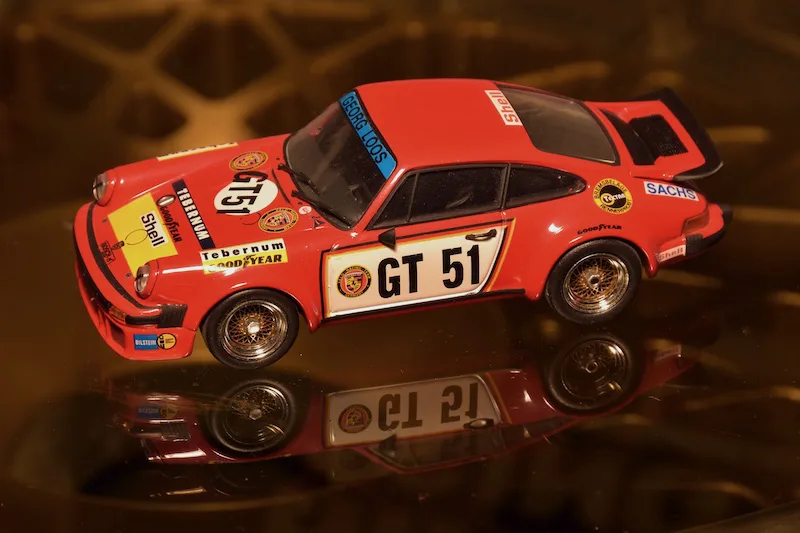
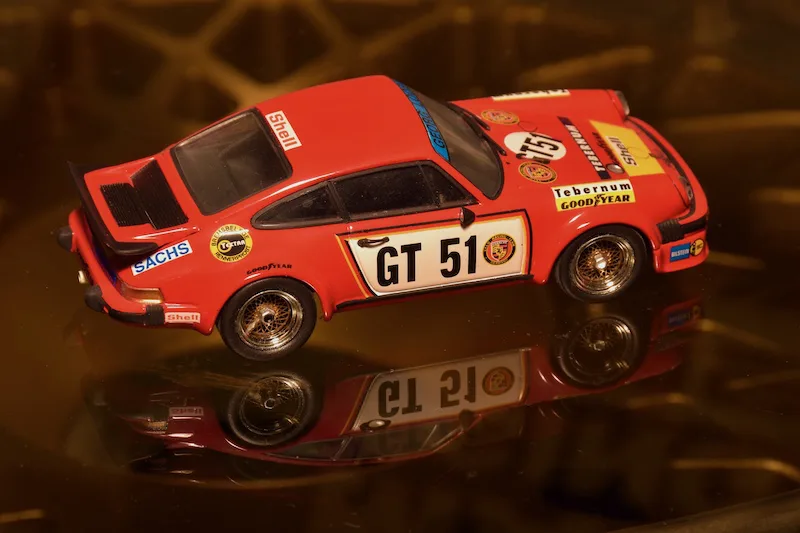
- MINICHAMPS MC 400 766451 (diecast)
- Overall rating: 3 STARS | Quality details: 3 STARS | Estimated value: 3 STARS
- Only appears in this collection
1977 DRM Norisring, Porsche 935/77A
The Kremer team were the arch enemy of Georg Loos and the opposite in almost everything. The Kremer brothers prepared and developed their cars in their Cologne workshop. Georg Loos had his cars prepared by the Porsche Motorsport department and even had works mechanics support during the event. Rolf Stommelen had Warsteiner sponsorship for the Norisring race, he drove this Porsche 935 to victory in the DRM championship race with a 41 second margin. The next day, in the traditional money race he finished 3rd.
Gelo Racing #66: Rolf Stommelen (D)
Results: Start-grid 1st / time 0:51.500 / race 1st – 70 laps
Porsche 935/77A – Group 5, DRM division I: Powered by 2.8 liter Porsche Type 930/78 – flat-6 turbo, approx. 600 hp. Goodyear tires. Weight 950 kg. Steel monocoque, chassisnr. #930 770 0908
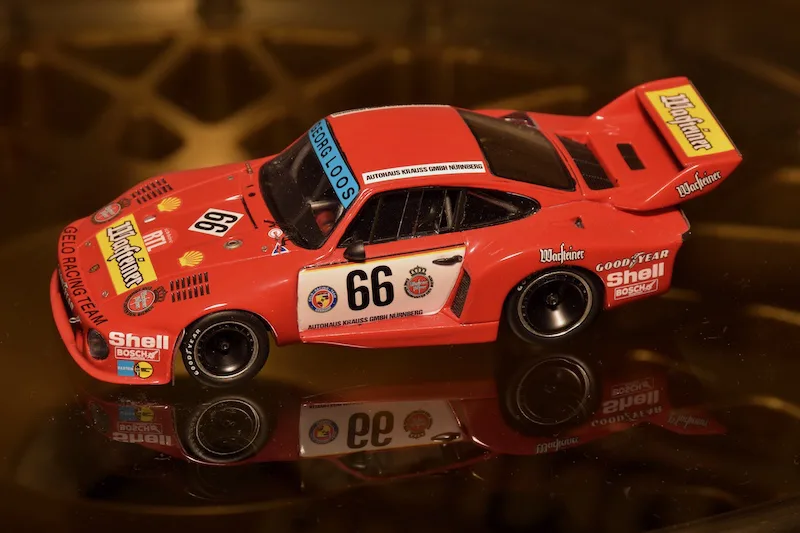
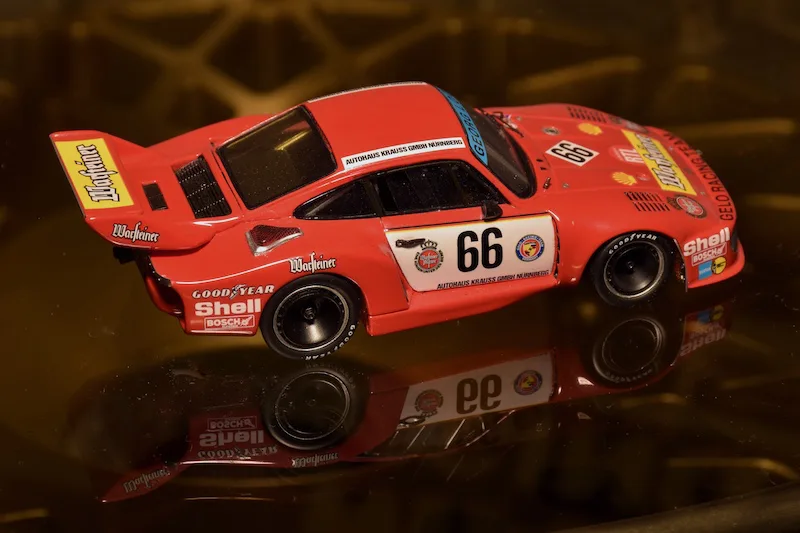
- SPARK Raceland Gold RS 1107 #386 / 400 pcs (resin)
- Overall rating: 4 STARS | Quality details: 4 STARS | Estimated value: 4 STARS
- Only appears in this collection
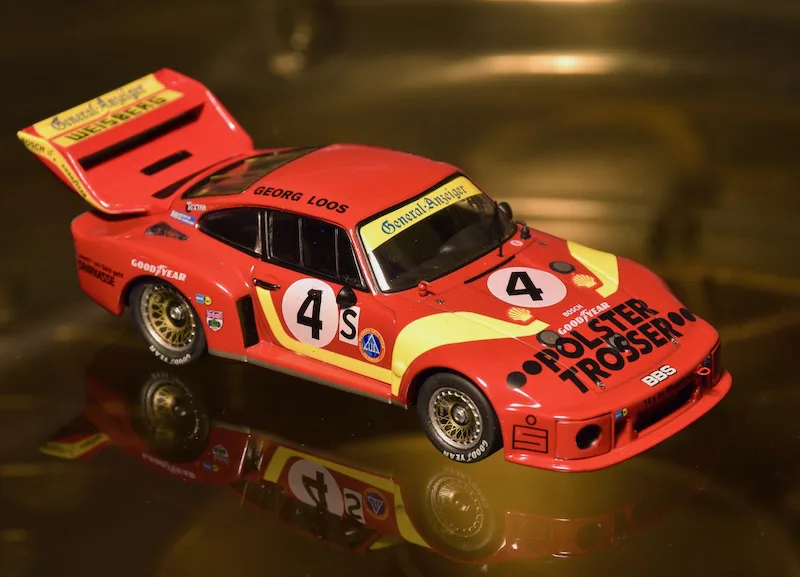
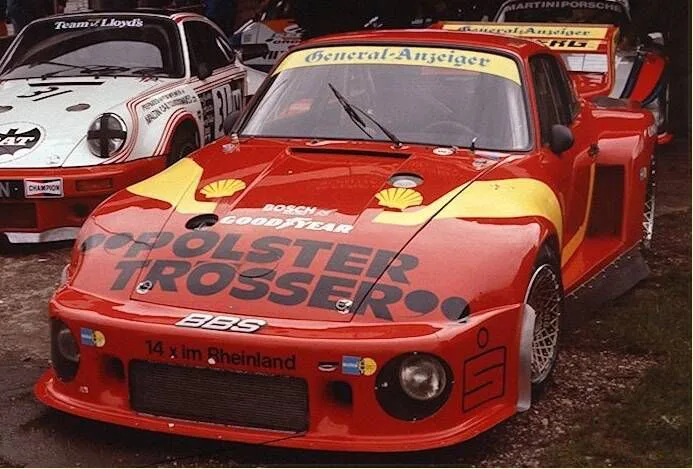
1978 Silverstone 6h, Porsche 935/77A
Silverstone was the last test before Le Mans for many teams. The Porsche factory team presented the awesome Moby Dick that made its debut by winning. Gelo Racing was present with three cars, two in the usual livery with Weisberg sponsorship and this one the livery that Ludwig used all season. Clearly not in preparation of Le Mans, because none of the cars had the same driver line-up that would be used next month in France. The next world championship race was the Nürburgring 1000 km and there Gelo Racing won with the same three drivers that would pilot the #47 a few weeks later.
Gelo Racing #4: Derek Bell (GB) / Hans Heyer (D) / Klaus Ludwig (D)
Results: Start-grid 4th / time 1:24.320 / race DNF – 111 laps
Porsche 935/77A – Group 5: Powered by 3.0 liter Porsche Type 930/78 – flat-6 turbo, approx. 630 hp. Goodyear tires. Weight 950 kg. Steel monocoque, chassisnr. #930 890 0020
- IXO GTM169 (diecast)
- Overall rating: 3 STARS | Quality details: 3 STARS | Estimated value: 3 STARS
- Also appears in #120 Derek Bell
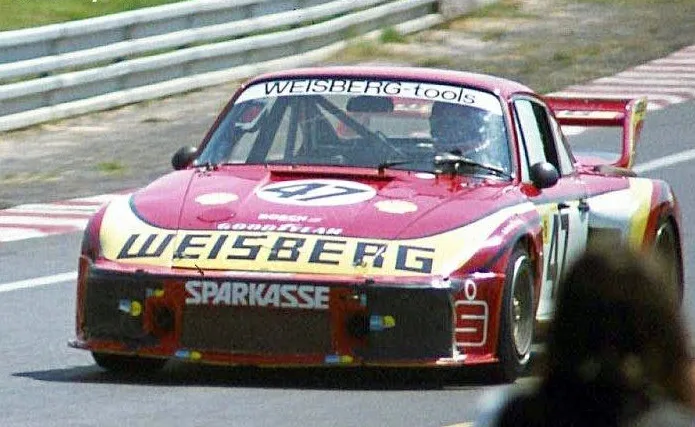
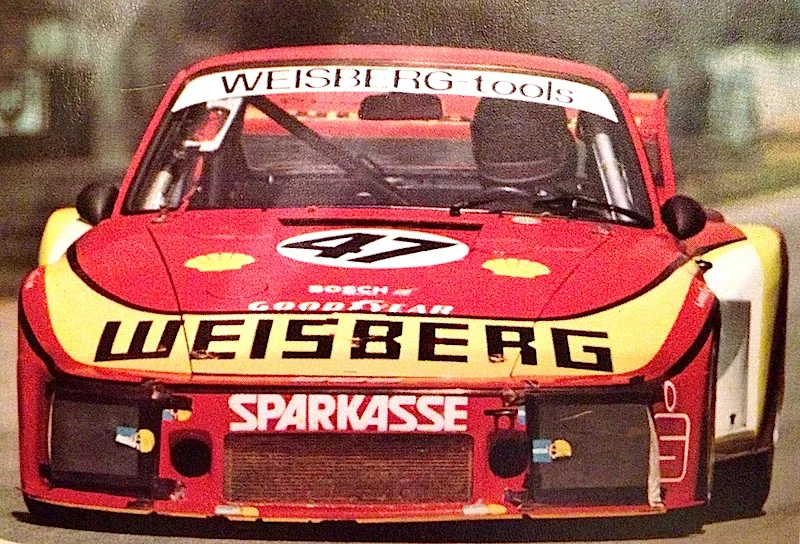
1978 Le Mans 24h, Porsche 935/77A
Georg Loos was well equipped for Le Mans. His car was prepared by the Porsche Motorsport department and he had his three best drivers in his only entered car: Hezemans, Fitzpatrick and Ludwig. In qualifying the only car in class they couldn’t beat was the awesome Moby Dick. So, things were looking good, but you can’t force a win at Le Mans. The red and yellow Porsche was the very first car to retire this year with a broken piston after only 19 laps.
Gelo Racing #47: Toine Hezemans (NL) / John Fitzpatrick (GB) / Klaus Luwig (D)
Results: Start-grid 11th / time 3:46.500 / race DNF – 19 laps engine
Porsche 935/77A – Group 5 >2L: Powered by 3.0 liter Porsche Type 930/78 – flat-6 turbo, approx. 630 hp. Goodyear tires. Weight 950 kg. Steel monocoque, chassisnr. #930 890 0011
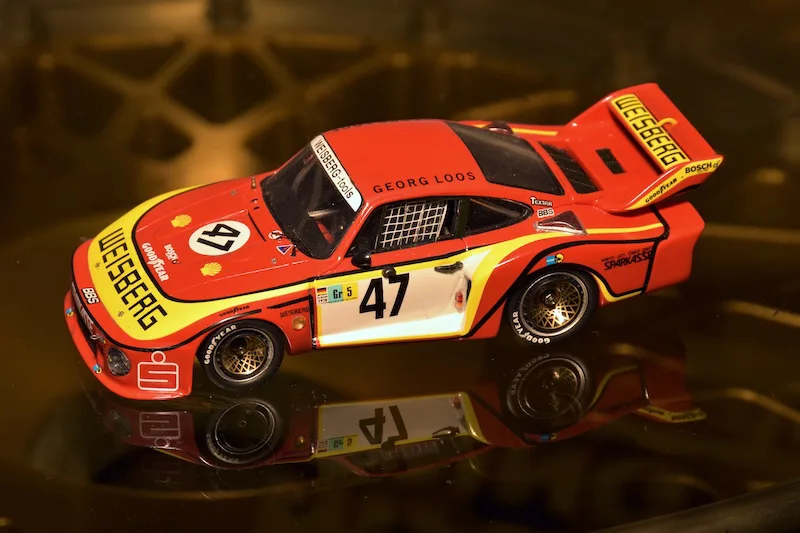

- SPARK S2350 (resin)
- Overall rating: 4 STARS | Quality details: 4 STARS | Estimated value: 4 STARS
- Only appears in this collection
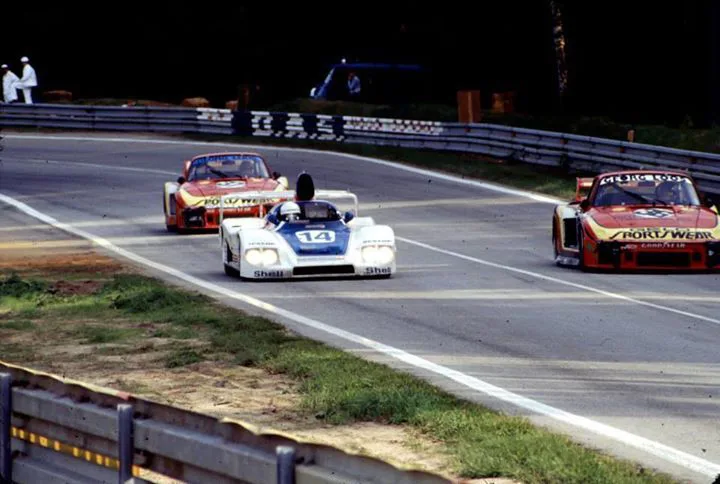
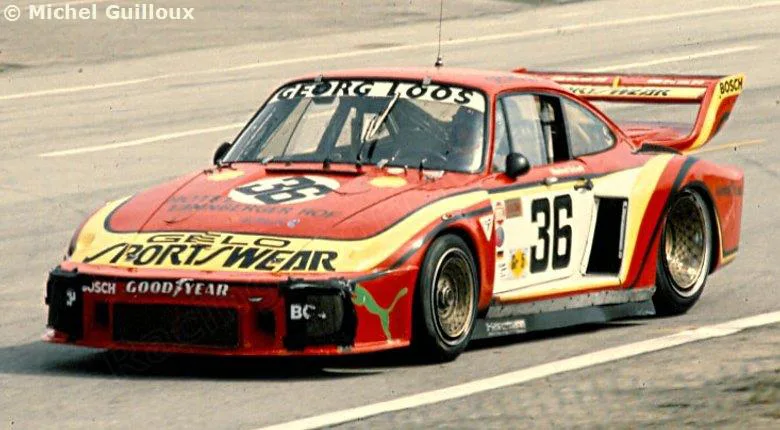
1979 Le Mans 24h, Porsche 935/77A
Again Georg Loos was well prepared for Le Mans. His car was again prepared by the Porsche Motorsport department and with Schurti and Heyer, he had two excellent drivers. The team qualified 4th overall, 10 seconds faster than last year so things were looking good. But again the Loos team was beaten by Klaus Ludwig in the Kremer K3 Porsche, just as in the DRM season. To make things worse, the engine broke down. The second car lead by Fitzpatrick (Hezemans has left the team in anger) suffered the same faith.
Gelo Racing #36: Manfred Schurti (FL) / Hans Heyer (D)
Results: Start-grid 4th / time 3:36.650 / race DNF – 201 laps engine
Porsche 935/77A – Group 5 >2L: Powered by 3.0 liter Porsche Type 930/78 – flat-6 turbo, approx. 650 hp. Goodyear tires. Weight 950 kg. Steel monocoque, chassisnr. #930 890 0015
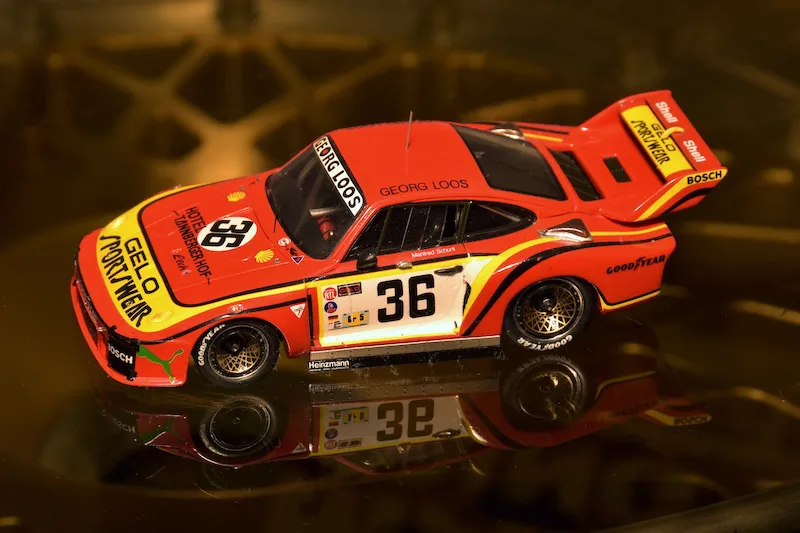
- SPARK S4165 (resin)
- Overall rating: 4 STARS | Quality details: 4 STARS | Estimated value: 4 STARS
- Only appears in this collection
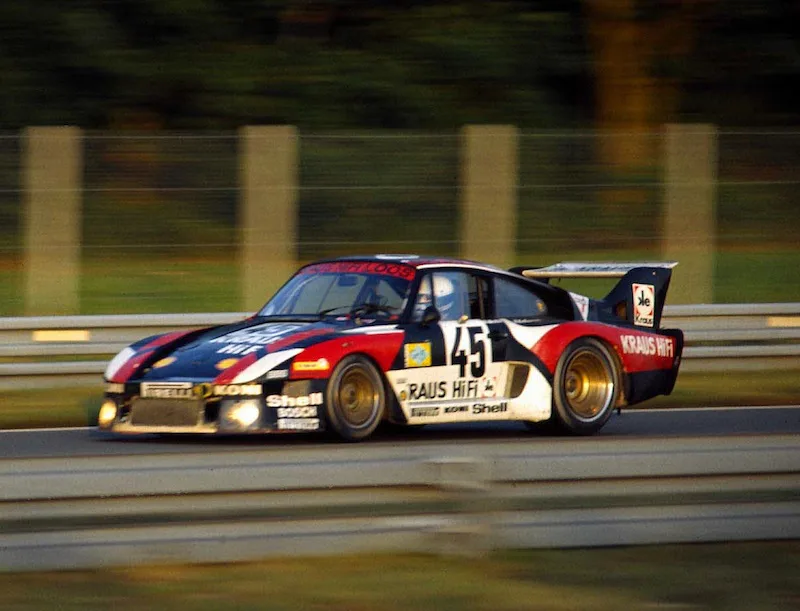
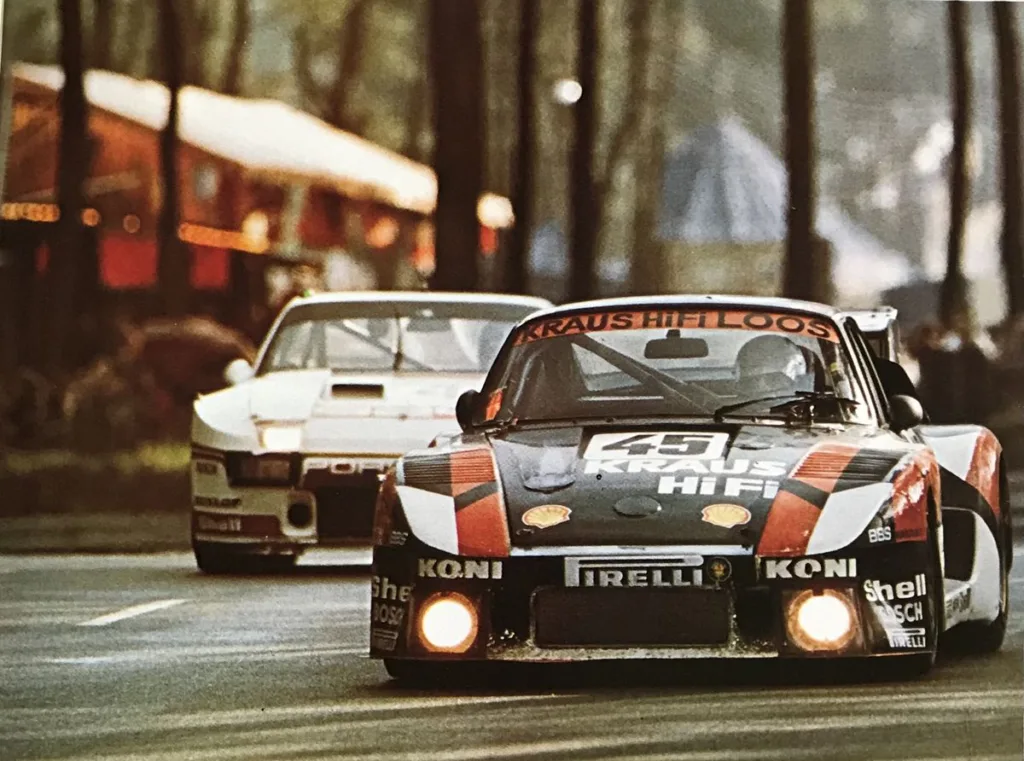
1980 Le Mans 24h, Porsche 935/80
Of course Gelo couldn’t use the Porsche 935 K3 that won last year’s DRM and Le Mans, because Kremer was his arch enemy among the Porsche teams. So he used this car, the 935/80 that combined the bodywork of the 1977 works car with an enlarged 3.2 liter engine. The first half of the DRM season Wollek had to drive a white car without sponsors, clear signs that something was going on in the once so mighty Gelo team. At Le Mans Wollek drove together with the experienced Helmut Kelleners. As in the last few years, something in the tuning was not perfect and the car burned a piston.
Gelo Racing #45: Bob Wollek (F) / Helmut Kelleners (D)
Results: Start-grid 10th / time 3:53.100 / race DNF – 191 laps engine
Porsche 935/80 – Group 5: Powered by 3.2 liter Porsche Type 930/78 – flat-6, approx. 700 hp. Pirelli tires. 1040 kg. Steel monocoque, chassisnr. #930 000 0022


- SPARK S2023 (resin)
- Overall rating: 4 STARS | Quality details: 4 STARS | Estimated value: 4 STARS
- Only appears in this collection
In 1981, Georg Loos disappeared from the radar. It says he has been accused of fraud and financial malversation. He is supposed to have sold 7 Ferraris that weren’t his and left with the money … He has been declared bankrupt in 1987 and deceased in 2016.
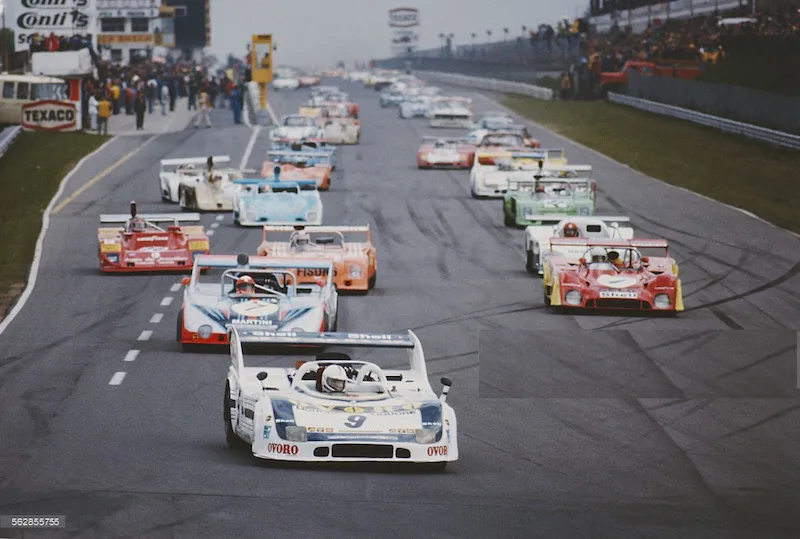
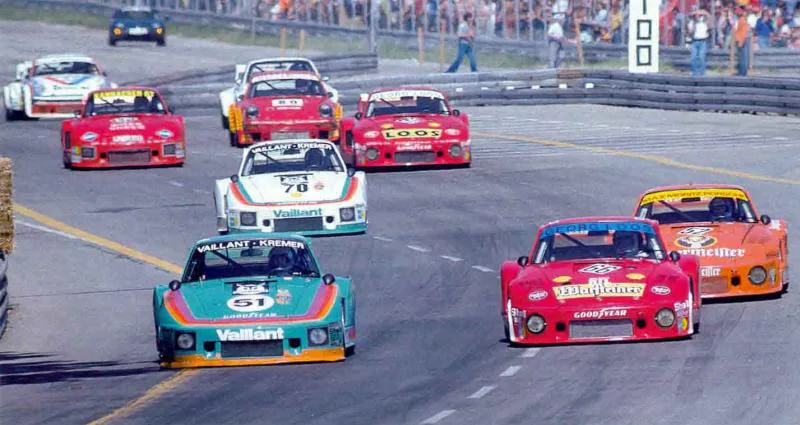
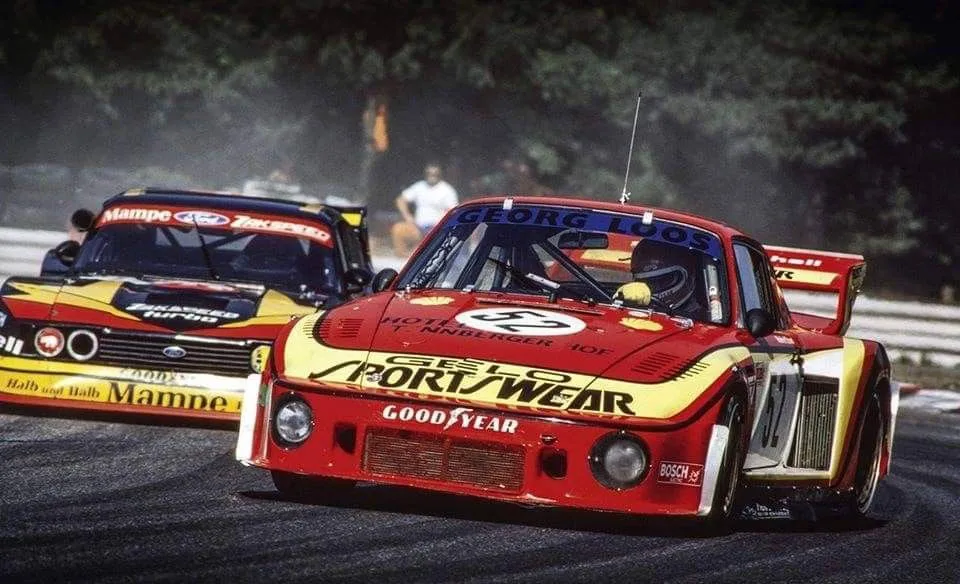
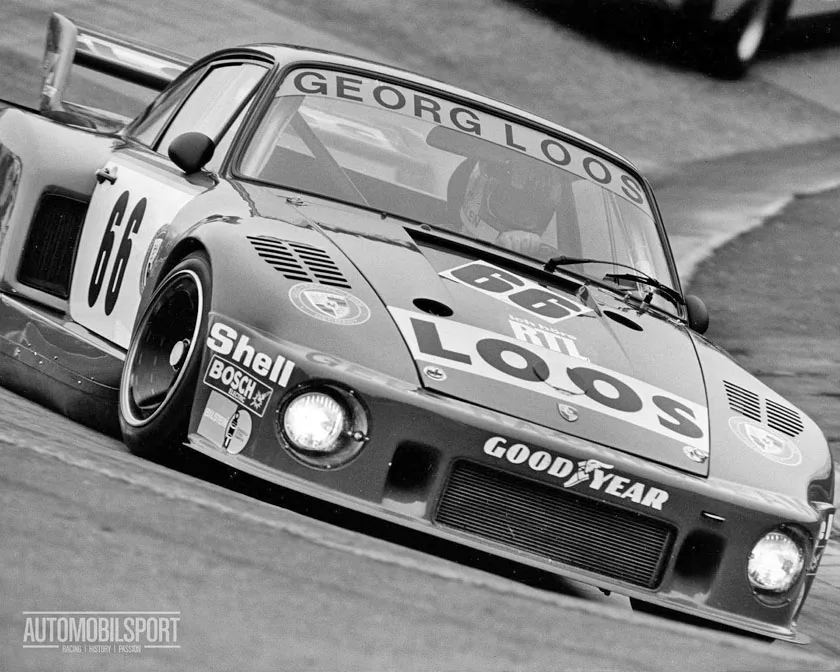
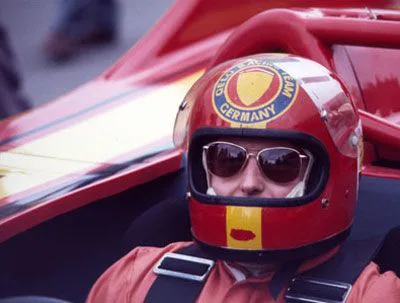
Below a random collection of beautiful pictures I found online of Gelo cars, mainly from DRM races.


Thanks for visiting 😉