Published August 06, 2026 | Last update August 06, 2026 | 16 models online
In this collection I present BMW prototypes. Fun fact is that BMW never built one. The first part contains prototypes and a formula car where BMW is the supplier of the engine. The second chapter are cars that are entered as BMW’s but all are built by specialised constructors such as March, Williams and Dallara.
- This collection contains:
- BMW as engine supplier
- 1973 Fuji 300 km – March 73S-BMW
- 1974 Fuji 250 km – March 73S-BMW
- 1977 Le Mans 24h – Sauber C5-BMW
- 1979 European F2 Championship Hockenheim – March 792-BMW
- 1989 Supercup Norisring – Maurer C87-BMW Maurer
- 2011 Daytona 24h – Riley Mk XI-BMW Ganassi
- Cars entered as BMW
- 1986 IMSA Portland 300 km – BMW GTP
- 1998 Le Mans 24h – BMW V12 LM 2x
- 1999 Le Mans 24h – BMW V12 LM Bscher
- 1999 Le Mans 24h – BMW V12 LM Team Goh
- 2000 Le Mans 24h – BMW V12 LM Bscher
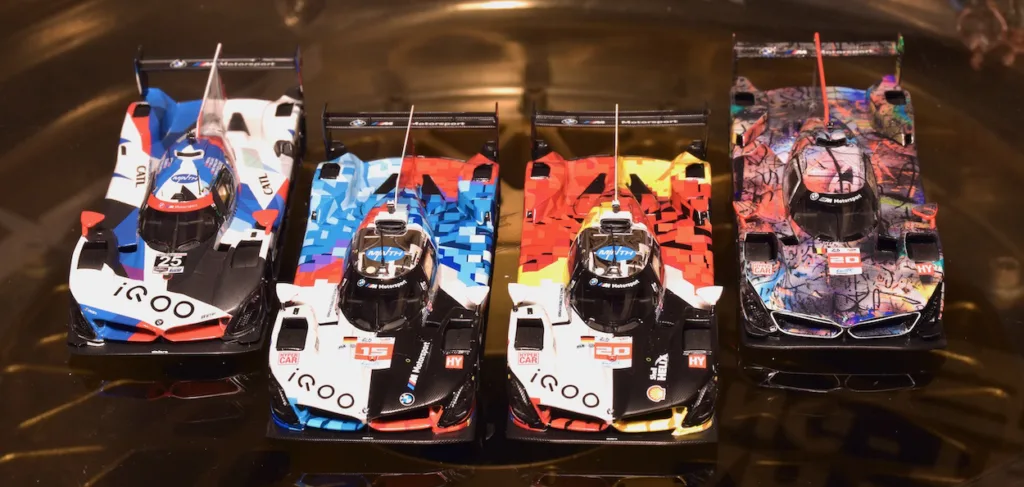
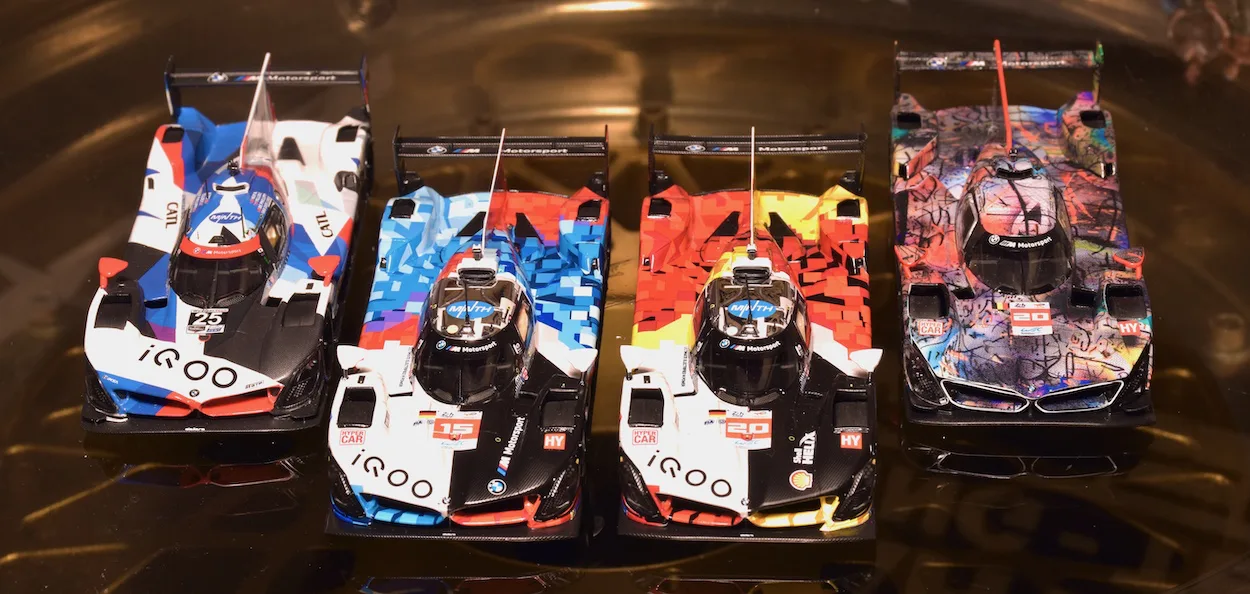
- 2023 Daytona 24h – BMW M Hybrid V8
- 2024 Le Mans 24h – BMW M Hybrid V8
- 2025 Le Mans 24h – BMW M Hybrid V8
- 2025 Le Mans 24h – BMW M Hybrid V8
BMW as engine supplier
1973 Fuji 300 km, March 73S-BMW
Nowadays the Super GT Championship is leading, but Japan has a great history of sports car championships; the Fuji Long Distance Series, the Japanese Sportscar Prototype Championship and the Fuji Grand Champion Series. The last one was the most important in the period 1970 – 1977. Motoharu Kurosawa was the champion in 1973 with this European car, a March 73S with 4-cylinder BMW engine.
Team Kurosawa #5: Motoharu Kurosawa (J)
Results: Start-grid 1st / time 1:44,250 / race 1st – 50 laps / championship 1st also
March 73S – Fuji Grand Championship Series Group 6 < 2-liter: Powered by 2.0 liter BMW M12/7, approx. 290 hp. Bridgestone tires . Weight 640 kg. Aluminium monocoque, chassisnr. #unknown
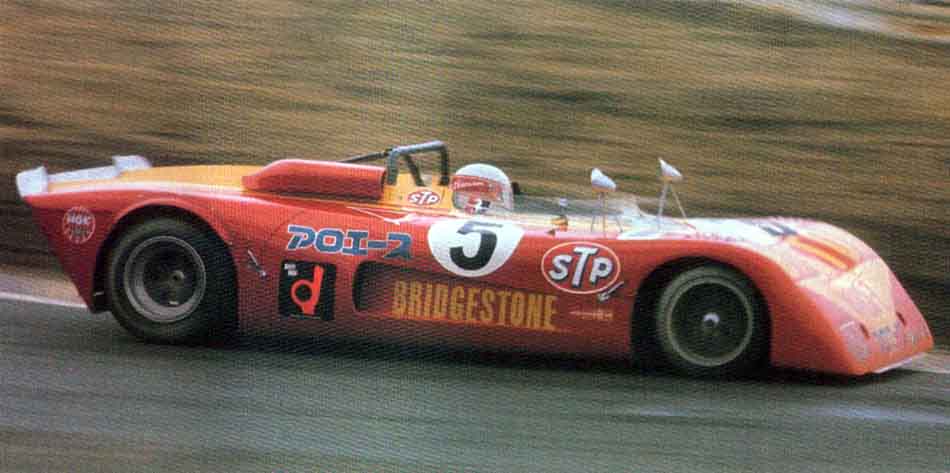
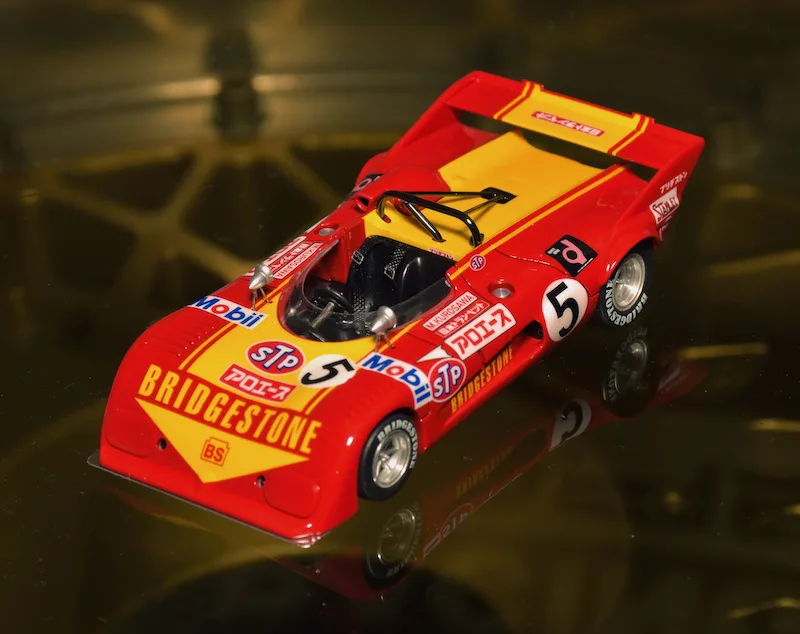
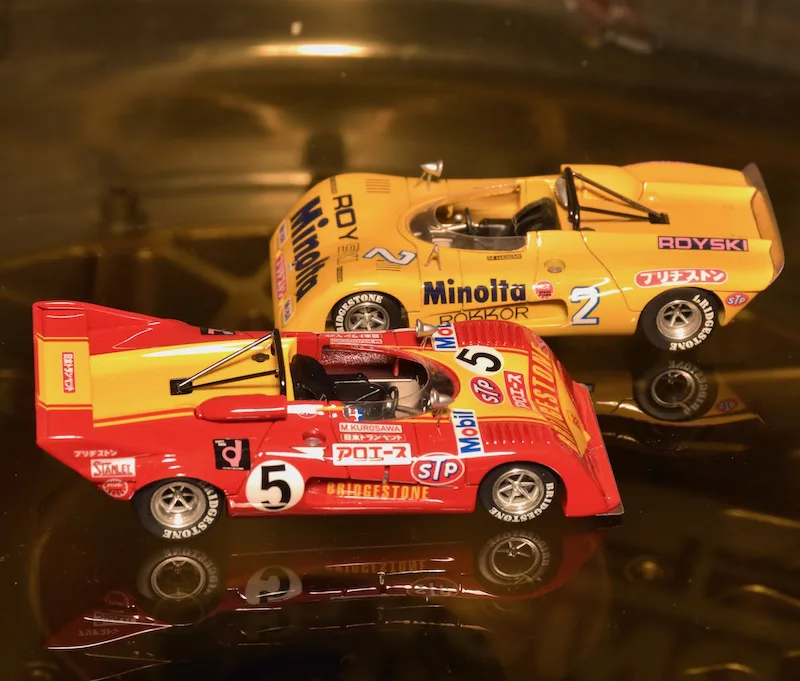
- EBBRO Racing History 45001 (resin)
- Overall rating: 4 STARS | Quality details: 4 STARS | Estimated value: 4 STARS
- Also appears in #114 BMW 4-cylinders
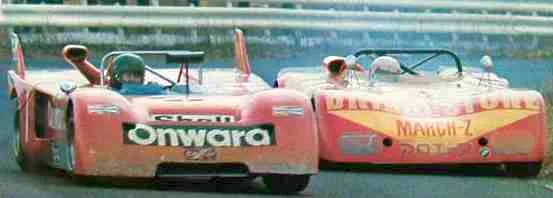
1974 Fuji 250 km, March 73S-BMW
The sportswear championships in Japan were dominated by European cars and engines in the first half of the 1970’s. March S73 and S74 with BMW engines, Chevron B23 and B26 with Ford BDA or BMW engines and Ford powered Lola T290 / T292 set the pace, all driven by Japanese drivers.Yojiro Terada in a Mazda powered Sigma was the only exception with a local built car and engine.
Team Kurosawa #2: Masahiro Hasemi (J)
Results: Start-grid 1st / time unknown / race 1st – 35 laps / championship 1st also
March 73S – Fuji Grand Championship Series Group 6 < 2-liter: Powered by 2.0 liter BMW M12/7, approx. 290 hp. Bridgestone tires . Weight 640 kg. Aluminium monocoque, chassisnr. #unknown
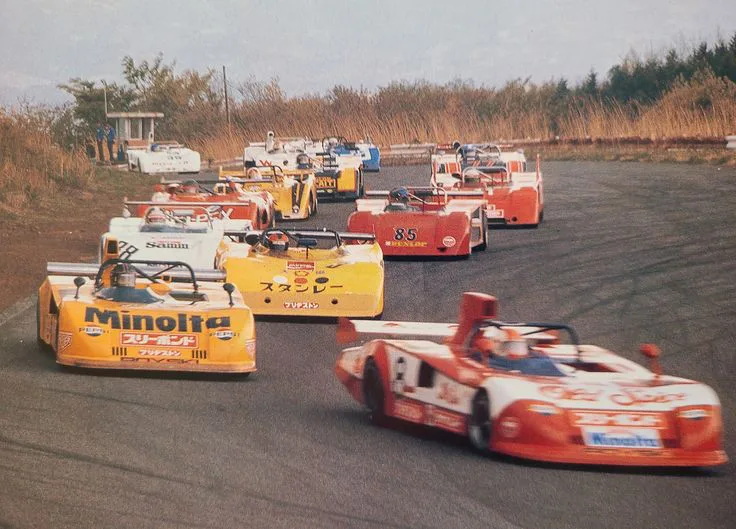
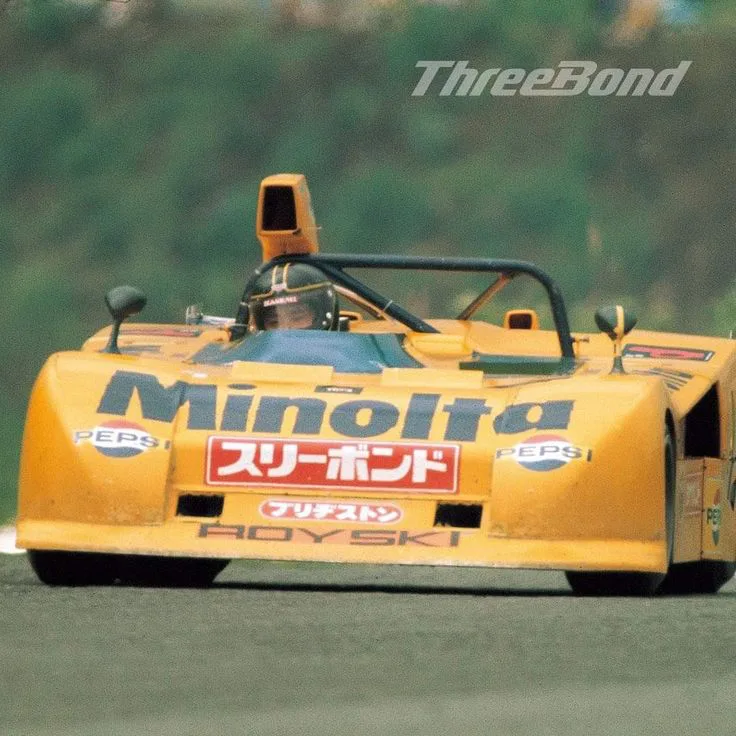
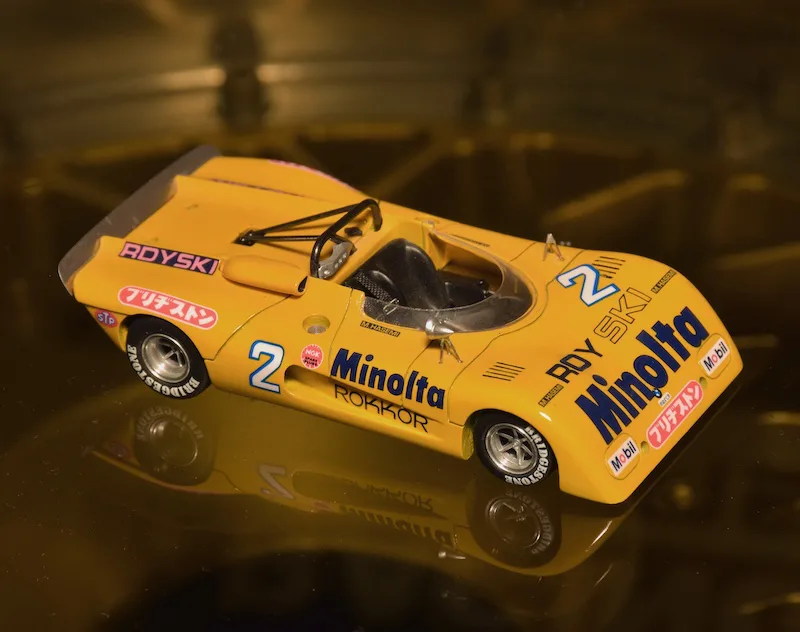
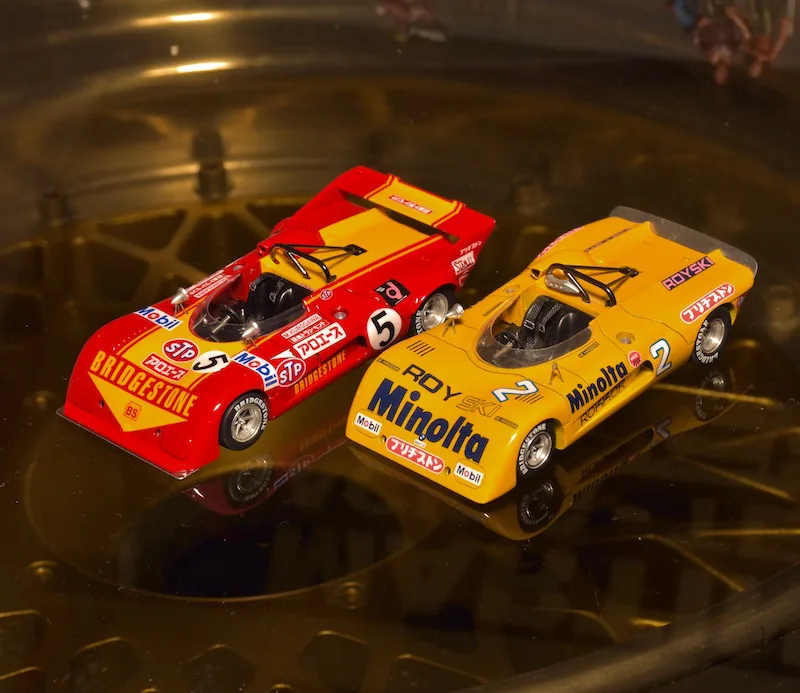
- EBBRO Racing History 45007 (resin)
- Overall rating: 4 STARS | Quality details: 4 STARS | Estimated value: 4 STARS
- Also appears in #114 BMW 4-cylinders
1977 Le Mans 24h, Sauber C5-BMW
Swiss Peter Sauber constructed his own sportscars. The first car that brought him some international success was the C5 with which Herbert Müller won some races in 1976. Francy Racing with an entire Swiss driver line-up entered this C5 at Le Mans, it had to retire when the BMW engine suffered an oil leak.
Francy Racing #21: Eugen Strähl (CH) / Peter Bernhard (CH)
Results: Start-grid 30th / time u 4:13,20 / race DNF oil leak – 161 laps
Sauber C5 – Group 6 < 2-liter: Powered by 2.0 liter BMW M12/7, approx. 300 hp. Bridgestone tires . Weight 630 kg. Aluminium monocoque, chassisnr. #001
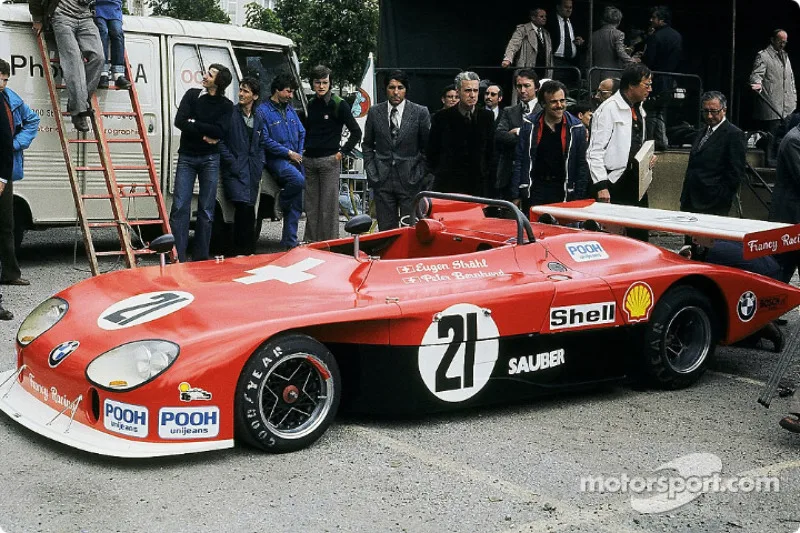
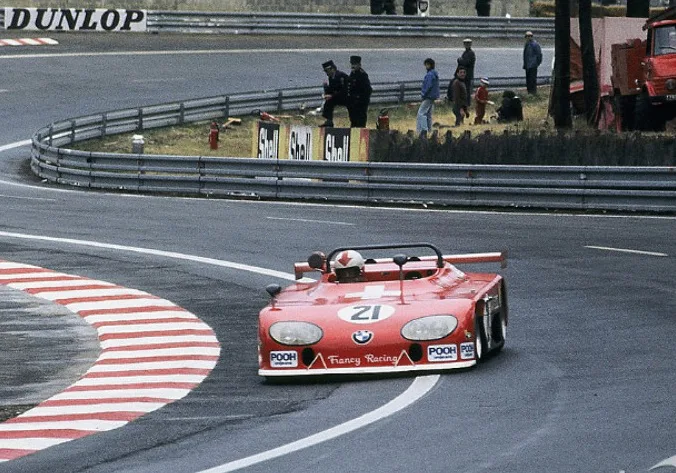
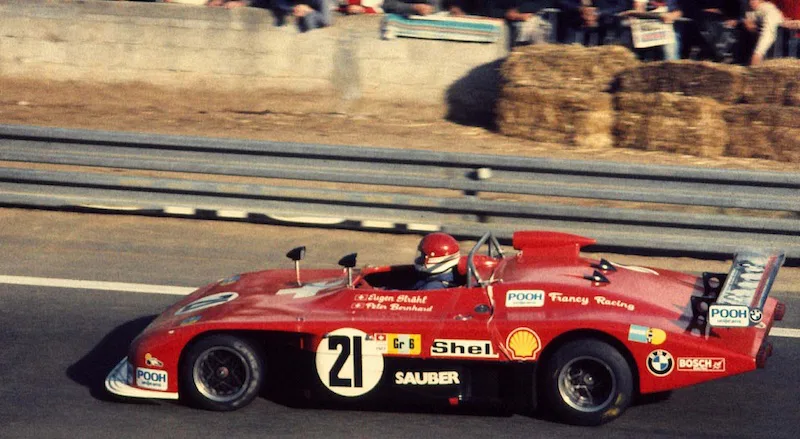
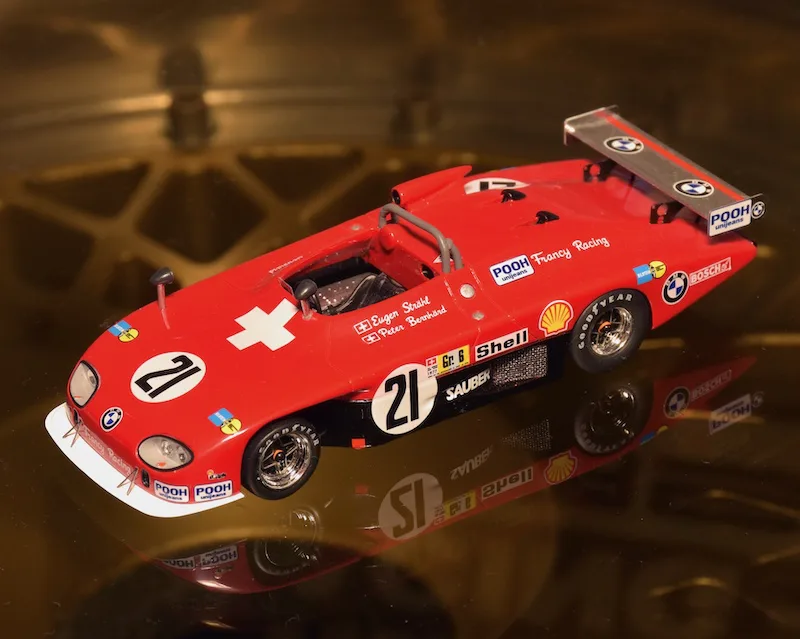
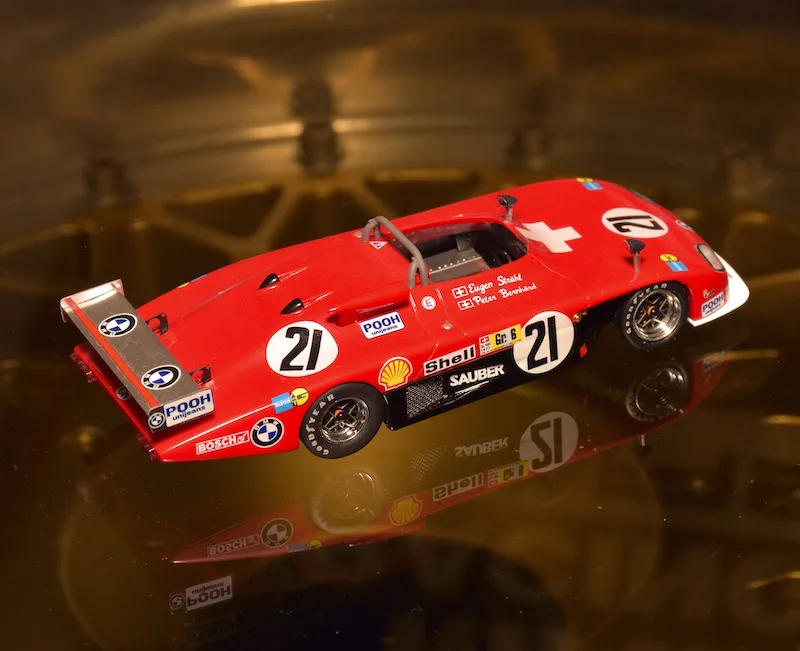
- BIZARRE BZ436 (resin)
- Overall rating: 4 STARS | Quality details: 4 STARS | Estimated value: 4 STARS
- Also appears in #114 BMW 4-cylinders
1979 European F2 Championship Hockenheim, March 792-BMW
Markus Höttinger was a young talent from Austria. He excelled in the hard-to-drive turbo BMW in the DRM and also drove in the famous BMW M1 Procar Series. With support of BMW, he entered this Jägermeister March in a number of Formula 2 races in 1979. His best result was 7th which he achieved in three races, one of them being the round in Hockenheim. Unfortunately, Höttinger would die in the 1980 round at Hockenheim.
Jägermeister Racing Team #26: Markus Höttinger (A)
Results: race 7th – 40 laps
March 792 – Formula 2: Powered by 2.0 liter BMW M12/7 – Straight 4, approx. 310 hp. Goodyear tires. Aluminium monocoque, chassisnr. March 792 #unknown
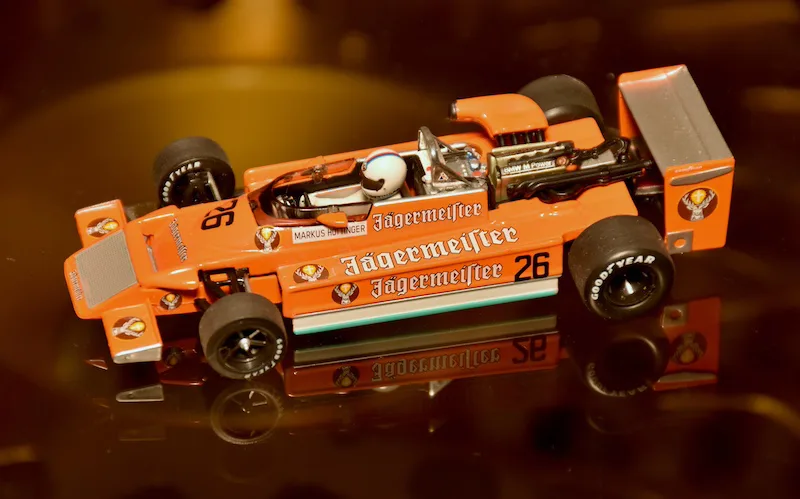
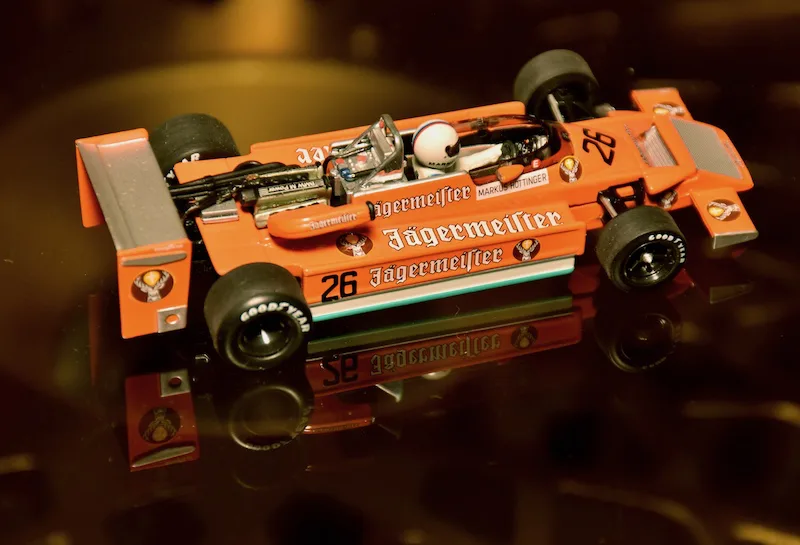
- MINICHAMPS MC400 790026 (diecast)
- Overall rating: 4 STARS | Quality details: 4 STARS | Estimated value: 3 STARS
- Also appears in #010 Jägermeister Prototypes / #114 BMW 4-cylinders
1989 Supercup Norisring, Maurer C87-BMW
Walter Maurer is a German artist who was involved in the production of the BMW Art cars. Except for the M1 which was painted by Warhol by hand, the paint jobs on the other Art Cars were done by Walter Maurer! He is also an amateur driver who had his own group C car based on a Lotec chassis and of course painted in Art Car style, inspired by Roy Lichtenstein.
Maurer #60: Walter Maurer (D)
Results: Start-grid 17th / time 0:53.030 / race 12th – 69 laps / 3rd C2
Maurer C87 – Group C2. Powered by 2.0 liter BMW M12/14 straight-4 turbo, approximately. 700 hp in race trim. Dunlop tires. Weight 800 kg. Aluminium monocoque #001 (Lotec)

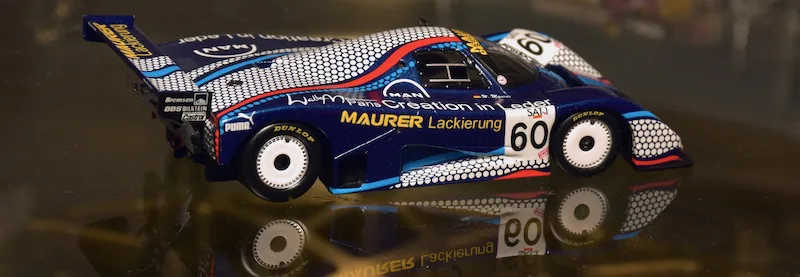
- SPARK Raceland Gold RS1270 #179 / 350 pcs (resin)
- Overall rating: 5 STARS | Quality details: 5 STARS | Estimated value: 4 STARS
- Also appears in #002 BMW Art Cars / #107 Group C
2011 Daytona 24h, Riley Mk XI-BMW
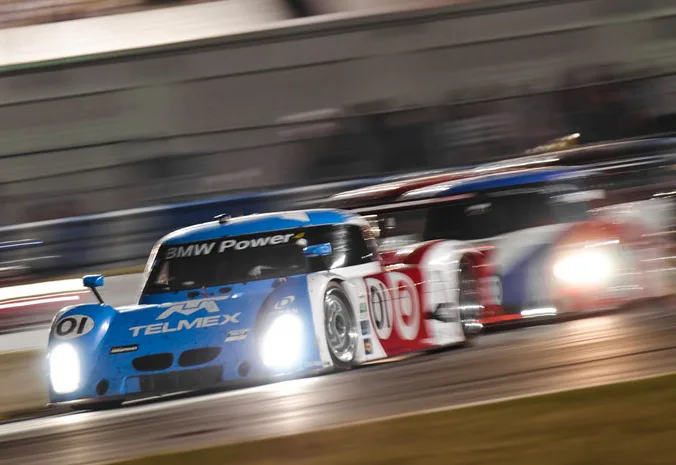
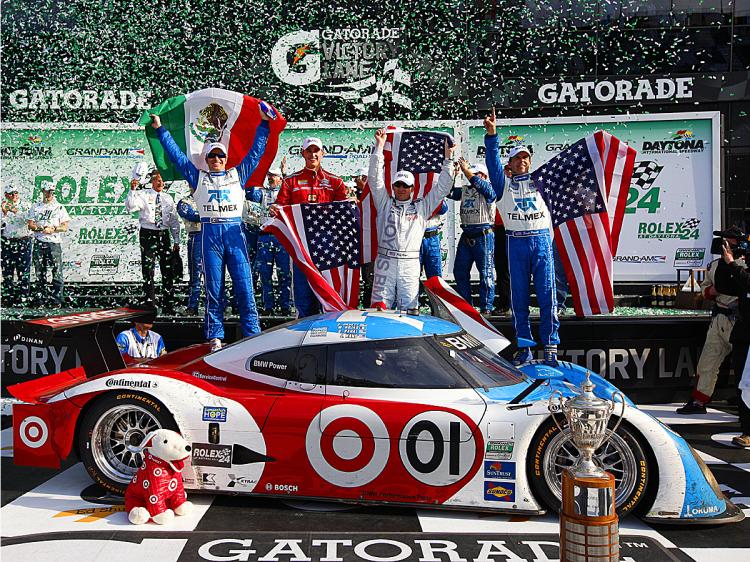
The 24 hour race had a dramatic finish that could come right from a movie script. The entire race there was a fierce battle and most of the time the lead group was in the same lap. Before the end of the race, a full course yellow made the lead group come very close. And when the green flag was waved only one lap remained. The team from Chip Ganassi took victory and 2nd place, no more than 6 seconds seperated the entire top 4.
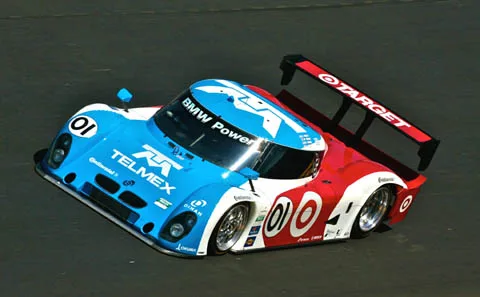
Chip Ganassi Racing #01: Scott Pruett (USA) / Memo Rojas (MEX) / Graham Rahal (USA) / Joey Hand (USA)
Results: Start-grid 3rd / time 1:40.245 / race 1st – 721 laps
Riley Mk XI – Daytona Prototypes: Powered by 5.0 liter BMW S62-B50 V8, approx. 490 hp. Continental tires. Weight 1050 kg. Steel space frame, chassisnr. Riley #004
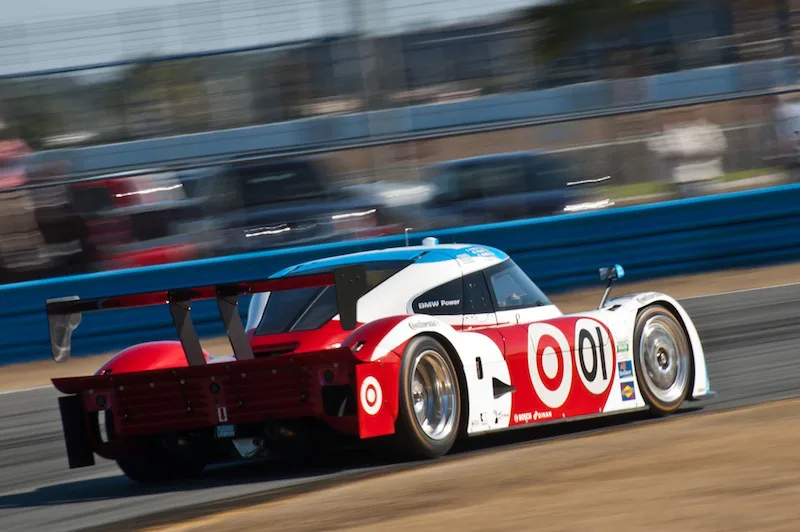
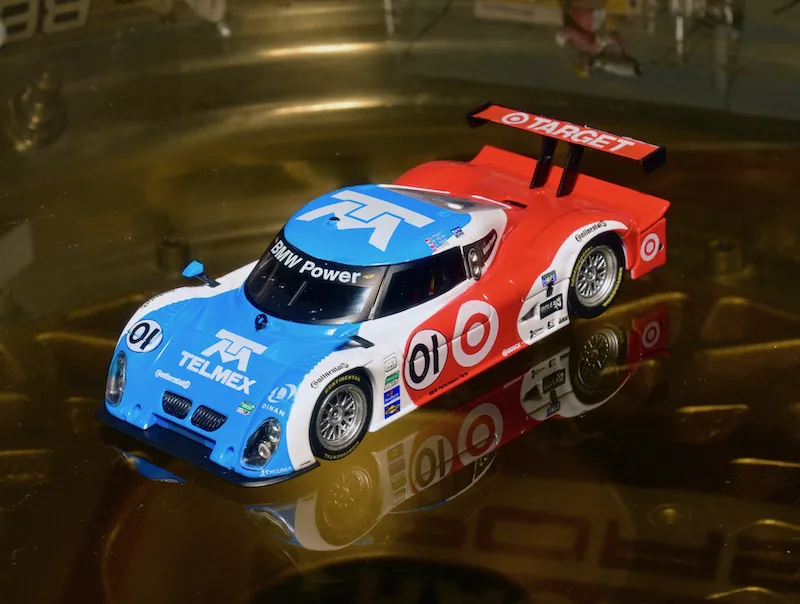
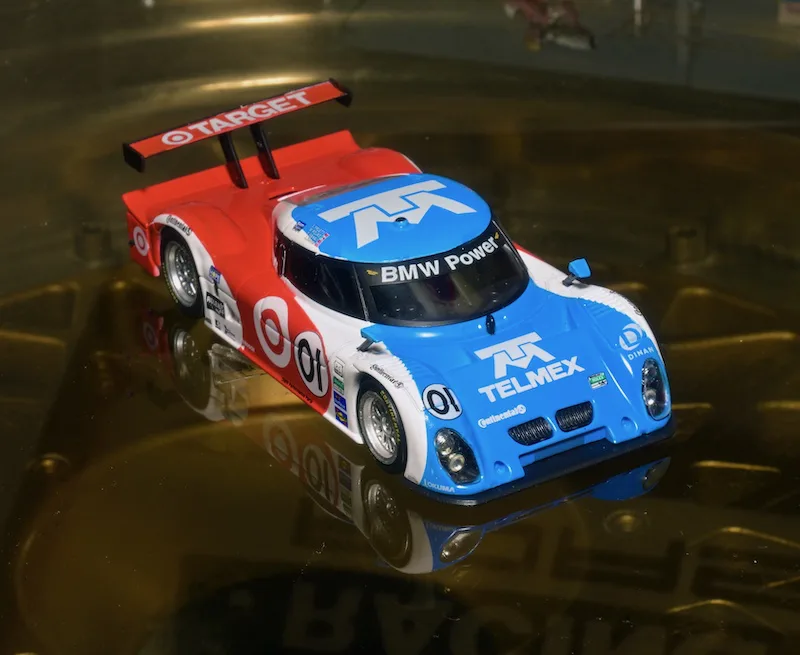
- ALTAYA Passion de la vitesse 14 (diecast)
- Overall rating: 3 STARS | Quality details: 3 STARS | Estimated value: 2 STARS
- Also appears in #092 Riley
Cars entered as BMW
1986 IMSA Portland 300 km, BMW GTP
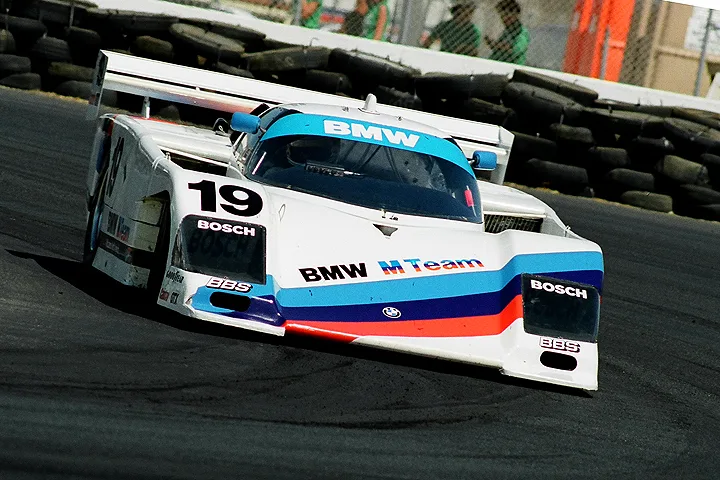
BMW had been succesful in USA with their touring cars and in Formula 1 with their turbo engines. The Germans decided to combine and bought two March chassis which they equiped with a 2-liter version of their 4 cylinder F1 turbo engine. The cars were powerful (upto 1000 bhp in qualifying) but hard to drive and not very reliable. Davy Jones and John Andretti managed a win at Watkins Glen. The best result of #19, driven by John Watson and David Hobbs was 4th at Portland. They could have won the race, but were delayed by a problem with the seat belts during the driver change.
BMW M Team #19:John Watson (GB) / David Hobbs (GB)
Results: Start-grid 8th / time unknown / race 4th – 97 laps
BMW GTP – IMSA GTP: Powered by 2.0 liter BMW M12/14 straight-4 turbo, approx. 800 hp. Goodyear tires. Weight 910 kg. Aluminum monocoque, chassisnr. March 86G #02
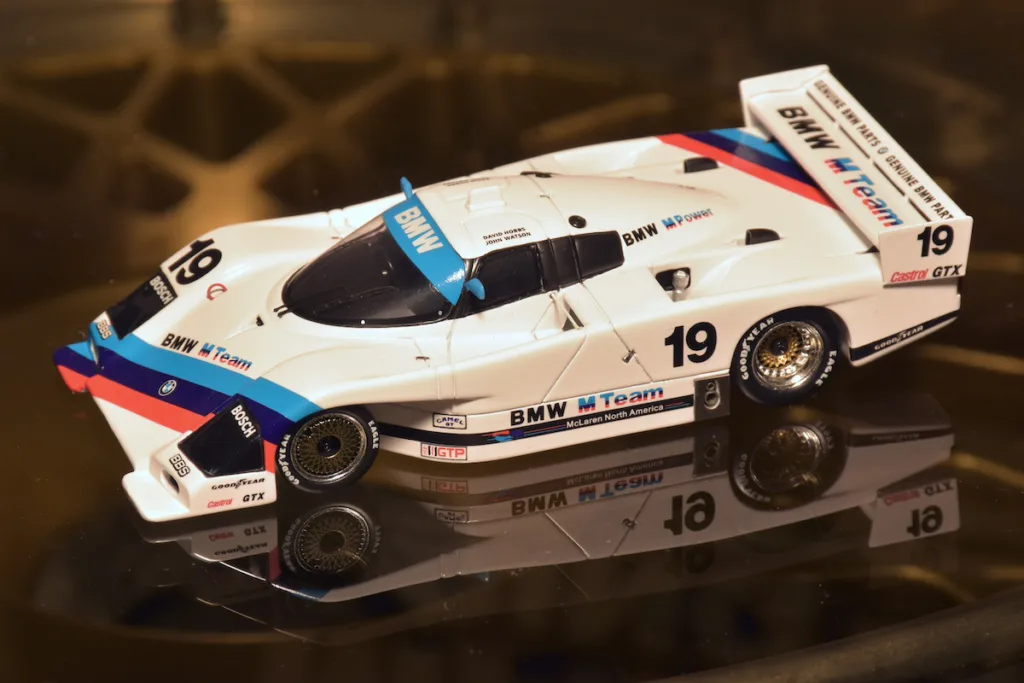
- SPARK S2571 (resin)
- Overall rating: 4 STARS | Quality details: 4 STARS | Estimated value: 4 STARS
- Also appears in #034 BMW Motorsport – part I / #107 Group C
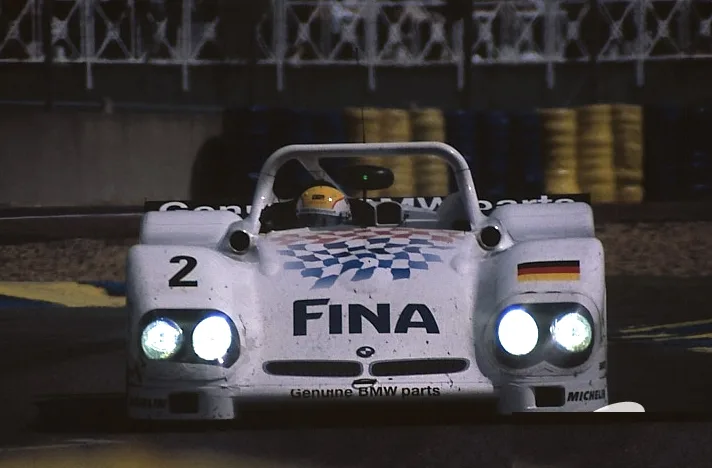
1998 Le Mans 24h, BMW V12 LM
The BMW V12 prototype is powered by the same reliable V12 that propelled the McLarens and should have ended the race without problems. The V12 LM were designed by Williams and operated by the Bigazzi team. Both cars retired early in the race by faulty wheel bearings. The cars would be sold to privateers for next years’ race and BMW had the new cars prepared by Schnitzer.
Team BMW Motorsport (Bigazzi) #1: Tom Kristensen (DK) / Hans Joachim Stuck (D) / Steve Soper (GB)
Results: Start-grid 12th / time 3:41.599 / race DNF wheel bearings / vibrations – 60 laps
Team BMW Motorsport (Bigazzi) #2: Johnnny Cecotto (VEN) / Joachim Winkelhock (D) / Pierluigi Martini (I)
Results: Start-grid 6h / time 3:38.829 / race DNF wheel bearings / vibrations – 43 laps
BMW V12 LM – LMP1: Powered by 6.0 liter BMW S70/3 V12 60º, approx. 550 hp. Michelin tires. Weight 900 kg. Carbon fibre monocoque, chassisnrs. Williams #001/98 & Williams #002/98
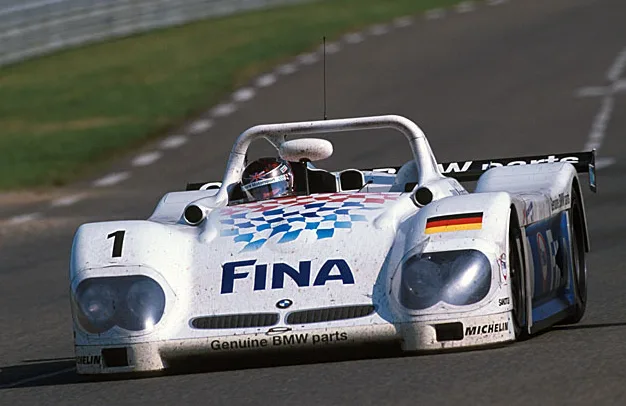
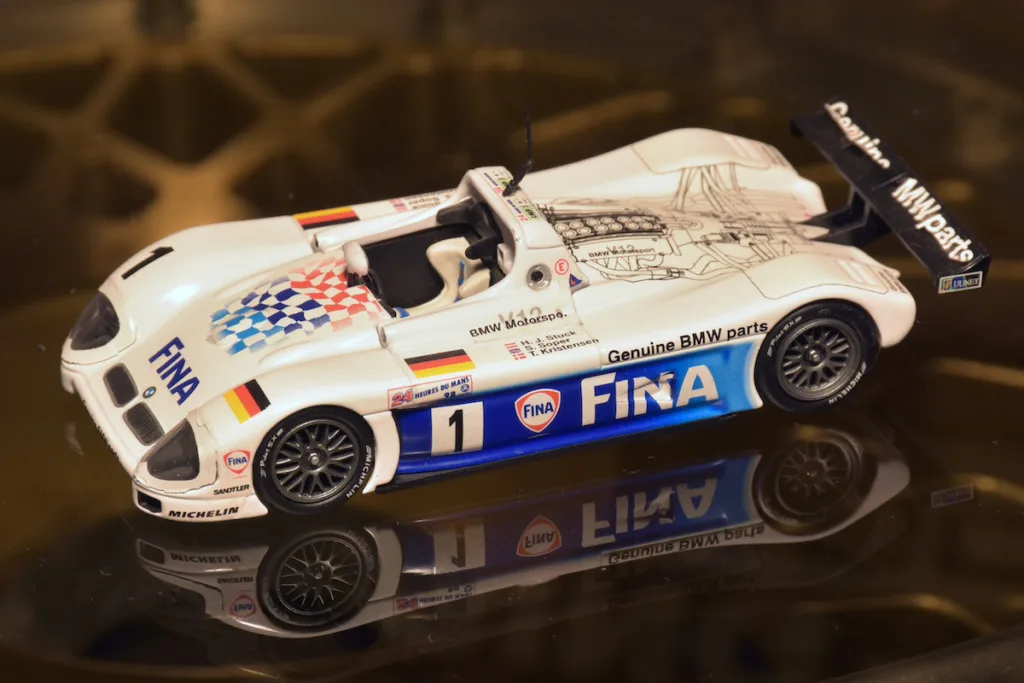
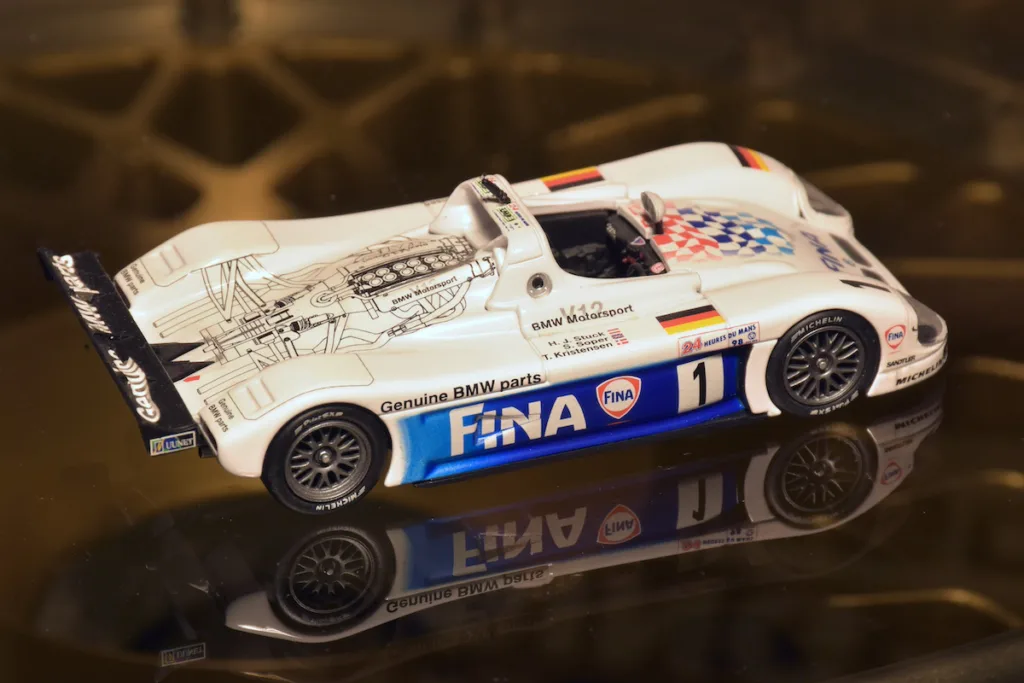
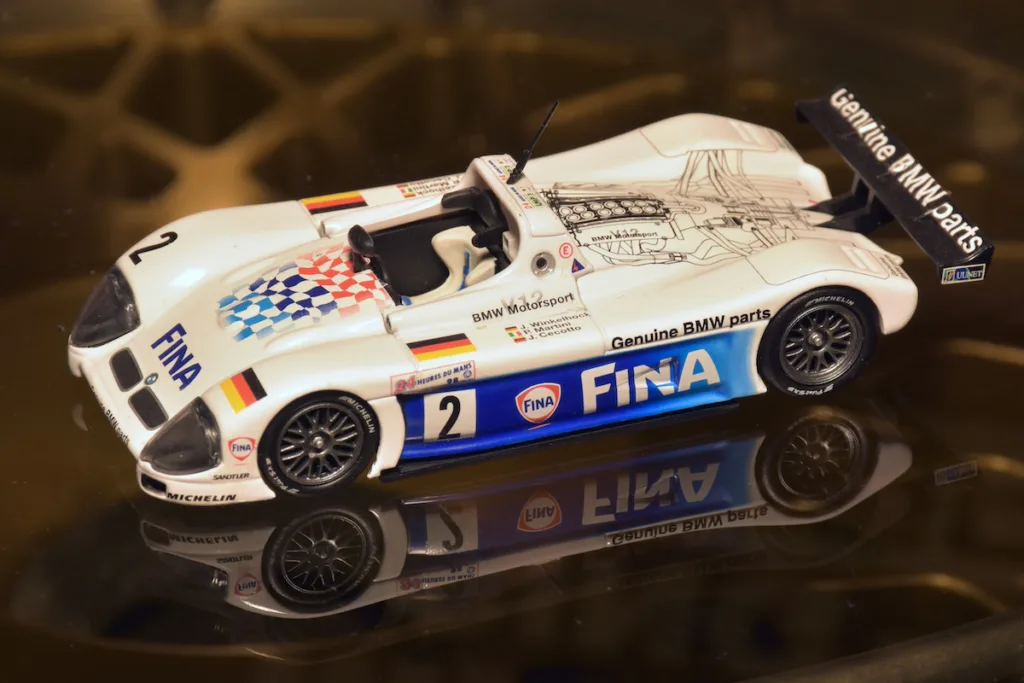
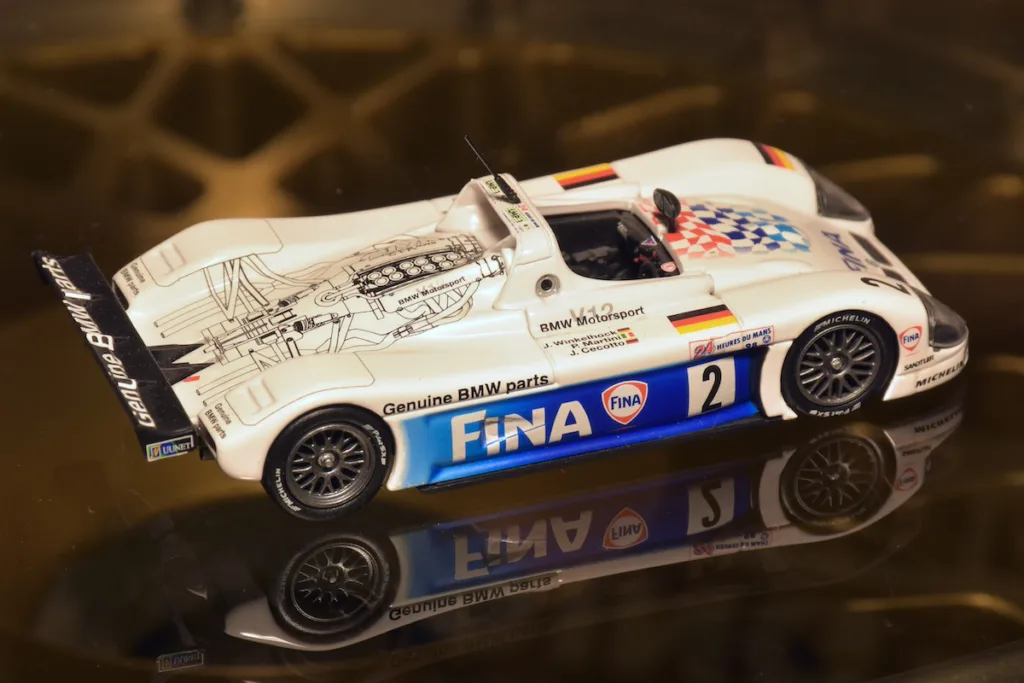
- MINICHAMPS BMW 80 42 9 422 941 & BMW 80 42 9 422 942 (diecast)
- Overall rating: 3 STARS | Quality details: 3 STARS | Estimated value: 3 STARS
- Both appear in #035 BMW Motorsport part II / #1 Also in #111 Tom Kristensen /
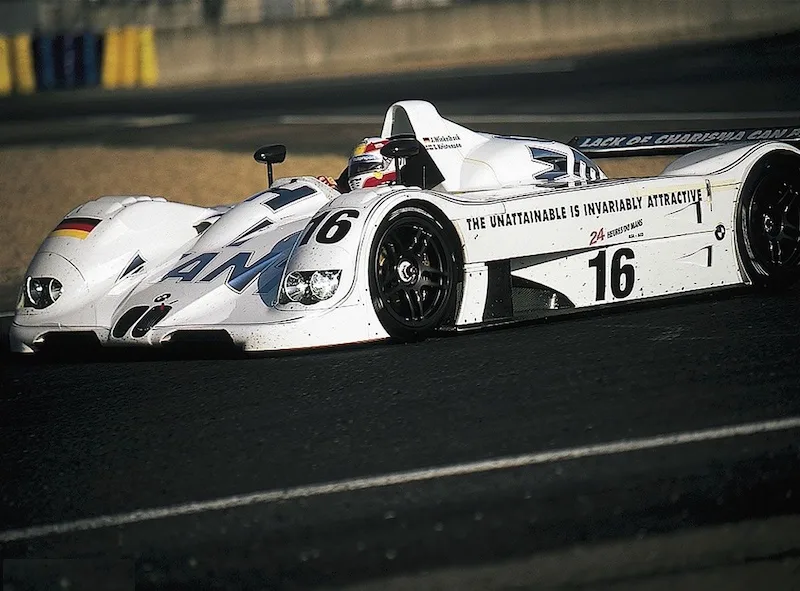
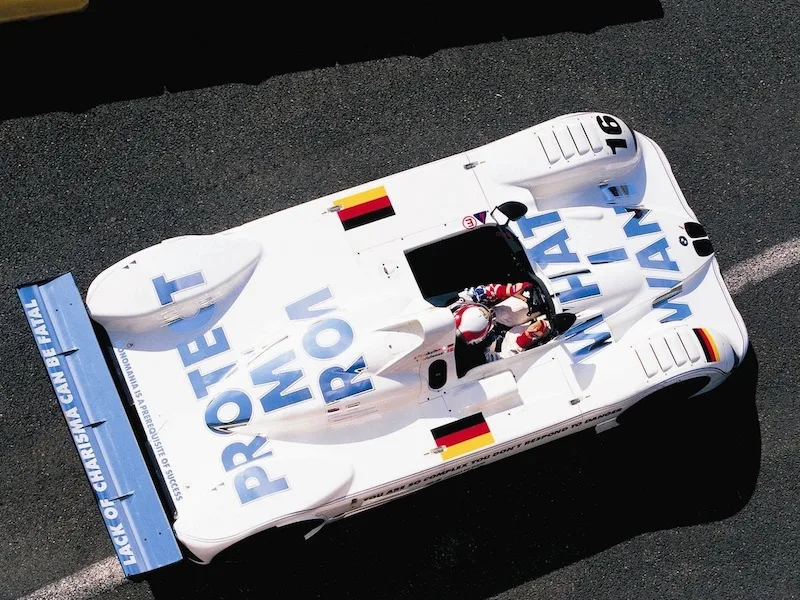
1999 Le Mans test, BMW V12 LMR
BMW entered three cars for the test day of this year’s Le Mans. #16 was a real Art Car designed by German artist Jenny Holzer. It didn’t compete in the 24-hour race where BMW only entered the #15 and #17 cars, not without success.
BMW Motorsport #16: Tom Kristensen (DK) / Joachim Winkelhock (D)
Results: Pre-race test 5th / time unknown / DNS race
BMW V12 LMR – LMP1. Powered by 6.0 liter BMW S70/3 V12 60º, approx. 550 hp. Michelin tires. Weight 900 kg. Carbon fibre monocoque, chassisnr. Williams #004/99

- MINICHAMPS BMW 80 42 0 008 552 (diecast)
- Overall rating: 3 STARS | Quality details: 3 STARS | Estimated value: 3 STARS
- Also appears in #002 BMW Art Cars
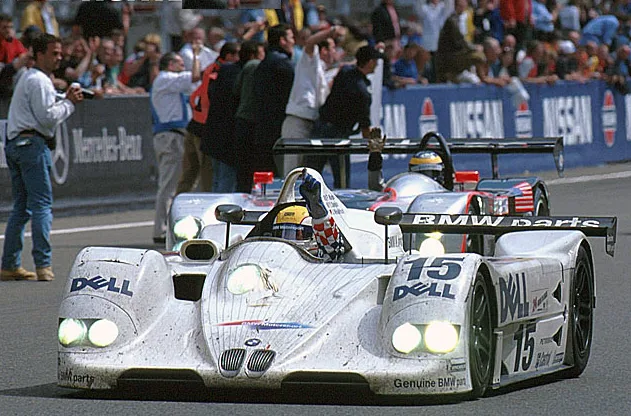
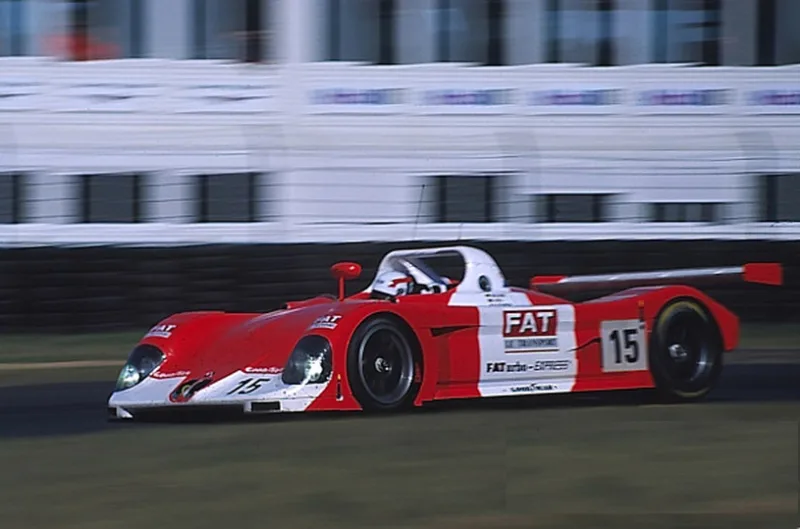
1999 Le Mans 24h, BMW V12 LMR
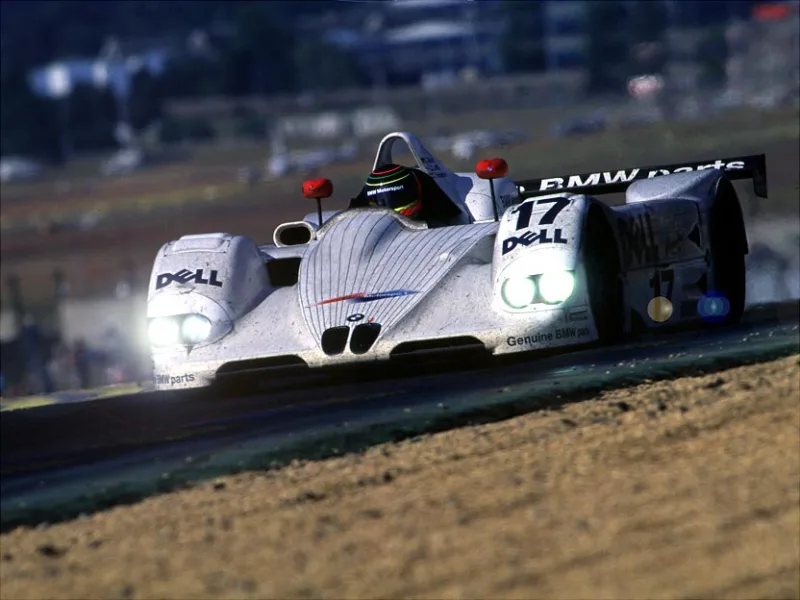
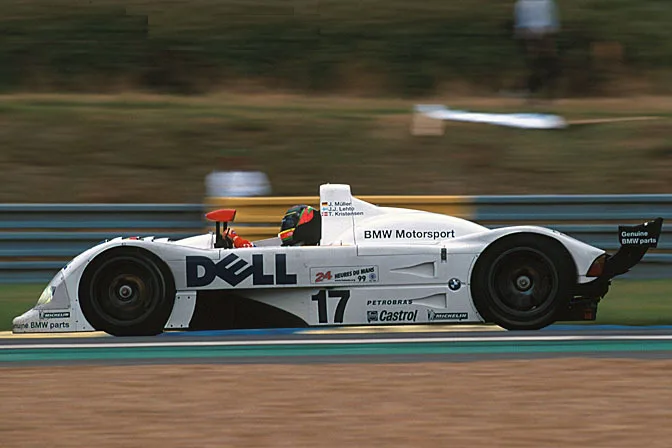
After last year’s disaster, BMW developed a brand new car and had it run by the very experienced Schnitzer Team. The #15 won Le Mans after a fierce battle with Toyota, the #17 was crashed by Lehto with just 3 hours to go while he was in the lead by 4 laps. A stuck throttle was the cause, it could have been Kristensen’s 2nd Le Mans win.
BMW Motorsport (Schnitzer) #15: Pierluigi Martini (I) / Yannick Dalmas (F) / Joachim Winkelhock (D)
Results: Start-grid 3rd / time 3:33.931 / race 1st – 366 laps
BMW Motorsport (Schnitzer) #17: Tom Kristensen (DK) / J.J. Lehto (FIN) / Jörg Müller (D)
Results: Start-grid 3rd / time 3:31.209 / race DNF accident – 304 laps
BMW V12 LMR – LMP1: Powered by 6.0 liter BMW S70/3 V12 60º, approx. 550 hp. Michelin tires. Weight 900 kg. Carbon fibre monocoque, chassisnrs. Williams #003/99 & Williams #004/99
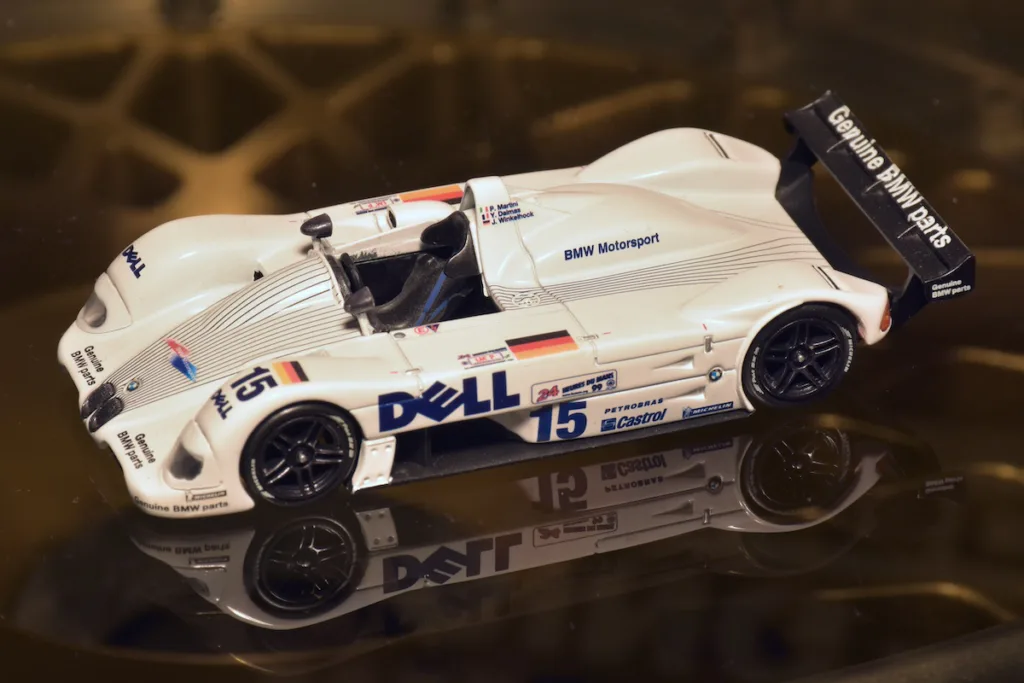
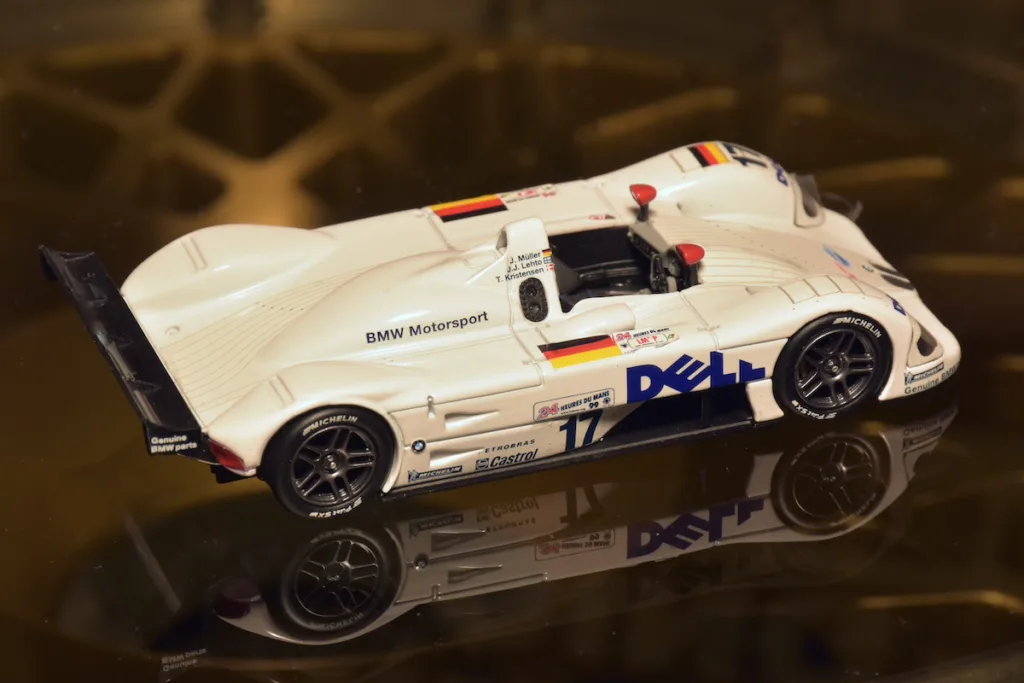
- REVELL 28247 (diecast)
- Overall rating: 2 STARS | Quality details: 2 STARS | Estimated value: 2 STARS
- ONYX Le Mans Collection XLM 99020 (diecast)
- Overall rating: 2 STARS | Quality details: 2 STARS | Estimated value: 2 STARS
- Both appear in #035 BMW Motorsport part II
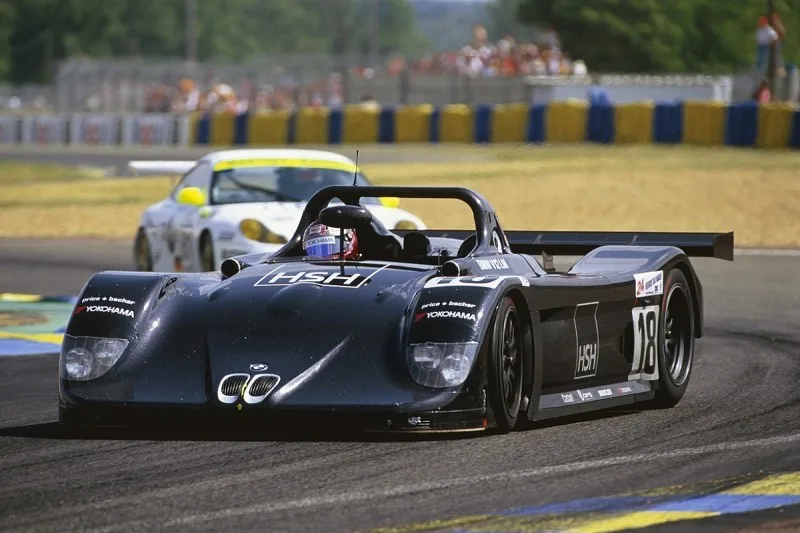
1999 Le Mans 24h, BMW V12 LM
This former factory cars from 1998 was entered by Dr.Thomas Bscher, technical support was provided by David Price Racing. The car has changed its looks to show more resemblance to the 1999 factory cars. The team did well and finished 5th overall, being first of the privateers.
Thomas Bscher / David Price #18: Thomas Bscher (D) / Bill Auberlen (USA) / Steve Soper (GB)
Results: Start-grid 18th / time 3:40.359 / race 5th – 346 laps
BMW V12 LM – LMP900: Powered by 6.0 liter BMW S70/3 V12 60º, approx. 600 hp. Yokohama tires. Carbon fibre monocoque, chassisnr. #001/98 (Williams)
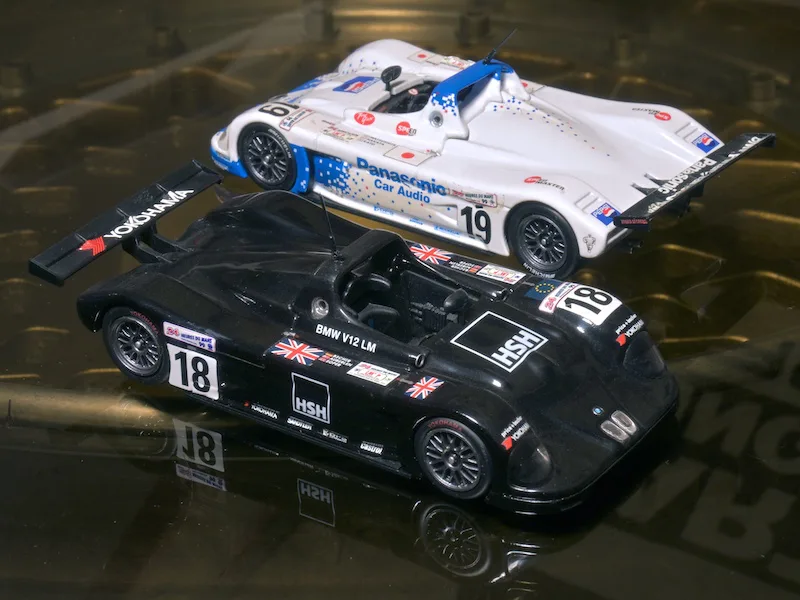
- MINICHAMPS BMW 80 42 0 009 608 (diecast)
- Overall rating: 3 STARS | Quality details: 3 STARS | Estimated value: 3 STARS
- Only appears in this collection
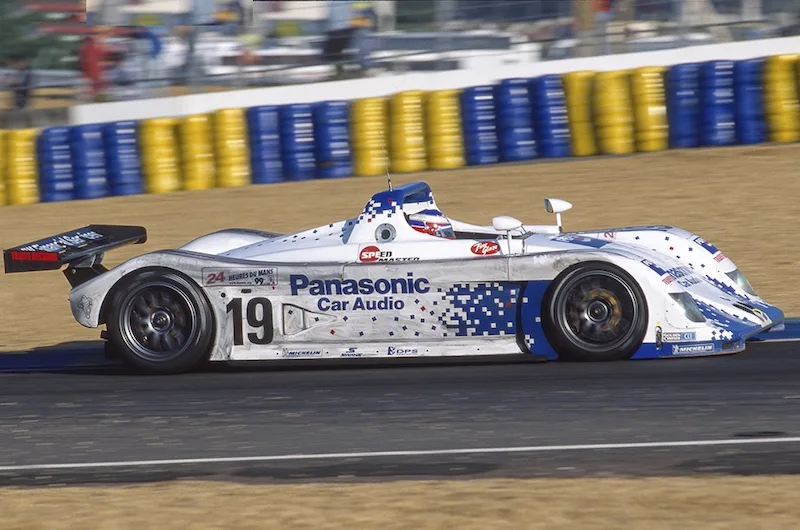
1999 Le Mans 24h, BMW V12 LM
Another former V12 LM was entered by Japanese Team Goh and driven by an entire Japanese crew. They were faster in qualifying than the Thomas Escher entry but less reliable, it had to retire with a broken gearbox.
Thomas Bscher / David Price #19: Hiroki Kato (J) / Akihiko Nakaya (J) / Hiro Matsushita (J)
Results: Start-grid 15th / time 3:38.478 / race DNF gearbox – 223 laps
BMW V12 LM – LMP900: Powered by 6.0 liter BMW S70/3 V12 60º, approx. 600 hp. Michelin tires. Carbon fibre monocoque, chassisnr. #002/98 (Williams)
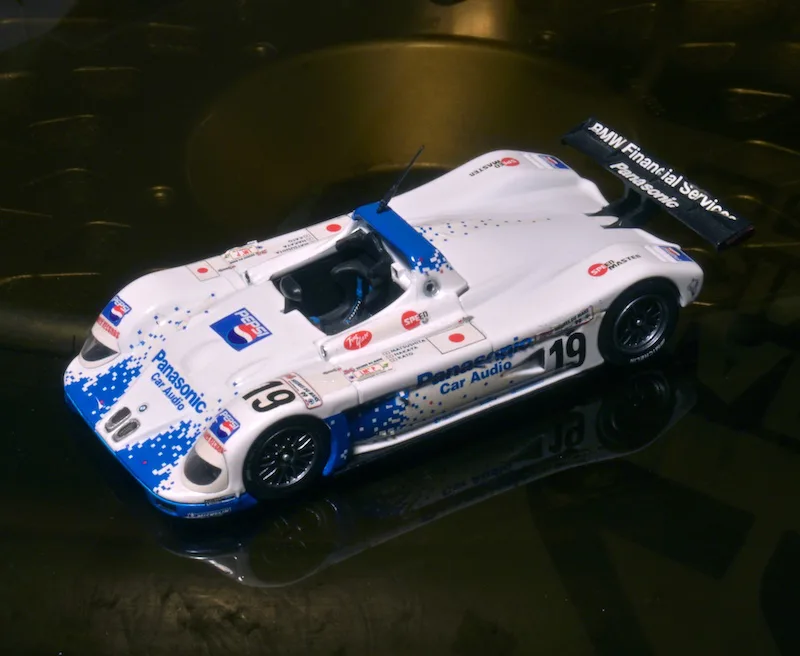
- MINICHAMPS MC 430 992819 (diecast)
- Overall rating: 3 STARS | Quality details: 3 STARS | Estimated value: 3 STARS
- Only appears in this collection
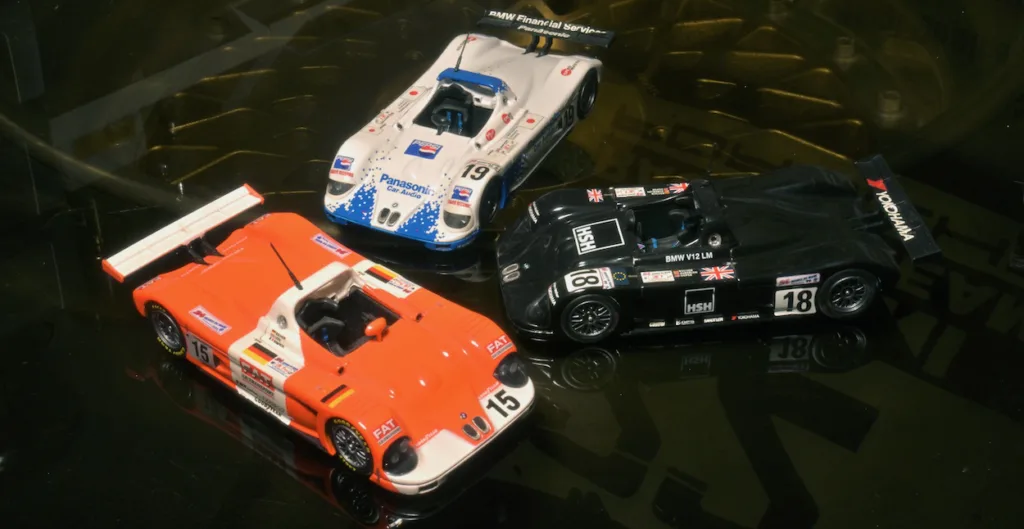
2000 Le Mans 24h, BMW V12 LM
The former BMW factory car from 1998 was entered by Dr.Tomas Bscher, technical support came from David Price Racing. In the previous year, the car finished 5th but this year it had to retire because the gearbox broke as a result of two earlier crashes by Gounon.
Thomas Bscher / David Price #18: Dr. Tomas Bscher (CZ) / Geoff Lees ( GB) /Jean-Marc Gounon (F)
Results: Start-grid 21st / time 3:47.493 / race DNF gearbox / damage – 180 laps
BMW V12 LM – LMP900: Powered by 6.0 liter BMW S70/3 V12 60º, approx. 600 hp. Carbon fibre monocoque, chassisnr. #001/98 (Williams)

- MINICHAMPS MC 430 002815 (diecast)
- Overall rating: 3 STARS | Quality details: 3 STARS | Estimated value: 2 STARS
- Also appears in #063 Marlboro
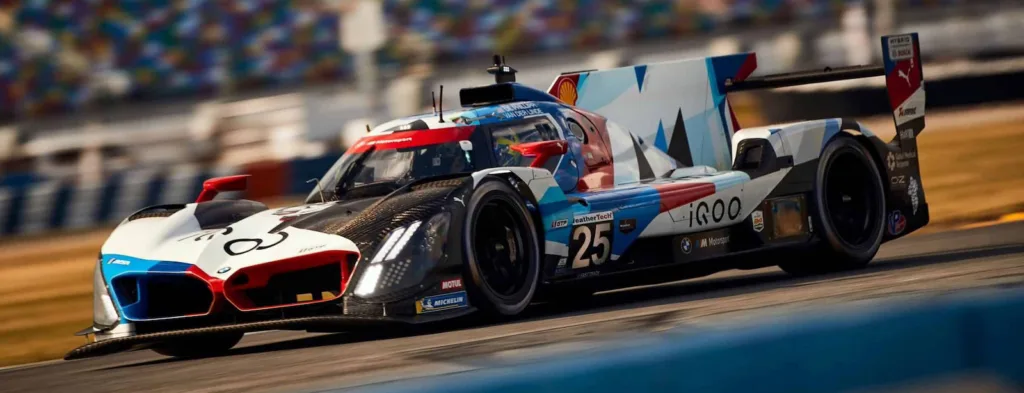
2023 Daytona 24h, BMW M Hybrid V8
BMW chose Dallara for the chassis and added a twin-turbo V8 that was based on a DTM-engine. The BMW’s lacked some speed and reliability in the beginning of the season, but developed well. The IMSA cars are raced by Rahal Letterman Lannigan, in 2024 the BMW M Hybrids are also present in FIA WEC by Belgian WRT team.
BMW M Team RLL #25: Connor de Phillippi (USA) / Colton Herta (USA) / Sheldon van der Linde (SA) / Nick Yelloly (GB)
Results: Start-grid 8th / time 1:34.846 / race 48th – 652 laps / 8th GTP
BMW M Hybrid V8 – IMSA GTP (LMDh): Powered by 4.0 liter BMW P66/3 V8 90° twin turbo hybrid – approx. 680 hp. Michelin tires. Weight 1050 kg. Carbon fibre monocoque, chassisnr. Dallara #unknown.
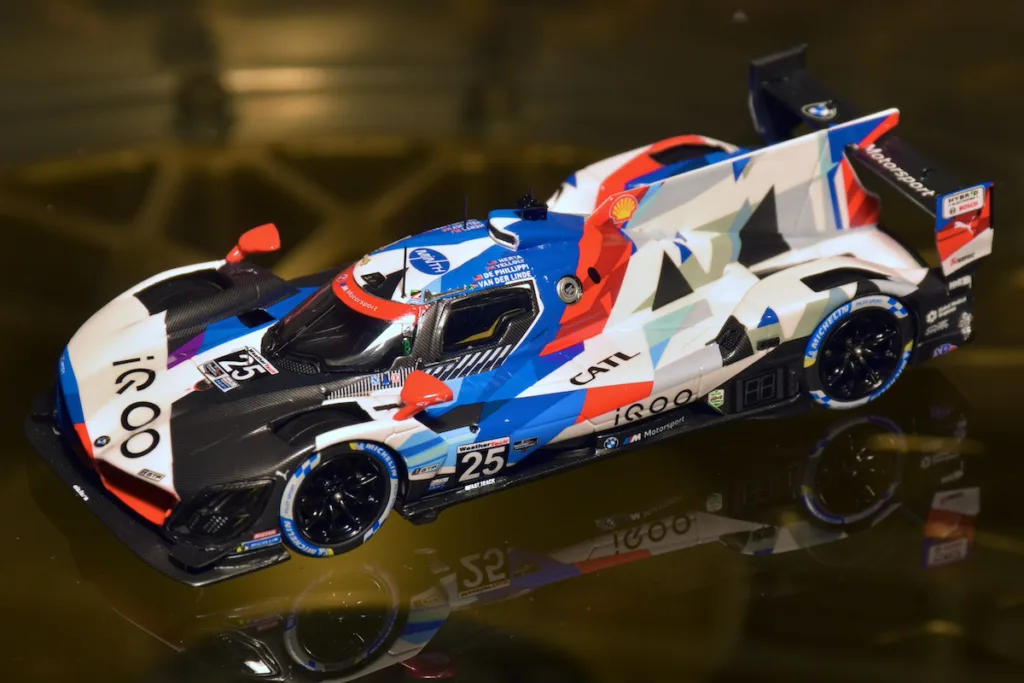
- TRUE SCALE MINIATURES TSM430704
- Overall rating: 4 STARS | Quality details: 5 STARS | Estimated value: 4 STARS
- Also appears in #035 BMW Motorsport part II
2024 Le Mans 24h, BMW M Hybrid V8
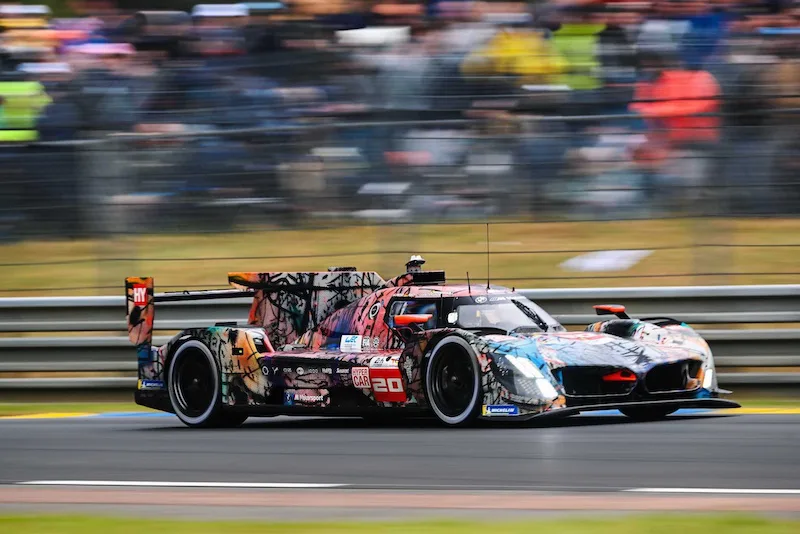
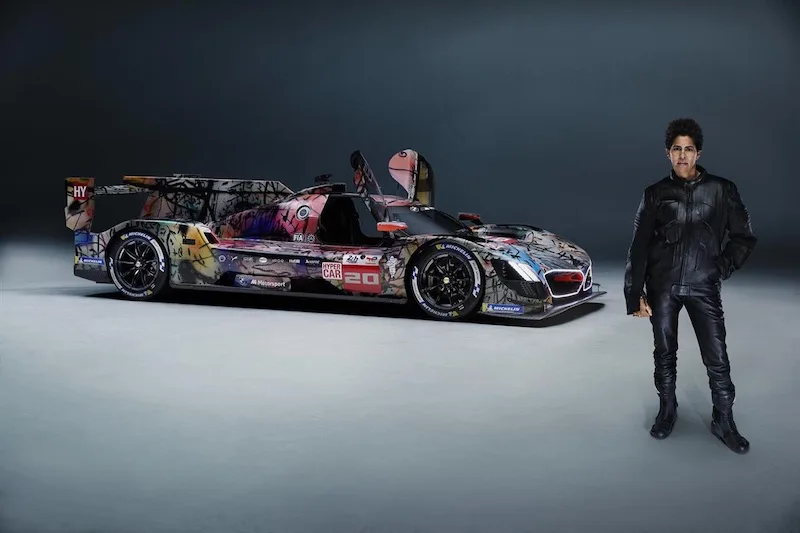
It took 25 years before BMW was back at Le Mans with an official Art Car. The M Hybrid V8 #20 was designed by Julie Mehretu, an American artist with Ethiopian roots. The race was very troublesome and however the car finished it wasn’t classified because it covered insufficient distance.
BMW Motorsport: #20 René Rast (D) / Robin Frijns (NL) / Sheldon van der Linde (SA)
Results: Start-grid 16th / time 3:26.223 / race DNC – 96 laps
BMW M Hybrid V8 – Hypercars LMDh: Powered by 4.0 liter BMW P66/3 V8 90° twin turbo hybrid – approx. 680 hp + 70 hp. Michelin tires. Weight 1050 kg. Carbon fibre monocoque, chassisnr. Dallara #P22B 005.

- NOREV BMW BMW 80 42 5 B54 CD0 (diecast)
- Overall rating: 4 STARS | Quality details: 4 STARS | Estimated value: 4 STARS
- Also appears in #002 BMW Art Cars
2025 Le Mans 24h, BMW M Hybrid V8
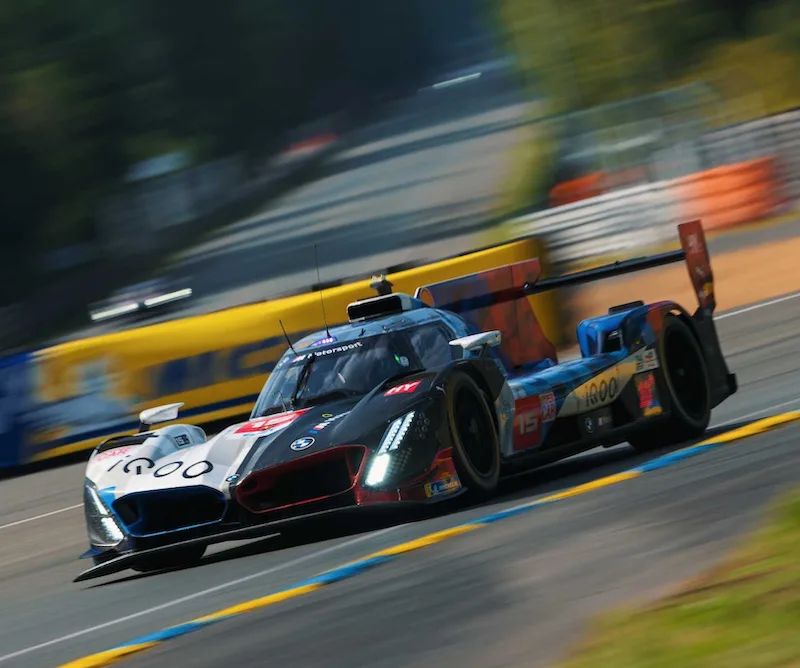
The operation of the BMW M Hybrid V8 is now in the hands of Belgian Team WRT, both in the IMSA Championship and the World Endurance Championship. The two cars that race in the WEC have different liveries this year. The #15 is still white with red and blue, the caracteristic BMW color scheme. The #20 that raced as an Art Car last year is now red-yellow and black. The colors of the German flag but also matching the sponsorship of Shell. Both cars were fast in qualifying, starting from the second and third row but again in the race they disappointed. The first BMW win finally took place in the Spa 6h in May 2026.
BMW M Team WRT #15: Dries Vanthoor (B) / Kevin Magnussen (DK) / Raffaele Marciello (I)
Results: Start-grid 4th / time 3:22.887 / race 31st – 361 laps
BMW M Hybrid V8 – Hypercars LMDh. Powered by 4.0 liter BMW P66/3 V8 90° twin turbo hybrid – approx. 680 hp + 70 hp. Michelin tires. Weight 1050 kg. Carbon fibre monocoque, chassisnr. Dallara #P22B 009.
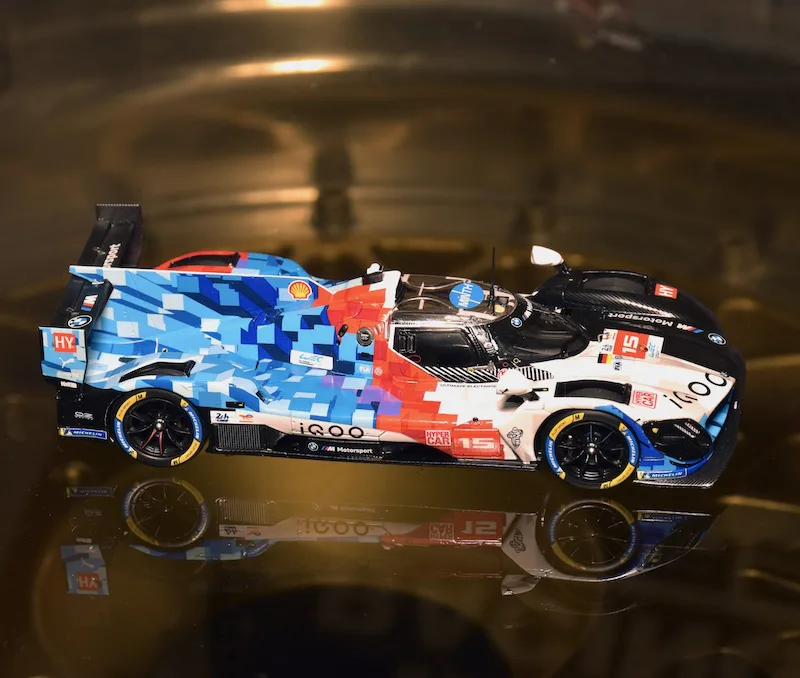
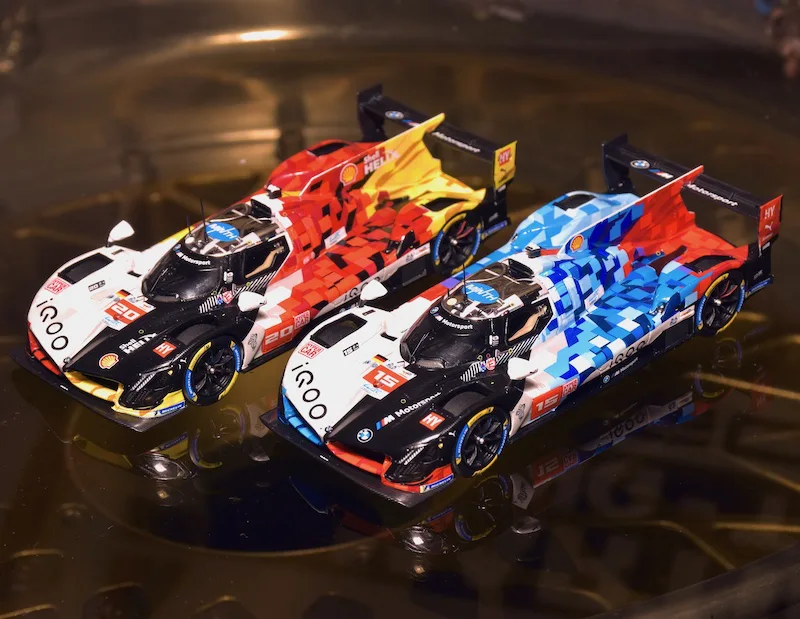
- SPARK S9262 (resin)
- Overall rating: 4 STARS | Quality details: 5 STARS | Estimated value: 4 STARS
- Also appears in #035 BMW Motorsport – part II
BMW M Team WRT #20: Robin Frijns (NL) / Sheldon van der Linde (SA) / René Rast (D)
Results: Start-grid 6th / time 3:23.250 / race 17th – 375 laps
BMW M Hybrid V8 – Hypercars LMDh. Powered by 4.0 liter BMW P66/3 V8 90° twin turbo hybrid – approx. 680 hp + 70 hp. Michelin tires. Weight 1050 kg. Carbon fibre monocoque, chassisnr. Dallara #P22B 007.
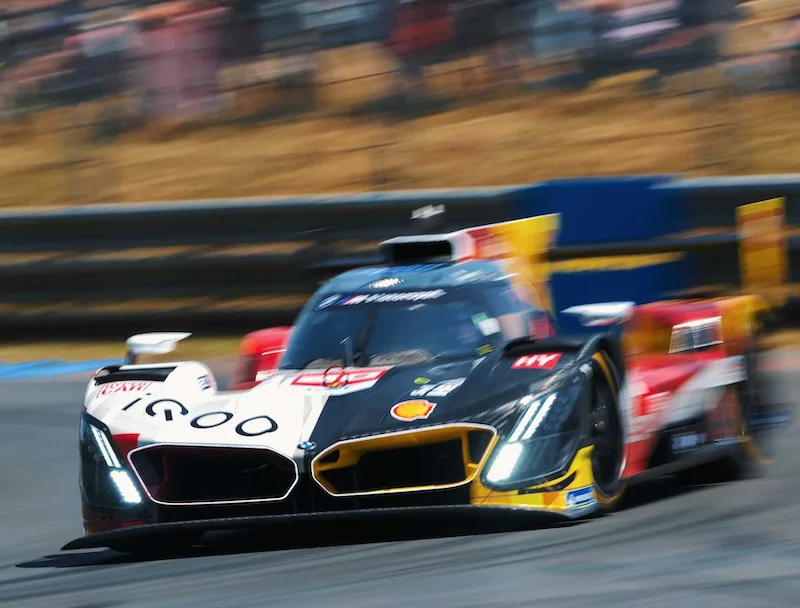
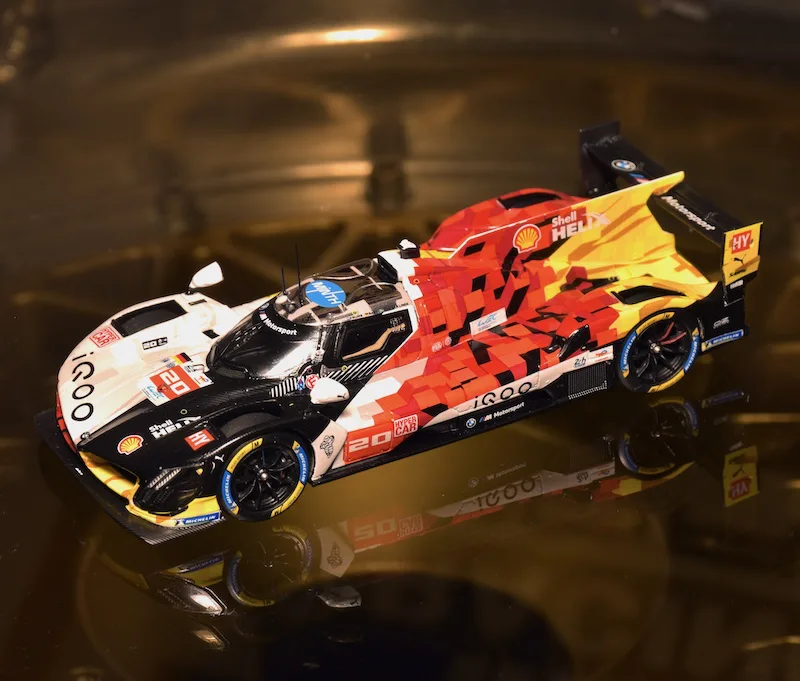
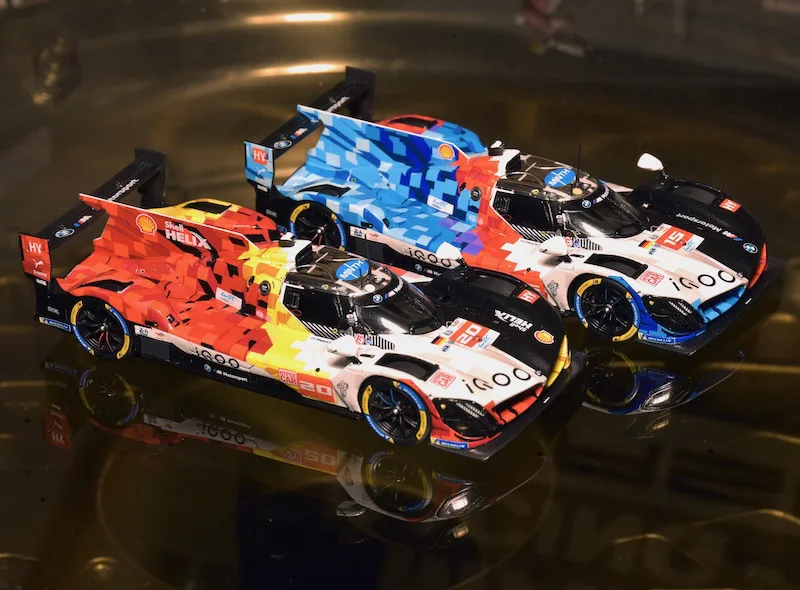
- SPARK S9263 (resin)
- Overall rating: 4 STARS | Quality details: 5 STARS | Estimated value: 4 STARS
- Also appears in #060 Shell