Published May 31, 2026 | Last update November 19, 2026 | 32 models online
One of the most, if not the most iconic GT in history is the Porsche 911. Introduced as Porsche 901 in 1964, it soon became a popular car in motorsports. The concept of the rear-engined car with flat-6 engine is still the same, all the rest has changed. Air-cooled became water-cooled, small engine capacity became a big 4.2 liter that revs 10.000 rpm in GT3 specs, the original torsion-bar suspension has also gone.
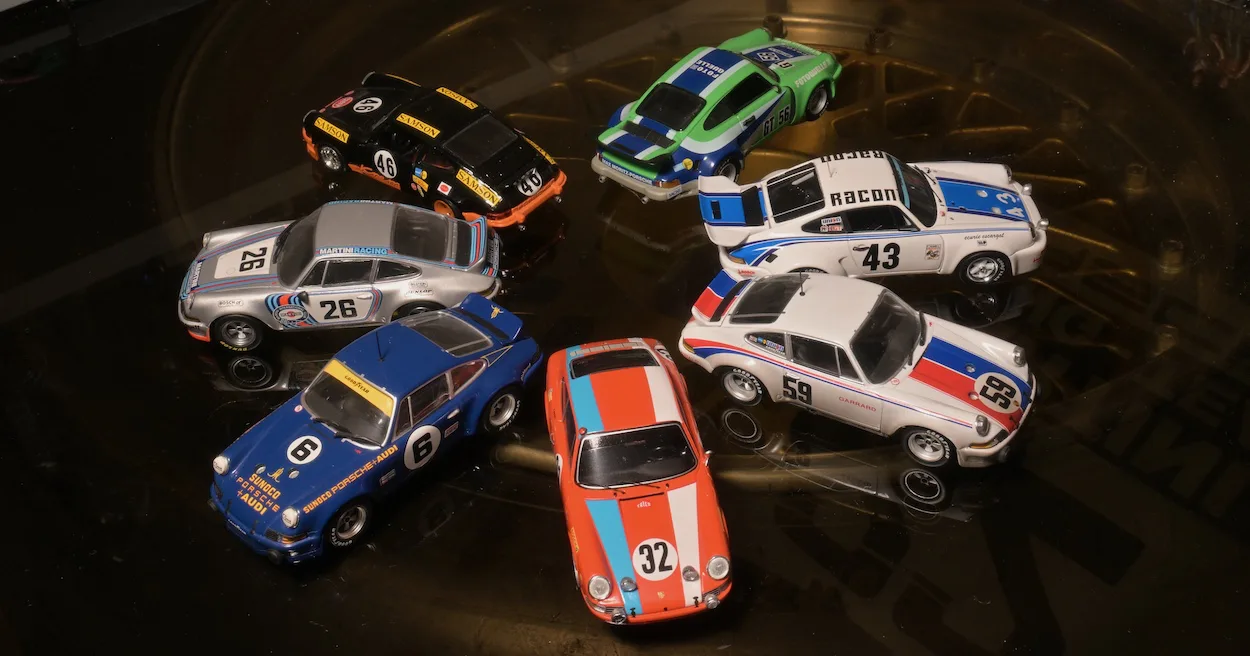
This topic shows the 911 in its original shape, including the Carrera RS and RSR (RSK in case of Team Kremer) versions but without the other special versions such as long tails, wide bodies, big wing versions or turbos.
- This collection contains:
- 911
- 1968 Spa-Francorchamps 24h – Porsche 911 L Kremer
- 1972 Le Mans 24h – Porsche 911 S/T Hall / Meznarie
- 1972 Le Mans 24h – Porsche 911 S Georg Loos
- 1972 Le Mans 24h – Porsche 911 S Kremer
- 1972 European GT Championship – Porsche 911 S Kremer
- 1972 IMSA GT Championship – Porsche 911 S Brumos
- 911 Carrera RS/RSR/RSK
- 1972 Porsche 911 Carrera RS Street
- 1972 Test Paul Ricard – Porsche 911 Carrera RSR Porsche
- 1973 Daytona 24h – Porsche 911 Carrera RSR Penske
- 1973 Daytona 24h – Porsche 911 Carrera RSR Brumos
- 1973 Sebring 12h – Porsche 911 Carrera RSR Brumos / Helmick
- 1973 TransAm championship – Porsche 911 Carrera RSR Holbert
- 1973 Vallelunga 6 hours, Porsche 911 Carrera RSR Martini Porsche 2x
- 1973 Dijon 1000 km – Porsche 911 Carrera RSR Martini Porsche
- 1973 Le Mans 4h – Porsche 911 Carrera RSR Martini Porsche
- 1973 Targa Florio – Porsche 911 Carrera RSR Martini Porsche
- 1973 Le Mans 24h – Porsche 911 Carrera RSR Georg Loos
- 1973 Le Mans 24h – Porsche 911 Carrera RSK Kremer
- 1973 Spa-Francorchamps 1000 km – Porsche Carrera RSK Kremer
- 1973 Monza 1000 km – Porsche Carrera RSK Kremer
- 911 Carrera RSR/RSK 3.0 liter
- 1974 Spa-Francorchamps 1000 km – Porsche Carrera RSK Kremer
- 1974 Nürburgring 1000 km – Porsche 911 Carrera RSR Georg Loos
- 1974 Nürburgring 1000 km – Porsche 911 Carrera RSR Max Moritz
- 1974 Imola 1000 km – Porsche Carrera RSK Kremer
- 1974 TransAm championship – Porsche 911 Carrera RSR Holbert
- 1975 Daytona 24h – Porsche 911 Carrera RSR Brumos
- 1975 Le Mans 24h – Porsche 911 Carrera RSR Georg Loos
- 1975 Nürburgring 1000 km – Porsche Carrera RSK Kremer
- 1975 Nürburgring Supersprint – Porsche Carrera RSK Kremer 3x
- 1977 Daytona 24h – Porsche 911 Carrera RSR Ecurie Escargot
911
1968 Spa-Francorchamps 24h, Porsche 911 L
1968 was only the 5th running of the 24-hour race at Spa-Francorchamps. It already was very popular with teams and spectators. The battle went on between the fast Alfa Romeo 1600 GTA’s and Porsche 911’s that had a small 2-liter engine in those years. The Porsche 911L prepared by Kremer took victory in a time that Erwin Kremer himself drove as well.
Kremer Porsche #32: Erwin Kremer (D) / Helmut Kelleners (D) / Willi Kauhsen (D)
Results: Start-grid 1st / time 4:23.000 / race 1st – 284 laps
Porsche 911 L – Touring division 3 >1.6L: Powered by 2.0 liter Porsche flat-6, approx.170 hp. Dunlop tires. Weight 850 kg. Steel monocoque, chassisnr. unknown.


- SPARK Kremer Racing 50 years MAB009 #209 / 300 pcs (resin)
- Overall rating: 4 STARS | Quality details: 4 STARS | Estimated value: 4 STARS
- Appears in #085 Kremer GT / #096 classics ’50s & ’60s
1972 Le Mans 24h, Porsche 911 S/T
With support from the Porsche Club of America and Porsche Customer Racing, Toad Hall Racing entered this 2.5 liter Porsche 911 S/T at Le mans 1972. Drivers were Michael Keyser (who also was famous for his book about Steve McQueen making the Le Mans movie) and Porsche engineer Jürgen Barth. Sylvain Garant and French tuner Louis Meznarie joined for the 24h race of Le Mans. It was the only 911 that reached the finish of the grueling race. A fully restored car was presented at the Techno Classica show in Essen in 2016.
Toad Hall / Meznarie #41: Michael Keyser (USA) / Jürgen Barth (D) / Sylvain Garant (F)
Results: Start-grid 44th / time 4:37.900 / race 13th – 285 laps / 1st in class.
Porsche 911 S/T – GT <2.5L: Powered by 2.5 liter Porsche 911/70 flat-6 injection, approx. 250 hp. Firestone tires. Weight 900 kg. Steel monocoque, chassisnr. #911 230 0538


- SPARK Porsche Classic WAX 020 200 33 – limited 500 pcs (resin)
- Overall rating: 4 STARS | Quality details: 4 STARS | Estimated value: 4 STARS
- Appears in #040 Classic 911 / #093 American Porsche GT teams
1972 Le Mans 24h, Porsche 911 S
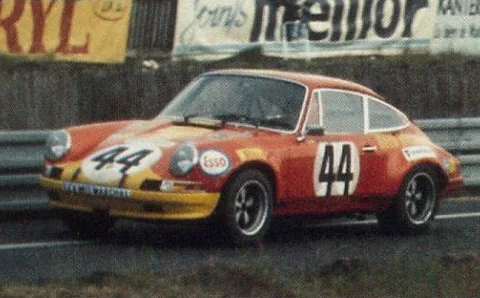
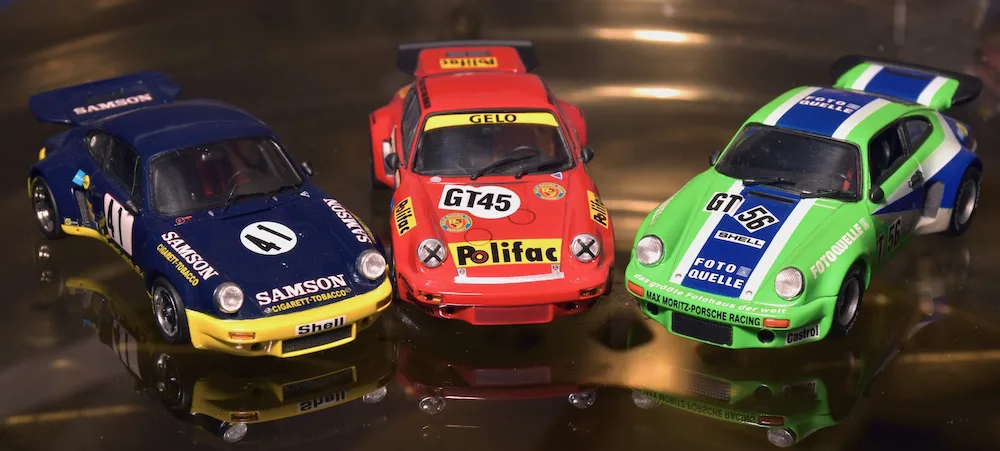
Georg Loos and Franz Pesch teamed up with French Jean Sage for the 1972 Le Mans, but unfortunately retired with a broken engine. The 911’s that raced Le Mans in 1972 were not much more than improved street cars, the Carrera RSR that would arrive in the next year had been developed as a racing car and much more reliable.
Gelo Racing #44: Jean Sage (F) / Georg Loos (D) / Franz Pesch (D)
Results: Start-grid 52nd / time 4:46.200 / race DNF engine – 64 laps
Porsche 911 S – GT: Powered by 2.5 liter Porsche 911/70 flat-6 injection, approx. 230 hp. Dunlop tires. Weight 900 kg. Steel monocoque, chassisnr. #911 230 0955

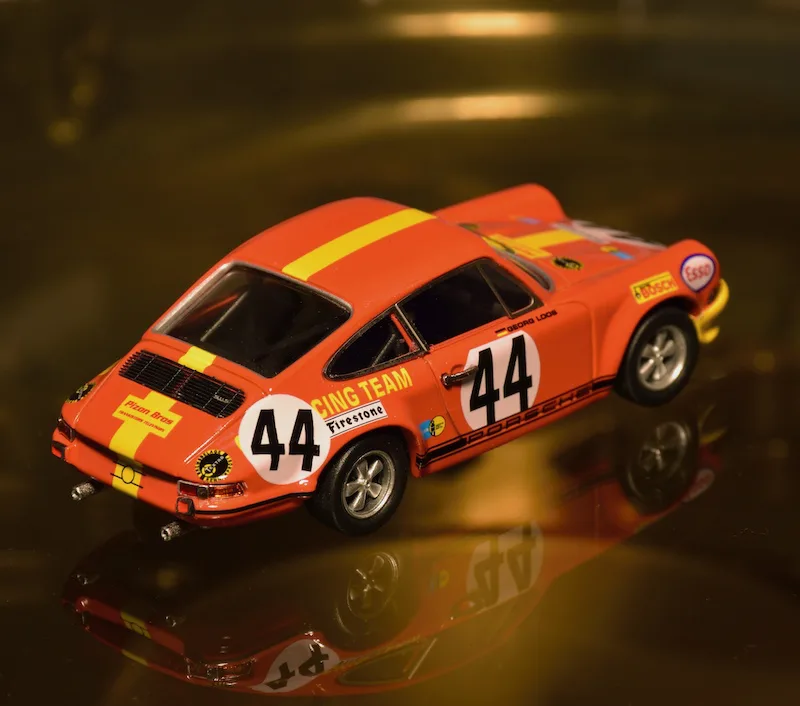
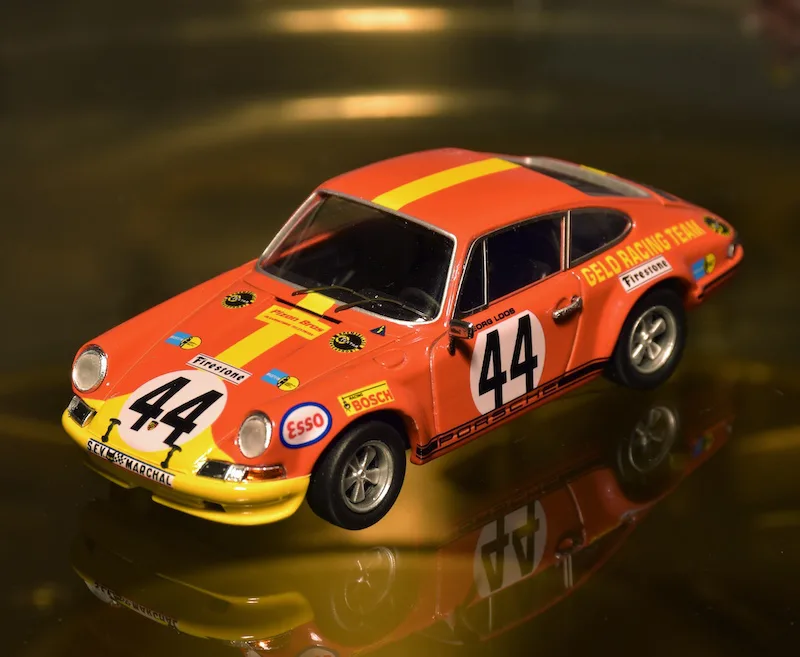
- TROFEU DSN264 limited 150 pcs (resin)
- Overall rating: 4 STARS | Quality details: 4 STARS | Estimated value: 4 STARS
- Appears in #044 Classic 911 / #102 Gelo
1972 Le Mans 24h, Porsche 911 S
The Kremer prepared car the fastest of the Porsche 911’s in Le Mans. But they couldn’t match the speed of the mighty Ferrari GTB and retired with a broken crankshaft in the usually reliable 6-cylinder Porsche.
Porsche Kremer Racing Team #80: Erwin Kremer (D) / John Fitzpatrick (GB)
Results: Start-grid 32nd / time 4:25.900 / race DNF crankshaft – 39 laps
Kremer Porsche 911 S – GT: Powered by 2.5 liter Porsche 911/70 flat-6 injection, approx. 230 hp. Dunlop tires. Weight 900 kg. Steel monocoque, chassisnr. #911 230 0827


- EAGLE’S RACE 10414 (diecast)
- Overall rating: 4 STARS | Quality details: 4 STARS | Estimated value: 4 STARS
- Appears in #040 Classic 911 / #060 Shell / #085 Kremer GT / #096 classics ’50s & ’60s
1972 European GT Championship, Porsche 911 S
John Fitzpatrick was the first European GT champion. He won five out of nine races in his Kremer Porsche. The 911S dominated the championship finishing in the first nine places of the championship.
Porsche Kremer Racing Team #1: John Fitzpatrick (GB)
Results: 5 victories / 1st championship
Porsche 911 S – GT: Powered by 2.5 liter Porsche 911/70 flat-6 injection, approx. 230 hp. Dunlop tires. Weight 900 kg. Steel monocoque, chassisnr. unknown


- SPARK S0922 (resin)
- Overall rating: 4 STARS | Quality details: 4 STARS | Estimated value: 4 STARS
- Appears in #040 Classic 911 / #060 Shell / #085 Kremer GT / #096 classics ’50s & ’60s
1972 IMSA GT Championship, Porsche 911 S
Peter Gregg and Hurley Haywood used this Brumos Racing Porsche 911 S in the GTU category in the IMSA Camel GT Championship of 1972. They won 2 races, and in the end took the championship title.
Brumos #59: Peter Gregg (USA) / Hurley Haywood (USA)
Results: 2 victories / 1st championship
Porsche 911 S – IMSA GTU: Powered by 2.5 liter Porsche 911/72 flat-6 – approx. 230 hp. Goodyear tires. Weight 820 kg. Steel monocoque, chassisnr. unknown


- SCHUCO 45 037 1300 (diecast)
- Overall rating: 3 STARS | Quality details: 3 STARS | Estimated value: 3 STARS
- Appears in #040 Classic 911 / #059 Brumos Porsche
911 Carrera RS/RSR/RSK
1972 Porsche 911 Carrera RS
The 911 was a popular GT but to improve its performance Porsche designed the 911 Carrera RS. Based upon that it made the lightweight RSR competition version. This is a street RS in the colors “gulf blue and indian red”.
Porsche 911 Carrera RS – street. Powered by 2.7 liter Porsche 911/83 flat-6, approximately. 210 hp. Dunlop tires. Weight 920 kg. Steel monocoque, chassisnr. #911 360 0911


- MINICHAMPS MC 430 736909 limited 1440 pcs (diecast)
- Overall rating: 3 STARS | Quality details: 3 STARS | Estimated value: 3 STARS
- Appears in #008 Gulf GT / #040 Classic 911
1972 Test Paul Ricard, Porsche 911 Carrera RSR
Two Marlboro sponsored works Porsche 911 Carrera RS competed in the Tour de Corse in November 1972 and both retired. The #6 car was shipped to Paul Ricard where a test session was planned that would turn the RS into the first RSR. The car was damaged in the Tour de Corse and repaired which explains the white door. Bigger wheel arches were mounted to cover the much wider rear wheels and also the larger rear spoiler that would make its debut at the Targa Florio in 1973 were already tested. The RSR would make its race debut at the Daytona 24h race in January 1973 as a prototype because the GT homologation wasn’t valid before March 1st. Surprisingly Porsche didn’t use the wider rear bodywork and rear wing at Daytona, they could have because of the prototype entry. Maybe because it would cause too much drag on the fast banking?
Porsche AG #: Gijs van Lennep (NL) / Herbert Müller (CH)
Results: unknown / test sessions
Porsche 911 Carrera RSR – GT Group 4: powered by 2.8 liter Porsche 911/72 flat-6, approx. 300 hp. Dunlop tires. Weight 820 kg. Steel monocoque, chassisnr. 911 360 0019 which would become R1


- MINICHAMPS MC 430 726990 limited 2400 pcs (diecast)
- Overall rating: 3 STARS | Quality details: 3 STARS | Estimated value: 3 STARS
- Appears in #040 Classic 911 / #063 Marlboro

1973 Daytona 24h, Porsche 911 Carrera RSR
Penske was supported by the Porsche factory in 1973 and het was among the first teams that used the Porsche 911 Carrrera RSR. The overall win in the Daytona 24-hour race by the Brumos car is one of the greatest achievements. This Penske Racing Porsche failed to finish.
Penske Racing #6: Mark Donohue (USA) / George Follmer (USA)
Results: Start-Grid 12th / time 2:02.794 / race DNF engine – 405 laps
Porsche 911 Carrera RSR – Prototype <3L: Powered by 2.8 liter Porsche 911/72 flat-6 – approx. 300 hp. Goodyear tires. Weight 820 kg. Steel monocoque, chassisnr. #911 360 0307 R3


- MINICHAMPS MC430 736906 (diecast)
- Overall rating: 3 STARS | Quality details: 3 STARS | Estimated value: 3 STARS
- Appears in #006 Sunoco Penske / #040 Classic 911 / #093 American Porsche GT teams
1973 Daytona 24h, Porsche 911 Carrera RSR
This overall win from the Brumos crew win in the Daytona 24-hour race is one of the greatest achievements.
Brumos #59: Peter Gregg (USA) / Hurley Haywood (USA)
Results: Start-grid 8th / time 2:02.156 / race 1st – 670 laps
Porsche 911 Carrera RSR – Prototypes <3L. Powered by 2.8 liter Porsche 911/72 flat-6, approx. 300 hp. Goodyear tires. Weight 820 kg. Steel monocoque, chassisnr. #911 360 0328 R4


- MINICHAMPS MP402 036996 ‘limited edition’ #2194 / 2403 pcs (diecast)
- Overall rating: 4 STARS | Quality details: 4 STARS | Estimated value: 4 STARS
- Appears in #0065 Martini Porsche 911 RSR / #040 Classic 911 / #059 Brumos Porsche
1973 Sebring 12h, Porsche 911 Carrera RSR
The evolution version of the Porsche 911, the 2.8 liter Carrera RSR was the most successful GT of its time. It made its debut win a win at Daytona a month before. Gregg and Haywood scored another win in a classic endurance race. This time in the customer RSR from Dave Helmick. Of course Gregg brought his sponsor Garrard and the experienced Brumos crew to make it possible.
Brumos / Helmick #59: Peter Gregg (USA) / Hurley Haywood (USA)
Results: Start-grid 4th / time 3:01.080 / race 1st – 226 laps
Porsche 911 Carrera RSR – IMSA GTO: Powered by 2.8 liter Porsche 911/72 flat-6 – approx. 300 hp. Goodyear tires. Weight 820 kg. Steel monocoque, chassisnr. #911 360 0705


- MINICHAMPS MC430 736999 (diecast)
- Overall rating: 4 STARS | Quality details: 3 STARS | Estimated value: 4 STARS
- Appears in #040 Classic 911 / #059 Brumos Porsche
1973 TransAm championship, Porsche 911 Carrera RSR
The evolution version of the Porsche 911, the 2.7 liter Carrera RSR was the most successful GT of its time. Al Holbert drove this Penske car in the TransAm championship, finishing second behind Peter Gregg in the Brumos car. Both Porsche drivers had strong competition from the Chevrolet Camaros and Corvettes that both took two victories also.
Penske / Holbert #14: Al Holbert (USA)
Results: 3 podiums / 2nd championship
Porsche 911 Carrera RSR – Trans-Am: Powered by 2.8 liter Porsche 911/72 flat-6 – approx. 300 hp. Goodyear tires. Weight 820 kg. Steel monocoque, chassisnr. #911 360 0307 R3


- MINICHAMPS MC 430 736914 (diecast)
- Overall rating: 3 STARS | Quality details: 3 STARS | Estimated value: 3 STARS
- Appears in #040 Classic 911 / #093 American Porsche GT teams
1973 Vallelunga 6 hours, Porsche 911 Carrera RSR
The second race in the World Championship was in Vallelunga, Italy. The Martini Porsches were allowed in GT by now and finished first and second in class.
Martini Racing #8: Gijs van Lennep (NL) / Herbert Müller (CH)
Results: Start-grid 15th / time 1:17.180 / race 8th overall – 251 laps / 2nd in GT
Martini Racing #9: Willy Kauhsen (D)/ George Follmer (USA)
Results:Start-grid 21st / time 1:23.020 / 7th – 251 laps / 1st in GT
Porsche 911 Carrera RSR – GT Group 4 < 3L. Powered by 2.8 liter Porsche 911/72 flat-6, approx. 300 hp. Dunlop tires. Weight 820 kg. Steel monocoque, chassisnr. 911 360 0576 R5 (#8) & 911 360 0588 R6 (#9)


- #8 | MINICHAMPS Porsche history set (diecast)
- #9 | MINICHAMPS MC430 736989 ‘limited edition’ 1008 pcs (diecast)
- Overall rating: 4 STARS | Quality details: 4 STARS | Estimated value: 4 STARS
- Appear in #006 Martini Porsche 911 RSR / #040 Classic 911
1973 Dijon 1000 km, Porsche 911 Carrera RSR
The third race of the World Sportscar Championship was in Dijon, again the Martini RSR won the GT class.
Martini Racing #26: Gijs van Lennep (NL) / Herbert Müller (CH)
Results: Start-grid 15th / time 1:11.300 / 9th – 266 laps / 1st in GT
Porsche 911 Carrera RSR – GT Group 4 < 3L. Powered by 2.8 liter Porsche 911/72 flat-6, approx. 300 hp. Dunlop tires. Weight 820 kg. Steel monocoque, chassisnr. 911 360 0576 R5


- MINICHAMPS MC430 736926 ‘limited edition’ 3024 pcs (diecast)
- Overall rating: 4 STARS | Quality details: 4 STARS | Estimated value: 4 STARS
- Appears in #006 Martini Porsche 911 RSR / #040 Classic 911
1973 Le Mans 4h, Porsche 911 Carrera RSR
The Martini Porsche competed in the 4 hours of Le Mans, a non-championship race held in April on the same track as the 24-hour race. Van Lennep and Müller took pole position and the overall victory ahead of a Porsche 910 prototype and a fair amount of Ferrari 365 GTBs.
Martini Racing #62: Gijs van Lennep (NL) / Herbert Müller (CH)
Results: Start-grid 1st / time 4:09.600 / 1st – 57 laps / 1st in GT
Porsche 911 Carrera RSR – GT Group 4 < 3L. Powered by 2.8 liter Porsche 911/72 flat-6, approx. 300 hp. Dunlop tires. Weight 820 kg. Steel monocoque, chassisnr. 911 360 0686 R7


- SOLIDO 1920 (diecast)
- Overall rating: 2 STARS | Quality details: 2 STARS | Estimated value: 1 STAR
- Appears in #005 Martini Porsche 911 RSR / #040 Classic 911
1973 Targa Florio, Porsche 911 Carrera RSR
Round 6 of the world championship was the infamous Targa Florio at Sicily. It was more a rally than a race; 1 lap being over 70 km over mountain roads and across villages. The #107 finished 6th, but it was actually not the original #107 which had been crashed heavily by Pucci during practice. The other Martini Porsches raced in the prototype category and were fitted with bigger brakes and a larger rear spoiler
Martini Racing #107: Gunther Stekkönig (D) / Giulio Pucci (I)
Results: Start-grid 8th / time 38:40.500 / race 6th – 11 laps
Porsche 911 Carrera RSR – Prototypes < 3L. Powered by 2.8 liter Porsche 911/72 flat-6, approx. 300 hp. Dunlop tires. Weight 820 kg. Steel monocoque, chassisnr. #911 360 0002


- MINICHAMPS MC430 736907 ‘limited edition’ 4896 pcs (diecast)
- Overall rating: 4 STARS | Quality details: 3 STARS | Estimated value: 3 STARS
- Appears in #005 Martini Porsche 911 RSR / #040 Classic 911
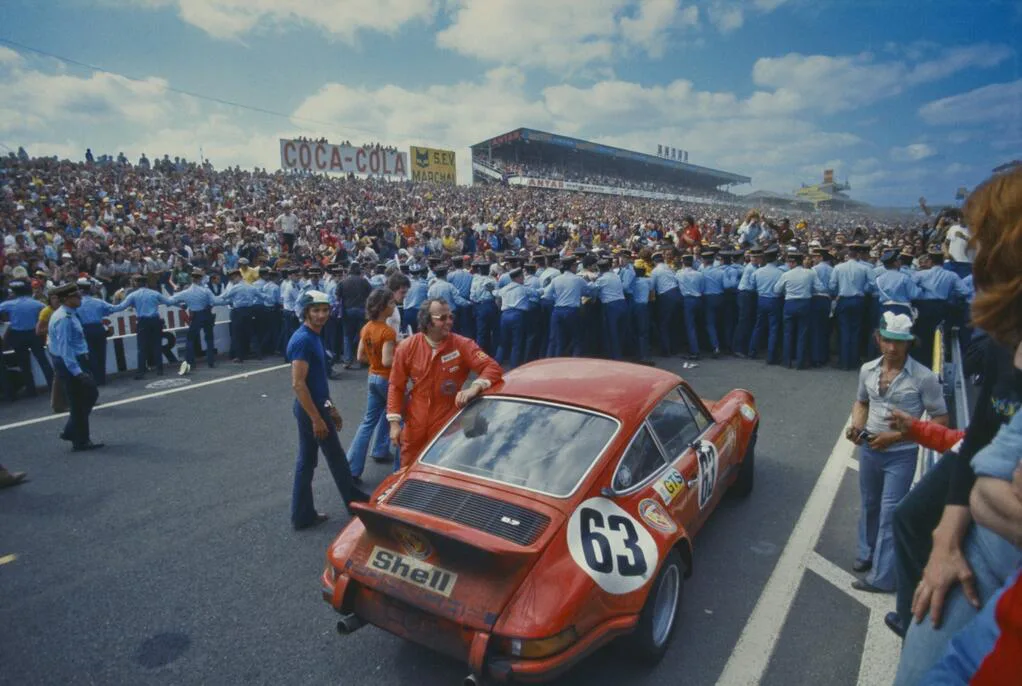
1973 Le Mans 24h, Porsche 911 Carrera RSR
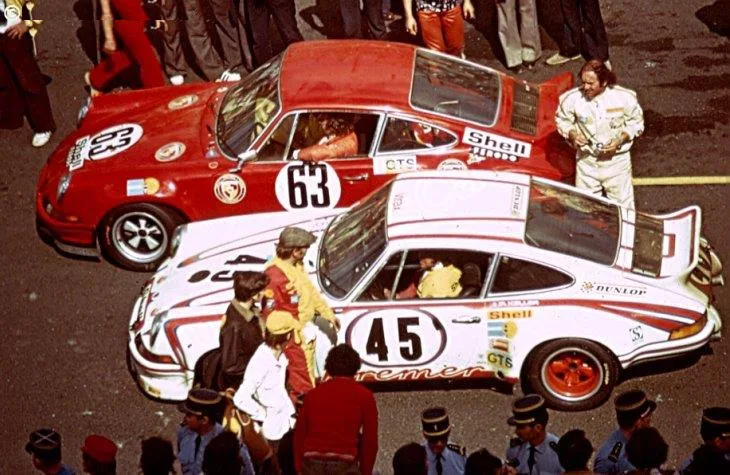
The evolution version of the Porsche 911, the 2.7 liter Carrera RSR was the most succesful GT of its time. It won its class in every world championship race in 1973 and overall in Daytona. Georg Loos drove his car together with Porsche factory engineer and test driver Jürgen Barth and finished 10th overall, second in class behind the #45 Kremer RSR.
Gelo Racing #63: Georg Loos (D) / Jürgen Barth (D)
Results: Start-grid 32nd / time 4:19.300 / race 10th – 312 laps / 2nd GTS
Porsche 911 Carrera RSR – GTS <3L: Powered by 2.8 liter Porsche 911/72 flat-6 injection, approx. 300 hp. Dunlop tires. Weight 830 kg. Steel monocoque, chassi5snr. #911 360 0847

- MINICHAMPS MC 430 736963 (diecast)
- Overall rating: 3 STARS | Quality details: 3 STARS | Estimated value: 3 STARS
- Appears in #040 Classic 911 / #102 Gelo
1973 Le Mans 24h, Porsche 911 Carrera RSK
The evolution version of the Porsche 911, the 2.7 liter Carrera RSR was the most successful GT of its time. It won its class in every world championship race in 1973 and overall in Daytona. This Kremer prepared car won the 3-liter GT category in Le Mans 1973.
Porsche Kremer Racing Team #45: Erwin Kremer (D) / Paul Keller (CH) / Clemens Schickentanz (D)
Results: Start-grid 38th / time 4:21.600 / 8th – 317 laps / 1st in GT 3.0
Porsche 911 Carrera RSK – GT: Powered by 2.8 liter Porsche 911/72 flat-6 injection, approx. 300 hp. Dunlop tires. Weight 830 kg. Steel monocoque, chassisnr. unknown


- MINICHAMPS MC430 736945 (diecast)
- Overall rating: 3 STARS | Quality details: 3 STARS | Estimated value: 3 STARS
- Appears in #040 Classic 911 / #060 Shell / #085 Kremer GT

1973 Spa-Francorchamps 1000 km, Porsche Carrera RSK
The Kremer Porsches were supported by Samson Tobacco and raced the European GT championship as well as the World championship. This one retired just before the end of the race and still got classified 14th overall.
Oldenkott Tobacco / Kremer Racing #46: John Fitzpatrick (GB) / Clemens Schickentanz (D)
Results: Start-grid 16th / time 3:57.200 / 14th DNF – 55 laps / 4th GT
Porsche 911 Carrera RSK – GT: Powered by 2.8 liter Porsche 911/73 – flat-6, approx. 300 hp. Dunlop tires. Weight 840 kg. Steel monocoque, chassisnr. #911 360 0885


- VEREM 730 (diecast)
- Overall rating: 2 STARS | Quality details: 2 STARS | Estimated value: 2 STARS
- Appears in #040 Classic 911 / #085 Kremer GT
1973 Monza 1000 km, Porsche Carrera RSK
The Porsche Carrera RSR was the most successful GT of its time. It won its class in every world championship race in 1973 and overall in Daytona. This Kremer prepared car won the GT class at the 1000 km race in Monza 1973.
Samson Kremer Racing #84: Erwin Kremer (D) / Clemens Schickentanz (D)
Results: Start-grid 35th / time 1:39.690 / race 8th -142 laps / 1st GT 3.0
Porsche 911 Carrera RSK – GT: Powered by 2.8 liter Porsche 911/73 – flat-6, approx. 300 hp. Dunlop tires. Weight 840 kg. Steel monocoque, chassisnr. #911 360 0885


- MINICHAMPS MC 430 736984 limited 1728 pcs (diecast)
- Overall rating: 3 STARS | Quality details: 3 STARS | Estimated value: 3 STARS
- ppears in #040 Classic 911 / #085 Kremer GT

911 Carrera RSR/RSK 3.0 liter
1974 Spa-Francorchamps 1000 km, Porsche Carrera RSK
The new 3.0 liter Porsche Carrera was very competitive. The GT’s finished 4th (Gelo RSR), 5th (Kremer RSK), 6th (Kremer RSK) and 7th (Romand RSR).
Samson Kremer Racing #41: Paul Keller (CH) / Hans Heyer (D)
Results: Start-grid 19th / time 4:09.400 / race 6th – 62 laps / 3rd GT
Porsche 911 RSK – GT: Powered by 3.0 liter Porsche 911/75 – flat-6, approx. 330 hp. Dunlop tires. Weight 860 kg. Steel monocoque, chassisnr. #911 004 0005


- SPARK Kremer Racing 50 years #317 / 400 pcs (resin)
- Overall rating: 4 STARS | Quality details: 4 STARS | Estimated value: 4 STARS
- Appears in #040 Classic 911 / #085 Kremer Porsche
1974 Nürburgring 1000 km, Porsche 911 Carrera RSR
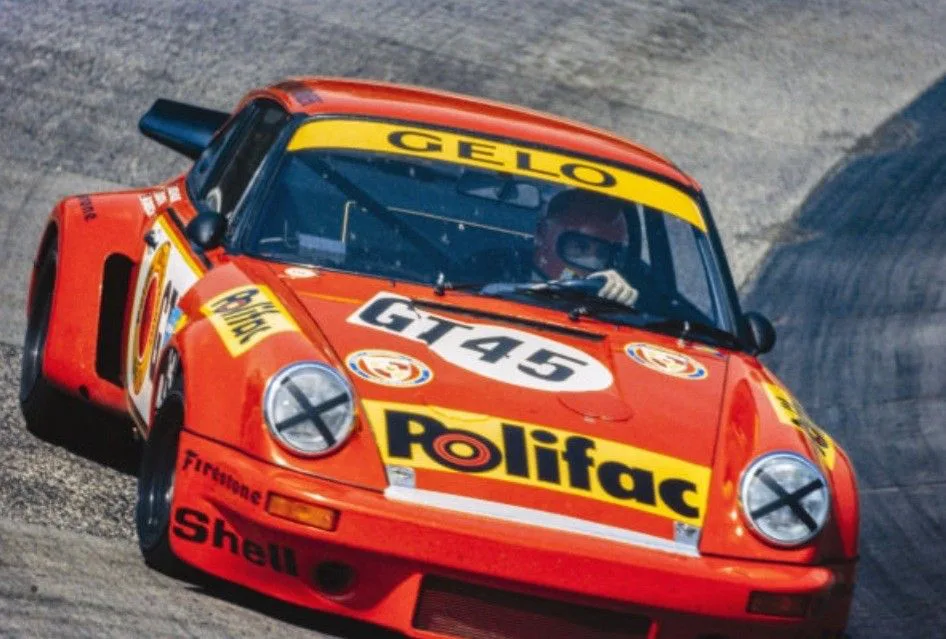
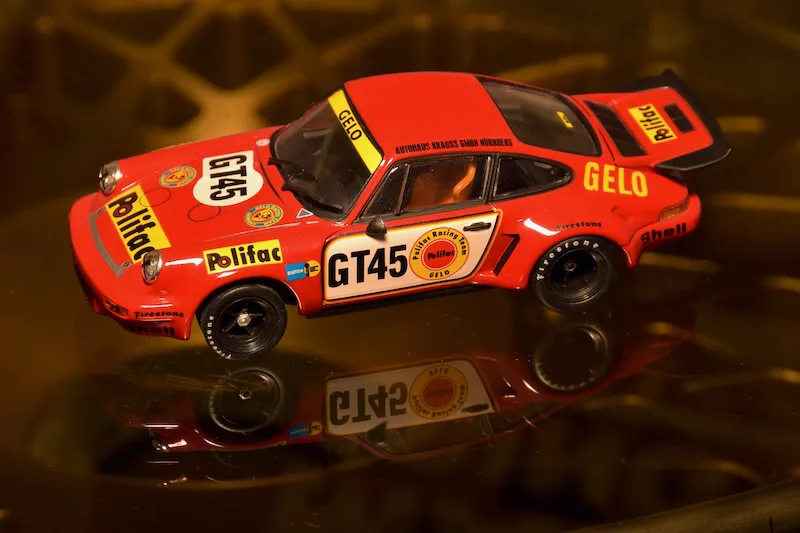
The German team Loos entered the new 3.0 liter RSR in the DRM, European GT and some world championship races. Many different drivers raced for Loos this year, making that Gelo / Polifac Racing won quit some races against their arch rival – the Samson Kremer team – but won no championship. This car won the GT-class in the world championship 1000 km race at the Nürburgring in 1974 with John Fitzpatrick. Fitzpatrick raced in the European GT for Gelo, but finished the season in the Samson Kremer team and went on to become European GT champion.
Polifac Racing / Gelo Racing #45: John Fitzpatrick (GB) / Jürgen Barth (D)
Results: Start-grid 37th / time 8:40.100 / race 12th – 312 laps / 1st GT
Porsche 911 Carrera RSR – GT: Powered by 3.0 liter Porsche 911/75 flat-6 injection, approx. 300 hp. Dunlop tires. Weight 830 kg. Steel monocoque, chassisnr. #911 460 9065
- MINICHAMPS history set (diecast)
- Overall rating: 3 STARS | Quality details: 3 STARS | Estimated value: 3 STARS
- Appears in #040 classic 911 / #102 Gelo
1974 Nürburgring 1000 km, Porsche 911 Carrera RSR
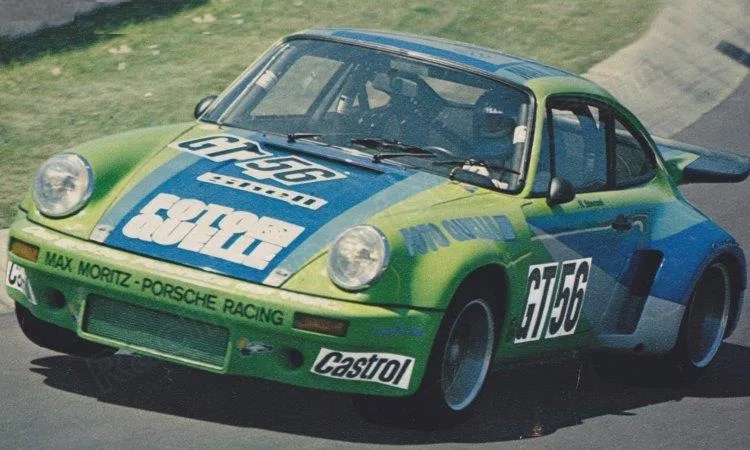
The improved 3.0 liter RSR appeared in 1974 and was available for the Porsche privateerteams like Loos, Kremer and Max Moritz. A car from Max Moritz was driven by Reinhardt Stenzel and experienced rally driver Ove Andersson. They were quite fast in qualifying, even faster than the #51 Gelo Porsche. During the race, they retired after 19 laps.
Foto Quelle – Max Moritz Racing #56: Reinhardt Stenzel (D) / Ove Andersson (S)
Results: Start-grid 28th / time 8:28.500 / race DNF – 19 laps
Porsche 911 Carrera RSR – GT: Powered by 3.0 liter Porsche 911/75 flat-6 injection, approx. 300 hp. Goodyear tires. Weight 830 kg. Steel monocoque, chassisnr. #911 460 9060
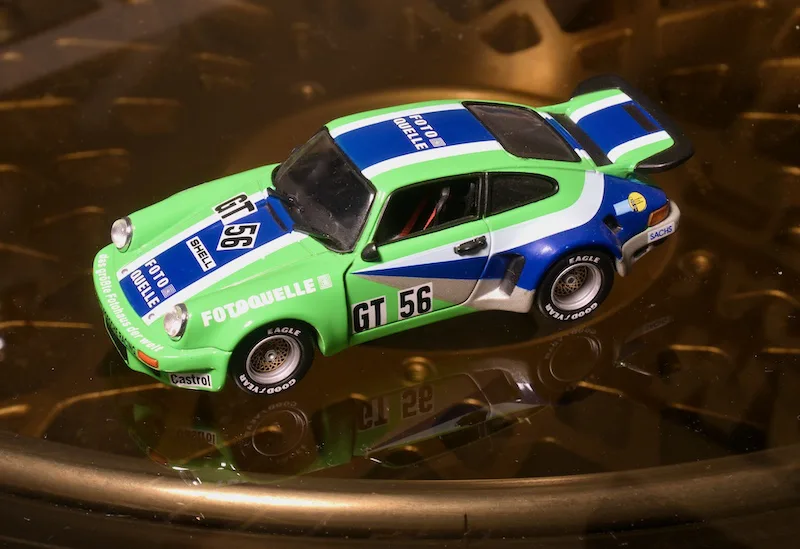
- EAGLE’S RACE 3712 (diecast)
- Overall rating: 3 STARS | Quality details: 2 STARS | Estimated value: 2 STARS
- Appears in #040 classic 911
1974 Imola 1000 km, Porsche Carrera RSK
The dark blue Porsche RSK is best of the GT’s in the Imola 1000 km race. It finishes 5th behind 2 Matra and 2 Alfa Romeo prototypes.
Samson Kremer Racing #152: Paul Keller (CH) / Hans Heyer (D)
Results: Start-grid / time / race 5th – kkk laps / 1st GT
Porsche 911 RSK – GT: Powered by 3.0 liter Porsche 911/75 – flat-6, approx. 330 hp. Dunlop tires. Weight 860 kg. Steel monocoque, chassisnr. #911 004 0005


- MINICHAMPS MC 430 746952 limited 1104 pcs (diecast)
- Overall rating: 3 STARS | Quality details: 3 STARS | Estimated value: 3 STARS
- Appears in #040 Classic 911 / #085 Kremer Porsche

1974 TransAm championship, Porsche 911 Carrera RSR
By 1974, the 3.0 liter RSR’s had taken over the American TransAm Championship. Holbert won at Road Atlanta and finished 4th in the championship. He battled all season with famous names as Peter Gregg, Michael Keyser and Hurley Haywood all in similar cars. Well, not entirely similar … Holbert’s car was originally a 1970 Porsche 911 T that was converted to a new 3.0 liter RSR.
Holbert #14: Al Holbert (USA)
Results: 1 victory / 4th championship
Porsche 911 Carrera RSR – TransAm: Powered by 3.0 liter Porsche 911/72 flat-6 – approx. 330 hp. Goodyear tires. Weight 820 kg. Steel monocoque, chassisnr. #911 T (1970)


- MINICHAMPS MC 430 746914 (diecast)
- Overall rating: 3 STARS | Quality details: 3 STARS | Estimated value: 3 STARS
- Appears in #040 Classic 911 / #093 American Porsche GT teams
1975 Daytona 24h, Porsche 911 Carrera RSR 3.0
Brumos Racing took the first victory in a big race for the Porsche 911 Carrera RSR back in 1973. Two years later the same team, now with a 3.0 liter version, won the Daytona 24 hours race again. Competition has changed in these two years, the number of Porsche RSR’s that compete is enourmous and BMW joined with the CSL’s that were very succesful in Europe. The Brumos Porsche didn’t have an easy race as can be concluded by the state is was in when it crossed the finish line. It was a tough race.
Brumos #59: Peter Gregg (USA) / Hurley Haywood (USA)
Results: Start-grid 7th / time 1:59.030 / 1st – 684 laps
Porsche 911 Carrera RSR – IMSA GTO: Powered by 3.0 liter Porsche 911/72 flat-6 – approx. 330 hp. Goodyear tires. Weight 850 kg. Steel monocoque, chassisnr. #911 460 9054


- SPARK 43DA75 (resin)
- Overall rating: 4 STARS | Quality details: 4 STARS | Estimated value: 4 STARS
- Appears in #040 Classic 911 / #059 Brumos Porsche
1975 Le Mans 24h, Porsche 911 Carrera RSR
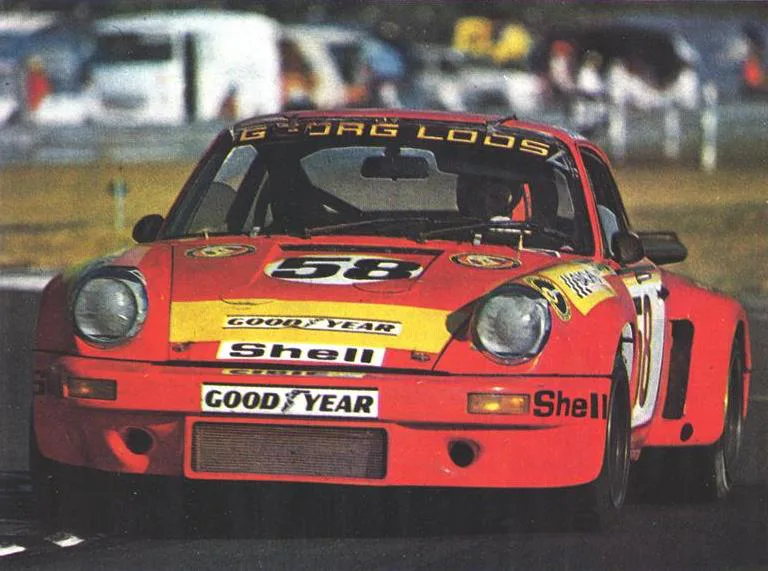
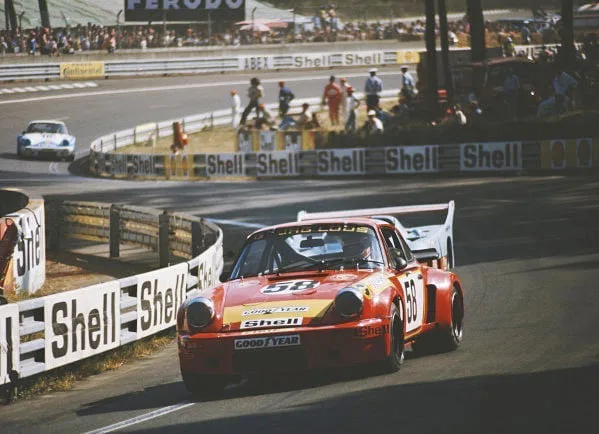
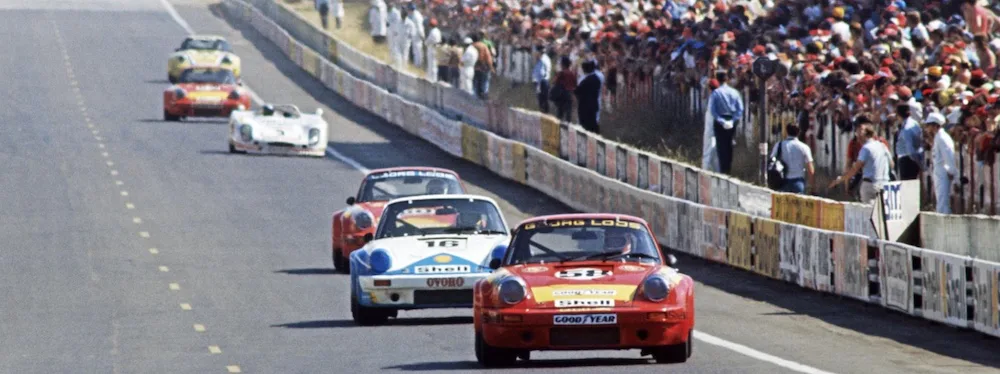
Gelo entered none of his Mirages, but three GT Porsches for Le Mans. Not all went smooth: In the 10th hour the #60 car of Hezemans and Schurti retired and both drivers joined Van Lennep and Fitzpatrick in the #58. The #59 car of F1 drivers Schenken and Ganley retired with a broken gearbox in the 21st hour. But the #58 stayed in one piece and won the GTS category.
Gelo Racing #58: John Fitzpatrick (GB) / Gijs van Lennep (NL) / Toine Hezemans (NL) / Manfred Schurti (FL)
Results: Start-grid 20th / time 4:18.400 / race 5th -316 laps / 1st GT
Porsche 911 Carrera RSR – GT: Powered by 3.0 liter Porsche 911/75 flat-6 injection, approx. 300 hp. Goodyear tires. Weight 830 kg. Steel monocoque, chassisnr. #911 460 9012
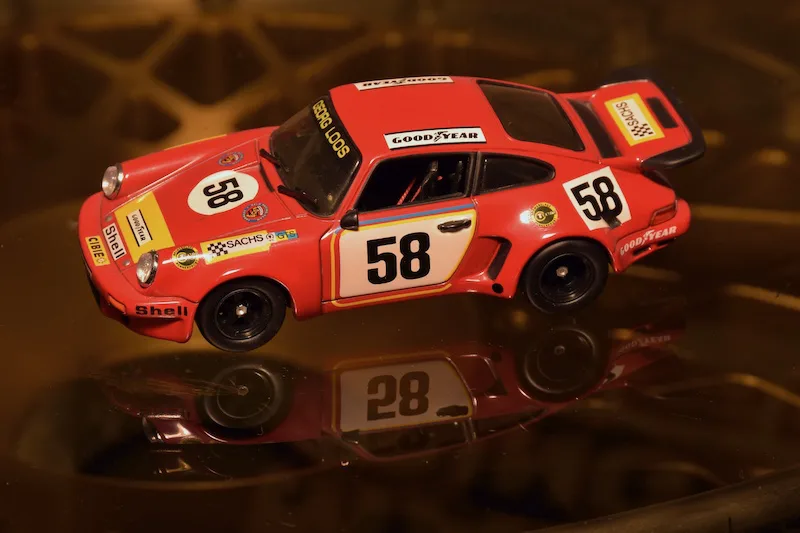

- EAGLE’S RACE 3681 (diecast)
- Overall rating: 3 STARS | Quality details: 3 STARS | Estimated value: 2 STARS
- Appears in #040 Classic 911 / #102 Gelo
1975 Nürburgring 1000 km, Porsche Carrera RSK
The improved 3.0 liter Porsche 911 Carrera RSR appeared in 1974 and was available for the Porsche privateer teams like Loos, Moritz and Kremer like this one that won the GT category in this year’s Nürburgring 1000 km. Kremer named the RSR’s that were prepared by them RSK.
Jägermeister Kremer Team #54: Hans Heyer (D) / Bob Wollek (F) / Helmut Kelleners (D)
Results: Start-grid 29th / time 8:26.400 / race 8th – 40 laps / 1st GT
Porsche 911 Carrera RSK – GT >2L: Powered by 3.0 liter Porsche 911/75 – flat-6, approx. 330 hp. Dunlop tires. Weight 900 kg. Steel monocoque, chassisnr. #005 0005


- MINICHAMPS MC430 756954 limited 3312 pcs (diecast)
- Overall rating: 3 STARS | Quality details: 3 STARS | Estimated value: 3 STARS
- Appears in #082 Jägermeister GT / #085 Kremer GT / #131 Bob Wollek
1975 Nürburgring Supersprint, Porsche Carrera RSK
The Supersprint was a non-championship race over 50 laps at the 2,3 km short version of the Nürburgring. The Kremer team was present with 3 cars that all finished in the top 4.
Jägermeister Kremer Team #4: Hans Heyer (D)
Results: Start-grid unknown / race 2nd – 50 laps
Vaillant Kremer Team #5: Bob Wollek (F)
Results: Start-grid unknown / race 1st – 50 laps
Lucky Star Wallys Jeans Kremer Team #6: Cees Siewertsen (NL)
Results: Start-grid unknown / race 4th – 50 laps
Porsche 911 RSK – GT: Powered by 3.0 liter Porsche 911/75 – flat-6, approx. 330 hp. Dunlop tires. Weight 900 kg. Steel monocoque. Chassisnrs. #911 460 9063 (#4)


- MINICHAMPS MC430 756904, 756905 & 756906 (diecast)
- Overall rating: 3 STARS | Quality details: 3 STARS | Estimated value: 3 STARS
- #4 Appears in #040 Classic 911 / #082 Jägermeister GT / #085 Kremer GT
- #5 Appears in #040 Classic 911 / #085 Kremer GT / #131 Bob Wollek
- #6 Appears in #040 Classic 911 / #085 Kremer GT
1977 Daytona 24h, Porsche 911 Carrera RSR
Hurley Haywood competed in Daytona with a normally aspirated Porsche 911 Carrera RSR from Ecurie Escargot, the French name for snail. A good name, the Inaltera prototypes and new Porsche 935 turbo’s were at least 10 seconds a lap faster. But Daytona always produces some surprises and this snail was one of them. Haywood had won the race already in 1973 and 1975 for Brumos and did also in 1977.
Ecurie Escargot #43: Hurley Haywood (USA) / John Graves (USA) / Dave Helmick (USA)
Results: Start-grid 12th / time 2:01.499 / race 1st -681 laps
Porsche 911 Carrera RSR – IMSA GTO: Powered by 3.0 liter Porsche flat-6, approx. 340 hp. Goodyear tires. Weight 900 kg. Steel monocoque, chassisnr. #911 560 9112


The Escargot surrounded by its turbocharged competitors
- SPARK Porsche Museum Collection MAP 020 277 14 (resin)
- Overall rating: 4 STARS | Quality details: 4 STARS | Estimated value: 4 STARS
- Appears in #040 Classic 911 / #093 American Porsche GT teams
Thanks for visiting 😉