Published June 8, 2024 | Last update October 26, 2026 | 31 models online
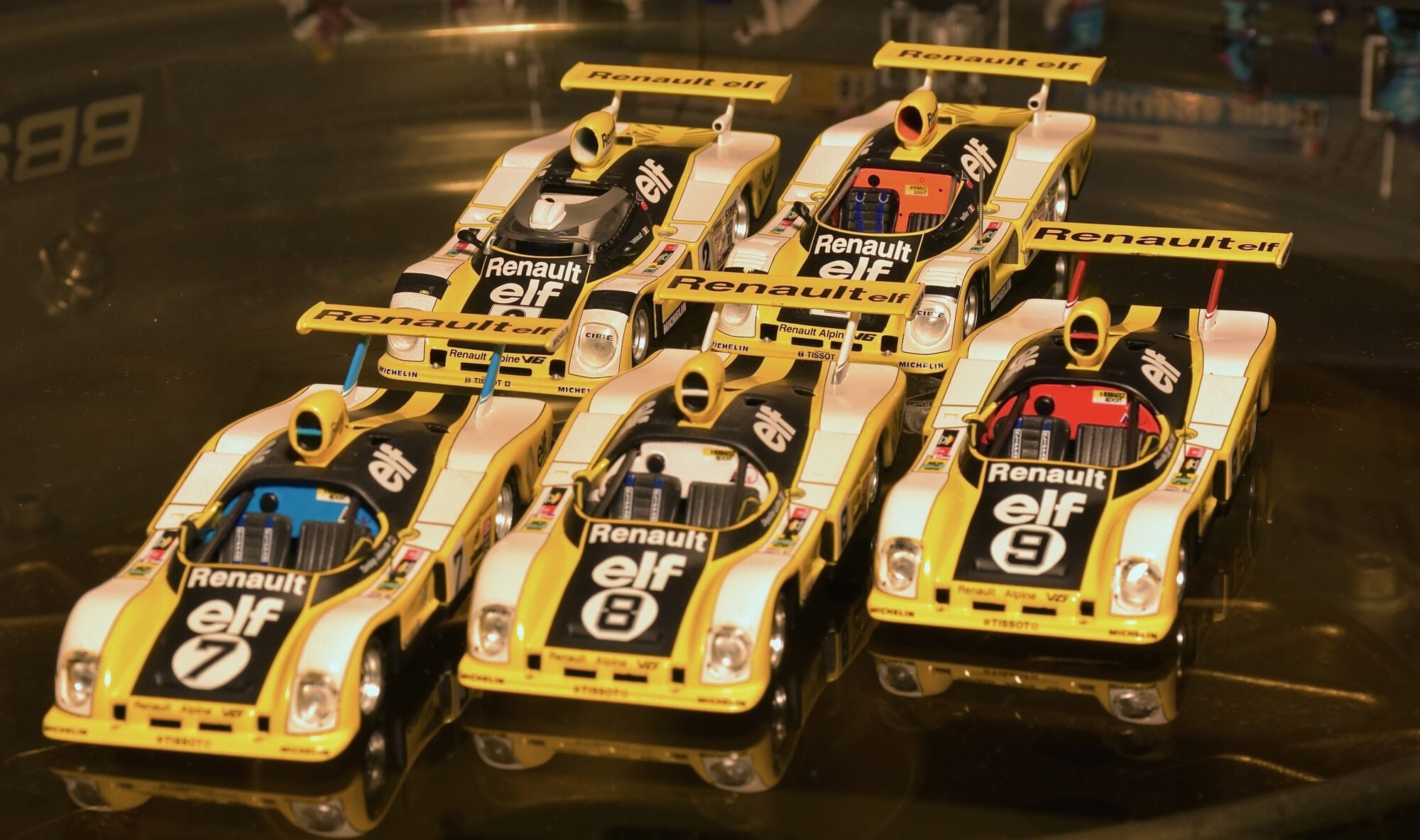
Renault was one of the pioneers of the turbo engine. Porsche beat Renault as the first manufacturer to win Le Mans using a turbo engine, but Renault moved on after Le Mans and was the first to bring the turbo to the Formula One. After a long time, Renault came back to sports car racing in 2013 and are still there, now using the Alpine brand.
- This collection contains:
- But first: rally
- 1969 Alpine-Renault A110
- 1969 Tour de Corse – Alpine-Renault A110
- 1973 Rally de Monte Carlo – Alpine-Renault A110
- 1973 Rallye de Maroc – Alpine-Renault A110
- The first V6 and V6 turbo
- 1973 Magny-Cours – Alpine-Renault A440 V6
- 1974 European Sports Car Championship – Alpine-Renault A441 V6
- 1975 Le Mans 24h – Alpine-Renault A441 V6
- 1975 Mugello 1000 km – Alpine-Renault A441 V6 turbo
- 1976 Nürburgring 300 km – Alpine-Renault A442 V6 turbo
- 1976 Le Mans 24h – Alpine-Renault A442 V6 turbo
- 1977 & 1978 the big attack
- 1977 Le Mans 24h – Renault Alpine A442 V6 turbo (3x)
- 1977 Le Mans 24h – Alpine-Renault A442 V6 turbo équipe de Chaunac
- 1977 Le Mans – Mirage-Renault M8 Gitanes
- 1978 Le Mans 24h – Renault Alpine A442B and A443
- 1978 Le Mans 24h – Renault Alpine A442 V6 turbo équipe Calberson
- 1978 Le Mans 24h – Mirage-Renault M9 Gitanes
- The in between years
- 1978 Rally de Monte Carlo – Renault 5 Alpine Calberson
- 1980 Tour de Corse – Renault 5 turbo Gitanes
- 1981 Renault 5 turbo Cup LUI
- 1982 Renault 5 turbo Cup Ebel
- 1983 Renault 5 turbo Cup Marlboro
- 1984 Renault 5 turbo Cup Momo
- 1994 Le Mans 24h – Venturi LM 600-Renault
- 2017 Yes Marina Gulf 12 hours – Renault R.S.01
- Almost 20 years later, Alpine is back
- 2013 Le Mans 24h – Alpine A450-Nissan
- 2016 Le Mans 24h – Alpine A460-Nissan (2x)
- 2021 Le Mans 24h – Alpine A480-Gibson
- 2024 Le Mans 24h, Alpine A424-Mecachrome
But first: rally
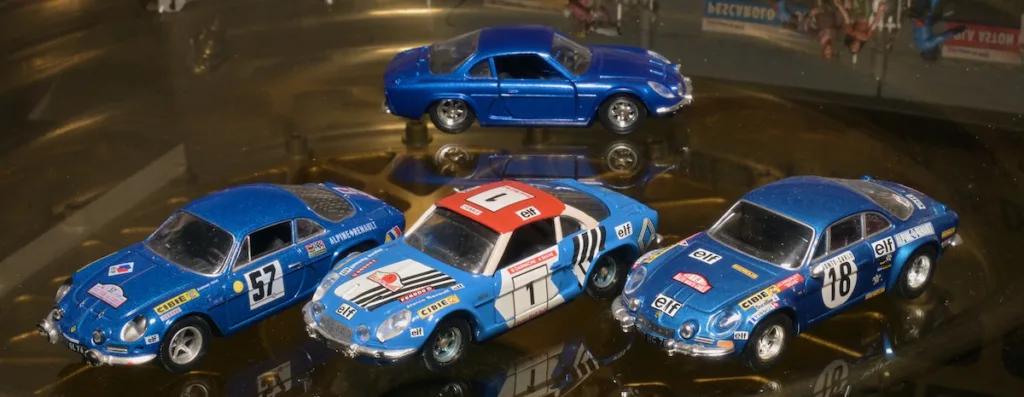
1969 Alpine-Renault A110
With a length of 385 cm, height of 113 cm and weight of around 700 kg, the original Alpine A110 can be described as a small car. Because of these specs, it was very successful as a rally car. Its modern successor is still not a large car: 418 cm long, 125 cm high and a curb weight that is more than 400 kg heavier than the original.
Alpine Renault A110 – street: Powered by 1.6 liter Renault DOHC straight-4, approx, 108hp. Michelin tires. Weight 700 kg. Steel monocoque with fibreglass body, chassisnr. unknown
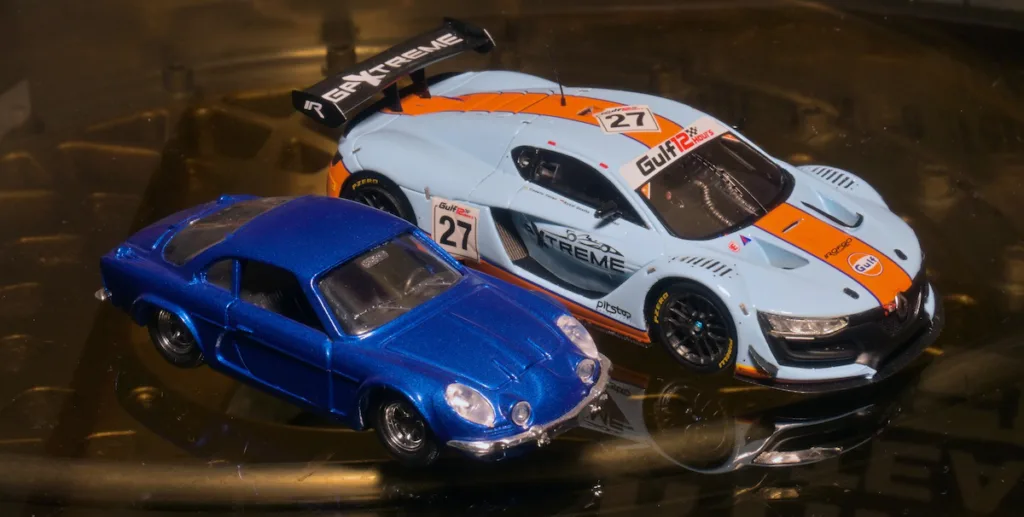
Here is the A110 next to the 2016 Renault R.S.01 …
- SOLIDO #unknown
- Overall rating: 2 STARS | Quality details: 2 STARS | Estimated value: 1 STARS
- Appears in #044 Alpine & Renault / #129 Small touring cars & GT
1969 Tour de Corse, Alpine-Renault A110
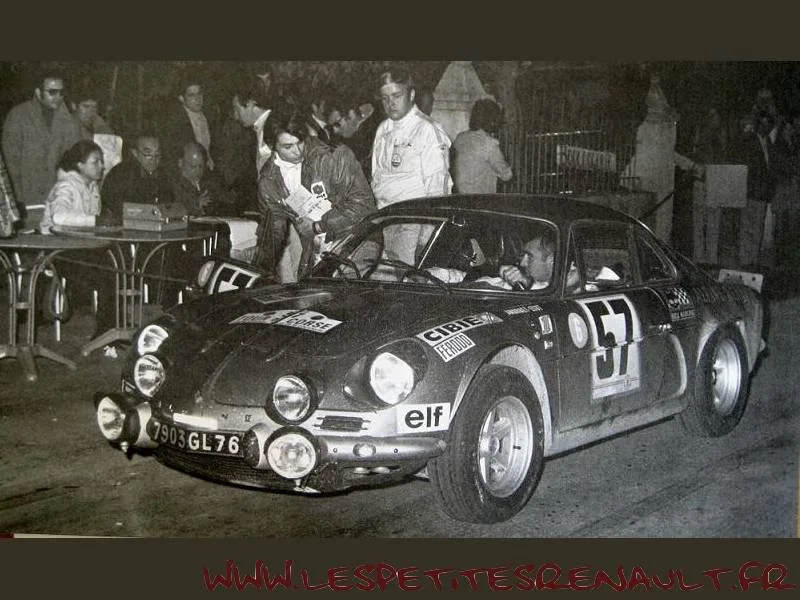
The Alpine A110 was already introduced in 1963, but the 950 cc 51 hp engine didn’t invite to race or rally the car. The small Berlinetta could handle more powerful engines and by 1969, the 1.6 liter twin-carburetor version produced about 138 hp. Many Alpines were entered for the 1969 Tour de Corse rally, most of them being 1300 and 1500 cc versions. Andruet had a 1600S, but had to retire with damage after an accident. Other Alpines finished 2nd, 4th, 5th, 6th and 8th behind Gérard Larrousse in a Porsche 911. Larrousse would become Renault Sport Director some years later.
Alpine Renault #57: Jean-Claude Andruet (F)/ Patrice Écot (F)
Results: DNF damage after accident – 6 special stages
Alpine-Renault A110 – Group 4: Powered by 1.6 liter Renault DOHC straight-4, approx, 138 hp. Michelin tires. Weight 700 kg. Steel monocoque with fibreglass body, chassisnr. unknown
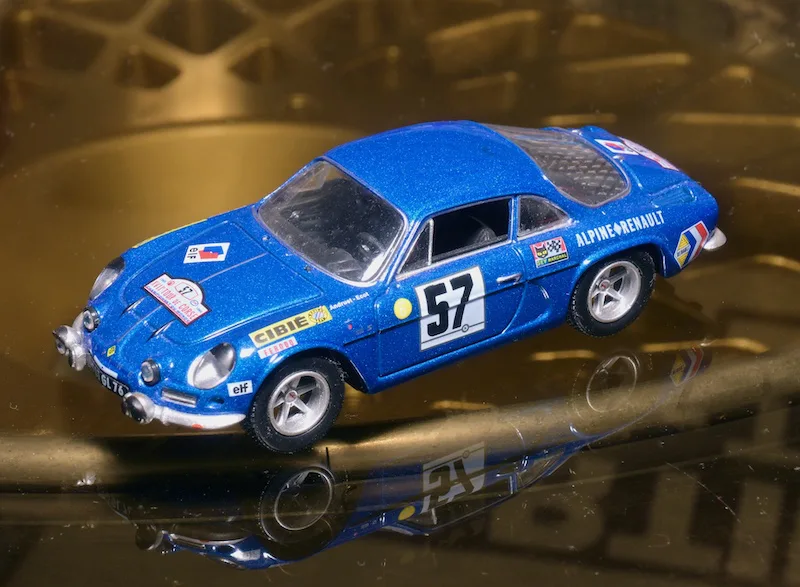
- UNIVERSAL HOBBIES #unknown (diecast, no box)
- Overall rating: 2 STARS | Quality details: 2 STARS | Estimated value: 1 STARS
- Appears in #044 Alpine & Renault / #129 Small touring cars & GT
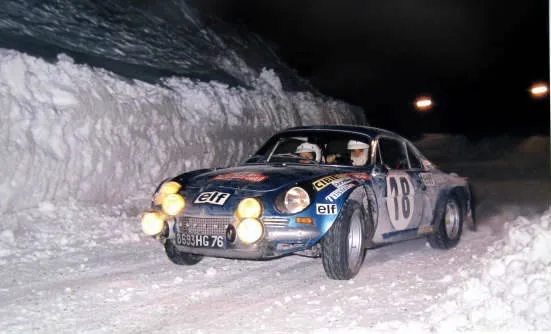
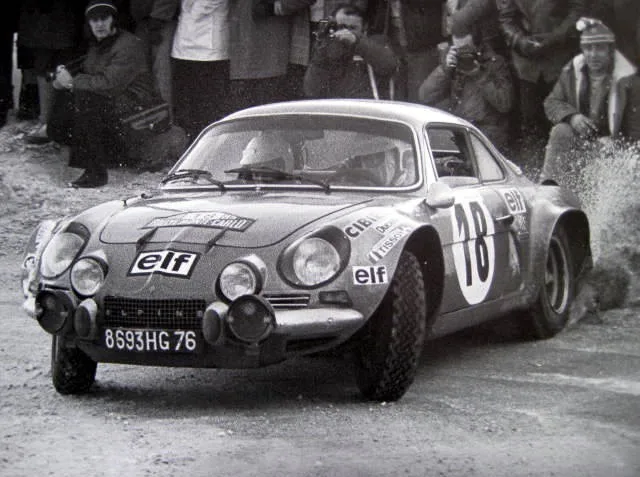
1973 Rally de Monte Carlo, Alpine-Renault A110
At this time, the Monte Carlo rally was a regularity rally, with teams beginning competition in 9 different cities across Europe. Once gathered in Monte Carlo, the competition part began. The Group 4 Alpine-Renault was the car to beat on the special stages and these finished 1st, 2nd, 3rd, 5th, 6th and 10th. Victory going to Andruet and his female co-pilot “Biche” a pseudonym for Michèle Petit.
Alpine Renault #18: Jean-Claude Andruet (F) / “Biche” (F)
Results: 1st
Alpine-Renault A110 – Group 4: Powered by 1.8 liter Renault 807-GA DOHC straight-4, approx, 185 hp. Michelin tires. Weight 700 kg. Steel monocoque with fibreglass body, chassisnr. unknown

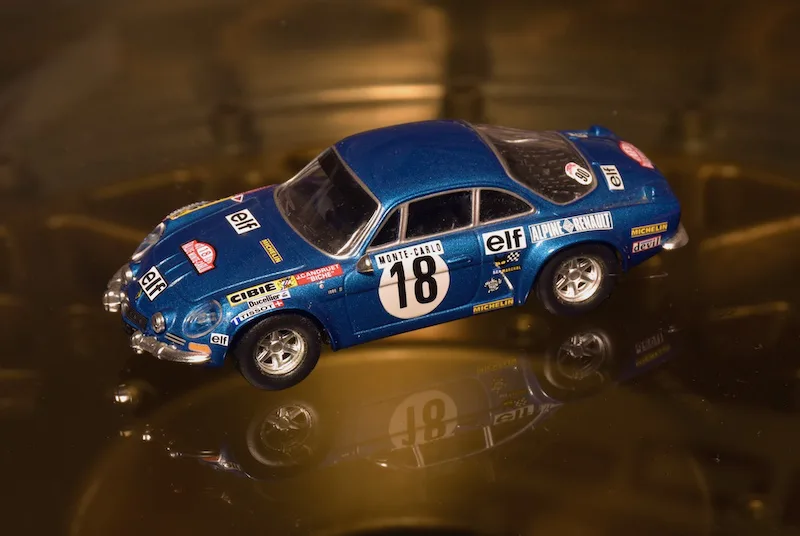
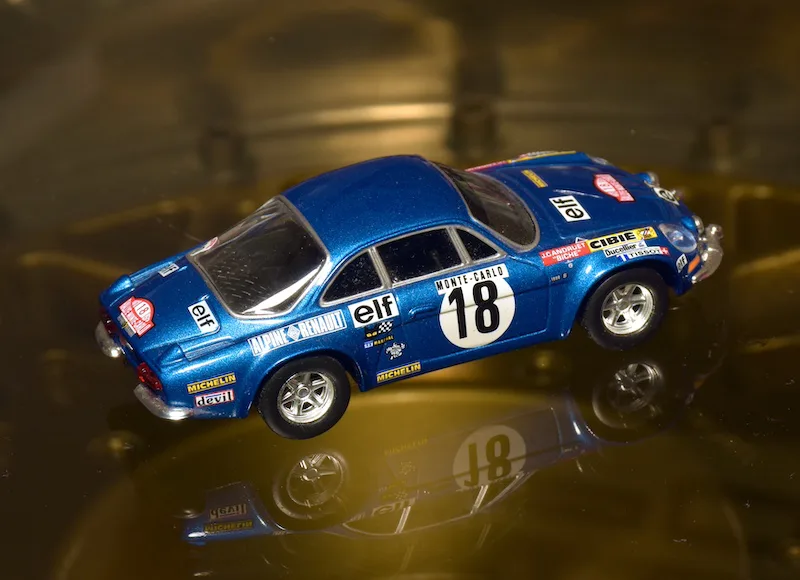
- ALTAYA unknown (diecast)
- Overall rating: 3 STARS | Quality details: 3 STARS | Estimated value: 2 STARS
- Appears in #044 Alpine & Renault / #097 Classic GT 1970s / #124 Racing Ladies / #129 Small touring cars & GT
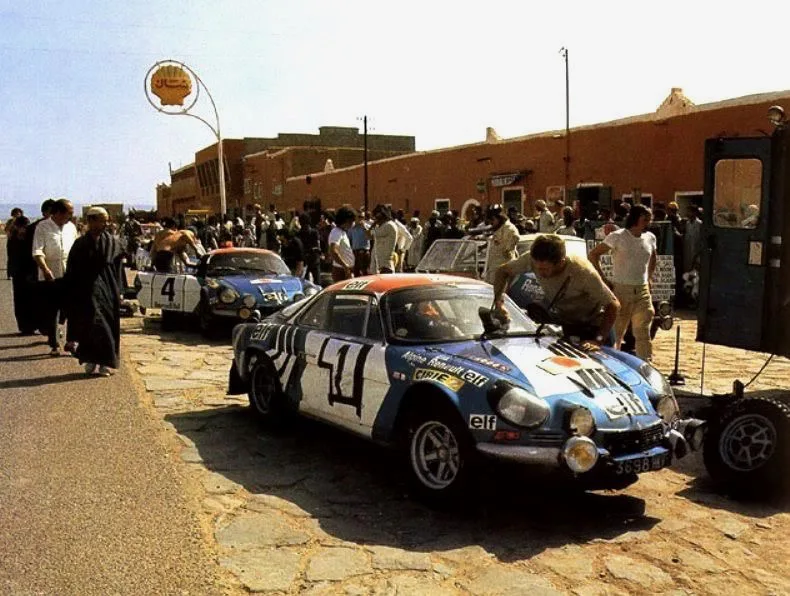
1973 Rallye de Maroc, Alpine-Renault A110
1973 Was the first year of the official World Rally Championship (WRC) that began with the Monte Carlo in January. The 5th round of the season was completely different. Again it was an Alpine that won, but 2nd, 3rd and 4th were Citroën DS23. Not your average rally car, but the hydropneumatic suspension worked very well on the bad roads in Morocco. Alpine-Renault would go on and win the first manufacturers’ championship with a total of 6 victories.
Alpine Renault #1: Bernard Darniche (F) / Alain Mahé (F)
Results: 1st
Alpine-Renault A110 – Group 4: Powered by 1.8 liter Renault 807-GA DOHC straight-4, approx, 185 hp. Michelin tires. Weight 700 kg. Steel monocoque with fibreglass body, chassisnr. unknown
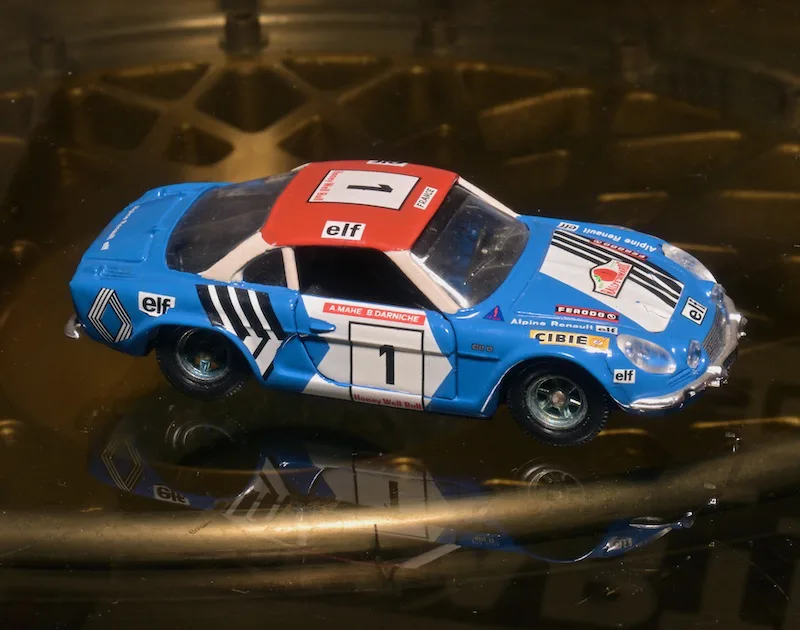
- VEREM #unknown (diecast, no box)
- Overall rating: 2 STARS | Quality details: 2 STARS | Estimated value: 1 STARS
- Appears in #044 Alpine & Renault / #129 Small touring cars & GT
The first V6 and V6 turbo
1973 Magny-Cours, Alpine-Renault A440 V6
Alpine introduced the all new A440 with Renault V6 engine in 1973. Jean-Pierre Jabouille drove it at its debut race to 4th place and would win the next event.
Alpine #19: Jean-Pierre Jabouille (F)
Results: heat 1: 5th / heat 2: 5th / combined 4th
Alpine-Renault A440 – Group 6 < 2L: 2.0 liter Renault Gordini V6 60º, approx. 280 hp. Michelin tires. Weight 650 kg. Aluminum monocoque, chassisnr. #4400
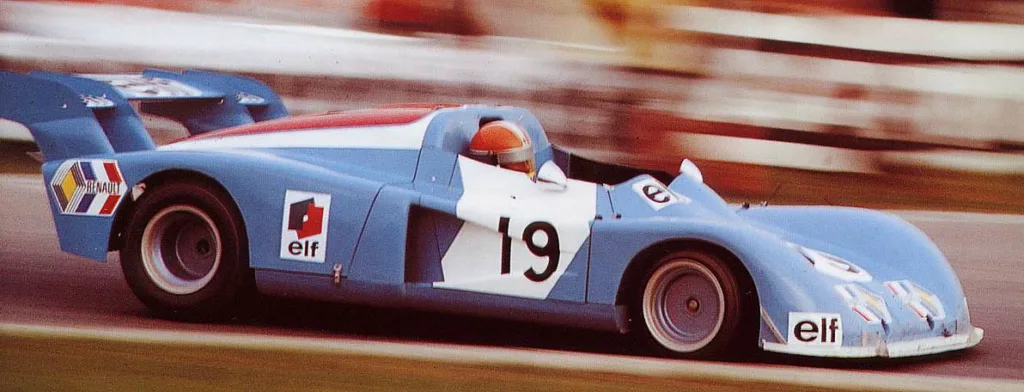
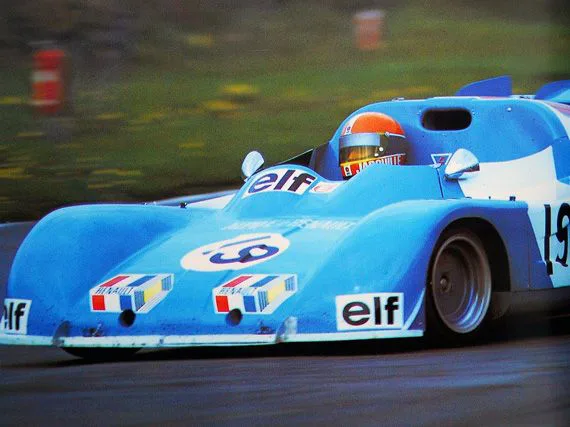
- ELIGOR Collection Renault #6 (diecast)
- Overall rating: 2 STARS | Quality details: 2 STARS | Estimated value: 2 STARS
- Only appears in this collection
1974 European Sports Car Championship, Alpine-Renault A441 V6
In 1974, four improved A441’s were entered in the European Sports Car Championship. The cars – ran by two teams – won all races. This is one of the four original A441’s, which was used by Jean Ortelli in hillclimbs later.
Alpine: Jean-Pierre Jabouille (F) / Alain Serpaggi (F)
Results: 1st
Alpine-Renault A441 – Group 6 <2L: Powered by 2.0 liter Renault Gordini V6 60º, approx. 280 hp. aMichelin tires. Weight 670 kg. Aluminium monocoque, chassisnr. #4410
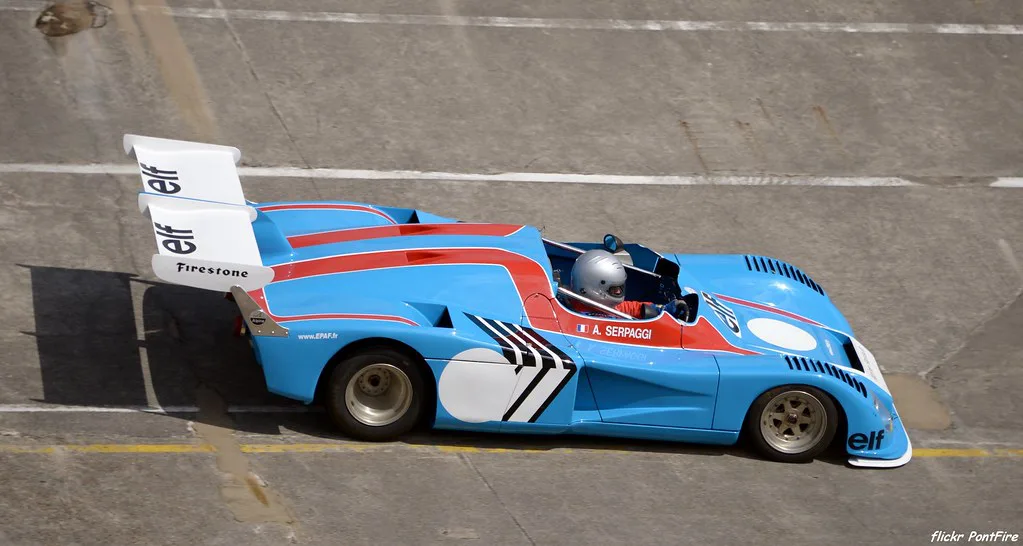
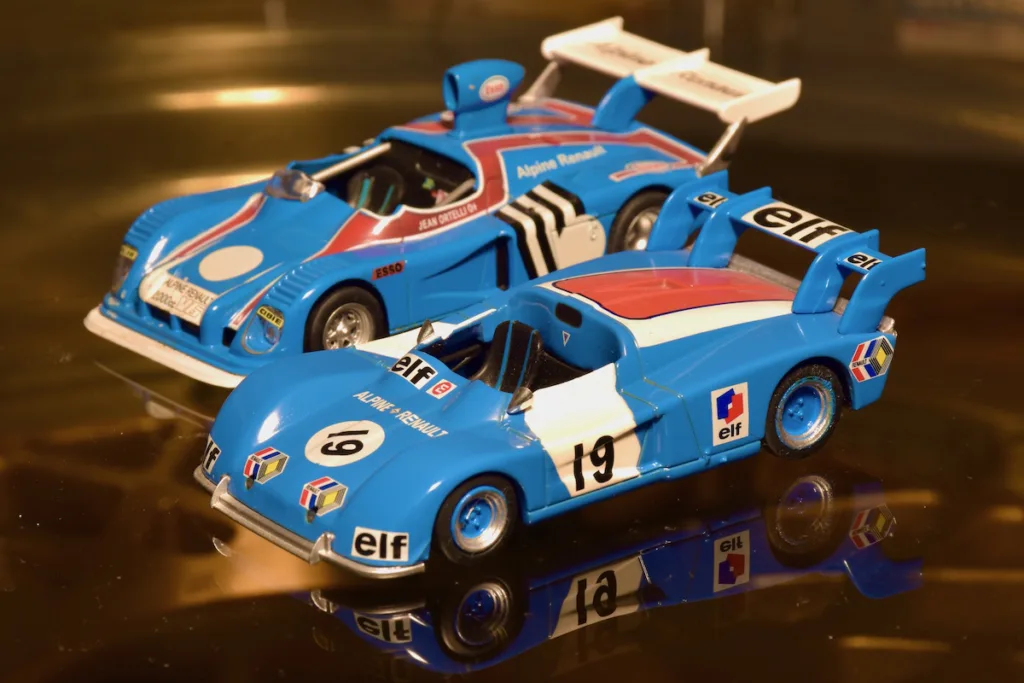
- ELIGOR Collection Renault #38 (diecast)
- Overall rating: 2 STARS | Quality details: 2 STARS | Estimated value: 2 STARS
- Only appears in this collection
1975 Le Mans 24h, Alpine-Renault A441 V6
The Alpine-Renault V6 dominated the European Sports Car Championship in 1974. In 1975 the French stepped into the 3-liter class of the world championship with a turbocharged version of their A441. The works team used the A441 turbo only once and put all efforts in the new A442. The Elf Switserland team with lady drivers Lombardi and Beaumont used a normally aspirated version of the A441 all season, including at Le Mans. The car retired after only 20 laps with fuel feed problems.
Elf Switzerland #26: Marie-Claude Beaumont (F) / Lella Lombardi (I)
Results: Start-grid 8th / time 4:02.900 / race DNF fuel feed – 20 laps
Alpine-Renault A441 – Group 6 <2L: Powered by 2.0 liter Renault Gordini V6 60º, approx. 300 hp. Michelin tires. Weight 670 kg. Aluminium monocoque, chassisnr. #4413
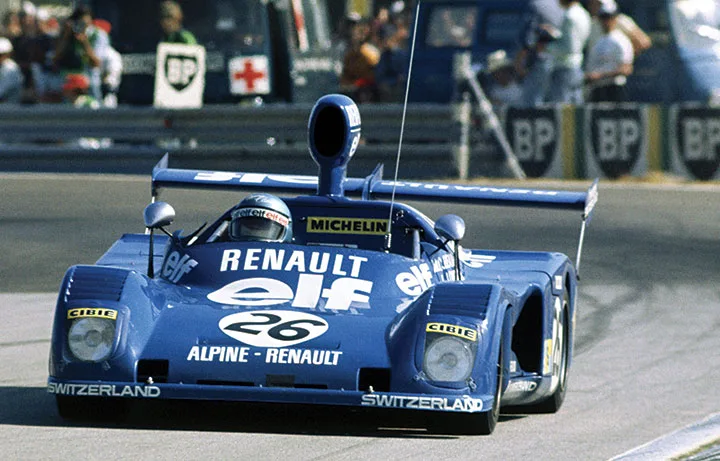
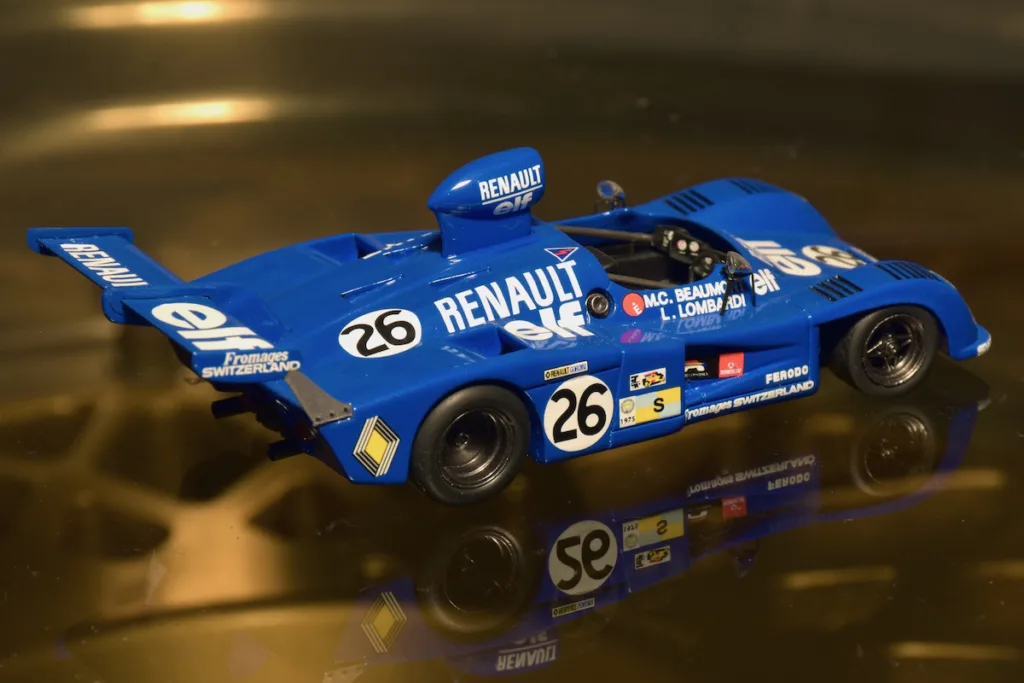
- SPARK S1549 (resin)
- Overall rating: 4 STARS | Quality details: 4 STARS | Estimated value: 4 STARS
- Also appears in ##124 Racing Ladies
1975 Mugello 1000 km, Alpine-Renault A441 V6 turbo
The Alpine-Renault V6 dominated the European Sports Car Championship in 1974. In 1975 the French stepped into the 3-liter class of the world championship with a turbocharged version of their A441. It won its first and only race at Mugello. The works team drove the rest of the season with the newly developed A442, but that was still unreliable and scored no victories.
Renault-Alpine #5: Jean-Pierre Jabouille (F) / Gérard Larrousse (F)
Results: Start-grid 2nd / time 1:48.890 / race 1st – 150 laps
Alpine-Renault A441 – Group 6 <3L: Powered by 2.0 liter Renault Gordini V6 60º twin turbo, approx. 480 hp. Michelin tires. Weight 720 kg. Aluminium monocoque, chassisnr. #4411
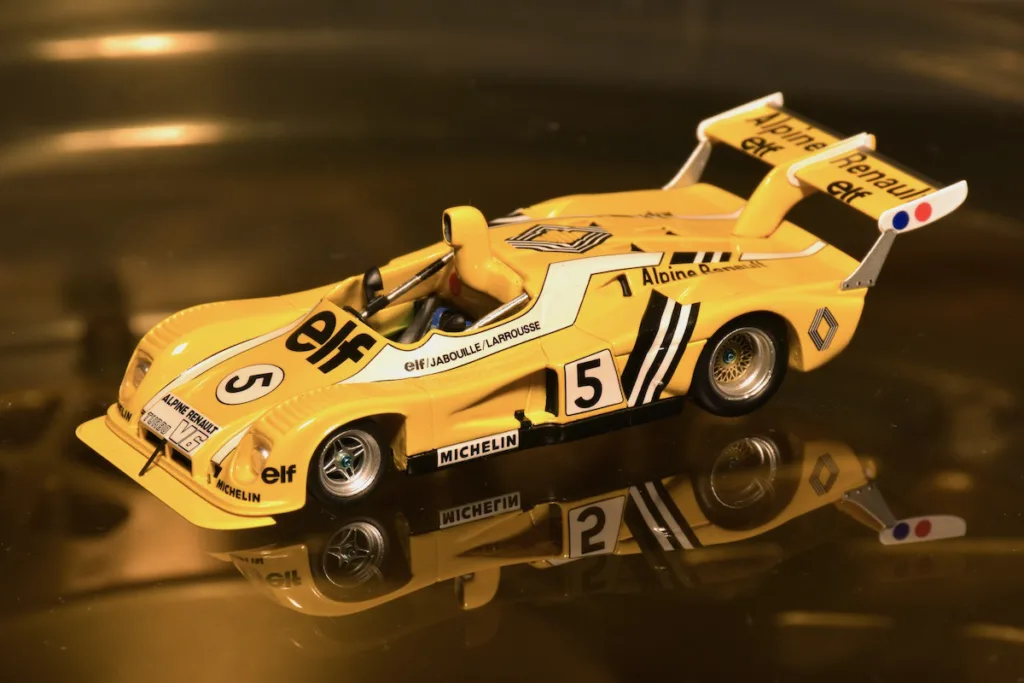
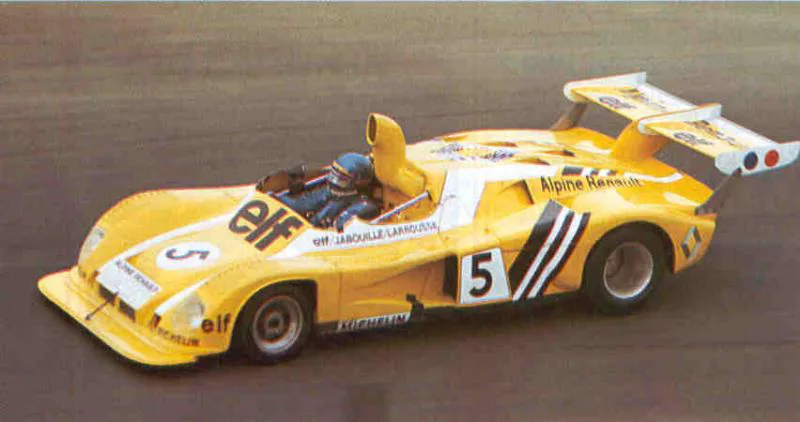
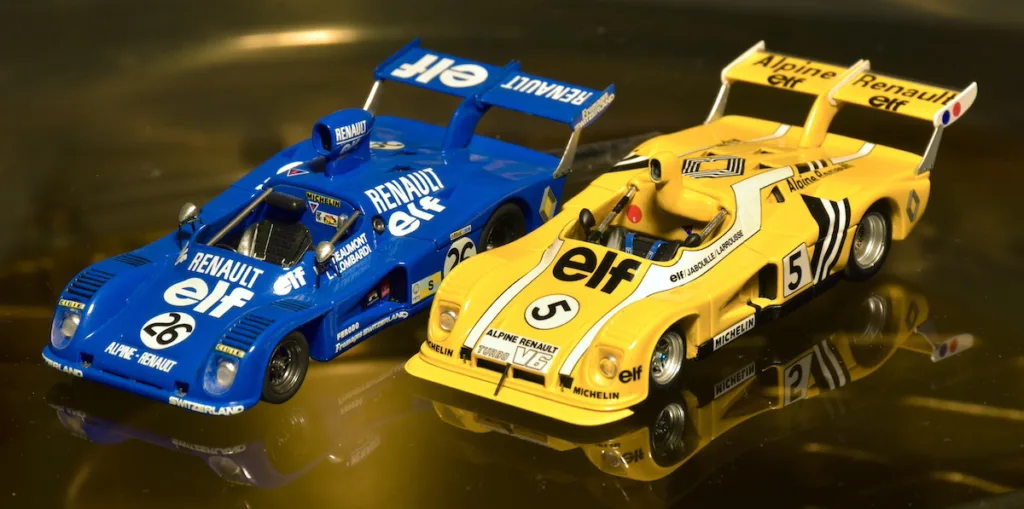
- SPARK S1550 (resin)
- Overall rating: 4 STARS | Quality details: 4 STARS | Estimated value: 4 STARS
- Only appears in this collection
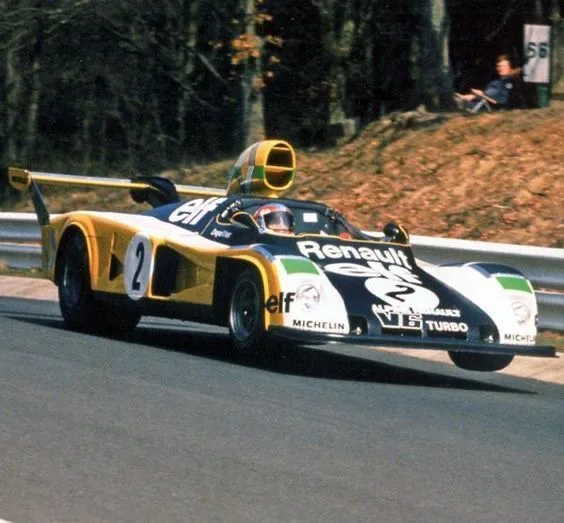
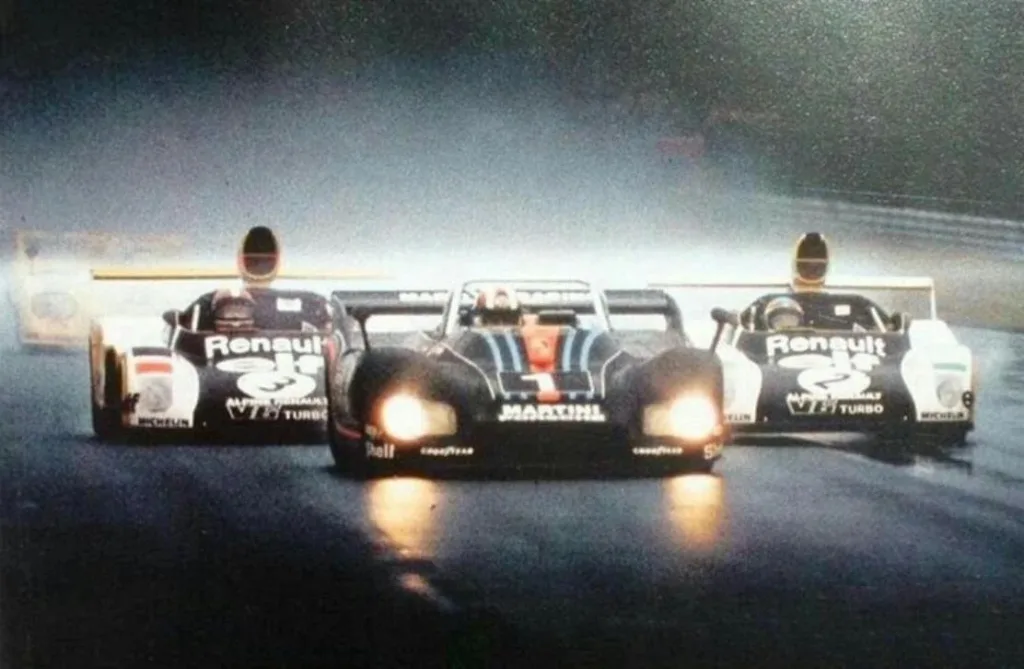
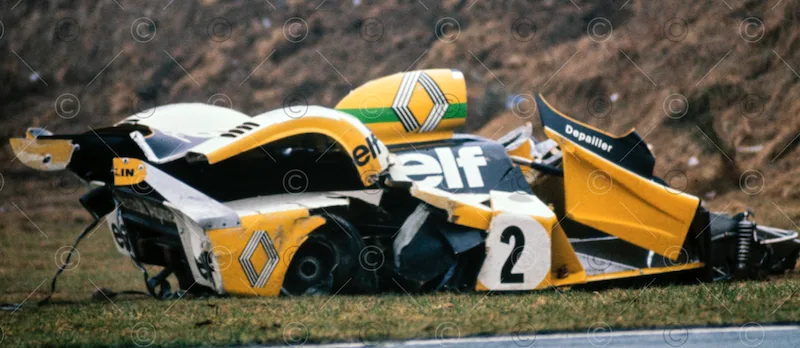
1976 Nürburgring 300 km, Alpine-Renault A442 V6 turbo
During the 1975 season, Alpine switched to the A442 version of their turbo charged race car. They raced that in the entire 1976 season but without great success. The speed certainly was there, but reliability not. Sometimes they also had bad luck. Patrick Depailler put the car on pole on a dry track for the 300 km race at the Nürburgring but he crashed it already in the first lap in rainy conditions.
Renault-Sport #2: Patrick Depailler
Results: Start-grid 1st / time 7:16.900 / race DNF crash – 0 laps
Alpine-Renault A442- Group 6 <3L: Powered by 2.0 liter Renault Gordini V6 60º twin turbo, approx. 510 hp. Michelin tires. Weight 720 kg. Aluminium monocoque, chassisnr. #4420

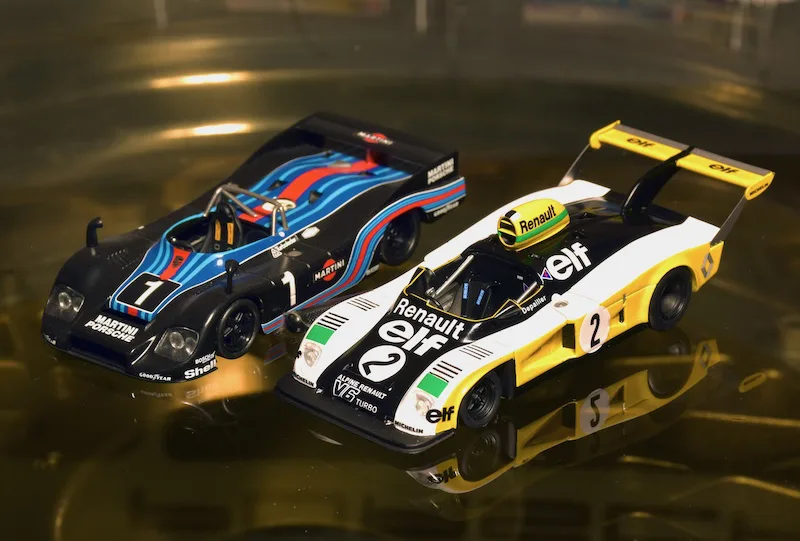
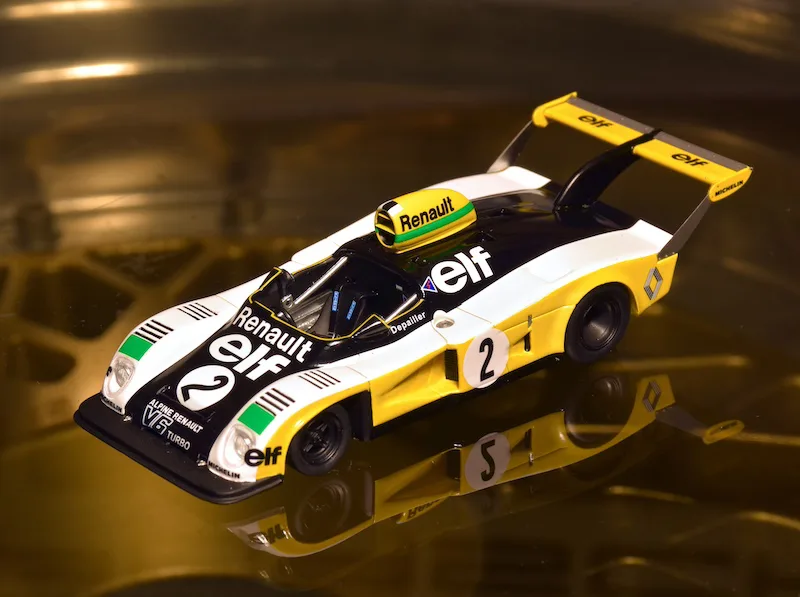
- SPARK S9320 (resin)
- Overall rating: 4 STARS | Quality details: 4 STARS | Estimated value: 4 STARS
- Only appears in this collection
1976 Le Mans 24h, Alpine-Renault A442 V6 turbo
Renault was one of the first to run turbo-engines at Le Mans in 1975 in their A441. The 1976 A442 had serious reliability problems and Renault entered only a single car for Le Mans. It was quick, in qualifying almost 7 seconds a lap faster than the Porsche 936, but Le mans is not always won by the fastest car. The Renault engine quit after 135 laps and Porsche went on to the first turbo victory at Le Mans. Renault would return in 1977 with a much bigger team.
Renault-Sport #19: Jean-Pierre Jabouille (F) / Patrick Tambay (F)
Results: Start-grid 1st / time 3:33.100 / race DNF engine – 135 laps
Alpine-Renault A442- Group 6 <3L: Powered by 2.0 liter Renault Gordini V6 60º twin turbo, approx. 510 hp. Michelin tires. Weight 720 kg. Aluminium monocoque, chassisnr. #4423
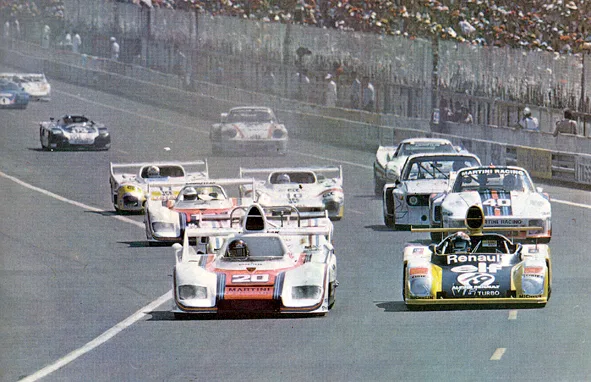
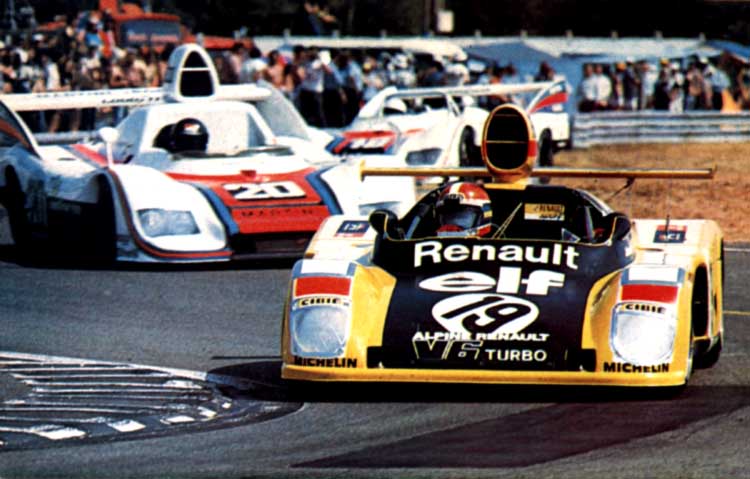
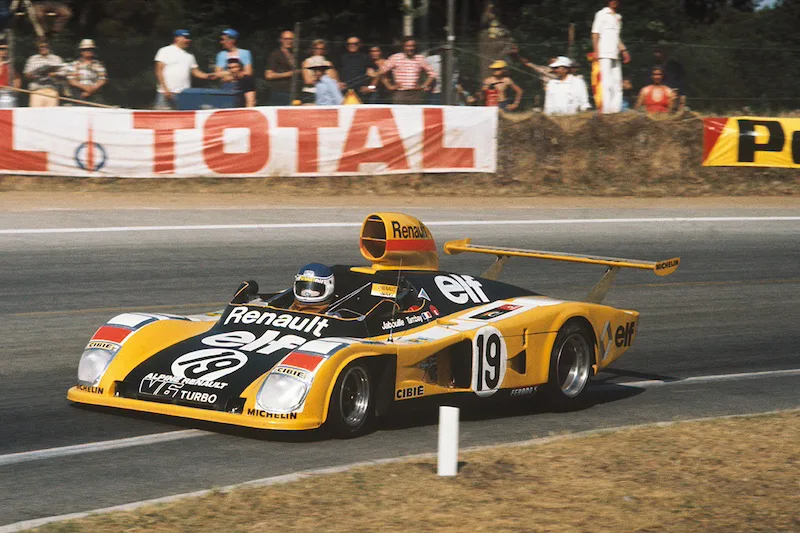
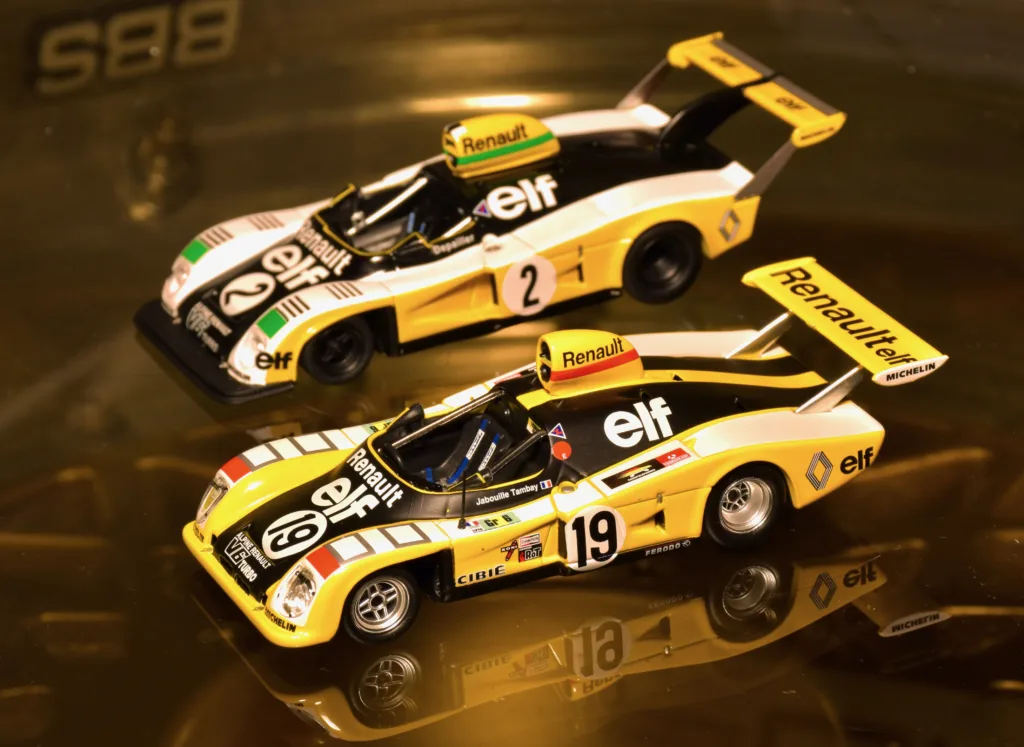
- IXO Classic Le Mans & GT Cars LMC021 (diecast)
- Overall rating: 3 STARS | Quality details: 3 STARS | Estimated value: 2 STARS
- Only appears in this collection
1977 & 1978 the big attack
1977 Le Mans 24h, Renault Alpine A442 V6 turbo
The name has changed from Alpine-Renault to Renault Alpine and the main color was already Renault yellow instead of Alpine blue. Renault entered a single A442 last year which was very quick but retired. In 1977 they returned, now with 3 works cars and one for the team of Hughes de Chaunac that didn’t even last one lap. Again, the Alpines were the quickest, but Jacky Ickx in the Porsche 936 chased them until all of them retired.
Equipe Renault Elf #7: Patrick Tambay (F) / Jean-Pierre Jaussaud (F)
Results: Start-grid 4th / time 3:34.800/ race DNF engine – 158 laps
Equipe Renault Elf #8:Jacques Lafitte (F) / Patrick Depailler (F)
Results: Start-grid 2nd / time 3:32.900/ race DNF engine – 289 laps
Equipe Renault Elf #9: Jean-Pierre Jabouille (F) / Derek Bell (GB)
Results: Start-grid 1st / time 3:31.700 / race DNF engine – 257 laps
Renault Alpine A442- Group 6 <3L: Powered by .0 liter Renault Gordini V6 60º twin turbo, approx. 550 hp. Michelin tires. Weight 720 kg. Aluminium monocoque, chassisnrs. #4421, #4422 and #4423.
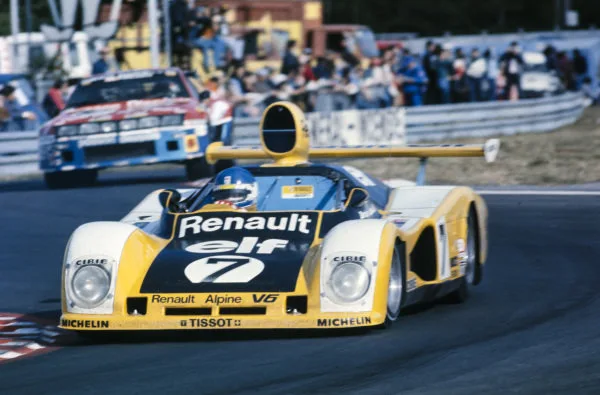
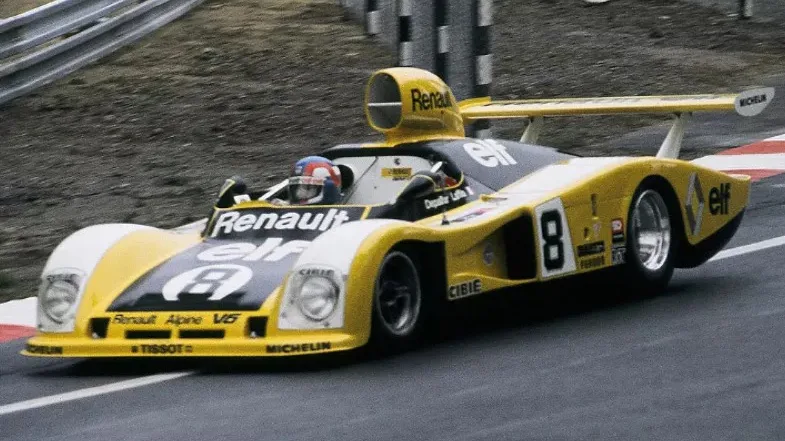
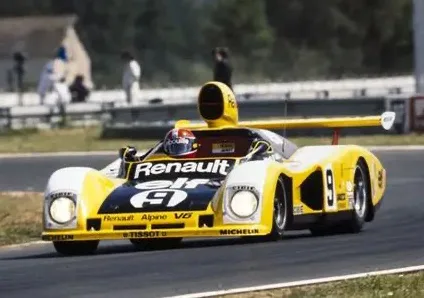
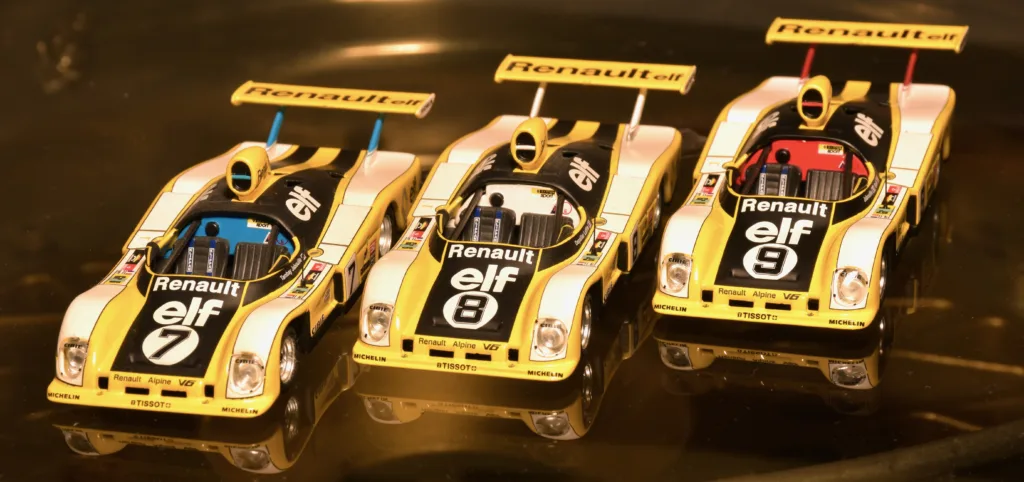
- IXO Classic Le Mans & GT Cars LMC042 / LMC043 / LMC 044 (diecast)
- Overall rating: 3 STARS | Quality details: 3 STARS | Estimated value: 2 STARS
- Also appears in #120 Derek Bell
1977 Le Mans 24h, Alpine-Renault A442
Renault was present with three factory cars at Le Mans, this semi-works car that was entered by Equipe de Chaunac – which would be known as Oreca in the future. It had bad luck, the turbo caused fire in the very first lap of the race.
Equipe de Chaunac #16: René Arnoux (F) / Didier Pironi (F) / Guy Fréquelin (F)
Results: Start-grid 5th / time 3:38.600 / race DNF fire – 0 laps
Renault Alpine A442- Group 6 <3L: Powered by 2.0 liter Renault Gordini V6 60º twin turbo, approx. 510 hp. Michelin tires. Weight 720 kg. Aluminium monocoque, chassisnr. #4420

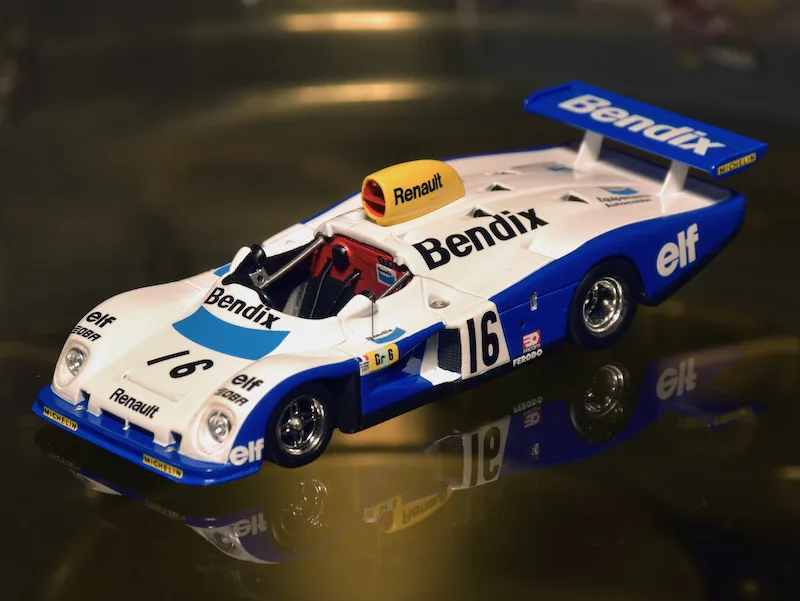
- SPARK S1556 (resin)
- Overall rating: 4 STARS | Quality details: 4 STARS | Estimated value: 3 STARS
- Only appears in this collection
1977 Le Mans, Mirage-Renault GR8
Not only 3 factory cars and a factory supported Alpine, also two Mirages were powered by the Renault V6 turbo engine. One failed to finish but the #10 car got on the podium as the only Renault powered prototype but it was 11 laps behind the winning Porsche.
Grand Touring Cars #10: Vern Schuppan (NZ) / Jean Pierre Jarier (F)
Results: Start-grid 12th / time 3:47.400 / race 2nd – 332 laps
Mirage GR8 – Group 6 <3L: Powered by 2.0 liter Renault Gordini V6 60º twin turbo, approx. 550 hp. Goodyear tires. Weight 730 kg. Aluminium monocoque, chassisnr. #802
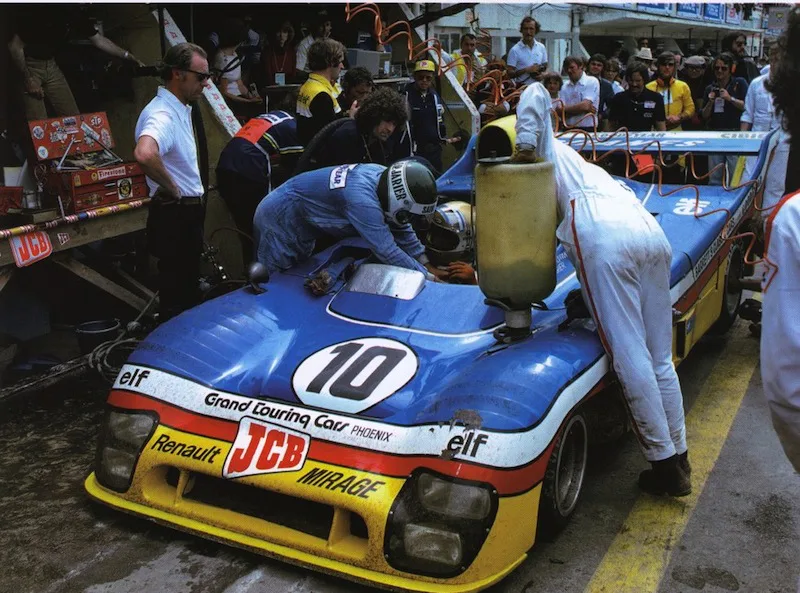
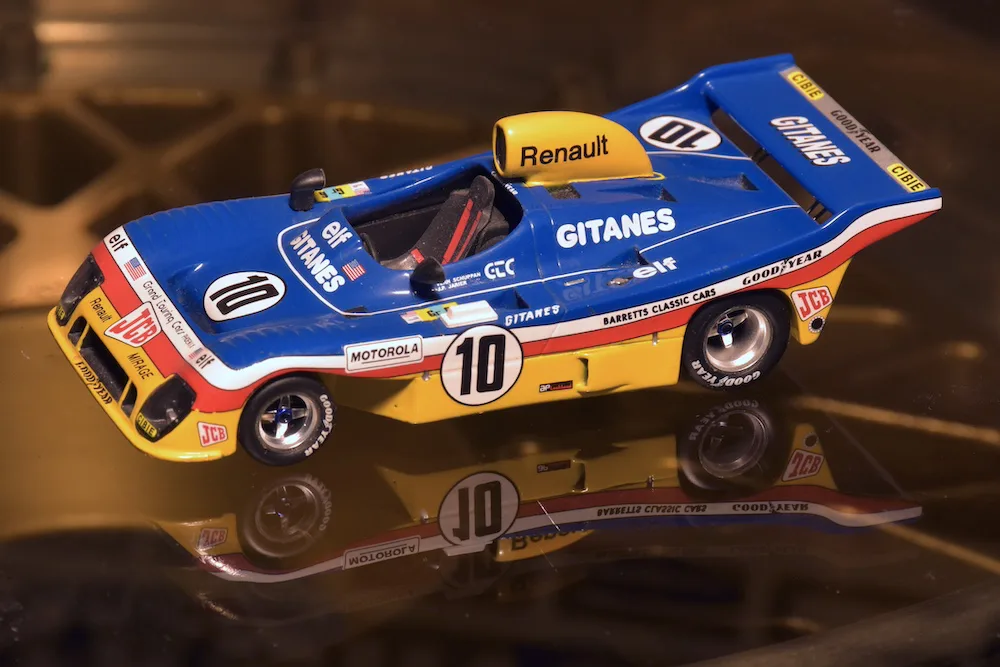
- SPARK STME07 (resin)
- Overall rating: 4 STARS | Quality details: 3 STARS | Estimated value: 3 STARS
- Also appears in #062 Gitanes & Gauloises
1978 Le Mans 24h, Renault Alpine A442B and A443
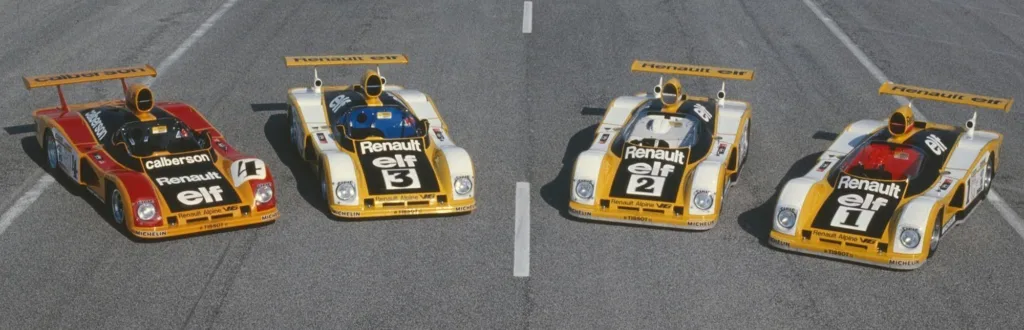
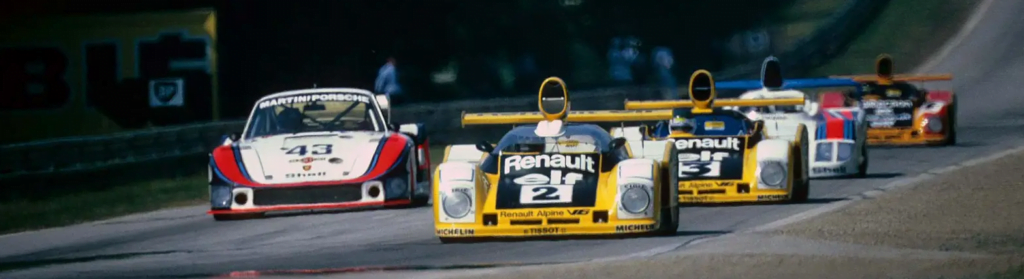
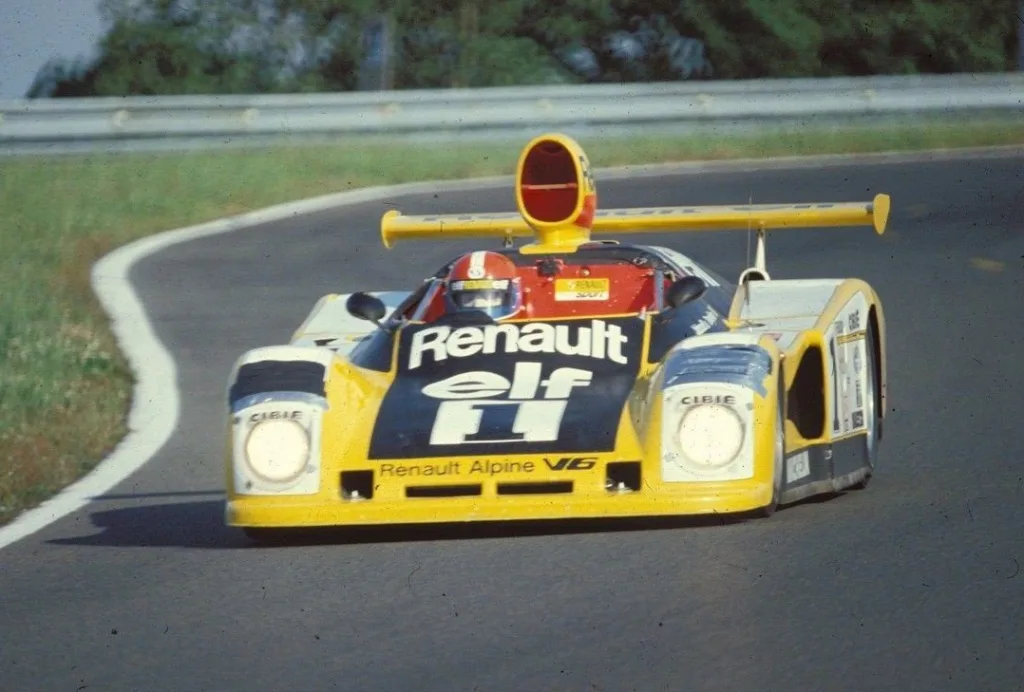
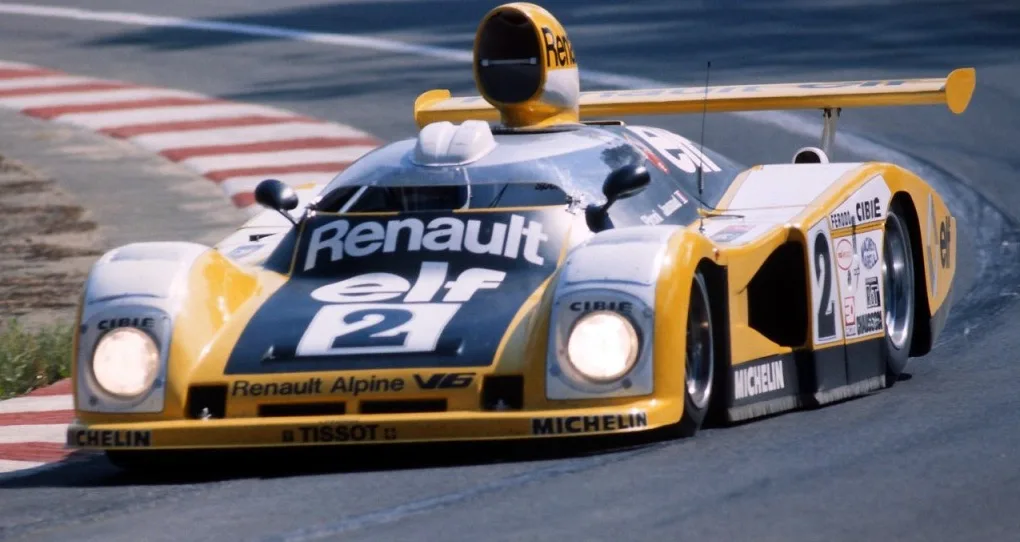
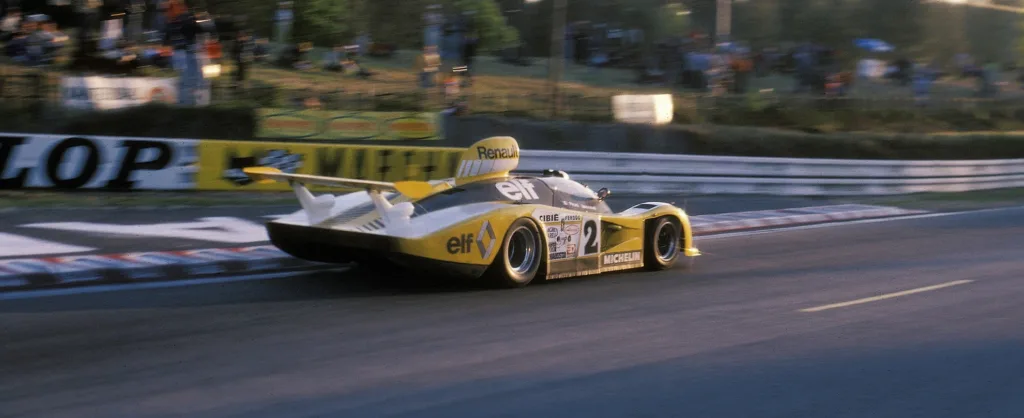
After last year’s defeat, Renault entered 3 full works cars this year: One A442 in last year’s specs, one A442B with a canopy for better aerodynamics and 2.1 liter engine, and a brand new A443 with that same 2.1 liter power plant and a slightly longer wheelbase. The A443 led the field from the start and served as the hare. It retired with a broken engine, but also caused some damage and delay to the following Porsches. In the end the #2 A442B “bubble” won Le Mans. Renault quit immediately after and started their Formula 1 project where they named their car Renault Gordini and not Alpine.
Equipe Renault Elf Sport #1: Jean-Pierre Jarier (F) / Patrick Depailler (F)
Results: Start-grid 2nd / time 3:28.400 / race DNF engine – 279 laps
Alpine-Renault A443 – Group 6 <3L: Powered by 2.1 liter Renault Gordini V6 60º twin turbo, approx. 580 hp. Michelin tires. Weight 740 kg. Aluminium monocoque, chassisnr. #4431
Equipe Renault Elf Sport #2: Jean-Pierre Jaussaud (F) / Didier Pironi (F)
Results: Start-grid 5th / time 3:35.700 / race 1st – 370 laps
Renault Alpine A442B – Group 6 <3L: Powered by 2.1 liter Renault Gordini V6 60º twin turbo, approx. 580 hp. Michelin tires. Weight 720 kg. Aluminium monocoque, chassisnr. #4423
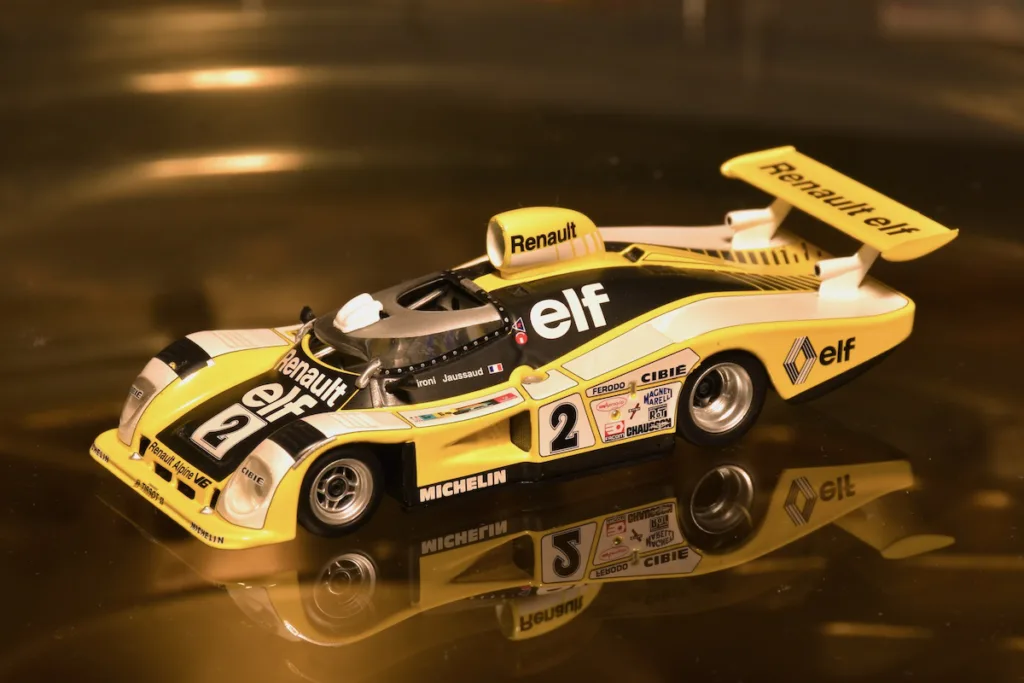
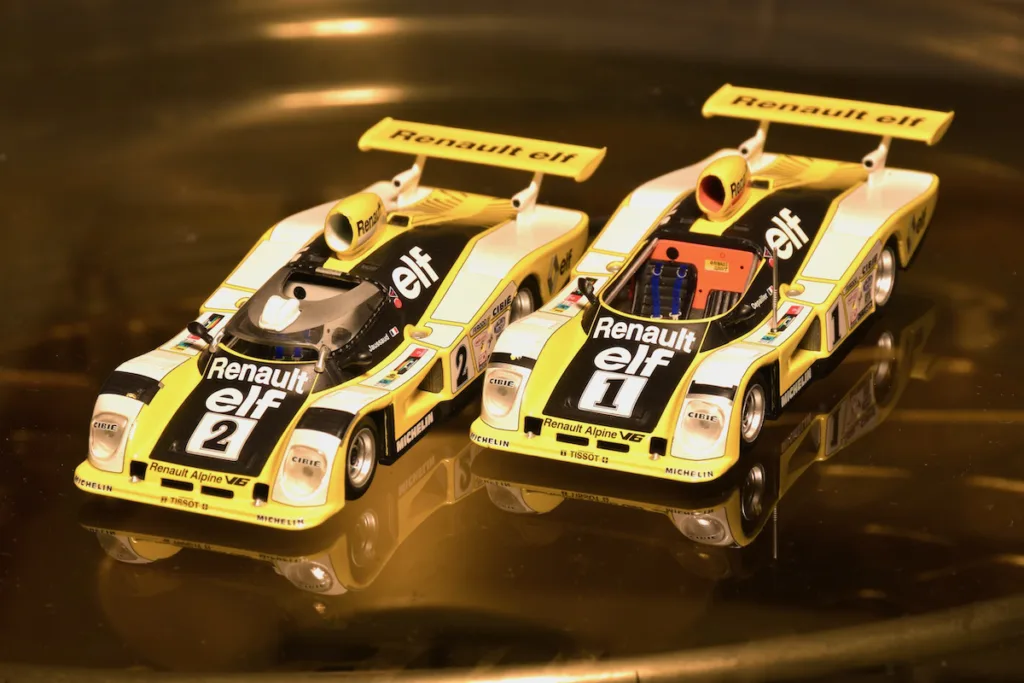
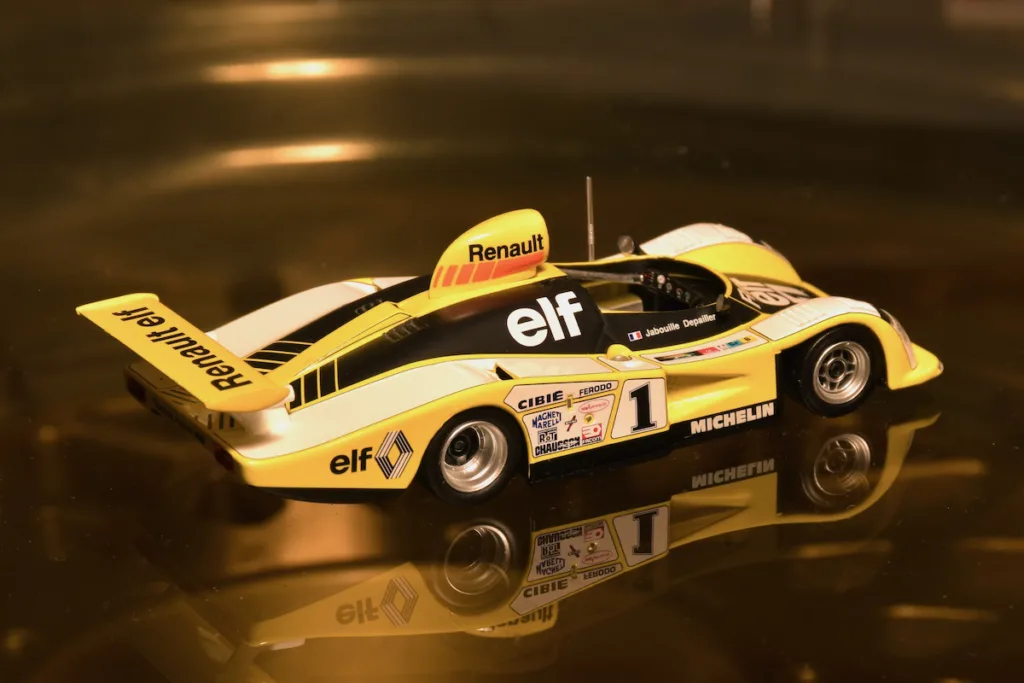
- MINICHAMPS MC430 781101 & MC430 781102 (diecast)
- Overall rating: 4 STARS | Quality details: 3 STARS | Estimated value: 3 STARS
- Only appear in this collection
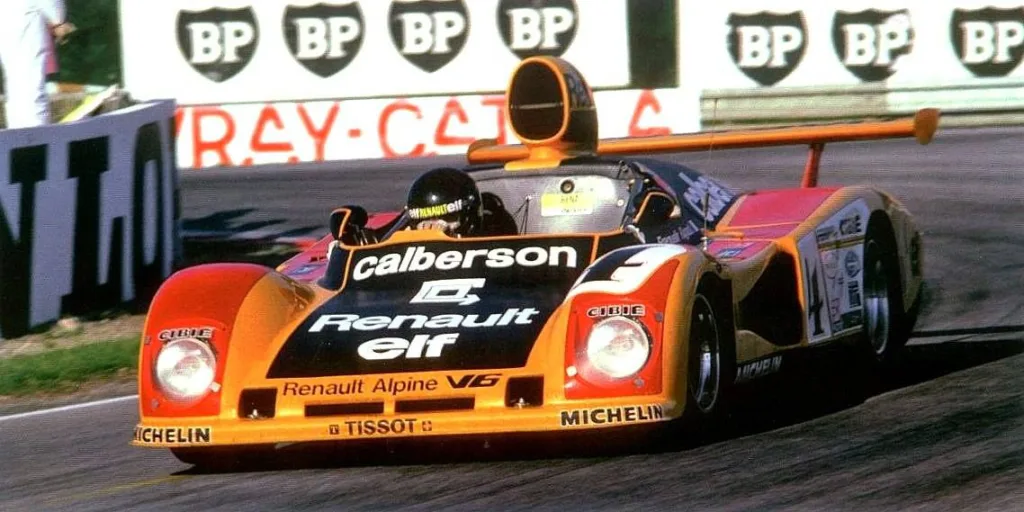
1978 Le Mans 24h, Renault Alpine A442
A fourth Renault Alpine contested this year’s race. It was a 1977 A442 that was entered by Equipe Calberson. It was slower than the official works cars but reliable and finished 4th behind the winning A442B and two Porsche 936’s.
Equipe Renault Elf Sport Calberson #4: Jean Ragnotti (F) / Guy Frequelin (F) / José Dolhem (F)
Results: Start-grid 8th / time 3:42.700 / race 4th – 359 laps
Renault Alpine A442- Group 6 <3L: Powered by 2.0 liter Renault Gordini V6 60º twin turbo, approx. 550 hp. Michelin tires. Weight 720 kg. Aluminum monocoque, chassisnr. #4421
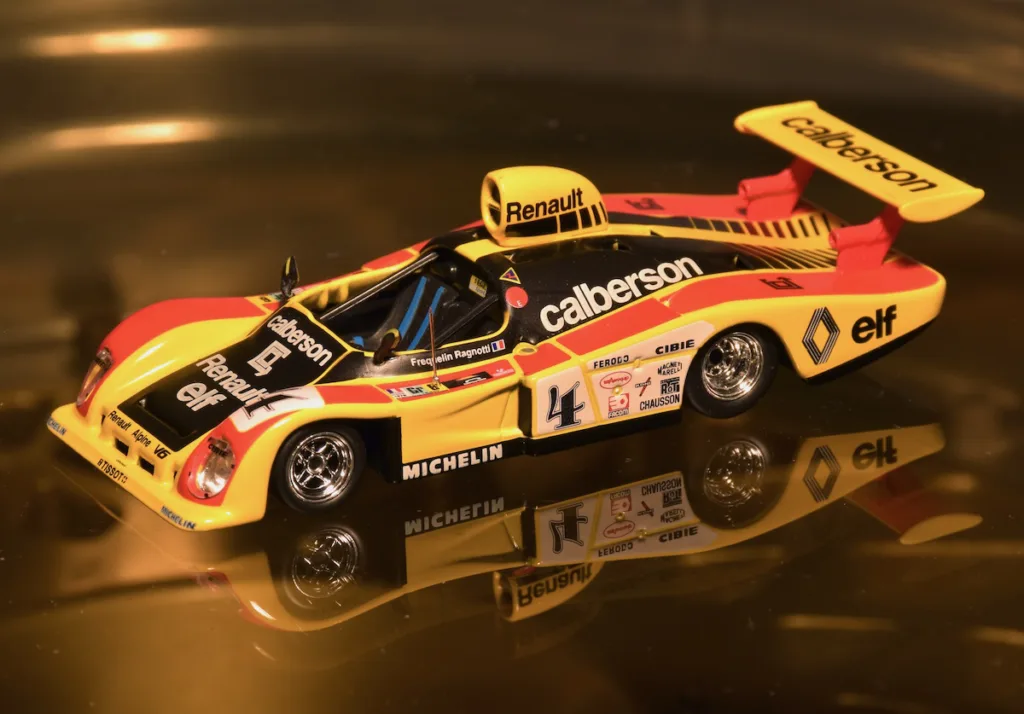
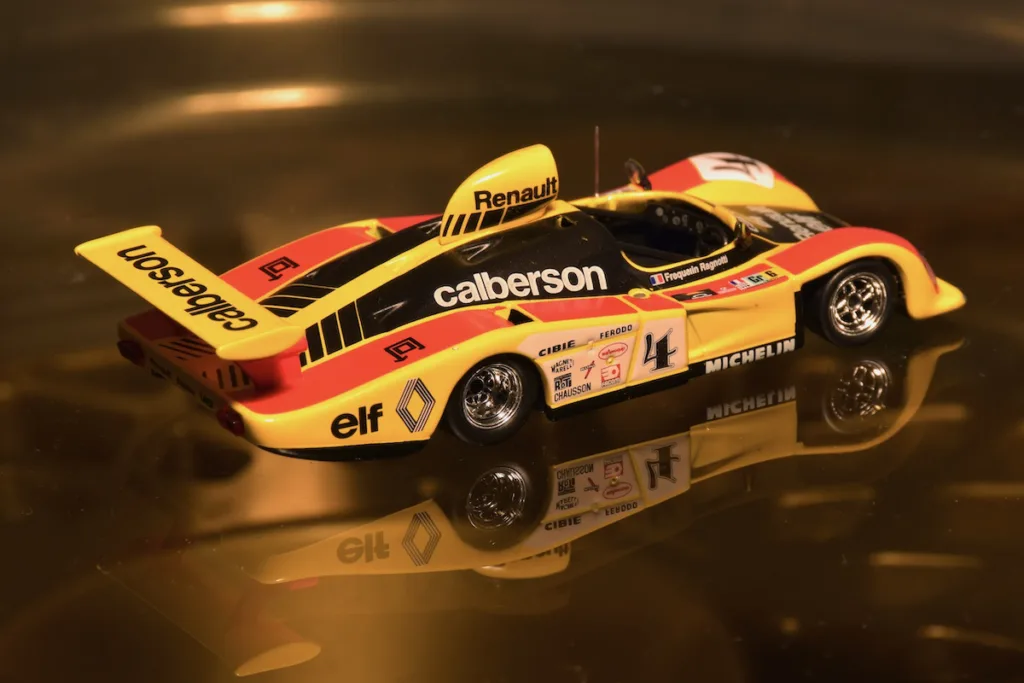
- IXO ALTAYA 24 heures du Mans 46 (diecast)
- Overall rating: 3 STARS | Quality details: 3 STARS | Estimated value: 2 STARS
- Only appears in this collection
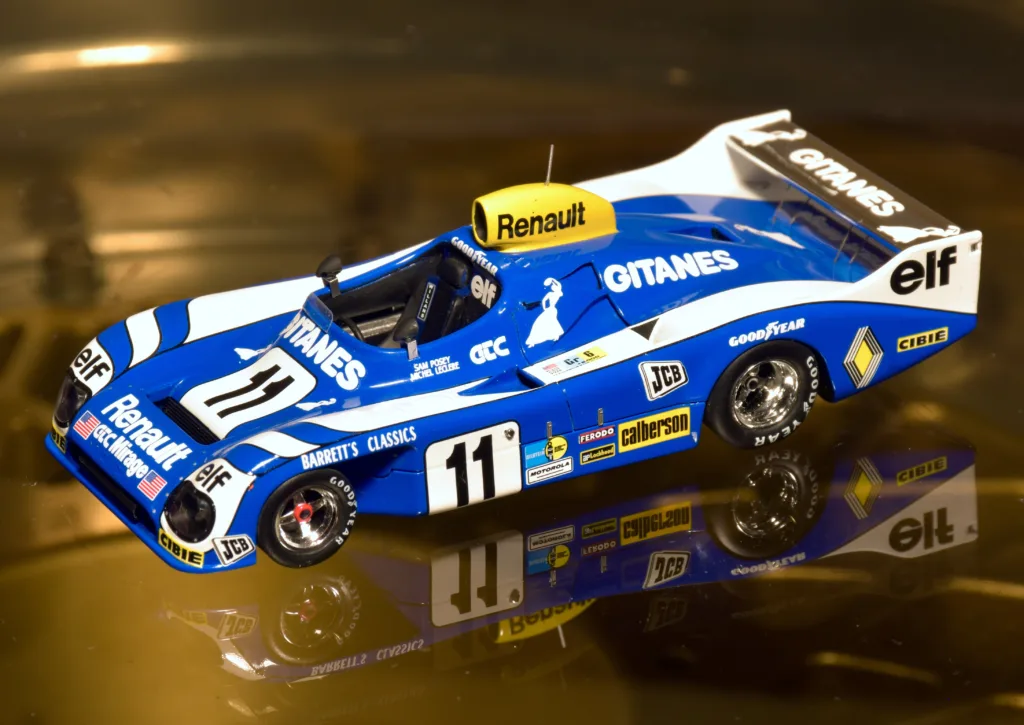
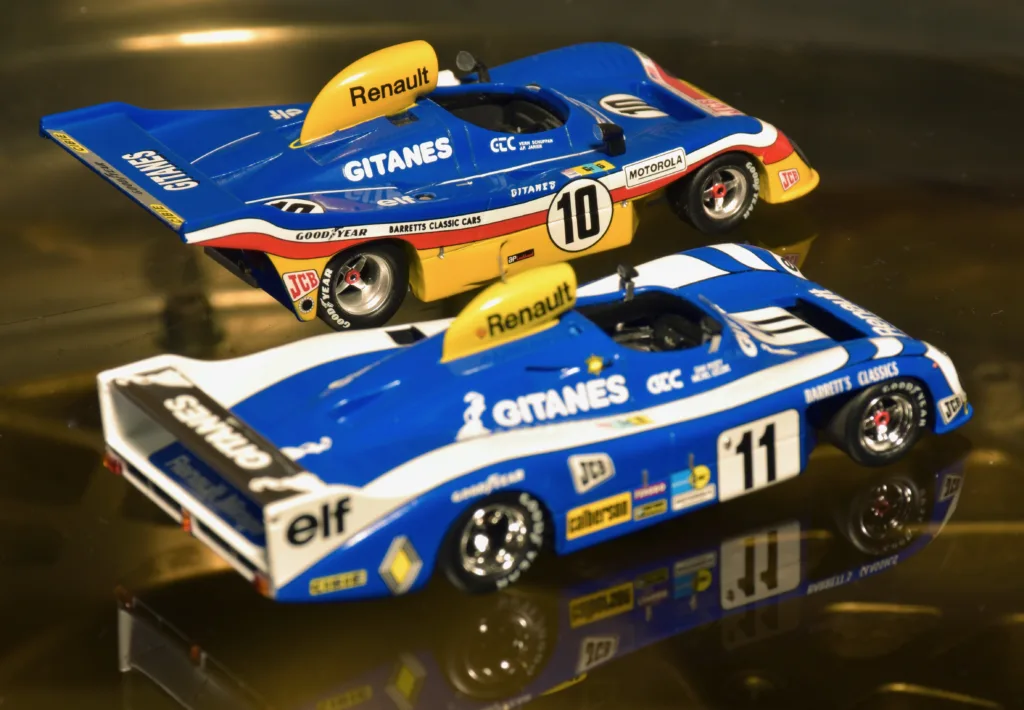
1978 Le Mans 24h, Mirage-Renault M9
Just as in the previous year, Renault provided Mirage with engines. Unfortunately, it was the engine that blew up on the #11 Mirage. The #10 car did finish the race, but way back in 10th place. The Mirage M9’s had a long-tail bodywork which made them look quite differently from last year’s car which made them approximately 1 second per lap quicker however the chassis were quite some years old.
Grand Touring Cars #11: Michel Leclère (F) / Sam Posey (USA) / Vern Schuppan (NZ) DNS
Results: Start-grid 12th / time 3:48.300 / race DNF electrics – 33 laps
Mirage M9 – Group 6 <3L: Powered by 2.0 liter Renault Gordini V6 60º twin turbo, approx. 550 hp. aluminum monocoque, chassisnr. #801
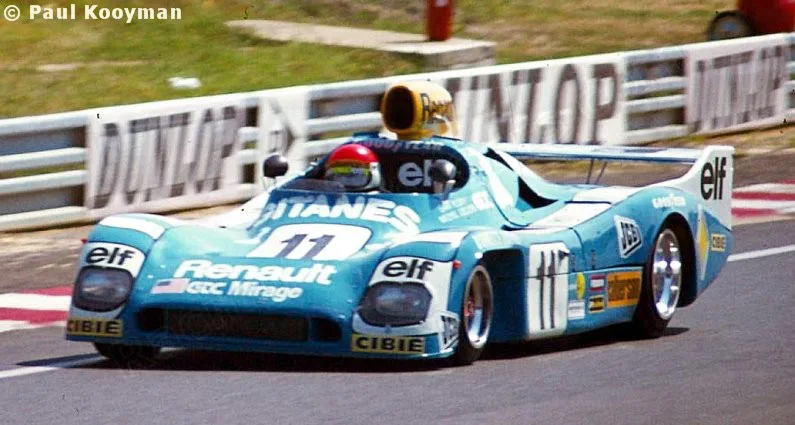
- SPARK S0312 (resin)
- Overall rating: 5 STARS | Quality details: 5 STARS | Estimated value: 4 STARS
- Also appears in #062 Gitanes & Gauloises
The in between years
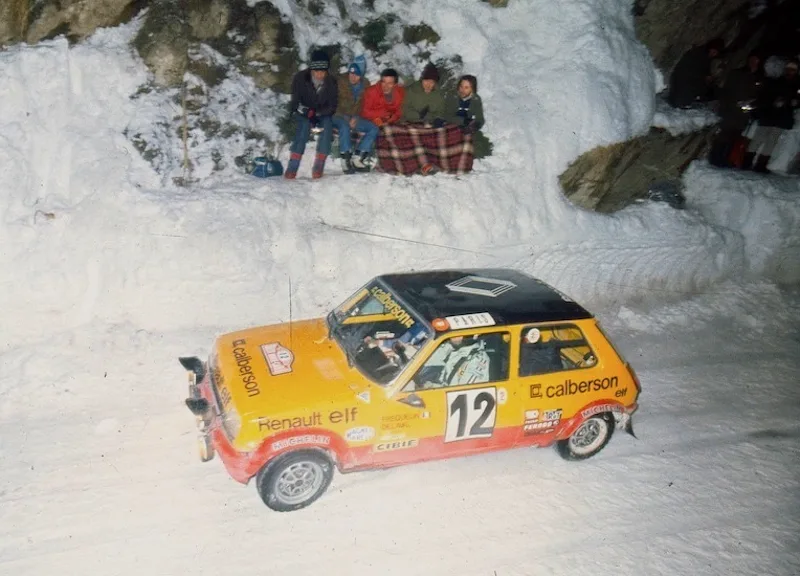
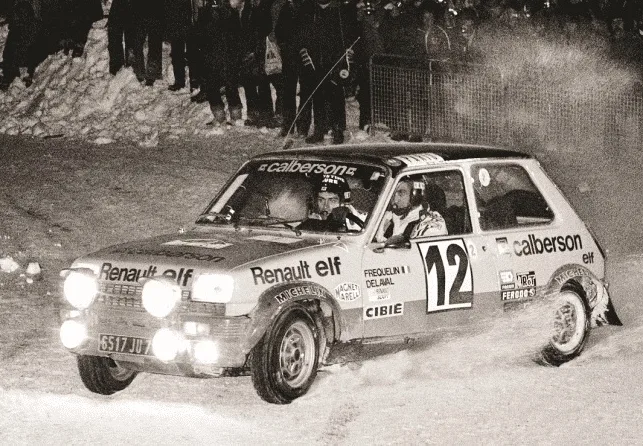
1978 Rally de Monte Carlo, Renault 5 Alpine
The 1978 version of the Rally de Monte Carlo saw a lot of snow, which may be a disadvantage when you have a lot of engine power. Jean-Pierre Nicolas managed it very well in his Porsche 911, but behind him finished two little front-wheel drive Renault 5 Alpine. The French cars beat all the factory Fiat 131 Abarths and some Lancia Stratos! Jean Ragnotti finished second and Guy Fréquelin third.
Renault Elf Calberson #12: Guy Fréquelin (F) / Jacques Delaval (F)
Results: 3rd overall / 2nd Group 2
Renault 5 Alpine – Group 2: Powered by 1.4 liter Renault straight-4, approximately. 130 hp. Michelin tires. Weight 800 kg. Steel monocoque, chassisnr. unknown
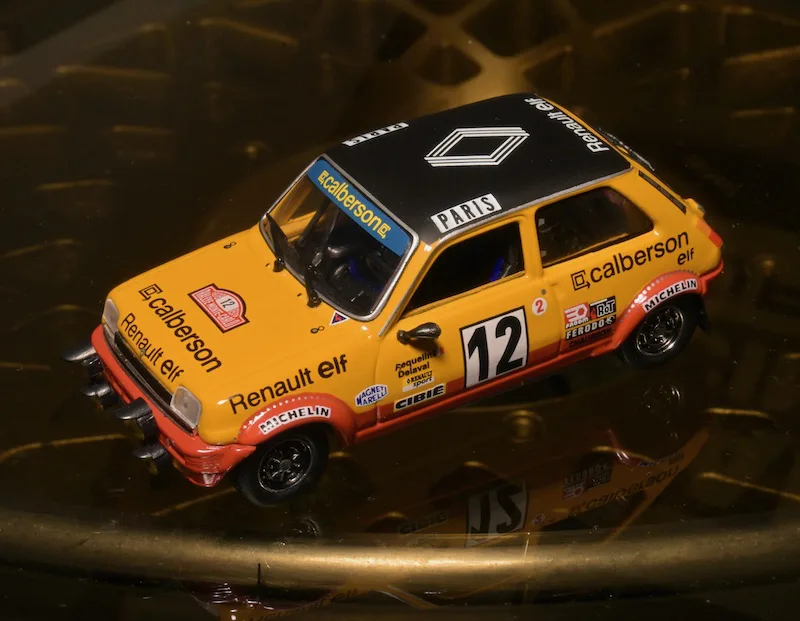
- SKID SKC028 (diecast)
- Overall rating: 2 STARS | Quality details: 3 STARS | Estimated value: 2 STARS
- Appears in #044 Alpine & Renault / #129 Small touring cars & GT
1980 Tour de Corse, Renault 5 turbo
The small Renault 5 turbo was a competitive rally car in the early 1980s before the powerful AWD group B cars arrived. In the 1980 Tour de Corse, Bruno Saby managed a fine 4th place behind two Porsche 911 and a FIAT 131 Abarth.
Garage Galtier #18: Bruno Saby (F) / Christian Tilber (MC)
Results: 4th / 2nd in class
Renault 5 turbo – Group 4 <2L: Powered by 1.4 liter Renault Gordini 830 straight-4 turbo, approx. 180 hp. Michelin tires. Weight 900 kg. Steel monocoque, chassisnr. unknown
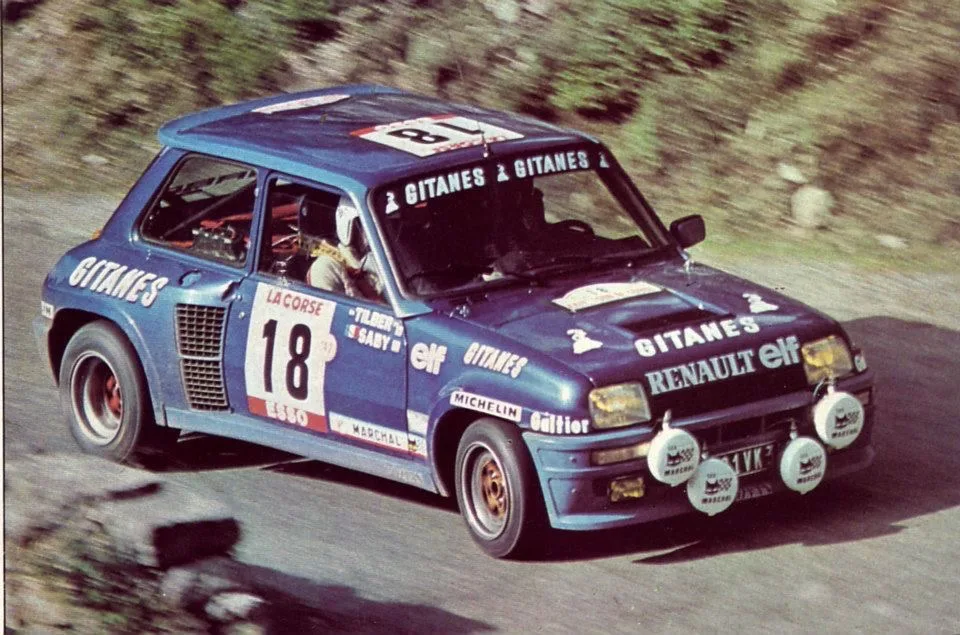
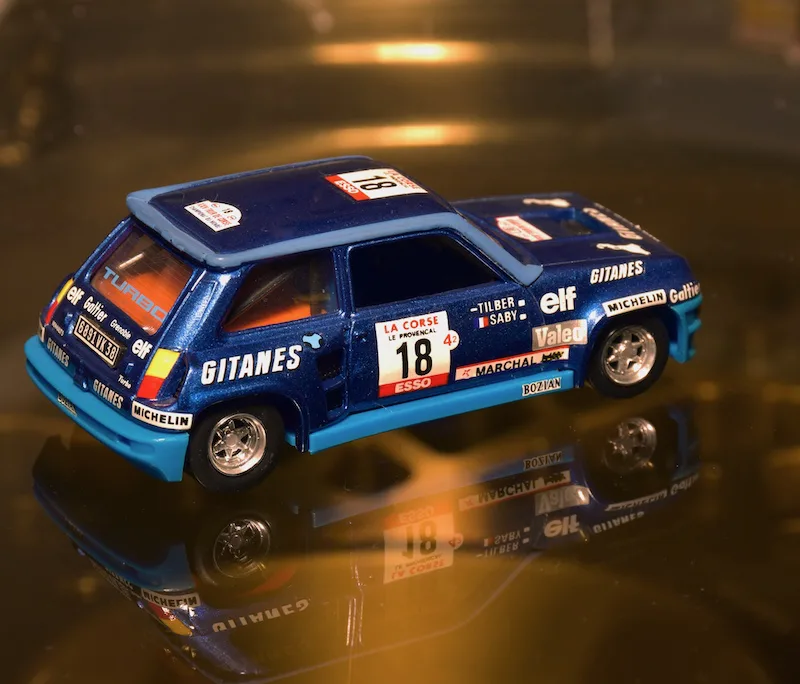
- SOLIDO 1023 (diecast)
- Overall rating: 2 STARS | Quality details: 2 STARS | Estimated value: 2 STARS
- Appears in #044 Alpine & Renault / #062 Gitanes & Gauloises / #129 Small touring cars & GT
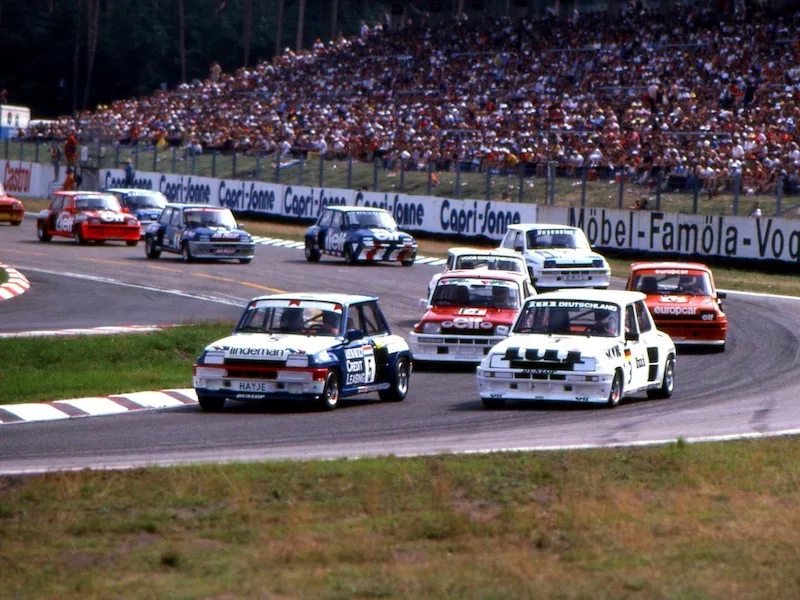
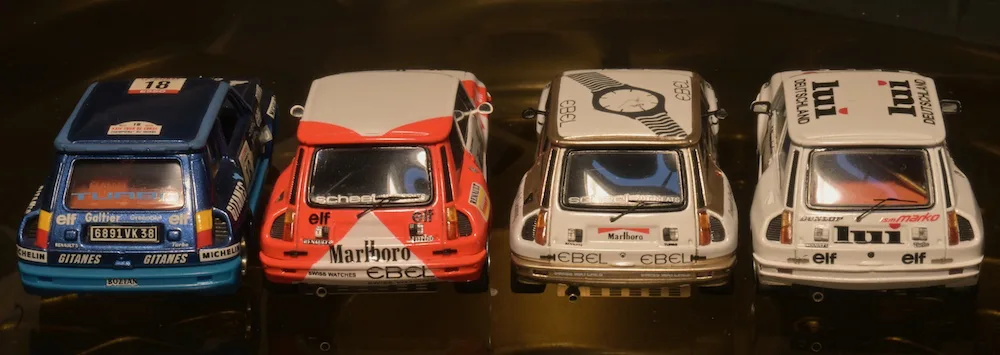
1981 Renault 5 turbo Cup
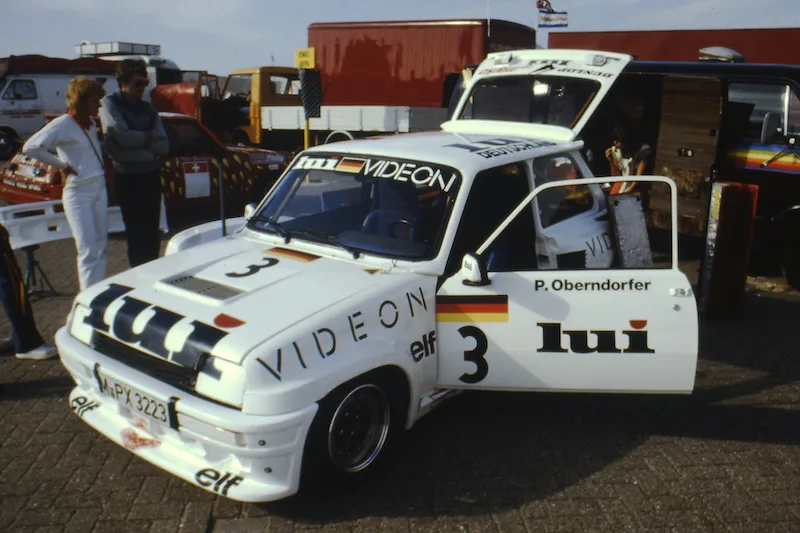
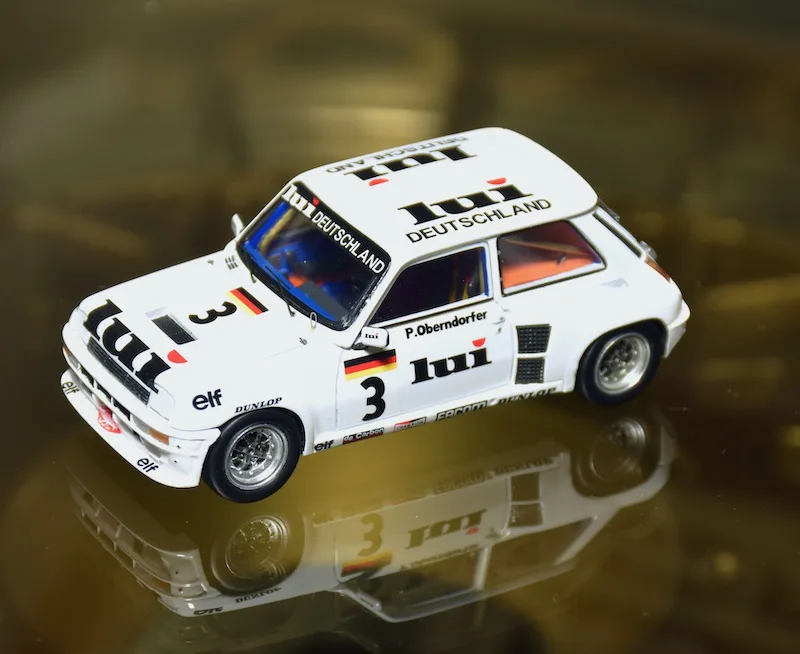
1981 was the first year of the European Renault 5 turbo cup. A one-make series with near-standard versions of the spectacular mid-engined Renault 5 turbo. Drivers came from France of course, but also quit a many form The Netherlands, Germany and Italy. German Wolfgang Schütz was the first champion, another fast German driver was Peter Oberndorfer. He finished the 1981 championship in 6th position.
LUI Germany #3: Peter Oberndorfer (D)
Results: championship 6th
Renault 5 turbo 2 – R5 turbo Cup: Powered by 1.4 liter Renault Gordini 830 straight-4 turbo, approx. 200 hp. Dunlop tires. Weight 900 kg. Steel monocoque, chassisnr. unknown
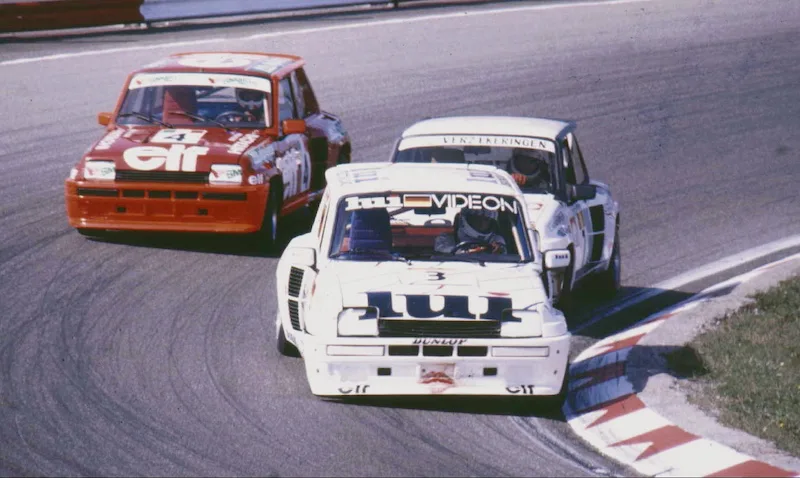
- SPARK S6021 (resin)
- Overall rating: 4 STARS | Quality details: 4 STARS | Estimated value: 3 STARS
- AAppears in #044 Alpine & Renault / #129 Small touring cars & GT / #116 LUI Magazine
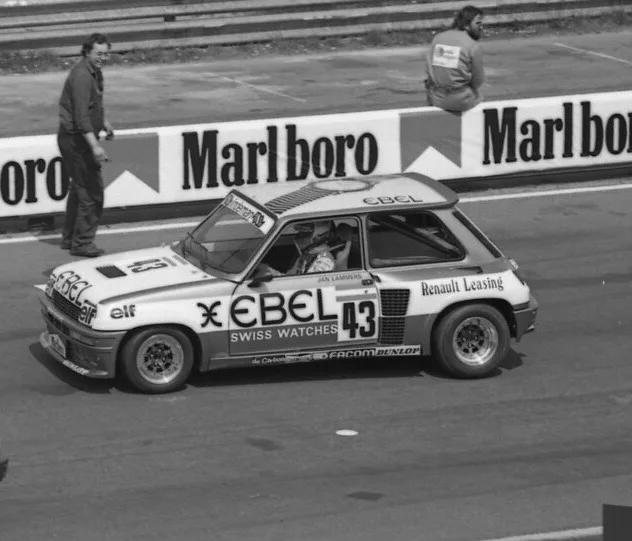
1982 Renault 5 turbo cup, Renault 5 turbo
Jan Lammers made his debut in the European Renault 5 cup in 1982 with support from the Dutch distributor. He took victory at the Norisring and would become champion in the next two seasons.
Renault Nederland #2: Jan Lammers (NL)
Results: 1 victory
Renault 5 turbo 2 – R5 turbo Cup: Powered by 1.4 liter Renault Gordini 830 straight-4 turbo, approx. 200 hp. Dunlop tires. Weight Steel monocoque, chassisnr. unknown
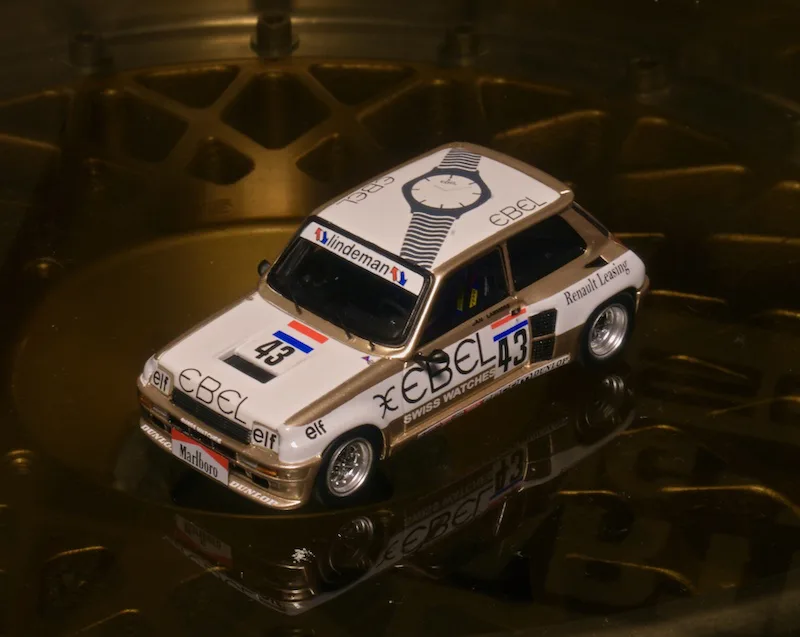
- SPARK S6023 (resin)
- Overall rating: 4 STARS | Quality details: 4 STARS | Estimated value: 4 STARS
- Appears in #044 Alpine & Renault / #129 Small touring cars & GT
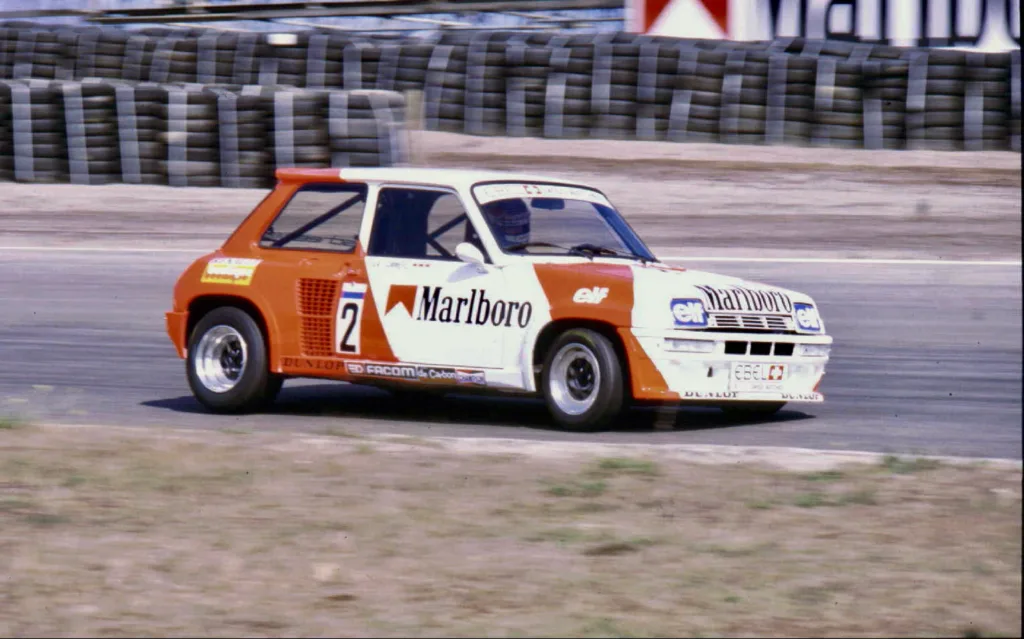
1983 Renault 5 turbo cup, Renault 5 turbo
Jan Lammers’ F1 career didn’t go as hoped. But he was an absolute ace in the Renault Cups; champion in the little R5 turbos in 1983 and 1984 and 3rd in the Alpine V6 cup in 1986. Later he would also excel in endurance racing, winning both the Le Mans and Daytona 24-hour races.
Marlboro Team Renault Nederland #2: Jan Lammers (NL)
Results: 4 victories / 1st championship
Renault 5 turbo 2 – R5 turbo Cup: Powered by 1.4 liter Renault Gordini 830 straight-4 turbo, approx. 200 hp. Dunlop tires. Weight Steel monocoque, chassisnr. unknown
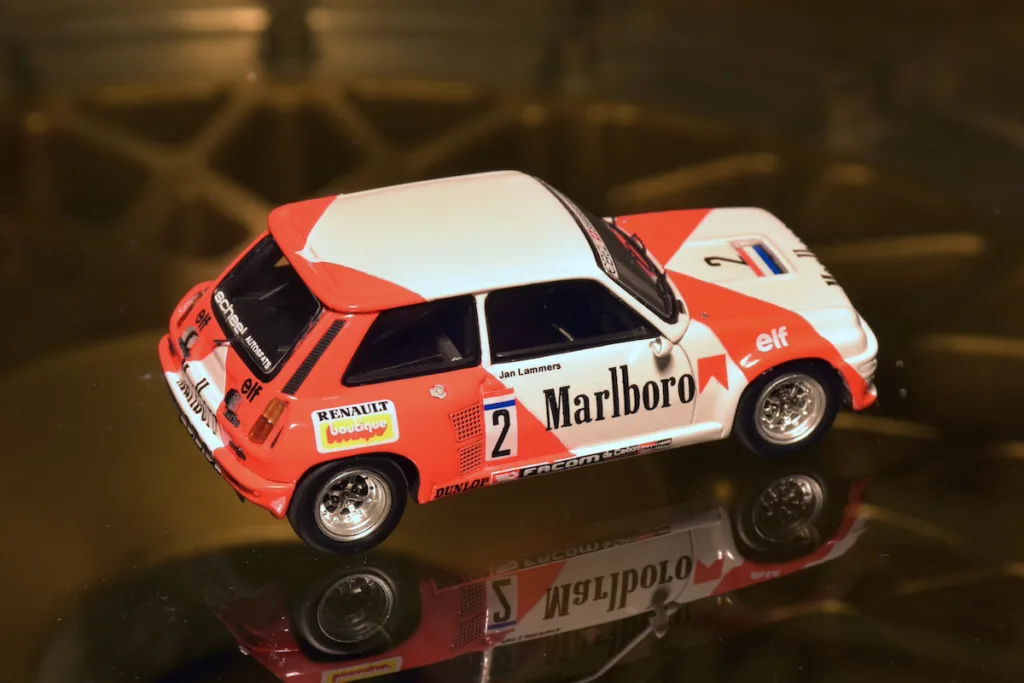
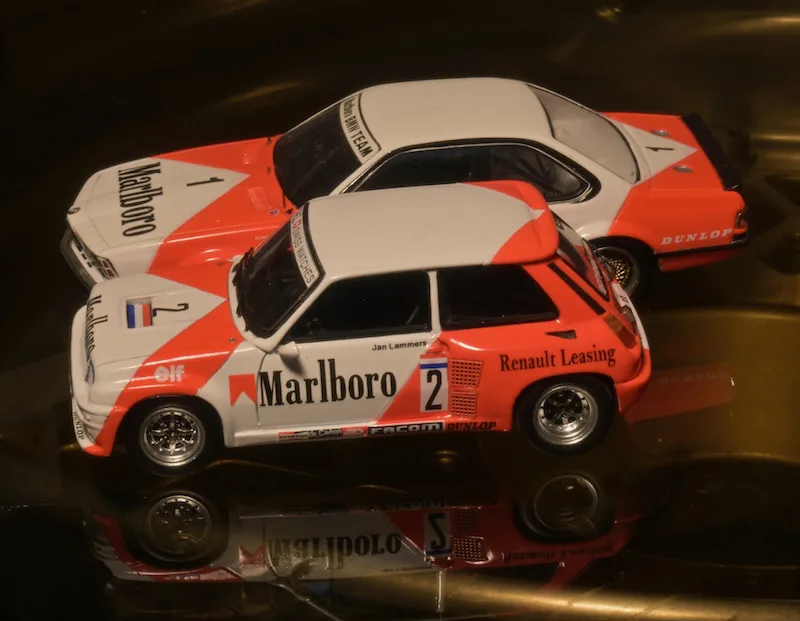
- SPARK S6155 (resin)
- Overall rating: 4 STARS | Quality details: 4 STARS | Estimated value: 4 STARS
- Appears in #044 Alpine & Renault / #063 Marlboro / #129 Small touring cars & GT
1984 Renault 5 turbo cup, Renault 5 turbo
Sicilian Massimo Sigala is a very experienced Cup driver. He won the Italian Renault 5 cup in 1978, the European Alfasud Sprint Cup in 1979, participated in all seasons of the European Renault 5 turbo Cup. In 1984 he finished 5th in the championship and took victory at Jan Lammers’ hometrack in Zandvoort. After the Renault 5 Turbo Cup ended, he switched to its successor the Renault V6 turbo cup and won the championship in 1986, 1987 and 1988. In 1989 and 1990 he also won the Renault 21 Turbo Cup. In between he raced Porsche 956s often together with Oscar Larrauri.
Momo #4: Massimo Sigala (I)
Results: 1 victory / 5th championship
Renault 5 turbo 2 – R5 turbo Cup: Powered by 1.4 liter Renault Gordini 830 straight-4 turbo, approx. 200 hp. Dunlop tires. Weight Steel monocoque, chassisnr. unknown
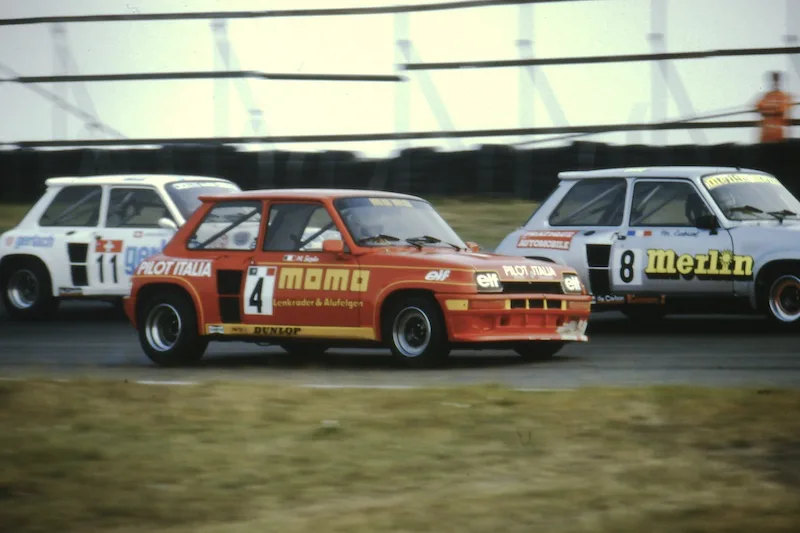
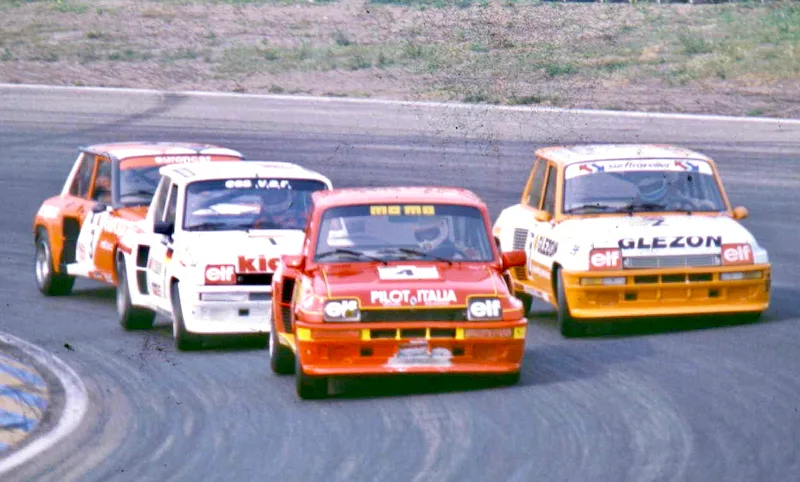
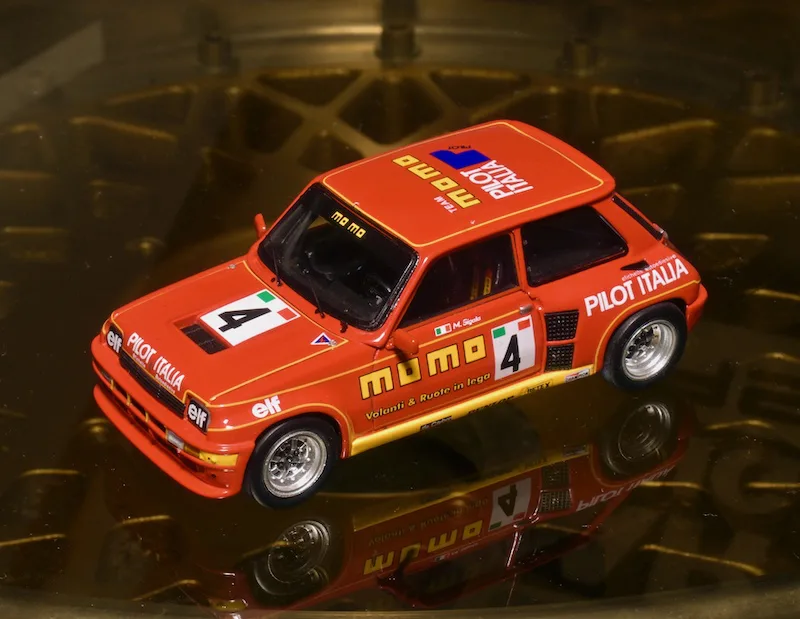
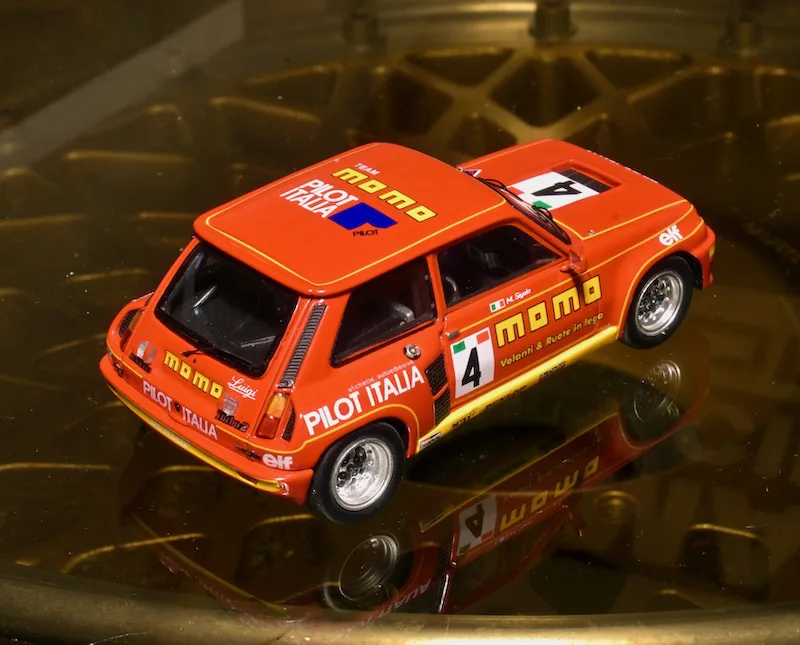
- SPARK S5558 (resin)
- Overall rating: 4 STARS | Quality details: 4 STARS | Estimated value: 4 STARS
- Appears in #044 Alpine & Renault / #129 Small touring cars & GT / #130 Momo
1984 Renault 5 turbo cup, Renault 5 turbo
Sicilian Massimo Sigala is a very experienced Cup driver. He won the Italian Renault 5 cup in 1978, the European Alfasud Sprint Cup in 1979, participated in all seasons of the European Renault 5 turbo Cup. In 1984 he finished 5th in the championship and took victory at Jan Lammers‘ hometrack in Zandvoort. After the Renault 5 Turbo Cup ended, he switched to its successor the Renault V6 turbo cup and won the championship in 1986, 1987 and 1988. In 1989 and 1990 he also won the Renault 21 Turbo Cup. In between he raced Porsche 956s often together with Oscar Larrauri.
Momo #4: Massimo Sigala (I)
Results: 1 victory / 5th championship
Renault 5 turbo 2 – R5 turbo Cup: Powered by 1.4 liter Renault Gordini 830 straight-4 turbo, approx. 200 hp. Dunlop tires. Weight Steel monocoque, chassisnr. unknown
- SPARK S5558 (resin)
- Overall rating: 4 STARS | Quality details: 4 STARS | Estimated value: 4 STARS
- Appears in #044 Alpine & Renault / #129 Small touring cars & GT / #130 MOMO
1994 Le Mans 24h, Venturi LM 600-Renault
Venturi is a small French manufacturer that uses Renault engines for its cars. In this case the PRV6 engine was equipped with two turbos and delivered about 600 hp. Only one of six started Venturi managed to finish, but it was not this one with its special livery designed by Arman. This was the comeback of art lover Hervé Poulain, also responsible for the famous BMW Art Cars in the 70’s.
BBA Compétition #30: Hervé Poulain (F) / Jean-Luc Maury Laribiére (F) / Bernard Chauvin (F)
Results: Start-grid 38h / time 4:31.920 / race DNC – 222 laps
Venturi LM 600 GT1 – LM GT1: Powered by 3.0 liter Renault PRV V6 90º twin turbo, approx. 600 hp. Dunlop tires. Steel monocoque, chassisnr. MVS #LM006
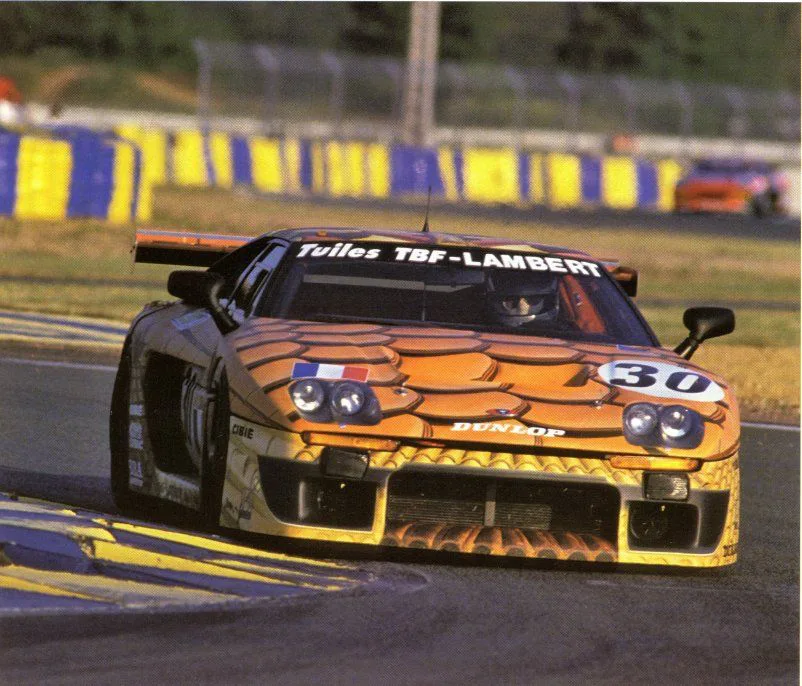
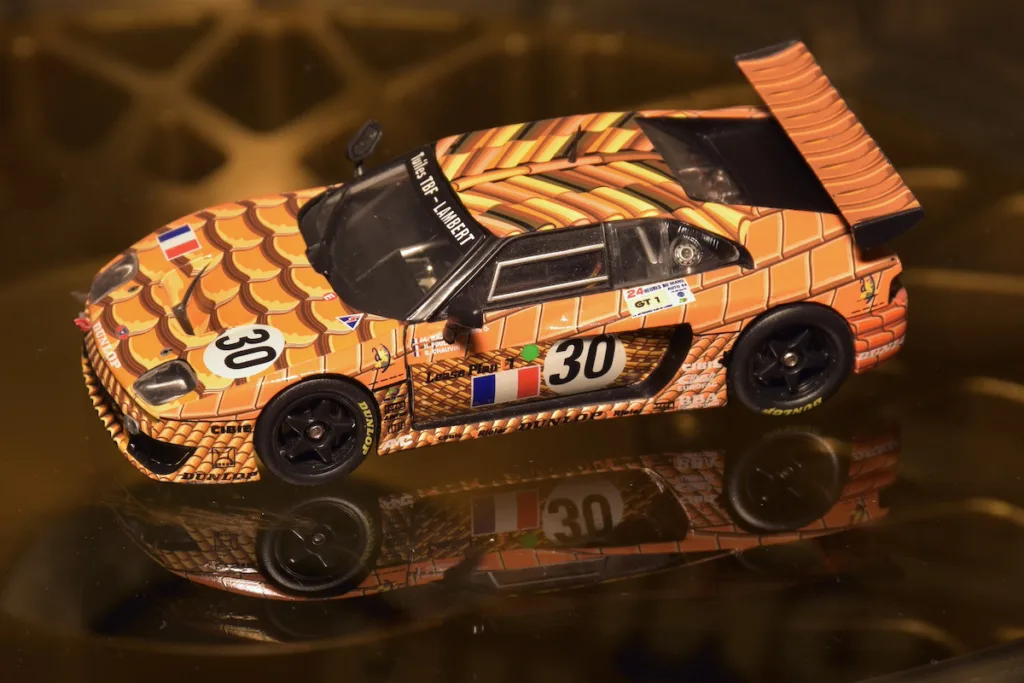
- IXO – ALTAYA Monstres sacres de l’endurance 57 (diecast)
- Overall rating: 4 STARS | Quality details: 4 STARS | Estimated value: 3STARS
- Also appears in #100 Art cars
2017 Yes Marina Gulf 12 hours, Renault R.S.01
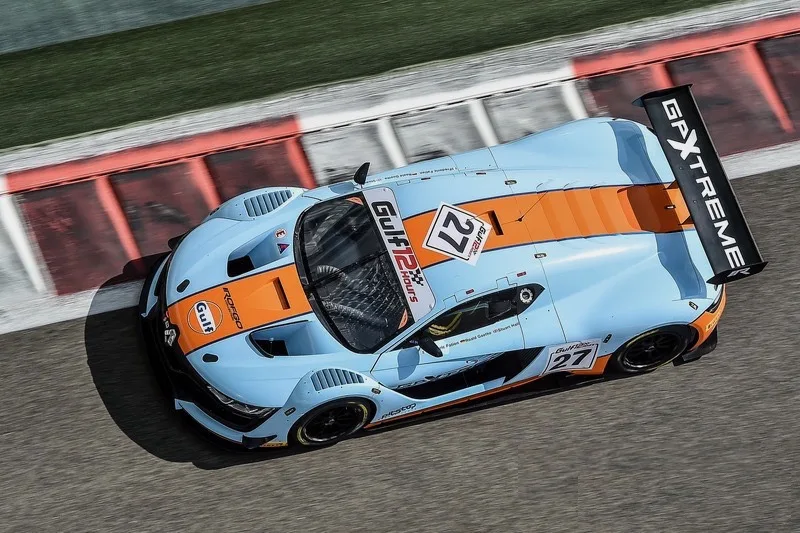
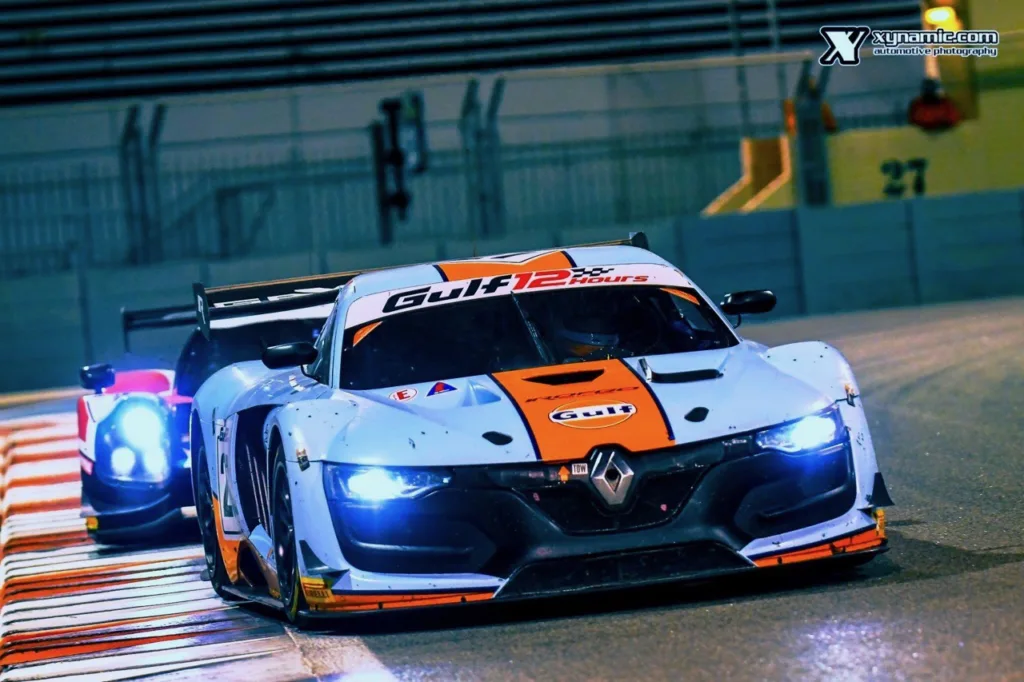
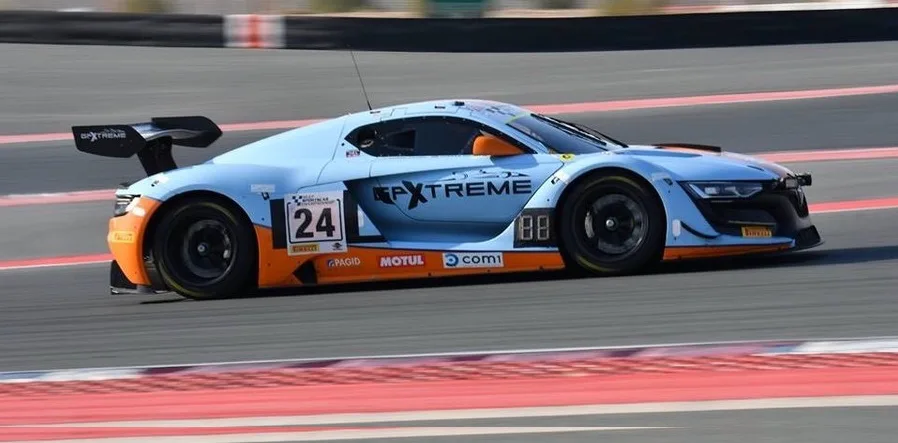
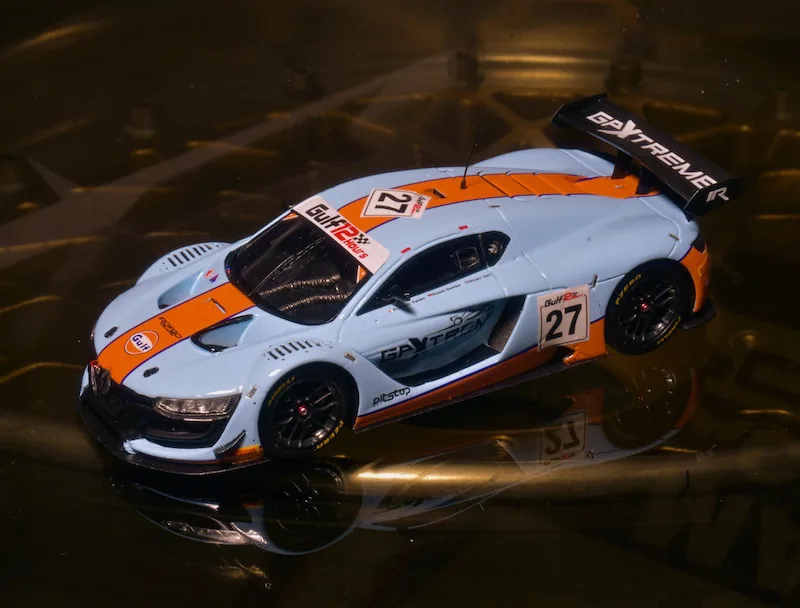
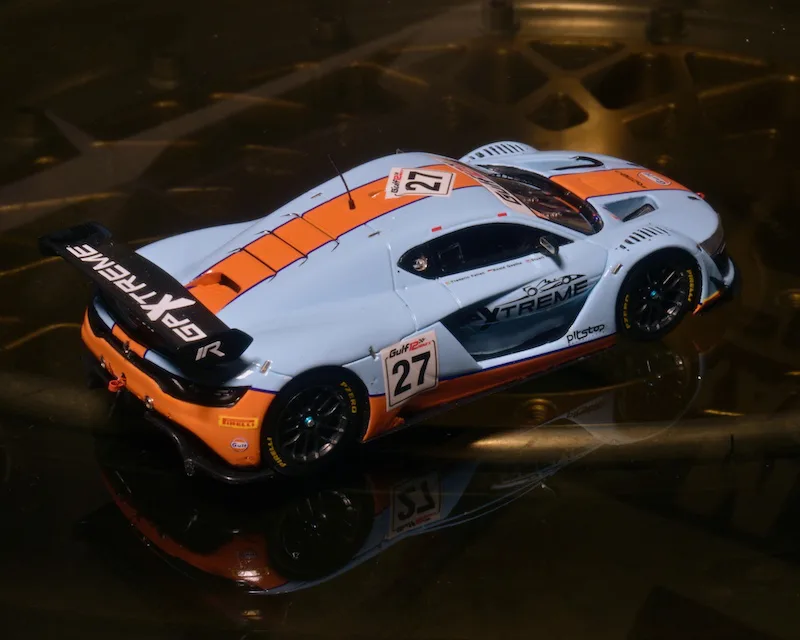
The Renault R.S.01 was originally developed for the Renault Sport Trophy as replacement for the Renault Mégane Coupé V6. With some adjustments it was also homologated for GT3. The weight had to be increased by 125 kg and the ceramic brakes discs were replaced by steel discs. The Nissan V6 twin-turbo engine from the Nissan GT-R was mounted in a carbon fibre chassis that was built by Dallara. GPXtreme entered this car in the 24-hour race at Dubai and the 12-hour race (actually two 6-hour races) at the track of Las Marina and some other events (picture #24). Roald Goethe brought the Gulf sponsoring which makes the picture complete.
GPXtreme #27: Roald Goethe (D) / Frédéric Fatien (F) / Stuart Hall (GB)
Results: Start-grid 26th / time 2:16.501 / race 1: 16th / race 2: 14th
Renault R.S. 01 – GT3 Pro-Am: Powered by 3.8 liter Nissan VR38DETT V6 twin-turbo, approx. 580 hp. Hankook tires. Weight 1270 kg. Carbon fibre chassis, chassisnr. FGT3 (Dallara)
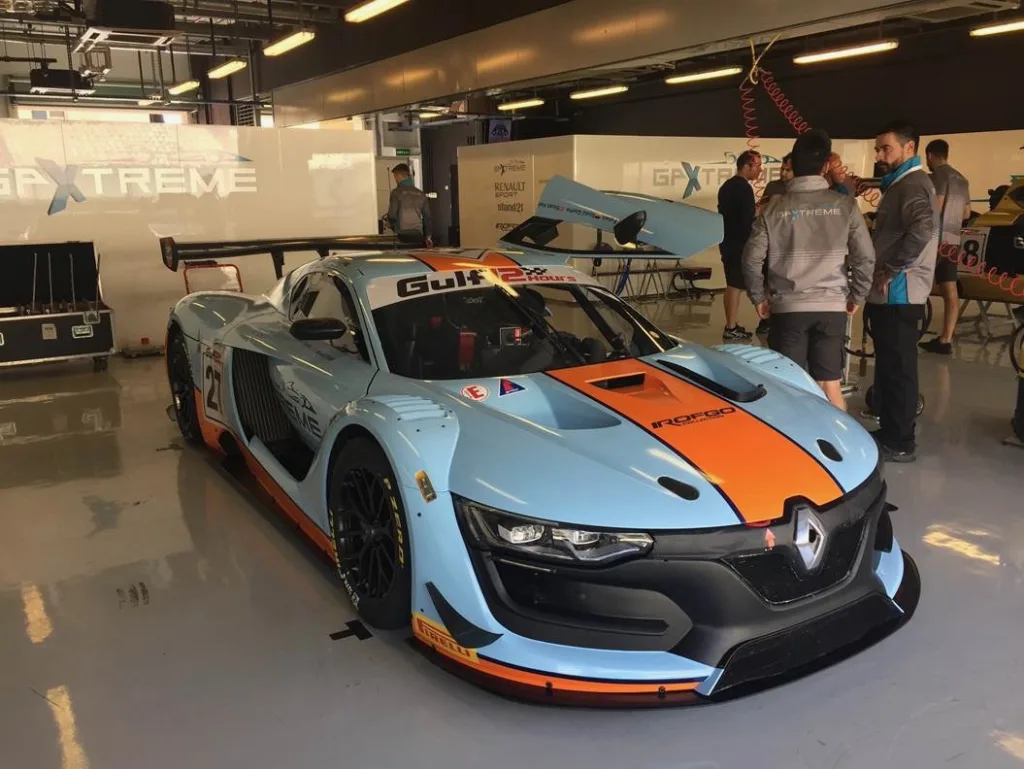
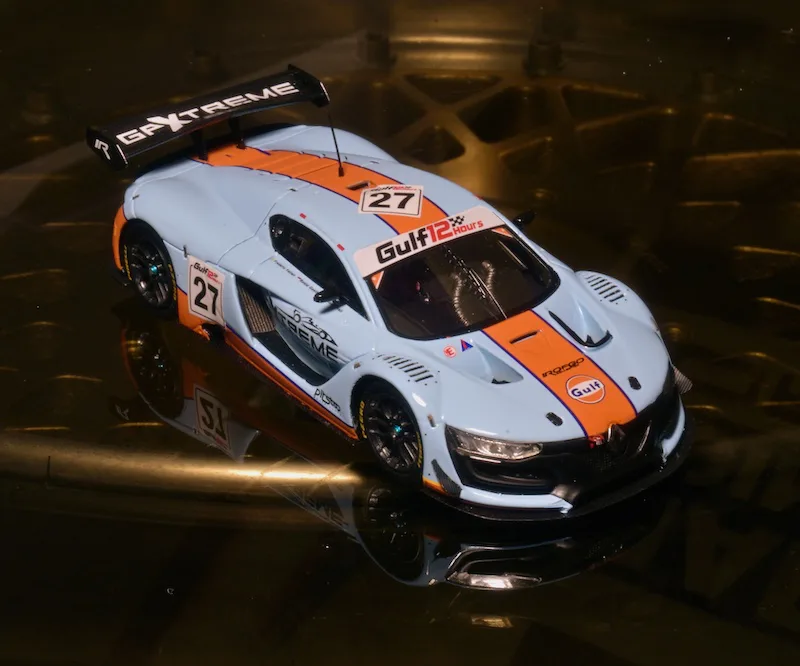
- SPARK S3844 (resin)
- Overall rating: 4 STARS | Quality details: 4 STARS | Estimated value: 4 STARS
- Also appears in #008 Gulf GT Cars
Almost 20 years later, Alpine is back
2013 Le Mans 24h, Alpine A450-Nissan
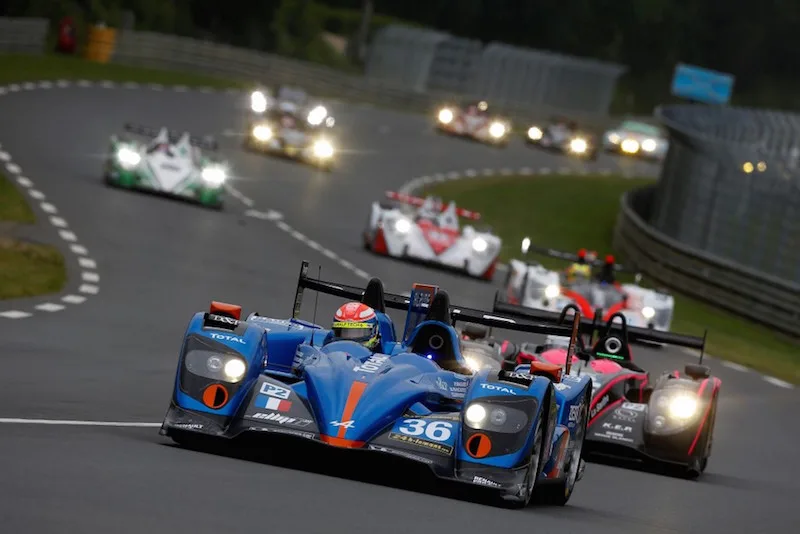
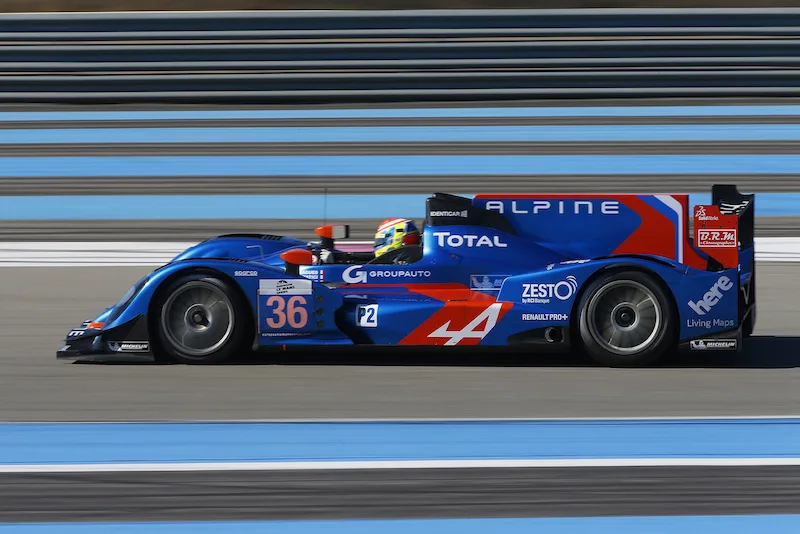
Using historic names for modern cars is a hot topic in LMP2 category in 2013. A Zytek looks like a Caterham, the Morgan LMP2 is a rebadged Oak-Pescarolo and this Alpine is no more than an Oreca 03 with V8 Nissan engine. Signatech uses the name and logos of historic brand Alpine on this car, of course with approval of Renault that wants to relaunch the Alpine brand. A bit of racing success would help, but the beautiful car finished only 8th in class and 14th overall.
Signatech Alpine #36: Nelson Panciatici (F) / Pierre Ragues (F) / Tristan Gommendy (F)
Results: Start-grid 15th / time 3:41.654 / race 14th – 317 laps / 8th LMP2
Alpine A450 – LMP2: Powered by 4.5 liter Nissan VK45DE V8 90º, approx. 460 hp. Michelin tires. Weight 900 kg. Carbon fibre monocoque, chassisnr. Alpine A450 #001 / Oreca 03 #06
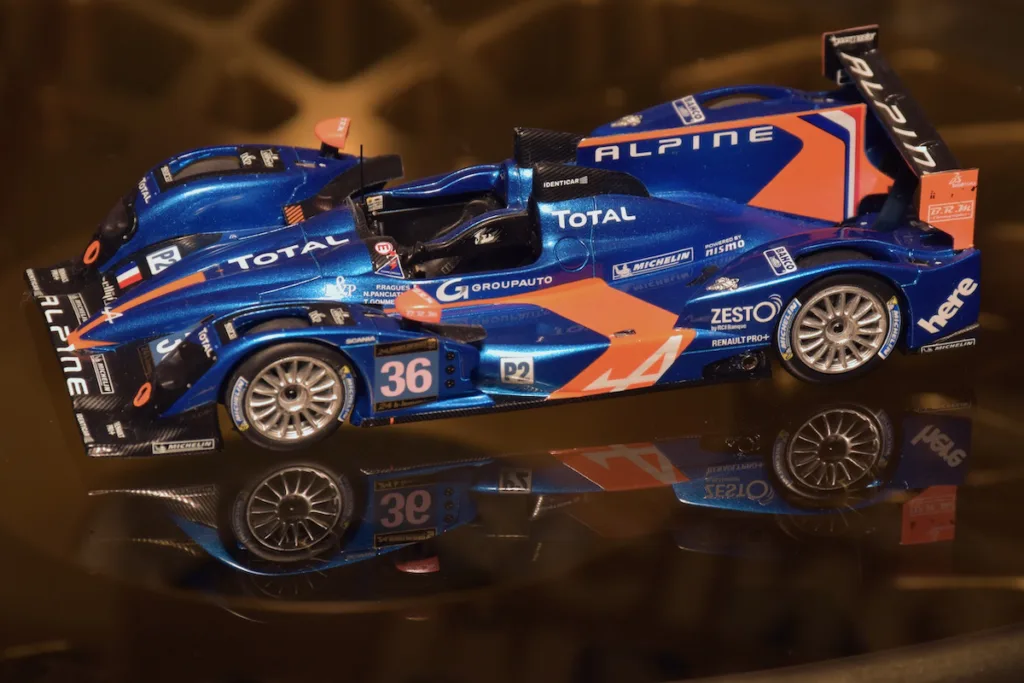
- SPARK S3755 (resin)
- Overall rating: 4 STARS | Quality details: 4 STARS | Estimated value: 4 STARS
- Also appears in #125 Oreca (manufacturer)
2016 Le Mans 24h, Alpine A460-Nissan
The Alpine A460 has its own homologation but it is just an Oreca 05. Oreca’s are doing well at fast tracks such as Le Mans. But the Signatech team performed very well over the entire season because they also win the LMP2 teams and drivers titles in FIA WEC.
Signatech Alpine #36: Nicolas Lapierre (F) / Stéphane Richelmi (
MC) / Gustavo Menezes (USA)
Results: Start-grid 11th / time 3:37.225 / race 5th -357 laps / 1st LMP 2
Alpine A460 – LMP2: Powered by 4.5 liter Nissan VK45DE V8 90º, approx. 460 hp. Michelin tires. Weight 900 kg. Carbon fibre monocoque, chassisnr. Oreca 05 #12
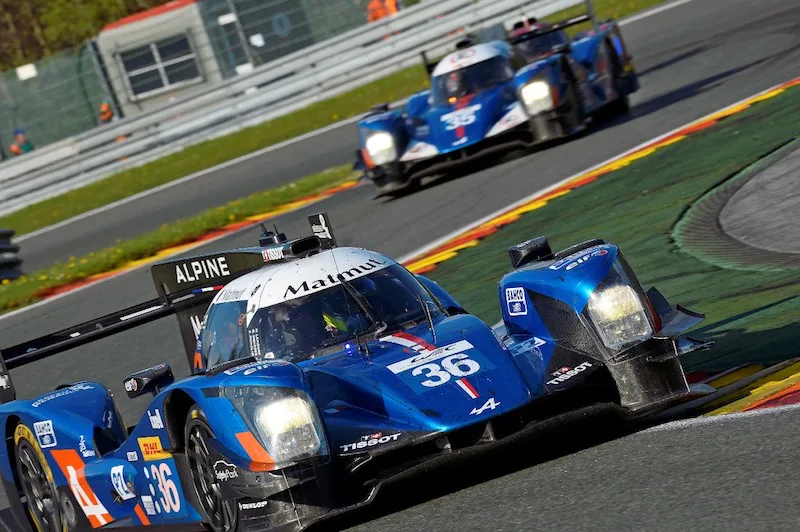
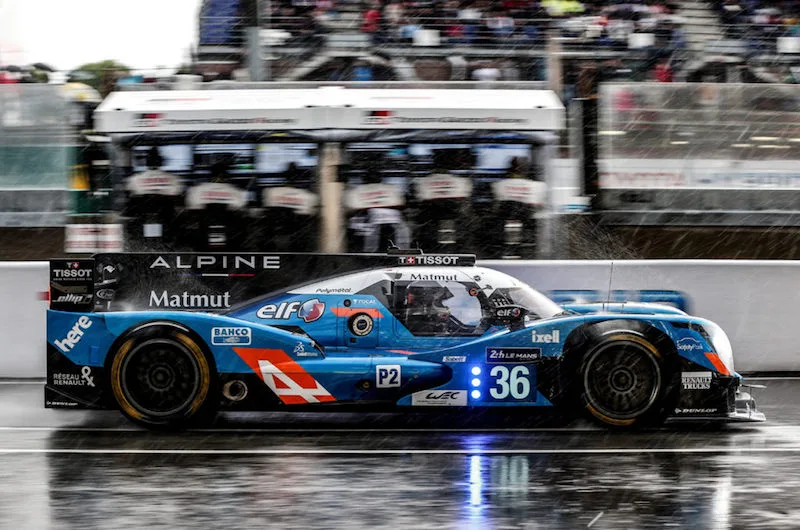

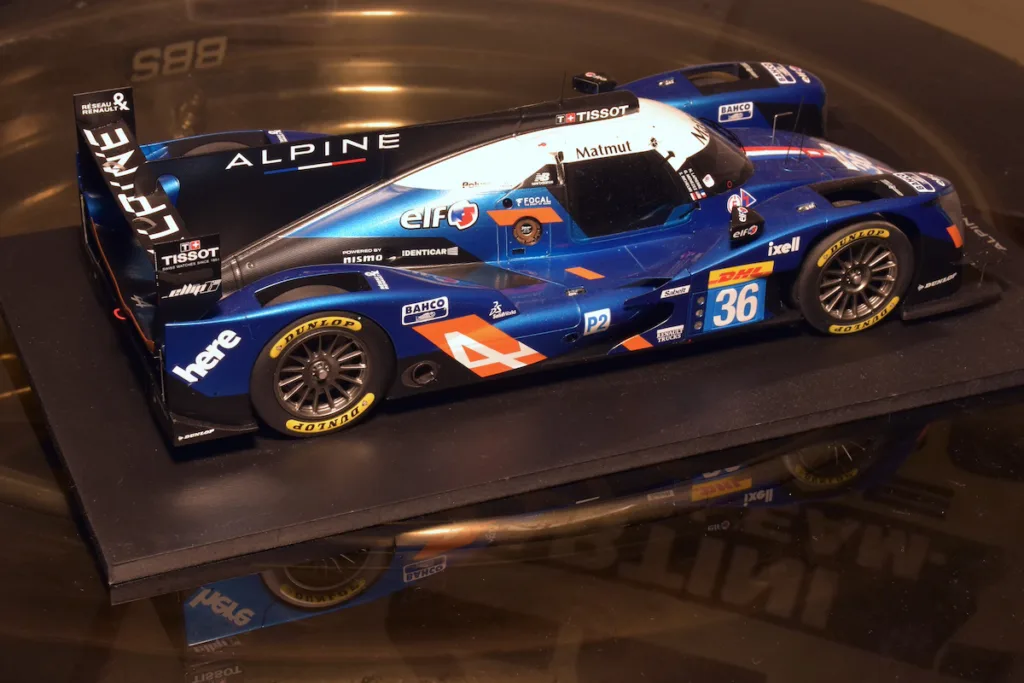
- SPARK S5119 (resin 1:43 This model has rain tires)
- Overall rating: 4 STARS | Quality details: 5 STARS | Estimated value: 4 STARS
- SPARK Renault 77 11 782 209 (resin 1:18)
- Overall rating: 5 STARS | Quality details: 5 STARS | Estimated value: 5 STARS
- Also appears in #125 Oreca (manufacturer)
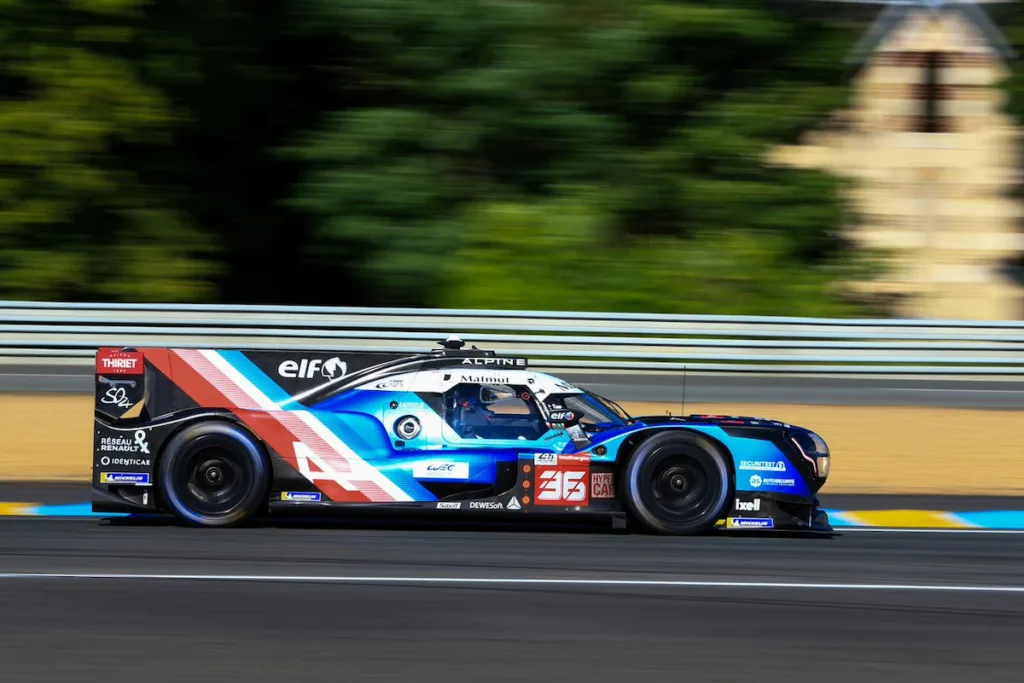
2021 Le Mans 24h, Alpine A480 – Gibson
Alpine enters the Hypercar category with a car which is neither a Hypercar nor an Alpine. The car is based on a LMP2 Oreca 07 fitted with a Gibson 458-engine and ran as Rebellion in the previous years. It is allowed to run in Hypercar after some adjustments such as an increase of weight and decrease of engine power.
Alpine #36: Alpine A480 (legacy LMP1) #36 Nicolas Lapierre (F) / André Negrão (BR) / Matthieu Vaxiviere (F)
Results Le Mans 2021: Start-grid 3rd / time 3:25.574 / race 3rd – 367 laps
Alpine A480 – Hypercar (legacy LMP1): Powered by 4.5 liter Gibson GL458 V8 90º, approx. 600 hp. Michelin tires. Weight 1050 kg. Carbon fibre monocoque, chassisnr. Oreca 07 #01
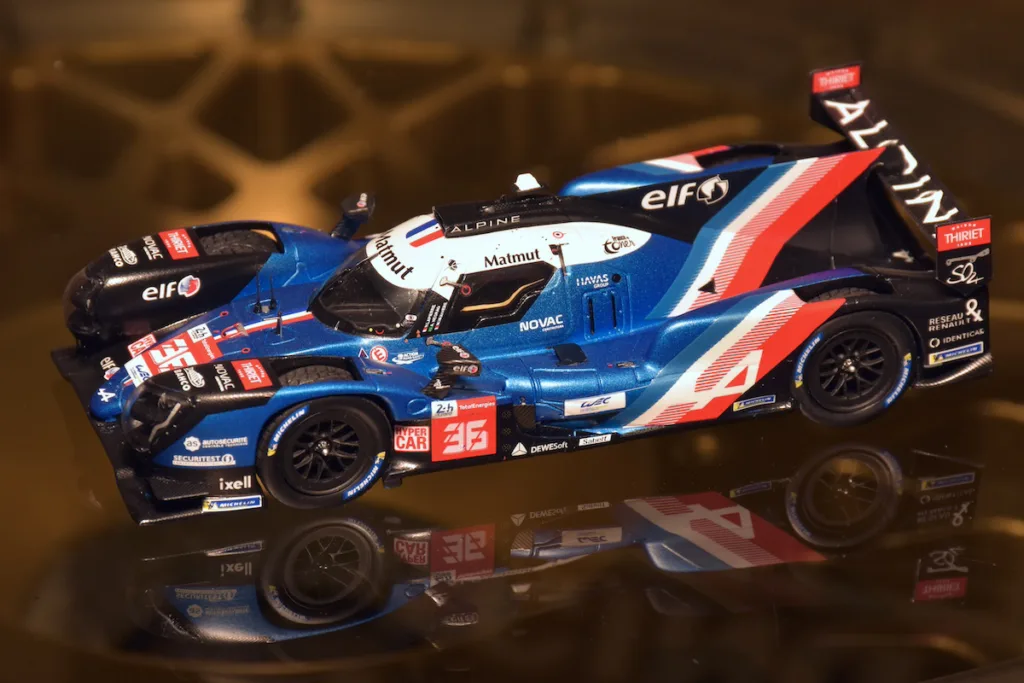
- SPARK S8232 (resin, this model has rain tires)
- Overall rating: 4 STARS | Quality details: 5 STARS | Estimated value: 4 STARS
- Also appears in #056 Hypercars & Prototypes / #125 Oreca (manufacturer)

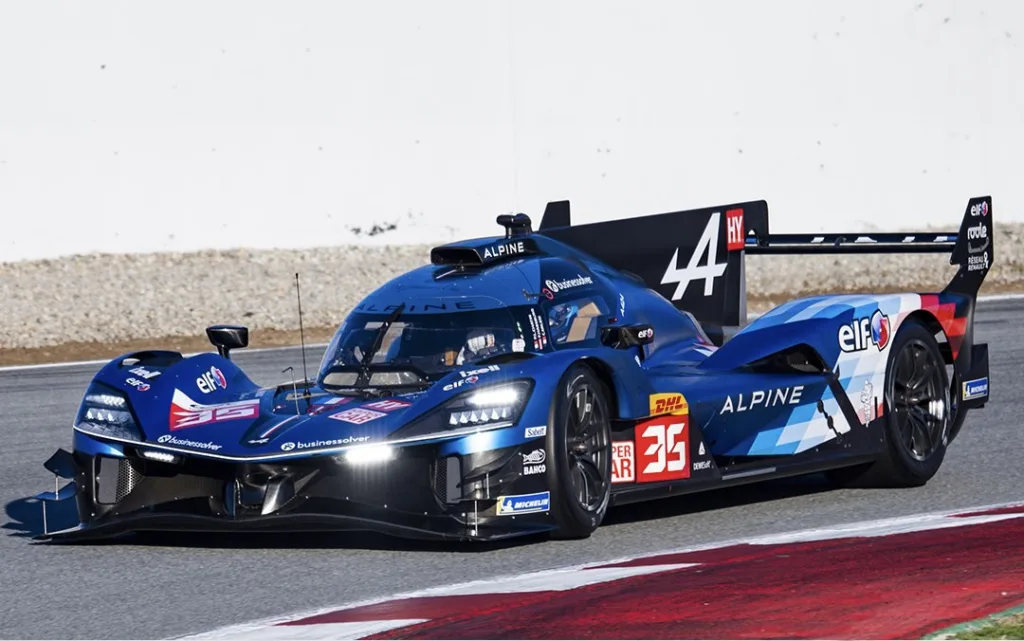
2024 Le Mans 24h, Alpine A424 – Mecachrome
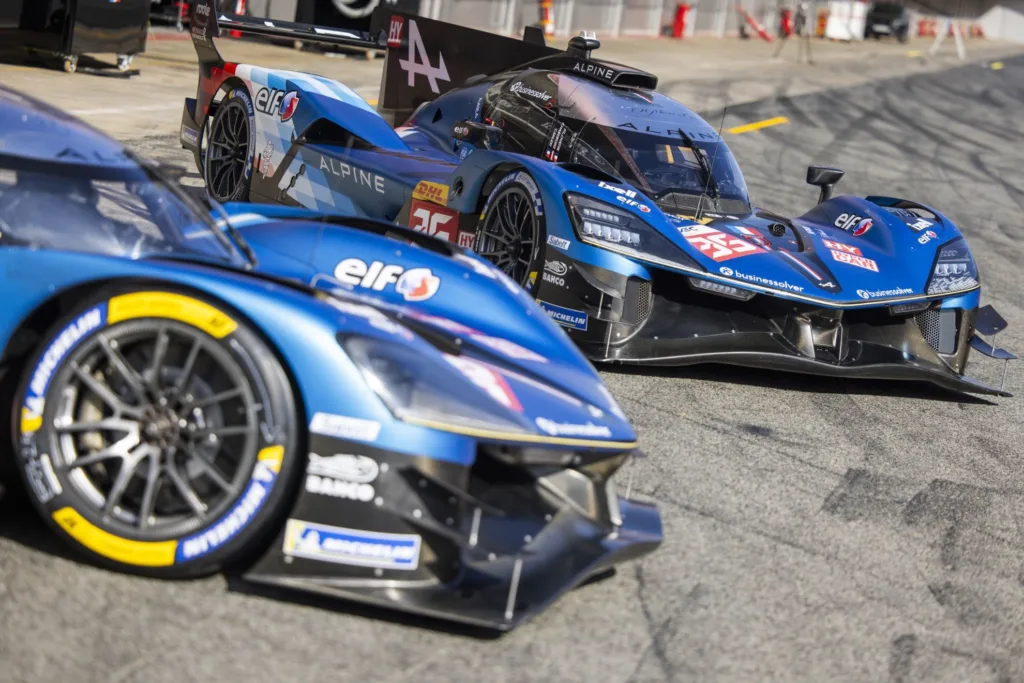
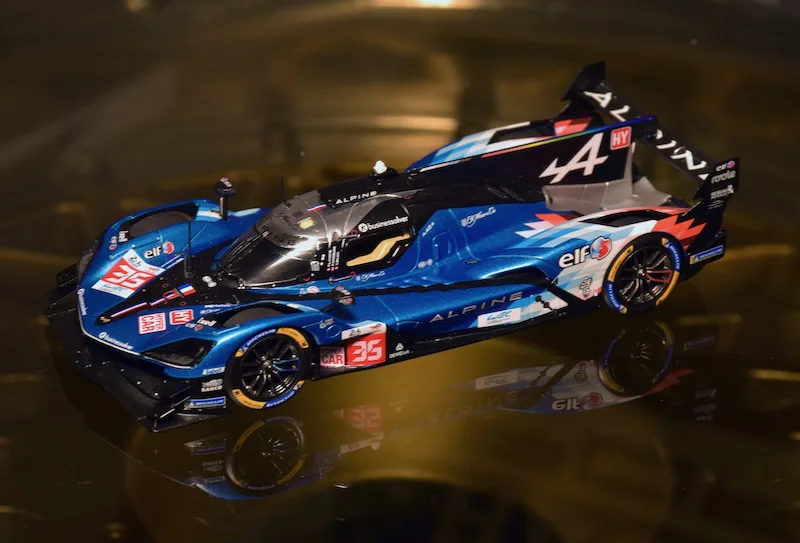
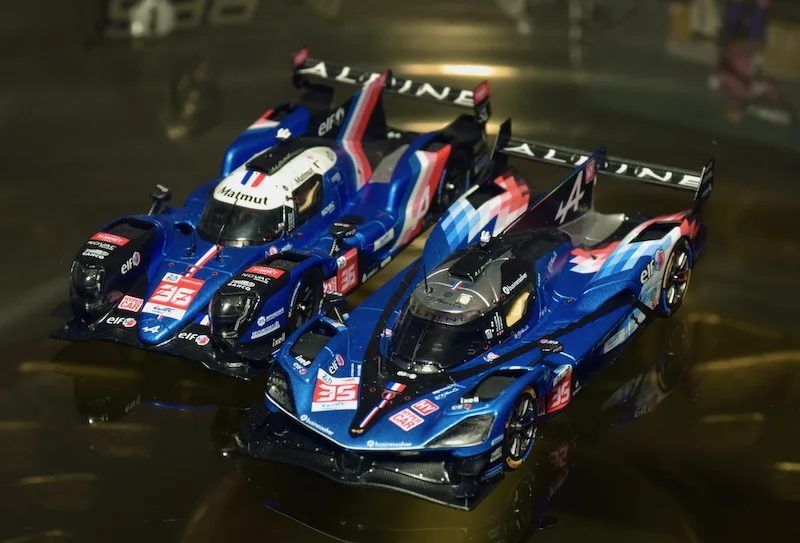
In 2024 Alpine entered the FIA WEC with an actual hypercar, the Alpine A424. In fact it is a LMDh, build by Oreca that also developed the Acura’s that race in the IMSA championship. Both have the ‘wing’ over the front of the car. At Le Mans, the Alpines were quite fast in qualifying – 5th and 9th – but the Formula 2 based Mecachrome engines weren’t reliable. The #35’s engine seized after 75 laps, the #36 did only 13 laps more.
Alpine #35: Charles Milesi (F) / Paul-Loup Chatin (F) / Ferdinand Habsburg (A)
Results: Start-grid 5th / time 3:24.872 / race DNF engine – 75 laps
Alpine A424 – Hypercar LMDh: Powered by 3.4 liter Mecachrome V634 V6 turbo hybrid, approx 680 hp. Michelin tires. Weight 1050 kg. Carbon fibre monocoque, chassisnr. Oreca LMDH 12 #02.

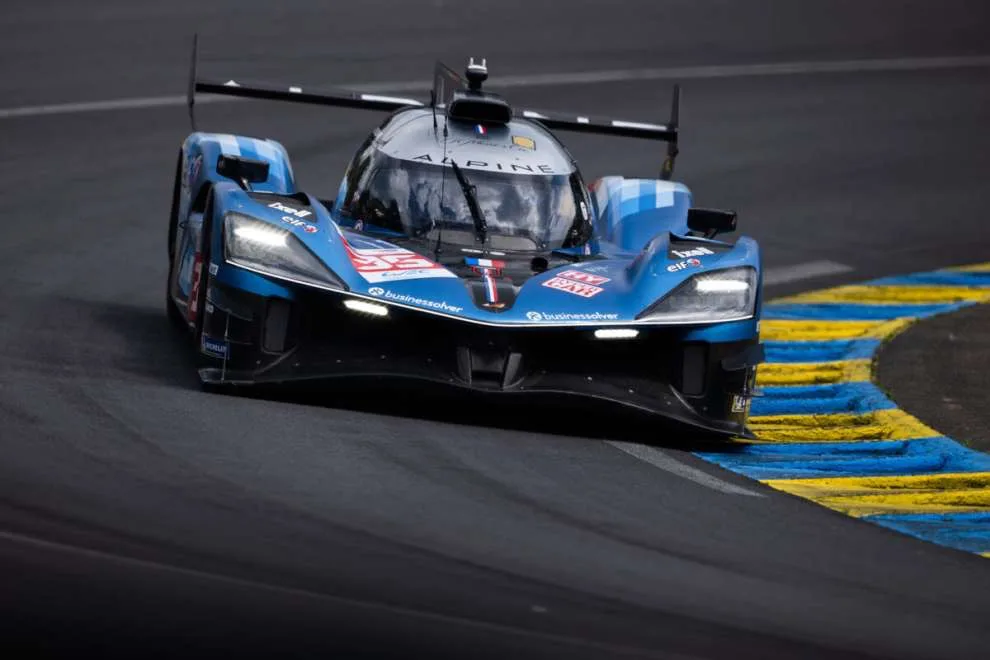
- SPARK S9122 (resin)
- Overall rating: 5 STARS | Quality details: 5 STARS | Estimated value: 4 STARS
- Also appears in #056 Hypercars & Prototypes / #125 Oreca (manufacturer)
Thanks for visiting 😉