Published April 22, 2024 | Last update August 24, 2026 | 25 models online
Peugeot had been suppling street car derived V6 turbo engines to the WM team but with the change of regulations, the French brand came to Le Mans and the world championship full force. Only for a short while. More than 15 years later they would return, and with the introduction of the hypercars again.
- This collection contains:
- WM-Peugeot – Group C
- 1984 Le Mans 24h – WM P83B – Peugeot
- 1985 Le Mans 24h – WM-P83B – Peugeot
- 1986 Le Mans 24h – WM P86 – Peugeot
- 1988 Le Mans 24h – WM P87 – Peugeot
- 1988 Le Mans 24h – WM P88 – Peugeot
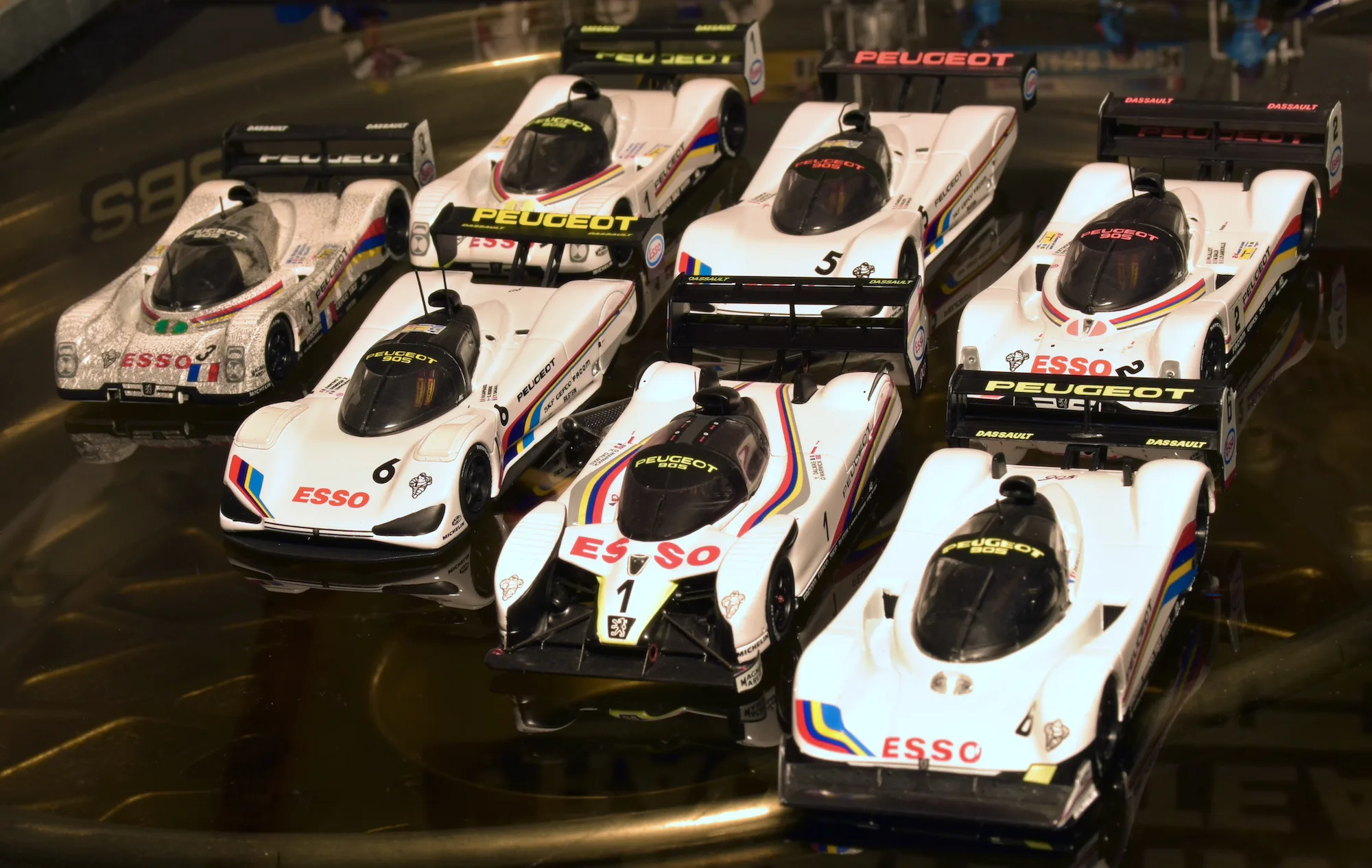
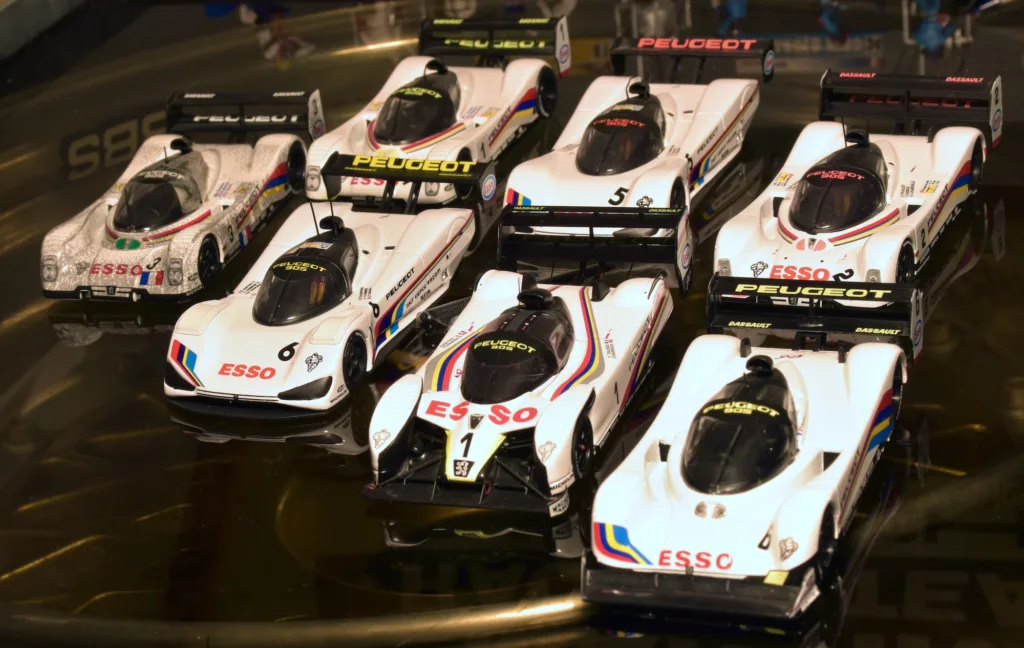
- Peugeot 905 – 3.5 liter Group C
- 1990 Magny Cours – Peugeot 905
- 1991 Le Mans 24h – Peugeot 905 2x
- 1991 Magny Cours 430 km, Peugeot 905 Evo1
- 1992 Le Mans 24h, Peugeot 905 evo1 bis 2x
- 1992 Magny Cours – Peugeot 905 evo2
- 1993 Le Mans 24h – Peugeot 905 evo1 bis LM
- Peugeot 908 (HDI FAP) – LMP1 diesel
- 2007 Le Mans 24h – Peugeot 908 HDI FAP 2x
- 2008 Le Mans 24h – Peugeot 908 HDI FAP
- 2009 Le Mans 24h – Peugeot 908 HDI FAP
- 2009 Le Mans 24h – Peugeot 908 HDI FAP Pescarolo
- 2010 Le Mans 24h – Peugeot 908 HDI FAP Oreca
- 2011 Le Mans 24h – Peugeot 908
- 2011 Le Mans 24h – Peugeot 908 HDI FAP Oreca
- 2008 presentation, Peugeot 908 HY
- Peugeot 9X8 – Hypercar
- 2023 Le Mans 24h – Peugeot 9X8 2x
- 2024 Le Mans 24h – Peugeot 9X8
WM-Peugeot – Group C
1984 Le Mans 24h, WM P83B – Peugeot
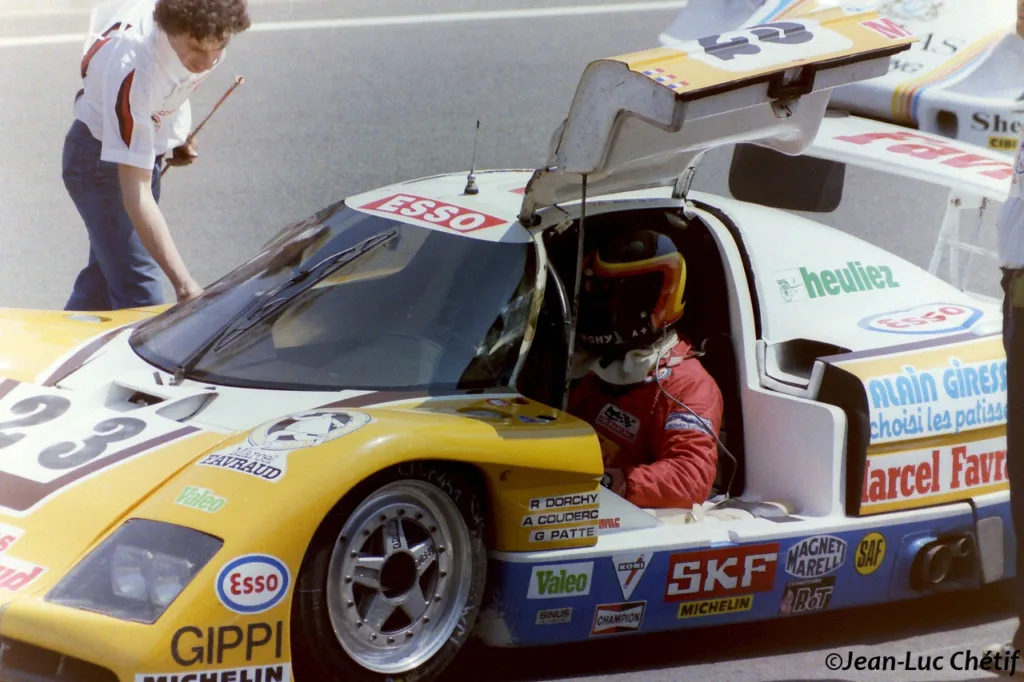
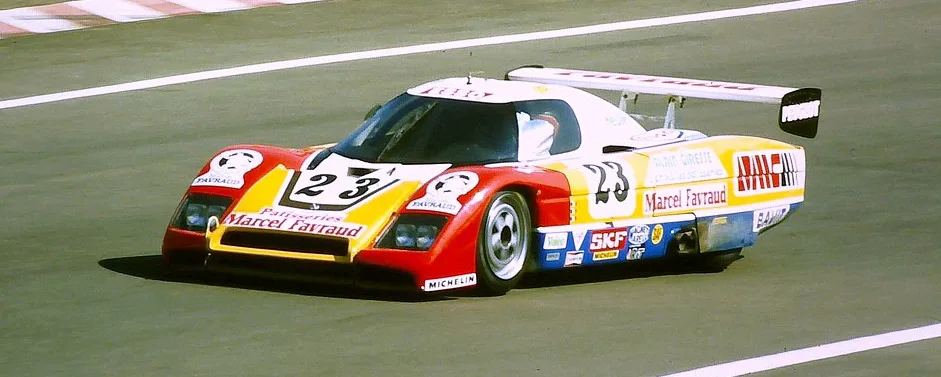
Roger Dorchy qualified the Peugeot powered WM P83B surprisingly fast; 8th overall. He could keep the pace of the Porsches for a while until he crashed while he was in second place, braking for Mulsanne corner. He managed to continue with only bodywork damage. In the pits he received some red bodywork that belonged to his teammate #24. Some hours later, the WM had to retire with a broken gearbox.
WM Secateva #23: Roger Dorchy (F) / Alain Couderc (F) / Gérard Patté (F)
Results: Start-grid 8h / time 3:30.010 / race DNF gearbox – 122 laps
WM P83B- Group C1: Powered by 2.6 liter Peugeot PRV V6 turbo, approx. 600 hp. Michelin tires. weight 850 kg. Aluminium monocoque, chassisnr. WM P82-01
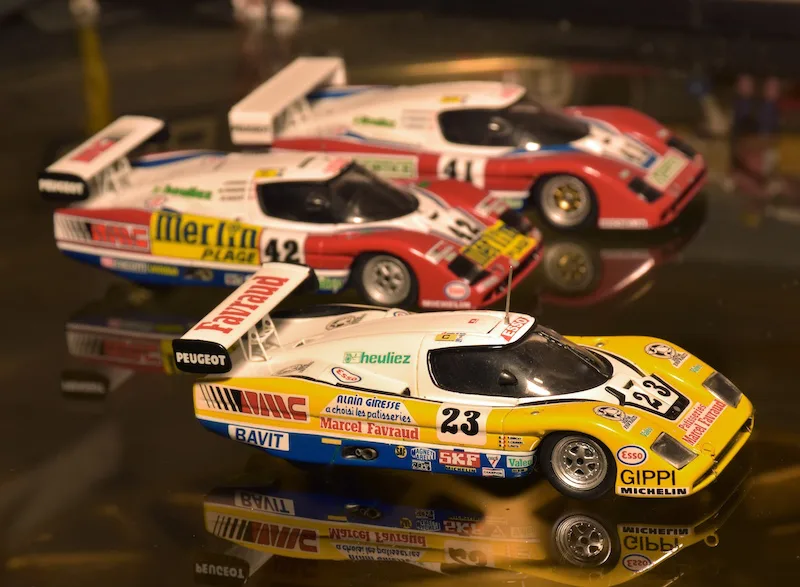
- BIZARRE BZ 368 (resin)
- Overall rating: 4 STARS | Quality details: 4 STARS | Estimated value: 4 STARS
- Also appears in #107 Group C
1985 Le Mans 24h, WM P83B – Peugeot
WM was one of the first makes to build a group C car, but it didn’t develop much over the years. The 1985 car was still a P83B, originally built in 1982. Despite the presence of Jean Rondeau – winner in 1980 in his own car – the team could not impress.
WM Secateva #42: Jean Rondeau (F) / Michel Pignard (F) / Jean-Daniël Raulet (F)
Results: Start-grid 21st / time 3:43.070 / race 17th – 299 laps
WM P83B – Group C1: Powered by 2.6 liter Peugeot PRV V6 twin turbo, approx. 600 hp. Michelin tires. Weight 900 kg. Aluminium monocoque, chassisnr. #P82-01
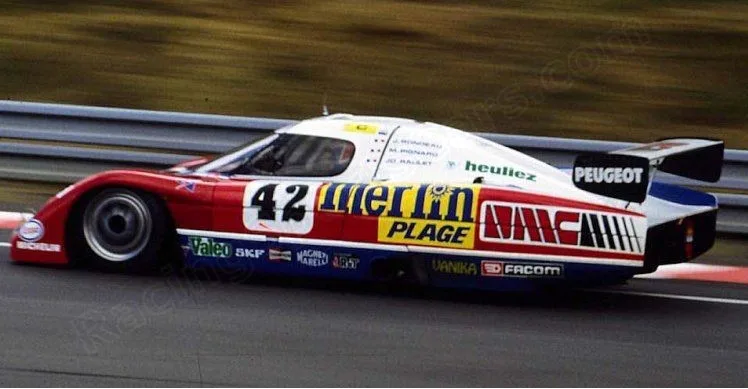
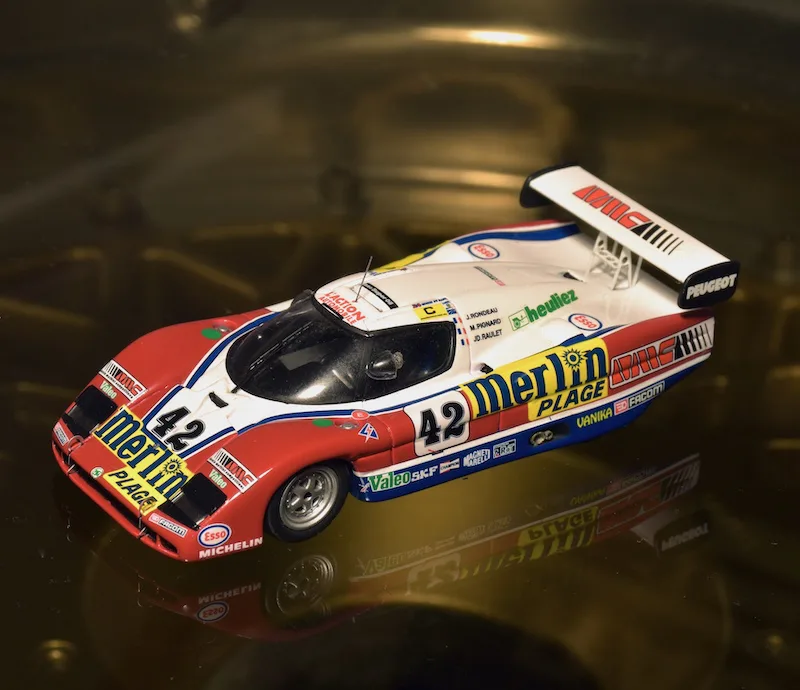
- BIZARRE BZ 382 (resin)
- Overall rating: 4 STARS | Quality details: 4 STARS | Estimated value: 4 STARS
- Also appears in #089 Rondeau / #107 Group C
1986 Le Mans 24h, WM P86 – Peugeot
WM started building GTP cars and were among the first makes to build a group C car, but it didn’t develop much over the years. The 1986 car was a P86 in name, but almost identical to the P83B’s from previous years. It retired with a broken Peugeot engine.
WM Secateva #41: Francois Migault (F) / Michel Pignard (F) / Jean-Daniël Raulet (F)
Results: Start-grid 18th / time 3:33.970 / race DNF engine – 132 laps
WM P86 – Group C1: Powered by 2.8 liter Peugeot PRV V6 twin turbo, approx. 600 hp. Michelin tires. Weight 850 kg. Aluminium monocoque, chassisnr. #P86-01
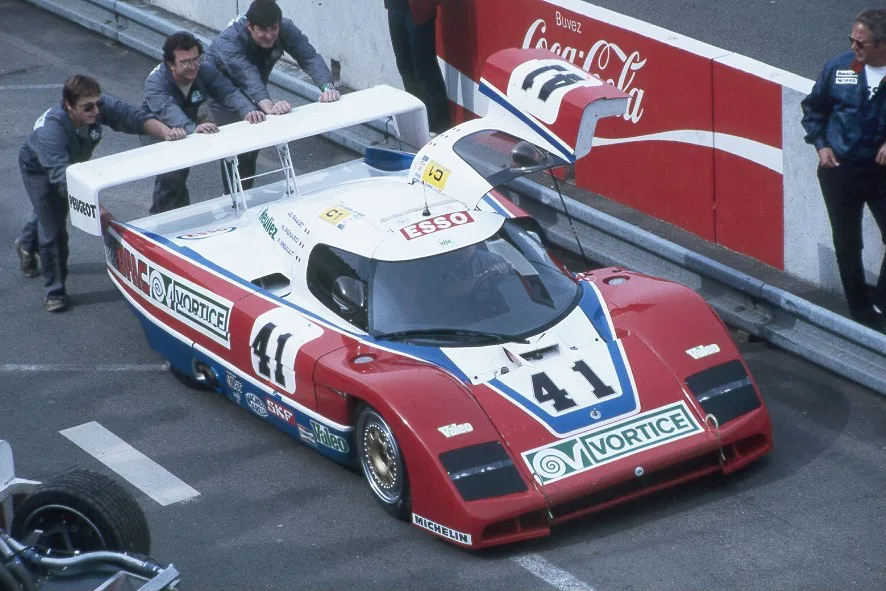
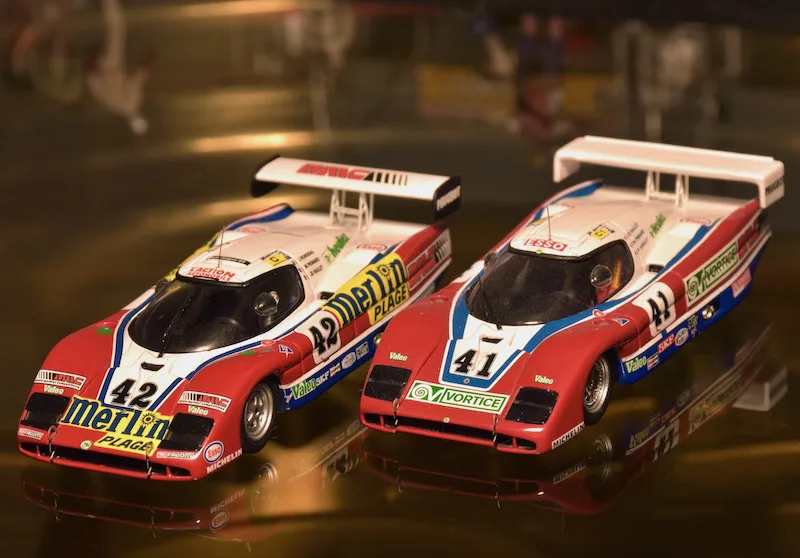
- BIZARRE BZ930 (resin)
- Overall rating: 4 STARS | Quality details: 4 STARS | Estimated value: 4 STARS
- Also appears in #107 Group C
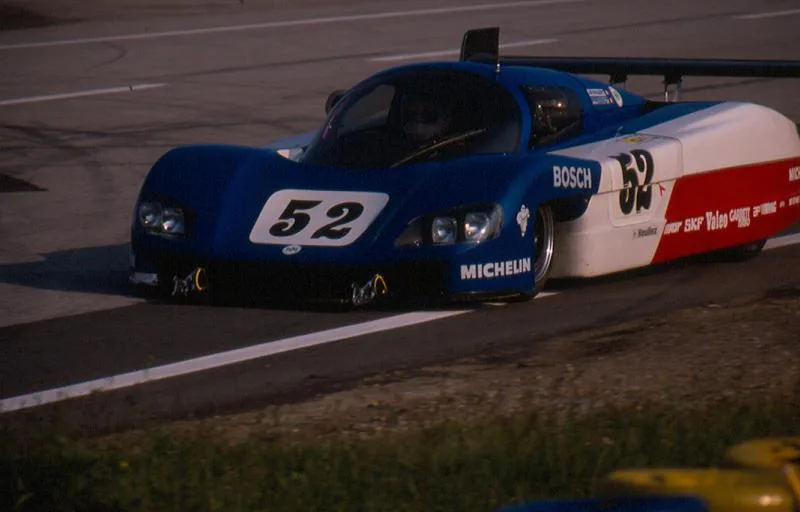
1988 Le Mans 24h, WM P87 – Peugeot
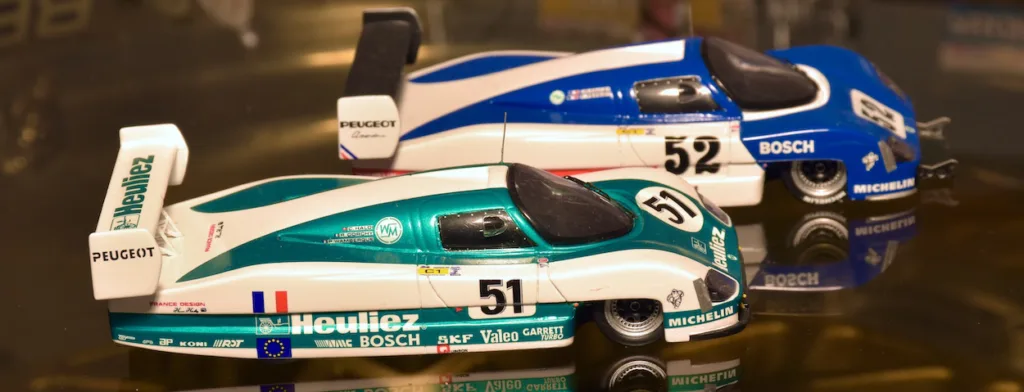
The small WM team brought two cars to Le Mans. A new P88 that was tuned for high top speeds and this P87. The P87 had an additional front wing for more downforce and a somewhat larger engine, which made it 7 seconds faster in qualifying than the #51 sister car. Unfortunately the gearbox broke down after only 22 laps.
WM Secateva #52: Pascal Pressiot (F) / Jean-Daniël Raulet (F)
Results: Start-grid 22nd / time 3:34.650 / race DNF gearbox – 22 laps
WM P87 – Group C1: Powered by 3.0 liter Peugeot PRV V6 twin-turbo, approx. 750 hp. Michelin tires. Weight 900 kg. Aluminium monocoque, chassisnr. P87 #01
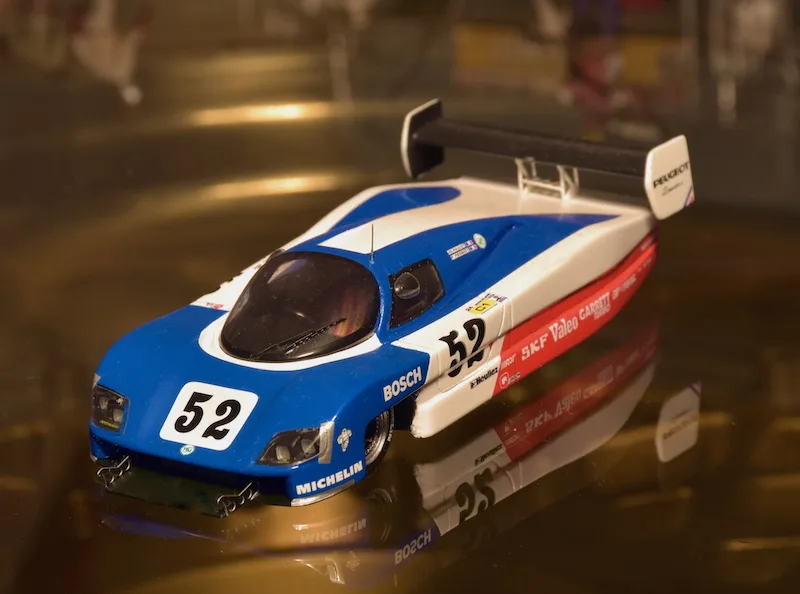
- BIZARRE BZ245 (resin)
- Overall rating: 5 STARS | Quality details: 4 STARS | Estimated value: 4 STARS
- Also appears in #107 Group C
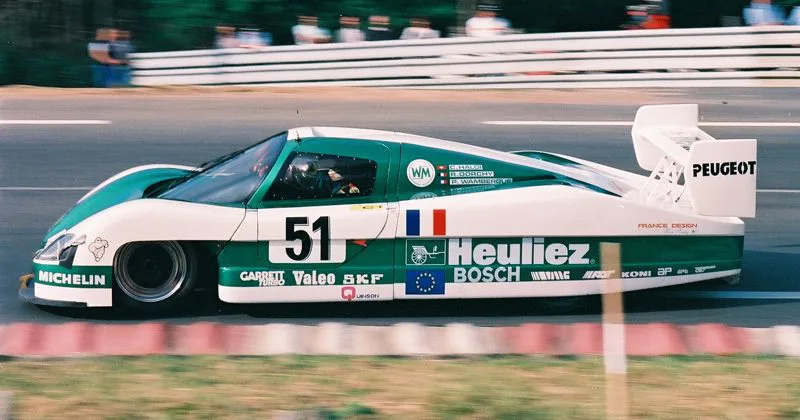
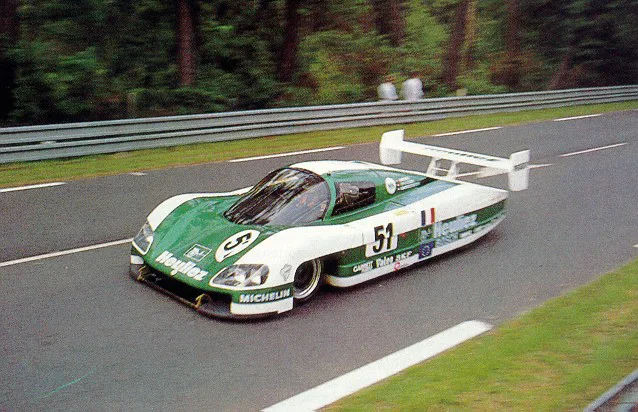
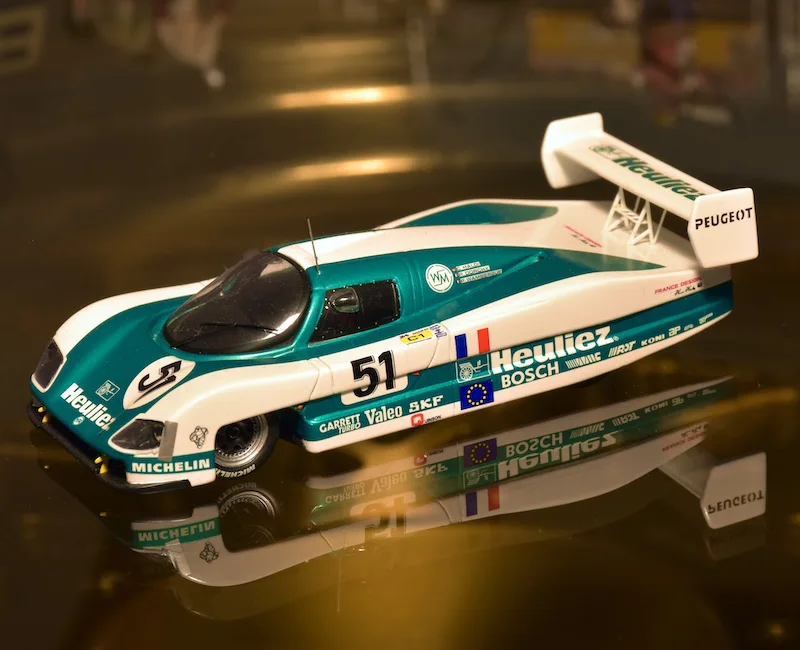
1988 Le Mans 24h, WM P88 – Peugeot
This is the “Project 400”. The first racing car to exceed 400 kmh / 250 mph at the Mulsanne Straight. Roger Dorchy was the first who managed this in practice. Thanks to the 800 bhp Peugeot engine, special narrow Michelin tires and a very flat rear wing. Did it manage pole position? No, the lap times were not well but in a straight line, it was blistering fast. In the race the car retired early with overheating problems, probably because not many air ducts were made in the slick body work.
WM Secateva #51: Claude Haldi (CH) / Philippe Wambergue (F) / Roger Dorchy (F)
Results: Start-grid 36th / time 3:41.480 / race DNFoverheating – 59 laps
WM P88 – Group C1: Powered by 2.9 liter Peugeot PRV V6 twin-turbo, approx. 800 hp. Michelin tires. Weight 900 kg. Aluminium monocoque, chassisnr. P88 #01
- BIZARRE BZ061 (resin)
- Overall rating: 5 STARS | Quality details: 4 STARS | Estimated value: 4 STARS
- Also appears in #107 Group C
Peugeot 905 – 3.5 liter Group C
1990 Magny Cours, Peugeot 905
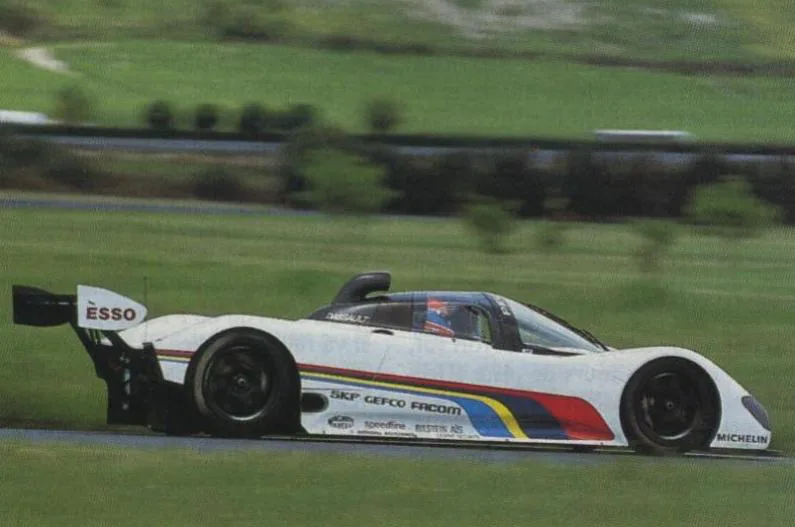
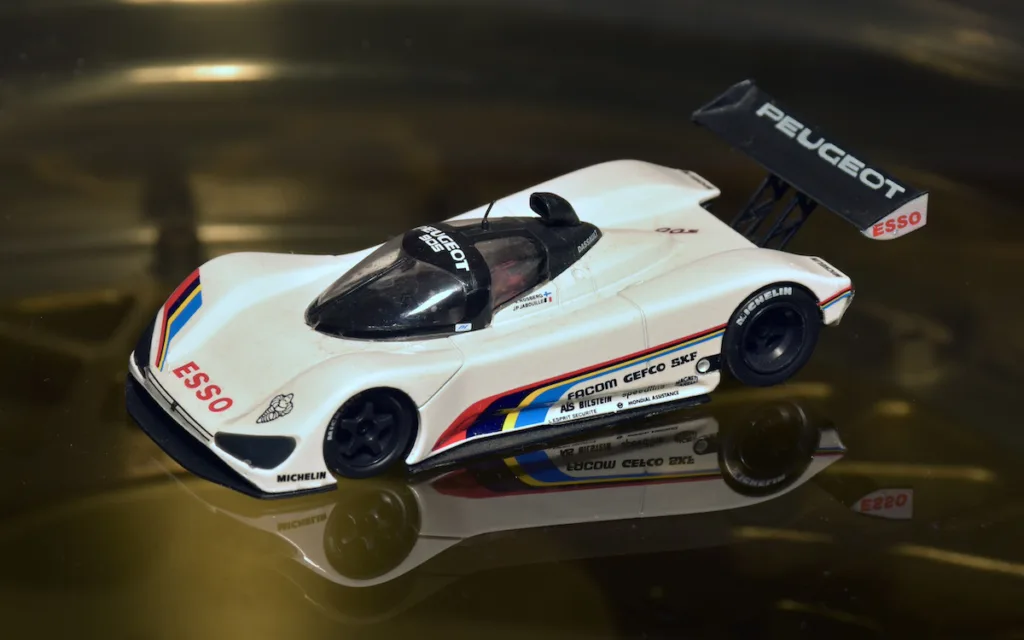
The FIA thought that Group C needed a new impulse. So they introduced the 3.5 liter (formula 1 engined) category and banned the turbo’s. Peugeot built this 905 together with Dassault and developed a brand new normally aspirated V10 engine for it. Here it is during a test at Magna Cours in 1990. 1991 Would be a learning year, in 1992 and 1993 the evo versions of this car would be very successful.
Peugeot Sport: Jean-Pierre Jabouille (F)
Results: test Magny Cours
Peugeot 905 – Group C, cat. 1: Powered by 3.5 liter Peugeot SA35-A1 V10 80º, approx. 650 hp. Michelin tires. Weight 750 kg. Carbon fibre monocoque, chassisnr. Dassault # unknown

- VITESSE #unknown (diecast)
- Overall rating: 2 STARS | Quality details: 2 STARS | Estimated value: 2 STARS
- Only appears in this collection
1991 Le Mans 24h, Peugeot 905
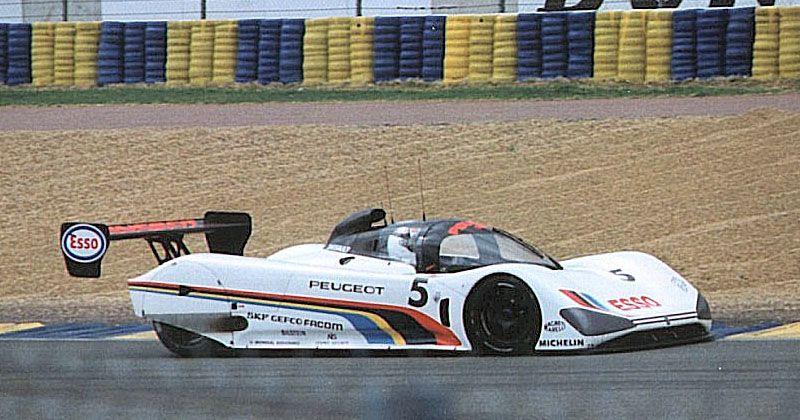
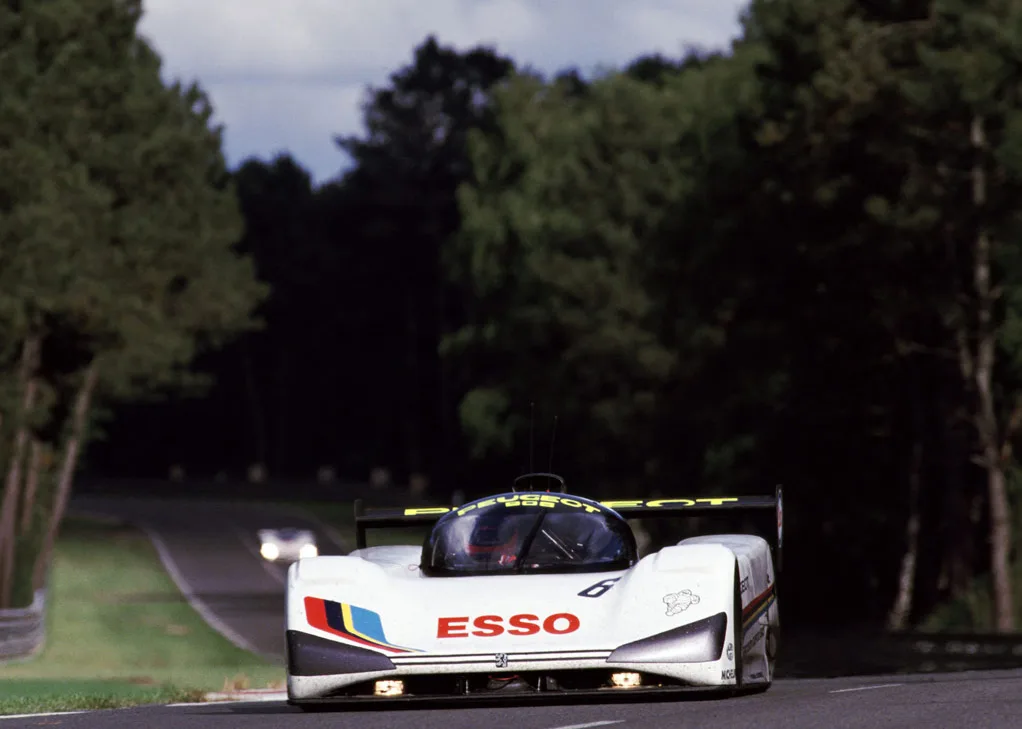
A number of car manufacturers accepted the challenge to build cars that fit the 3.5 liter formula, but that was not enough to for a decent grid, so the old group C cars were still allowed but with some restrictions … The new Jaguars were fast with their 3.5 liter V8 Cosworth engine but TWR decided to use the reliable V12 for the race. The V10 Mercedes C291 could hardly run one lap running flat-out at the long straight, let alone 24-hours. So Mercedes opted to race the reliable V8 turbo. The Peugeots weren’t the fastest qualifiers, but because they were entered in category 1 for normally aspirated cars, they were allowed to start at the front row. The engine of the #5 Peugeot blew up after only 22 laps, DNF. The #6 failed to finish because of a broken gearbox.
Peugeot Sport #5: Mauro Baldi (I) / Philippe Alliot (F) / Jean-Pierre Jabouille (F)
Results: Start-grid 1st / time 3:35.058 / race DNF engine – 22 laps
Peugeot Sport #6: Keke Rosberg (FIN) / Yannick Dalmas (F) / Pierre-Henri Raphanel (F)
Results: Start-grid 2nd / time 3:38.886 / race DNF gearbox – 68 laps
Peugeot 905 – Group C, cat. 1: Powered by 3.5 liter Peugeot SA35-A1 V10 80º, approx. 650 hp. Michelin tires. Weight 750 kg. Carbon fibre monocoque, chassisnr. Dassault # EV14 & EV15.

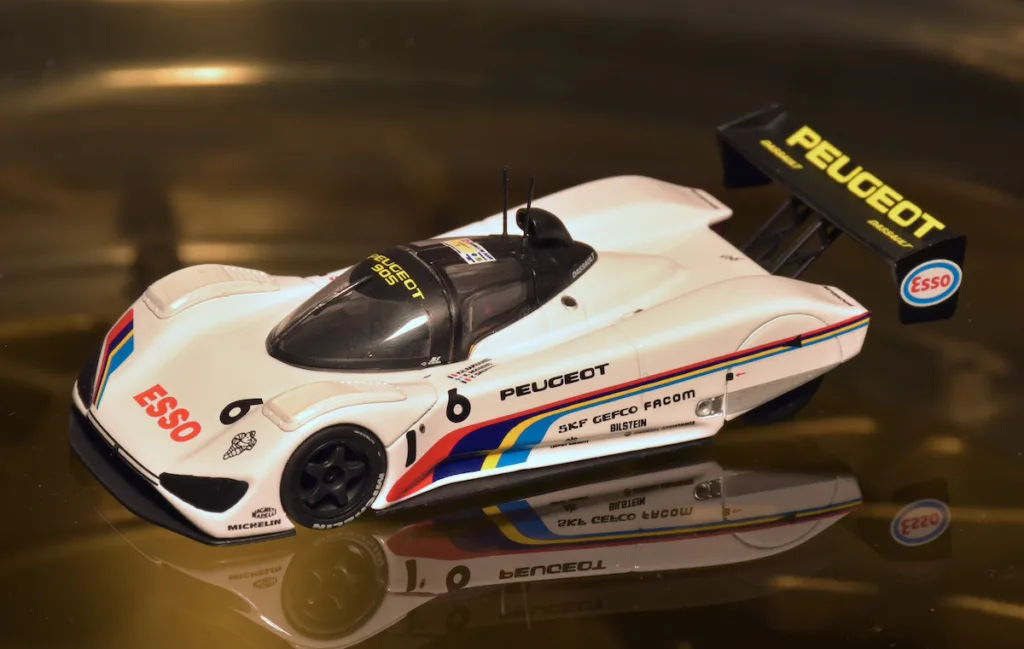
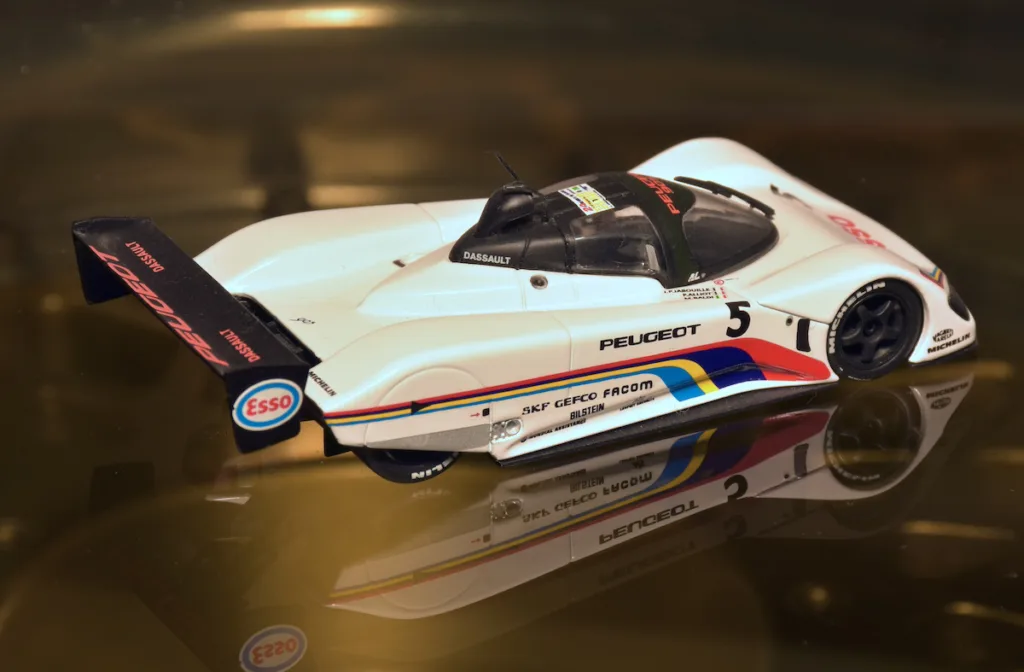
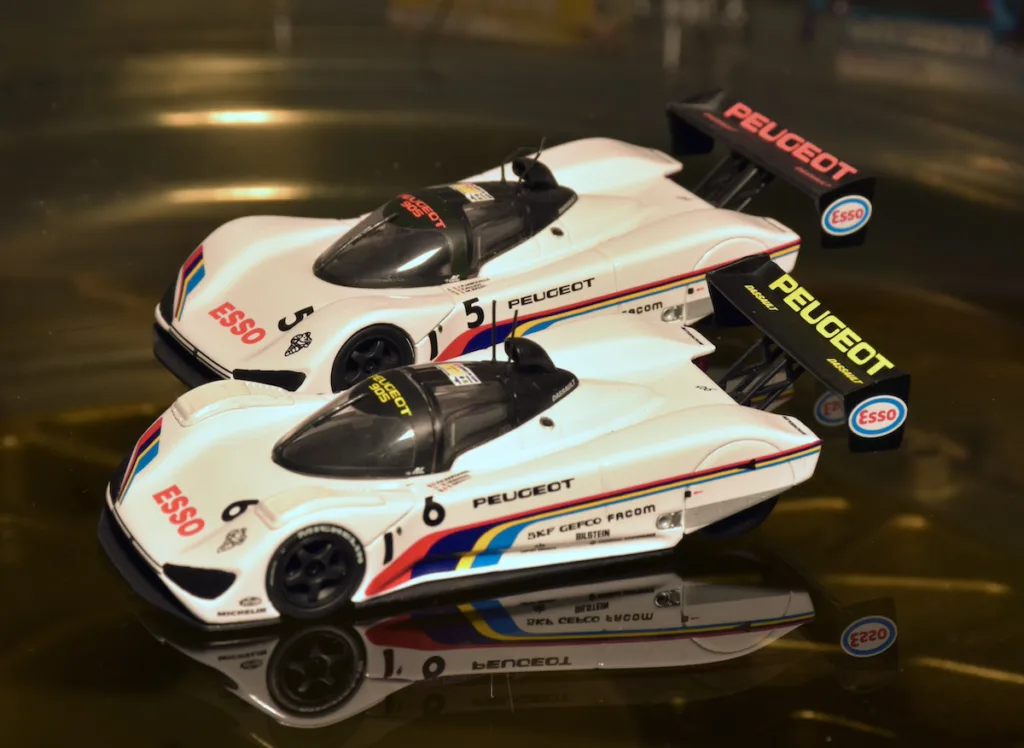
- QUARTZO QLM99003 & QLM99004
- Overall rating: 2 STARS | Quality details: 2 STARS | Estimated value: 2 STARS
- Only appear in this collection
1991 Magny Cours 430 km, Peugeot 905 Evo1
By the end of 1991, Peugeot got stronger and already won 2 races. At Magny Cours the team took a double victory over Jaguar. For that race the 905’s were equipped with an additional spoiler at the front and double one at the rear and the car was named 905 evo1.
Peugeot Sport #6: Yannick Dalmas (F) / Keke Rosberg (FIN)
Results: Start-grid 1st / time 1:21.821 / race 1st – 101 laps
Peugeot 905 evo 1 – Group C, cat. 1: Powered by 3.5 liter Peugeot SA35-A2 V10 80º, approx. 670 hp. Michelin tires. Weight 750 kg. Carbon fibre monocoque, chassisnr. Dassault #EV15
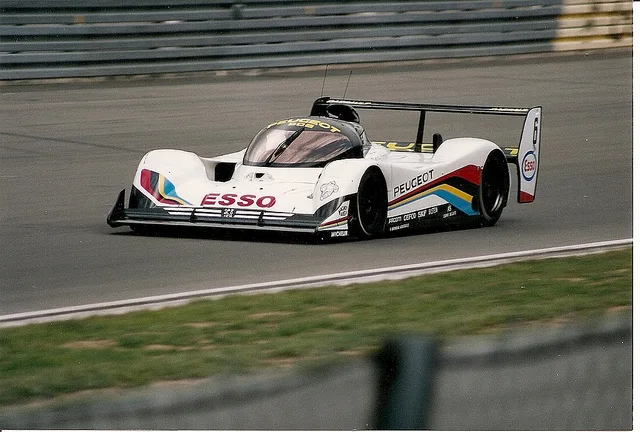
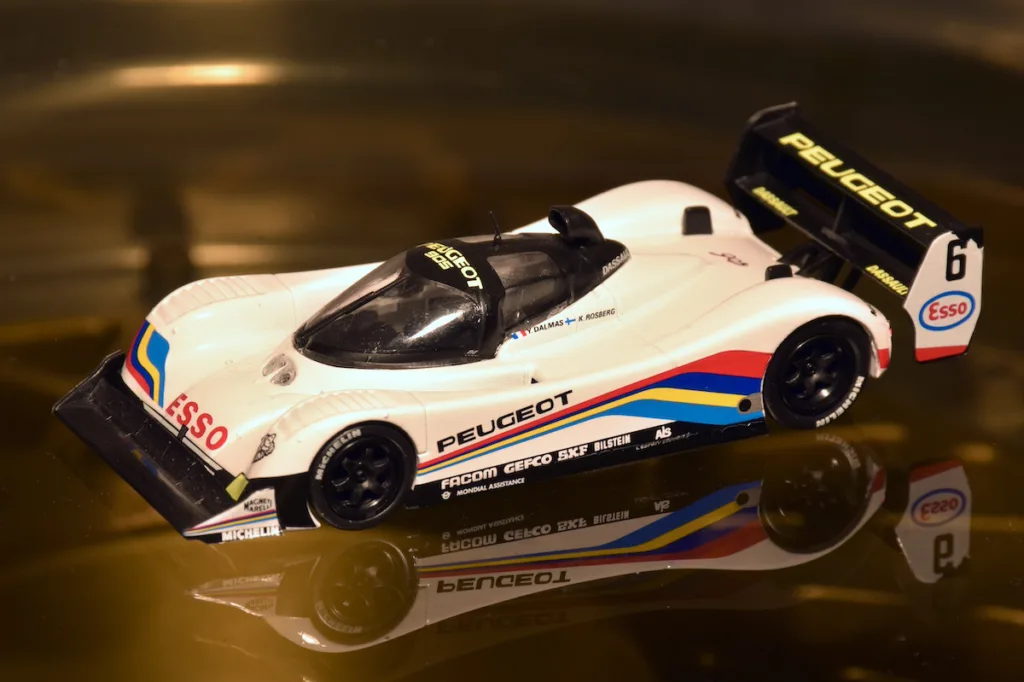
- VITESSE 653B (diecast)
- Overall rating: 2 STARS | Quality details: 2 STARS | Estimated value: 2 STARS
- Only appears in this collection
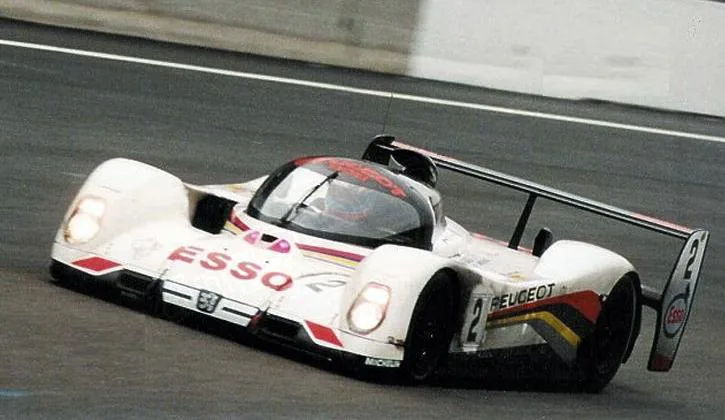
1992 Le Mans 24h, Peugeot 905 evo1 bis
Peugeot made quite some adjustments to their 905, the front looked different and less like a Peugeot. This version was called “evo1 bis”, the double rear wing from the evo1 was still there and the engine was now much more reliable by now. The French took a double win in front of their home crowd, but with only 30 starters, the field was smallest in years.
Peugeot Sport #1: Derek Warwick (GB) / Yannick Dalmas (D) / Mark Blundell (GB)
Results: Start-grid 2nd / time 3:22.512 / race 1st – 352 laps
Peugeot Sport #2: Philippe Alliot (F) / Mauro Baldi (I) / Jean-Pierre Jabouille (F)
Results: Start-grid 1st / time 3:21.209 / race 2nd – 346 laps
Peugeot 905 evo 1bis – Group C, cat. 1: Powered by 3.5 liter Peugeot SA35-A2 V10 80º, approx. 670 hp. Michelin tires. Weight 750 kg. Carbon fibre monocoque, chassisnr. Dassault #EV17 & EV16
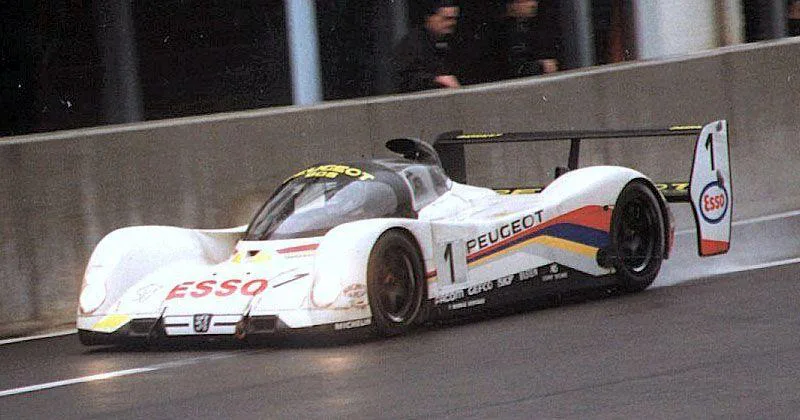
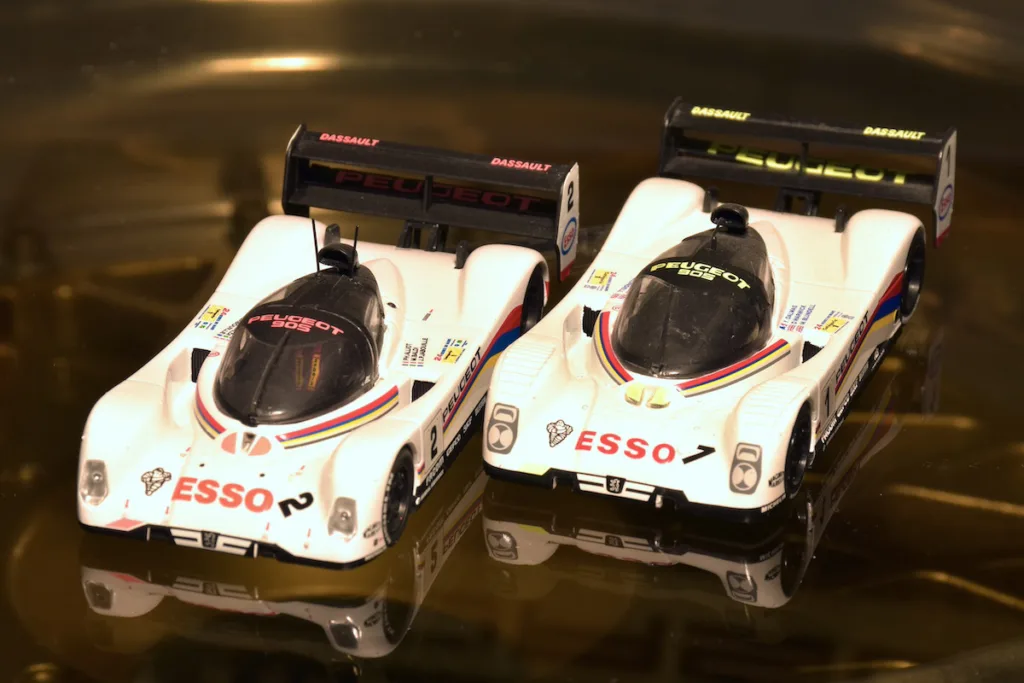
- VITESSE 654 (diecast) & ONYX QLM 99010 (diecast)
- Overall rating: 2 STARS | Quality details: 2 STARS | Estimated value: 2 STARS
- Only appear in this collection
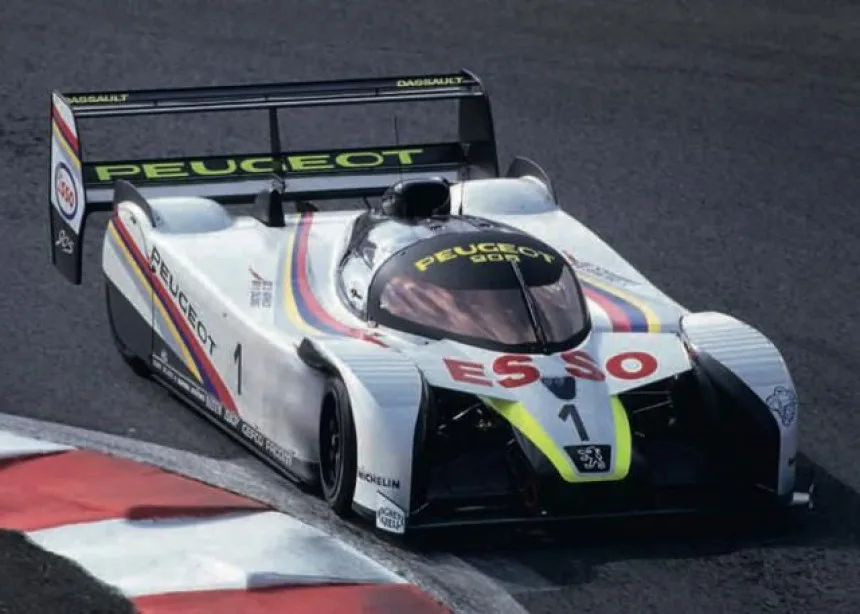
1992 Magny Cours, Peugeot 905 evo2
Peugeot already started development of a new car, the very extreme evo2 version of the 905, nickname “Supercopter”. The car never raced, but made some laps at the practice for the last race of the 1992 season at Magny Cours.
Peugeot Sport #1: Derek Warwick (GB) / Yannick Dalmas (F)
Results: Some practice laps only
Peugeot 905 evo2 – Group C, cat. 1: Powered by 3.5 liter Peugeot SA35-A2 V10 80º, approx. 670 hp. Michelin tires. Weight 750 kg. Carbon fibre monocoque, chassisnr. Dassault #EV21
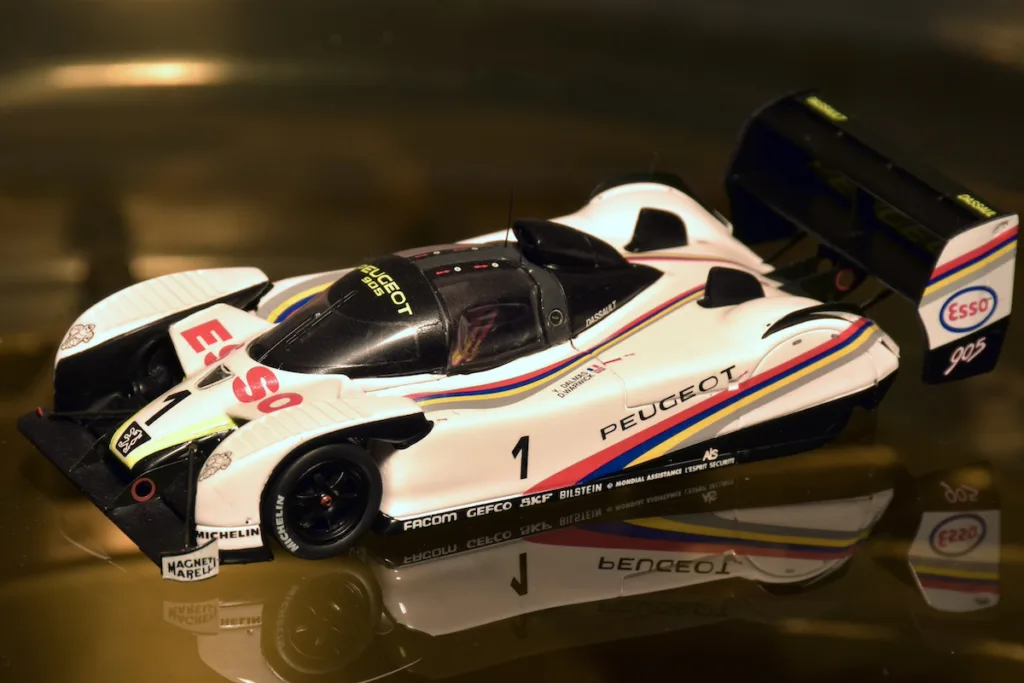
- SPARK S1274 (resin)
- Overall rating: 4 STARS | Quality details: 4 STARS | Estimated value: 3 STARS
- Only appears in this collection
1993 Le Mans 24h, Peugeot 905 evo1 bis LM
The world championship was cancelled because of too little competitors. The grid was better filled than in the previous year because the GT’s were back. Peugeot upgraded the 1992 evo1 bis to evo1 bis LM and only raced it once, at Le Mans 1993. It took a convincing 1-2-3 finish ahead of 4 Toyota’s.
Peugeot Sport #3: Eric Hélary (F) / Christophe Bouchut (F) / Geoff Brabham (AUS)
Results: Start-grid 6th / time 3:32.080 / race 1st -376 laps
Peugeot 905 evo 1bis LM– Group C, cat. 1: Powered 3.5 liter Peugeot SA35-A2 V10 80º, approx. 670 hp. Michelin tires. Weight 750 kg. Carbon fibre monocoque, chassisnr. Dassault #EV12
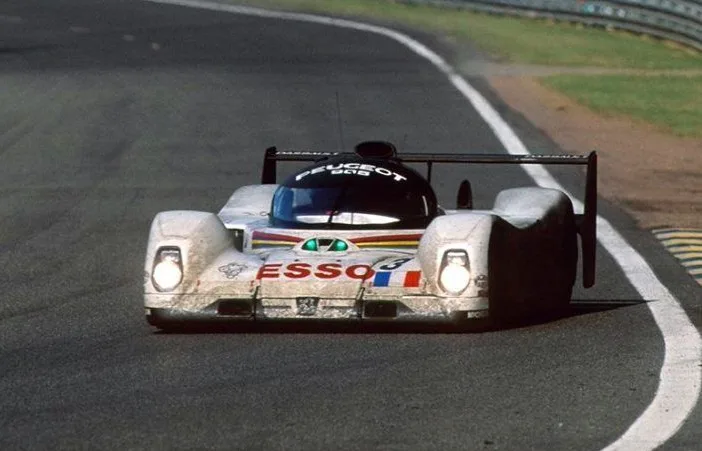
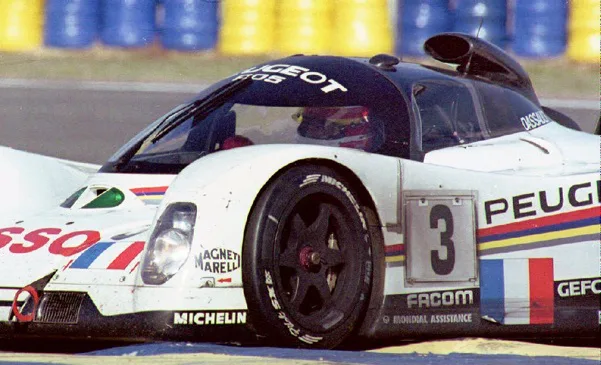
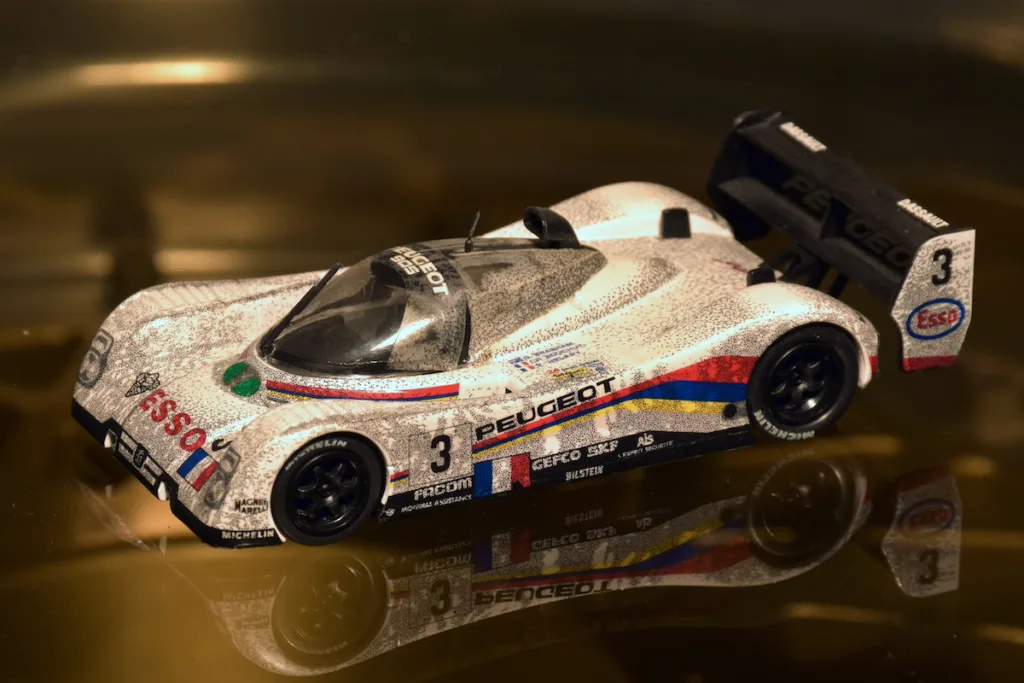
- VITESSE 039D “Dirt version” (diecast)
- Overall rating: 2 STARS | Quality details: 2 STARS | Estimated value: 2 STARS
- Only appears in this collection
Peugeot took their V10 engine to formula 1 where it was used by McLaren, Jordan and Prost but never had the success that it had in Le Mans.
Peugeot 908 (HDI FAP) – LMP1 diesel
2007 Le Mans 24h, Peugeot 908 HDI FAP
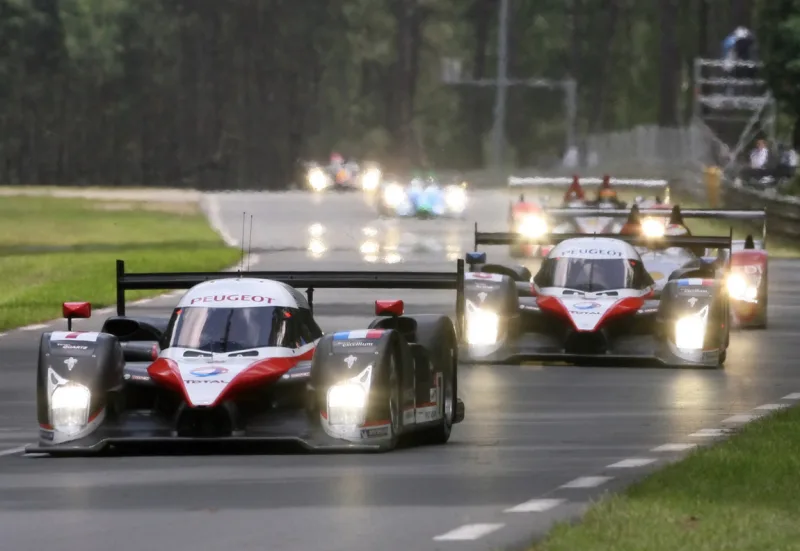
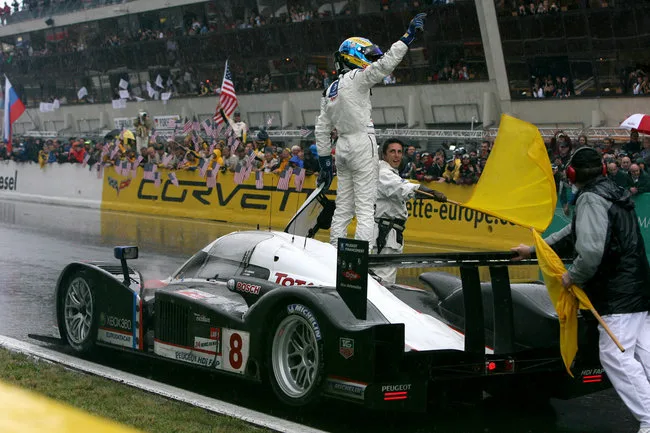
Peugeot arrived at the diesel party with their 5.5 liter V12 HDI, a year after Audi did. The Audi’s were favourite for victory at Le Mans, even after the French took pole position. Peugeot did well with a 2nd place, but were helped by Audi that lost two R10’s in accidents. The second Peugeot car failed to finish because of injection failure, probably caused by the bad weather.
Team Peugeot Total #7: Nicolas Minassian (F) / Marc Gené (E) / Jacques Villeneuve (CAN)
Results: Start-grid 3rd/ time 3:27.724 / race DNF injection – 338 laps
Team Peugeot Total #8: Stéphane Sarrazin (F) / Pedro Lamy (POR)/ Sebastien Bourdais (F)
Results: Start-grid 1st / time 3:26.344 / race 2nd -359 laps
Peugeot 908 HDI FAP – LMP1: Powered by 5.5 liter Peugeot HDi FAP V12 100°, approx. 700 hp. Michelin tires. Weight 920 kg. Carbon fibre monocoque, chassisnr. #02 & #03

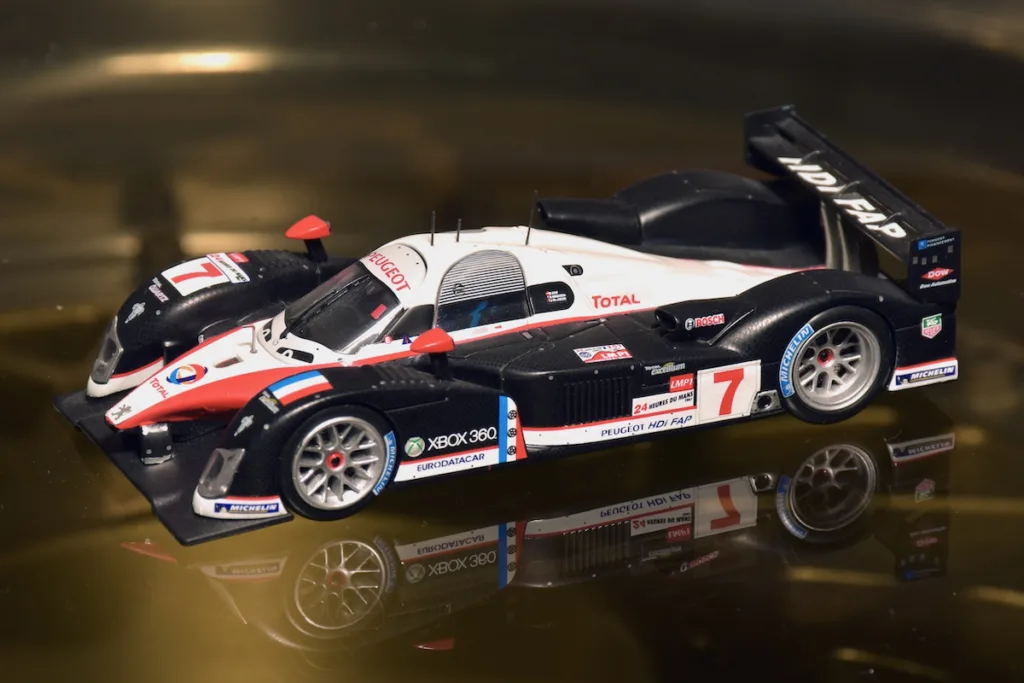
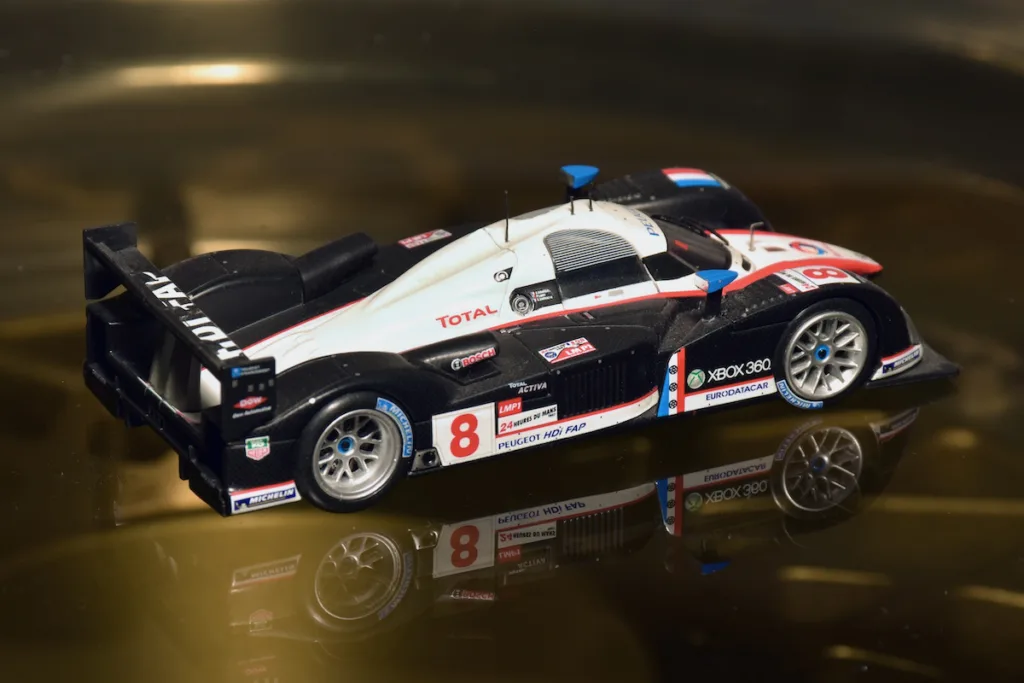
- IXO Modern Le Mans & GT Cars LMM112 & LMM113 (diecast)
- Overall rating: 3 STARS | Quality details: 3 STARS | Estimated value: 3 STARS
- Only appear in this collection
2008 Le Mans 24h, Peugeot 908 HDI FAP
The Peugeots were the fastest cars this year and should have won. But when it started to rain, the expierenced Audi crew took the lead. In the end on a drying track, Peugeot was closing in fast until Minassian made a few mistakes on wrong tyres. The Peugeot finished 2nd within a lap of the winning Audi. The other Peugeots finished 3rd and 5th.
Team Peugeot Total #7: Nicolas Minassian (F) / Marc Gené (E) / Jacques Villeneuve (CAN)
Results: Start-grid 2nd / time 3:20.451 / race 2nd – 381 laps
Peugeot 908 HDI FAP – LMP1: Powered by 5.5 liter Peugeot HDi FAP V12 100°, approx. 700 hp. Michelin tires. Weight 920 kg. Carbon fibre monocoque, chassisnr. #05
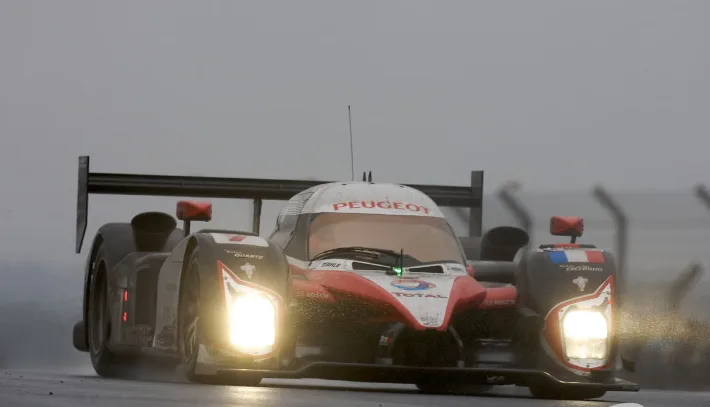
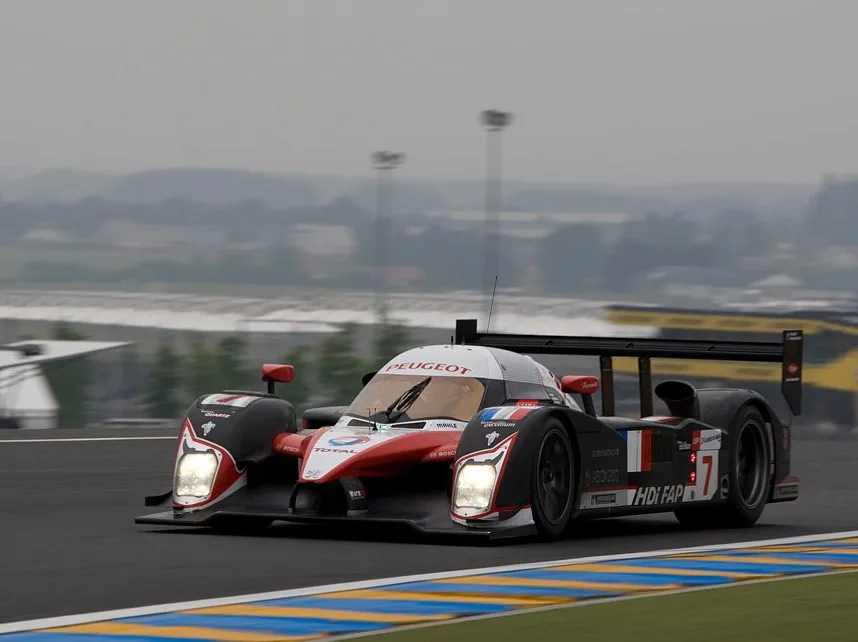
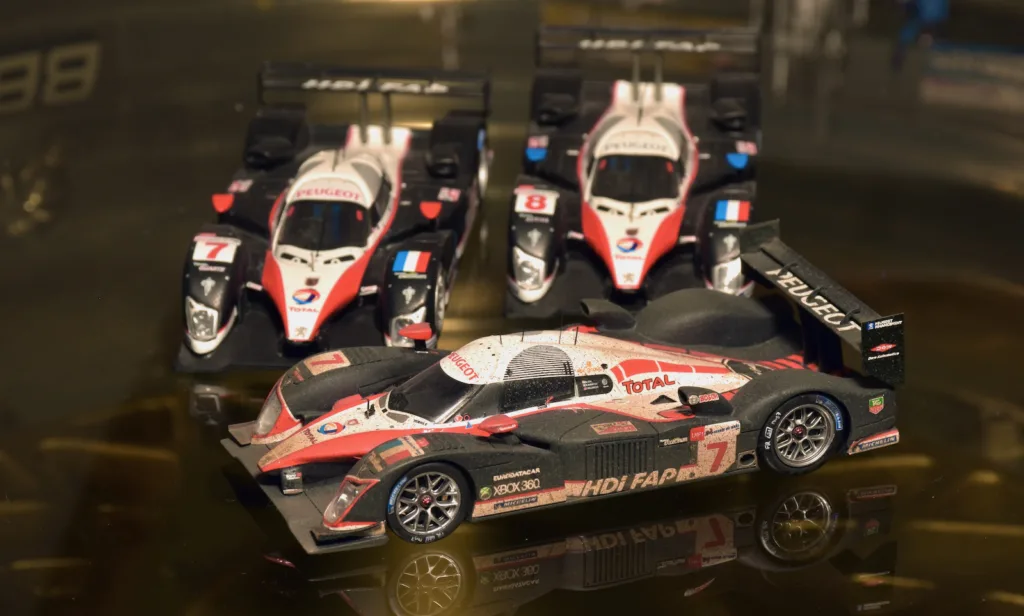
- SPARK S1297 CN a 300 pieces limited version “dirt model” special for the Canadian market (resin)
- Overall rating: 5 STARS | Quality details: 4 STARS | Estimated value: 4 STARS
- Only appears in this collection
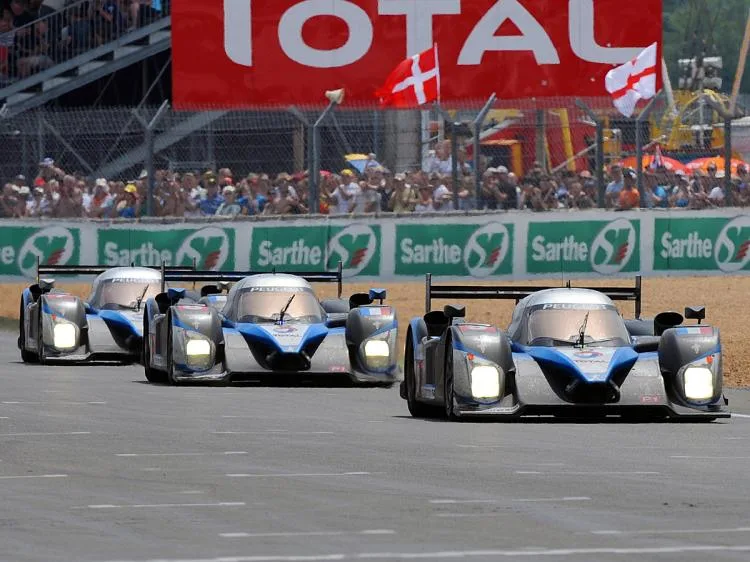
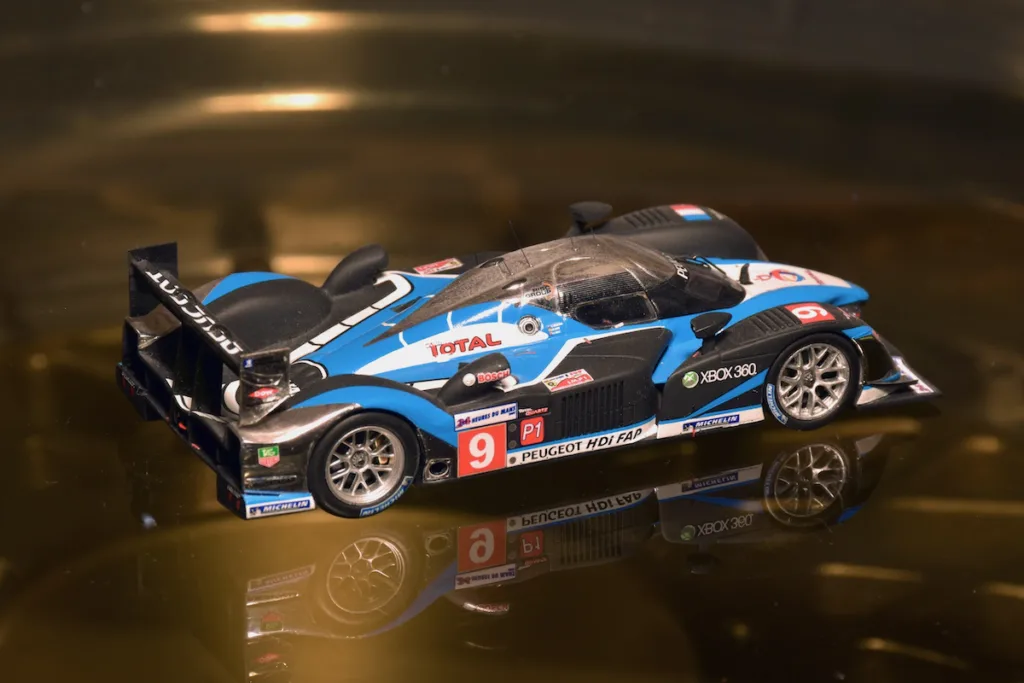
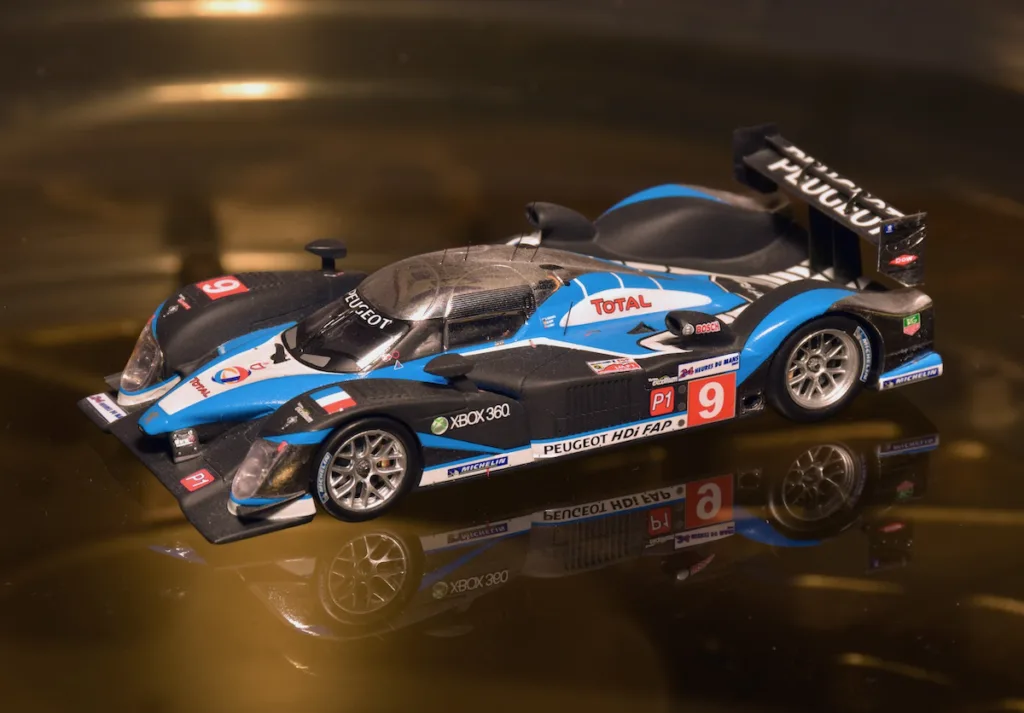
2009 Le Mans 24h, Peugeot 908 HDI FAP
The Peugeots were again the fastest cars this year. They went all in with three cars this year and his time there were no mistakes and the 908 HDI’s took a double win ahead of the new revolutionary styled Audi R15 TDI. The third Peugeot finished in 6th position.
Team Peugeot Total #9: Alexander Wurz (A) / Marc Gené (E) / David Brabham (AUS)
Results: Start-grid 5th / time 3:25.252 / race 1st – 382 laps
Peugeot 908 HDI FAP – LMP1: Powered by 5.5 liter Peugeot HDi FAP V12 100°, approx. 700 hp. Michelin tires. Weight 920 kg. Carbon fibre monocoque, chassisnr. #06
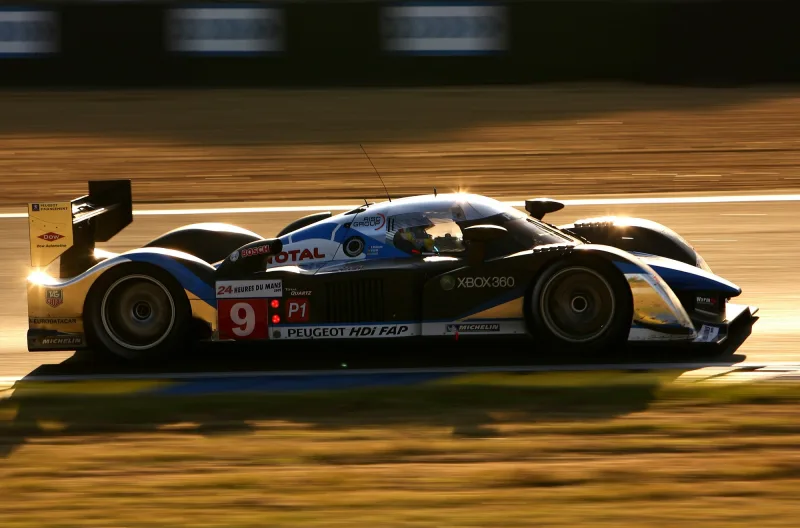
- SPARK 9-90809-09LM (resin)
- Overall rating: 4 STARS | Quality details: 4 STARS | Estimated value: 4 STARS
- Only appears in this collection
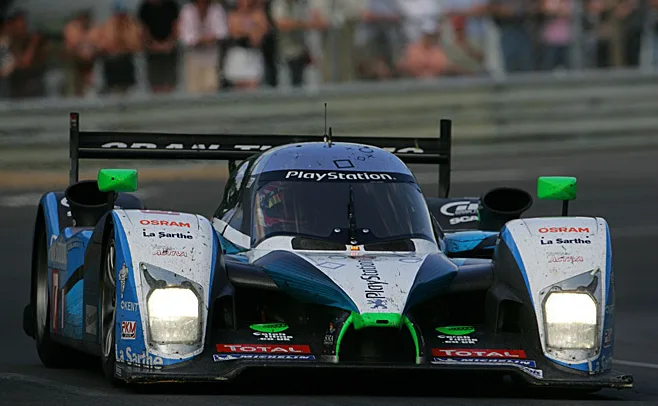
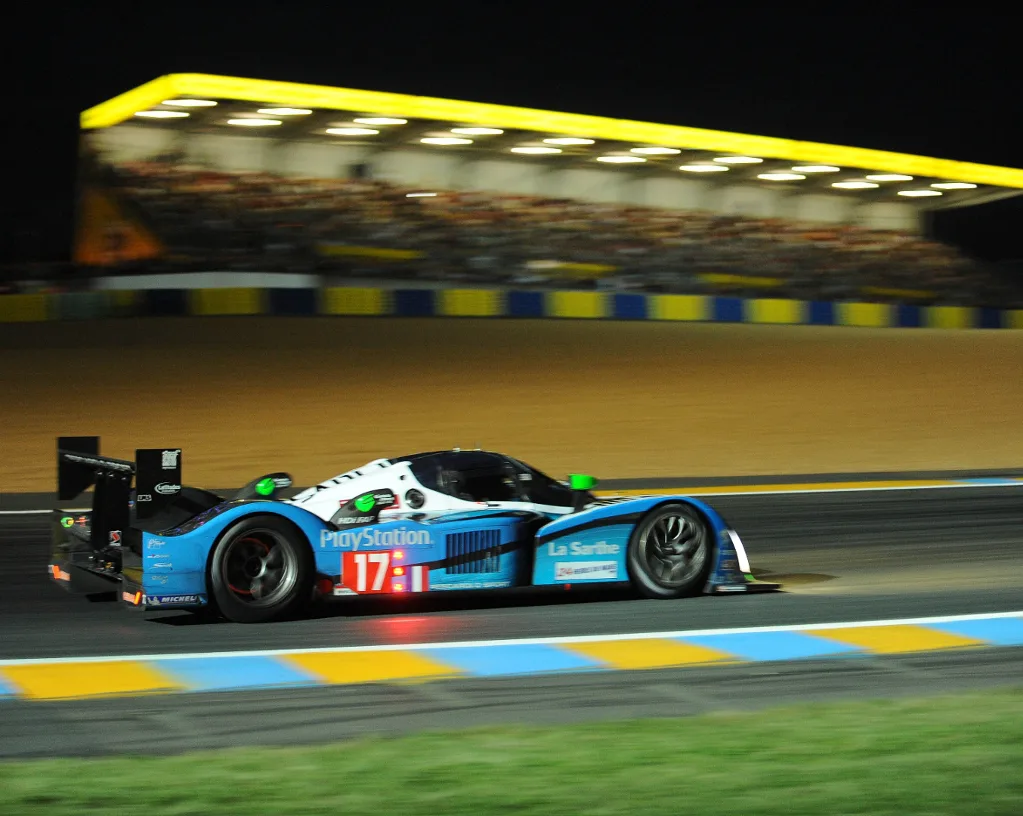
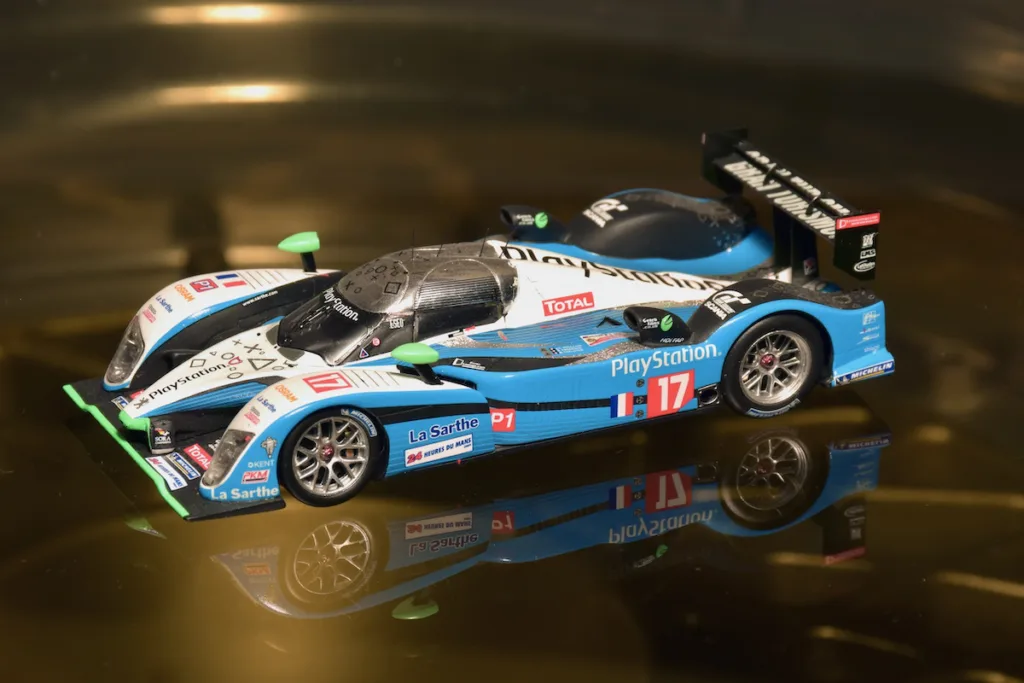
2009 Le Mans 24h, Pescarolo Peugeot
After fighting the diesels for some years, the Pescarolo Team could use one of the 2008 Peugeots. It was not a lucky race for them. In the early stages the car collided with one of the factory cars in the pit lane and at night Tréluyer crashed the car heavily. He escaped without injuries.005
Pescarolo Sport #17: Benoit Tréluyer (F) / Jean-Christophe Bouillon (F) / Simon Pagenaud
Results: Start-grid 4th / time 3:25.062 / race DNF crash – 210 laps
Peugeot 908 HDI FAP – LMP1: Powered by 5.5 liter Peugeot HDi FAP V12 100°, approx. 700 hp. Michelin tires. Weight 920 kg. Carbon fibre monocoque, chassisnr. #03
- SPARK S1290 (resin)
- Overall rating: 4 STARS | Quality details: 4 STARS | Estimated value: 4 STARS
- Also appears in #112 Playstation
2010 Le Mans 24h, Peugeot. 908 HDI FAP
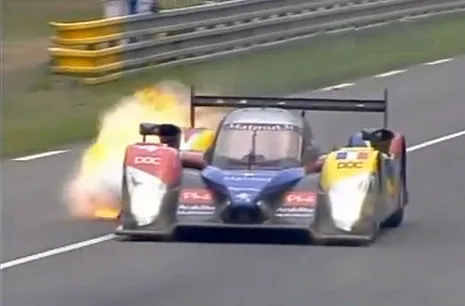
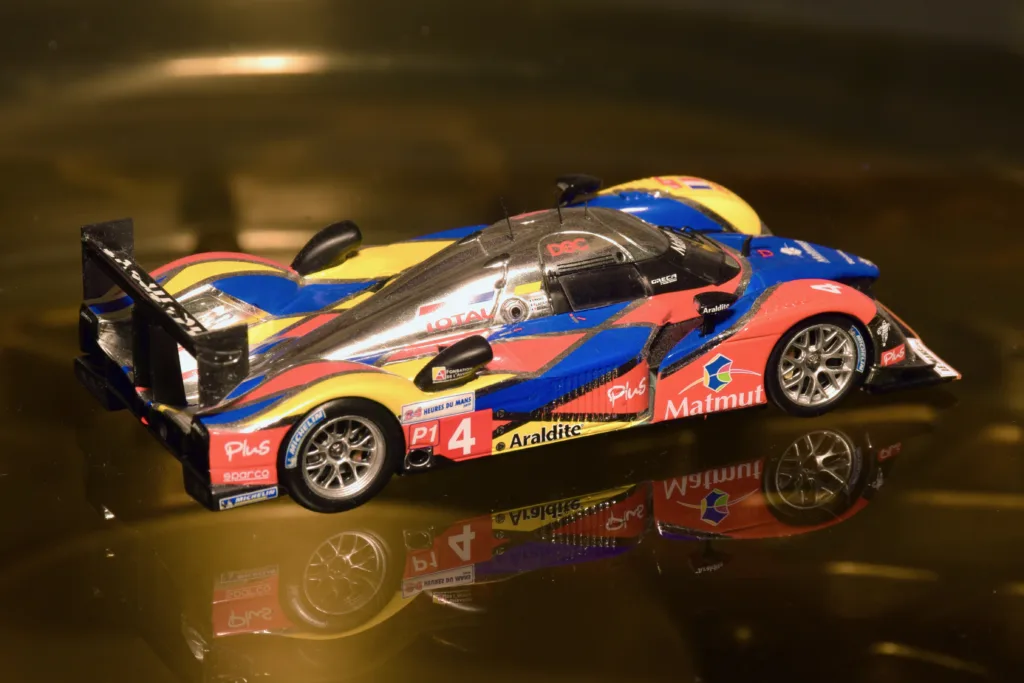
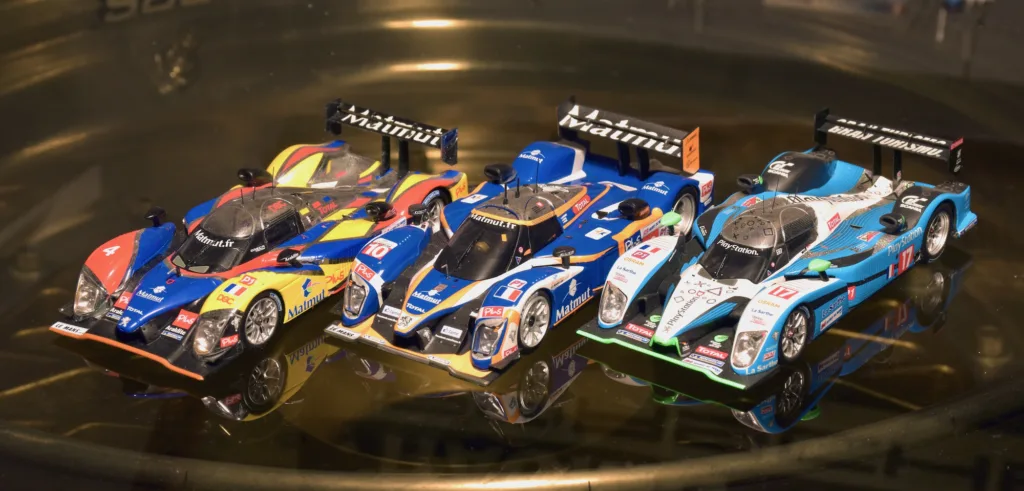
Oreca could use the 4th Peugeot 908 HDI just as Pescarolo did in 2009. The French make was favorite this year, but it would go completely different. All factory Peugeots had already retired when this car was battling for 2nd place. Duval drove the fastest lap and only a few laps later, he blew his engine in a big flame. Teamowner Hughes de Chaunac saw it happening on the monitor in his pit box and cried.
Team Oreca Matmut #4: Olivier Panis (F) / Nicolas Lapierre (F)/ Loic Duval (F)
Results: Start-grid 4th / time 3:21.192 / race DNF engine – 373 laps
Peugeot 908 HDI FAP – LMP1: Powered by 5.5 liter Peugeot HDi FAP V12 100°, approx. 700 hp. Michelin tires. Weight 920 kg. Carbon fibre monocoque, chassisnr. #04
- SPARK S1294 (resin)
- Overall rating: 4 STARS | Quality details: 4 STARS | Estimated value: 4 STARS
- Also appears in #126 Oreca (team)
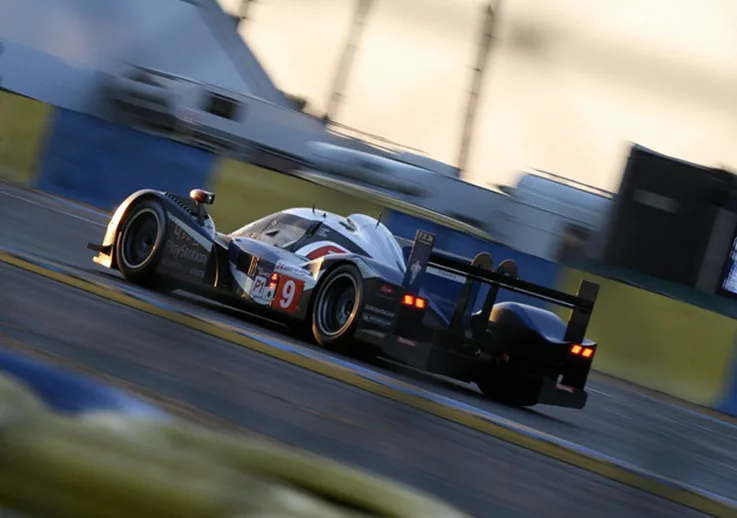
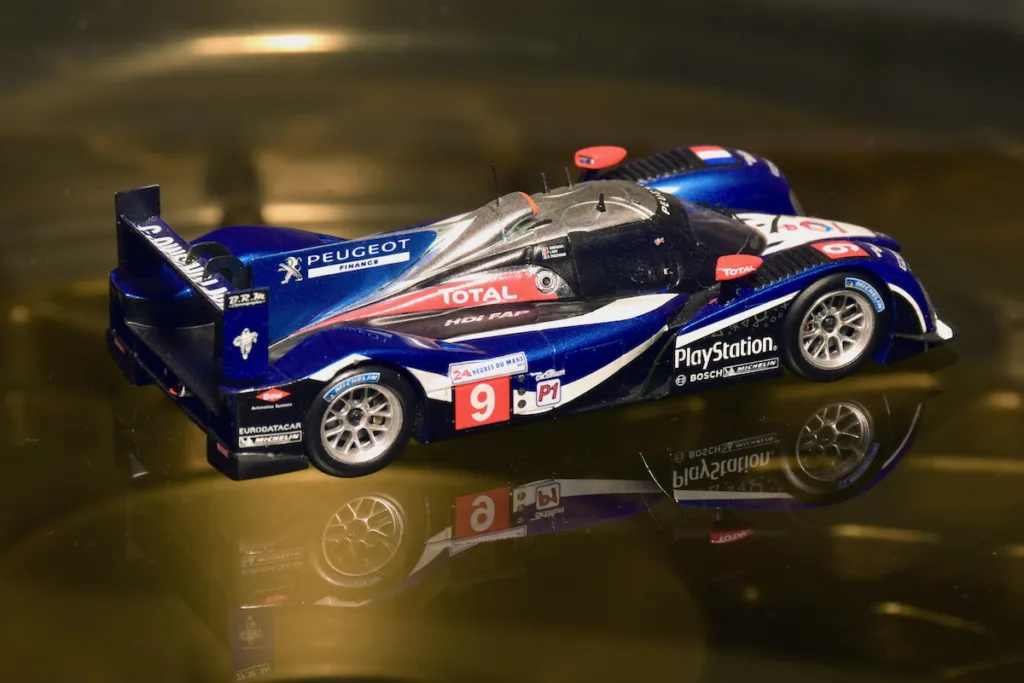
2011 Le Mans 24h, Peugeot 908
The set of regulations for 2011 have changed. Audi and Peugeot have new cars with smaller diesel engines, this one a 3.7 liter V8 turbo diesel and no longer called HDI FAP. In Le Mans, Audi was just a bit quicker than Peugeot all weekend. But when two of three Audi’s crashed heavily, the remaining one had to fight off three Peugeots. Audi won and this car finished 2nd, only 13.8 seconds behind.
Team Peugeot Total #9: Sébastien Bourdais (F) / Simon Pagenaud (F) / Pedro Lamy (POR)
Results: Start-grid 3rd / time 3:26.010 / race 2nd / 355 laps
Peugeot 908 – LMP1: Powered by 3.7 liter Peugeot V8 HDi FAP V8 90°, approx. 550 hp. Michelin tires. Weight 900 kg. Carbon fibre monocoque, chassisnr. #03

- SPARK S2594 (resin)
- Overall rating: 4 STARS | Quality details: 4 STARS | Estimated value: 4 STARS
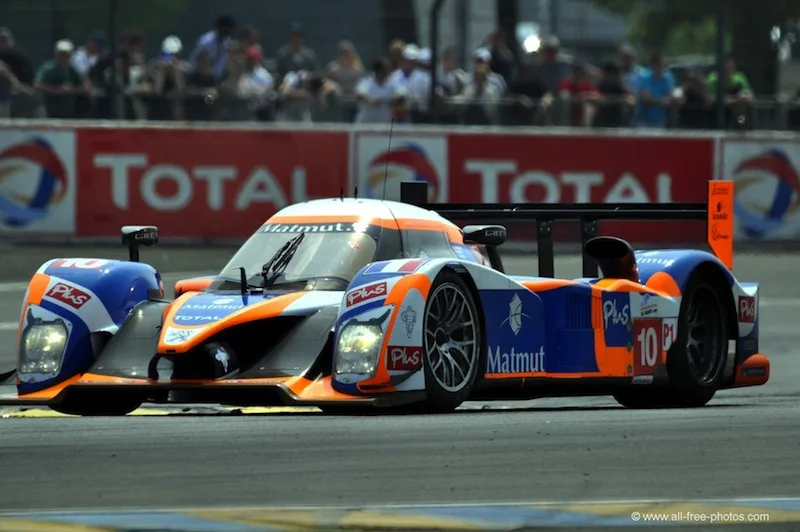
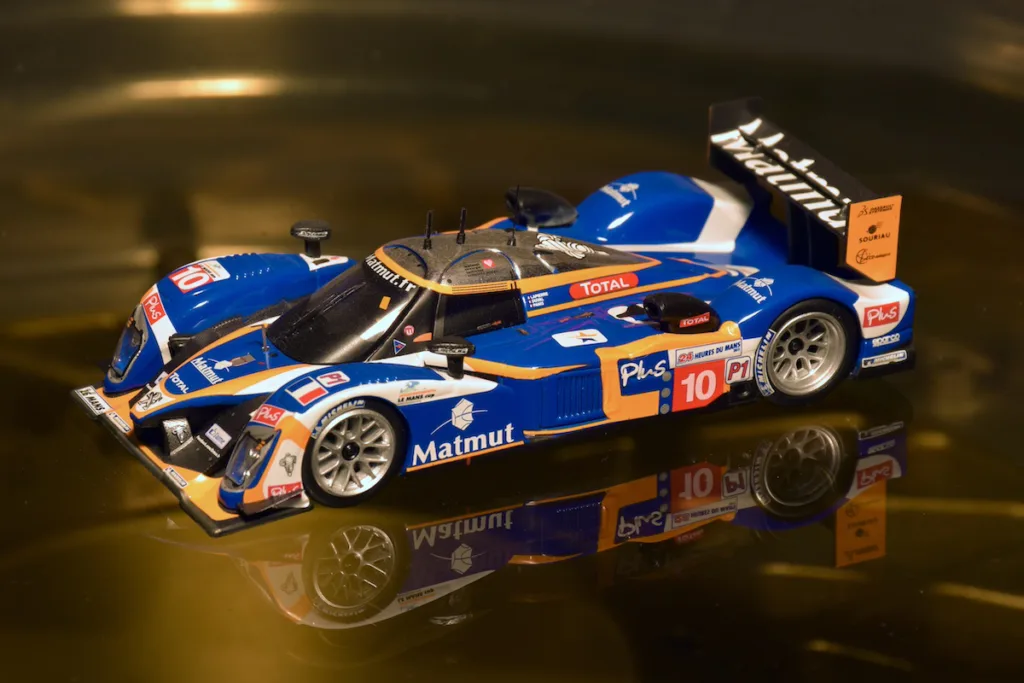
2011 Le Mans 24h, Oreca Peugeot 908 HDI FAP
The regulations for 2011 have changed. Audi and Peugeot race new cars with smaller diesel engines, but they still dominate LMP1. Oreca uses one of last year’s Peugeots, still with the 5.5 liter V12 diesel engine. It was restricted to prevent it from having an advantage over the newer cars with their small engines. It still finished 5th, and had already won the Sebring 12h race earlier this year.
Team Oreca Matmut #10: Olivier Panis (F) / Nicolas Lapierre (F) / Loic Duval (F)
Results: Start-grid 7th / time 3:30.084 / race 5th / 339 laps
Peugeot 908 HDI FAP – LMP1: Powered by 5.5 liter Peugeot HDi FAP V12 100°, approx. 550 hp (restricted). Michelin tires. Weight 920 kg. Carbon fibre monocoque, chassisnr. #010
- IXO LMM213 (diecast)
- Overall rating: 3 STARS | Quality details: 3 STARS | Estimated value: 3 STARS
- Also appears in #126 oreca (team)
- Overall rating: 3 STARS | Quality details: 3 STARS | Estimated value: 3 STARS
2008 presentation, Peugeot 908 HY
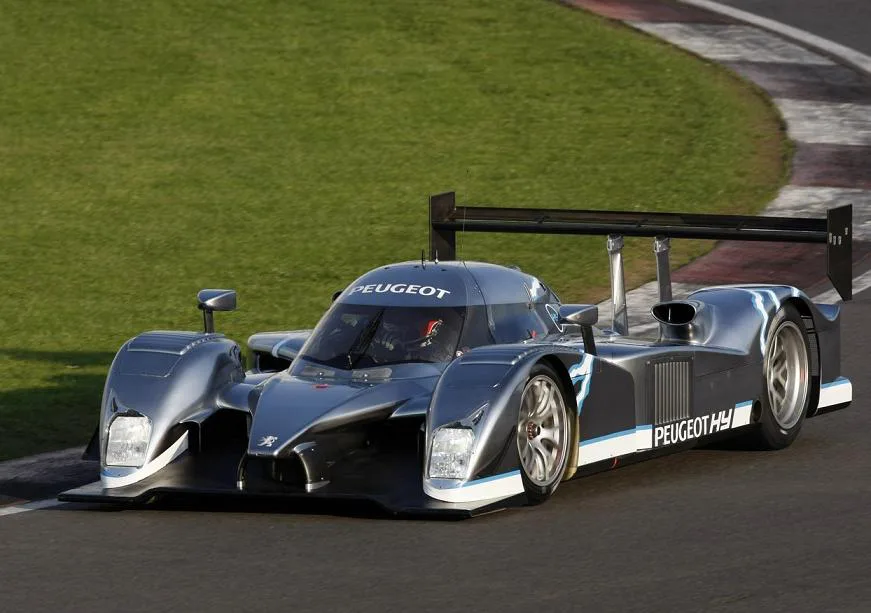
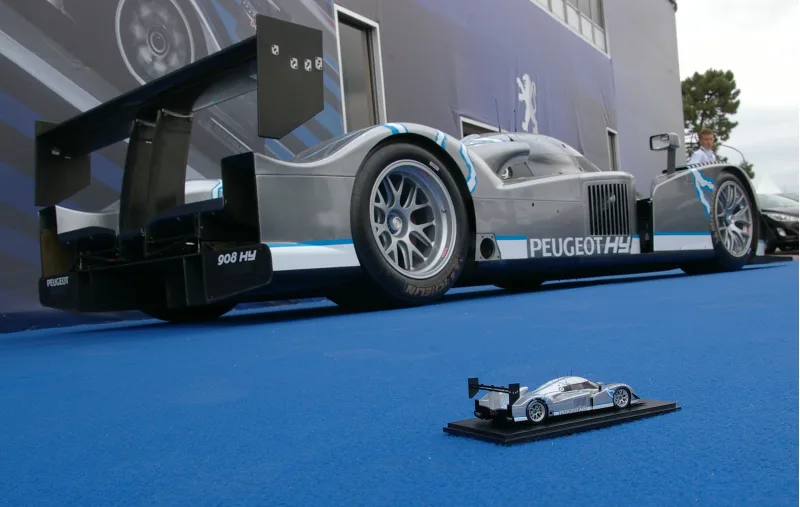
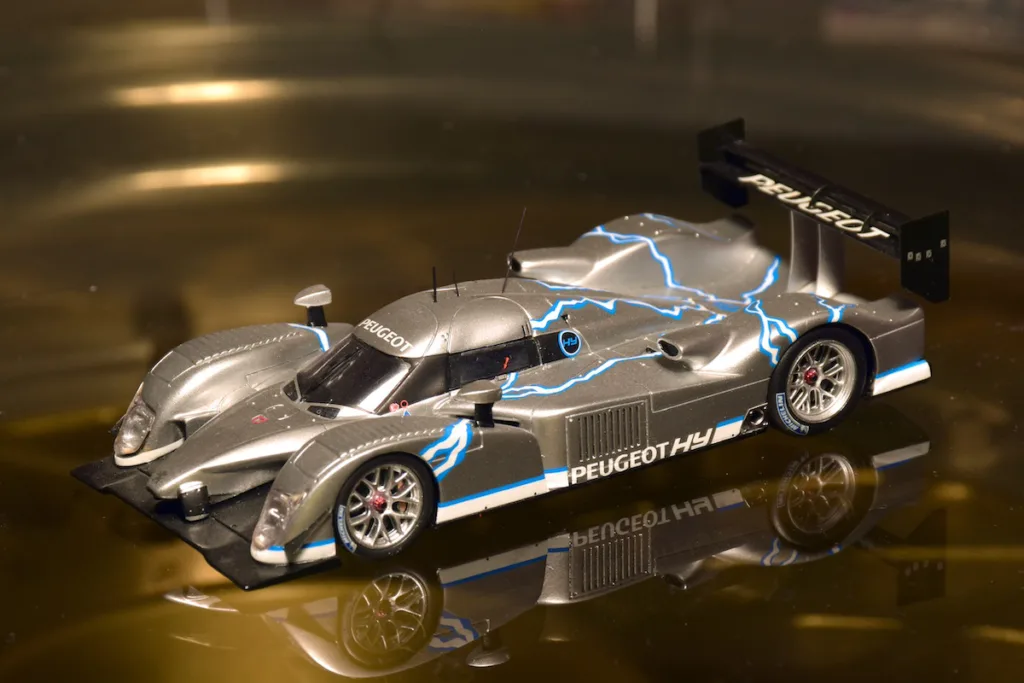
Peugeot made its debut with a diesel racer in 2007. A year later they presented this prototype from a hybrid racer. It combines the diesel engine with an electric one. It never raced but showed us how Peugeot saw the future of endurance racing. They were right, hybrids would be the future but not in combination with a diesel engine.
Peugeot 908 HY – TEST
- SPARK S1282 (resin)
- Overall rating: 4 STARS | Quality details: 4 STARS | Estimated value: 3 STARS
- Only appears in this collection
Peugeot 9X8 – hypercar
2023 Le Mans 24h, Peugeot 9X8
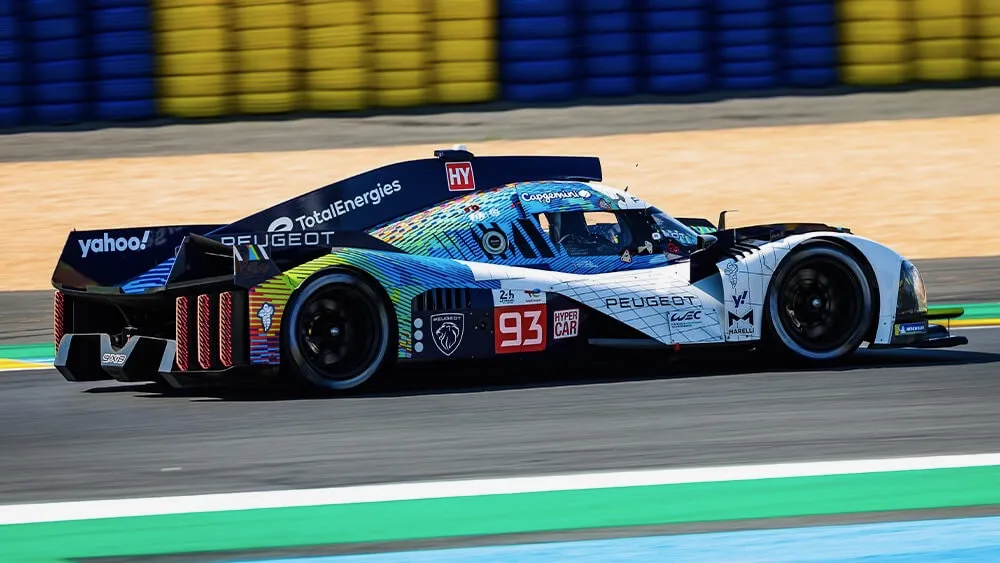
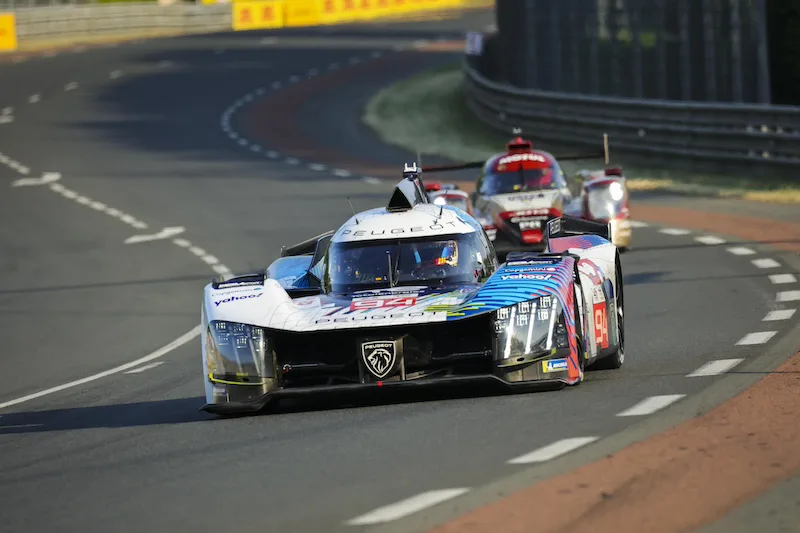
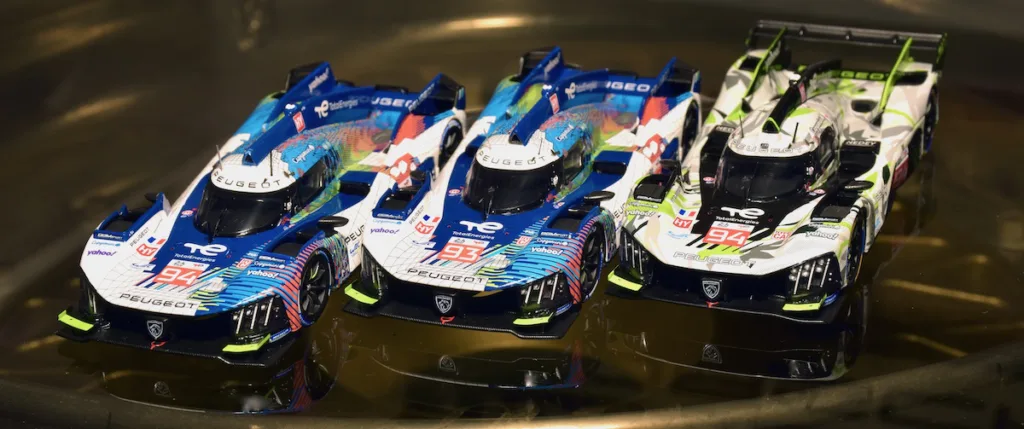
Peugeot stopped the 908 project at the end of 2011, in 2022 the French returned to endurance racing with the 9X8 Hypercar and decided for an unusual design without a rear spoiler. Downforce is generated through ground effect and the lack of a spoiler should give a higher top speed. Peugeot proves that theory and practice are sometimes different; only one podium is reached in 2023 and at Le Mans it finished in 8th and 11th position.
Peugeot Sport #93: Paul di Resta (GB) / Mikkel Jensen (DK) / Jean-Eric Vergne (F)
Results: Start-grid 10th / time 3:27.260 / race 8th – 330 laps
Peugeot Sport #94: Loic Duval (F) / Nico Müller (CH) / Gustavo Menezes (USA)
Results: Start-grid 11th / time 3:27.850 / race 27th – 312 laps
Peugeot 9X8 – Hypercar: Powered by 2.6 liter Peugeot F163 Hybrid4 V6 90° twin turbo hybrid, approx. 680 hp. Michelin tires. Weight 1050 kg. Carbon fibre monocoque, chassisnr. 2022 #07 & 2022 #08

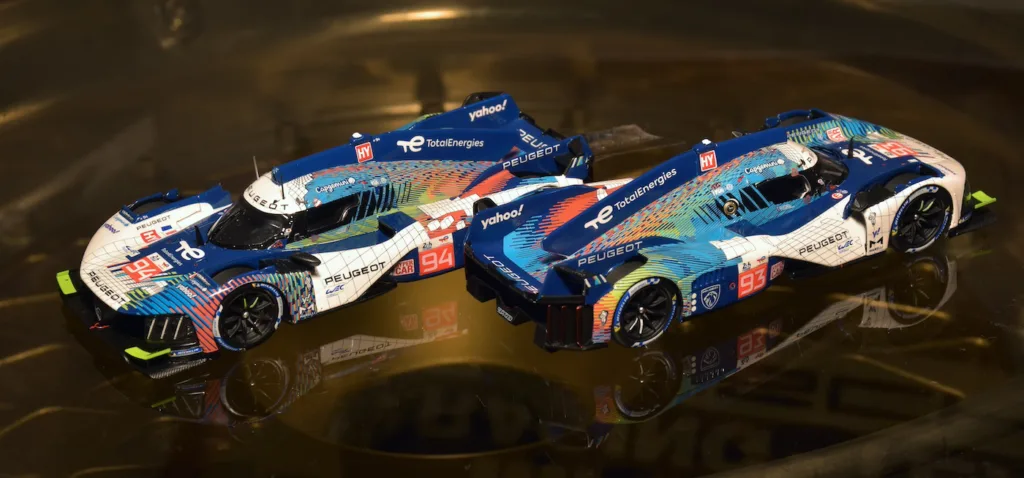
- SPARK S8729 & S9730 (resin)
- Overall rating: 5 STARS | Quality details: 5 STARS | Estimated value: 5 STARS
- Also appear in #056 Hypercars & Prototypes
2024 Le Mans 24h, Peugeot 9X8
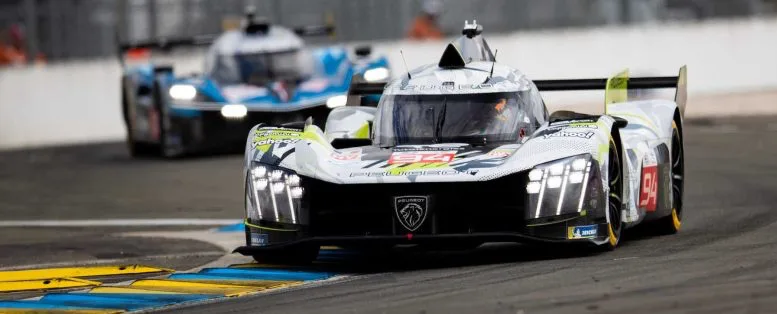
Peugeot was having a hard time in their first year in Hypercars, the design without rear spoiler brought the French no success yet. After homologation, manufacturers have limited possibilities to develop their car. Peugeot chose for a revised bodywork with a rear wing where the downforce shifted more towards the rear. In that process, the concept of equally wide front and rear tires has gone. Both Peugeots finished 2 laps behind the winner. In any year this would be a great result and probably a podium, but because of the great competitiveness they only finished 11th and 12th.
Peugeot Sport #94: Loic Duval (F) / Nico Müller (CH) / Stoffel Vandoorne (B)
Results: Start-grid 20h / time 3:27.251 / race 11th – 309 laps
Peugeot 9X8 2024 – Hypercar: Powered by 2.6 liter Peugeot F163 Hybrid4 V6 90° twin turbo hybrid, approx. 680 hp. Michelin tires. Weight 1050 kg. Carbon fibre monocoque, chassisnr. 2022 #12

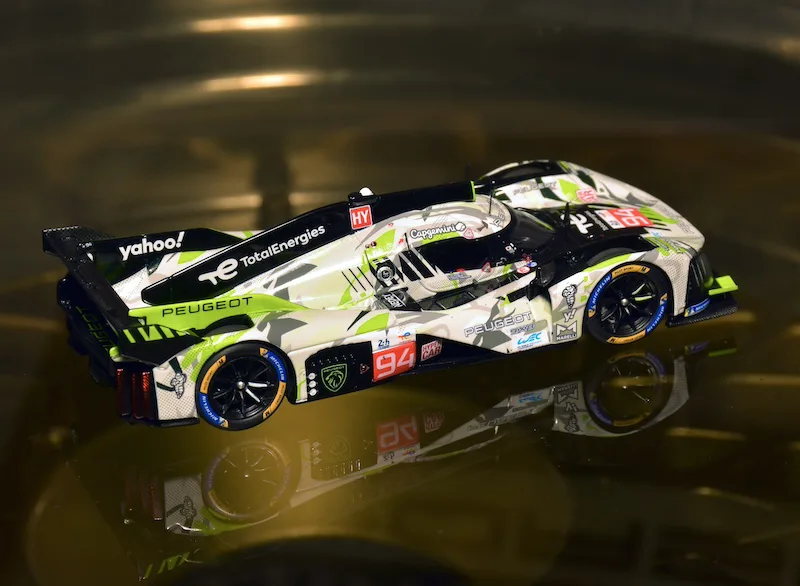
- SPARK S9127 (resin)
- Overall rating: 5 STARS | Quality details: 5 STARS | Estimated value: 4 STARS
- Also appear in #056 Hypercars & Prototypes
Thanks for visiting 🙂