Published June 17, 2026 | Last update June 17, 2026 | 35 models online
Some drivers show up a lot more than others in my collection because they raced the most beautiful sports cars of which I collected a model car. So I decided to do these drivers honor by adding collections in which the driver is the main topic.
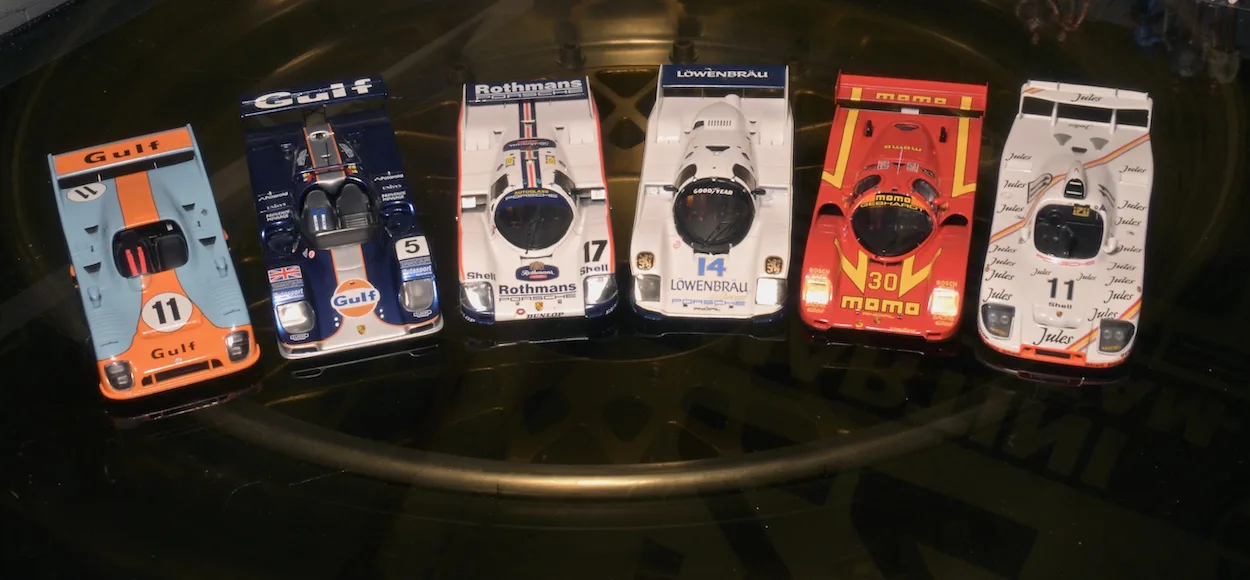
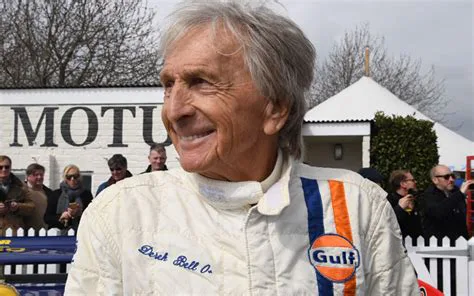
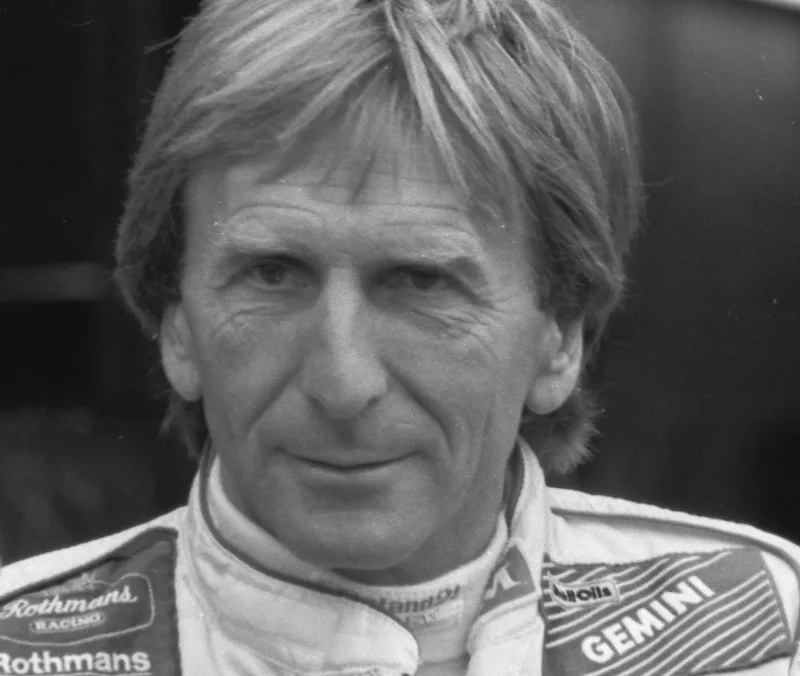
This collection is dedicated to Derek Bell who is often mentioned as second driver on the car, but his contribution to so many victories and good results is impressive. Derek won Le Mans 24h five times and the Daytona 24h three times.
Derek Reginald Bell MBE
born in England on October 31, 1941
- This collection contains:
- Ecurie Francorchamps, Ferrari
- 1970 Spa 1000 km – Ferrari 512S
- 1972 Le Mans 24h – Ferrari 365 GTB/4
- J.W. Automotive Gulf Racing
- 1971 Temporada Buenos Aires 1000km – Porsche 917K
- 1971 Daytona 24h – Porsche 917K
- 1971 Nürburgring 1000km – Porsche 908/03
- 1971 Le Mans test – Porsche 917K “Schnorkel”
- 1971 Le Mans 24h – Porsche 917L
- 1974 Le Mans 24h – Mirage GR7 – Ford
- 1975 Le Mans 24h – Mirage GR8- Ford
- In between
- 1976 Le Mans 24h – Mirage GR8 – Ford
- 1976 European Touring Car Championship Silverstone – Jaguar XJ12 Coupé
- 1977 European Touring Car Championship Silverstone – Jaguar XJ12 Coupé
- 1977 Le Mans 24h – Renault Alpine A442 V6 turbo
- 1978 Silverstone 6h – Porsche 935/77A Gelo
- Factory Porsche @ Le Mans
- 1980 Le Mans 24h – Porsche 924 Carrera GT 3x
- 1981 Le Mans 24h – Porsche 936/81 Jules
- 1982 Le Mans 24h – Porsche 956L Rothmans 4x
- 1983 Nürburgring 1000 km – Porsche 956K Rothmans
- 1986 Le Mans 24h – Porsche 962C Rothmans
- 1987 Le Mans 24h – Porsche 962C Rothmans
- 1988 Le Mans 24h – Porsche 962C Shell
- Privateer teams @ Le Mans
- 1990 Le Mans 24h – Porsche 962C Joest / Blaupunkt
- 1991 Le Mans 24h – Porsche 962C Joest / FATurbo
- 1993 Le Mans 24 – Courage C30LM – Porsche Courage
- 1994 Le Mans 24h – Kremer K8 Gulf
- 1995 Le Mans 24h – McLaren F1 GTR Harrods
- 1996 Le Mans 24h – McLaren F1 GTR Harrods / Hawaiian Tropic
- Career in the USA
- 1982 Daytona 24h – Porsche 935 K3/80 Coca-Cola
- 1982 Road Atlanta 500 miles – Porsche 935 LT1 Coca-Cola
- 1986 Daytona 24h – Porsche 962 Holbert / Löwenbraü
- 1989 Daytona 24h – Porsche 962 Busby / Miller’s
- 1990 Daytona 24h – Porsche 962 Moretti / Momo
- 1991 Daytona 24h – Gunnar 966 – Porsche
- 1993 IMSA championship – Nissan NPT-90 Moretti / Momo
Ecurie Francorchamps, Ferrari
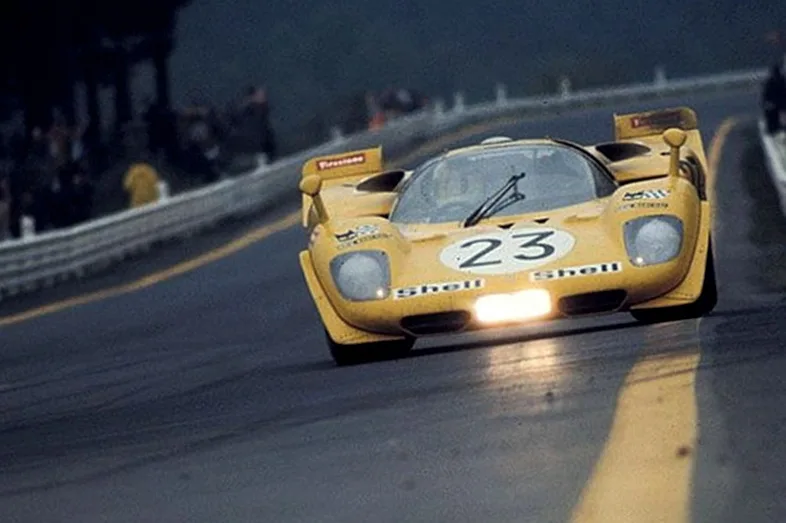
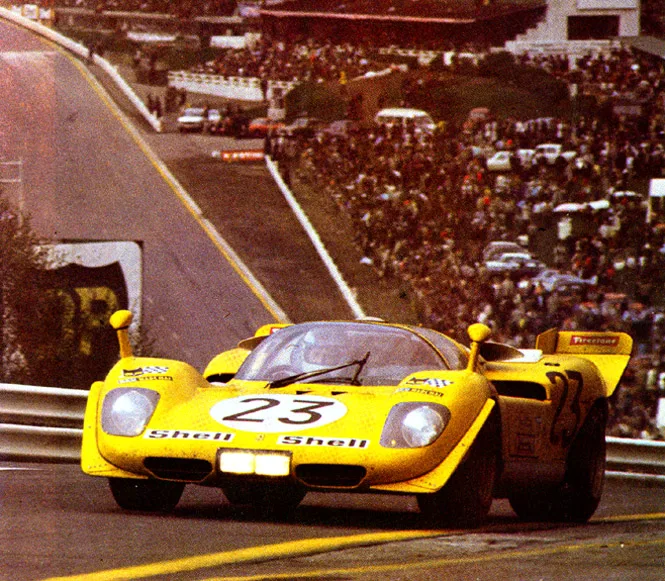
1970 Spa 1000 km, Ferrari 512S
Local hero Hughes de Fierlant finished a credible 8th in his home race in the bright yellow Ferrari from Ecurie Francorchamps. He was joined by Derek Bell.
Ecurie Francorchamps #23: Hughes de Fierlant (B) / Derek Bell (GB)
Results: Start-grid 7th / time 3:31.600 / race 8th – 64 laps
Ferrari 512S – Sports cars <5L: Powered by 5.0 liter Ferrari Tipo 128 LM – V12 60º – approx. 550 hp. Firestone tires. Weight 840 kg. Steel semi-monocoque, chassisnr. #1030

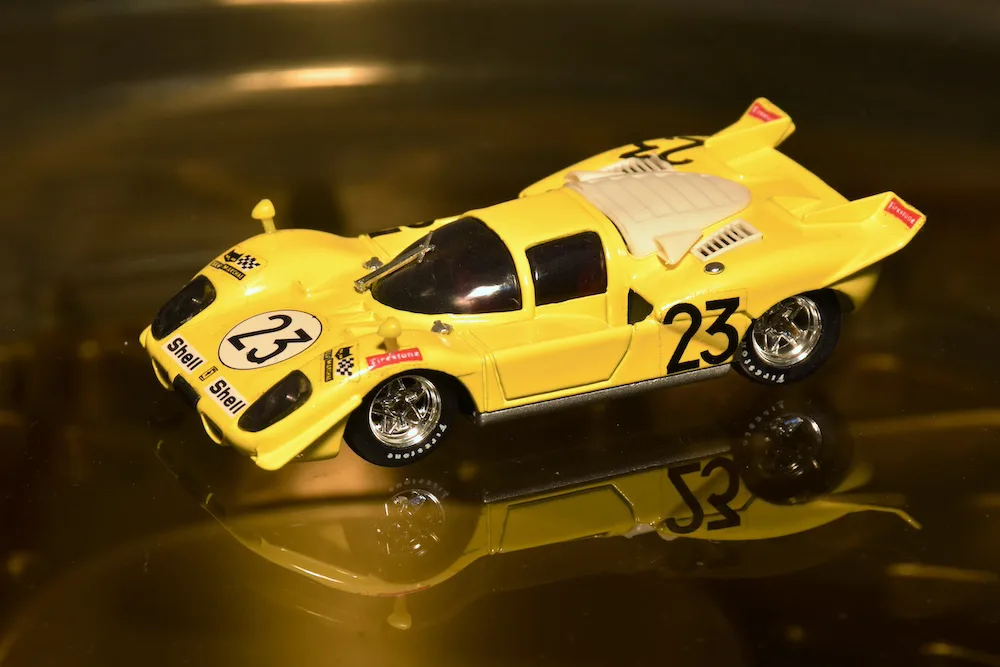
- BRUMM R203 (diecast)
- Overall rating: 2 STARS | Quality details: 2 STARS | Estimated value: 2 STARS
- Also appears in #038 Ferrari prototypes / #045 Ecurie Francorchamps
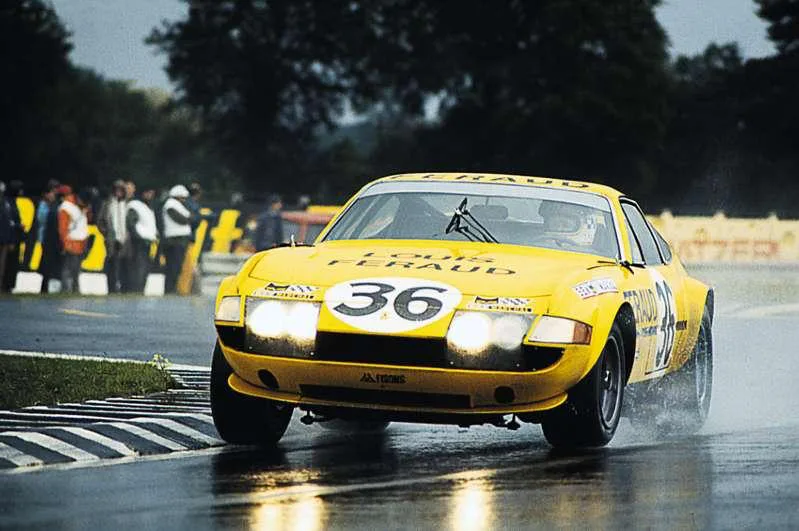
1972 Le Mans 24h, Ferrari 365 GTB/4
Cars from the team of French Ferrari distributor Pozzi won its class in Le Mans in 1972 and 1973. This one, entered by the Belgian distributor finished 4th in its class.
Ecurie Francorchamps #36: Teddy Pilette (B) / Derek Bell (
GB) / Richard Bond (
GB)
Results:Start grid 26th / time 4:25.100 / race 8th overall – 302 laps / 4th GT
Ferrari 365 GTB/4 Daytona Competition – GT: Powered by 4.4 liter Ferrari Tipo 251F – V12 60º, approx. 430 hp. Michelin tires. Weight 1200 kg. Steel monocoque, chassisnr. #15373

- RIO R11 (diecast)
- Overall rating: 2 STARS | Quality details: 2 STARS | Estimated value: 2 STARS
- Also appears in #097 Classic GT 1970s / #045 Ecurie Francorchamps
J.W. Automotive, Gulf Racing
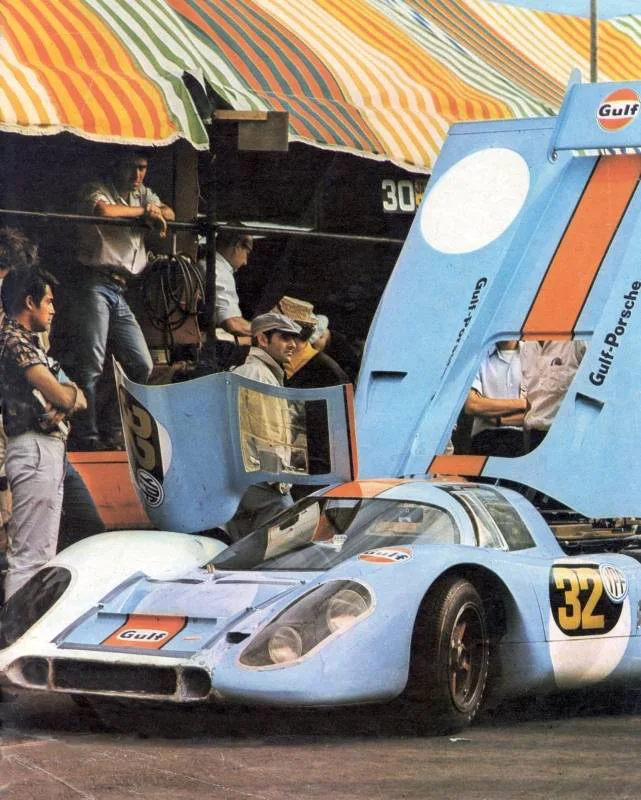
1971 Temporada Buenos Aires 1000km, Porsche 917K
The Temporada, Buenos Aires’ 1000km race was the first race of the 1971 championship. Battle went on between the Gulf Porsches and the 3-liter Alfa Romeo. Jo Siffert and Derek Bell started 3rd but managed to win the race in the #30. Jacky Oliver crashed the #32 car during practice and it was just in time ready for the race. They finished 2nd behind their team mates. The race was overshadowed by the fatal accident of Ignazio Giunti.
J.W. Automotive #30: Jo Siffert ( CH) / Derek Bell (GB)
Results: Start-grid 3rd / time 1:53.400 / race 1st – 165 laps
Porsche 917K – Sports cars <5L: Powered by 4.5 liter Porsche 912.00 V12 180º, approx. 580 hp. Firestone tires. Weight 810 kg. Aluminum space frame, chassisnrs. #917-029 and #035
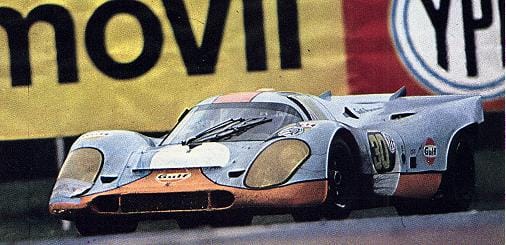
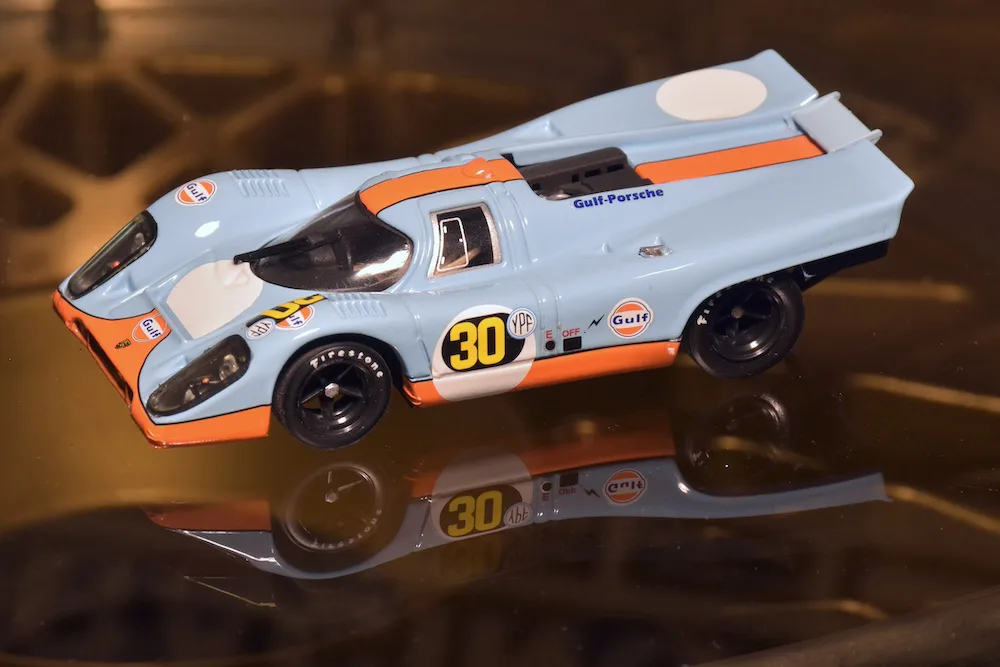
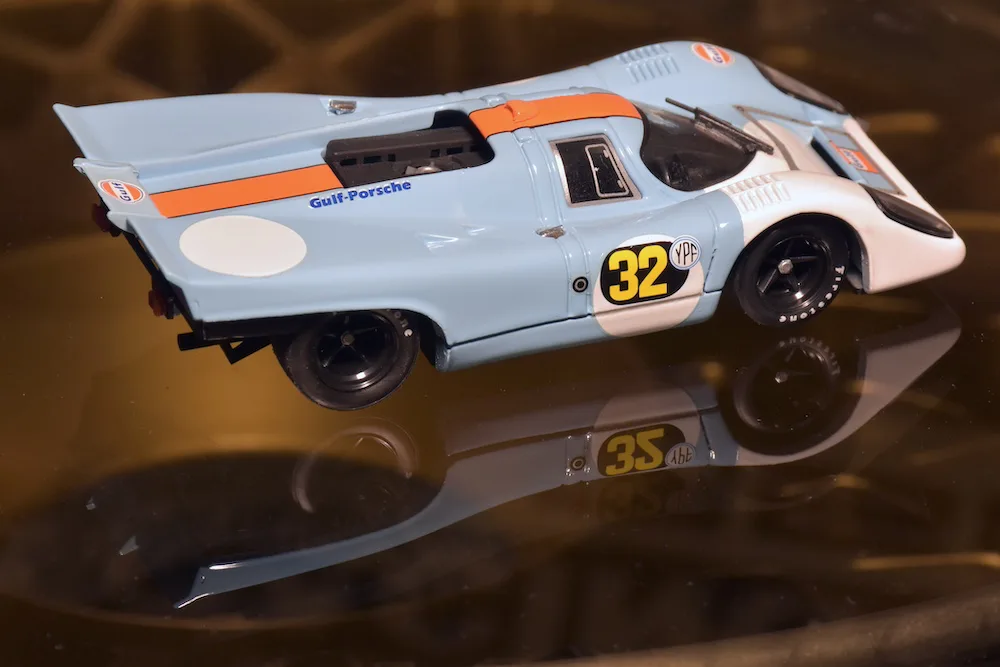
- BRUMM R568 & R569 (diecast)
- Overall rating: 2 STARS | Quality details: 2 STARS | Estimated value: 2 STARS
- Also appears in #051 Gulf Porsche 908 & 917
1971 Daytona 24h, Porsche 917K
The John Wyer Gulf Porsches 917 were favourits to win the Daytona 24 hour race. And they did: Rodriguez and Oliver won ahead of 2 Ferrari’s. The Porsches used the new 4.9 liter engine for the first time here but this #1 car with Siffert and Bell suffered a broken engine early in the race. Daytona Porsches always had an additional window in the roof that allowed the drivers to look further ahead on the steep banking of Daytona.
J.W. Automotive #1: Jo Siffert (CH) / Derek Bell (GB)
Results: Start-grid 4th / time 1:44.440 / race DNF engine – 113 laps
Porsche 917K – Sports cars <5L: Powered by 4.9 liter Porsche 912.10 V12 180º, approx. 600 hp. Firestone tires. Weight 810 kg. Aluminum space frame, chassisnr. #917-035
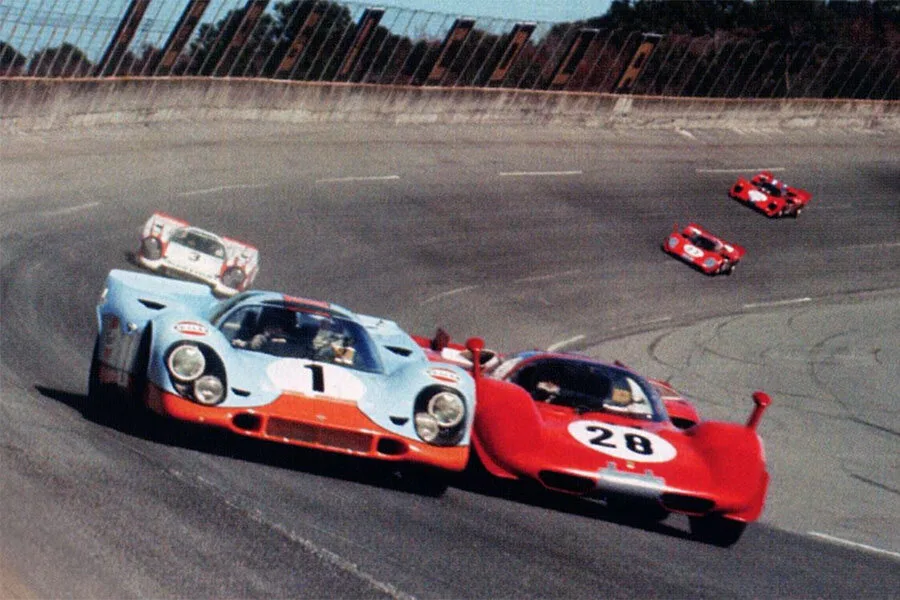
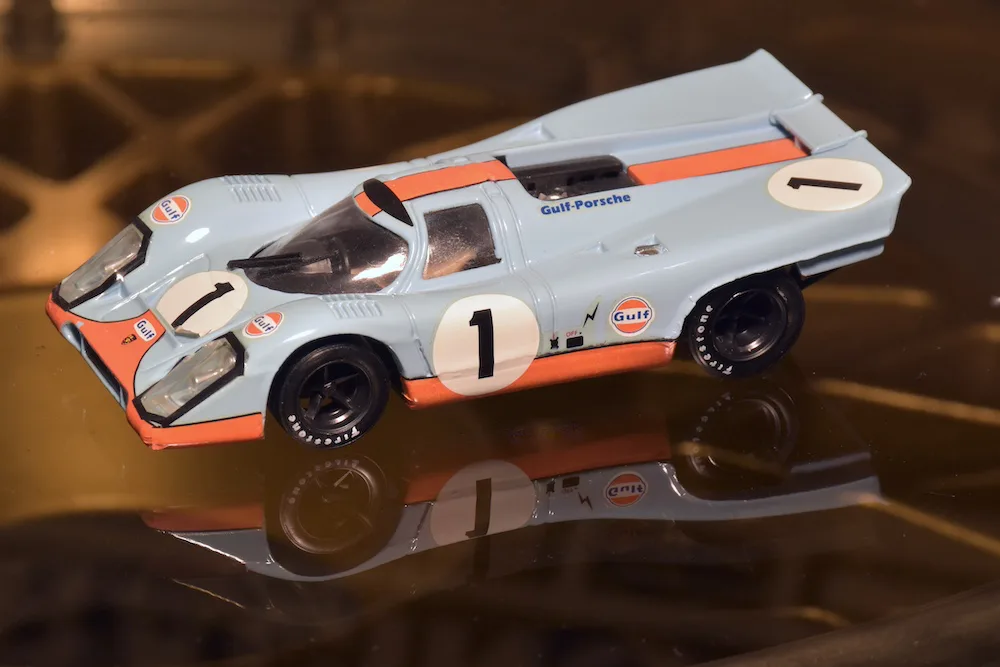
- BRUMM R269 (diecast)
- Overall rating: 2 STARS | Quality details: 2 STARS | Estimated value: 2 STARS
- Also appears in #051 Gulf Porsche 908 & 917
1971 Nürburgring 1000km, Porsche 908/03
Both Alfa Romeo and the new Ferrari 312PB had more powerful engines and were quicker in qualifying than the J.W.A. 908’s. But 1000 km at the Nürburgring is not about speed alone; in the end the 2 Martini Porsches and 1 JWA Gulf filled the podium. Jo Siffert drove both cars, he started the #2 but when that retired he switched to the #1 car, replacing Jacky Oliver.
J.W. Automotive #2: Jo Siffert (CH) / Derek Bell (GB)
Results: Start-grid 5th / time 7:52.700 / race DNF chassis – 44 laps
Porsche 908/02 – Prototypes <3L: Powered by 3.0 liter Porsche 908 – flat-8, approx. 350 hp. Firestone tires. Weight 545 kg. Steel space frame, chassisnrs. #908/03 013 & #908/03 012.
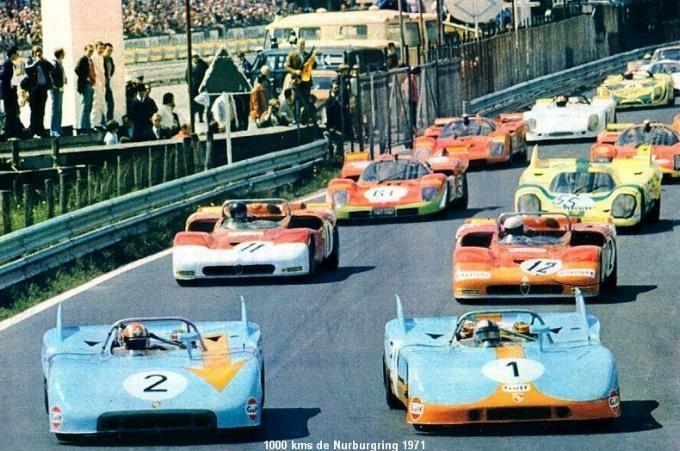
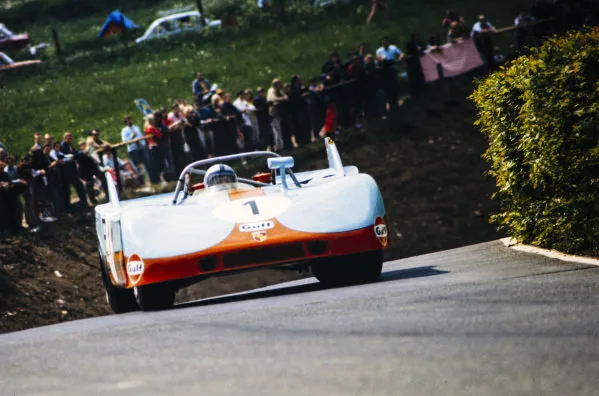
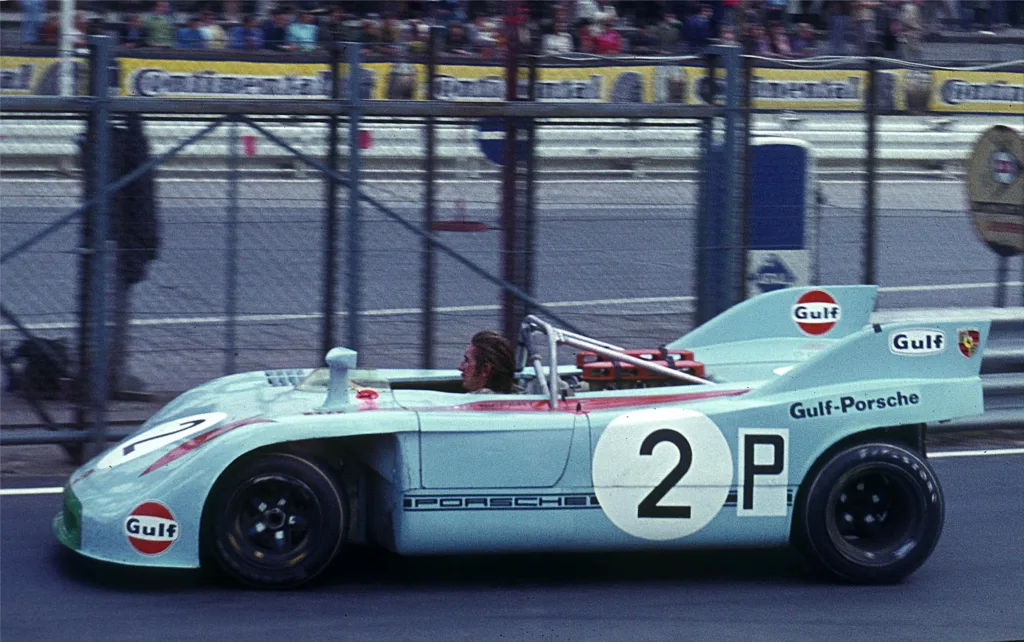
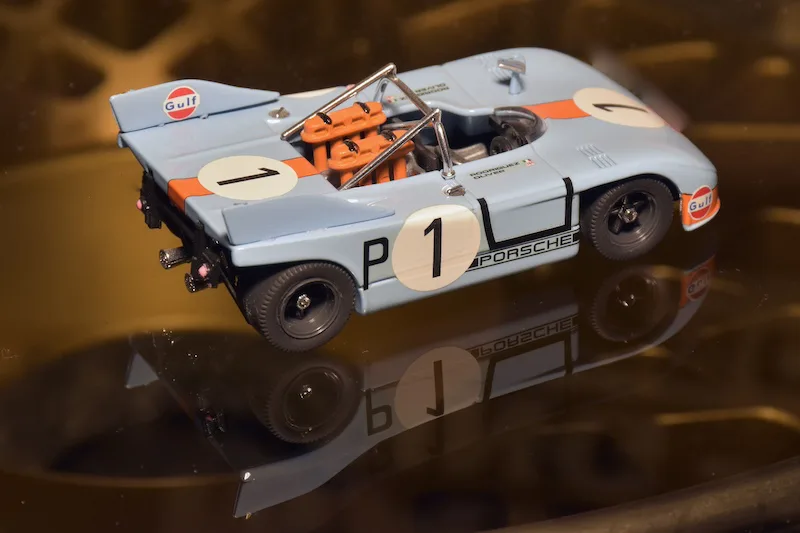
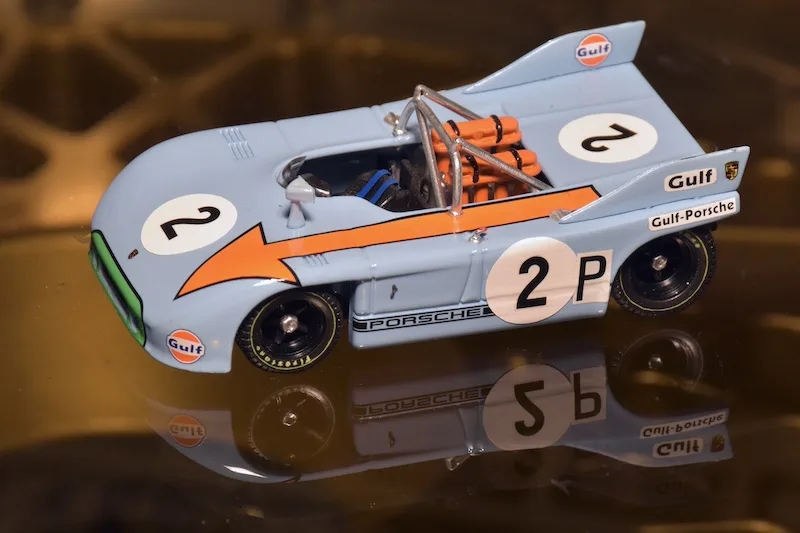
- BEST 9188 & 9675 (diecast)
- Overall rating: 2 STARS | Quality details: 2 STARS | Estimated value: 2 STARS
- lso appears in #051 Gulf Porsche 908 & 917
1971 Le Mans test, Porsche 917K “Schnorkel”
During the 24-hour race at Le Mans, the #18 Porsche was one of the long tail versions. But during the tests 2 months earlier, the German manufacturer was experimenting with high placed air-intakes. These periscopes or “schnorkels” were only used once in a race, but never at Le Mans.
J.W. Automotive #1 / #18: Jo Siffert (CH) / Derek Bell (GB) / Jackie Oliver (GB)
Results ……….
Porsche 917K – Sports cars <5L: Powered by 4.9 liter Porsche 912.10 V12 180º, approx. 600 hp. Firestone tires. Weight 810 kg. Aluminum space frame, chassisnr. #917-016
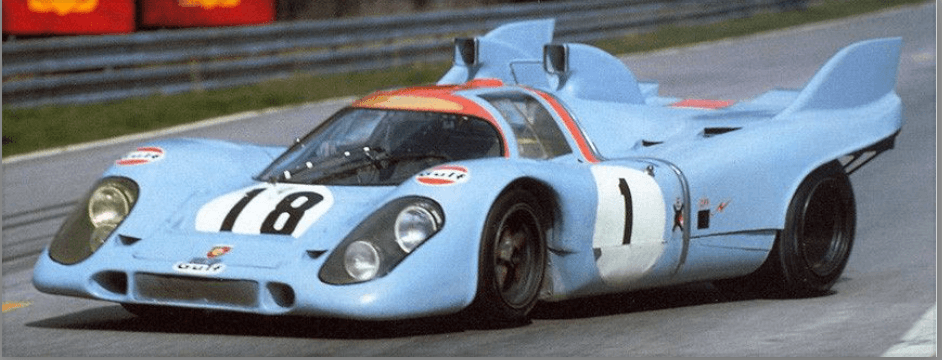

- SPARK S9985 (resin)
- Overall rating: 4 STARS | Quality details: 3 STARS | Estimated value: 3 STARS
- Also appears in #051 Gulf Porsche 908 & 917
1971 Le Mans 24h, Porsche 917L
The longtail versions of the Porsche 917 were blistering quick, reaching over 240 mph (in 1971!). On the #17, the fans of the air cooled engines broke. The #18 had an oil pump failure, so they both retired with broken engines.
J.W. Automotive #17: Jo Siffert (CH) / Derek Bell (GB)
Results: Start-grid ccc th / time nnnnn / race DNF cooling fan – ccc laps
Porsche 917L – Sports cars <5L: Powered by 4.9 liter Porsche 912.10 V12 180º, approx. 600 hp. Firestone tires. Weight 840 kg. Aluminum space frame, chassisnrs. #917-045 and #043
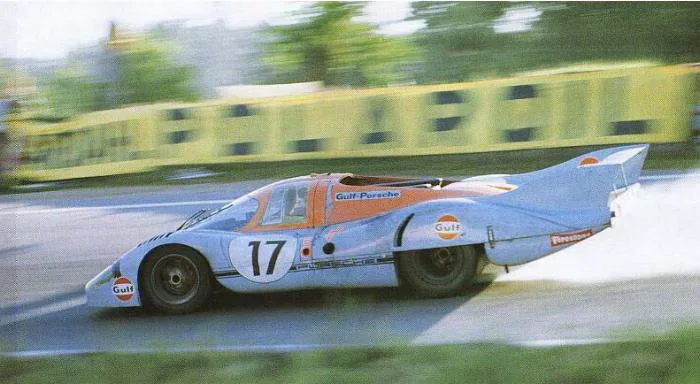
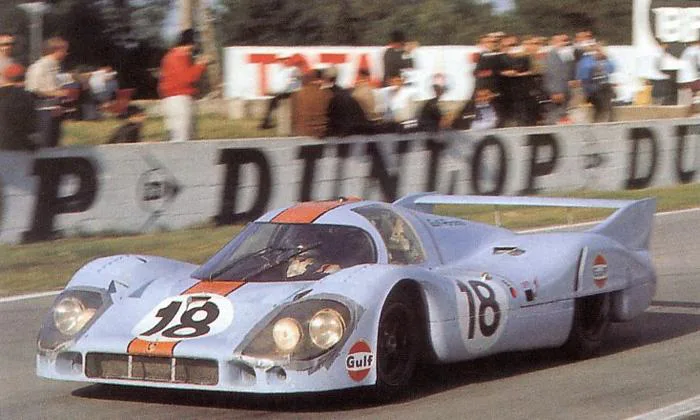
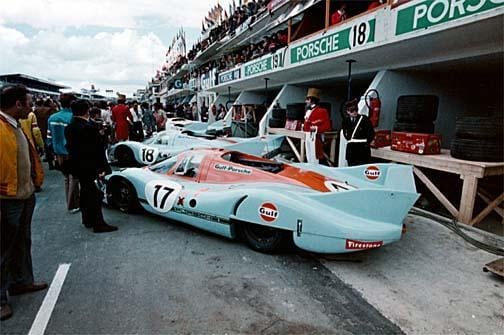
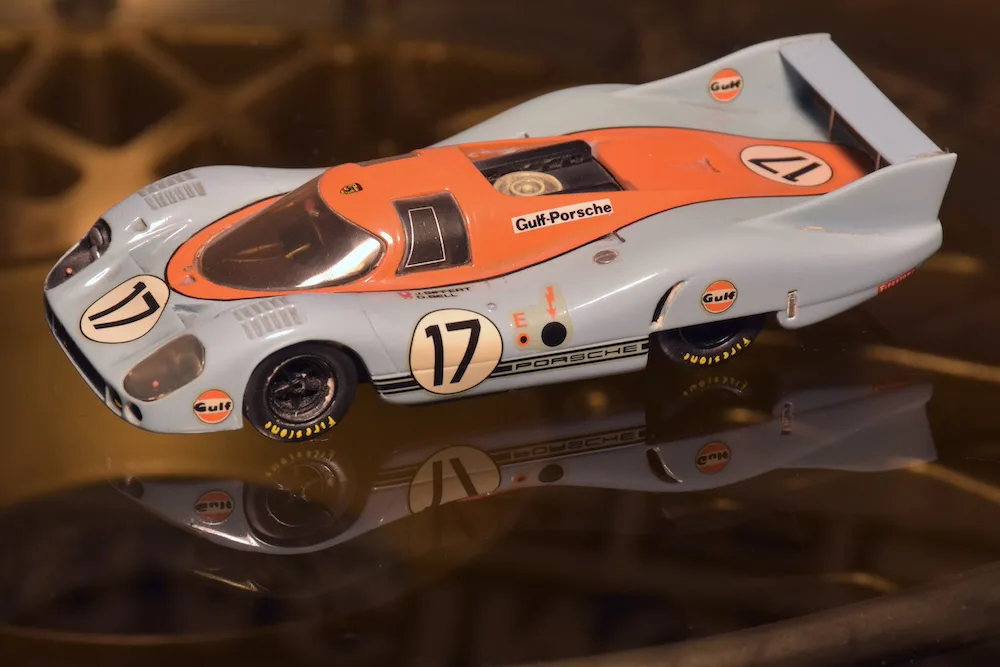
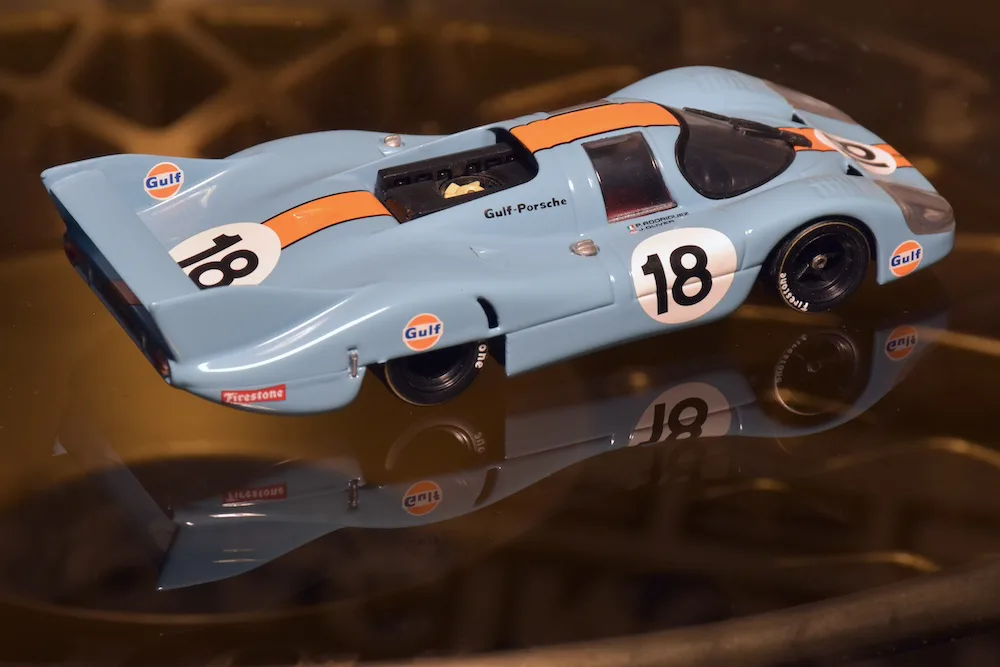
- #17 MARSH handbuilt kit (metal)
- Overall rating: 4 STARS | Quality details: 3 STARS | Estimated value: 2 STARS (headlight missing)
- #18 MINICHAMPS MC430 716718 (diecast)
- Overall rating: 3 STARS | Quality details: 3 STARS | Estimated value: 3 STARS
- Both also appear in #051 Gulf Porsche 908 & 917
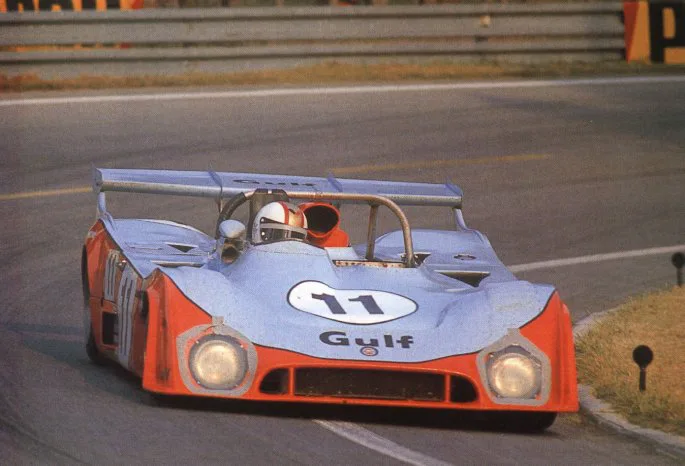
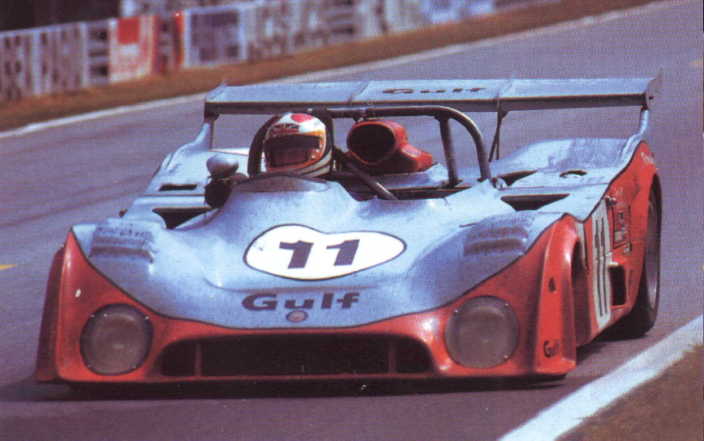
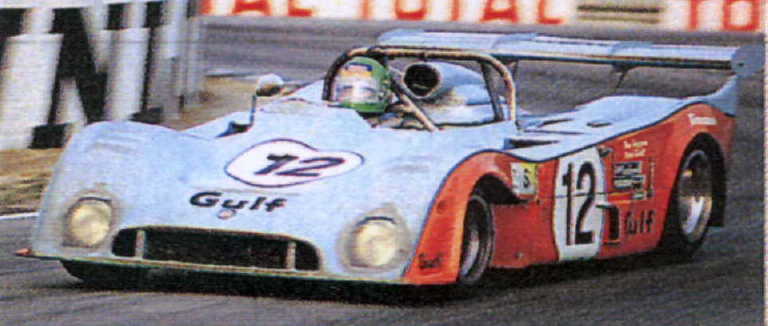
1974 Le Mans 24h, Mirage GR7 – Ford
After 1972, the big sports cars have disappeared from Le Mans. The 3-liter prototypes took over and Matra-Simca was the leading team with three wins in a row. The JWA Gulf Mirage which made its debut a year before was quit competitive but lacked some engine power compared to the screaming 12 cylinders from Matra. The Derek Bell driven Gulf Mirage finished 4th overall, the other retired.
Gulf Research Racing Company #11: Derek Bell (GB) / Mike Hailwood (GB)
Results: Start-grid 4th / time 3:41.300 / race 4th – 318 laps
Gulf Research Racing Company #12: Vern Schuppan (AUS) / Reine Wissell (S)
Results: Start-grid 3rd / time 3:41.200 / race DNF engine – 49 laps
Mirage GR7 – Group 6 <3L: Powered by 3.0 liter Ford Cosworth DFV – V8 90º, approx. 445 hp. Goodyear tires. Weight 680 kg. Aluminium monocoque, chassisnrs. #704 & #701
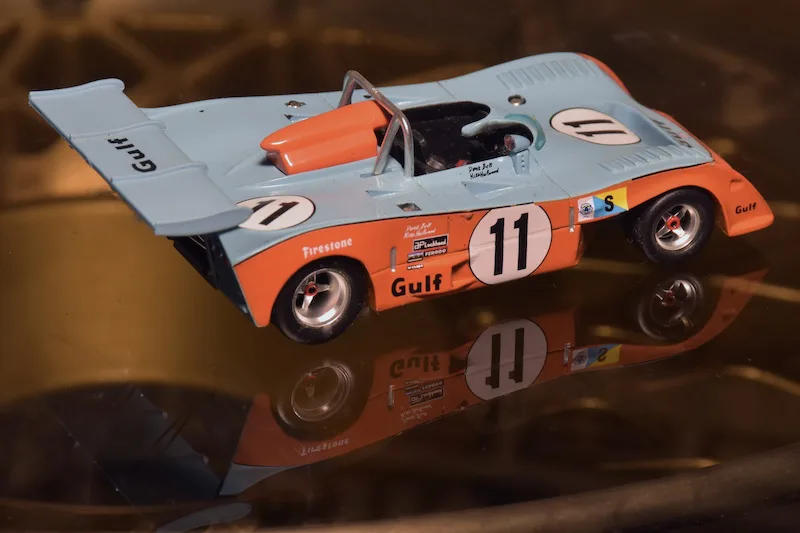
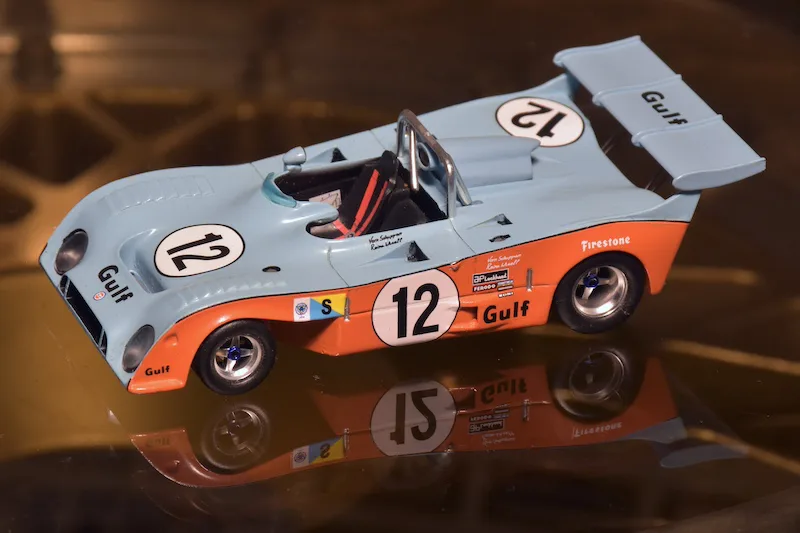
- SPARK STME 05 & STME 06 (resin)
- Overall rating: 4 STARS | Quality details: 3 STARS | Estimated value: 3 STARS
- Both also appear in #021 Ford GT40 & Mirage
1975 Le Mans 24h, Mirage GR8 – Ford
1975 Was a year in between of two era’s: Matra quit after 3 wins in a row and Porsche and Renault would come in 1976 with their new turbocharged cars. Team Gulf Mirage took their chances, also thanks to the two topdrivers Ickx and Bell and the fuel consumption rules that benefited the Cosworth V8 which was turned down in power.
Gulf Research Racing Company / JWA #11: Jacky Ickx (B) / Derek Bell (GB)
Results: Start-grid 1st / time 3:49.900 / race 1st – 337 laps
Mirage GR8 – Prototypes Group 6 <3L: Powered by Ford Cosworth DFV – V8 90º, approx. 385 hp (restricted). Goodyear tires. Weight 650 kg. Aluminium monocoque, chassisnrs. #801 & #802
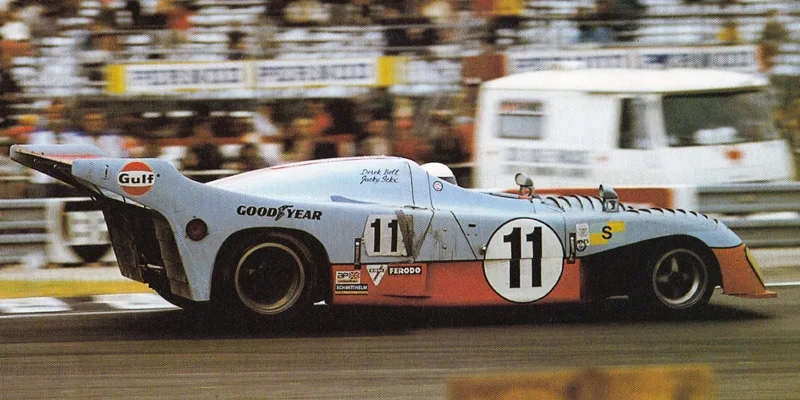
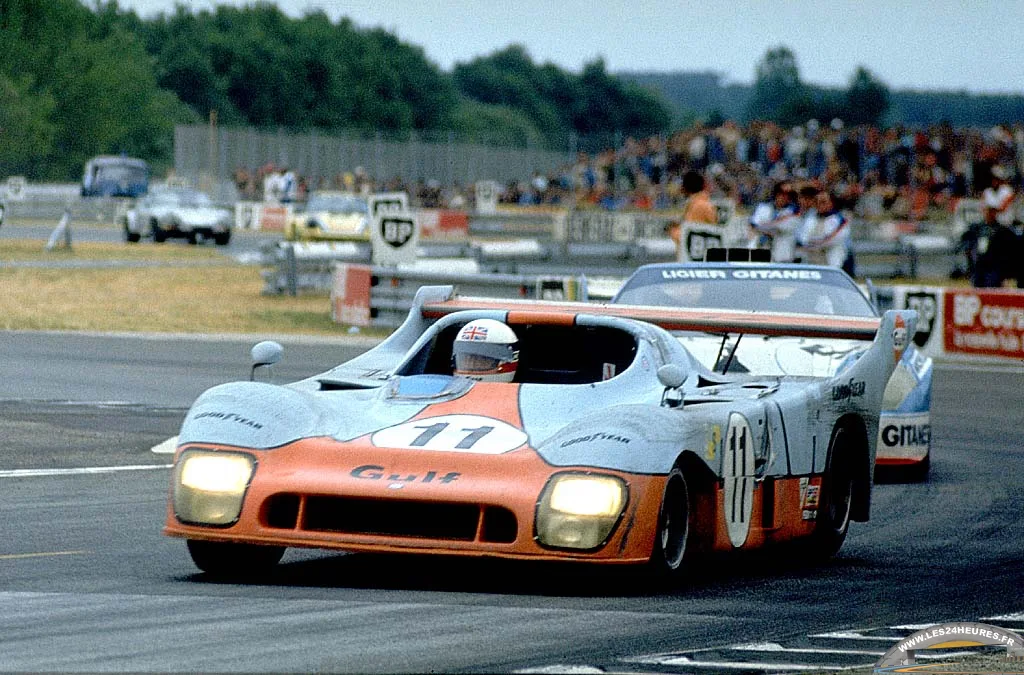
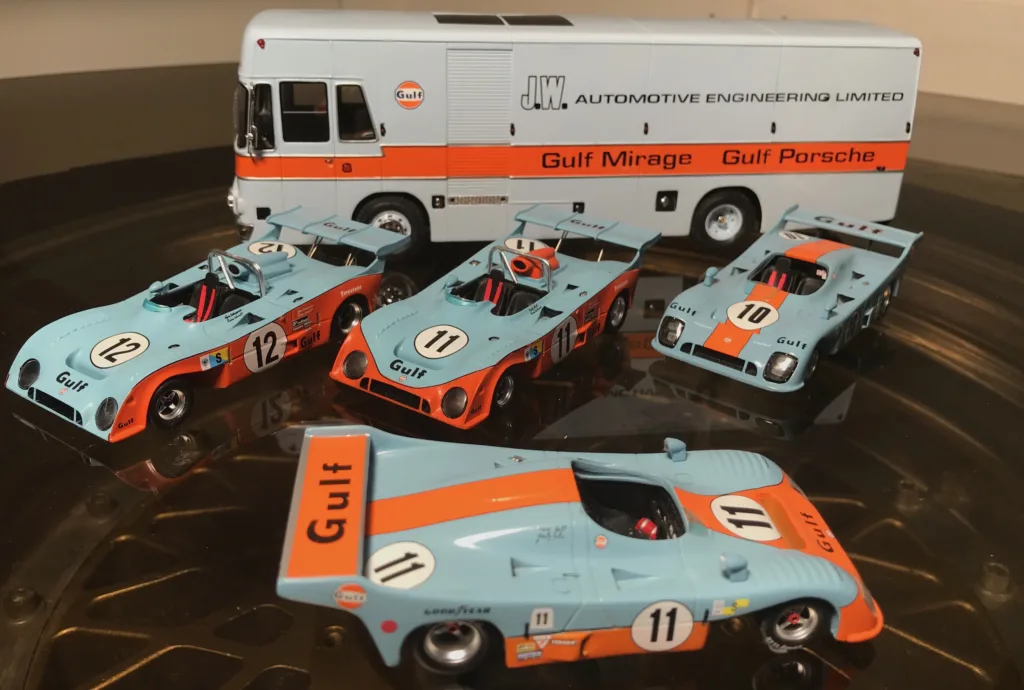
- SPARK STME 01 & STME 02 (resin)
- Overall rating: 4 STARS | Quality details: 3 STARS | Estimated value: 3 STARS
- Also appears in #021 Gulf Ford GT40 & Mirage / #115 Jacky Ickx
In between
1976 Le Mans 24h, Mirage GR8 – Ford
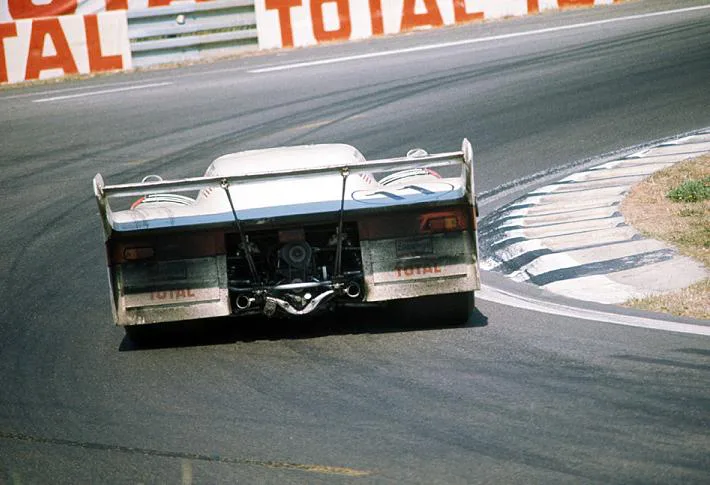
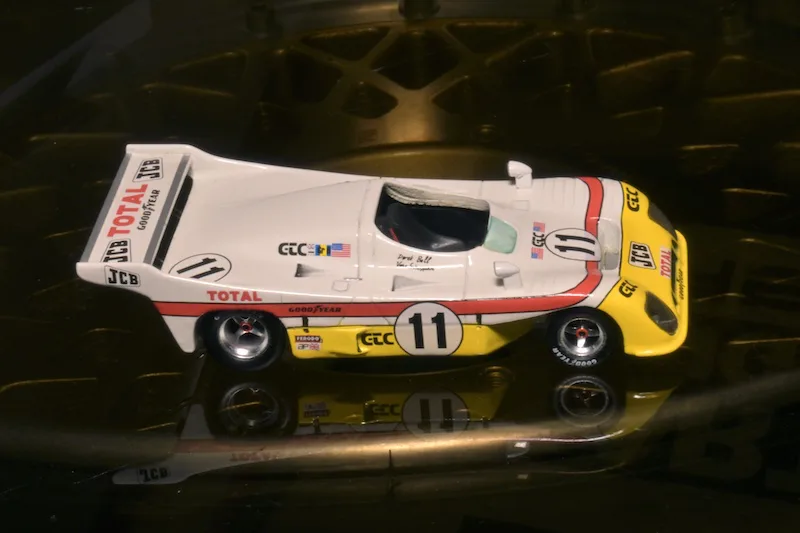
No-one expected the Mirage’s to be in front in 1976 however they won last year’s Le Mans. The competition was much stronger this year with factory teams from Renault and Porsche. Nevertheless the Mirage’s finished 2nd (#10, 11 laps behind) and 5th (#11, 23 laps behind), thanks to their reliability.
Grand Touring Cars Inc. #11: Derek Bell (GB) / Vern Schuppan (AUS)
Results: Start-grid 6th / time 3:48.100 / race 5th – 327 laps
Mirage GR8 – Prototypes Group 6 <3L: Powered by Ford Cosworth DFV – V8 90º, approx. 450 hp. Goodyear tires. Weight 650 kg. Aluminium monocoque, chassisnrs. #801
- SPARK STME04 (resin)
- Overall rating: 4 STARS | Quality details: 3 STARS | Estimated value: 3 STARS
- Only appears in this collection
1976 European Touring Car Championship Silverstone, Jaguar XJ12 Coupé
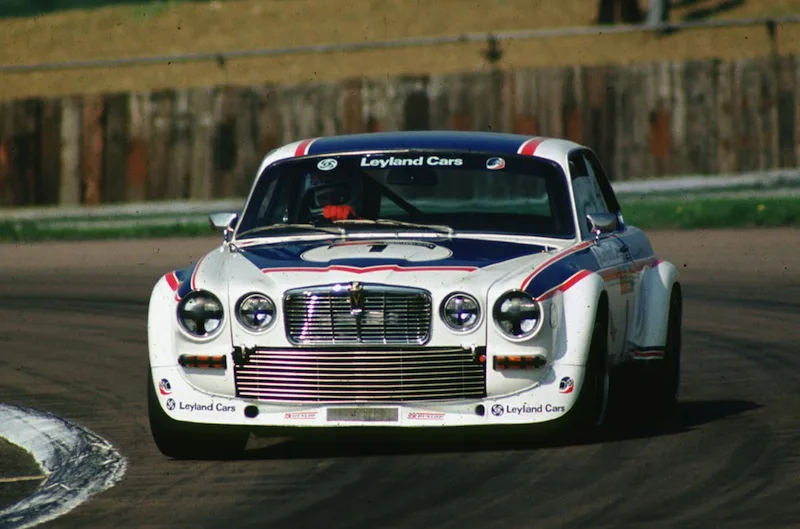
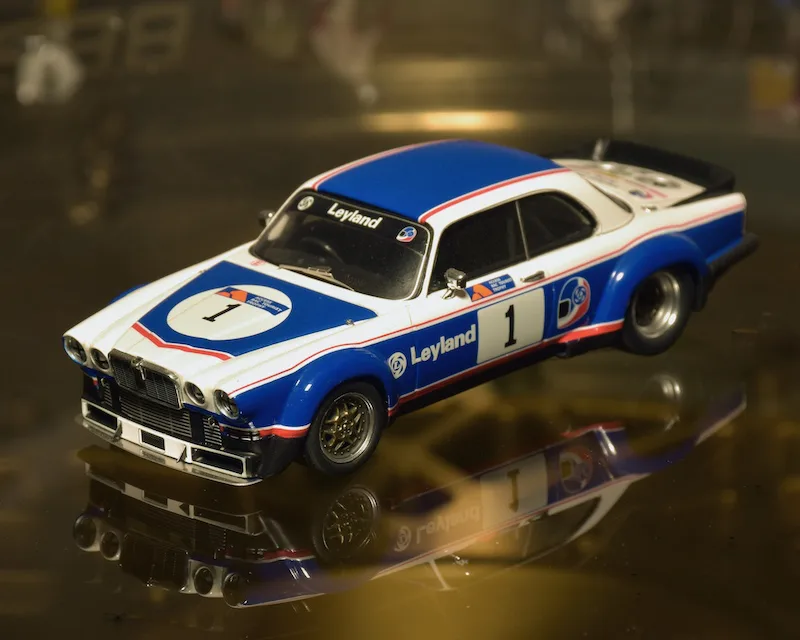
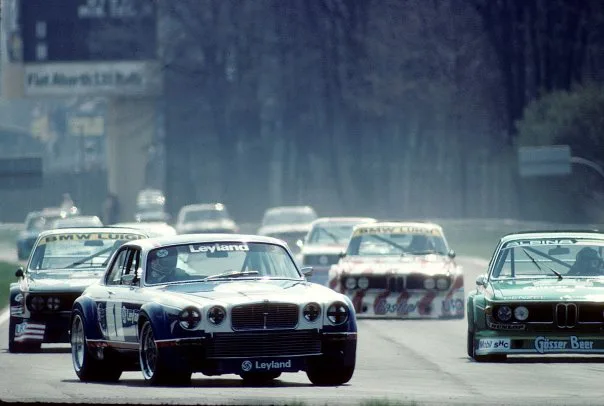
In 1976 the once very popular group 2 category had changed, factory teams from Ford, BMW and Alfa Romeo had left the European championship. Cars were slower than before; the technical regulations were changed to give room for the “everything is allowed class” group 5. Privateer teams contested the European championship, such as BelgianLuigi BMW that was dominating the over 3 liter class. Near the end of the season, at Silverstone, this Broadspeed prepared Jaguar appeared. It took pole position and the fastest lap but retired because a wheel came off … The plan was to contest the full 1977 season with 2 cars.
Broadspeed #1: Derek Bell (GB) / David Hobbs (GB)
Results: Start-grid 1st / time 1:36.720 / race DNF – 39 laps
Jaguar XJ12 Coupé – Group 2 ETCC: Powered by 5.3 liter Jaguar V12, approx. 540 hp. Dunlop tires. Weight 1325 kg. Steel monocoque, chassisnr. BELJC-001
- SPARK S0779 (resin)
- Overall rating: 5 STARS | Quality details: 4 STARS | Estimated value: 4 STARS
- Also appears in #041 British / #119 Touring cars
1977 European Touring Car Championship Silverstone, Jaguar XJ12 Coupé
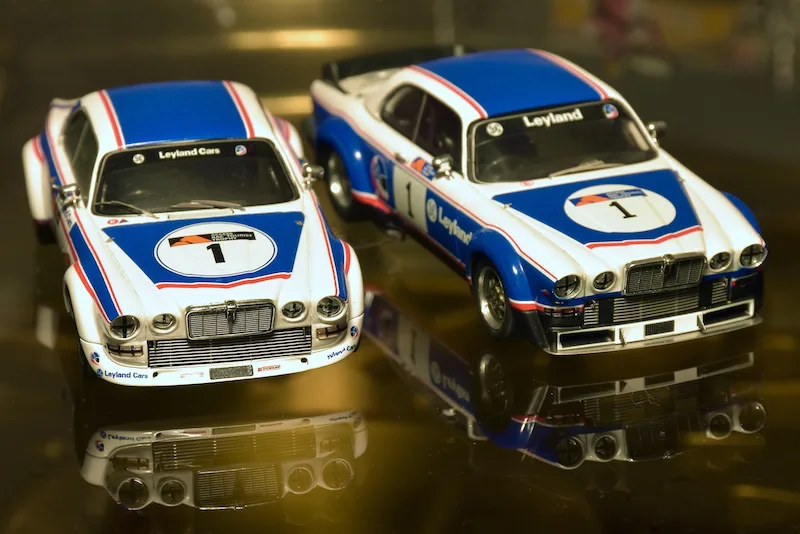
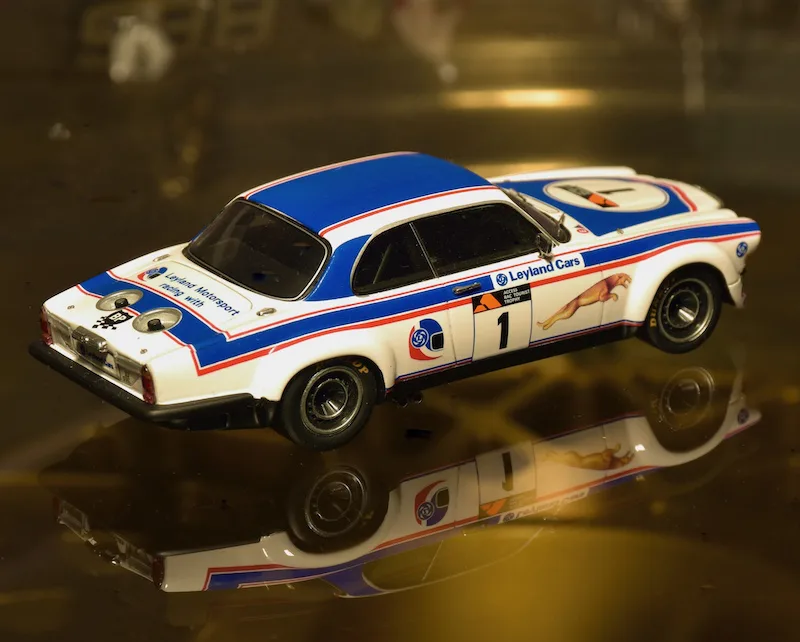
The Jaguar XJ12C made its debut in the Tourist Trophy at Silverstone in 1976. It took pole position and the fastest lap but retired. In 1977 the British wanted to campaign the entire ETCC season with a two car team, but it was a disaster. The big cats were much faster than the old BMW’s but retired almost every race; gearboxes, drive shafts, differentials, everything broke down. Also brakes were a problem, the cars were simply too heavy. A Jaguar reached the finish in only one occasion, 2nd at Nürburgring. At Silverstone the car retired just before the end, but still got classified 4th. Before end of the season British Leyland stopped the project.
Broadspeed #1: Derek Bell (GB) / Andy Rouse (GB)
Results: Start-grid 1st / time 1:36.050 / race DNF classified 4th – 98 laps
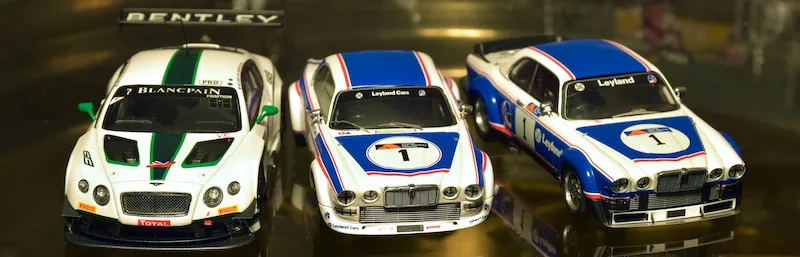
Jaguar XJ12 Coupé – Group 2 ETCC: Powered by 5.3 liter Jaguar V12, approx. 560 hp. Dunlop tires. Weight 1315 kg. Steel monocoque, chassisnr. BELJC-001
- SPARK S0779 (resin)
- Overall rating: 5 STARS | Quality details: 4 STARS | Estimated value: 4 STARS
- Also appears in #041 British / #119 Touring cars
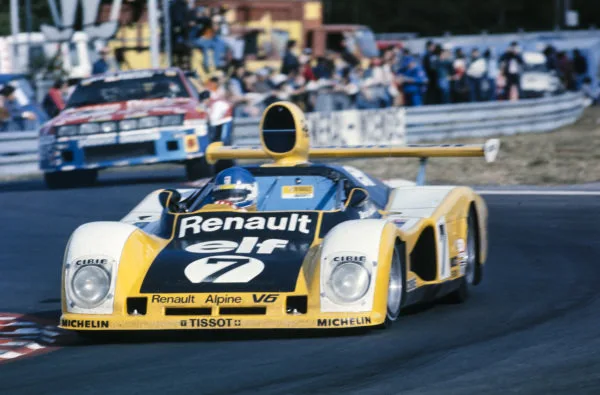
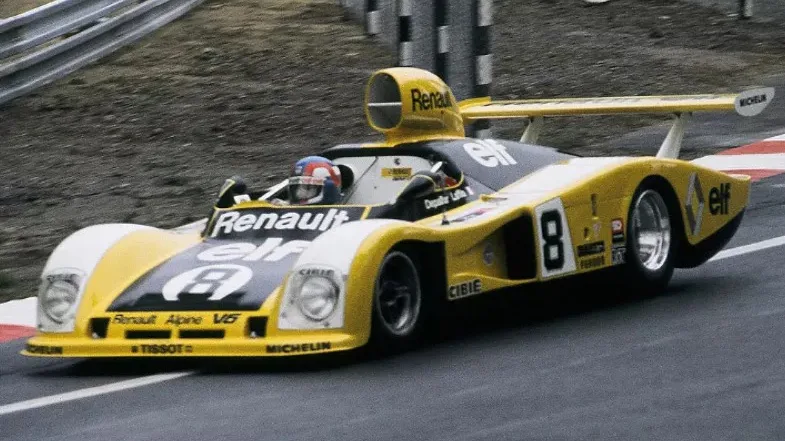
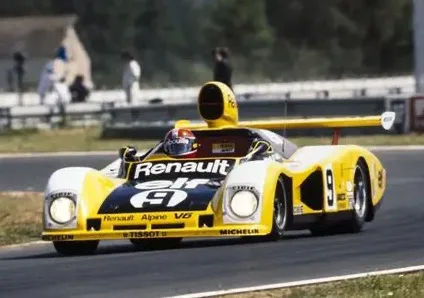
1977 Le Mans 24h, Renault Alpine A442 V6 turbo
The name has changed from Alpine-Renault to Renault Alpine and the main color was already Renault yellow instead of Alpine blue. Renault entered a single A442 last year which was very quick but retired. In 1977 they returned, now with 3 works cars and one for the team of Hughes de Chaunac that didn’t even last one lap. Again, the Alpines were the quickest, but Jacky Ickx in the Porsche 936 chased them until all of them retired.
Equipe Renault Elf #9: Jean-Pierre Jabouille (F) / Derek Bell (GB)
Results: Start-grid 1st / time 3:31.700 / race DNF engine – 257 laps
Renault Alpine A442- Group 6 <3L: Powered by .0 liter Renault Gordini V6 60º twin turbo, approx. 550 hp. Michelin tires. Weight 720 kg. Aluminium monocoque, chassisnr. #4423.
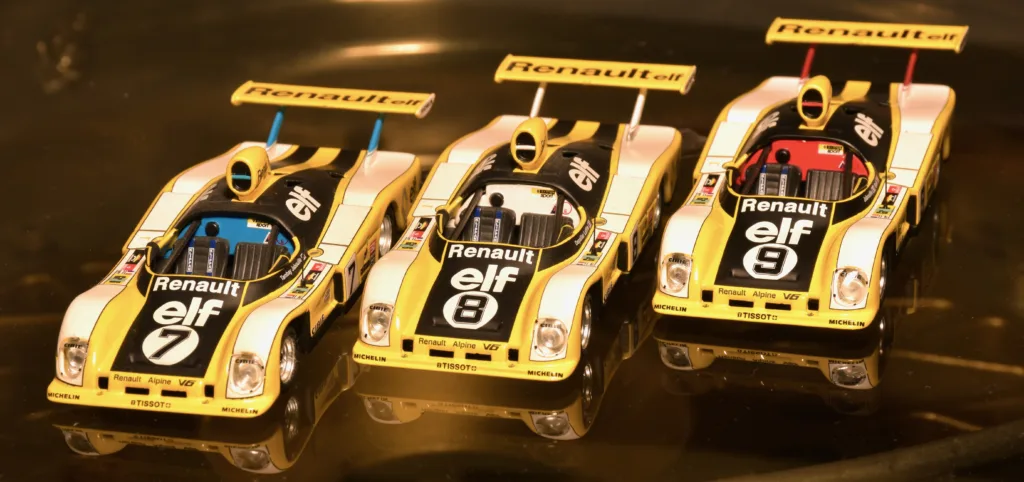
- IXO Classic Le Mans & GT Cars LMC042 / LMC043 / LMC 044 (diecast)
- Overall rating: 3 STARS | Quality details: 3 STARS | Estimated value: 2 STARS
- Also appears in #044 Renault & Alpine
1978 Silverstone 6h, Porsche 935/77A
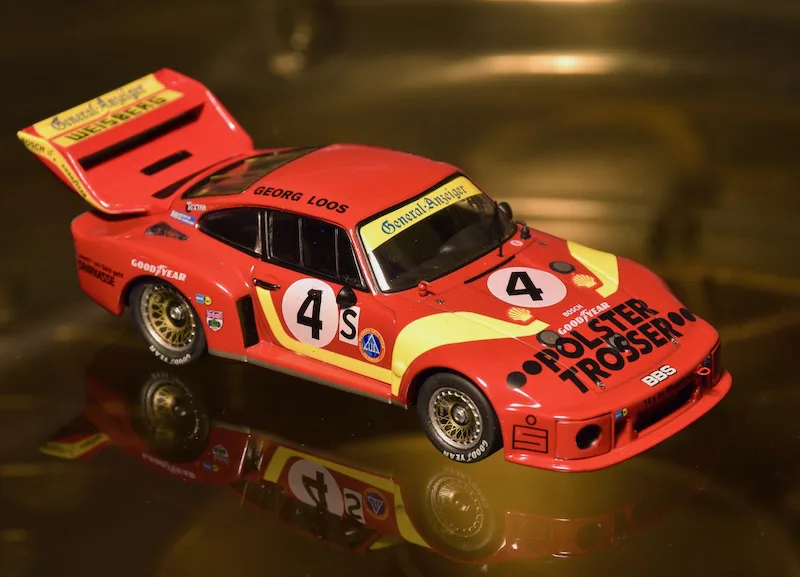
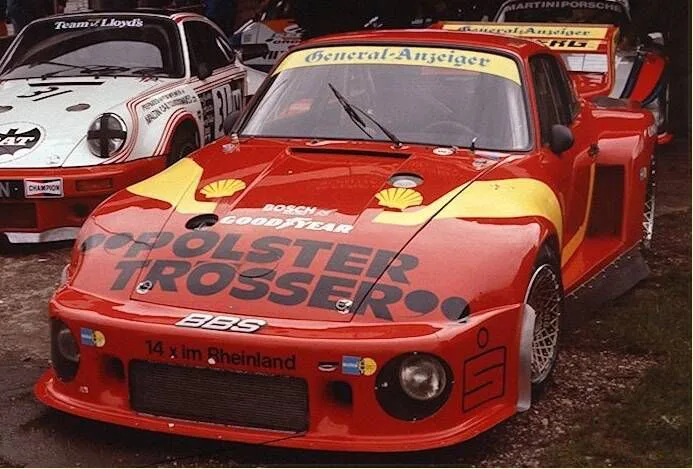
Silverstone was the last test before Le Mans for many teams. The Porsche factory team presented the awesome Moby Dick that made its debut by winning. Gelo Racing was present with three cars, two in the usual livery with Weisberg sponsorship and this one the livery that Ludwig used all season. Clearly not in preparation of Le Mans, because none of the cars had the same driver line-up that would be used next month in France. The next world championship race was the Nürburgring 1000 km and there Gelo Racing won with the same three drivers that would pilot the #47 a few weeks later.
Gelo Racing #4: Derek Bell (GB) / Hans Heyer (D) / Klaus Ludwig (D)
Results: Start-grid 4th / time 1:24.320 / race DNF – 111 laps
Porsche 935/77A – Group 5: Powered by 3.0 liter Porsche Type 930/78 – flat-6 turbo, approx. 630 hp. Goodyear tires. Weight 950 kg. Steel monocoque, chassisnr. #930 890 0020
- IXO GTM169 (diecast)
- Overall rating: 3 STARS | Quality details: 3 STARS | Estimated value: 3 STARS
- Also appears in #102 Gelo
Factory Porsche @ Le Mans
1980 Le Mans 24h, Porsche 924 Carrera GT
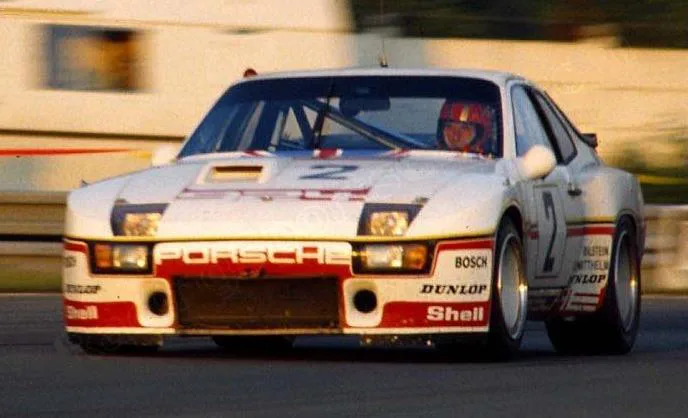
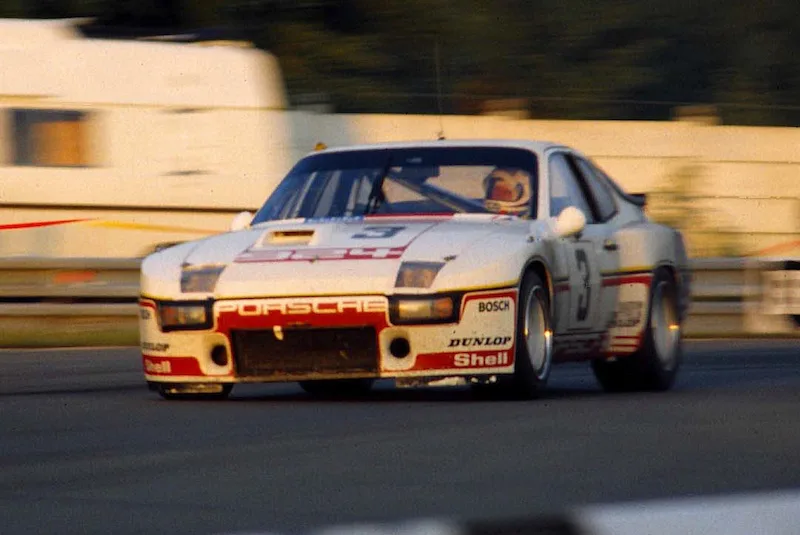
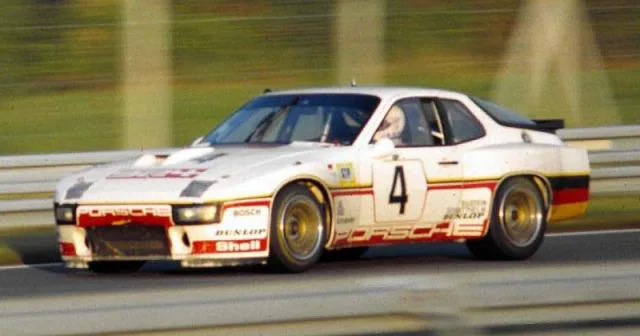
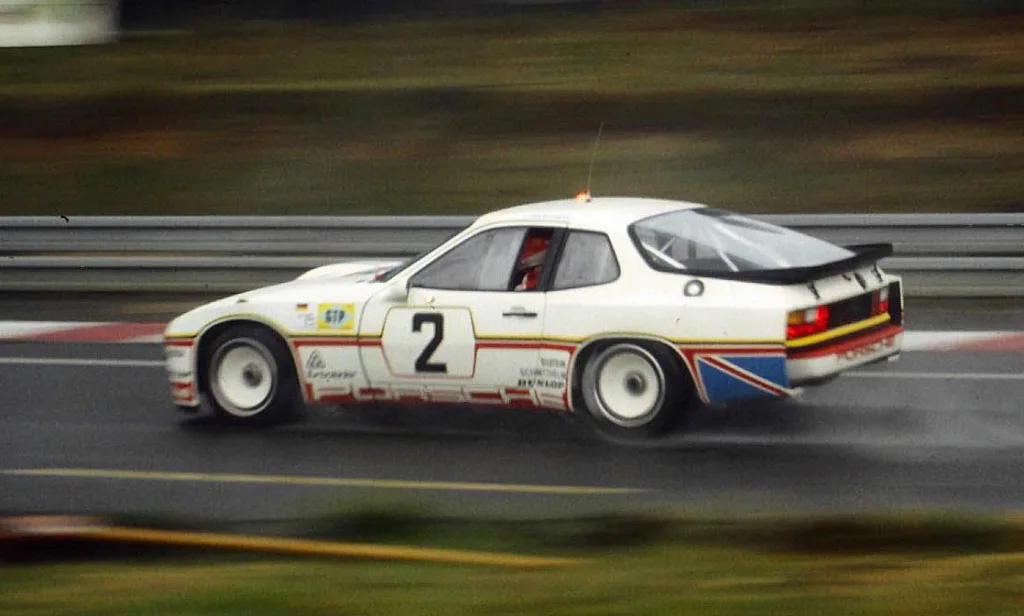
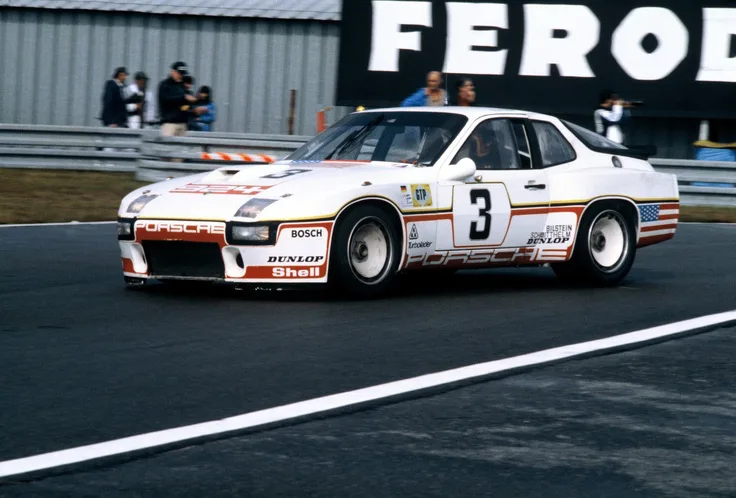
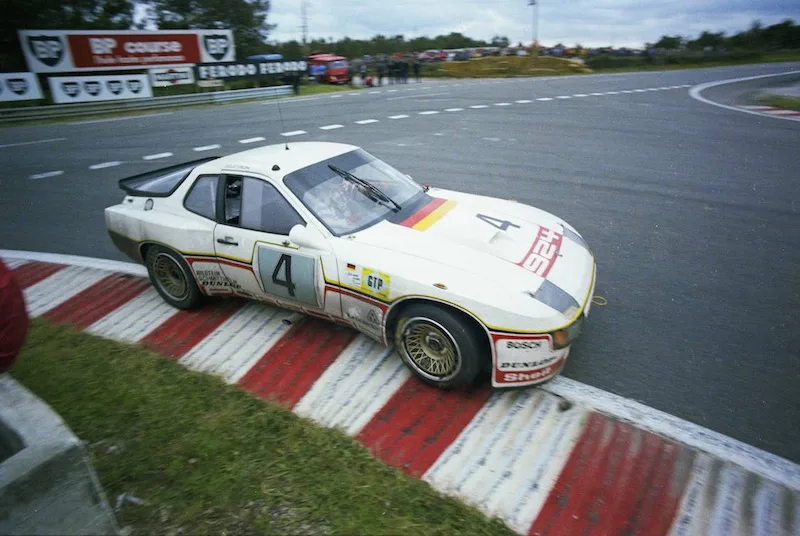
Porsche was in financial trouble, the sales of Porsche 924 and 924 turbo needed a boost. Porsche developed the 924 Carrera GT, a version with much more power and wider body work based on the 924 turbo. In 1980 Porsche System entered three 924 GTP’s for Le Mans using the 924 Carrera badge. The cars were entered in GTP, proved extremely reliable and did very well.
Porsche System #2: Andy Rouse (GB) / Tony Dron (GB)
Results: Start-grid 44th / time 4:16.500 / race 12th – 311 laps / 5th GTP
Porsche System #3: Derek Bell (GB) / Al Holbert (USA)
Results: Start-grid 34th / time 4:10.800 / race 13th – 306 laps / 6th GTP
Porsche System #4: Jürgen Barth (D) / Manfred Schurti (FL)
Results: Start-grid 46th / time 4:17.100 / race 6th – 317 laps / 3rd GTP
Porsche 924 Carrera GT – GTP: Powered by 2.0 liter Porsche M31.50 straight-4 turbo, approx. 340 hp. Dunlop tires. Weight 945 kg. Steel monocoque, chassisnrs. 924 GTP #002, #003 & #004
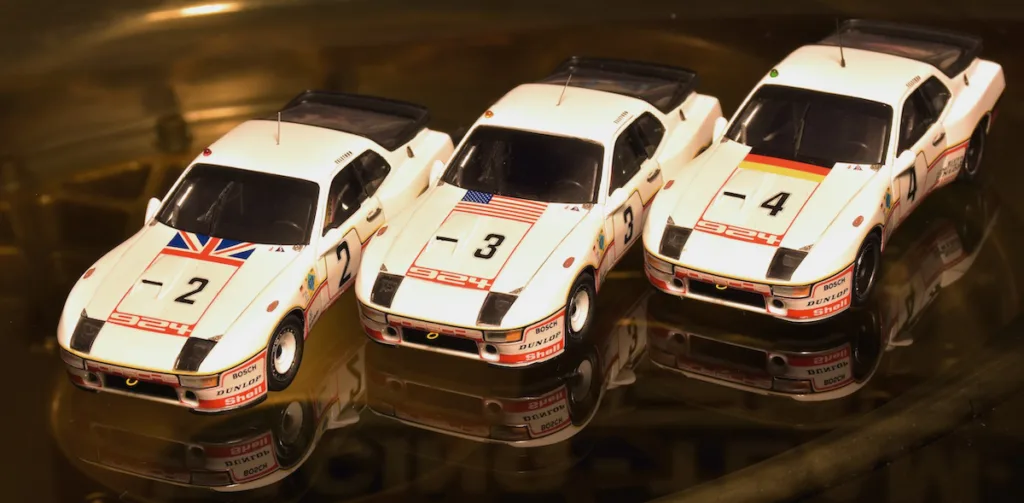
- SPARK S0982, S0983 & S0984 (resin)
- Overall rating: 4 STARS | Quality details: 4 STARS | Estimated value: 4 STARS
- Also appear in #070 Front-engined Porsches
1981 Le Mans 24h, Porsche 936/81
The ACO let go of the 3-liter formula (or 2.1 liter turbo) group 6 cars. Next year Group C would be the new standard and such cars with larger engine capacities were already allowed to participate this year. Porsche developed a 2.65 liter flat-6 engine for Indy cars, but because of a rule change in the USA they didn’t use it at that side of the ocean. Now it could be found in the back of the old 936s that made their come-back to Le Mans and it would power the next generation Porsche Group C cars also.
Porsche System #11: Jacky Ickx (B) / Derek Bell (GB)
Results: Start-grid 1st / time 3:29.440 / race 1st – 355 laps
Porsche 936/81 – Prototypes >2L: Powered by 2.65 liter Porsche 935/82 flat-6 twin-turbo, approx. 620 hp (@ 1.4 bar). Dunlop tires. Weight 860 kg. Steel space frame, chassisnr. 936 #003 & #001
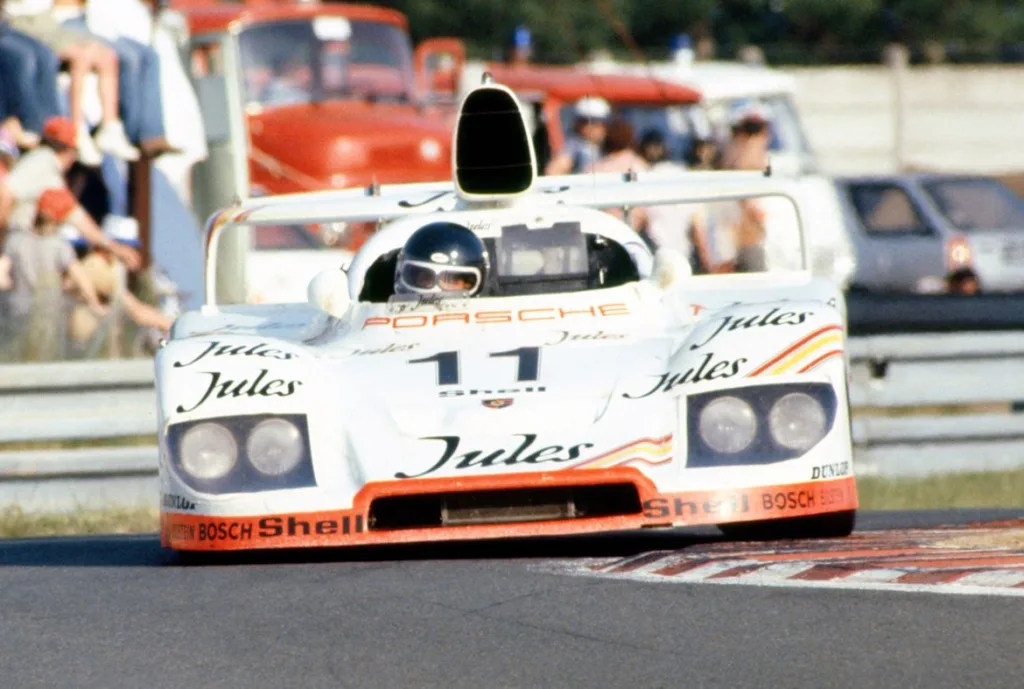
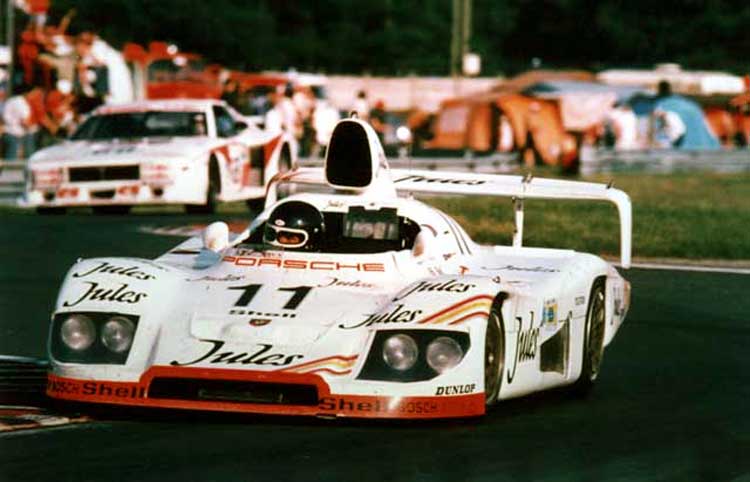
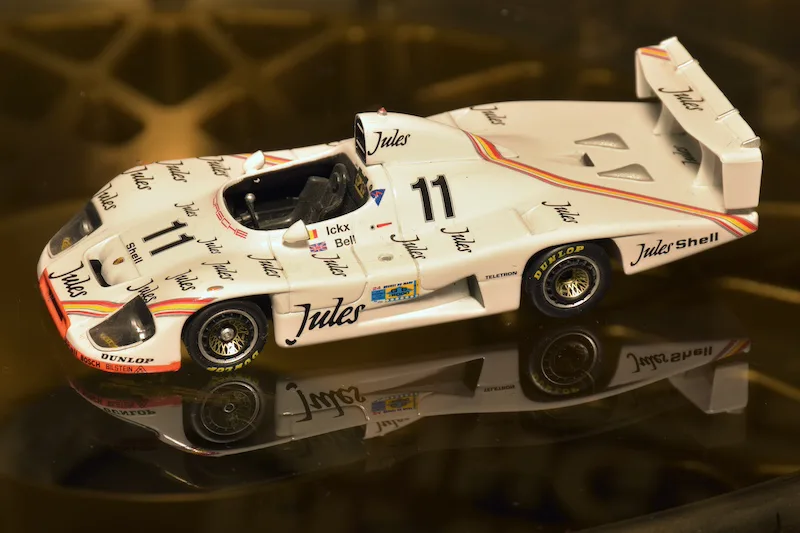
- MINICHAMPS MC430 816911 & MC430 816912 (diecast)
- Overall rating: 3 STARS | Quality details: 3 STARS | Estimated value: 3 STARS
- #11 also appears in #115 Jacky Ickx / #071 Porsche 936 factory cars
1982 Le Mans 24h, Porsche 956L
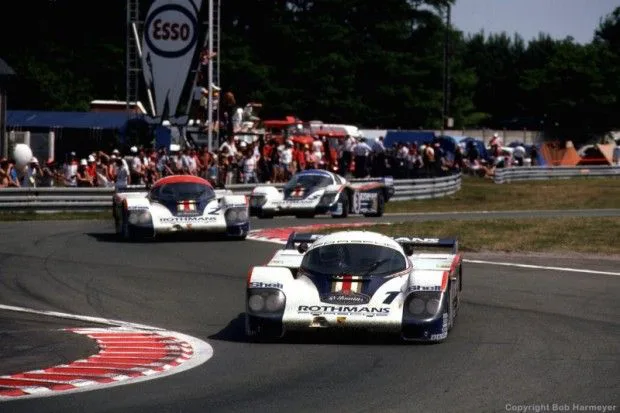
Porsche presented its new racing car just weeks before the 24h Le Mans. The Group C 956 was a new concept for Porsche. The engine – originally developed for Indianapolis – was already successful at Le Mans in 1981. But the rest of the car was brand new; an aluminium monocoque chassis with ground effect instead of the tubular space frames that all of its predecessors used. But the car was fuel efficient (important in Group C), fast and reliable which lead to a historic triple win.
Porsche System #1: Jacky Ickx (B) / Derek Bell (GB)
Results: Start-grid 1st / time 3:28.400 / race 1st – 359 laps
Porsche 956L – Group C: Powered by 2.65 liter Porsche 935/79 flat-6 twin-turbo, approx. 620 hp. Dunlop tires. Weight 840 kg. Aluminum monocoque, chassisnrs. #002
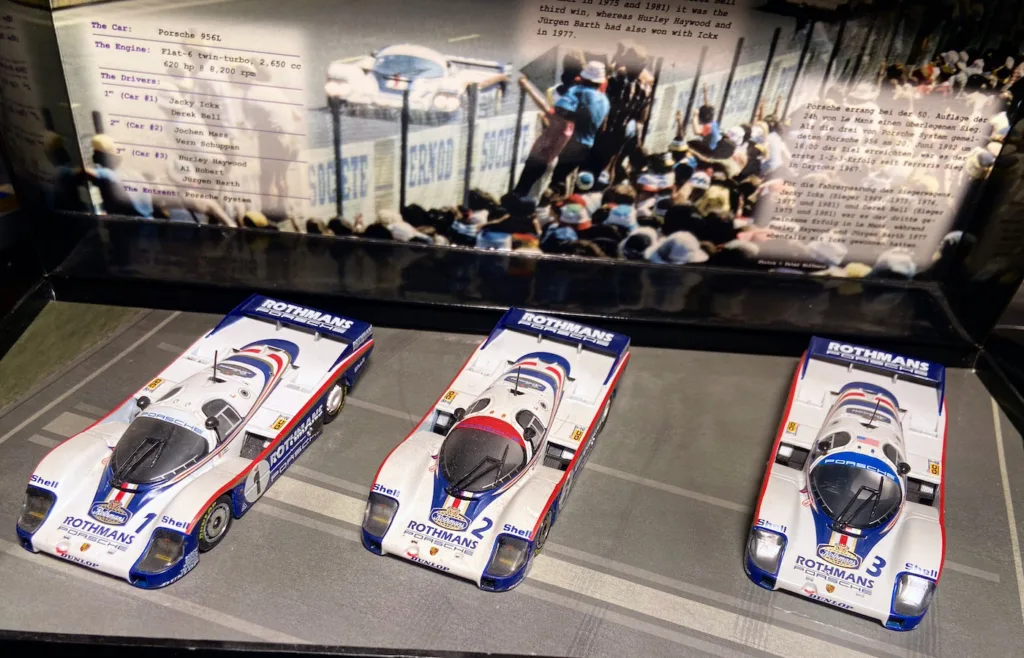

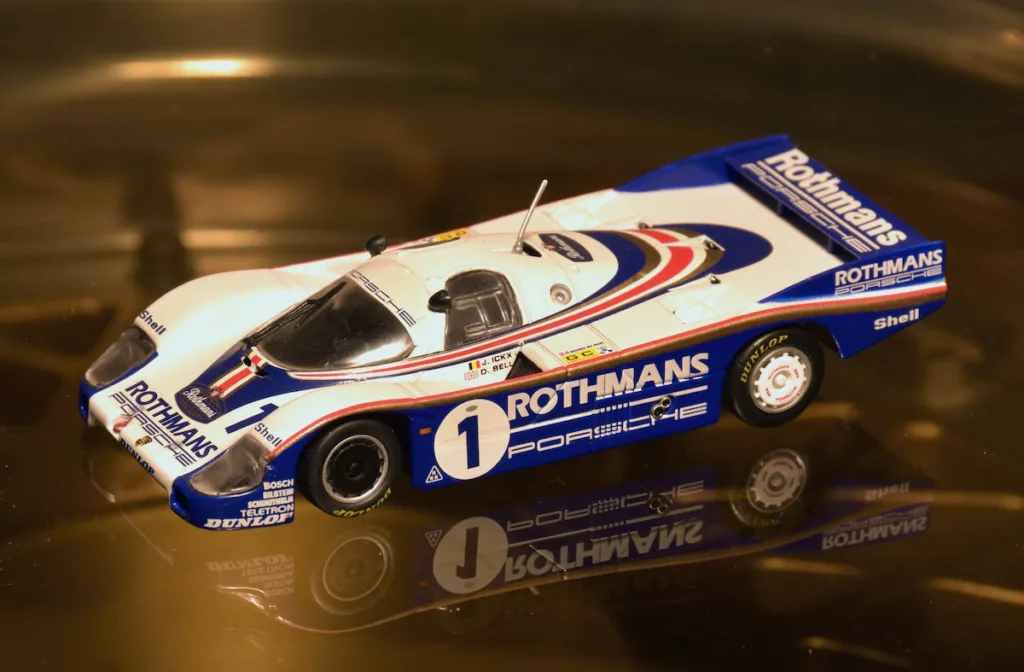
- MINICHAMPS MC402 826503 a 3-car presentation box #5114 / 5832 pcs (diecast)
- Overall rating: 3 STARS | Quality details: 3 STARS | Estimated value: 4 STARS
- QUARTZO Q3055 (diecast)
- Overall rating: 3 STARS | Quality details: 2 STARS | Estimated value: 3 STARS
- Both also appear in #026 Rothmans Porsche / #115 Jacky Ickx
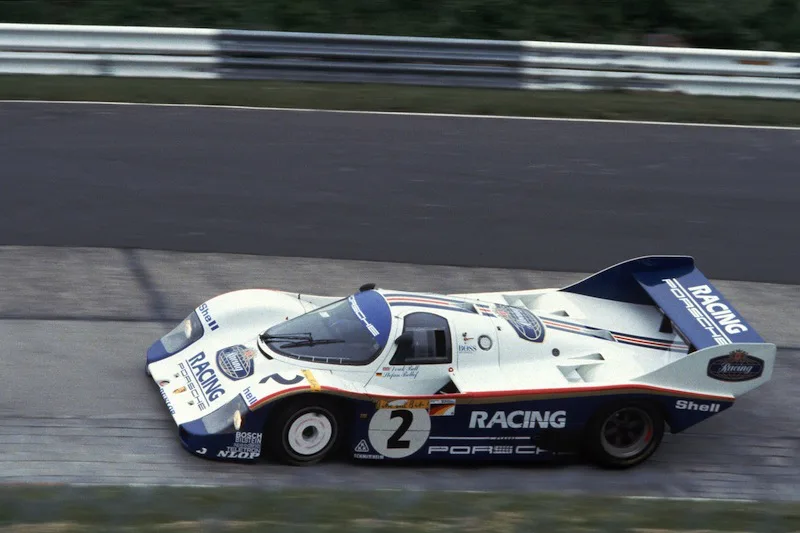
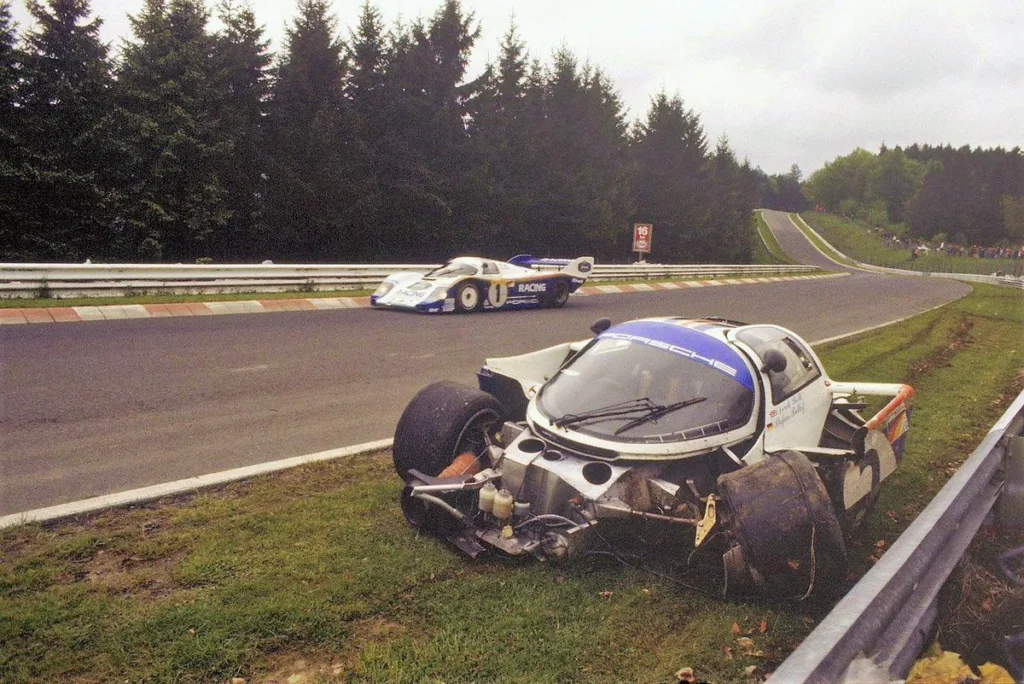
1983 Nürburgring 1000 km, Porsche 956K
Jacky Ickx and Jochen Mass won in front of the privateer Porsches from Joest and Richard Lloyd. Bellof crashed the #2 car early in the race. Before that, het set a pole-position record of 6:11.13 which still stands. Also, his fastest race lap of 6:25.91 is still the official race record on the Nordschleife.
Rothmans Porsche #2: Stefan Bellof (D) / Derek Bell (GB)
Results: Start-grid 1st / time 6:11.130 / race DNF crash – 19 laps
Porsche 956K – Group C1: Powered by 2.65 liter Porsche 935/79 flat-6 twin turbo, approx. 640 hp. Dunlop tires. Weight 840 kg. Aluminum monocoque, chassisnr. #007
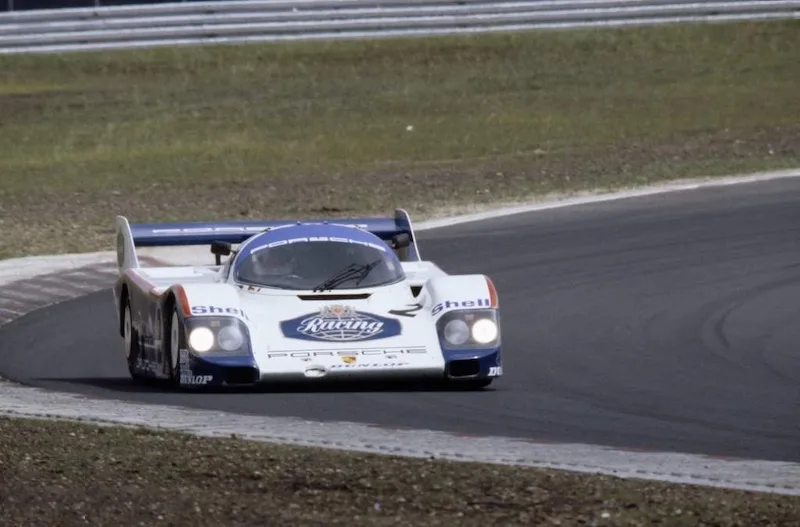
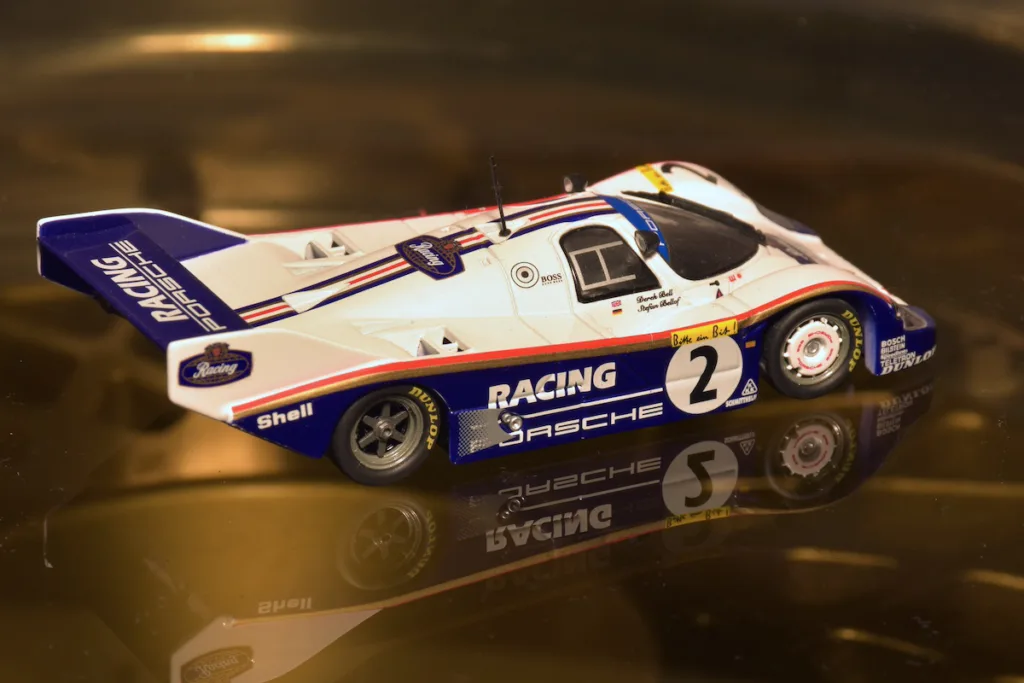
- MINICHAMPS MC402 836602 (diecast)
- Overall rating: 3 STARS | Quality details: 3 STARS | Estimated value: 3 STARS
- Also appears in #026 rothmans Porsche / #108 Stefan bellow
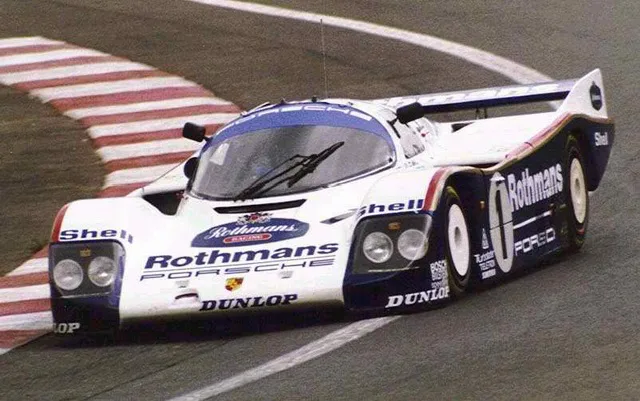
1986 Le Mans 24h, Porsche 962C
The Rothmans Porsche 962C was back on top. The #1 car took victory ahead of 6 other Porsches. The #2 retired after an accident.
Rothmans Porsche #1: Hans J. Stuck (D) / Derek Bell (GB) / Al Holbert (USA)
Results: Start-grid 2nd / time 3:16.600 / race 1st – 368 laps
Porsche 962C – Group C1: Powered by .8 liter Porsche 935/82 flat-6 twin turbo, approx. 650 hp. Dunlop tires. Weight 860 kg. Aluminum monocoque, chassisnr. #009
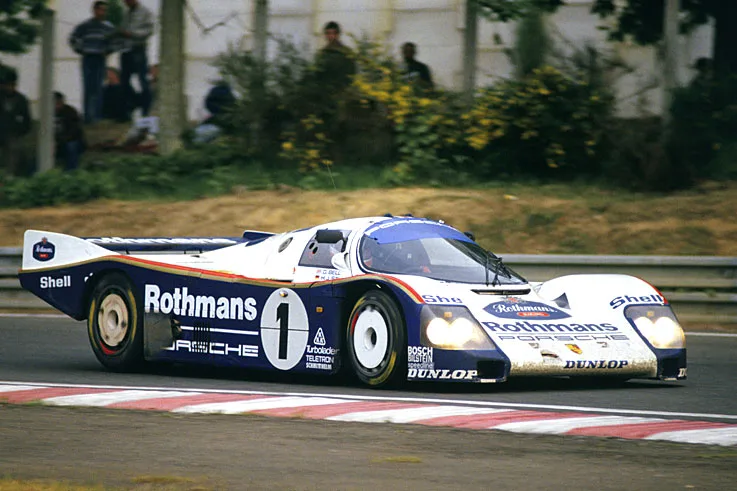
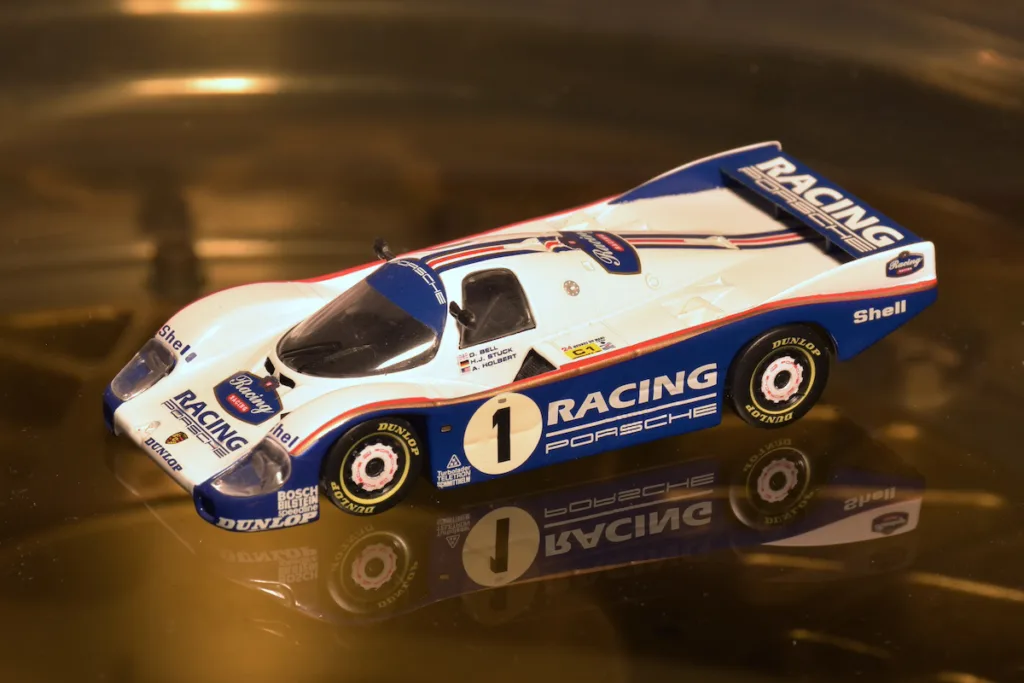
- #1 IXO – Altaya 100 ans de sport automobile 22 non-tobacco version (diecast)
- Overall rating: 3 STARS | Quality details: 2 STARS | Estimated value: 2 STARS
- Also appears in #026 Rothmans Porsche
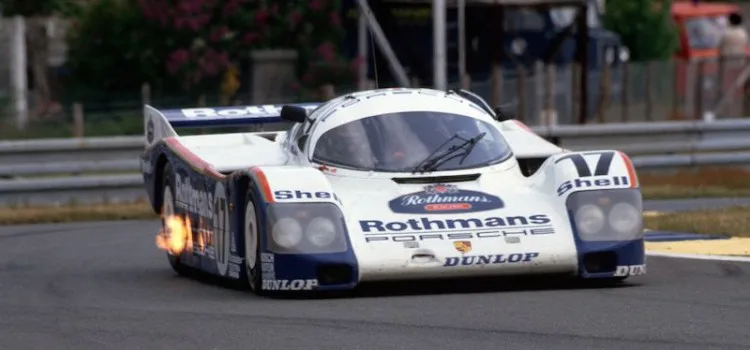
1987 Le Mans 24h, Porsche 962C
Only twelve cars reached the finish in this year’s 24 hour race at Le Mans. The #17 factory Porsche with Hans J. Stuck / Derek Bell / Al Holbert took a convincing win 20 laps over the second placed Primagaz Porsche. Must have been quite boring for the spectators …
Porsche AG #17:Hans J. Stuck (D) / Derek Bell (GB) / Al Holbert (USA)
Results: Start-grid 2nd / time 3:21.130 / race 1st – 355 laps
Porsche 962C – Group C1: Powered by 3.0 liter Porsche 935/82 flat-6 twin turbo, approx. 670 hp. Dunlop tires. Weight 860 kg. Aluminum monocoque, chassisnr. #006
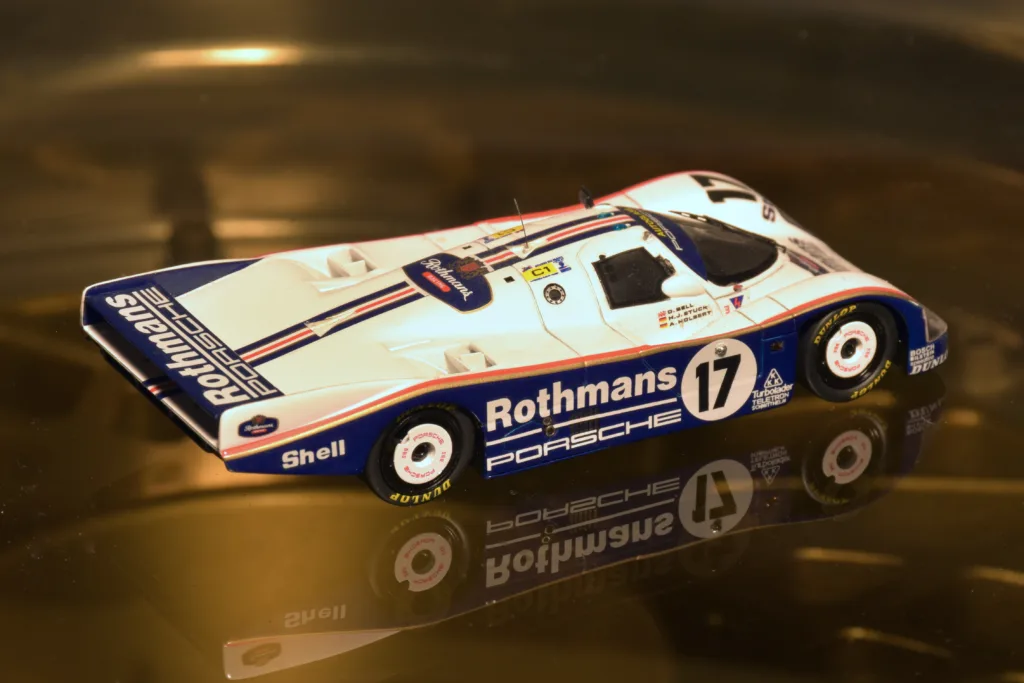
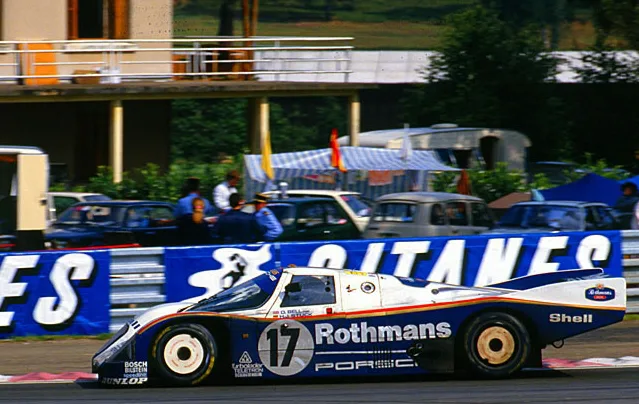
- SPARK S0942 (resin)
- Overall rating: 4 STARS | Quality details: 4 STARS | Estimated value: 4 STARS
- Also appears in #120 Derek Bell
1988 Le Mans 24h, Porsche 962C
The factory Porsche 962C that was succesful in 1986 and 1987 with Stuck and Bell. This year Klaus Ludwig joined, forming an even stronger line up. Despite this, the #17 team finished 2nd this year behind the Jaguar of Dutchman Jan Lammers.
Porsche AG #17: Hans J. Stuck (D) / Klaus Ludwig (D) / Derek Bell (GB)
Results: Start-grid 1st / time 3:15.640 / race 2nd – 394 laps
Porsche 962C – Group C1: Powered by 3.0 liter flat-6 turbo – approx. 700 hp. Dunlop tires. Weight 860 kg. Aluminum monocoque, chassisnr. # 962-010
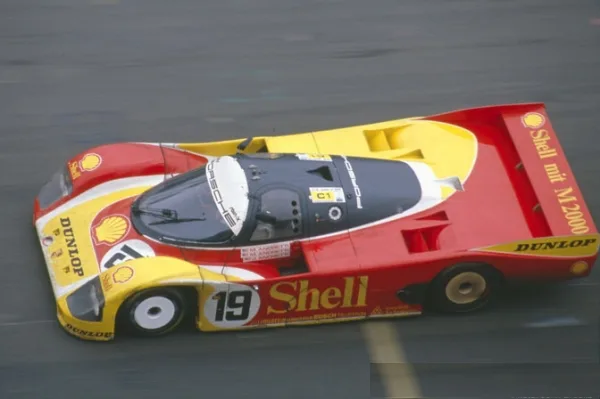
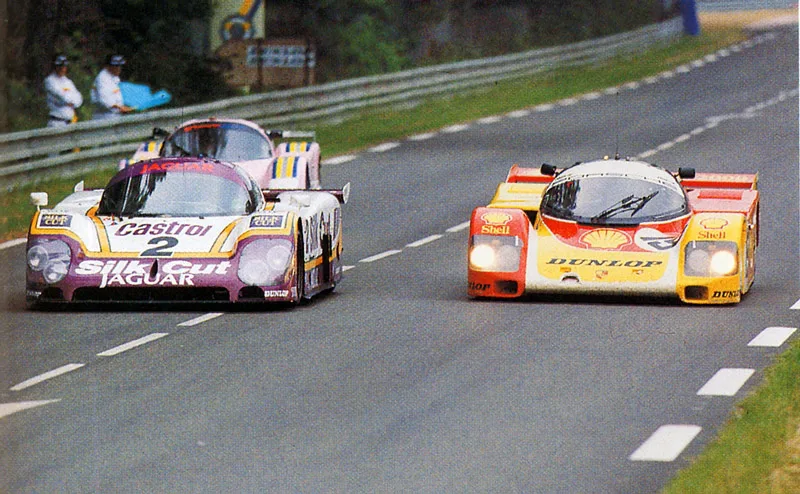
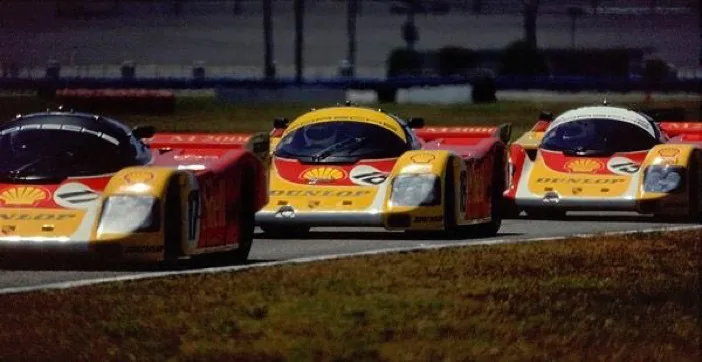
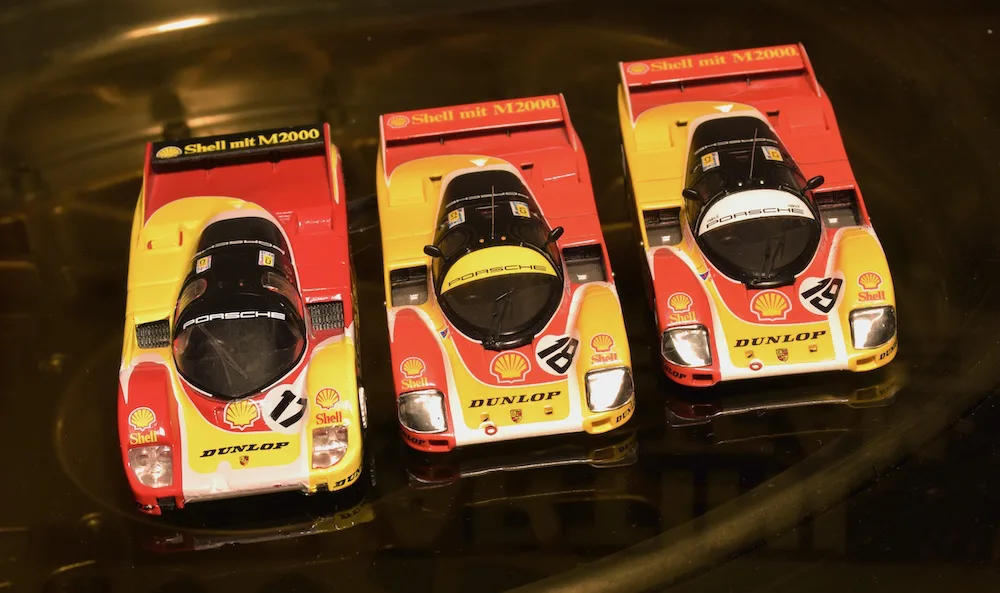
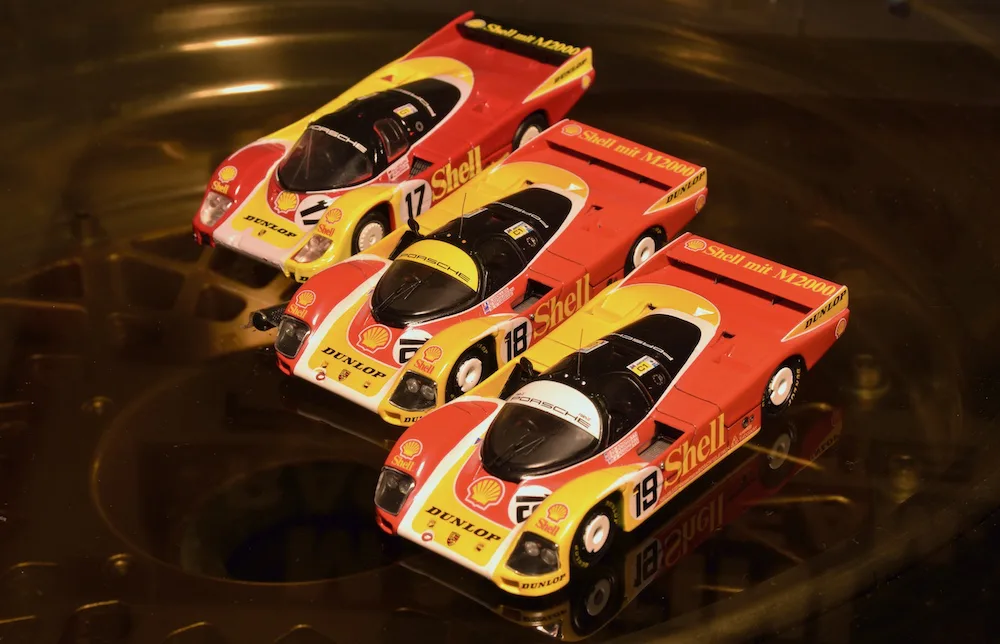
- ONYX 15 (#17 diecast)
- Overall rating: 2 STARS | Quality details: 2 STARS | Estimated value: 2 STARS
- Also appears in #060 Shell
Privateer teams @ Le Mans
1990 Le Mans 24h, Porsche 962C
However the Porsche factory did not compete, a record number of 19 Porsche 962’s started in Le Mans this year. Joest Racing entered four cars of which only three started, this was the best with a fourth place.
Joest Porsche Racing #7: Hans-Joachim Stuck (D) / Frank Jelinski (D) / Derek Bell (GB)
Results: Start-grid 6th / time 3:36.080 / race 4th – 350 laps
Porsche 962C – Group C1: Powered by 3.0 liter Porsche 935/79 Flat-6 twin turbo, approx. 670 hp. Goodyear tires. Weight 840 kg. Aluminum monocoque, chassisnr. #962 015
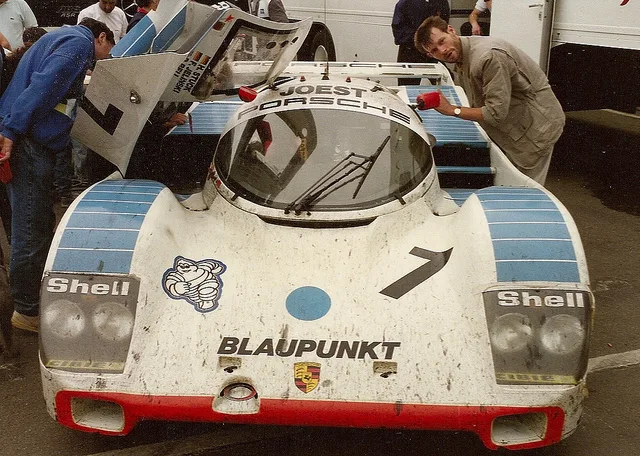
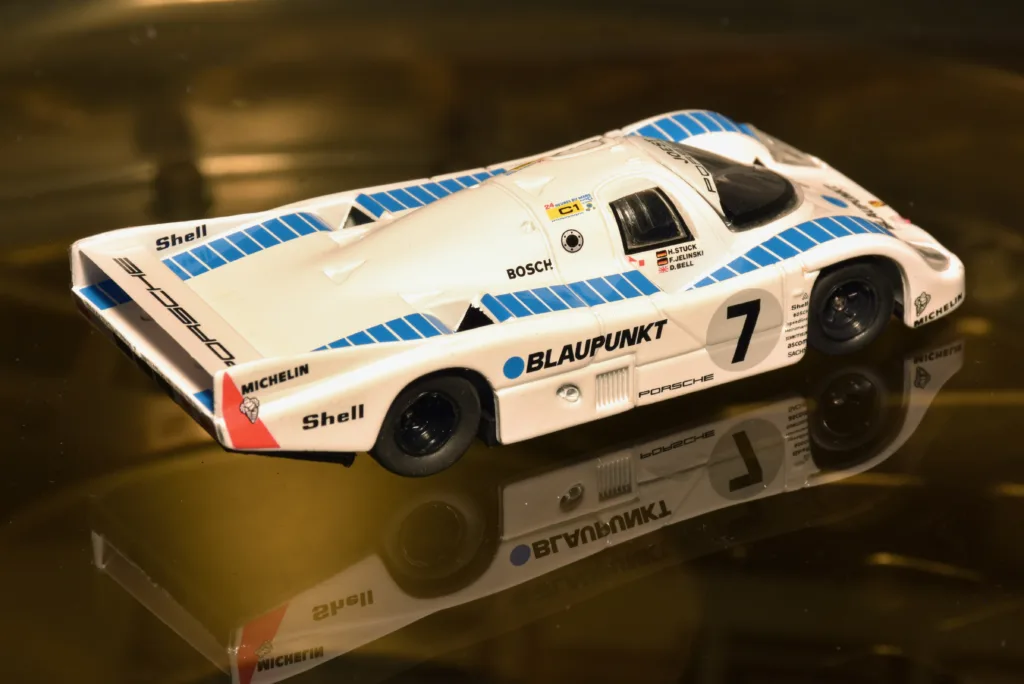
- ONYX 44 (diecast)
- Overall rating: 2 STARS | Quality details: 1 STARS | Estimated value: 2 STARS
- Also appears in #052 Joest Porsche 956 & 962
1991 Le Mans 24h, Porsche 962C
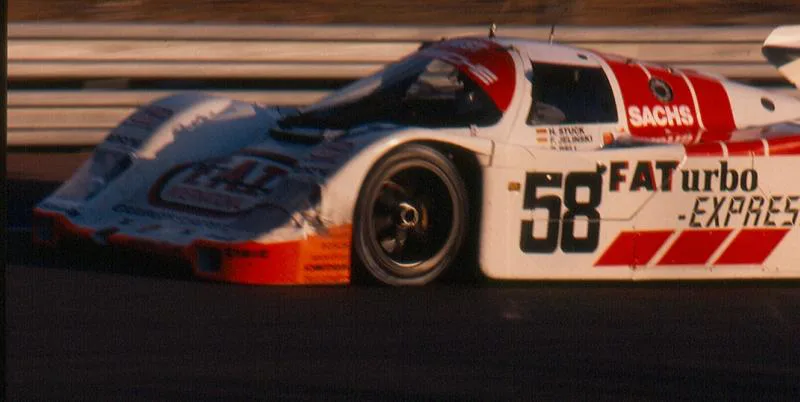
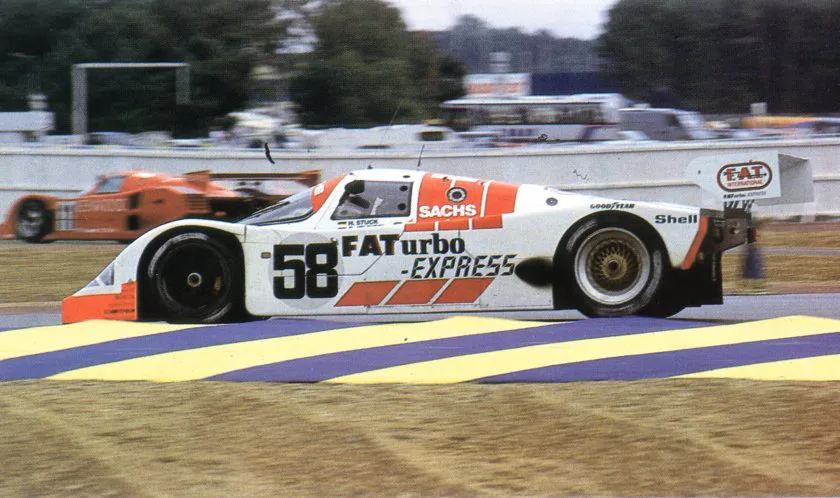
Konrad Motorsport and Joest partnered up for Le Mans. Konrad entered the Joest car (and drivers) for Le Mans and finished 7th, 1st of the Porsches.
Konrad Motorsport / Joest Porsche #58: Hans J. Stuck (D) / Frank Jelinski (D) / Derek Bell (GB)
Results: Start-grid 16th / time 3:40.526 / race 7th – 348 laps
Porsche 962C – Group C, category 2: Powered by 3.2 liter Porsche 935/82 flat-6 twin turbo, approx. 700 hp. Goodyear tires. Weight 900 kg. Aluminum monocoque, chassisnr. #106
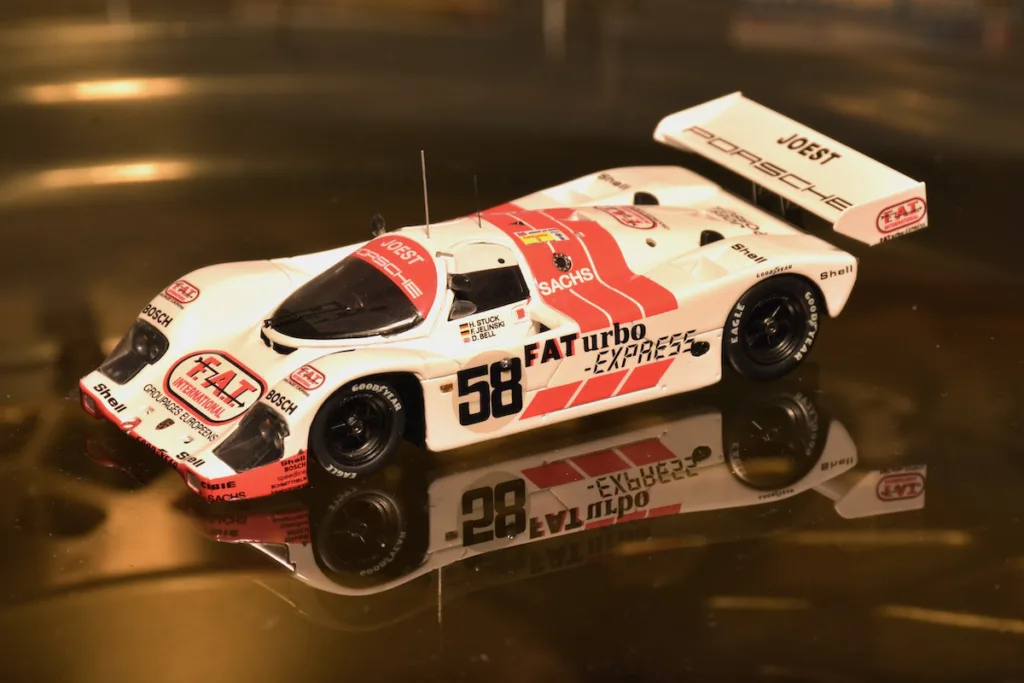
- SPARK S1915 (resin)
- Overall rating: 4 STARS | Quality details: 4 STARS | Estimated value: 4 STARS
- Also appears in #048 FATurbo / #052 Joest Porsche 956 & 962
1993 Le Mans 24, Courage C30LM – Porsche
Yves Courage had the opportunity to get the experienced Derek Bell for the 1993 Le Mans. He and his team mates managed a fine 10th place overall and 5th in the Cat.2 for older turbo-charged Group C cars. The sister car finished one place behind them.
Courage Compétition #14: Derek Bell (GB) / Lionel Robert (F) / Pascal Fabre (F)
Results: Start-grid 11th / time 3:42.590 / race 10th – 348 laps / 5th cat 2
Courage C30LM – Group C, cat.2. Powered by 3.0 liter Porsche 935/76 flat-6 twin turbo, approx. 600 hp. Goodyear tires. Weight 940 kg. Carbon fibre monocoque, chassisnr. C30 #011

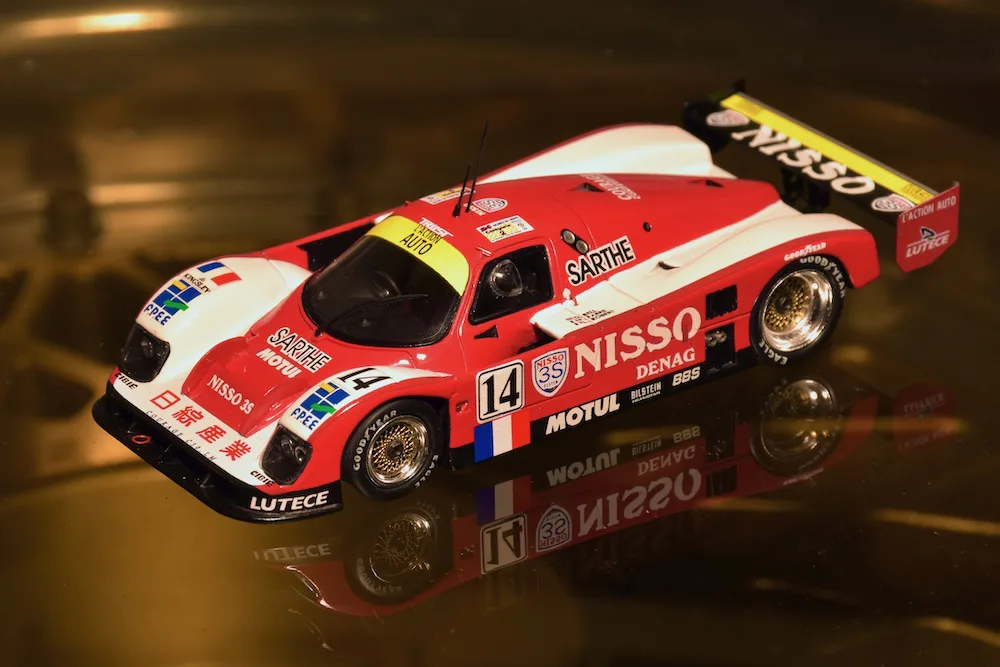
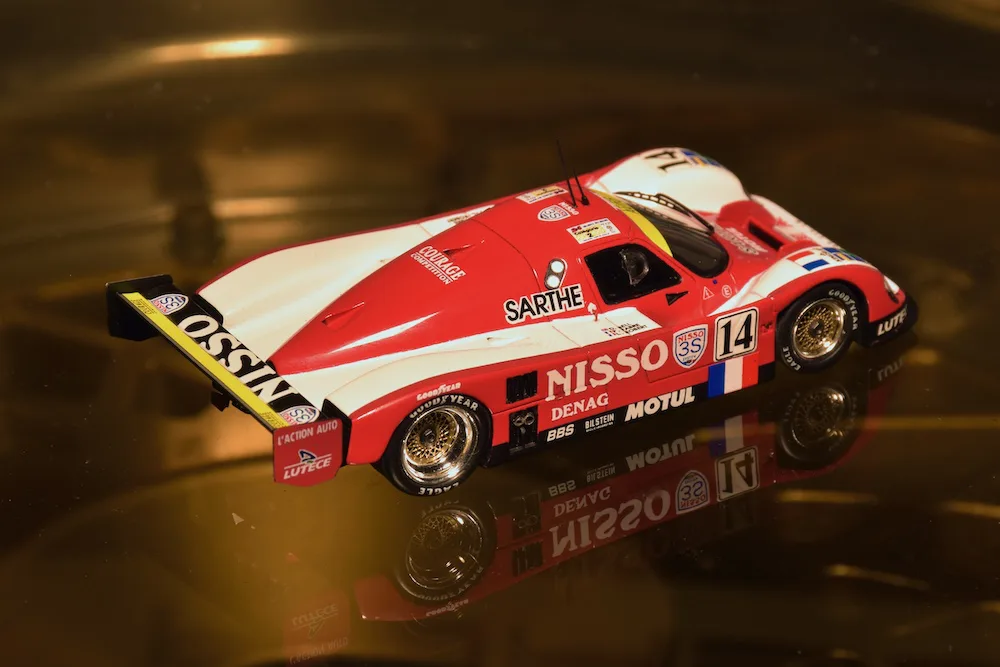
- SPARK S3662 (resin)
- Overall rating: 4 STARS | Quality details: 4 STARS | Estimated value: 4 STARS
- Also appears in #049 Courage
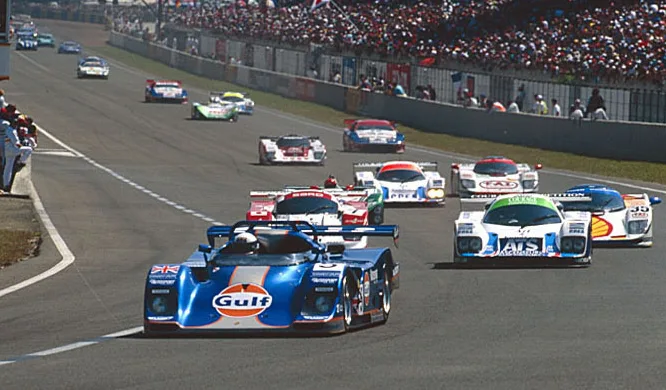
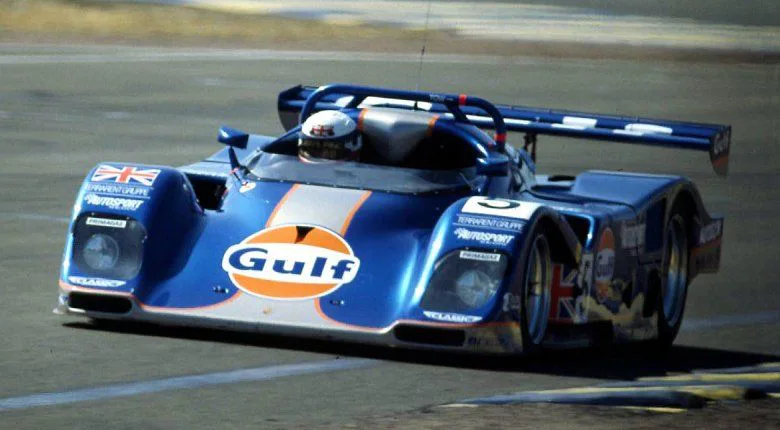
1994 Le Mans 24h, Kremer K8
Group C came to an end and Kremer built a LMP car with Porsche 962 technology. The Kremer K8 was fast, qualifying second in front of the Dauers and Toyota. In the end they finished 6th. This was the first K8 built, which was originally the 962 CK6-07 with lots of adjustments to fit the new regulations. The car is now part of the legendary ROFGO Collection. It was Derek Bell’s last Le Mans 24h race with Porsche.
Gulf Oil Racing #5: Derek Bell (GB) / Jürgen Lässig (D) / Robin Donovan (GB)
Results: Start-grid 2nd / time 3:51.750 / race 6th – 317 laps / 3rd LMP1
Kremer K8 – LMP1/C90: Powered by 3.0 liter Porsche 935/76 flat-6 twin turbo, approx. 550 hp. Dunlop tires. Weight 950 kg. Aluminium honeycomb and carbon monocoque, chassisnr. 07SP (Thompson)
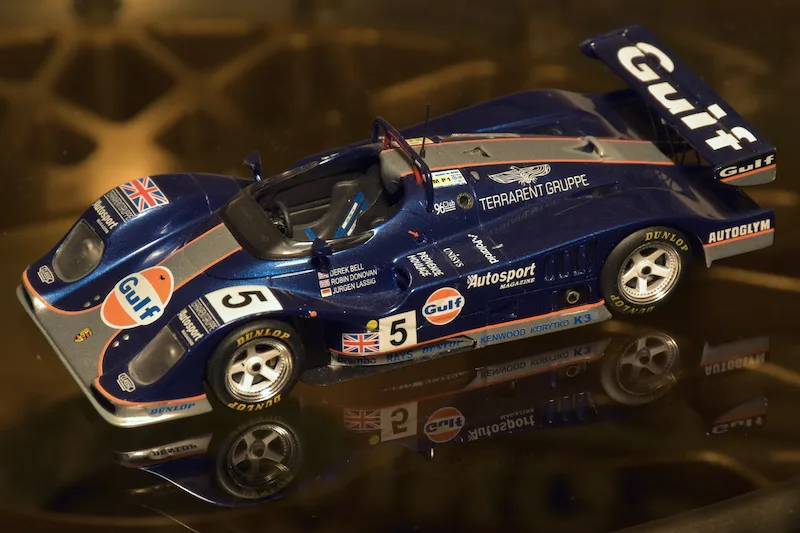
- SPARK Kremer Collection S0329 (resin)
- Overall rating: 5 STARS | Quality details: 5 STARS | Estimated value: 5 STARS
- Also appears in #074 Kremer / #079 Gulf Prototypes
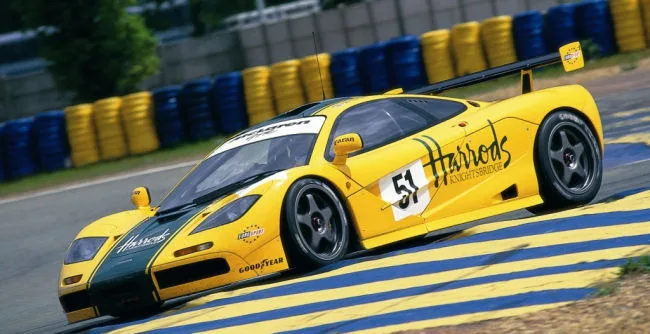
1995 Le Mans 24h, McLaren F1 GTR
The McLarens were the great surprise of the 1995 Le Mans race. This Mach One entry including father and son Bell took a very fine 3rd spot, 2nd in GT1.
Harrods Mach One Racing #51: Andy Wallace (GB) / Derek Bell (GB) / Justin Bell (GB)
Results: Start-grid 13th / time 3:58.800 / race 3rd – 297 laps / 2nd GT1
McLaren F1 GTR – GT1: Powered by 6.1 liter BMW S70/3 V12 60º, approx. 600 hp. Goodyear tires. Weight 1010 kg. Carbon fibre monocoque, chassisnr. #006R
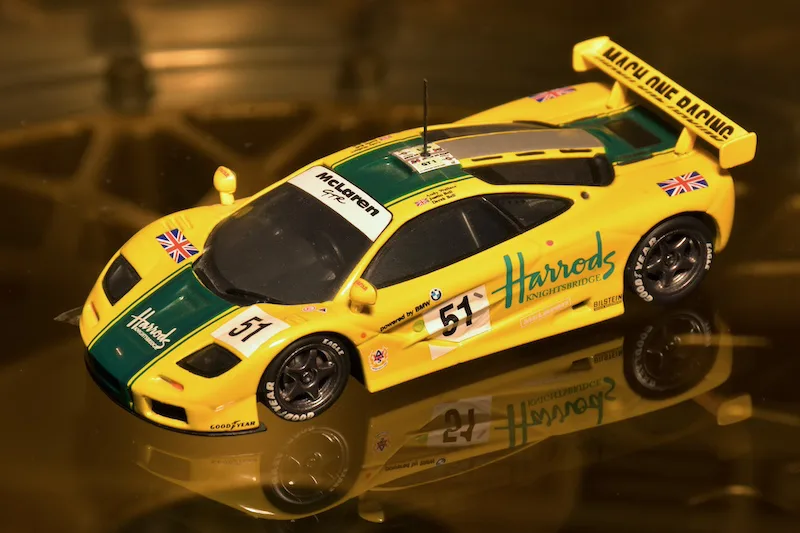

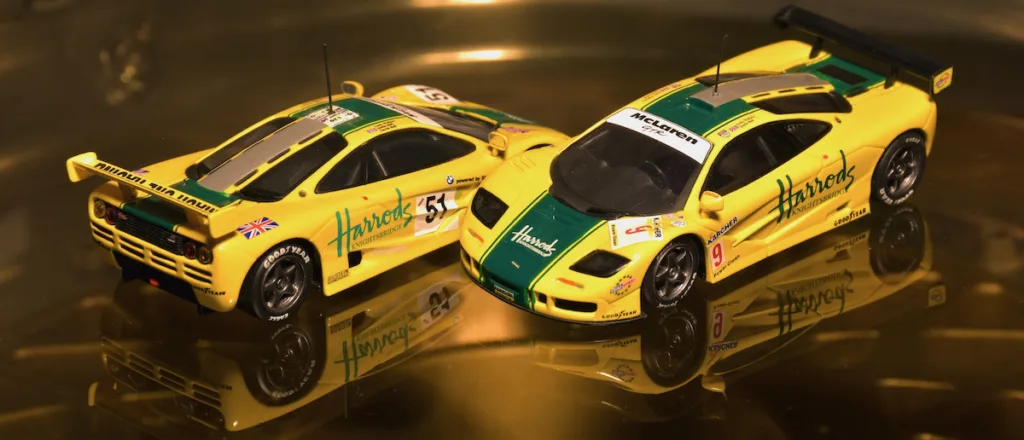
- MINICHAMPS MC530 154349 (diecast)
- Overall rating: 4 STARS | Quality details: 3 STARS | Estimated value: 4 STARS
- Also appears in #075 McLaren F1 GTR
1996 Le Mans 24h, McLaren F1 GTR
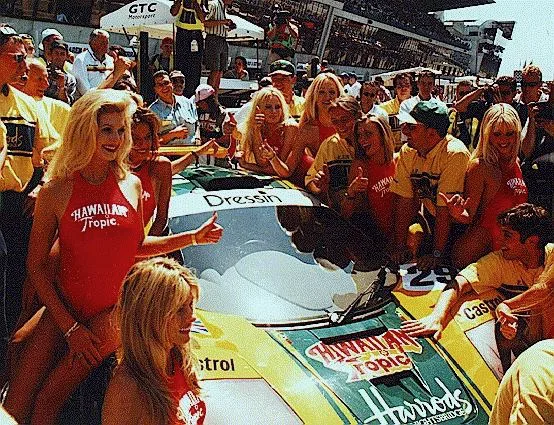
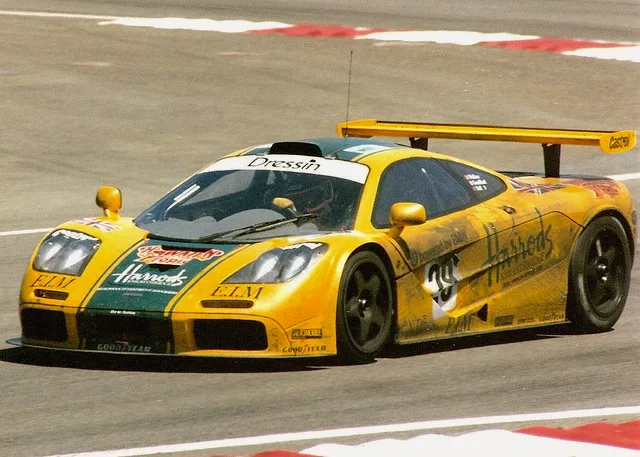
The McLarens were the great surprise of the 1995 Le Mans race in the pooring rain, but couldn’t repeat this performance in the following year because of the. The Harrods Mach One McLaren received support from the famous Hawaiian Tropic Girls which made it finish 6th!
Harrods Mach One Racing #29: Andy Wallace (GB) / Derek Bell (GB) / Olivier Grouillard (F)
Results: Start-grid 24th / time 3:56.021 / race 6th – 328 laps / 5th GT1
McLaren F1 GTR – GT1: Powered by 6.1 liter BMW S70/3 V12 60º, approx. 600 hp. Goodyear tires. Weight 1010 kg. Carbon fibre monocoque, chassisnr. #006R
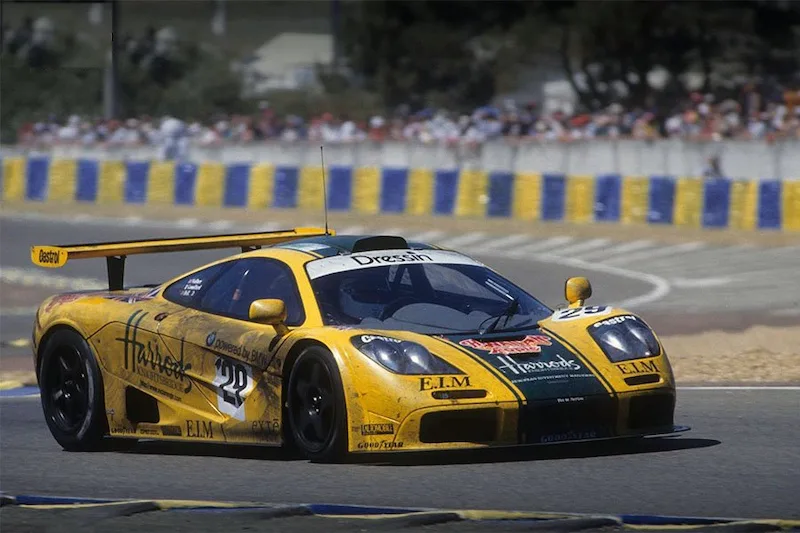
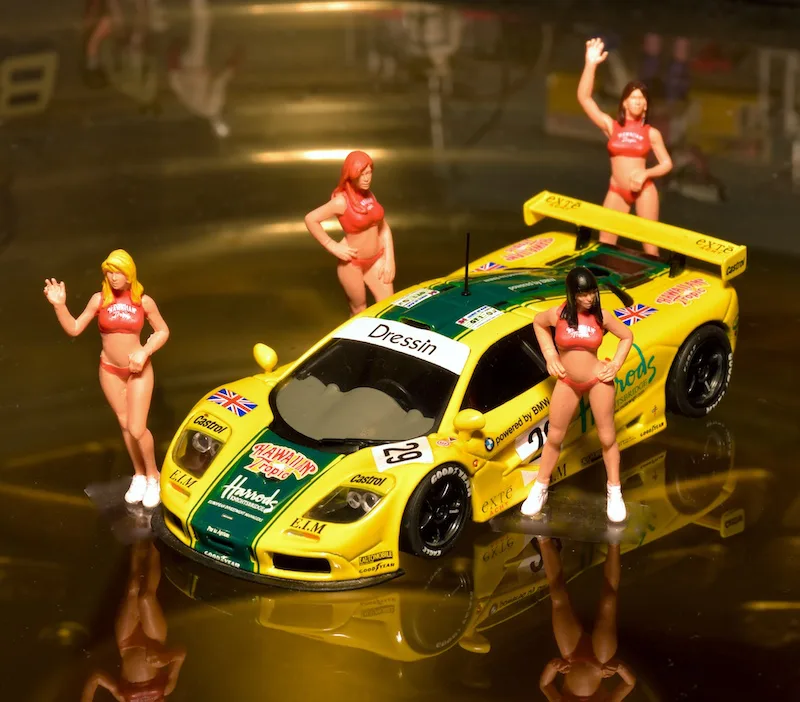
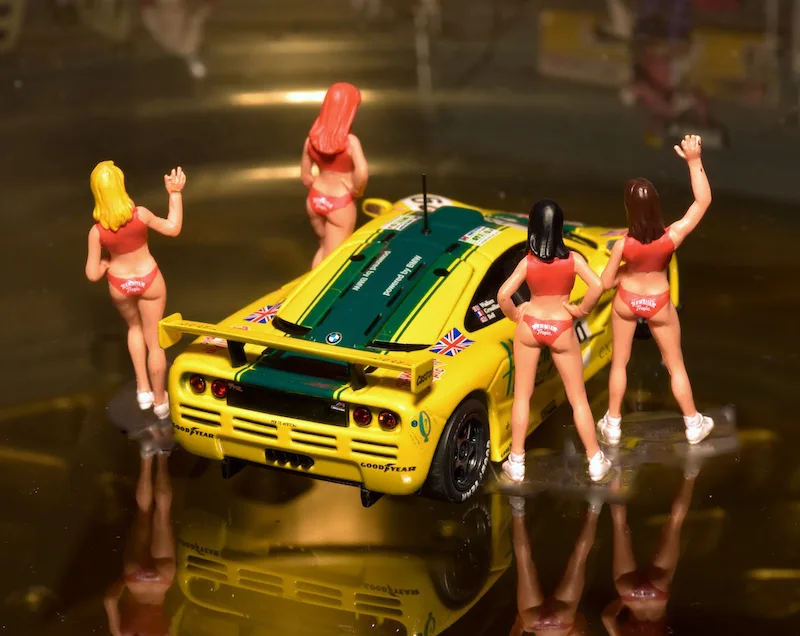
- MINICHAMPS MC 530 164329 (diecast)
- Overall rating: 4 STARS | Quality details: 3 STARS | Estimated value: 3 STARS
- Also appears in #075 McLaren F1 GTR
Career in the USA
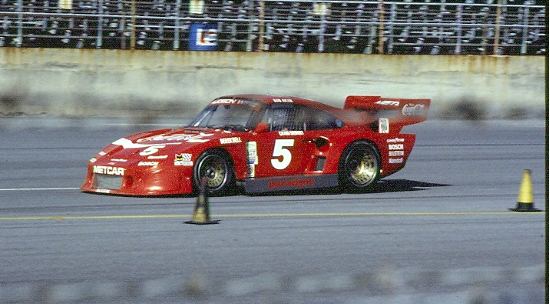
1982 Daytona 24h, Porsche 935 K3/80
In Europe the career of Porsches 935 ended with the disappearance of group 5. In the USA the cars fitted in the GTP regulations and were able to compete with the real prototypes. This Bob Akin 935 K3 finished 2nd in this year’s Daytona 24-hour race.
Bob Akin Motorsports #5: Bob Akin (USA) / Craig Siebert (USA) / Derek Bell (GB)
Results: Start-grid 7th / time 1:47.094 / race 2nd – 708 laps
Porsche 935 K3/80 – IMSA GTP: Powered by 3.0 liter Porsche Type 930/78 flat-6 turbo, approx. 650 hp. Goodyear tires. Weight 970 kg. Steel monocoque, chassisnr. #930 009 0005
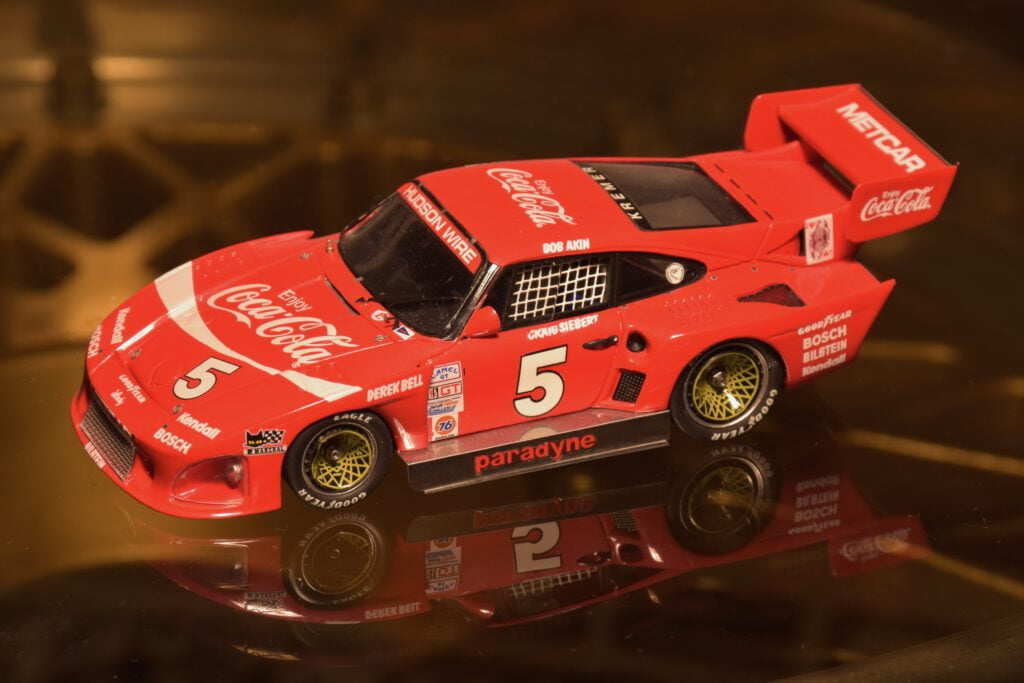
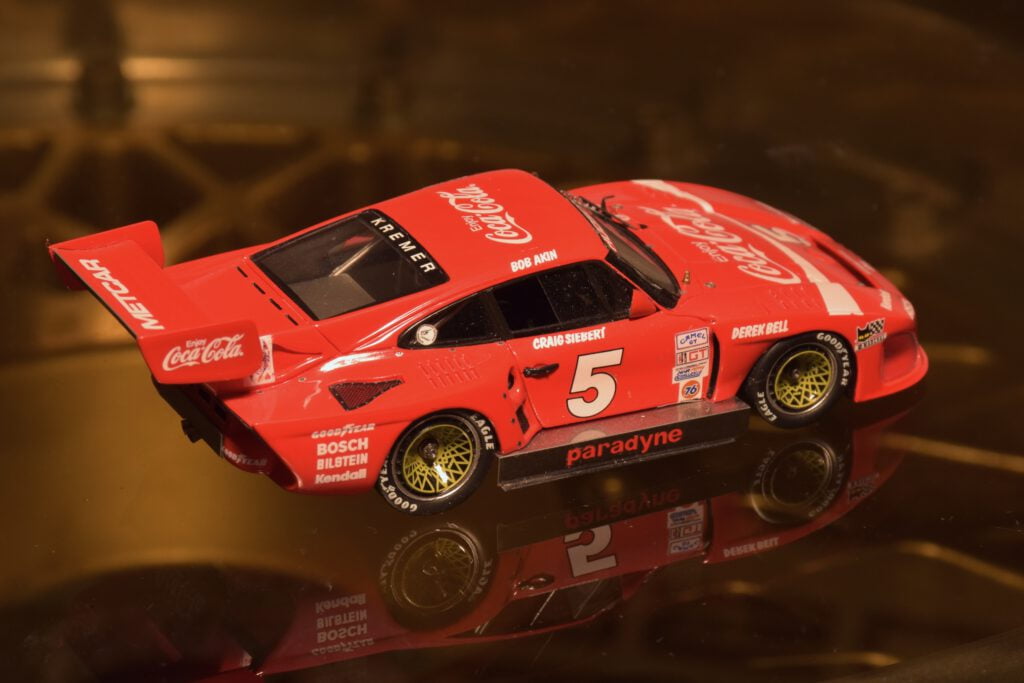
- TRUE SCALE MINIATURES 09433 (resin)
- Overall rating: 5 STARS | Quality details: 5 STARS | Estimated value: 4 STARS
- Also appears in #093 American Porsche GT Teams / #007 Coca-Cola
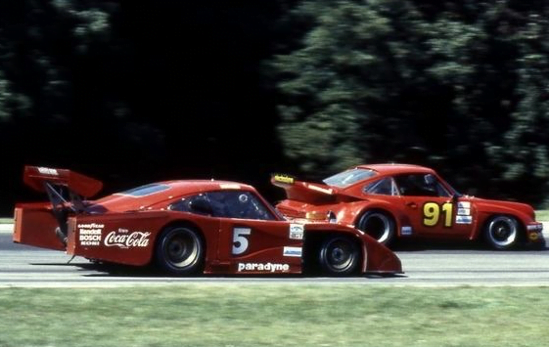
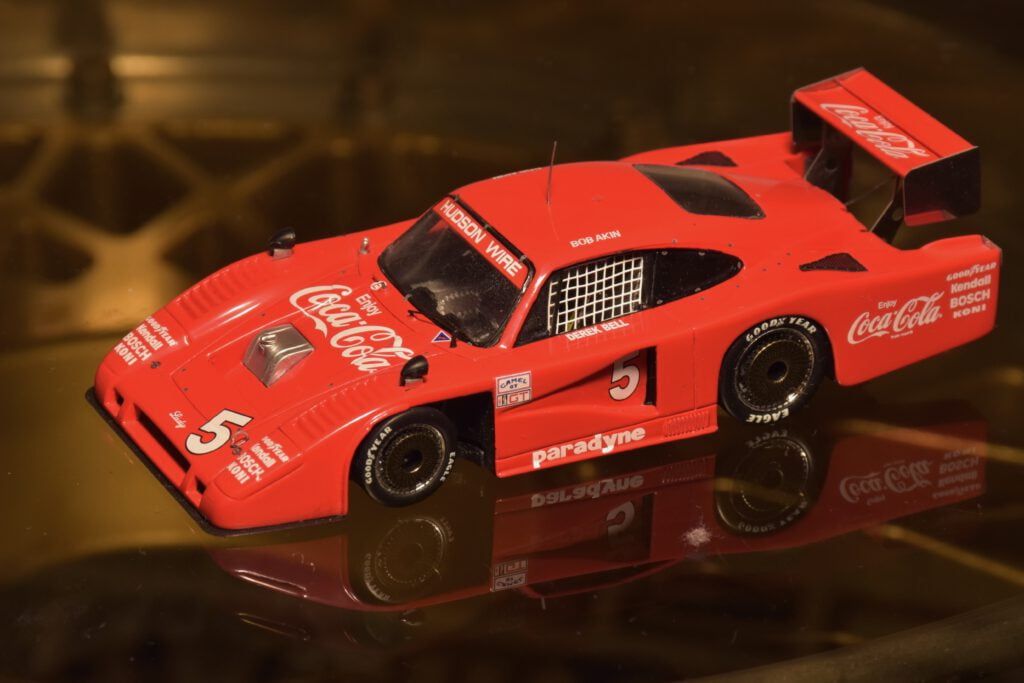
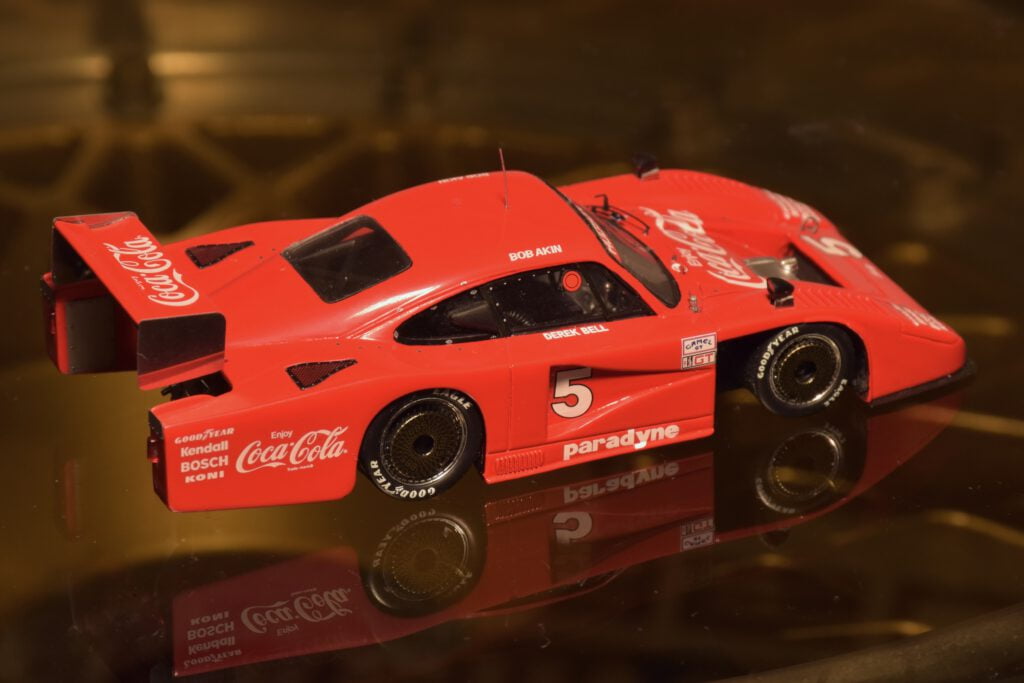
1982 Road Atlanta 500 miles, Porsche 935 LT1
In Europe the career of Porsche’s 935 ended with the disappearance of group 5. In the USA the cars fitted in the GTP regulations and were able to compete with the real prototypes. Bob Akin had this 935 LT1 developed with the aerodynamic nose of a Lola T600 sports car and improved monocoque. It finished 7th at Road Atlanta.
Bob Akin Motorsports #5: Bob Akin (USA) / Derek Bell (GB)
Results: Start-grid 1st / time 1:32.755 / race 7th overall – 116 laps / 5th GTP
Porsche 935 LT1 – IMSA GTP: Powered by 3.2 liter Porsche Type 930/78 flat-6 turbo, approx. 700 hp. Goodyear tires. Weight 970 kg. Steel space frame, chassisnr. Akin #935L-1
- TRUE SCALE MINIATURES 10431 (resin)
- Overall rating: 4 STARS | Quality details: 5 STARS | Estimated value: 4 STARS
- Also appears in #093 American Porsche GT Teams / #007 Coca-Cola
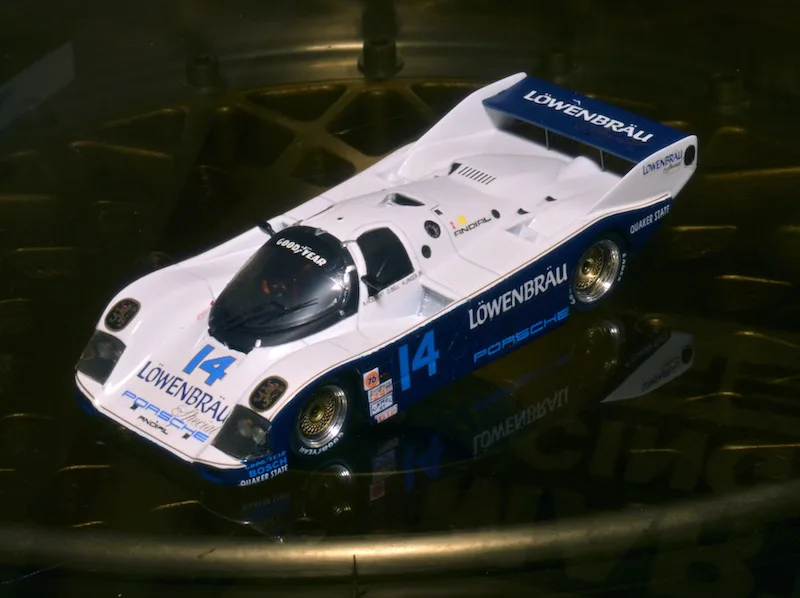
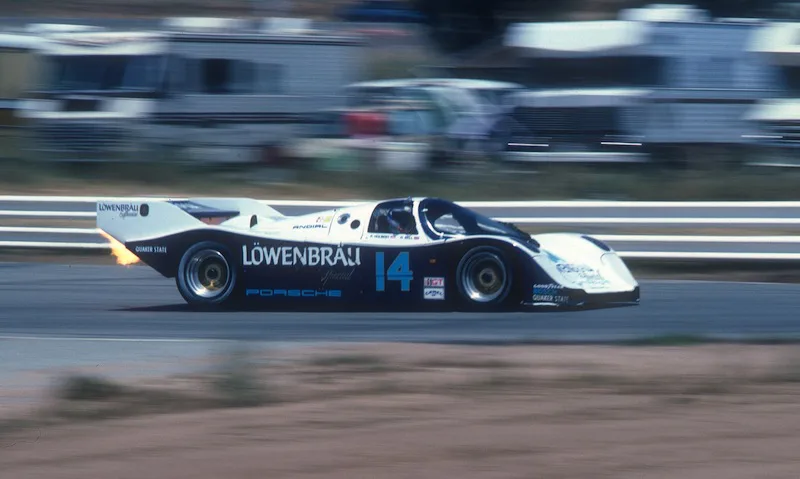
1986 Daytona 24h, Porsche 962
The Porsche 962 is successor of the 956. The 962C is the Group C version, the American 962 GTP versions ran in different configuration but were just as successful. The first three places in this year’s Daytona 24-hour race were taken by 962’s: The first two in the same lap, the third only one lap behind. Holbert would win the 1987 Daytona also with the same car but other drivers.
Holbert Racing #14: Al Holbert (USA) / Derek Bell (GB) / Al Unser Jr. (USA)
Results: Start-grid 9th / time 1:43.190 / race 1st -712 laps
Porsche 962 – IMSA GTP: Powered by 3.2 liter Porsche Type 930/78 flat-6 turbo, approx. 640 hp. Goodyear tires. Weight 840 kg. Aluminium monocoque, chassisnr. #103
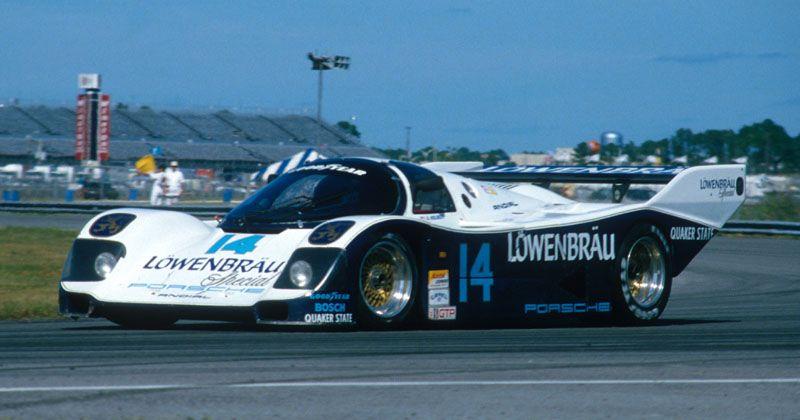
- SPARK S0948 (resin)
- Overall rating: 4 STARS | Quality details: 4 STARS | Estimated value: 4 STARS
- Only appears in this collection
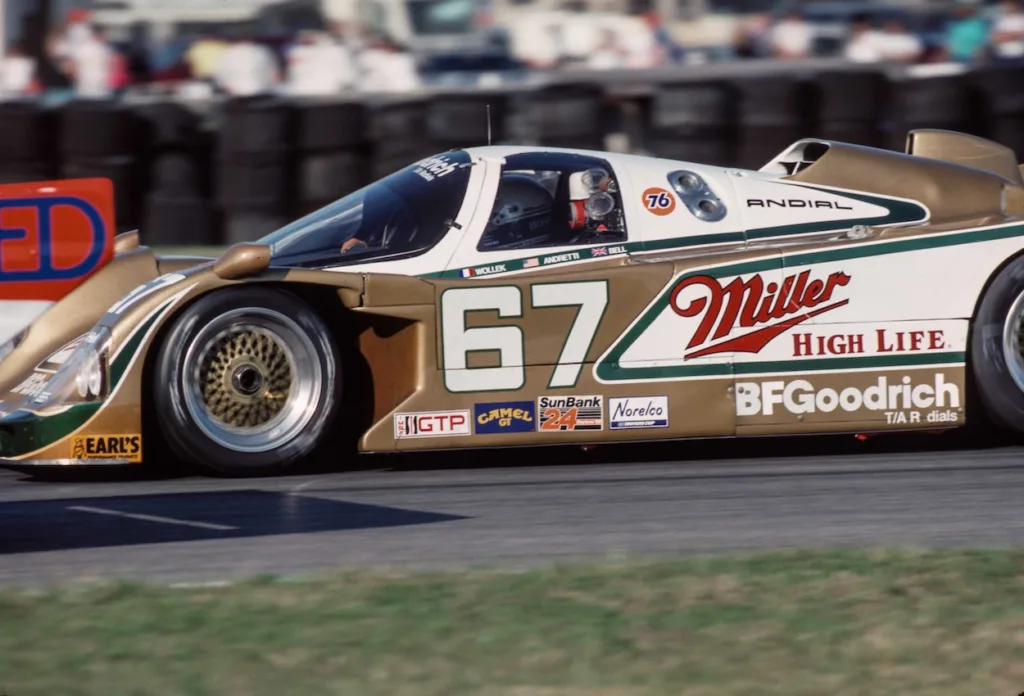
1989 Daytona 24h, Porsche 962
And another win for the famous Porsche 962. It won the 1989 Daytona 24 hour race just in front of Lammers’ TWR Jaguar that won the year before and after.
Busby Racing #67: Bob Wollek (F) / Derek Bell (GB) / John Andretti (USA)
Results: Start-grid 12th / time 1:12.944 / race 1st – 621 laps
Porsche 962 – IMSA GTP: Powered by 3.2 liter Porsche Type 930/78 flat-6 turbo, approx. 640 hp. BF Goodrich tires. Weight 840 kg. Aluminium monocoque, chassisnr. #C02 (Chapman)
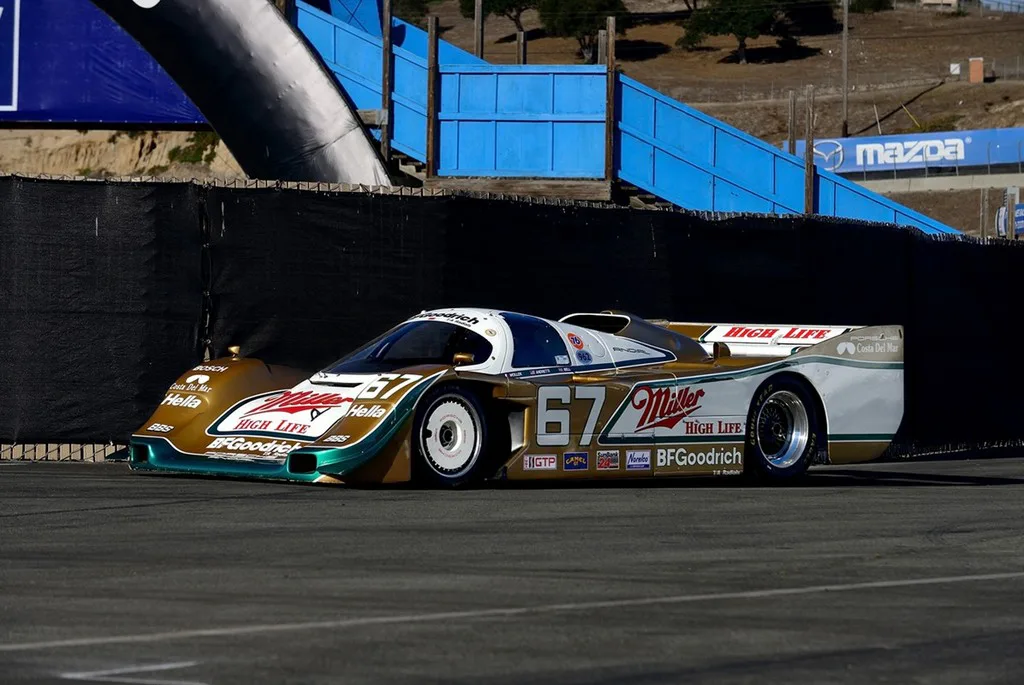
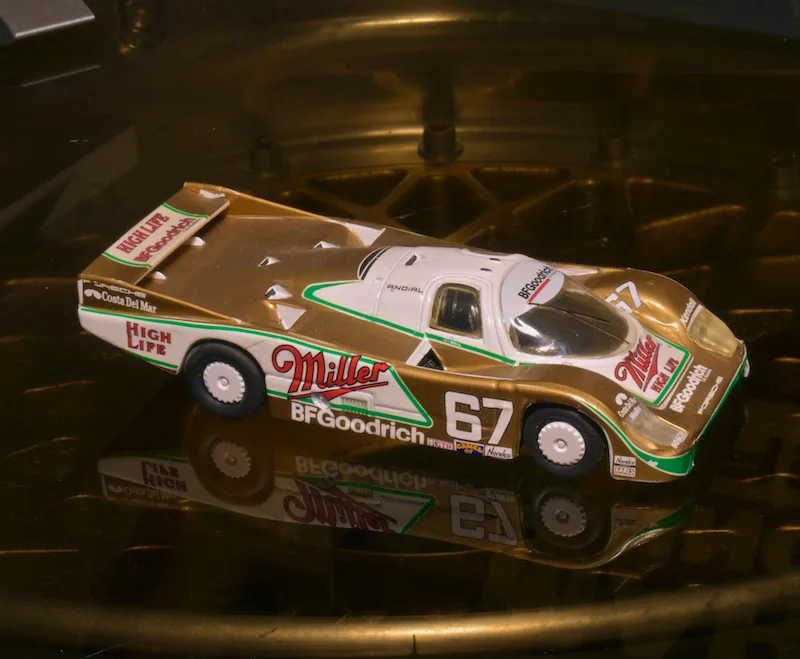
- VITESSE #unknown (diecast)
- Overall rating: 2 STARS | Quality details: 1 STAR | Estimated value: 2 STARS
- Only appears in this collection
1990 Daytona 24h, Porsche 962
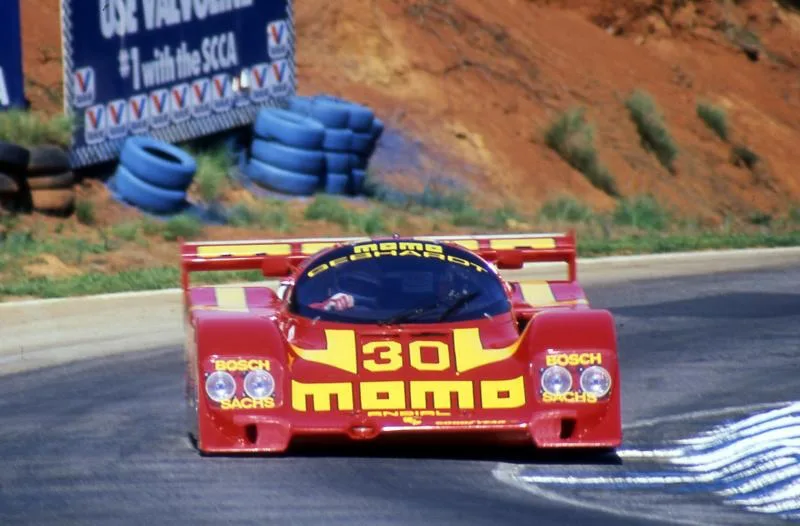
Gianpiero Moretti and his Momo crew were of course present at Daytona this year. With support from Derek Bell, the team qualified 14th but managed only 186 laps when a crash ended their race. I didn’t manage to find a decent picture of the car during this event, so the picture is from other race.
Momo Racing #30: Giampiero Moretti (I) / Derek Bell (GB) / Stanley Dickens (S)
Results: Start-grid 14th / time 1:42.532 / race DNF accident – 186 laps
Porsche 962 – IMSA GTP: Powered by 3.2 liter Porsche Type 930/78 flat-6 turbo, approx. 640 hp. Goodyear tires. Weight 840 kg. Aluminium monocoque, chassisnr. GS01 (Gebhardt)
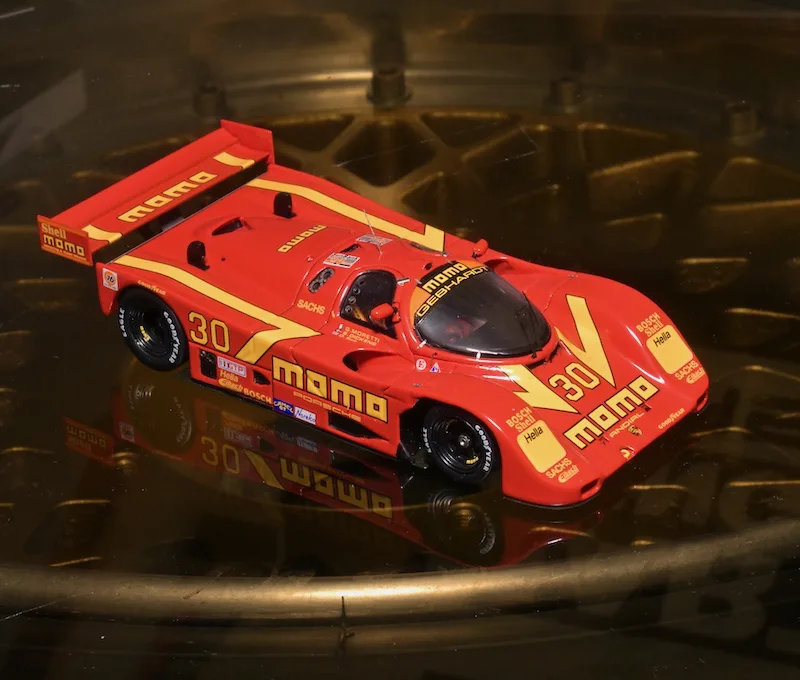
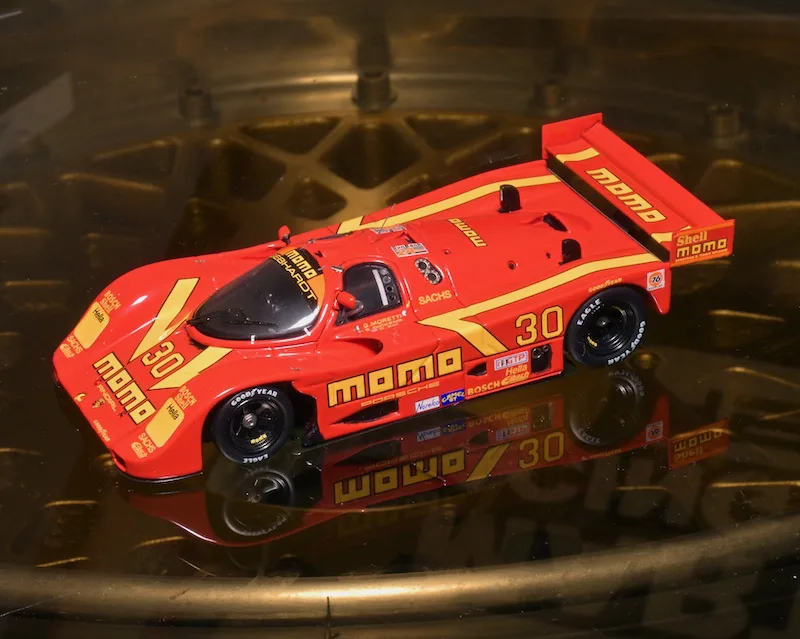
- SPARK PD 043 11008 (resin)
- Overall rating: 4 STARS | Quality details: 4 STARS | Estimated value: 4 STARS
- Only appears in this collection
1991 Daytona 24h, Gunnar 966 – Porsche
Kevin Jeanette built this Gunnar Porsche 966, the world’s first WSC Sportscar. The car with a flat bottom was based upon the chassis of a Porsche 962 and has its IMSA spec engine. The car raced between 1991 and 1993 but never achieved great succes. Typical Gunnar style; the car had a different livery every race. In Daytona 1991, it supported the American and British armed forces that fought in the 1st Gulf war. Derek Bell drove together with his son Justin.
Gunnar Porsche #60: Derek Bell (GB) / Justin Bell (GB) / Jay Cochran (USA)
Results: Start-grid 13th / time 2:05.483 / race DNF – 83 laps
Gunnar 966 – IMSA GTP: Powered by 3.2 liter Porsche Type 930/78 flat-6 turbo, approx. 660 hp. BF Goodrich tires. Weight 900 kg. Aluminium monocoque, chassisnr. #01 (Chapman)
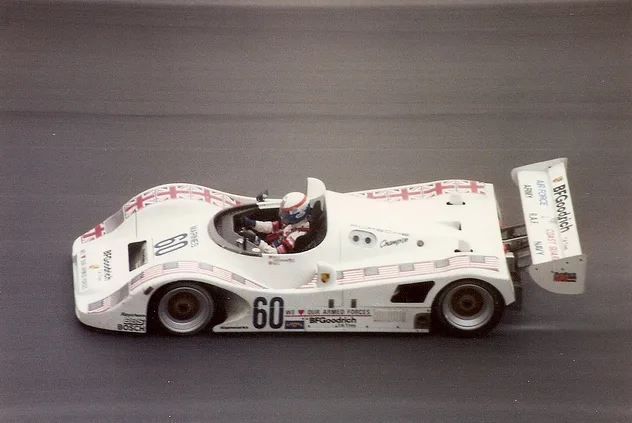
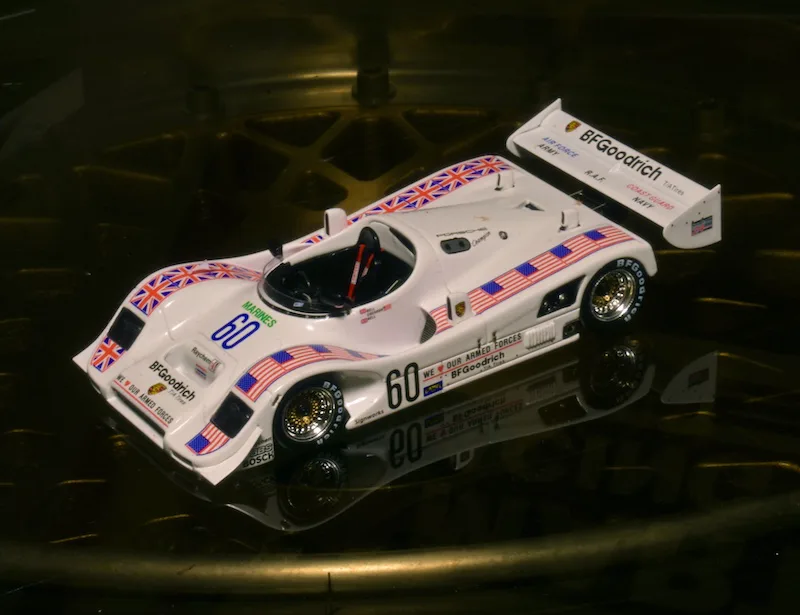
- TRUE SCALE MINIATURES TSM 114306 (resin)
- Overall rating: 4 STARS | Quality details: 4 STARS | Estimated value: 4 STARS
- Only appears in this collection
1993 IMSA championship, Nissan NPT-90
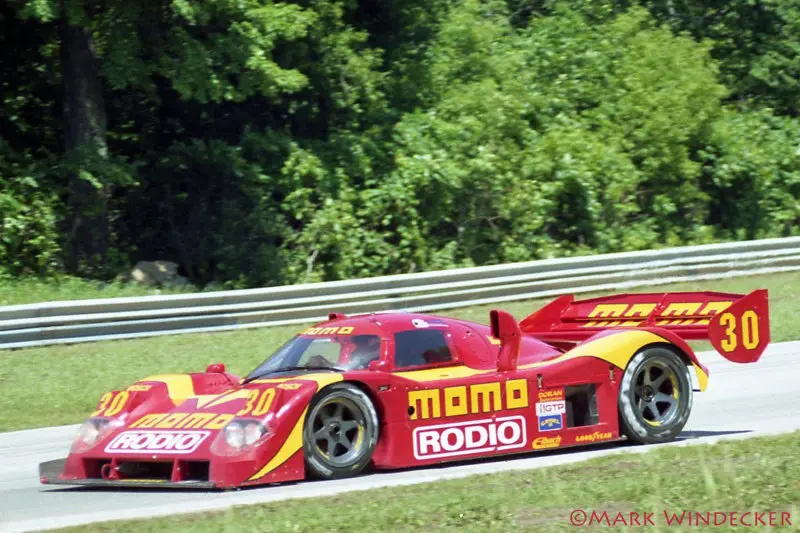
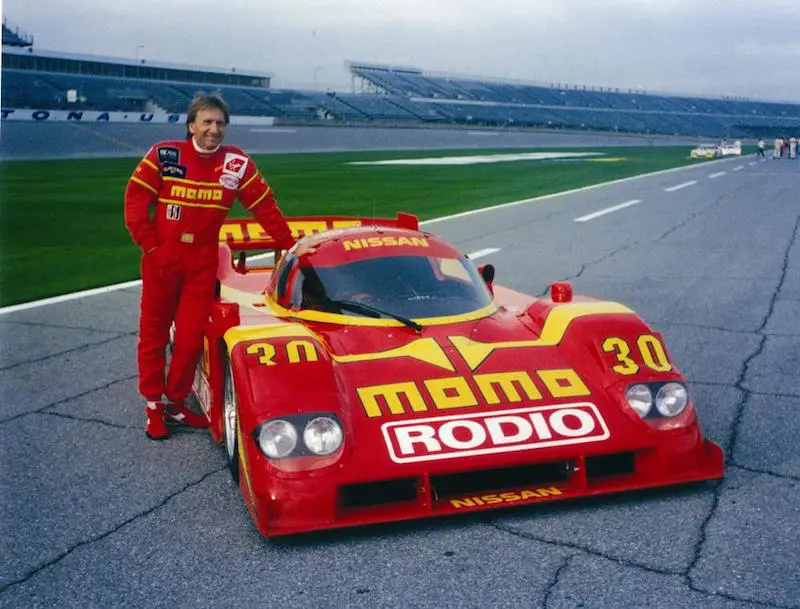
The American branch of Nissan Motorsport created this IMSA spec NPT-90. It has been used by the US Nissan team in 1990 and 1991 and then sold to Gianpiero Moretti. Moretti and Derek Bell drove it in the 1993 IMSA season. They had no chance against the Eagle-Toyota, but still scored some good results such as 3rd place at Mid-Ohio.
Momo #30: Gianpierro Moretti (I) / Derek Bell (GB)
Results: Start-grid 4th / time unknown / race 3rd – 93 laps
Nissan NPT-90 – IMSA GTP: Powered by 3.0 liter Nissan VG30-GTP V6 60º twin turbo, approx 650 hp. Goodyear tires. Weight 900 kg. Carbon fibre monocoque, chassisnr. Nissan Power Technology #90-10
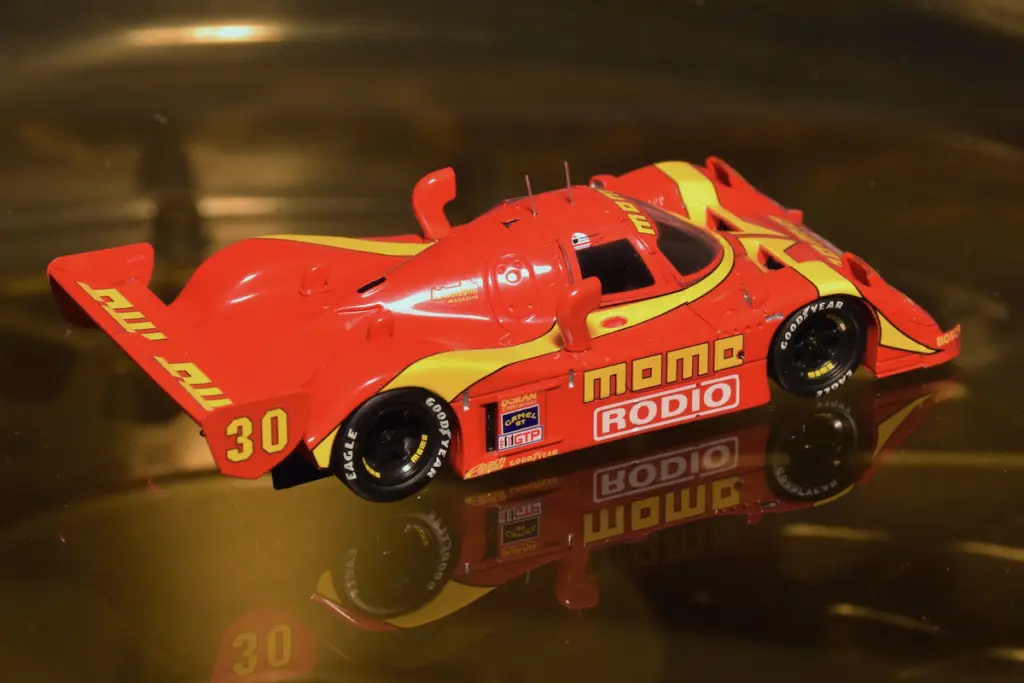
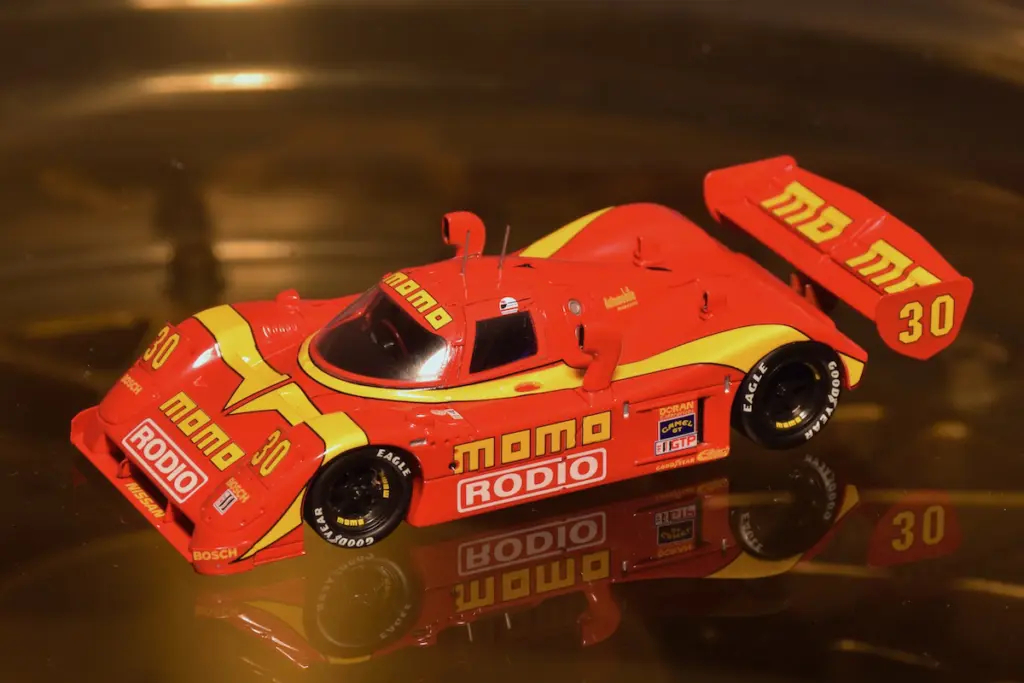
- SPARK S3884 (resin)
- Overall rating: 5 STARS | Quality details: 4 STARS | Estimated value: 4 STARS
- Also appears in #019 Nissan Group C & IMSA GTP / #130 Momo